
- What are the school’s current admission and subject-level arrangements?
- How are gaps in algebra, comprehension and study habits supported?
- What parts of ALP/LLP are for the whole cohort?
- Which CCAs have trials, auditions or capacity restrictions?
- What do typical CCA days and late dismissal look like?
- Where are the safe school gate and public transport routes?
- What help is offered in the first month of Secondary 1?
JC, polytechnic and ITE: the future is bigger than this one choice
Parents choosing a secondary school may already have university in mind. That ambition can be discussed, but it should not become a reason to misrepresent the child’s likely path at age twelve. For mainstream students, later SEC subject levels and results interact with post-secondary admissions requirements. Strong literacy, numeracy, relevant subject prerequisites and consistent learning matter across routes.
JC and Millennia Institute offer pre-university programmes for eligible students. Polytechnics offer diplomas with course-specific requirements. ITE provides technical and vocational programmes with further pathways. The child’s eventual choice should depend on actual results, interests and the rules in force at that time.
IP students follow their programme’s pre-university A-Level or IB endpoint. That route can be valuable for suitable learners but does not guarantee a particular university course. Conversely, a student from a local mainstream school can achieve strong qualifications and progress through post-secondary routes.
The family can revisit detailed admissions thresholds nearer the time. Today the most useful work is selecting a secondary environment where the child can develop learning capability, independence and a realistic weekly rhythm.
Frequently asked questions for Punggol Central families
Which four secondary schools are inside Punggol? Edgefield, Greendale, Punggol Secondary and Yusof Ishak Secondary.
Does Punggol MRT connect both LRT loops? Yes. LTA describes the east and west loops connecting residential areas through the town-centre interchange.
Is Edgefield the same as Punggol Secondary? No. They are separate schools with different campuses and programmes.
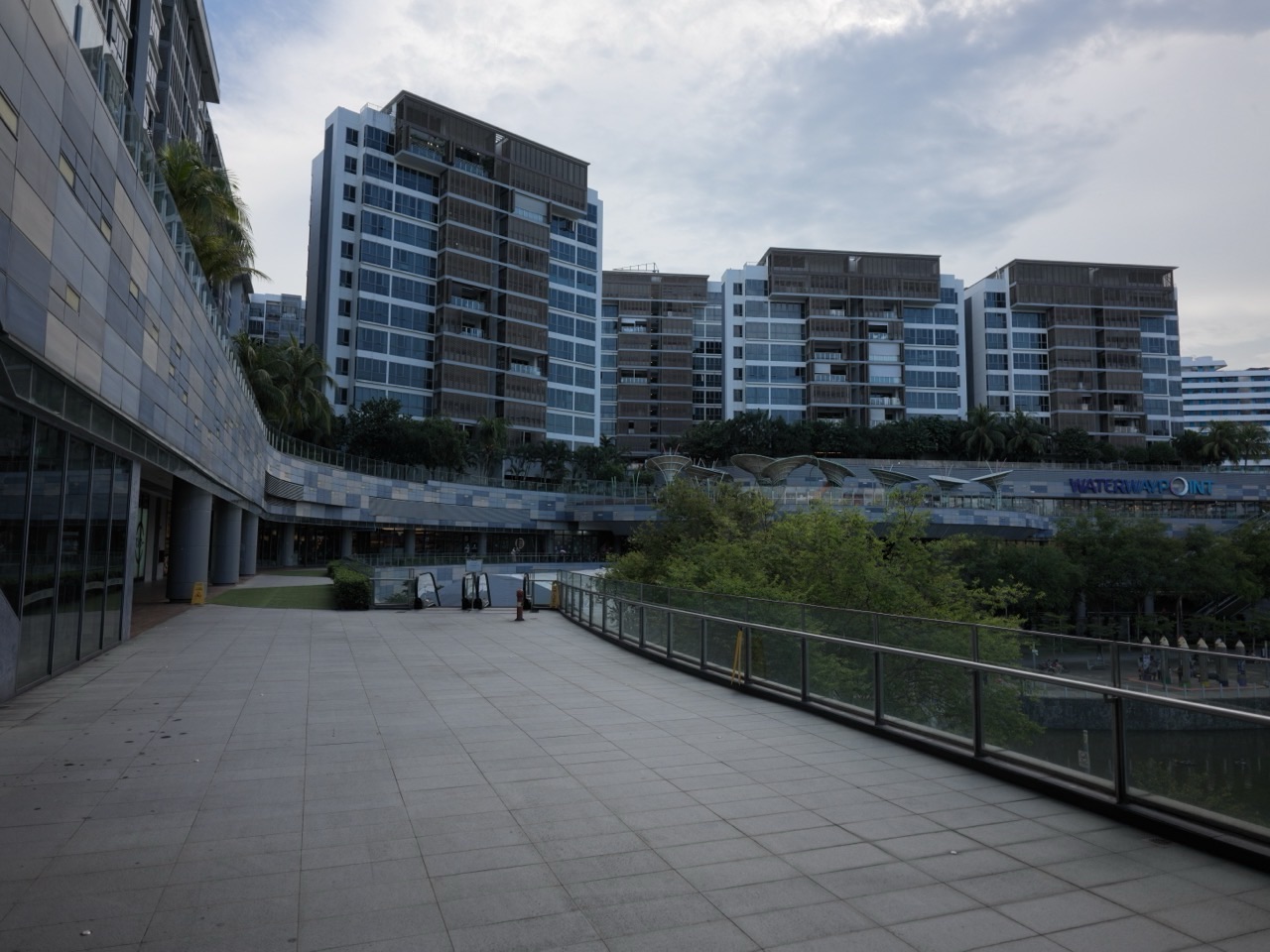
Is a school at Punggol Field automatically walkable from Waterway Point? That depends on the child’s exact block, the gate and safe pedestrian route.
Which school has a design and engineering ALP? Greendale publishes that programme; examine the actual lower-secondary modules.
Which school has an environmental sustainability ALP? Punggol Secondary identifies that emphasis in its official programme information.
Can living near a school guarantee S1 admission? No. Standard Secondary 1 posting does not use the Primary 1 residential distance-priority system.
Can PG2 and PG3 pupils be in the same form class? Full SBB provides mixed form classes and individual G-level subjects according to arrangements.
Does a G1 subject mean the child cannot progress later? No permanent label should be assumed; later movement depends on eligibility and school evidence.
Are any of the four Punggol mainstream schools IP? No. Research a separate IP school.
Does IP always lead to IB? No. Some IP routes lead to A-Levels and others to the IB Diploma.
Is a historical PSLE cut-off a guarantee? No. It records a previous completed intake.
Should an eligible child select only selective schools? MOE recommends a spread of realistic historical cut-offs among six genuine preferences.
Do all CCAs admit everyone? Not necessarily; some have trials, allocation or capacity limits.
Is Sengkang worth considering? Yes where the school, eligibility and actual commute fit the child.
What matters most in the first month? Safe travel, belonging, a clear timetable, foundational learning, sufficient sleep and the confidence to ask for help.
Sources, related reading and a practical next step
Reviewed 14 November 2026. This independent guide should be used with the current official information for the actual intake. MOE and schools determine admissions, subject offerings, programme availability and final posting. Historical score ranges are evidence about earlier cohorts, not certified predictions.
MOE SchoolFinder; MOE PSLE and Full SBB; LTA Punggol LRT network; Greendale official contact; Punggol Secondary official ALP/LLP; Yusof Ishak transport and campus.
More local guides: Four Punggol secondary schools; Punggol East and Edgedale; Punggol West and Sumang; Northshore and Punggol Coast; PSLE score and six choices.
To move from research to a decision, test two school routes from the child’s actual home on a normal weekday, then ask which school they could picture attending when the novelty has worn off. An informed choice is one that remains sensible after the commute, curriculum and daily routine are made real.
A fictional Punggol Central family comparing four local schools
Imagine a family whose child can consider all four local schools under the relevant Posting Group. The pupil enjoys designing things, is steady in English, and needs better Mathematical explanation skills. The parents initially believe that the school with the most competitive cut-off should rank first.
They test the routes to the four campuses and attend available open houses. They discover that Greendale’s design direction appeals, Edgefield’s problem-solving projects are also interesting, Punggol Secondary’s environmental learning connects with the child’s science curiosity, and Yusof Ishak’s environment has its own attraction. The exercise does not produce a universal ranking because the child’s interests and travel differ from those of another household.
The parents ask how each school diagnoses Mathematics difficulty, what practice pupils receive, and how a child can ask for help. They also verify the actual CCA allocation rules. The family considers the return journey after an activity, which is longer than the ordinary school-day route for some choices.
Finally, the child ranks the schools they would genuinely attend, and the parents check the current official ranges before submitting a balanced set of six. The process is careful without pretending the outcome is guaranteed.
A fictional Punggol Waterway pupil facing PG2 or PG3
A second family has a child with a result that permits a PG2/PG3 choice. The pupil is a strong reader but lacks confidence when multi-step Mathematics appears. The family wonders whether choosing PG3 will automatically produce a better future.
They consult the primary school about academic readiness and ask shortlisted secondary schools how G-level subjects are offered. They learn to compare group-specific admission and subject-level flexibility separately. They also look at the student’s daily routine, because an overly long journey could reduce the time for consistent practice.
The parents do not assume PG2 means every subject will be fixed indefinitely. Nor do they claim that a child can move upward after one high test score. School eligibility and sustained evidence matter. They select the group according to the official process, then build a school list that genuinely fits the child.
The lesson is that a Posting Group is an admission structure, not a measure of the child’s total potential or character.
A fictional family weighing a CCA against a shorter journey
A third Punggol Central family has a child interested in music performance. One eligible school has a CCA that looks particularly appealing, while another school offers an easier daily route and helpful first-year academic support. A brochure cannot decide this trade-off.
The parents ask the first school about auditions, allocation, rehearsal days, training commitment and whether every newcomer can participate. They ask the second school about its alternative music opportunities and the child’s ability to continue learning outside CCA. They also test late return journeys from both campuses.
If the desired CCA is competitive, the family should not treat a place in it as certain simply because the school offers the activity. They can still prefer that school, but the risk needs to be explicit. The pupil should understand what they would enjoy even if the first CCA choice is unavailable.
The family makes a decision based on the whole experience of secondary school rather than one attractive item in a programme list.
What to ask at an open house
A useful open house answers real questions about learning and daily life. Begin with the child’s eligibility and an example of their current subject strengths. Ask a teacher how the school teaches students at different subject levels, especially in English, Mathematics and Science.
Find out how the first term is organised. Does the school support pupils who are nervous about transitions? How do teachers communicate homework expectations and offer help? When are subject-level reviews considered, and how are parents informed?
Ask about Applied Learning and Learning for Life programmes. Which elements are part of ordinary teaching? Which are optional? Can pupils observe and participate without arriving with specialist skills? How are CCAs allocated, and what happens when a first choice is oversubscribed?
Then ask where the child should enter and exit, and what times are relevant after CCAs. Make a note of the exact campus, because relying on a generic transport map can create avoidable problems.
Finally, speak with the child after the visit. Their first reaction is not decisive, but it is evidence. Ask which questions they felt comfortable asking and whether they can imagine learning there on an ordinary day.
- What are the school’s current admission and subject-level arrangements?
- How are gaps in algebra, comprehension and study habits supported?
- What parts of ALP/LLP are for the whole cohort?
- Which CCAs have trials, auditions or capacity restrictions?
- What do typical CCA days and late dismissal look like?
- Where are the safe school gate and public transport routes?
- What help is offered in the first month of Secondary 1?
JC, polytechnic and ITE: the future is bigger than this one choice
Parents choosing a secondary school may already have university in mind. That ambition can be discussed, but it should not become a reason to misrepresent the child’s likely path at age twelve. For mainstream students, later SEC subject levels and results interact with post-secondary admissions requirements. Strong literacy, numeracy, relevant subject prerequisites and consistent learning matter across routes.
JC and Millennia Institute offer pre-university programmes for eligible students. Polytechnics offer diplomas with course-specific requirements. ITE provides technical and vocational programmes with further pathways. The child’s eventual choice should depend on actual results, interests and the rules in force at that time.
IP students follow their programme’s pre-university A-Level or IB endpoint. That route can be valuable for suitable learners but does not guarantee a particular university course. Conversely, a student from a local mainstream school can achieve strong qualifications and progress through post-secondary routes.
The family can revisit detailed admissions thresholds nearer the time. Today the most useful work is selecting a secondary environment where the child can develop learning capability, independence and a realistic weekly rhythm.
Frequently asked questions for Punggol Central families
Which four secondary schools are inside Punggol? Edgefield, Greendale, Punggol Secondary and Yusof Ishak Secondary.
Does Punggol MRT connect both LRT loops? Yes. LTA describes the east and west loops connecting residential areas through the town-centre interchange.
Is Edgefield the same as Punggol Secondary? No. They are separate schools with different campuses and programmes.
Is a school at Punggol Field automatically walkable from Waterway Point? That depends on the child’s exact block, the gate and safe pedestrian route.
Which school has a design and engineering ALP? Greendale publishes that programme; examine the actual lower-secondary modules.
Which school has an environmental sustainability ALP? Punggol Secondary identifies that emphasis in its official programme information.
Can living near a school guarantee S1 admission? No. Standard Secondary 1 posting does not use the Primary 1 residential distance-priority system.
Can PG2 and PG3 pupils be in the same form class? Full SBB provides mixed form classes and individual G-level subjects according to arrangements.
Does a G1 subject mean the child cannot progress later? No permanent label should be assumed; later movement depends on eligibility and school evidence.
Are any of the four Punggol mainstream schools IP? No. Research a separate IP school.
Does IP always lead to IB? No. Some IP routes lead to A-Levels and others to the IB Diploma.
Is a historical PSLE cut-off a guarantee? No. It records a previous completed intake.
Should an eligible child select only selective schools? MOE recommends a spread of realistic historical cut-offs among six genuine preferences.
Do all CCAs admit everyone? Not necessarily; some have trials, allocation or capacity limits.
Is Sengkang worth considering? Yes where the school, eligibility and actual commute fit the child.
What matters most in the first month? Safe travel, belonging, a clear timetable, foundational learning, sufficient sleep and the confidence to ask for help.
Sources, related reading and a practical next step
Reviewed 14 November 2026. This independent guide should be used with the current official information for the actual intake. MOE and schools determine admissions, subject offerings, programme availability and final posting. Historical score ranges are evidence about earlier cohorts, not certified predictions.
MOE SchoolFinder; MOE PSLE and Full SBB; LTA Punggol LRT network; Greendale official contact; Punggol Secondary official ALP/LLP; Yusof Ishak transport and campus.
More local guides: Four Punggol secondary schools; Punggol East and Edgedale; Punggol West and Sumang; Northshore and Punggol Coast; PSLE score and six choices.
To move from research to a decision, test two school routes from the child’s actual home on a normal weekday, then ask which school they could picture attending when the novelty has worn off. An informed choice is one that remains sensible after the commute, curriculum and daily routine are made real.
- School name, campus and correct programme.
- Eligible Posting Group and prior-intake range.
- Teaching support, subject fit and future options.
- Specific CCA or applied programme interest.
- Measured school-day and CCA commute.
- Child’s view plus unresolved factual questions.
A fictional Punggol Central family comparing four local schools
Imagine a family whose child can consider all four local schools under the relevant Posting Group. The pupil enjoys designing things, is steady in English, and needs better Mathematical explanation skills. The parents initially believe that the school with the most competitive cut-off should rank first.
They test the routes to the four campuses and attend available open houses. They discover that Greendale’s design direction appeals, Edgefield’s problem-solving projects are also interesting, Punggol Secondary’s environmental learning connects with the child’s science curiosity, and Yusof Ishak’s environment has its own attraction. The exercise does not produce a universal ranking because the child’s interests and travel differ from those of another household.
The parents ask how each school diagnoses Mathematics difficulty, what practice pupils receive, and how a child can ask for help. They also verify the actual CCA allocation rules. The family considers the return journey after an activity, which is longer than the ordinary school-day route for some choices.
Finally, the child ranks the schools they would genuinely attend, and the parents check the current official ranges before submitting a balanced set of six. The process is careful without pretending the outcome is guaranteed.
A fictional Punggol Waterway pupil facing PG2 or PG3
A second family has a child with a result that permits a PG2/PG3 choice. The pupil is a strong reader but lacks confidence when multi-step Mathematics appears. The family wonders whether choosing PG3 will automatically produce a better future.
They consult the primary school about academic readiness and ask shortlisted secondary schools how G-level subjects are offered. They learn to compare group-specific admission and subject-level flexibility separately. They also look at the student’s daily routine, because an overly long journey could reduce the time for consistent practice.
The parents do not assume PG2 means every subject will be fixed indefinitely. Nor do they claim that a child can move upward after one high test score. School eligibility and sustained evidence matter. They select the group according to the official process, then build a school list that genuinely fits the child.
The lesson is that a Posting Group is an admission structure, not a measure of the child’s total potential or character.
A fictional family weighing a CCA against a shorter journey
A third Punggol Central family has a child interested in music performance. One eligible school has a CCA that looks particularly appealing, while another school offers an easier daily route and helpful first-year academic support. A brochure cannot decide this trade-off.
The parents ask the first school about auditions, allocation, rehearsal days, training commitment and whether every newcomer can participate. They ask the second school about its alternative music opportunities and the child’s ability to continue learning outside CCA. They also test late return journeys from both campuses.
If the desired CCA is competitive, the family should not treat a place in it as certain simply because the school offers the activity. They can still prefer that school, but the risk needs to be explicit. The pupil should understand what they would enjoy even if the first CCA choice is unavailable.
The family makes a decision based on the whole experience of secondary school rather than one attractive item in a programme list.
What to ask at an open house
A useful open house answers real questions about learning and daily life. Begin with the child’s eligibility and an example of their current subject strengths. Ask a teacher how the school teaches students at different subject levels, especially in English, Mathematics and Science.
Find out how the first term is organised. Does the school support pupils who are nervous about transitions? How do teachers communicate homework expectations and offer help? When are subject-level reviews considered, and how are parents informed?
Ask about Applied Learning and Learning for Life programmes. Which elements are part of ordinary teaching? Which are optional? Can pupils observe and participate without arriving with specialist skills? How are CCAs allocated, and what happens when a first choice is oversubscribed?
Then ask where the child should enter and exit, and what times are relevant after CCAs. Make a note of the exact campus, because relying on a generic transport map can create avoidable problems.
Finally, speak with the child after the visit. Their first reaction is not decisive, but it is evidence. Ask which questions they felt comfortable asking and whether they can imagine learning there on an ordinary day.
- What are the school’s current admission and subject-level arrangements?
- How are gaps in algebra, comprehension and study habits supported?
- What parts of ALP/LLP are for the whole cohort?
- Which CCAs have trials, auditions or capacity restrictions?
- What do typical CCA days and late dismissal look like?
- Where are the safe school gate and public transport routes?
- What help is offered in the first month of Secondary 1?
JC, polytechnic and ITE: the future is bigger than this one choice
Parents choosing a secondary school may already have university in mind. That ambition can be discussed, but it should not become a reason to misrepresent the child’s likely path at age twelve. For mainstream students, later SEC subject levels and results interact with post-secondary admissions requirements. Strong literacy, numeracy, relevant subject prerequisites and consistent learning matter across routes.
JC and Millennia Institute offer pre-university programmes for eligible students. Polytechnics offer diplomas with course-specific requirements. ITE provides technical and vocational programmes with further pathways. The child’s eventual choice should depend on actual results, interests and the rules in force at that time.
IP students follow their programme’s pre-university A-Level or IB endpoint. That route can be valuable for suitable learners but does not guarantee a particular university course. Conversely, a student from a local mainstream school can achieve strong qualifications and progress through post-secondary routes.
The family can revisit detailed admissions thresholds nearer the time. Today the most useful work is selecting a secondary environment where the child can develop learning capability, independence and a realistic weekly rhythm.
Frequently asked questions for Punggol Central families
Which four secondary schools are inside Punggol? Edgefield, Greendale, Punggol Secondary and Yusof Ishak Secondary.
Does Punggol MRT connect both LRT loops? Yes. LTA describes the east and west loops connecting residential areas through the town-centre interchange.
Is Edgefield the same as Punggol Secondary? No. They are separate schools with different campuses and programmes.
Is a school at Punggol Field automatically walkable from Waterway Point? That depends on the child’s exact block, the gate and safe pedestrian route.
Which school has a design and engineering ALP? Greendale publishes that programme; examine the actual lower-secondary modules.
Which school has an environmental sustainability ALP? Punggol Secondary identifies that emphasis in its official programme information.
Can living near a school guarantee S1 admission? No. Standard Secondary 1 posting does not use the Primary 1 residential distance-priority system.
Can PG2 and PG3 pupils be in the same form class? Full SBB provides mixed form classes and individual G-level subjects according to arrangements.
Does a G1 subject mean the child cannot progress later? No permanent label should be assumed; later movement depends on eligibility and school evidence.
Are any of the four Punggol mainstream schools IP? No. Research a separate IP school.
Does IP always lead to IB? No. Some IP routes lead to A-Levels and others to the IB Diploma.
Is a historical PSLE cut-off a guarantee? No. It records a previous completed intake.
Should an eligible child select only selective schools? MOE recommends a spread of realistic historical cut-offs among six genuine preferences.
Do all CCAs admit everyone? Not necessarily; some have trials, allocation or capacity limits.
Is Sengkang worth considering? Yes where the school, eligibility and actual commute fit the child.
What matters most in the first month? Safe travel, belonging, a clear timetable, foundational learning, sufficient sleep and the confidence to ask for help.
Sources, related reading and a practical next step
Reviewed 14 November 2026. This independent guide should be used with the current official information for the actual intake. MOE and schools determine admissions, subject offerings, programme availability and final posting. Historical score ranges are evidence about earlier cohorts, not certified predictions.
MOE SchoolFinder; MOE PSLE and Full SBB; LTA Punggol LRT network; Greendale official contact; Punggol Secondary official ALP/LLP; Yusof Ishak transport and campus.
More local guides: Four Punggol secondary schools; Punggol East and Edgedale; Punggol West and Sumang; Northshore and Punggol Coast; PSLE score and six choices.
To move from research to a decision, test two school routes from the child’s actual home on a normal weekday, then ask which school they could picture attending when the novelty has worn off. An informed choice is one that remains sensible after the commute, curriculum and daily routine are made real.
When Sengkang becomes more practical than a cross-town Punggol route
Punggol Central is a useful starting point for a rail journey to Sengkang. A family can consider schools such as Compassvale Secondary, Seng Kang Secondary, North Vista Secondary, CHIJ St. Joseph’s Convent, Nan Chiau High, Pei Hwa Secondary or Outram Secondary’s Anchorvale campus arrangements if the child’s Posting Group and the school-specific conditions permit.
However, the phrase ‘near Sengkang MRT’ hides significant variation. Some campuses are within a manageable walk of a useful station; others require a bus, LRT or longer final walk. Parents must compare the exact gate-to-home route in addition to the main North East Line ride.
The motivation should be educationally concrete. Compassvale’s ACES programme in aeronautics and coding may genuinely interest one pupil. Pei Hwa’s robotics and programming may attract another. CHIJ St. Joseph’s Convent’s girls-only environment may be meaningful to a daughter. Nan Chiau’s SAP status and language culture may appeal to an eligible student.
Each school’s entry profile differs. The family must check whether the relevant Posting Group is available, whether gender or affiliation rules apply, and which previous-cohort cut-off range is meaningful. A school name on a public transport route map does not establish admissions eligibility.
If there is no distinctive reason to travel out of Punggol and one of the local schools fits well, the shorter routine may benefit sleep, study consistency and participation. That is a valid educational consideration.
The PSLE Score and Posting Group gate
The PSLE total is formed from the Achievement Levels of four subjects, with a lower score indicating stronger performance. The total is used for Secondary 1 posting eligibility; the precise Posting Group and any boundary options appear in official guidance and result documents.
Broadly, scores 4–20 ordinarily enter PG3; 21–22 can choose between PG3 and PG2; 23–24 are PG2; 25 can choose PG2 or PG1; 26–30 can qualify for PG1 when the required English and Mathematics Achievement Level conditions are met. For scores 31–32, parents should obtain individual advice about the specialised alternatives rather than invent ordinary mainstream eligibility.
Do not assume every Punggol or Sengkang school accepts all three groups. Use MOE SchoolFinder for the child’s actual group and a school’s previous-cohort range. Where a school offers a particular track, affiliation category or single-sex setting, read that entry specifically.
A historical cut-off is not a prediction. The 2027 Secondary 1 intake’s final cut-offs will be determined by the 2026 PSLE posting exercise, not by an article written beforehand. Even an apparently strong score relative to last year’s endpoint does not guarantee admission.
Parents with a boundary-score choice should discuss the group with the child and primary school before applying, then follow the current rules for a consistent six-school submission.
G1/G2/G3 can be a mixed subject profile
Once a pupil enters a mainstream school under Full Subject-Based Banding, the academic experience is more flexible than the older stream-based model. Individual subjects may be offered at G1, G2 or G3 according to eligibility, readiness and school arrangements, while students can belong to mixed form classes.
For example, a fictional pupil might be confident in English but need additional support in Mathematics. The family should ask about the actual English and Mathematics levels offered, whether a higher subject-level opportunity is appropriate, and what evidence the school requires. It should not request every subject to be moved upward merely for prestige.
A child who takes a G1-level subject is not defined entirely by that level. The school can help build basic literacy, numeracy and practical capability while recognising stronger interests elsewhere. The purpose is to support subject mastery and development, not to rename old streams and apply them as permanent identities.
Parents can ask how subject combinations are selected before upper secondary, and how the SEC later records the subject levels and examination results. These are important facts for future academic pathways, but the exact eligibility rules should be revisited in the years when the child applies.
Tuition, if used, should also respect the learner’s actual subject level and diagnosed gap. A G3 algebra extension worksheet is not an appropriate default answer to every child’s mathematical difficulty.
What about IP and IB from Punggol Central?
Punggol Central connects to wider Singapore, so families interested in IP and IB programmes can investigate eligible schools outside the estate. However, IP is not merely a more difficult G3 class. It is a distinct continuous programme with its own school and qualification destination.
Some IP routes, including Catholic High, CHIJ St. Nicholas and Singapore Chinese Girls’ School’s Joint IP, lead to Eunoia JC and A-Levels. Raffles, Cedar and Victoria routes have other A-Level endpoints. SJI, ACS(I) and MGS offer IP routes that lead to an IB Diploma, with important distinctions between the Year 1 and Year 5 schools and in some cases separate SEC tracks.
A strong PSLE result is a reason to investigate programme eligibility, not a command to choose a faraway institution. A pupil who prefers a four-year SEC checkpoint and a later post-secondary choice may be well served by a local mainstream school.
The family should investigate fees where applicable, support, campus transitions, subject breadth, academic workload and the real commuter day. A route that is tolerable for one weekly enrichment activity may be demanding when repeated every weekday.
Keep IP/IB research separate until the family has confirmed the programme track and what the child genuinely wants from it.
A parent decision worksheet for central Punggol
Create six columns for each possible school. Record the official campus and programme; the child’s valid Posting Group; the previous completed intake’s relevant PSLE range; subjects and school learning support; CCA or programme fit; and the actual door-to-gate route. Include the pupil’s own response as a final note.
Each field should contain a fact, an observation or a question to verify. Do not enter ‘prestigious’ as if it were an objective measure of teaching quality. Do not enter ’15 minutes’ unless the entire route was actually tested or responsibly estimated for the correct time and starting location.
Rank schools in genuine preference order after checking eligibility. MOE encourages six choices with a sensible range of historical cut-offs, including schools where the pupil’s score is better than the previous cut-off. A balanced list is not a guarantee, but it is more responsible than placing all six choices in an unrealistically competitive band.
If two schools appear tied, ask which would be better on an ordinary Wednesday. Is the child tired after a CCA? Does the school provide useful support for the weakest subject? Is the pupil keen to participate? Can the family manage the commute without constant rescue?
This kind of worksheet is useful because it makes missing evidence visible. Parents can contact a school about a genuine gap rather than continue reading opinions that cannot resolve the decision.
- School name, campus and correct programme.
- Eligible Posting Group and prior-intake range.
- Teaching support, subject fit and future options.
- Specific CCA or applied programme interest.
- Measured school-day and CCA commute.
- Child’s view plus unresolved factual questions.
A fictional Punggol Central family comparing four local schools
Imagine a family whose child can consider all four local schools under the relevant Posting Group. The pupil enjoys designing things, is steady in English, and needs better Mathematical explanation skills. The parents initially believe that the school with the most competitive cut-off should rank first.
They test the routes to the four campuses and attend available open houses. They discover that Greendale’s design direction appeals, Edgefield’s problem-solving projects are also interesting, Punggol Secondary’s environmental learning connects with the child’s science curiosity, and Yusof Ishak’s environment has its own attraction. The exercise does not produce a universal ranking because the child’s interests and travel differ from those of another household.
The parents ask how each school diagnoses Mathematics difficulty, what practice pupils receive, and how a child can ask for help. They also verify the actual CCA allocation rules. The family considers the return journey after an activity, which is longer than the ordinary school-day route for some choices.
Finally, the child ranks the schools they would genuinely attend, and the parents check the current official ranges before submitting a balanced set of six. The process is careful without pretending the outcome is guaranteed.
A fictional Punggol Waterway pupil facing PG2 or PG3
A second family has a child with a result that permits a PG2/PG3 choice. The pupil is a strong reader but lacks confidence when multi-step Mathematics appears. The family wonders whether choosing PG3 will automatically produce a better future.
They consult the primary school about academic readiness and ask shortlisted secondary schools how G-level subjects are offered. They learn to compare group-specific admission and subject-level flexibility separately. They also look at the student’s daily routine, because an overly long journey could reduce the time for consistent practice.
The parents do not assume PG2 means every subject will be fixed indefinitely. Nor do they claim that a child can move upward after one high test score. School eligibility and sustained evidence matter. They select the group according to the official process, then build a school list that genuinely fits the child.
The lesson is that a Posting Group is an admission structure, not a measure of the child’s total potential or character.
A fictional family weighing a CCA against a shorter journey
A third Punggol Central family has a child interested in music performance. One eligible school has a CCA that looks particularly appealing, while another school offers an easier daily route and helpful first-year academic support. A brochure cannot decide this trade-off.
The parents ask the first school about auditions, allocation, rehearsal days, training commitment and whether every newcomer can participate. They ask the second school about its alternative music opportunities and the child’s ability to continue learning outside CCA. They also test late return journeys from both campuses.
If the desired CCA is competitive, the family should not treat a place in it as certain simply because the school offers the activity. They can still prefer that school, but the risk needs to be explicit. The pupil should understand what they would enjoy even if the first CCA choice is unavailable.
The family makes a decision based on the whole experience of secondary school rather than one attractive item in a programme list.
What to ask at an open house
A useful open house answers real questions about learning and daily life. Begin with the child’s eligibility and an example of their current subject strengths. Ask a teacher how the school teaches students at different subject levels, especially in English, Mathematics and Science.
Find out how the first term is organised. Does the school support pupils who are nervous about transitions? How do teachers communicate homework expectations and offer help? When are subject-level reviews considered, and how are parents informed?
Ask about Applied Learning and Learning for Life programmes. Which elements are part of ordinary teaching? Which are optional? Can pupils observe and participate without arriving with specialist skills? How are CCAs allocated, and what happens when a first choice is oversubscribed?
Then ask where the child should enter and exit, and what times are relevant after CCAs. Make a note of the exact campus, because relying on a generic transport map can create avoidable problems.
Finally, speak with the child after the visit. Their first reaction is not decisive, but it is evidence. Ask which questions they felt comfortable asking and whether they can imagine learning there on an ordinary day.
- What are the school’s current admission and subject-level arrangements?
- How are gaps in algebra, comprehension and study habits supported?
- What parts of ALP/LLP are for the whole cohort?
- Which CCAs have trials, auditions or capacity restrictions?
- What do typical CCA days and late dismissal look like?
- Where are the safe school gate and public transport routes?
- What help is offered in the first month of Secondary 1?
JC, polytechnic and ITE: the future is bigger than this one choice
Parents choosing a secondary school may already have university in mind. That ambition can be discussed, but it should not become a reason to misrepresent the child’s likely path at age twelve. For mainstream students, later SEC subject levels and results interact with post-secondary admissions requirements. Strong literacy, numeracy, relevant subject prerequisites and consistent learning matter across routes.
JC and Millennia Institute offer pre-university programmes for eligible students. Polytechnics offer diplomas with course-specific requirements. ITE provides technical and vocational programmes with further pathways. The child’s eventual choice should depend on actual results, interests and the rules in force at that time.
IP students follow their programme’s pre-university A-Level or IB endpoint. That route can be valuable for suitable learners but does not guarantee a particular university course. Conversely, a student from a local mainstream school can achieve strong qualifications and progress through post-secondary routes.
The family can revisit detailed admissions thresholds nearer the time. Today the most useful work is selecting a secondary environment where the child can develop learning capability, independence and a realistic weekly rhythm.
Frequently asked questions for Punggol Central families
Which four secondary schools are inside Punggol? Edgefield, Greendale, Punggol Secondary and Yusof Ishak Secondary.
Does Punggol MRT connect both LRT loops? Yes. LTA describes the east and west loops connecting residential areas through the town-centre interchange.
Is Edgefield the same as Punggol Secondary? No. They are separate schools with different campuses and programmes.
Is a school at Punggol Field automatically walkable from Waterway Point? That depends on the child’s exact block, the gate and safe pedestrian route.
Which school has a design and engineering ALP? Greendale publishes that programme; examine the actual lower-secondary modules.
Which school has an environmental sustainability ALP? Punggol Secondary identifies that emphasis in its official programme information.
Can living near a school guarantee S1 admission? No. Standard Secondary 1 posting does not use the Primary 1 residential distance-priority system.
Can PG2 and PG3 pupils be in the same form class? Full SBB provides mixed form classes and individual G-level subjects according to arrangements.
Does a G1 subject mean the child cannot progress later? No permanent label should be assumed; later movement depends on eligibility and school evidence.
Are any of the four Punggol mainstream schools IP? No. Research a separate IP school.
Does IP always lead to IB? No. Some IP routes lead to A-Levels and others to the IB Diploma.
Is a historical PSLE cut-off a guarantee? No. It records a previous completed intake.
Should an eligible child select only selective schools? MOE recommends a spread of realistic historical cut-offs among six genuine preferences.
Do all CCAs admit everyone? Not necessarily; some have trials, allocation or capacity limits.
Is Sengkang worth considering? Yes where the school, eligibility and actual commute fit the child.
What matters most in the first month? Safe travel, belonging, a clear timetable, foundational learning, sufficient sleep and the confidence to ask for help.
Sources, related reading and a practical next step
Reviewed 14 November 2026. This independent guide should be used with the current official information for the actual intake. MOE and schools determine admissions, subject offerings, programme availability and final posting. Historical score ranges are evidence about earlier cohorts, not certified predictions.
MOE SchoolFinder; MOE PSLE and Full SBB; LTA Punggol LRT network; Greendale official contact; Punggol Secondary official ALP/LLP; Yusof Ishak transport and campus.
More local guides: Four Punggol secondary schools; Punggol East and Edgedale; Punggol West and Sumang; Northshore and Punggol Coast; PSLE score and six choices.
To move from research to a decision, test two school routes from the child’s actual home on a normal weekday, then ask which school they could picture attending when the novelty has worn off. An informed choice is one that remains sensible after the commute, curriculum and daily routine are made real.
- School transport: Yusof Ishak contact and travel page.
- Check the morning and late-day route separately.
- Ask what subject and CCA opportunities the ordinary Secondary 1 pupil receives.
When Sengkang becomes more practical than a cross-town Punggol route
Punggol Central is a useful starting point for a rail journey to Sengkang. A family can consider schools such as Compassvale Secondary, Seng Kang Secondary, North Vista Secondary, CHIJ St. Joseph’s Convent, Nan Chiau High, Pei Hwa Secondary or Outram Secondary’s Anchorvale campus arrangements if the child’s Posting Group and the school-specific conditions permit.
However, the phrase ‘near Sengkang MRT’ hides significant variation. Some campuses are within a manageable walk of a useful station; others require a bus, LRT or longer final walk. Parents must compare the exact gate-to-home route in addition to the main North East Line ride.
The motivation should be educationally concrete. Compassvale’s ACES programme in aeronautics and coding may genuinely interest one pupil. Pei Hwa’s robotics and programming may attract another. CHIJ St. Joseph’s Convent’s girls-only environment may be meaningful to a daughter. Nan Chiau’s SAP status and language culture may appeal to an eligible student.
Each school’s entry profile differs. The family must check whether the relevant Posting Group is available, whether gender or affiliation rules apply, and which previous-cohort cut-off range is meaningful. A school name on a public transport route map does not establish admissions eligibility.
If there is no distinctive reason to travel out of Punggol and one of the local schools fits well, the shorter routine may benefit sleep, study consistency and participation. That is a valid educational consideration.
The PSLE Score and Posting Group gate
The PSLE total is formed from the Achievement Levels of four subjects, with a lower score indicating stronger performance. The total is used for Secondary 1 posting eligibility; the precise Posting Group and any boundary options appear in official guidance and result documents.
Broadly, scores 4–20 ordinarily enter PG3; 21–22 can choose between PG3 and PG2; 23–24 are PG2; 25 can choose PG2 or PG1; 26–30 can qualify for PG1 when the required English and Mathematics Achievement Level conditions are met. For scores 31–32, parents should obtain individual advice about the specialised alternatives rather than invent ordinary mainstream eligibility.
Do not assume every Punggol or Sengkang school accepts all three groups. Use MOE SchoolFinder for the child’s actual group and a school’s previous-cohort range. Where a school offers a particular track, affiliation category or single-sex setting, read that entry specifically.
A historical cut-off is not a prediction. The 2027 Secondary 1 intake’s final cut-offs will be determined by the 2026 PSLE posting exercise, not by an article written beforehand. Even an apparently strong score relative to last year’s endpoint does not guarantee admission.
Parents with a boundary-score choice should discuss the group with the child and primary school before applying, then follow the current rules for a consistent six-school submission.
G1/G2/G3 can be a mixed subject profile
Once a pupil enters a mainstream school under Full Subject-Based Banding, the academic experience is more flexible than the older stream-based model. Individual subjects may be offered at G1, G2 or G3 according to eligibility, readiness and school arrangements, while students can belong to mixed form classes.
For example, a fictional pupil might be confident in English but need additional support in Mathematics. The family should ask about the actual English and Mathematics levels offered, whether a higher subject-level opportunity is appropriate, and what evidence the school requires. It should not request every subject to be moved upward merely for prestige.
A child who takes a G1-level subject is not defined entirely by that level. The school can help build basic literacy, numeracy and practical capability while recognising stronger interests elsewhere. The purpose is to support subject mastery and development, not to rename old streams and apply them as permanent identities.
Parents can ask how subject combinations are selected before upper secondary, and how the SEC later records the subject levels and examination results. These are important facts for future academic pathways, but the exact eligibility rules should be revisited in the years when the child applies.
Tuition, if used, should also respect the learner’s actual subject level and diagnosed gap. A G3 algebra extension worksheet is not an appropriate default answer to every child’s mathematical difficulty.
What about IP and IB from Punggol Central?
Punggol Central connects to wider Singapore, so families interested in IP and IB programmes can investigate eligible schools outside the estate. However, IP is not merely a more difficult G3 class. It is a distinct continuous programme with its own school and qualification destination.
Some IP routes, including Catholic High, CHIJ St. Nicholas and Singapore Chinese Girls’ School’s Joint IP, lead to Eunoia JC and A-Levels. Raffles, Cedar and Victoria routes have other A-Level endpoints. SJI, ACS(I) and MGS offer IP routes that lead to an IB Diploma, with important distinctions between the Year 1 and Year 5 schools and in some cases separate SEC tracks.
A strong PSLE result is a reason to investigate programme eligibility, not a command to choose a faraway institution. A pupil who prefers a four-year SEC checkpoint and a later post-secondary choice may be well served by a local mainstream school.
The family should investigate fees where applicable, support, campus transitions, subject breadth, academic workload and the real commuter day. A route that is tolerable for one weekly enrichment activity may be demanding when repeated every weekday.
Keep IP/IB research separate until the family has confirmed the programme track and what the child genuinely wants from it.
A parent decision worksheet for central Punggol
Create six columns for each possible school. Record the official campus and programme; the child’s valid Posting Group; the previous completed intake’s relevant PSLE range; subjects and school learning support; CCA or programme fit; and the actual door-to-gate route. Include the pupil’s own response as a final note.
Each field should contain a fact, an observation or a question to verify. Do not enter ‘prestigious’ as if it were an objective measure of teaching quality. Do not enter ’15 minutes’ unless the entire route was actually tested or responsibly estimated for the correct time and starting location.
Rank schools in genuine preference order after checking eligibility. MOE encourages six choices with a sensible range of historical cut-offs, including schools where the pupil’s score is better than the previous cut-off. A balanced list is not a guarantee, but it is more responsible than placing all six choices in an unrealistically competitive band.
If two schools appear tied, ask which would be better on an ordinary Wednesday. Is the child tired after a CCA? Does the school provide useful support for the weakest subject? Is the pupil keen to participate? Can the family manage the commute without constant rescue?
This kind of worksheet is useful because it makes missing evidence visible. Parents can contact a school about a genuine gap rather than continue reading opinions that cannot resolve the decision.
- School name, campus and correct programme.
- Eligible Posting Group and prior-intake range.
- Teaching support, subject fit and future options.
- Specific CCA or applied programme interest.
- Measured school-day and CCA commute.
- Child’s view plus unresolved factual questions.
A fictional Punggol Central family comparing four local schools
Imagine a family whose child can consider all four local schools under the relevant Posting Group. The pupil enjoys designing things, is steady in English, and needs better Mathematical explanation skills. The parents initially believe that the school with the most competitive cut-off should rank first.
They test the routes to the four campuses and attend available open houses. They discover that Greendale’s design direction appeals, Edgefield’s problem-solving projects are also interesting, Punggol Secondary’s environmental learning connects with the child’s science curiosity, and Yusof Ishak’s environment has its own attraction. The exercise does not produce a universal ranking because the child’s interests and travel differ from those of another household.
The parents ask how each school diagnoses Mathematics difficulty, what practice pupils receive, and how a child can ask for help. They also verify the actual CCA allocation rules. The family considers the return journey after an activity, which is longer than the ordinary school-day route for some choices.
Finally, the child ranks the schools they would genuinely attend, and the parents check the current official ranges before submitting a balanced set of six. The process is careful without pretending the outcome is guaranteed.
A fictional Punggol Waterway pupil facing PG2 or PG3
A second family has a child with a result that permits a PG2/PG3 choice. The pupil is a strong reader but lacks confidence when multi-step Mathematics appears. The family wonders whether choosing PG3 will automatically produce a better future.
They consult the primary school about academic readiness and ask shortlisted secondary schools how G-level subjects are offered. They learn to compare group-specific admission and subject-level flexibility separately. They also look at the student’s daily routine, because an overly long journey could reduce the time for consistent practice.
The parents do not assume PG2 means every subject will be fixed indefinitely. Nor do they claim that a child can move upward after one high test score. School eligibility and sustained evidence matter. They select the group according to the official process, then build a school list that genuinely fits the child.
The lesson is that a Posting Group is an admission structure, not a measure of the child’s total potential or character.
A fictional family weighing a CCA against a shorter journey
A third Punggol Central family has a child interested in music performance. One eligible school has a CCA that looks particularly appealing, while another school offers an easier daily route and helpful first-year academic support. A brochure cannot decide this trade-off.
The parents ask the first school about auditions, allocation, rehearsal days, training commitment and whether every newcomer can participate. They ask the second school about its alternative music opportunities and the child’s ability to continue learning outside CCA. They also test late return journeys from both campuses.
If the desired CCA is competitive, the family should not treat a place in it as certain simply because the school offers the activity. They can still prefer that school, but the risk needs to be explicit. The pupil should understand what they would enjoy even if the first CCA choice is unavailable.
The family makes a decision based on the whole experience of secondary school rather than one attractive item in a programme list.
What to ask at an open house
A useful open house answers real questions about learning and daily life. Begin with the child’s eligibility and an example of their current subject strengths. Ask a teacher how the school teaches students at different subject levels, especially in English, Mathematics and Science.
Find out how the first term is organised. Does the school support pupils who are nervous about transitions? How do teachers communicate homework expectations and offer help? When are subject-level reviews considered, and how are parents informed?
Ask about Applied Learning and Learning for Life programmes. Which elements are part of ordinary teaching? Which are optional? Can pupils observe and participate without arriving with specialist skills? How are CCAs allocated, and what happens when a first choice is oversubscribed?
Then ask where the child should enter and exit, and what times are relevant after CCAs. Make a note of the exact campus, because relying on a generic transport map can create avoidable problems.
Finally, speak with the child after the visit. Their first reaction is not decisive, but it is evidence. Ask which questions they felt comfortable asking and whether they can imagine learning there on an ordinary day.
- What are the school’s current admission and subject-level arrangements?
- How are gaps in algebra, comprehension and study habits supported?
- What parts of ALP/LLP are for the whole cohort?
- Which CCAs have trials, auditions or capacity restrictions?
- What do typical CCA days and late dismissal look like?
- Where are the safe school gate and public transport routes?
- What help is offered in the first month of Secondary 1?
JC, polytechnic and ITE: the future is bigger than this one choice
Parents choosing a secondary school may already have university in mind. That ambition can be discussed, but it should not become a reason to misrepresent the child’s likely path at age twelve. For mainstream students, later SEC subject levels and results interact with post-secondary admissions requirements. Strong literacy, numeracy, relevant subject prerequisites and consistent learning matter across routes.
JC and Millennia Institute offer pre-university programmes for eligible students. Polytechnics offer diplomas with course-specific requirements. ITE provides technical and vocational programmes with further pathways. The child’s eventual choice should depend on actual results, interests and the rules in force at that time.
IP students follow their programme’s pre-university A-Level or IB endpoint. That route can be valuable for suitable learners but does not guarantee a particular university course. Conversely, a student from a local mainstream school can achieve strong qualifications and progress through post-secondary routes.
The family can revisit detailed admissions thresholds nearer the time. Today the most useful work is selecting a secondary environment where the child can develop learning capability, independence and a realistic weekly rhythm.
Frequently asked questions for Punggol Central families
Which four secondary schools are inside Punggol? Edgefield, Greendale, Punggol Secondary and Yusof Ishak Secondary.
Does Punggol MRT connect both LRT loops? Yes. LTA describes the east and west loops connecting residential areas through the town-centre interchange.
Is Edgefield the same as Punggol Secondary? No. They are separate schools with different campuses and programmes.
Is a school at Punggol Field automatically walkable from Waterway Point? That depends on the child’s exact block, the gate and safe pedestrian route.
Which school has a design and engineering ALP? Greendale publishes that programme; examine the actual lower-secondary modules.
Which school has an environmental sustainability ALP? Punggol Secondary identifies that emphasis in its official programme information.
Can living near a school guarantee S1 admission? No. Standard Secondary 1 posting does not use the Primary 1 residential distance-priority system.
Can PG2 and PG3 pupils be in the same form class? Full SBB provides mixed form classes and individual G-level subjects according to arrangements.
Does a G1 subject mean the child cannot progress later? No permanent label should be assumed; later movement depends on eligibility and school evidence.
Are any of the four Punggol mainstream schools IP? No. Research a separate IP school.
Does IP always lead to IB? No. Some IP routes lead to A-Levels and others to the IB Diploma.
Is a historical PSLE cut-off a guarantee? No. It records a previous completed intake.
Should an eligible child select only selective schools? MOE recommends a spread of realistic historical cut-offs among six genuine preferences.
Do all CCAs admit everyone? Not necessarily; some have trials, allocation or capacity limits.
Is Sengkang worth considering? Yes where the school, eligibility and actual commute fit the child.
What matters most in the first month? Safe travel, belonging, a clear timetable, foundational learning, sufficient sleep and the confidence to ask for help.
Sources, related reading and a practical next step
Reviewed 14 November 2026. This independent guide should be used with the current official information for the actual intake. MOE and schools determine admissions, subject offerings, programme availability and final posting. Historical score ranges are evidence about earlier cohorts, not certified predictions.
MOE SchoolFinder; MOE PSLE and Full SBB; LTA Punggol LRT network; Greendale official contact; Punggol Secondary official ALP/LLP; Yusof Ishak transport and campus.
More local guides: Four Punggol secondary schools; Punggol East and Edgedale; Punggol West and Sumang; Northshore and Punggol Coast; PSLE score and six choices.
To move from research to a decision, test two school routes from the child’s actual home on a normal weekday, then ask which school they could picture attending when the novelty has worn off. An informed choice is one that remains sensible after the commute, curriculum and daily routine are made real.
Yusof Ishak Secondary: Sumang from the interchange
Yusof Ishak Secondary at 8 Sumang Walk represents the west-side option among the four mainstream Punggol schools. Its official contact page lists Punggol MRT, Soo Teck and Sumang LRT, plus local bus services. Families near Punggol Central should investigate the exact route, because the west-loop connection can make it a realistic option for some households.
A parent should ask about the school’s classroom teaching, subject-level arrangements and student support, not assume a western campus is less suitable than an eastern one because of a map. The child may prefer the school culture, friends, teaching approach or particular CCA. All of those are worth checking.
Find out how the school uses its teaching spaces and introduces Secondary 1 students to independent work. An attractive campus can provide opportunities, but the day-to-day learning depends on teachers, routines, feedback and relationships.
After CCA, the route through Sumang or Soo Teck may be different from the morning approach. Measure the actual evening trip and walking safety. Do not rely on a single station-to-station estimate.
Finally, verify the school’s relevant SchoolFinder entry. A convenient route does not create automatic posting priority, and the family must still submit an eligible choice.
- School transport: Yusof Ishak contact and travel page.
- Check the morning and late-day route separately.
- Ask what subject and CCA opportunities the ordinary Secondary 1 pupil receives.
When Sengkang becomes more practical than a cross-town Punggol route
Punggol Central is a useful starting point for a rail journey to Sengkang. A family can consider schools such as Compassvale Secondary, Seng Kang Secondary, North Vista Secondary, CHIJ St. Joseph’s Convent, Nan Chiau High, Pei Hwa Secondary or Outram Secondary’s Anchorvale campus arrangements if the child’s Posting Group and the school-specific conditions permit.
However, the phrase ‘near Sengkang MRT’ hides significant variation. Some campuses are within a manageable walk of a useful station; others require a bus, LRT or longer final walk. Parents must compare the exact gate-to-home route in addition to the main North East Line ride.
The motivation should be educationally concrete. Compassvale’s ACES programme in aeronautics and coding may genuinely interest one pupil. Pei Hwa’s robotics and programming may attract another. CHIJ St. Joseph’s Convent’s girls-only environment may be meaningful to a daughter. Nan Chiau’s SAP status and language culture may appeal to an eligible student.
Each school’s entry profile differs. The family must check whether the relevant Posting Group is available, whether gender or affiliation rules apply, and which previous-cohort cut-off range is meaningful. A school name on a public transport route map does not establish admissions eligibility.
If there is no distinctive reason to travel out of Punggol and one of the local schools fits well, the shorter routine may benefit sleep, study consistency and participation. That is a valid educational consideration.
The PSLE Score and Posting Group gate
The PSLE total is formed from the Achievement Levels of four subjects, with a lower score indicating stronger performance. The total is used for Secondary 1 posting eligibility; the precise Posting Group and any boundary options appear in official guidance and result documents.
Broadly, scores 4–20 ordinarily enter PG3; 21–22 can choose between PG3 and PG2; 23–24 are PG2; 25 can choose PG2 or PG1; 26–30 can qualify for PG1 when the required English and Mathematics Achievement Level conditions are met. For scores 31–32, parents should obtain individual advice about the specialised alternatives rather than invent ordinary mainstream eligibility.
Do not assume every Punggol or Sengkang school accepts all three groups. Use MOE SchoolFinder for the child’s actual group and a school’s previous-cohort range. Where a school offers a particular track, affiliation category or single-sex setting, read that entry specifically.
A historical cut-off is not a prediction. The 2027 Secondary 1 intake’s final cut-offs will be determined by the 2026 PSLE posting exercise, not by an article written beforehand. Even an apparently strong score relative to last year’s endpoint does not guarantee admission.
Parents with a boundary-score choice should discuss the group with the child and primary school before applying, then follow the current rules for a consistent six-school submission.
G1/G2/G3 can be a mixed subject profile
Once a pupil enters a mainstream school under Full Subject-Based Banding, the academic experience is more flexible than the older stream-based model. Individual subjects may be offered at G1, G2 or G3 according to eligibility, readiness and school arrangements, while students can belong to mixed form classes.
For example, a fictional pupil might be confident in English but need additional support in Mathematics. The family should ask about the actual English and Mathematics levels offered, whether a higher subject-level opportunity is appropriate, and what evidence the school requires. It should not request every subject to be moved upward merely for prestige.
A child who takes a G1-level subject is not defined entirely by that level. The school can help build basic literacy, numeracy and practical capability while recognising stronger interests elsewhere. The purpose is to support subject mastery and development, not to rename old streams and apply them as permanent identities.
Parents can ask how subject combinations are selected before upper secondary, and how the SEC later records the subject levels and examination results. These are important facts for future academic pathways, but the exact eligibility rules should be revisited in the years when the child applies.
Tuition, if used, should also respect the learner’s actual subject level and diagnosed gap. A G3 algebra extension worksheet is not an appropriate default answer to every child’s mathematical difficulty.
What about IP and IB from Punggol Central?
Punggol Central connects to wider Singapore, so families interested in IP and IB programmes can investigate eligible schools outside the estate. However, IP is not merely a more difficult G3 class. It is a distinct continuous programme with its own school and qualification destination.
Some IP routes, including Catholic High, CHIJ St. Nicholas and Singapore Chinese Girls’ School’s Joint IP, lead to Eunoia JC and A-Levels. Raffles, Cedar and Victoria routes have other A-Level endpoints. SJI, ACS(I) and MGS offer IP routes that lead to an IB Diploma, with important distinctions between the Year 1 and Year 5 schools and in some cases separate SEC tracks.
A strong PSLE result is a reason to investigate programme eligibility, not a command to choose a faraway institution. A pupil who prefers a four-year SEC checkpoint and a later post-secondary choice may be well served by a local mainstream school.
The family should investigate fees where applicable, support, campus transitions, subject breadth, academic workload and the real commuter day. A route that is tolerable for one weekly enrichment activity may be demanding when repeated every weekday.
Keep IP/IB research separate until the family has confirmed the programme track and what the child genuinely wants from it.
A parent decision worksheet for central Punggol
Create six columns for each possible school. Record the official campus and programme; the child’s valid Posting Group; the previous completed intake’s relevant PSLE range; subjects and school learning support; CCA or programme fit; and the actual door-to-gate route. Include the pupil’s own response as a final note.
Each field should contain a fact, an observation or a question to verify. Do not enter ‘prestigious’ as if it were an objective measure of teaching quality. Do not enter ’15 minutes’ unless the entire route was actually tested or responsibly estimated for the correct time and starting location.
Rank schools in genuine preference order after checking eligibility. MOE encourages six choices with a sensible range of historical cut-offs, including schools where the pupil’s score is better than the previous cut-off. A balanced list is not a guarantee, but it is more responsible than placing all six choices in an unrealistically competitive band.
If two schools appear tied, ask which would be better on an ordinary Wednesday. Is the child tired after a CCA? Does the school provide useful support for the weakest subject? Is the pupil keen to participate? Can the family manage the commute without constant rescue?
This kind of worksheet is useful because it makes missing evidence visible. Parents can contact a school about a genuine gap rather than continue reading opinions that cannot resolve the decision.
- School name, campus and correct programme.
- Eligible Posting Group and prior-intake range.
- Teaching support, subject fit and future options.
- Specific CCA or applied programme interest.
- Measured school-day and CCA commute.
- Child’s view plus unresolved factual questions.
A fictional Punggol Central family comparing four local schools
Imagine a family whose child can consider all four local schools under the relevant Posting Group. The pupil enjoys designing things, is steady in English, and needs better Mathematical explanation skills. The parents initially believe that the school with the most competitive cut-off should rank first.
They test the routes to the four campuses and attend available open houses. They discover that Greendale’s design direction appeals, Edgefield’s problem-solving projects are also interesting, Punggol Secondary’s environmental learning connects with the child’s science curiosity, and Yusof Ishak’s environment has its own attraction. The exercise does not produce a universal ranking because the child’s interests and travel differ from those of another household.
The parents ask how each school diagnoses Mathematics difficulty, what practice pupils receive, and how a child can ask for help. They also verify the actual CCA allocation rules. The family considers the return journey after an activity, which is longer than the ordinary school-day route for some choices.
Finally, the child ranks the schools they would genuinely attend, and the parents check the current official ranges before submitting a balanced set of six. The process is careful without pretending the outcome is guaranteed.
A fictional Punggol Waterway pupil facing PG2 or PG3
A second family has a child with a result that permits a PG2/PG3 choice. The pupil is a strong reader but lacks confidence when multi-step Mathematics appears. The family wonders whether choosing PG3 will automatically produce a better future.
They consult the primary school about academic readiness and ask shortlisted secondary schools how G-level subjects are offered. They learn to compare group-specific admission and subject-level flexibility separately. They also look at the student’s daily routine, because an overly long journey could reduce the time for consistent practice.
The parents do not assume PG2 means every subject will be fixed indefinitely. Nor do they claim that a child can move upward after one high test score. School eligibility and sustained evidence matter. They select the group according to the official process, then build a school list that genuinely fits the child.
The lesson is that a Posting Group is an admission structure, not a measure of the child’s total potential or character.
A fictional family weighing a CCA against a shorter journey
A third Punggol Central family has a child interested in music performance. One eligible school has a CCA that looks particularly appealing, while another school offers an easier daily route and helpful first-year academic support. A brochure cannot decide this trade-off.
The parents ask the first school about auditions, allocation, rehearsal days, training commitment and whether every newcomer can participate. They ask the second school about its alternative music opportunities and the child’s ability to continue learning outside CCA. They also test late return journeys from both campuses.
If the desired CCA is competitive, the family should not treat a place in it as certain simply because the school offers the activity. They can still prefer that school, but the risk needs to be explicit. The pupil should understand what they would enjoy even if the first CCA choice is unavailable.
The family makes a decision based on the whole experience of secondary school rather than one attractive item in a programme list.
What to ask at an open house
A useful open house answers real questions about learning and daily life. Begin with the child’s eligibility and an example of their current subject strengths. Ask a teacher how the school teaches students at different subject levels, especially in English, Mathematics and Science.
Find out how the first term is organised. Does the school support pupils who are nervous about transitions? How do teachers communicate homework expectations and offer help? When are subject-level reviews considered, and how are parents informed?
Ask about Applied Learning and Learning for Life programmes. Which elements are part of ordinary teaching? Which are optional? Can pupils observe and participate without arriving with specialist skills? How are CCAs allocated, and what happens when a first choice is oversubscribed?
Then ask where the child should enter and exit, and what times are relevant after CCAs. Make a note of the exact campus, because relying on a generic transport map can create avoidable problems.
Finally, speak with the child after the visit. Their first reaction is not decisive, but it is evidence. Ask which questions they felt comfortable asking and whether they can imagine learning there on an ordinary day.
- What are the school’s current admission and subject-level arrangements?
- How are gaps in algebra, comprehension and study habits supported?
- What parts of ALP/LLP are for the whole cohort?
- Which CCAs have trials, auditions or capacity restrictions?
- What do typical CCA days and late dismissal look like?
- Where are the safe school gate and public transport routes?
- What help is offered in the first month of Secondary 1?
JC, polytechnic and ITE: the future is bigger than this one choice
Parents choosing a secondary school may already have university in mind. That ambition can be discussed, but it should not become a reason to misrepresent the child’s likely path at age twelve. For mainstream students, later SEC subject levels and results interact with post-secondary admissions requirements. Strong literacy, numeracy, relevant subject prerequisites and consistent learning matter across routes.
JC and Millennia Institute offer pre-university programmes for eligible students. Polytechnics offer diplomas with course-specific requirements. ITE provides technical and vocational programmes with further pathways. The child’s eventual choice should depend on actual results, interests and the rules in force at that time.
IP students follow their programme’s pre-university A-Level or IB endpoint. That route can be valuable for suitable learners but does not guarantee a particular university course. Conversely, a student from a local mainstream school can achieve strong qualifications and progress through post-secondary routes.
The family can revisit detailed admissions thresholds nearer the time. Today the most useful work is selecting a secondary environment where the child can develop learning capability, independence and a realistic weekly rhythm.
Frequently asked questions for Punggol Central families
Which four secondary schools are inside Punggol? Edgefield, Greendale, Punggol Secondary and Yusof Ishak Secondary.
Does Punggol MRT connect both LRT loops? Yes. LTA describes the east and west loops connecting residential areas through the town-centre interchange.
Is Edgefield the same as Punggol Secondary? No. They are separate schools with different campuses and programmes.
Is a school at Punggol Field automatically walkable from Waterway Point? That depends on the child’s exact block, the gate and safe pedestrian route.
Which school has a design and engineering ALP? Greendale publishes that programme; examine the actual lower-secondary modules.
Which school has an environmental sustainability ALP? Punggol Secondary identifies that emphasis in its official programme information.
Can living near a school guarantee S1 admission? No. Standard Secondary 1 posting does not use the Primary 1 residential distance-priority system.
Can PG2 and PG3 pupils be in the same form class? Full SBB provides mixed form classes and individual G-level subjects according to arrangements.
Does a G1 subject mean the child cannot progress later? No permanent label should be assumed; later movement depends on eligibility and school evidence.
Are any of the four Punggol mainstream schools IP? No. Research a separate IP school.
Does IP always lead to IB? No. Some IP routes lead to A-Levels and others to the IB Diploma.
Is a historical PSLE cut-off a guarantee? No. It records a previous completed intake.
Should an eligible child select only selective schools? MOE recommends a spread of realistic historical cut-offs among six genuine preferences.
Do all CCAs admit everyone? Not necessarily; some have trials, allocation or capacity limits.
Is Sengkang worth considering? Yes where the school, eligibility and actual commute fit the child.
What matters most in the first month? Safe travel, belonging, a clear timetable, foundational learning, sufficient sleep and the confidence to ask for help.
Sources, related reading and a practical next step
Reviewed 14 November 2026. This independent guide should be used with the current official information for the actual intake. MOE and schools determine admissions, subject offerings, programme availability and final posting. Historical score ranges are evidence about earlier cohorts, not certified predictions.
MOE SchoolFinder; MOE PSLE and Full SBB; LTA Punggol LRT network; Greendale official contact; Punggol Secondary official ALP/LLP; Yusof Ishak transport and campus.
More local guides: Four Punggol secondary schools; Punggol East and Edgedale; Punggol West and Sumang; Northshore and Punggol Coast; PSLE score and six choices.
To move from research to a decision, test two school routes from the child’s actual home on a normal weekday, then ask which school they could picture attending when the novelty has worn off. An informed choice is one that remains sensible after the commute, curriculum and daily routine are made real.
- Programme source: Punggol Secondary official ALP/LLP answer.
- Ask: How does the school teach environmental reasoning to younger students?
- Ask: How are learning gaps diagnosed and corrected?
- Ask: What CCA and leadership opportunities are open to the whole cohort?
Yusof Ishak Secondary: Sumang from the interchange
Yusof Ishak Secondary at 8 Sumang Walk represents the west-side option among the four mainstream Punggol schools. Its official contact page lists Punggol MRT, Soo Teck and Sumang LRT, plus local bus services. Families near Punggol Central should investigate the exact route, because the west-loop connection can make it a realistic option for some households.
A parent should ask about the school’s classroom teaching, subject-level arrangements and student support, not assume a western campus is less suitable than an eastern one because of a map. The child may prefer the school culture, friends, teaching approach or particular CCA. All of those are worth checking.
Find out how the school uses its teaching spaces and introduces Secondary 1 students to independent work. An attractive campus can provide opportunities, but the day-to-day learning depends on teachers, routines, feedback and relationships.
After CCA, the route through Sumang or Soo Teck may be different from the morning approach. Measure the actual evening trip and walking safety. Do not rely on a single station-to-station estimate.
Finally, verify the school’s relevant SchoolFinder entry. A convenient route does not create automatic posting priority, and the family must still submit an eligible choice.
- School transport: Yusof Ishak contact and travel page.
- Check the morning and late-day route separately.
- Ask what subject and CCA opportunities the ordinary Secondary 1 pupil receives.
When Sengkang becomes more practical than a cross-town Punggol route
Punggol Central is a useful starting point for a rail journey to Sengkang. A family can consider schools such as Compassvale Secondary, Seng Kang Secondary, North Vista Secondary, CHIJ St. Joseph’s Convent, Nan Chiau High, Pei Hwa Secondary or Outram Secondary’s Anchorvale campus arrangements if the child’s Posting Group and the school-specific conditions permit.
However, the phrase ‘near Sengkang MRT’ hides significant variation. Some campuses are within a manageable walk of a useful station; others require a bus, LRT or longer final walk. Parents must compare the exact gate-to-home route in addition to the main North East Line ride.
The motivation should be educationally concrete. Compassvale’s ACES programme in aeronautics and coding may genuinely interest one pupil. Pei Hwa’s robotics and programming may attract another. CHIJ St. Joseph’s Convent’s girls-only environment may be meaningful to a daughter. Nan Chiau’s SAP status and language culture may appeal to an eligible student.
Each school’s entry profile differs. The family must check whether the relevant Posting Group is available, whether gender or affiliation rules apply, and which previous-cohort cut-off range is meaningful. A school name on a public transport route map does not establish admissions eligibility.
If there is no distinctive reason to travel out of Punggol and one of the local schools fits well, the shorter routine may benefit sleep, study consistency and participation. That is a valid educational consideration.
The PSLE Score and Posting Group gate
The PSLE total is formed from the Achievement Levels of four subjects, with a lower score indicating stronger performance. The total is used for Secondary 1 posting eligibility; the precise Posting Group and any boundary options appear in official guidance and result documents.
Broadly, scores 4–20 ordinarily enter PG3; 21–22 can choose between PG3 and PG2; 23–24 are PG2; 25 can choose PG2 or PG1; 26–30 can qualify for PG1 when the required English and Mathematics Achievement Level conditions are met. For scores 31–32, parents should obtain individual advice about the specialised alternatives rather than invent ordinary mainstream eligibility.
Do not assume every Punggol or Sengkang school accepts all three groups. Use MOE SchoolFinder for the child’s actual group and a school’s previous-cohort range. Where a school offers a particular track, affiliation category or single-sex setting, read that entry specifically.
A historical cut-off is not a prediction. The 2027 Secondary 1 intake’s final cut-offs will be determined by the 2026 PSLE posting exercise, not by an article written beforehand. Even an apparently strong score relative to last year’s endpoint does not guarantee admission.
Parents with a boundary-score choice should discuss the group with the child and primary school before applying, then follow the current rules for a consistent six-school submission.
G1/G2/G3 can be a mixed subject profile
Once a pupil enters a mainstream school under Full Subject-Based Banding, the academic experience is more flexible than the older stream-based model. Individual subjects may be offered at G1, G2 or G3 according to eligibility, readiness and school arrangements, while students can belong to mixed form classes.
For example, a fictional pupil might be confident in English but need additional support in Mathematics. The family should ask about the actual English and Mathematics levels offered, whether a higher subject-level opportunity is appropriate, and what evidence the school requires. It should not request every subject to be moved upward merely for prestige.
A child who takes a G1-level subject is not defined entirely by that level. The school can help build basic literacy, numeracy and practical capability while recognising stronger interests elsewhere. The purpose is to support subject mastery and development, not to rename old streams and apply them as permanent identities.
Parents can ask how subject combinations are selected before upper secondary, and how the SEC later records the subject levels and examination results. These are important facts for future academic pathways, but the exact eligibility rules should be revisited in the years when the child applies.
Tuition, if used, should also respect the learner’s actual subject level and diagnosed gap. A G3 algebra extension worksheet is not an appropriate default answer to every child’s mathematical difficulty.
What about IP and IB from Punggol Central?
Punggol Central connects to wider Singapore, so families interested in IP and IB programmes can investigate eligible schools outside the estate. However, IP is not merely a more difficult G3 class. It is a distinct continuous programme with its own school and qualification destination.
Some IP routes, including Catholic High, CHIJ St. Nicholas and Singapore Chinese Girls’ School’s Joint IP, lead to Eunoia JC and A-Levels. Raffles, Cedar and Victoria routes have other A-Level endpoints. SJI, ACS(I) and MGS offer IP routes that lead to an IB Diploma, with important distinctions between the Year 1 and Year 5 schools and in some cases separate SEC tracks.
A strong PSLE result is a reason to investigate programme eligibility, not a command to choose a faraway institution. A pupil who prefers a four-year SEC checkpoint and a later post-secondary choice may be well served by a local mainstream school.
The family should investigate fees where applicable, support, campus transitions, subject breadth, academic workload and the real commuter day. A route that is tolerable for one weekly enrichment activity may be demanding when repeated every weekday.
Keep IP/IB research separate until the family has confirmed the programme track and what the child genuinely wants from it.
A parent decision worksheet for central Punggol
Create six columns for each possible school. Record the official campus and programme; the child’s valid Posting Group; the previous completed intake’s relevant PSLE range; subjects and school learning support; CCA or programme fit; and the actual door-to-gate route. Include the pupil’s own response as a final note.
Each field should contain a fact, an observation or a question to verify. Do not enter ‘prestigious’ as if it were an objective measure of teaching quality. Do not enter ’15 minutes’ unless the entire route was actually tested or responsibly estimated for the correct time and starting location.
Rank schools in genuine preference order after checking eligibility. MOE encourages six choices with a sensible range of historical cut-offs, including schools where the pupil’s score is better than the previous cut-off. A balanced list is not a guarantee, but it is more responsible than placing all six choices in an unrealistically competitive band.
If two schools appear tied, ask which would be better on an ordinary Wednesday. Is the child tired after a CCA? Does the school provide useful support for the weakest subject? Is the pupil keen to participate? Can the family manage the commute without constant rescue?
This kind of worksheet is useful because it makes missing evidence visible. Parents can contact a school about a genuine gap rather than continue reading opinions that cannot resolve the decision.
- School name, campus and correct programme.
- Eligible Posting Group and prior-intake range.
- Teaching support, subject fit and future options.
- Specific CCA or applied programme interest.
- Measured school-day and CCA commute.
- Child’s view plus unresolved factual questions.
A fictional Punggol Central family comparing four local schools
Imagine a family whose child can consider all four local schools under the relevant Posting Group. The pupil enjoys designing things, is steady in English, and needs better Mathematical explanation skills. The parents initially believe that the school with the most competitive cut-off should rank first.
They test the routes to the four campuses and attend available open houses. They discover that Greendale’s design direction appeals, Edgefield’s problem-solving projects are also interesting, Punggol Secondary’s environmental learning connects with the child’s science curiosity, and Yusof Ishak’s environment has its own attraction. The exercise does not produce a universal ranking because the child’s interests and travel differ from those of another household.
The parents ask how each school diagnoses Mathematics difficulty, what practice pupils receive, and how a child can ask for help. They also verify the actual CCA allocation rules. The family considers the return journey after an activity, which is longer than the ordinary school-day route for some choices.
Finally, the child ranks the schools they would genuinely attend, and the parents check the current official ranges before submitting a balanced set of six. The process is careful without pretending the outcome is guaranteed.
A fictional Punggol Waterway pupil facing PG2 or PG3
A second family has a child with a result that permits a PG2/PG3 choice. The pupil is a strong reader but lacks confidence when multi-step Mathematics appears. The family wonders whether choosing PG3 will automatically produce a better future.
They consult the primary school about academic readiness and ask shortlisted secondary schools how G-level subjects are offered. They learn to compare group-specific admission and subject-level flexibility separately. They also look at the student’s daily routine, because an overly long journey could reduce the time for consistent practice.
The parents do not assume PG2 means every subject will be fixed indefinitely. Nor do they claim that a child can move upward after one high test score. School eligibility and sustained evidence matter. They select the group according to the official process, then build a school list that genuinely fits the child.
The lesson is that a Posting Group is an admission structure, not a measure of the child’s total potential or character.
A fictional family weighing a CCA against a shorter journey
A third Punggol Central family has a child interested in music performance. One eligible school has a CCA that looks particularly appealing, while another school offers an easier daily route and helpful first-year academic support. A brochure cannot decide this trade-off.
The parents ask the first school about auditions, allocation, rehearsal days, training commitment and whether every newcomer can participate. They ask the second school about its alternative music opportunities and the child’s ability to continue learning outside CCA. They also test late return journeys from both campuses.
If the desired CCA is competitive, the family should not treat a place in it as certain simply because the school offers the activity. They can still prefer that school, but the risk needs to be explicit. The pupil should understand what they would enjoy even if the first CCA choice is unavailable.
The family makes a decision based on the whole experience of secondary school rather than one attractive item in a programme list.
What to ask at an open house
A useful open house answers real questions about learning and daily life. Begin with the child’s eligibility and an example of their current subject strengths. Ask a teacher how the school teaches students at different subject levels, especially in English, Mathematics and Science.
Find out how the first term is organised. Does the school support pupils who are nervous about transitions? How do teachers communicate homework expectations and offer help? When are subject-level reviews considered, and how are parents informed?
Ask about Applied Learning and Learning for Life programmes. Which elements are part of ordinary teaching? Which are optional? Can pupils observe and participate without arriving with specialist skills? How are CCAs allocated, and what happens when a first choice is oversubscribed?
Then ask where the child should enter and exit, and what times are relevant after CCAs. Make a note of the exact campus, because relying on a generic transport map can create avoidable problems.
Finally, speak with the child after the visit. Their first reaction is not decisive, but it is evidence. Ask which questions they felt comfortable asking and whether they can imagine learning there on an ordinary day.
- What are the school’s current admission and subject-level arrangements?
- How are gaps in algebra, comprehension and study habits supported?
- What parts of ALP/LLP are for the whole cohort?
- Which CCAs have trials, auditions or capacity restrictions?
- What do typical CCA days and late dismissal look like?
- Where are the safe school gate and public transport routes?
- What help is offered in the first month of Secondary 1?
JC, polytechnic and ITE: the future is bigger than this one choice
Parents choosing a secondary school may already have university in mind. That ambition can be discussed, but it should not become a reason to misrepresent the child’s likely path at age twelve. For mainstream students, later SEC subject levels and results interact with post-secondary admissions requirements. Strong literacy, numeracy, relevant subject prerequisites and consistent learning matter across routes.
JC and Millennia Institute offer pre-university programmes for eligible students. Polytechnics offer diplomas with course-specific requirements. ITE provides technical and vocational programmes with further pathways. The child’s eventual choice should depend on actual results, interests and the rules in force at that time.
IP students follow their programme’s pre-university A-Level or IB endpoint. That route can be valuable for suitable learners but does not guarantee a particular university course. Conversely, a student from a local mainstream school can achieve strong qualifications and progress through post-secondary routes.
The family can revisit detailed admissions thresholds nearer the time. Today the most useful work is selecting a secondary environment where the child can develop learning capability, independence and a realistic weekly rhythm.
Frequently asked questions for Punggol Central families
Which four secondary schools are inside Punggol? Edgefield, Greendale, Punggol Secondary and Yusof Ishak Secondary.
Does Punggol MRT connect both LRT loops? Yes. LTA describes the east and west loops connecting residential areas through the town-centre interchange.
Is Edgefield the same as Punggol Secondary? No. They are separate schools with different campuses and programmes.
Is a school at Punggol Field automatically walkable from Waterway Point? That depends on the child’s exact block, the gate and safe pedestrian route.
Which school has a design and engineering ALP? Greendale publishes that programme; examine the actual lower-secondary modules.
Which school has an environmental sustainability ALP? Punggol Secondary identifies that emphasis in its official programme information.
Can living near a school guarantee S1 admission? No. Standard Secondary 1 posting does not use the Primary 1 residential distance-priority system.
Can PG2 and PG3 pupils be in the same form class? Full SBB provides mixed form classes and individual G-level subjects according to arrangements.
Does a G1 subject mean the child cannot progress later? No permanent label should be assumed; later movement depends on eligibility and school evidence.
Are any of the four Punggol mainstream schools IP? No. Research a separate IP school.
Does IP always lead to IB? No. Some IP routes lead to A-Levels and others to the IB Diploma.
Is a historical PSLE cut-off a guarantee? No. It records a previous completed intake.
Should an eligible child select only selective schools? MOE recommends a spread of realistic historical cut-offs among six genuine preferences.
Do all CCAs admit everyone? Not necessarily; some have trials, allocation or capacity limits.
Is Sengkang worth considering? Yes where the school, eligibility and actual commute fit the child.
What matters most in the first month? Safe travel, belonging, a clear timetable, foundational learning, sufficient sleep and the confidence to ask for help.
Sources, related reading and a practical next step
Reviewed 14 November 2026. This independent guide should be used with the current official information for the actual intake. MOE and schools determine admissions, subject offerings, programme availability and final posting. Historical score ranges are evidence about earlier cohorts, not certified predictions.
MOE SchoolFinder; MOE PSLE and Full SBB; LTA Punggol LRT network; Greendale official contact; Punggol Secondary official ALP/LLP; Yusof Ishak transport and campus.
More local guides: Four Punggol secondary schools; Punggol East and Edgedale; Punggol West and Sumang; Northshore and Punggol Coast; PSLE score and six choices.
To move from research to a decision, test two school routes from the child’s actual home on a normal weekday, then ask which school they could picture attending when the novelty has worn off. An informed choice is one that remains sensible after the commute, curriculum and daily routine are made real.
Punggol Secondary: environmental and leadership learning
Punggol Secondary at 51 Edgefield Plains describes environmental sustainability as its Applied Learning Programme and community and youth leadership as its Learning for Life Programme. These are distinct from ordinary class subjects and deserve practical evaluation.
Ask whether the pupil studies data about environmental issues, participates in a local sustainability project, designs an improvement or learns leadership through service. What evidence do students collect, and how are they taught to judge whether a proposed solution works? A meaningful ALP should give pupils opportunities to think and act, not only repeat a slogan.
Parents considering the school should also ask about core learning. What happens when a Secondary 1 child has gaps in fractions, ratio or English comprehension? Are lessons differentiated appropriately across subject levels? What practice and feedback help the child become more independent?
The school’s previous-year cut-off is only a record of admission demand. It should not be used to dismiss or praise the school’s educational value. A child who connects with teachers and enjoys the programme may learn very well in an environment that others overlook because of a score table.
Measure the route from central Punggol to the school and check where pupils leave after CCA. Confirm the actual gate, not only the school’s address.
- Programme source: Punggol Secondary official ALP/LLP answer.
- Ask: How does the school teach environmental reasoning to younger students?
- Ask: How are learning gaps diagnosed and corrected?
- Ask: What CCA and leadership opportunities are open to the whole cohort?
Yusof Ishak Secondary: Sumang from the interchange
Yusof Ishak Secondary at 8 Sumang Walk represents the west-side option among the four mainstream Punggol schools. Its official contact page lists Punggol MRT, Soo Teck and Sumang LRT, plus local bus services. Families near Punggol Central should investigate the exact route, because the west-loop connection can make it a realistic option for some households.
A parent should ask about the school’s classroom teaching, subject-level arrangements and student support, not assume a western campus is less suitable than an eastern one because of a map. The child may prefer the school culture, friends, teaching approach or particular CCA. All of those are worth checking.
Find out how the school uses its teaching spaces and introduces Secondary 1 students to independent work. An attractive campus can provide opportunities, but the day-to-day learning depends on teachers, routines, feedback and relationships.
After CCA, the route through Sumang or Soo Teck may be different from the morning approach. Measure the actual evening trip and walking safety. Do not rely on a single station-to-station estimate.
Finally, verify the school’s relevant SchoolFinder entry. A convenient route does not create automatic posting priority, and the family must still submit an eligible choice.
- School transport: Yusof Ishak contact and travel page.
- Check the morning and late-day route separately.
- Ask what subject and CCA opportunities the ordinary Secondary 1 pupil receives.
When Sengkang becomes more practical than a cross-town Punggol route
Punggol Central is a useful starting point for a rail journey to Sengkang. A family can consider schools such as Compassvale Secondary, Seng Kang Secondary, North Vista Secondary, CHIJ St. Joseph’s Convent, Nan Chiau High, Pei Hwa Secondary or Outram Secondary’s Anchorvale campus arrangements if the child’s Posting Group and the school-specific conditions permit.
However, the phrase ‘near Sengkang MRT’ hides significant variation. Some campuses are within a manageable walk of a useful station; others require a bus, LRT or longer final walk. Parents must compare the exact gate-to-home route in addition to the main North East Line ride.
The motivation should be educationally concrete. Compassvale’s ACES programme in aeronautics and coding may genuinely interest one pupil. Pei Hwa’s robotics and programming may attract another. CHIJ St. Joseph’s Convent’s girls-only environment may be meaningful to a daughter. Nan Chiau’s SAP status and language culture may appeal to an eligible student.
Each school’s entry profile differs. The family must check whether the relevant Posting Group is available, whether gender or affiliation rules apply, and which previous-cohort cut-off range is meaningful. A school name on a public transport route map does not establish admissions eligibility.
If there is no distinctive reason to travel out of Punggol and one of the local schools fits well, the shorter routine may benefit sleep, study consistency and participation. That is a valid educational consideration.
The PSLE Score and Posting Group gate
The PSLE total is formed from the Achievement Levels of four subjects, with a lower score indicating stronger performance. The total is used for Secondary 1 posting eligibility; the precise Posting Group and any boundary options appear in official guidance and result documents.
Broadly, scores 4–20 ordinarily enter PG3; 21–22 can choose between PG3 and PG2; 23–24 are PG2; 25 can choose PG2 or PG1; 26–30 can qualify for PG1 when the required English and Mathematics Achievement Level conditions are met. For scores 31–32, parents should obtain individual advice about the specialised alternatives rather than invent ordinary mainstream eligibility.
Do not assume every Punggol or Sengkang school accepts all three groups. Use MOE SchoolFinder for the child’s actual group and a school’s previous-cohort range. Where a school offers a particular track, affiliation category or single-sex setting, read that entry specifically.
A historical cut-off is not a prediction. The 2027 Secondary 1 intake’s final cut-offs will be determined by the 2026 PSLE posting exercise, not by an article written beforehand. Even an apparently strong score relative to last year’s endpoint does not guarantee admission.
Parents with a boundary-score choice should discuss the group with the child and primary school before applying, then follow the current rules for a consistent six-school submission.
G1/G2/G3 can be a mixed subject profile
Once a pupil enters a mainstream school under Full Subject-Based Banding, the academic experience is more flexible than the older stream-based model. Individual subjects may be offered at G1, G2 or G3 according to eligibility, readiness and school arrangements, while students can belong to mixed form classes.
For example, a fictional pupil might be confident in English but need additional support in Mathematics. The family should ask about the actual English and Mathematics levels offered, whether a higher subject-level opportunity is appropriate, and what evidence the school requires. It should not request every subject to be moved upward merely for prestige.
A child who takes a G1-level subject is not defined entirely by that level. The school can help build basic literacy, numeracy and practical capability while recognising stronger interests elsewhere. The purpose is to support subject mastery and development, not to rename old streams and apply them as permanent identities.
Parents can ask how subject combinations are selected before upper secondary, and how the SEC later records the subject levels and examination results. These are important facts for future academic pathways, but the exact eligibility rules should be revisited in the years when the child applies.
Tuition, if used, should also respect the learner’s actual subject level and diagnosed gap. A G3 algebra extension worksheet is not an appropriate default answer to every child’s mathematical difficulty.
What about IP and IB from Punggol Central?
Punggol Central connects to wider Singapore, so families interested in IP and IB programmes can investigate eligible schools outside the estate. However, IP is not merely a more difficult G3 class. It is a distinct continuous programme with its own school and qualification destination.
Some IP routes, including Catholic High, CHIJ St. Nicholas and Singapore Chinese Girls’ School’s Joint IP, lead to Eunoia JC and A-Levels. Raffles, Cedar and Victoria routes have other A-Level endpoints. SJI, ACS(I) and MGS offer IP routes that lead to an IB Diploma, with important distinctions between the Year 1 and Year 5 schools and in some cases separate SEC tracks.
A strong PSLE result is a reason to investigate programme eligibility, not a command to choose a faraway institution. A pupil who prefers a four-year SEC checkpoint and a later post-secondary choice may be well served by a local mainstream school.
The family should investigate fees where applicable, support, campus transitions, subject breadth, academic workload and the real commuter day. A route that is tolerable for one weekly enrichment activity may be demanding when repeated every weekday.
Keep IP/IB research separate until the family has confirmed the programme track and what the child genuinely wants from it.
A parent decision worksheet for central Punggol
Create six columns for each possible school. Record the official campus and programme; the child’s valid Posting Group; the previous completed intake’s relevant PSLE range; subjects and school learning support; CCA or programme fit; and the actual door-to-gate route. Include the pupil’s own response as a final note.
Each field should contain a fact, an observation or a question to verify. Do not enter ‘prestigious’ as if it were an objective measure of teaching quality. Do not enter ’15 minutes’ unless the entire route was actually tested or responsibly estimated for the correct time and starting location.
Rank schools in genuine preference order after checking eligibility. MOE encourages six choices with a sensible range of historical cut-offs, including schools where the pupil’s score is better than the previous cut-off. A balanced list is not a guarantee, but it is more responsible than placing all six choices in an unrealistically competitive band.
If two schools appear tied, ask which would be better on an ordinary Wednesday. Is the child tired after a CCA? Does the school provide useful support for the weakest subject? Is the pupil keen to participate? Can the family manage the commute without constant rescue?
This kind of worksheet is useful because it makes missing evidence visible. Parents can contact a school about a genuine gap rather than continue reading opinions that cannot resolve the decision.
- School name, campus and correct programme.
- Eligible Posting Group and prior-intake range.
- Teaching support, subject fit and future options.
- Specific CCA or applied programme interest.
- Measured school-day and CCA commute.
- Child’s view plus unresolved factual questions.
A fictional Punggol Central family comparing four local schools
Imagine a family whose child can consider all four local schools under the relevant Posting Group. The pupil enjoys designing things, is steady in English, and needs better Mathematical explanation skills. The parents initially believe that the school with the most competitive cut-off should rank first.
They test the routes to the four campuses and attend available open houses. They discover that Greendale’s design direction appeals, Edgefield’s problem-solving projects are also interesting, Punggol Secondary’s environmental learning connects with the child’s science curiosity, and Yusof Ishak’s environment has its own attraction. The exercise does not produce a universal ranking because the child’s interests and travel differ from those of another household.
The parents ask how each school diagnoses Mathematics difficulty, what practice pupils receive, and how a child can ask for help. They also verify the actual CCA allocation rules. The family considers the return journey after an activity, which is longer than the ordinary school-day route for some choices.
Finally, the child ranks the schools they would genuinely attend, and the parents check the current official ranges before submitting a balanced set of six. The process is careful without pretending the outcome is guaranteed.
A fictional Punggol Waterway pupil facing PG2 or PG3
A second family has a child with a result that permits a PG2/PG3 choice. The pupil is a strong reader but lacks confidence when multi-step Mathematics appears. The family wonders whether choosing PG3 will automatically produce a better future.
They consult the primary school about academic readiness and ask shortlisted secondary schools how G-level subjects are offered. They learn to compare group-specific admission and subject-level flexibility separately. They also look at the student’s daily routine, because an overly long journey could reduce the time for consistent practice.
The parents do not assume PG2 means every subject will be fixed indefinitely. Nor do they claim that a child can move upward after one high test score. School eligibility and sustained evidence matter. They select the group according to the official process, then build a school list that genuinely fits the child.
The lesson is that a Posting Group is an admission structure, not a measure of the child’s total potential or character.
A fictional family weighing a CCA against a shorter journey
A third Punggol Central family has a child interested in music performance. One eligible school has a CCA that looks particularly appealing, while another school offers an easier daily route and helpful first-year academic support. A brochure cannot decide this trade-off.
The parents ask the first school about auditions, allocation, rehearsal days, training commitment and whether every newcomer can participate. They ask the second school about its alternative music opportunities and the child’s ability to continue learning outside CCA. They also test late return journeys from both campuses.
If the desired CCA is competitive, the family should not treat a place in it as certain simply because the school offers the activity. They can still prefer that school, but the risk needs to be explicit. The pupil should understand what they would enjoy even if the first CCA choice is unavailable.
The family makes a decision based on the whole experience of secondary school rather than one attractive item in a programme list.
What to ask at an open house
A useful open house answers real questions about learning and daily life. Begin with the child’s eligibility and an example of their current subject strengths. Ask a teacher how the school teaches students at different subject levels, especially in English, Mathematics and Science.
Find out how the first term is organised. Does the school support pupils who are nervous about transitions? How do teachers communicate homework expectations and offer help? When are subject-level reviews considered, and how are parents informed?
Ask about Applied Learning and Learning for Life programmes. Which elements are part of ordinary teaching? Which are optional? Can pupils observe and participate without arriving with specialist skills? How are CCAs allocated, and what happens when a first choice is oversubscribed?
Then ask where the child should enter and exit, and what times are relevant after CCAs. Make a note of the exact campus, because relying on a generic transport map can create avoidable problems.
Finally, speak with the child after the visit. Their first reaction is not decisive, but it is evidence. Ask which questions they felt comfortable asking and whether they can imagine learning there on an ordinary day.
- What are the school’s current admission and subject-level arrangements?
- How are gaps in algebra, comprehension and study habits supported?
- What parts of ALP/LLP are for the whole cohort?
- Which CCAs have trials, auditions or capacity restrictions?
- What do typical CCA days and late dismissal look like?
- Where are the safe school gate and public transport routes?
- What help is offered in the first month of Secondary 1?
JC, polytechnic and ITE: the future is bigger than this one choice
Parents choosing a secondary school may already have university in mind. That ambition can be discussed, but it should not become a reason to misrepresent the child’s likely path at age twelve. For mainstream students, later SEC subject levels and results interact with post-secondary admissions requirements. Strong literacy, numeracy, relevant subject prerequisites and consistent learning matter across routes.
JC and Millennia Institute offer pre-university programmes for eligible students. Polytechnics offer diplomas with course-specific requirements. ITE provides technical and vocational programmes with further pathways. The child’s eventual choice should depend on actual results, interests and the rules in force at that time.
IP students follow their programme’s pre-university A-Level or IB endpoint. That route can be valuable for suitable learners but does not guarantee a particular university course. Conversely, a student from a local mainstream school can achieve strong qualifications and progress through post-secondary routes.
The family can revisit detailed admissions thresholds nearer the time. Today the most useful work is selecting a secondary environment where the child can develop learning capability, independence and a realistic weekly rhythm.
Frequently asked questions for Punggol Central families
Which four secondary schools are inside Punggol? Edgefield, Greendale, Punggol Secondary and Yusof Ishak Secondary.
Does Punggol MRT connect both LRT loops? Yes. LTA describes the east and west loops connecting residential areas through the town-centre interchange.
Is Edgefield the same as Punggol Secondary? No. They are separate schools with different campuses and programmes.
Is a school at Punggol Field automatically walkable from Waterway Point? That depends on the child’s exact block, the gate and safe pedestrian route.
Which school has a design and engineering ALP? Greendale publishes that programme; examine the actual lower-secondary modules.
Which school has an environmental sustainability ALP? Punggol Secondary identifies that emphasis in its official programme information.
Can living near a school guarantee S1 admission? No. Standard Secondary 1 posting does not use the Primary 1 residential distance-priority system.
Can PG2 and PG3 pupils be in the same form class? Full SBB provides mixed form classes and individual G-level subjects according to arrangements.
Does a G1 subject mean the child cannot progress later? No permanent label should be assumed; later movement depends on eligibility and school evidence.
Are any of the four Punggol mainstream schools IP? No. Research a separate IP school.
Does IP always lead to IB? No. Some IP routes lead to A-Levels and others to the IB Diploma.
Is a historical PSLE cut-off a guarantee? No. It records a previous completed intake.
Should an eligible child select only selective schools? MOE recommends a spread of realistic historical cut-offs among six genuine preferences.
Do all CCAs admit everyone? Not necessarily; some have trials, allocation or capacity limits.
Is Sengkang worth considering? Yes where the school, eligibility and actual commute fit the child.
What matters most in the first month? Safe travel, belonging, a clear timetable, foundational learning, sufficient sleep and the confidence to ask for help.
Sources, related reading and a practical next step
Reviewed 14 November 2026. This independent guide should be used with the current official information for the actual intake. MOE and schools determine admissions, subject offerings, programme availability and final posting. Historical score ranges are evidence about earlier cohorts, not certified predictions.
MOE SchoolFinder; MOE PSLE and Full SBB; LTA Punggol LRT network; Greendale official contact; Punggol Secondary official ALP/LLP; Yusof Ishak transport and campus.
More local guides: Four Punggol secondary schools; Punggol East and Edgedale; Punggol West and Sumang; Northshore and Punggol Coast; PSLE score and six choices.
To move from research to a decision, test two school routes from the child’s actual home on a normal weekday, then ask which school they could picture attending when the novelty has worn off. An informed choice is one that remains sensible after the commute, curriculum and daily routine are made real.
- School address: Greendale official contact page.
- Travel: Greendale school travel FAQ.
- Ask: Which projects are timetabled for every Sec 1 pupil?
- Ask: Which CCAs have selection processes or capacity limits?
Punggol Secondary: environmental and leadership learning
Punggol Secondary at 51 Edgefield Plains describes environmental sustainability as its Applied Learning Programme and community and youth leadership as its Learning for Life Programme. These are distinct from ordinary class subjects and deserve practical evaluation.
Ask whether the pupil studies data about environmental issues, participates in a local sustainability project, designs an improvement or learns leadership through service. What evidence do students collect, and how are they taught to judge whether a proposed solution works? A meaningful ALP should give pupils opportunities to think and act, not only repeat a slogan.
Parents considering the school should also ask about core learning. What happens when a Secondary 1 child has gaps in fractions, ratio or English comprehension? Are lessons differentiated appropriately across subject levels? What practice and feedback help the child become more independent?
The school’s previous-year cut-off is only a record of admission demand. It should not be used to dismiss or praise the school’s educational value. A child who connects with teachers and enjoys the programme may learn very well in an environment that others overlook because of a score table.
Measure the route from central Punggol to the school and check where pupils leave after CCA. Confirm the actual gate, not only the school’s address.
- Programme source: Punggol Secondary official ALP/LLP answer.
- Ask: How does the school teach environmental reasoning to younger students?
- Ask: How are learning gaps diagnosed and corrected?
- Ask: What CCA and leadership opportunities are open to the whole cohort?
Yusof Ishak Secondary: Sumang from the interchange
Yusof Ishak Secondary at 8 Sumang Walk represents the west-side option among the four mainstream Punggol schools. Its official contact page lists Punggol MRT, Soo Teck and Sumang LRT, plus local bus services. Families near Punggol Central should investigate the exact route, because the west-loop connection can make it a realistic option for some households.
A parent should ask about the school’s classroom teaching, subject-level arrangements and student support, not assume a western campus is less suitable than an eastern one because of a map. The child may prefer the school culture, friends, teaching approach or particular CCA. All of those are worth checking.
Find out how the school uses its teaching spaces and introduces Secondary 1 students to independent work. An attractive campus can provide opportunities, but the day-to-day learning depends on teachers, routines, feedback and relationships.
After CCA, the route through Sumang or Soo Teck may be different from the morning approach. Measure the actual evening trip and walking safety. Do not rely on a single station-to-station estimate.
Finally, verify the school’s relevant SchoolFinder entry. A convenient route does not create automatic posting priority, and the family must still submit an eligible choice.
- School transport: Yusof Ishak contact and travel page.
- Check the morning and late-day route separately.
- Ask what subject and CCA opportunities the ordinary Secondary 1 pupil receives.
When Sengkang becomes more practical than a cross-town Punggol route
Punggol Central is a useful starting point for a rail journey to Sengkang. A family can consider schools such as Compassvale Secondary, Seng Kang Secondary, North Vista Secondary, CHIJ St. Joseph’s Convent, Nan Chiau High, Pei Hwa Secondary or Outram Secondary’s Anchorvale campus arrangements if the child’s Posting Group and the school-specific conditions permit.
However, the phrase ‘near Sengkang MRT’ hides significant variation. Some campuses are within a manageable walk of a useful station; others require a bus, LRT or longer final walk. Parents must compare the exact gate-to-home route in addition to the main North East Line ride.
The motivation should be educationally concrete. Compassvale’s ACES programme in aeronautics and coding may genuinely interest one pupil. Pei Hwa’s robotics and programming may attract another. CHIJ St. Joseph’s Convent’s girls-only environment may be meaningful to a daughter. Nan Chiau’s SAP status and language culture may appeal to an eligible student.
Each school’s entry profile differs. The family must check whether the relevant Posting Group is available, whether gender or affiliation rules apply, and which previous-cohort cut-off range is meaningful. A school name on a public transport route map does not establish admissions eligibility.
If there is no distinctive reason to travel out of Punggol and one of the local schools fits well, the shorter routine may benefit sleep, study consistency and participation. That is a valid educational consideration.
The PSLE Score and Posting Group gate
The PSLE total is formed from the Achievement Levels of four subjects, with a lower score indicating stronger performance. The total is used for Secondary 1 posting eligibility; the precise Posting Group and any boundary options appear in official guidance and result documents.
Broadly, scores 4–20 ordinarily enter PG3; 21–22 can choose between PG3 and PG2; 23–24 are PG2; 25 can choose PG2 or PG1; 26–30 can qualify for PG1 when the required English and Mathematics Achievement Level conditions are met. For scores 31–32, parents should obtain individual advice about the specialised alternatives rather than invent ordinary mainstream eligibility.
Do not assume every Punggol or Sengkang school accepts all three groups. Use MOE SchoolFinder for the child’s actual group and a school’s previous-cohort range. Where a school offers a particular track, affiliation category or single-sex setting, read that entry specifically.
A historical cut-off is not a prediction. The 2027 Secondary 1 intake’s final cut-offs will be determined by the 2026 PSLE posting exercise, not by an article written beforehand. Even an apparently strong score relative to last year’s endpoint does not guarantee admission.
Parents with a boundary-score choice should discuss the group with the child and primary school before applying, then follow the current rules for a consistent six-school submission.
G1/G2/G3 can be a mixed subject profile
Once a pupil enters a mainstream school under Full Subject-Based Banding, the academic experience is more flexible than the older stream-based model. Individual subjects may be offered at G1, G2 or G3 according to eligibility, readiness and school arrangements, while students can belong to mixed form classes.
For example, a fictional pupil might be confident in English but need additional support in Mathematics. The family should ask about the actual English and Mathematics levels offered, whether a higher subject-level opportunity is appropriate, and what evidence the school requires. It should not request every subject to be moved upward merely for prestige.
A child who takes a G1-level subject is not defined entirely by that level. The school can help build basic literacy, numeracy and practical capability while recognising stronger interests elsewhere. The purpose is to support subject mastery and development, not to rename old streams and apply them as permanent identities.
Parents can ask how subject combinations are selected before upper secondary, and how the SEC later records the subject levels and examination results. These are important facts for future academic pathways, but the exact eligibility rules should be revisited in the years when the child applies.
Tuition, if used, should also respect the learner’s actual subject level and diagnosed gap. A G3 algebra extension worksheet is not an appropriate default answer to every child’s mathematical difficulty.
What about IP and IB from Punggol Central?
Punggol Central connects to wider Singapore, so families interested in IP and IB programmes can investigate eligible schools outside the estate. However, IP is not merely a more difficult G3 class. It is a distinct continuous programme with its own school and qualification destination.
Some IP routes, including Catholic High, CHIJ St. Nicholas and Singapore Chinese Girls’ School’s Joint IP, lead to Eunoia JC and A-Levels. Raffles, Cedar and Victoria routes have other A-Level endpoints. SJI, ACS(I) and MGS offer IP routes that lead to an IB Diploma, with important distinctions between the Year 1 and Year 5 schools and in some cases separate SEC tracks.
A strong PSLE result is a reason to investigate programme eligibility, not a command to choose a faraway institution. A pupil who prefers a four-year SEC checkpoint and a later post-secondary choice may be well served by a local mainstream school.
The family should investigate fees where applicable, support, campus transitions, subject breadth, academic workload and the real commuter day. A route that is tolerable for one weekly enrichment activity may be demanding when repeated every weekday.
Keep IP/IB research separate until the family has confirmed the programme track and what the child genuinely wants from it.
A parent decision worksheet for central Punggol
Create six columns for each possible school. Record the official campus and programme; the child’s valid Posting Group; the previous completed intake’s relevant PSLE range; subjects and school learning support; CCA or programme fit; and the actual door-to-gate route. Include the pupil’s own response as a final note.
Each field should contain a fact, an observation or a question to verify. Do not enter ‘prestigious’ as if it were an objective measure of teaching quality. Do not enter ’15 minutes’ unless the entire route was actually tested or responsibly estimated for the correct time and starting location.
Rank schools in genuine preference order after checking eligibility. MOE encourages six choices with a sensible range of historical cut-offs, including schools where the pupil’s score is better than the previous cut-off. A balanced list is not a guarantee, but it is more responsible than placing all six choices in an unrealistically competitive band.
If two schools appear tied, ask which would be better on an ordinary Wednesday. Is the child tired after a CCA? Does the school provide useful support for the weakest subject? Is the pupil keen to participate? Can the family manage the commute without constant rescue?
This kind of worksheet is useful because it makes missing evidence visible. Parents can contact a school about a genuine gap rather than continue reading opinions that cannot resolve the decision.
- School name, campus and correct programme.
- Eligible Posting Group and prior-intake range.
- Teaching support, subject fit and future options.
- Specific CCA or applied programme interest.
- Measured school-day and CCA commute.
- Child’s view plus unresolved factual questions.
A fictional Punggol Central family comparing four local schools
Imagine a family whose child can consider all four local schools under the relevant Posting Group. The pupil enjoys designing things, is steady in English, and needs better Mathematical explanation skills. The parents initially believe that the school with the most competitive cut-off should rank first.
They test the routes to the four campuses and attend available open houses. They discover that Greendale’s design direction appeals, Edgefield’s problem-solving projects are also interesting, Punggol Secondary’s environmental learning connects with the child’s science curiosity, and Yusof Ishak’s environment has its own attraction. The exercise does not produce a universal ranking because the child’s interests and travel differ from those of another household.
The parents ask how each school diagnoses Mathematics difficulty, what practice pupils receive, and how a child can ask for help. They also verify the actual CCA allocation rules. The family considers the return journey after an activity, which is longer than the ordinary school-day route for some choices.
Finally, the child ranks the schools they would genuinely attend, and the parents check the current official ranges before submitting a balanced set of six. The process is careful without pretending the outcome is guaranteed.
A fictional Punggol Waterway pupil facing PG2 or PG3
A second family has a child with a result that permits a PG2/PG3 choice. The pupil is a strong reader but lacks confidence when multi-step Mathematics appears. The family wonders whether choosing PG3 will automatically produce a better future.
They consult the primary school about academic readiness and ask shortlisted secondary schools how G-level subjects are offered. They learn to compare group-specific admission and subject-level flexibility separately. They also look at the student’s daily routine, because an overly long journey could reduce the time for consistent practice.
The parents do not assume PG2 means every subject will be fixed indefinitely. Nor do they claim that a child can move upward after one high test score. School eligibility and sustained evidence matter. They select the group according to the official process, then build a school list that genuinely fits the child.
The lesson is that a Posting Group is an admission structure, not a measure of the child’s total potential or character.
A fictional family weighing a CCA against a shorter journey
A third Punggol Central family has a child interested in music performance. One eligible school has a CCA that looks particularly appealing, while another school offers an easier daily route and helpful first-year academic support. A brochure cannot decide this trade-off.
The parents ask the first school about auditions, allocation, rehearsal days, training commitment and whether every newcomer can participate. They ask the second school about its alternative music opportunities and the child’s ability to continue learning outside CCA. They also test late return journeys from both campuses.
If the desired CCA is competitive, the family should not treat a place in it as certain simply because the school offers the activity. They can still prefer that school, but the risk needs to be explicit. The pupil should understand what they would enjoy even if the first CCA choice is unavailable.
The family makes a decision based on the whole experience of secondary school rather than one attractive item in a programme list.
What to ask at an open house
A useful open house answers real questions about learning and daily life. Begin with the child’s eligibility and an example of their current subject strengths. Ask a teacher how the school teaches students at different subject levels, especially in English, Mathematics and Science.
Find out how the first term is organised. Does the school support pupils who are nervous about transitions? How do teachers communicate homework expectations and offer help? When are subject-level reviews considered, and how are parents informed?
Ask about Applied Learning and Learning for Life programmes. Which elements are part of ordinary teaching? Which are optional? Can pupils observe and participate without arriving with specialist skills? How are CCAs allocated, and what happens when a first choice is oversubscribed?
Then ask where the child should enter and exit, and what times are relevant after CCAs. Make a note of the exact campus, because relying on a generic transport map can create avoidable problems.
Finally, speak with the child after the visit. Their first reaction is not decisive, but it is evidence. Ask which questions they felt comfortable asking and whether they can imagine learning there on an ordinary day.
- What are the school’s current admission and subject-level arrangements?
- How are gaps in algebra, comprehension and study habits supported?
- What parts of ALP/LLP are for the whole cohort?
- Which CCAs have trials, auditions or capacity restrictions?
- What do typical CCA days and late dismissal look like?
- Where are the safe school gate and public transport routes?
- What help is offered in the first month of Secondary 1?
JC, polytechnic and ITE: the future is bigger than this one choice
Parents choosing a secondary school may already have university in mind. That ambition can be discussed, but it should not become a reason to misrepresent the child’s likely path at age twelve. For mainstream students, later SEC subject levels and results interact with post-secondary admissions requirements. Strong literacy, numeracy, relevant subject prerequisites and consistent learning matter across routes.
JC and Millennia Institute offer pre-university programmes for eligible students. Polytechnics offer diplomas with course-specific requirements. ITE provides technical and vocational programmes with further pathways. The child’s eventual choice should depend on actual results, interests and the rules in force at that time.
IP students follow their programme’s pre-university A-Level or IB endpoint. That route can be valuable for suitable learners but does not guarantee a particular university course. Conversely, a student from a local mainstream school can achieve strong qualifications and progress through post-secondary routes.
The family can revisit detailed admissions thresholds nearer the time. Today the most useful work is selecting a secondary environment where the child can develop learning capability, independence and a realistic weekly rhythm.
Frequently asked questions for Punggol Central families
Which four secondary schools are inside Punggol? Edgefield, Greendale, Punggol Secondary and Yusof Ishak Secondary.
Does Punggol MRT connect both LRT loops? Yes. LTA describes the east and west loops connecting residential areas through the town-centre interchange.
Is Edgefield the same as Punggol Secondary? No. They are separate schools with different campuses and programmes.
Is a school at Punggol Field automatically walkable from Waterway Point? That depends on the child’s exact block, the gate and safe pedestrian route.
Which school has a design and engineering ALP? Greendale publishes that programme; examine the actual lower-secondary modules.
Which school has an environmental sustainability ALP? Punggol Secondary identifies that emphasis in its official programme information.
Can living near a school guarantee S1 admission? No. Standard Secondary 1 posting does not use the Primary 1 residential distance-priority system.
Can PG2 and PG3 pupils be in the same form class? Full SBB provides mixed form classes and individual G-level subjects according to arrangements.
Does a G1 subject mean the child cannot progress later? No permanent label should be assumed; later movement depends on eligibility and school evidence.
Are any of the four Punggol mainstream schools IP? No. Research a separate IP school.
Does IP always lead to IB? No. Some IP routes lead to A-Levels and others to the IB Diploma.
Is a historical PSLE cut-off a guarantee? No. It records a previous completed intake.
Should an eligible child select only selective schools? MOE recommends a spread of realistic historical cut-offs among six genuine preferences.
Do all CCAs admit everyone? Not necessarily; some have trials, allocation or capacity limits.
Is Sengkang worth considering? Yes where the school, eligibility and actual commute fit the child.
What matters most in the first month? Safe travel, belonging, a clear timetable, foundational learning, sufficient sleep and the confidence to ask for help.
Sources, related reading and a practical next step
Reviewed 14 November 2026. This independent guide should be used with the current official information for the actual intake. MOE and schools determine admissions, subject offerings, programme availability and final posting. Historical score ranges are evidence about earlier cohorts, not certified predictions.
MOE SchoolFinder; MOE PSLE and Full SBB; LTA Punggol LRT network; Greendale official contact; Punggol Secondary official ALP/LLP; Yusof Ishak transport and campus.
More local guides: Four Punggol secondary schools; Punggol East and Edgedale; Punggol West and Sumang; Northshore and Punggol Coast; PSLE score and six choices.
To move from research to a decision, test two school routes from the child’s actual home on a normal weekday, then ask which school they could picture attending when the novelty has worn off. An informed choice is one that remains sensible after the commute, curriculum and daily routine are made real.
Edgefield Secondary and the Punggol Field connection
Edgefield Secondary at 36 Punggol Field is one of the central-eastern campuses to examine. The school’s G.E.M. Applied Learning Programme emphasises inventive problem-solving, design, collaboration and entrepreneurial thinking. It also has a character education approach involving sport. A pupil who likes to explain ideas, create a simple prototype or work with others may be interested in what those programmes look like in ordinary lessons.
Parents should ask what all Secondary 1 pupils experience, not just what a selected team achieved in a showcase. How are pupils introduced to a problem? Do they have opportunities to test an idea, recognise errors and improve the solution? How does the school help a shy student who struggles to present?
Central Punggol families should compare the actual walking and transit route to Punggol Field. A campus may look near on a town map but involve a significant detour to a safe crossing or school gate. The practical route should be tested rather than inferred from street names.
Most important, check the correct Posting Group and historical range. An appealing applied programme cannot override the child’s eligibility. Nor does a previous low numerical cut-off tell parents whether their particular learner will be happy.
Ask about the child’s preferred CCA and the allocation process. A creative programme does not automatically guarantee a place in a competitive club or sports team.
Greendale Secondary: the Edgedale option from Punggol Central
Greendale Secondary is at 51 Edgedale Plains. Its design, technology and engineering programme can appeal to pupils who enjoy coding, building and applied problem solving. Its outdoor adventure focus can help learners practise resilience and cooperation. Parents should distinguish the regular curriculum, optional enrichment and CCA participation.
The school’s official travel FAQ identifies Meridian and Coral Edge as nearby LRT options and lists several buses. From Punggol Central, the actual best route depends on where the household begins and where pupils enter the school grounds. Check the timetable and walking approach rather than simply selecting the nearest-looking station.
A student with strong Science curiosity may enjoy applied tasks but still require support in English or Mathematics. Ask the school how foundational lessons are sequenced, how errors are corrected and how pupils at different subject levels receive appropriate challenge.
Parents should also ask whether outdoor programmes are compulsory, how accessibility or medical needs are accommodated and what safety practices are used. These questions help turn a publicity theme into an informed decision.
Finally, compare school culture and peer environment. A child may be attracted by the projects but worried about a new social setting. A visit or conversation with teachers can help assess how transitions are supported.
- School address: Greendale official contact page.
- Travel: Greendale school travel FAQ.
- Ask: Which projects are timetabled for every Sec 1 pupil?
- Ask: Which CCAs have selection processes or capacity limits?
Punggol Secondary: environmental and leadership learning
Punggol Secondary at 51 Edgefield Plains describes environmental sustainability as its Applied Learning Programme and community and youth leadership as its Learning for Life Programme. These are distinct from ordinary class subjects and deserve practical evaluation.
Ask whether the pupil studies data about environmental issues, participates in a local sustainability project, designs an improvement or learns leadership through service. What evidence do students collect, and how are they taught to judge whether a proposed solution works? A meaningful ALP should give pupils opportunities to think and act, not only repeat a slogan.
Parents considering the school should also ask about core learning. What happens when a Secondary 1 child has gaps in fractions, ratio or English comprehension? Are lessons differentiated appropriately across subject levels? What practice and feedback help the child become more independent?
The school’s previous-year cut-off is only a record of admission demand. It should not be used to dismiss or praise the school’s educational value. A child who connects with teachers and enjoys the programme may learn very well in an environment that others overlook because of a score table.
Measure the route from central Punggol to the school and check where pupils leave after CCA. Confirm the actual gate, not only the school’s address.
- Programme source: Punggol Secondary official ALP/LLP answer.
- Ask: How does the school teach environmental reasoning to younger students?
- Ask: How are learning gaps diagnosed and corrected?
- Ask: What CCA and leadership opportunities are open to the whole cohort?
Yusof Ishak Secondary: Sumang from the interchange
Yusof Ishak Secondary at 8 Sumang Walk represents the west-side option among the four mainstream Punggol schools. Its official contact page lists Punggol MRT, Soo Teck and Sumang LRT, plus local bus services. Families near Punggol Central should investigate the exact route, because the west-loop connection can make it a realistic option for some households.
A parent should ask about the school’s classroom teaching, subject-level arrangements and student support, not assume a western campus is less suitable than an eastern one because of a map. The child may prefer the school culture, friends, teaching approach or particular CCA. All of those are worth checking.
Find out how the school uses its teaching spaces and introduces Secondary 1 students to independent work. An attractive campus can provide opportunities, but the day-to-day learning depends on teachers, routines, feedback and relationships.
After CCA, the route through Sumang or Soo Teck may be different from the morning approach. Measure the actual evening trip and walking safety. Do not rely on a single station-to-station estimate.
Finally, verify the school’s relevant SchoolFinder entry. A convenient route does not create automatic posting priority, and the family must still submit an eligible choice.
- School transport: Yusof Ishak contact and travel page.
- Check the morning and late-day route separately.
- Ask what subject and CCA opportunities the ordinary Secondary 1 pupil receives.
When Sengkang becomes more practical than a cross-town Punggol route
Punggol Central is a useful starting point for a rail journey to Sengkang. A family can consider schools such as Compassvale Secondary, Seng Kang Secondary, North Vista Secondary, CHIJ St. Joseph’s Convent, Nan Chiau High, Pei Hwa Secondary or Outram Secondary’s Anchorvale campus arrangements if the child’s Posting Group and the school-specific conditions permit.
However, the phrase ‘near Sengkang MRT’ hides significant variation. Some campuses are within a manageable walk of a useful station; others require a bus, LRT or longer final walk. Parents must compare the exact gate-to-home route in addition to the main North East Line ride.
The motivation should be educationally concrete. Compassvale’s ACES programme in aeronautics and coding may genuinely interest one pupil. Pei Hwa’s robotics and programming may attract another. CHIJ St. Joseph’s Convent’s girls-only environment may be meaningful to a daughter. Nan Chiau’s SAP status and language culture may appeal to an eligible student.
Each school’s entry profile differs. The family must check whether the relevant Posting Group is available, whether gender or affiliation rules apply, and which previous-cohort cut-off range is meaningful. A school name on a public transport route map does not establish admissions eligibility.
If there is no distinctive reason to travel out of Punggol and one of the local schools fits well, the shorter routine may benefit sleep, study consistency and participation. That is a valid educational consideration.
The PSLE Score and Posting Group gate
The PSLE total is formed from the Achievement Levels of four subjects, with a lower score indicating stronger performance. The total is used for Secondary 1 posting eligibility; the precise Posting Group and any boundary options appear in official guidance and result documents.
Broadly, scores 4–20 ordinarily enter PG3; 21–22 can choose between PG3 and PG2; 23–24 are PG2; 25 can choose PG2 or PG1; 26–30 can qualify for PG1 when the required English and Mathematics Achievement Level conditions are met. For scores 31–32, parents should obtain individual advice about the specialised alternatives rather than invent ordinary mainstream eligibility.
Do not assume every Punggol or Sengkang school accepts all three groups. Use MOE SchoolFinder for the child’s actual group and a school’s previous-cohort range. Where a school offers a particular track, affiliation category or single-sex setting, read that entry specifically.
A historical cut-off is not a prediction. The 2027 Secondary 1 intake’s final cut-offs will be determined by the 2026 PSLE posting exercise, not by an article written beforehand. Even an apparently strong score relative to last year’s endpoint does not guarantee admission.
Parents with a boundary-score choice should discuss the group with the child and primary school before applying, then follow the current rules for a consistent six-school submission.
G1/G2/G3 can be a mixed subject profile
Once a pupil enters a mainstream school under Full Subject-Based Banding, the academic experience is more flexible than the older stream-based model. Individual subjects may be offered at G1, G2 or G3 according to eligibility, readiness and school arrangements, while students can belong to mixed form classes.
For example, a fictional pupil might be confident in English but need additional support in Mathematics. The family should ask about the actual English and Mathematics levels offered, whether a higher subject-level opportunity is appropriate, and what evidence the school requires. It should not request every subject to be moved upward merely for prestige.
A child who takes a G1-level subject is not defined entirely by that level. The school can help build basic literacy, numeracy and practical capability while recognising stronger interests elsewhere. The purpose is to support subject mastery and development, not to rename old streams and apply them as permanent identities.
Parents can ask how subject combinations are selected before upper secondary, and how the SEC later records the subject levels and examination results. These are important facts for future academic pathways, but the exact eligibility rules should be revisited in the years when the child applies.
Tuition, if used, should also respect the learner’s actual subject level and diagnosed gap. A G3 algebra extension worksheet is not an appropriate default answer to every child’s mathematical difficulty.
What about IP and IB from Punggol Central?
Punggol Central connects to wider Singapore, so families interested in IP and IB programmes can investigate eligible schools outside the estate. However, IP is not merely a more difficult G3 class. It is a distinct continuous programme with its own school and qualification destination.
Some IP routes, including Catholic High, CHIJ St. Nicholas and Singapore Chinese Girls’ School’s Joint IP, lead to Eunoia JC and A-Levels. Raffles, Cedar and Victoria routes have other A-Level endpoints. SJI, ACS(I) and MGS offer IP routes that lead to an IB Diploma, with important distinctions between the Year 1 and Year 5 schools and in some cases separate SEC tracks.
A strong PSLE result is a reason to investigate programme eligibility, not a command to choose a faraway institution. A pupil who prefers a four-year SEC checkpoint and a later post-secondary choice may be well served by a local mainstream school.
The family should investigate fees where applicable, support, campus transitions, subject breadth, academic workload and the real commuter day. A route that is tolerable for one weekly enrichment activity may be demanding when repeated every weekday.
Keep IP/IB research separate until the family has confirmed the programme track and what the child genuinely wants from it.
A parent decision worksheet for central Punggol
Create six columns for each possible school. Record the official campus and programme; the child’s valid Posting Group; the previous completed intake’s relevant PSLE range; subjects and school learning support; CCA or programme fit; and the actual door-to-gate route. Include the pupil’s own response as a final note.
Each field should contain a fact, an observation or a question to verify. Do not enter ‘prestigious’ as if it were an objective measure of teaching quality. Do not enter ’15 minutes’ unless the entire route was actually tested or responsibly estimated for the correct time and starting location.
Rank schools in genuine preference order after checking eligibility. MOE encourages six choices with a sensible range of historical cut-offs, including schools where the pupil’s score is better than the previous cut-off. A balanced list is not a guarantee, but it is more responsible than placing all six choices in an unrealistically competitive band.
If two schools appear tied, ask which would be better on an ordinary Wednesday. Is the child tired after a CCA? Does the school provide useful support for the weakest subject? Is the pupil keen to participate? Can the family manage the commute without constant rescue?
This kind of worksheet is useful because it makes missing evidence visible. Parents can contact a school about a genuine gap rather than continue reading opinions that cannot resolve the decision.
- School name, campus and correct programme.
- Eligible Posting Group and prior-intake range.
- Teaching support, subject fit and future options.
- Specific CCA or applied programme interest.
- Measured school-day and CCA commute.
- Child’s view plus unresolved factual questions.
A fictional Punggol Central family comparing four local schools
Imagine a family whose child can consider all four local schools under the relevant Posting Group. The pupil enjoys designing things, is steady in English, and needs better Mathematical explanation skills. The parents initially believe that the school with the most competitive cut-off should rank first.
They test the routes to the four campuses and attend available open houses. They discover that Greendale’s design direction appeals, Edgefield’s problem-solving projects are also interesting, Punggol Secondary’s environmental learning connects with the child’s science curiosity, and Yusof Ishak’s environment has its own attraction. The exercise does not produce a universal ranking because the child’s interests and travel differ from those of another household.
The parents ask how each school diagnoses Mathematics difficulty, what practice pupils receive, and how a child can ask for help. They also verify the actual CCA allocation rules. The family considers the return journey after an activity, which is longer than the ordinary school-day route for some choices.
Finally, the child ranks the schools they would genuinely attend, and the parents check the current official ranges before submitting a balanced set of six. The process is careful without pretending the outcome is guaranteed.
A fictional Punggol Waterway pupil facing PG2 or PG3
A second family has a child with a result that permits a PG2/PG3 choice. The pupil is a strong reader but lacks confidence when multi-step Mathematics appears. The family wonders whether choosing PG3 will automatically produce a better future.
They consult the primary school about academic readiness and ask shortlisted secondary schools how G-level subjects are offered. They learn to compare group-specific admission and subject-level flexibility separately. They also look at the student’s daily routine, because an overly long journey could reduce the time for consistent practice.
The parents do not assume PG2 means every subject will be fixed indefinitely. Nor do they claim that a child can move upward after one high test score. School eligibility and sustained evidence matter. They select the group according to the official process, then build a school list that genuinely fits the child.
The lesson is that a Posting Group is an admission structure, not a measure of the child’s total potential or character.
A fictional family weighing a CCA against a shorter journey
A third Punggol Central family has a child interested in music performance. One eligible school has a CCA that looks particularly appealing, while another school offers an easier daily route and helpful first-year academic support. A brochure cannot decide this trade-off.
The parents ask the first school about auditions, allocation, rehearsal days, training commitment and whether every newcomer can participate. They ask the second school about its alternative music opportunities and the child’s ability to continue learning outside CCA. They also test late return journeys from both campuses.
If the desired CCA is competitive, the family should not treat a place in it as certain simply because the school offers the activity. They can still prefer that school, but the risk needs to be explicit. The pupil should understand what they would enjoy even if the first CCA choice is unavailable.
The family makes a decision based on the whole experience of secondary school rather than one attractive item in a programme list.
What to ask at an open house
A useful open house answers real questions about learning and daily life. Begin with the child’s eligibility and an example of their current subject strengths. Ask a teacher how the school teaches students at different subject levels, especially in English, Mathematics and Science.
Find out how the first term is organised. Does the school support pupils who are nervous about transitions? How do teachers communicate homework expectations and offer help? When are subject-level reviews considered, and how are parents informed?
Ask about Applied Learning and Learning for Life programmes. Which elements are part of ordinary teaching? Which are optional? Can pupils observe and participate without arriving with specialist skills? How are CCAs allocated, and what happens when a first choice is oversubscribed?
Then ask where the child should enter and exit, and what times are relevant after CCAs. Make a note of the exact campus, because relying on a generic transport map can create avoidable problems.
Finally, speak with the child after the visit. Their first reaction is not decisive, but it is evidence. Ask which questions they felt comfortable asking and whether they can imagine learning there on an ordinary day.
- What are the school’s current admission and subject-level arrangements?
- How are gaps in algebra, comprehension and study habits supported?
- What parts of ALP/LLP are for the whole cohort?
- Which CCAs have trials, auditions or capacity restrictions?
- What do typical CCA days and late dismissal look like?
- Where are the safe school gate and public transport routes?
- What help is offered in the first month of Secondary 1?
JC, polytechnic and ITE: the future is bigger than this one choice
Parents choosing a secondary school may already have university in mind. That ambition can be discussed, but it should not become a reason to misrepresent the child’s likely path at age twelve. For mainstream students, later SEC subject levels and results interact with post-secondary admissions requirements. Strong literacy, numeracy, relevant subject prerequisites and consistent learning matter across routes.
JC and Millennia Institute offer pre-university programmes for eligible students. Polytechnics offer diplomas with course-specific requirements. ITE provides technical and vocational programmes with further pathways. The child’s eventual choice should depend on actual results, interests and the rules in force at that time.
IP students follow their programme’s pre-university A-Level or IB endpoint. That route can be valuable for suitable learners but does not guarantee a particular university course. Conversely, a student from a local mainstream school can achieve strong qualifications and progress through post-secondary routes.
The family can revisit detailed admissions thresholds nearer the time. Today the most useful work is selecting a secondary environment where the child can develop learning capability, independence and a realistic weekly rhythm.
Frequently asked questions for Punggol Central families
Which four secondary schools are inside Punggol? Edgefield, Greendale, Punggol Secondary and Yusof Ishak Secondary.
Does Punggol MRT connect both LRT loops? Yes. LTA describes the east and west loops connecting residential areas through the town-centre interchange.
Is Edgefield the same as Punggol Secondary? No. They are separate schools with different campuses and programmes.
Is a school at Punggol Field automatically walkable from Waterway Point? That depends on the child’s exact block, the gate and safe pedestrian route.
Which school has a design and engineering ALP? Greendale publishes that programme; examine the actual lower-secondary modules.
Which school has an environmental sustainability ALP? Punggol Secondary identifies that emphasis in its official programme information.
Can living near a school guarantee S1 admission? No. Standard Secondary 1 posting does not use the Primary 1 residential distance-priority system.
Can PG2 and PG3 pupils be in the same form class? Full SBB provides mixed form classes and individual G-level subjects according to arrangements.
Does a G1 subject mean the child cannot progress later? No permanent label should be assumed; later movement depends on eligibility and school evidence.
Are any of the four Punggol mainstream schools IP? No. Research a separate IP school.
Does IP always lead to IB? No. Some IP routes lead to A-Levels and others to the IB Diploma.
Is a historical PSLE cut-off a guarantee? No. It records a previous completed intake.
Should an eligible child select only selective schools? MOE recommends a spread of realistic historical cut-offs among six genuine preferences.
Do all CCAs admit everyone? Not necessarily; some have trials, allocation or capacity limits.
Is Sengkang worth considering? Yes where the school, eligibility and actual commute fit the child.
What matters most in the first month? Safe travel, belonging, a clear timetable, foundational learning, sufficient sleep and the confidence to ask for help.
Sources, related reading and a practical next step
Reviewed 14 November 2026. This independent guide should be used with the current official information for the actual intake. MOE and schools determine admissions, subject offerings, programme availability and final posting. Historical score ranges are evidence about earlier cohorts, not certified predictions.
MOE SchoolFinder; MOE PSLE and Full SBB; LTA Punggol LRT network; Greendale official contact; Punggol Secondary official ALP/LLP; Yusof Ishak transport and campus.
More local guides: Four Punggol secondary schools; Punggol East and Edgedale; Punggol West and Sumang; Northshore and Punggol Coast; PSLE score and six choices.
To move from research to a decision, test two school routes from the child’s actual home on a normal weekday, then ask which school they could picture attending when the novelty has worn off. An informed choice is one that remains sensible after the commute, curriculum and daily routine are made real.
- Walk from home to the first station or stop.
- Confirm the correct LRT loop or bus direction.
- Add all waiting and transfer time.
- Measure the final walk to the school entrance.
- Repeat the route after a late CCA dismissal.
- Prepare a rain or disruption alternative.
Edgefield Secondary and the Punggol Field connection
Edgefield Secondary at 36 Punggol Field is one of the central-eastern campuses to examine. The school’s G.E.M. Applied Learning Programme emphasises inventive problem-solving, design, collaboration and entrepreneurial thinking. It also has a character education approach involving sport. A pupil who likes to explain ideas, create a simple prototype or work with others may be interested in what those programmes look like in ordinary lessons.
Parents should ask what all Secondary 1 pupils experience, not just what a selected team achieved in a showcase. How are pupils introduced to a problem? Do they have opportunities to test an idea, recognise errors and improve the solution? How does the school help a shy student who struggles to present?
Central Punggol families should compare the actual walking and transit route to Punggol Field. A campus may look near on a town map but involve a significant detour to a safe crossing or school gate. The practical route should be tested rather than inferred from street names.
Most important, check the correct Posting Group and historical range. An appealing applied programme cannot override the child’s eligibility. Nor does a previous low numerical cut-off tell parents whether their particular learner will be happy.
Ask about the child’s preferred CCA and the allocation process. A creative programme does not automatically guarantee a place in a competitive club or sports team.
Greendale Secondary: the Edgedale option from Punggol Central
Greendale Secondary is at 51 Edgedale Plains. Its design, technology and engineering programme can appeal to pupils who enjoy coding, building and applied problem solving. Its outdoor adventure focus can help learners practise resilience and cooperation. Parents should distinguish the regular curriculum, optional enrichment and CCA participation.
The school’s official travel FAQ identifies Meridian and Coral Edge as nearby LRT options and lists several buses. From Punggol Central, the actual best route depends on where the household begins and where pupils enter the school grounds. Check the timetable and walking approach rather than simply selecting the nearest-looking station.
A student with strong Science curiosity may enjoy applied tasks but still require support in English or Mathematics. Ask the school how foundational lessons are sequenced, how errors are corrected and how pupils at different subject levels receive appropriate challenge.
Parents should also ask whether outdoor programmes are compulsory, how accessibility or medical needs are accommodated and what safety practices are used. These questions help turn a publicity theme into an informed decision.
Finally, compare school culture and peer environment. A child may be attracted by the projects but worried about a new social setting. A visit or conversation with teachers can help assess how transitions are supported.
- School address: Greendale official contact page.
- Travel: Greendale school travel FAQ.
- Ask: Which projects are timetabled for every Sec 1 pupil?
- Ask: Which CCAs have selection processes or capacity limits?
Punggol Secondary: environmental and leadership learning
Punggol Secondary at 51 Edgefield Plains describes environmental sustainability as its Applied Learning Programme and community and youth leadership as its Learning for Life Programme. These are distinct from ordinary class subjects and deserve practical evaluation.
Ask whether the pupil studies data about environmental issues, participates in a local sustainability project, designs an improvement or learns leadership through service. What evidence do students collect, and how are they taught to judge whether a proposed solution works? A meaningful ALP should give pupils opportunities to think and act, not only repeat a slogan.
Parents considering the school should also ask about core learning. What happens when a Secondary 1 child has gaps in fractions, ratio or English comprehension? Are lessons differentiated appropriately across subject levels? What practice and feedback help the child become more independent?
The school’s previous-year cut-off is only a record of admission demand. It should not be used to dismiss or praise the school’s educational value. A child who connects with teachers and enjoys the programme may learn very well in an environment that others overlook because of a score table.
Measure the route from central Punggol to the school and check where pupils leave after CCA. Confirm the actual gate, not only the school’s address.
- Programme source: Punggol Secondary official ALP/LLP answer.
- Ask: How does the school teach environmental reasoning to younger students?
- Ask: How are learning gaps diagnosed and corrected?
- Ask: What CCA and leadership opportunities are open to the whole cohort?
Yusof Ishak Secondary: Sumang from the interchange
Yusof Ishak Secondary at 8 Sumang Walk represents the west-side option among the four mainstream Punggol schools. Its official contact page lists Punggol MRT, Soo Teck and Sumang LRT, plus local bus services. Families near Punggol Central should investigate the exact route, because the west-loop connection can make it a realistic option for some households.
A parent should ask about the school’s classroom teaching, subject-level arrangements and student support, not assume a western campus is less suitable than an eastern one because of a map. The child may prefer the school culture, friends, teaching approach or particular CCA. All of those are worth checking.
Find out how the school uses its teaching spaces and introduces Secondary 1 students to independent work. An attractive campus can provide opportunities, but the day-to-day learning depends on teachers, routines, feedback and relationships.
After CCA, the route through Sumang or Soo Teck may be different from the morning approach. Measure the actual evening trip and walking safety. Do not rely on a single station-to-station estimate.
Finally, verify the school’s relevant SchoolFinder entry. A convenient route does not create automatic posting priority, and the family must still submit an eligible choice.
- School transport: Yusof Ishak contact and travel page.
- Check the morning and late-day route separately.
- Ask what subject and CCA opportunities the ordinary Secondary 1 pupil receives.
When Sengkang becomes more practical than a cross-town Punggol route
Punggol Central is a useful starting point for a rail journey to Sengkang. A family can consider schools such as Compassvale Secondary, Seng Kang Secondary, North Vista Secondary, CHIJ St. Joseph’s Convent, Nan Chiau High, Pei Hwa Secondary or Outram Secondary’s Anchorvale campus arrangements if the child’s Posting Group and the school-specific conditions permit.
However, the phrase ‘near Sengkang MRT’ hides significant variation. Some campuses are within a manageable walk of a useful station; others require a bus, LRT or longer final walk. Parents must compare the exact gate-to-home route in addition to the main North East Line ride.
The motivation should be educationally concrete. Compassvale’s ACES programme in aeronautics and coding may genuinely interest one pupil. Pei Hwa’s robotics and programming may attract another. CHIJ St. Joseph’s Convent’s girls-only environment may be meaningful to a daughter. Nan Chiau’s SAP status and language culture may appeal to an eligible student.
Each school’s entry profile differs. The family must check whether the relevant Posting Group is available, whether gender or affiliation rules apply, and which previous-cohort cut-off range is meaningful. A school name on a public transport route map does not establish admissions eligibility.
If there is no distinctive reason to travel out of Punggol and one of the local schools fits well, the shorter routine may benefit sleep, study consistency and participation. That is a valid educational consideration.
The PSLE Score and Posting Group gate
The PSLE total is formed from the Achievement Levels of four subjects, with a lower score indicating stronger performance. The total is used for Secondary 1 posting eligibility; the precise Posting Group and any boundary options appear in official guidance and result documents.
Broadly, scores 4–20 ordinarily enter PG3; 21–22 can choose between PG3 and PG2; 23–24 are PG2; 25 can choose PG2 or PG1; 26–30 can qualify for PG1 when the required English and Mathematics Achievement Level conditions are met. For scores 31–32, parents should obtain individual advice about the specialised alternatives rather than invent ordinary mainstream eligibility.
Do not assume every Punggol or Sengkang school accepts all three groups. Use MOE SchoolFinder for the child’s actual group and a school’s previous-cohort range. Where a school offers a particular track, affiliation category or single-sex setting, read that entry specifically.
A historical cut-off is not a prediction. The 2027 Secondary 1 intake’s final cut-offs will be determined by the 2026 PSLE posting exercise, not by an article written beforehand. Even an apparently strong score relative to last year’s endpoint does not guarantee admission.
Parents with a boundary-score choice should discuss the group with the child and primary school before applying, then follow the current rules for a consistent six-school submission.
G1/G2/G3 can be a mixed subject profile
Once a pupil enters a mainstream school under Full Subject-Based Banding, the academic experience is more flexible than the older stream-based model. Individual subjects may be offered at G1, G2 or G3 according to eligibility, readiness and school arrangements, while students can belong to mixed form classes.
For example, a fictional pupil might be confident in English but need additional support in Mathematics. The family should ask about the actual English and Mathematics levels offered, whether a higher subject-level opportunity is appropriate, and what evidence the school requires. It should not request every subject to be moved upward merely for prestige.
A child who takes a G1-level subject is not defined entirely by that level. The school can help build basic literacy, numeracy and practical capability while recognising stronger interests elsewhere. The purpose is to support subject mastery and development, not to rename old streams and apply them as permanent identities.
Parents can ask how subject combinations are selected before upper secondary, and how the SEC later records the subject levels and examination results. These are important facts for future academic pathways, but the exact eligibility rules should be revisited in the years when the child applies.
Tuition, if used, should also respect the learner’s actual subject level and diagnosed gap. A G3 algebra extension worksheet is not an appropriate default answer to every child’s mathematical difficulty.
What about IP and IB from Punggol Central?
Punggol Central connects to wider Singapore, so families interested in IP and IB programmes can investigate eligible schools outside the estate. However, IP is not merely a more difficult G3 class. It is a distinct continuous programme with its own school and qualification destination.
Some IP routes, including Catholic High, CHIJ St. Nicholas and Singapore Chinese Girls’ School’s Joint IP, lead to Eunoia JC and A-Levels. Raffles, Cedar and Victoria routes have other A-Level endpoints. SJI, ACS(I) and MGS offer IP routes that lead to an IB Diploma, with important distinctions between the Year 1 and Year 5 schools and in some cases separate SEC tracks.
A strong PSLE result is a reason to investigate programme eligibility, not a command to choose a faraway institution. A pupil who prefers a four-year SEC checkpoint and a later post-secondary choice may be well served by a local mainstream school.
The family should investigate fees where applicable, support, campus transitions, subject breadth, academic workload and the real commuter day. A route that is tolerable for one weekly enrichment activity may be demanding when repeated every weekday.
Keep IP/IB research separate until the family has confirmed the programme track and what the child genuinely wants from it.
A parent decision worksheet for central Punggol
Create six columns for each possible school. Record the official campus and programme; the child’s valid Posting Group; the previous completed intake’s relevant PSLE range; subjects and school learning support; CCA or programme fit; and the actual door-to-gate route. Include the pupil’s own response as a final note.
Each field should contain a fact, an observation or a question to verify. Do not enter ‘prestigious’ as if it were an objective measure of teaching quality. Do not enter ’15 minutes’ unless the entire route was actually tested or responsibly estimated for the correct time and starting location.
Rank schools in genuine preference order after checking eligibility. MOE encourages six choices with a sensible range of historical cut-offs, including schools where the pupil’s score is better than the previous cut-off. A balanced list is not a guarantee, but it is more responsible than placing all six choices in an unrealistically competitive band.
If two schools appear tied, ask which would be better on an ordinary Wednesday. Is the child tired after a CCA? Does the school provide useful support for the weakest subject? Is the pupil keen to participate? Can the family manage the commute without constant rescue?
This kind of worksheet is useful because it makes missing evidence visible. Parents can contact a school about a genuine gap rather than continue reading opinions that cannot resolve the decision.
- School name, campus and correct programme.
- Eligible Posting Group and prior-intake range.
- Teaching support, subject fit and future options.
- Specific CCA or applied programme interest.
- Measured school-day and CCA commute.
- Child’s view plus unresolved factual questions.
A fictional Punggol Central family comparing four local schools
Imagine a family whose child can consider all four local schools under the relevant Posting Group. The pupil enjoys designing things, is steady in English, and needs better Mathematical explanation skills. The parents initially believe that the school with the most competitive cut-off should rank first.
They test the routes to the four campuses and attend available open houses. They discover that Greendale’s design direction appeals, Edgefield’s problem-solving projects are also interesting, Punggol Secondary’s environmental learning connects with the child’s science curiosity, and Yusof Ishak’s environment has its own attraction. The exercise does not produce a universal ranking because the child’s interests and travel differ from those of another household.
The parents ask how each school diagnoses Mathematics difficulty, what practice pupils receive, and how a child can ask for help. They also verify the actual CCA allocation rules. The family considers the return journey after an activity, which is longer than the ordinary school-day route for some choices.
Finally, the child ranks the schools they would genuinely attend, and the parents check the current official ranges before submitting a balanced set of six. The process is careful without pretending the outcome is guaranteed.
A fictional Punggol Waterway pupil facing PG2 or PG3
A second family has a child with a result that permits a PG2/PG3 choice. The pupil is a strong reader but lacks confidence when multi-step Mathematics appears. The family wonders whether choosing PG3 will automatically produce a better future.
They consult the primary school about academic readiness and ask shortlisted secondary schools how G-level subjects are offered. They learn to compare group-specific admission and subject-level flexibility separately. They also look at the student’s daily routine, because an overly long journey could reduce the time for consistent practice.
The parents do not assume PG2 means every subject will be fixed indefinitely. Nor do they claim that a child can move upward after one high test score. School eligibility and sustained evidence matter. They select the group according to the official process, then build a school list that genuinely fits the child.
The lesson is that a Posting Group is an admission structure, not a measure of the child’s total potential or character.
A fictional family weighing a CCA against a shorter journey
A third Punggol Central family has a child interested in music performance. One eligible school has a CCA that looks particularly appealing, while another school offers an easier daily route and helpful first-year academic support. A brochure cannot decide this trade-off.
The parents ask the first school about auditions, allocation, rehearsal days, training commitment and whether every newcomer can participate. They ask the second school about its alternative music opportunities and the child’s ability to continue learning outside CCA. They also test late return journeys from both campuses.
If the desired CCA is competitive, the family should not treat a place in it as certain simply because the school offers the activity. They can still prefer that school, but the risk needs to be explicit. The pupil should understand what they would enjoy even if the first CCA choice is unavailable.
The family makes a decision based on the whole experience of secondary school rather than one attractive item in a programme list.
What to ask at an open house
A useful open house answers real questions about learning and daily life. Begin with the child’s eligibility and an example of their current subject strengths. Ask a teacher how the school teaches students at different subject levels, especially in English, Mathematics and Science.
Find out how the first term is organised. Does the school support pupils who are nervous about transitions? How do teachers communicate homework expectations and offer help? When are subject-level reviews considered, and how are parents informed?
Ask about Applied Learning and Learning for Life programmes. Which elements are part of ordinary teaching? Which are optional? Can pupils observe and participate without arriving with specialist skills? How are CCAs allocated, and what happens when a first choice is oversubscribed?
Then ask where the child should enter and exit, and what times are relevant after CCAs. Make a note of the exact campus, because relying on a generic transport map can create avoidable problems.
Finally, speak with the child after the visit. Their first reaction is not decisive, but it is evidence. Ask which questions they felt comfortable asking and whether they can imagine learning there on an ordinary day.
- What are the school’s current admission and subject-level arrangements?
- How are gaps in algebra, comprehension and study habits supported?
- What parts of ALP/LLP are for the whole cohort?
- Which CCAs have trials, auditions or capacity restrictions?
- What do typical CCA days and late dismissal look like?
- Where are the safe school gate and public transport routes?
- What help is offered in the first month of Secondary 1?
JC, polytechnic and ITE: the future is bigger than this one choice
Parents choosing a secondary school may already have university in mind. That ambition can be discussed, but it should not become a reason to misrepresent the child’s likely path at age twelve. For mainstream students, later SEC subject levels and results interact with post-secondary admissions requirements. Strong literacy, numeracy, relevant subject prerequisites and consistent learning matter across routes.
JC and Millennia Institute offer pre-university programmes for eligible students. Polytechnics offer diplomas with course-specific requirements. ITE provides technical and vocational programmes with further pathways. The child’s eventual choice should depend on actual results, interests and the rules in force at that time.
IP students follow their programme’s pre-university A-Level or IB endpoint. That route can be valuable for suitable learners but does not guarantee a particular university course. Conversely, a student from a local mainstream school can achieve strong qualifications and progress through post-secondary routes.
The family can revisit detailed admissions thresholds nearer the time. Today the most useful work is selecting a secondary environment where the child can develop learning capability, independence and a realistic weekly rhythm.
Frequently asked questions for Punggol Central families
Which four secondary schools are inside Punggol? Edgefield, Greendale, Punggol Secondary and Yusof Ishak Secondary.
Does Punggol MRT connect both LRT loops? Yes. LTA describes the east and west loops connecting residential areas through the town-centre interchange.
Is Edgefield the same as Punggol Secondary? No. They are separate schools with different campuses and programmes.
Is a school at Punggol Field automatically walkable from Waterway Point? That depends on the child’s exact block, the gate and safe pedestrian route.
Which school has a design and engineering ALP? Greendale publishes that programme; examine the actual lower-secondary modules.
Which school has an environmental sustainability ALP? Punggol Secondary identifies that emphasis in its official programme information.
Can living near a school guarantee S1 admission? No. Standard Secondary 1 posting does not use the Primary 1 residential distance-priority system.
Can PG2 and PG3 pupils be in the same form class? Full SBB provides mixed form classes and individual G-level subjects according to arrangements.
Does a G1 subject mean the child cannot progress later? No permanent label should be assumed; later movement depends on eligibility and school evidence.
Are any of the four Punggol mainstream schools IP? No. Research a separate IP school.
Does IP always lead to IB? No. Some IP routes lead to A-Levels and others to the IB Diploma.
Is a historical PSLE cut-off a guarantee? No. It records a previous completed intake.
Should an eligible child select only selective schools? MOE recommends a spread of realistic historical cut-offs among six genuine preferences.
Do all CCAs admit everyone? Not necessarily; some have trials, allocation or capacity limits.
Is Sengkang worth considering? Yes where the school, eligibility and actual commute fit the child.
What matters most in the first month? Safe travel, belonging, a clear timetable, foundational learning, sufficient sleep and the confidence to ask for help.
Sources, related reading and a practical next step
Reviewed 14 November 2026. This independent guide should be used with the current official information for the actual intake. MOE and schools determine admissions, subject offerings, programme availability and final posting. Historical score ranges are evidence about earlier cohorts, not certified predictions.
MOE SchoolFinder; MOE PSLE and Full SBB; LTA Punggol LRT network; Greendale official contact; Punggol Secondary official ALP/LLP; Yusof Ishak transport and campus.
More local guides: Four Punggol secondary schools; Punggol East and Edgedale; Punggol West and Sumang; Northshore and Punggol Coast; PSLE score and six choices.
To move from research to a decision, test two school routes from the child’s actual home on a normal weekday, then ask which school they could picture attending when the novelty has worn off. An informed choice is one that remains sensible after the commute, curriculum and daily routine are made real.
Why central Punggol can be both convenient and deceptive
The Punggol MRT/LRT interchange gives central Punggol households access to multiple directions. East-loop destinations can lead towards the Edgedale and Punggol Field side of the estate. West-loop connections can serve Sumang and Soo Teck. The North East Line links to Sengkang and beyond. That is a useful geographic advantage, but a transport network is not the same as a short, safe daily school journey.
Families living within walking distance of Waterway Point may reach the interchange readily. Others on the edge of a central neighbourhood still need a feeder walk or bus. A school served by LRT might also have a last leg from the station to its main gate, which is easily omitted when parents compare station names in an app.
LTA’s official description of the Punggol LRT explains that it connects residential areas to Punggol MRT and bus interchange through east and west loops. It is an orientation guide, not an admission recommendation. Read the actual service direction and do not assume a loop trip takes the same time in both directions.
The practical question is whether the pupil can arrive calmly at school and return safely on a day that includes CCA. Check the relevant school gate, bus stops and pedestrian crossings. A journey that is pleasant on a Sunday afternoon may be less comfortable in weekday morning crowds.
Make a comparison based on full route time, reliability, shelter and the child’s confidence. Avoid promising a timetable minute unless it was measured from the actual starting block at the right time.
- Walk from home to the first station or stop.
- Confirm the correct LRT loop or bus direction.
- Add all waiting and transfer time.
- Measure the final walk to the school entrance.
- Repeat the route after a late CCA dismissal.
- Prepare a rain or disruption alternative.
Edgefield Secondary and the Punggol Field connection
Edgefield Secondary at 36 Punggol Field is one of the central-eastern campuses to examine. The school’s G.E.M. Applied Learning Programme emphasises inventive problem-solving, design, collaboration and entrepreneurial thinking. It also has a character education approach involving sport. A pupil who likes to explain ideas, create a simple prototype or work with others may be interested in what those programmes look like in ordinary lessons.
Parents should ask what all Secondary 1 pupils experience, not just what a selected team achieved in a showcase. How are pupils introduced to a problem? Do they have opportunities to test an idea, recognise errors and improve the solution? How does the school help a shy student who struggles to present?
Central Punggol families should compare the actual walking and transit route to Punggol Field. A campus may look near on a town map but involve a significant detour to a safe crossing or school gate. The practical route should be tested rather than inferred from street names.
Most important, check the correct Posting Group and historical range. An appealing applied programme cannot override the child’s eligibility. Nor does a previous low numerical cut-off tell parents whether their particular learner will be happy.
Ask about the child’s preferred CCA and the allocation process. A creative programme does not automatically guarantee a place in a competitive club or sports team.
Greendale Secondary: the Edgedale option from Punggol Central
Greendale Secondary is at 51 Edgedale Plains. Its design, technology and engineering programme can appeal to pupils who enjoy coding, building and applied problem solving. Its outdoor adventure focus can help learners practise resilience and cooperation. Parents should distinguish the regular curriculum, optional enrichment and CCA participation.
The school’s official travel FAQ identifies Meridian and Coral Edge as nearby LRT options and lists several buses. From Punggol Central, the actual best route depends on where the household begins and where pupils enter the school grounds. Check the timetable and walking approach rather than simply selecting the nearest-looking station.
A student with strong Science curiosity may enjoy applied tasks but still require support in English or Mathematics. Ask the school how foundational lessons are sequenced, how errors are corrected and how pupils at different subject levels receive appropriate challenge.
Parents should also ask whether outdoor programmes are compulsory, how accessibility or medical needs are accommodated and what safety practices are used. These questions help turn a publicity theme into an informed decision.
Finally, compare school culture and peer environment. A child may be attracted by the projects but worried about a new social setting. A visit or conversation with teachers can help assess how transitions are supported.
- School address: Greendale official contact page.
- Travel: Greendale school travel FAQ.
- Ask: Which projects are timetabled for every Sec 1 pupil?
- Ask: Which CCAs have selection processes or capacity limits?
Punggol Secondary: environmental and leadership learning
Punggol Secondary at 51 Edgefield Plains describes environmental sustainability as its Applied Learning Programme and community and youth leadership as its Learning for Life Programme. These are distinct from ordinary class subjects and deserve practical evaluation.
Ask whether the pupil studies data about environmental issues, participates in a local sustainability project, designs an improvement or learns leadership through service. What evidence do students collect, and how are they taught to judge whether a proposed solution works? A meaningful ALP should give pupils opportunities to think and act, not only repeat a slogan.
Parents considering the school should also ask about core learning. What happens when a Secondary 1 child has gaps in fractions, ratio or English comprehension? Are lessons differentiated appropriately across subject levels? What practice and feedback help the child become more independent?
The school’s previous-year cut-off is only a record of admission demand. It should not be used to dismiss or praise the school’s educational value. A child who connects with teachers and enjoys the programme may learn very well in an environment that others overlook because of a score table.
Measure the route from central Punggol to the school and check where pupils leave after CCA. Confirm the actual gate, not only the school’s address.
- Programme source: Punggol Secondary official ALP/LLP answer.
- Ask: How does the school teach environmental reasoning to younger students?
- Ask: How are learning gaps diagnosed and corrected?
- Ask: What CCA and leadership opportunities are open to the whole cohort?
Yusof Ishak Secondary: Sumang from the interchange
Yusof Ishak Secondary at 8 Sumang Walk represents the west-side option among the four mainstream Punggol schools. Its official contact page lists Punggol MRT, Soo Teck and Sumang LRT, plus local bus services. Families near Punggol Central should investigate the exact route, because the west-loop connection can make it a realistic option for some households.
A parent should ask about the school’s classroom teaching, subject-level arrangements and student support, not assume a western campus is less suitable than an eastern one because of a map. The child may prefer the school culture, friends, teaching approach or particular CCA. All of those are worth checking.
Find out how the school uses its teaching spaces and introduces Secondary 1 students to independent work. An attractive campus can provide opportunities, but the day-to-day learning depends on teachers, routines, feedback and relationships.
After CCA, the route through Sumang or Soo Teck may be different from the morning approach. Measure the actual evening trip and walking safety. Do not rely on a single station-to-station estimate.
Finally, verify the school’s relevant SchoolFinder entry. A convenient route does not create automatic posting priority, and the family must still submit an eligible choice.
- School transport: Yusof Ishak contact and travel page.
- Check the morning and late-day route separately.
- Ask what subject and CCA opportunities the ordinary Secondary 1 pupil receives.
When Sengkang becomes more practical than a cross-town Punggol route
Punggol Central is a useful starting point for a rail journey to Sengkang. A family can consider schools such as Compassvale Secondary, Seng Kang Secondary, North Vista Secondary, CHIJ St. Joseph’s Convent, Nan Chiau High, Pei Hwa Secondary or Outram Secondary’s Anchorvale campus arrangements if the child’s Posting Group and the school-specific conditions permit.
However, the phrase ‘near Sengkang MRT’ hides significant variation. Some campuses are within a manageable walk of a useful station; others require a bus, LRT or longer final walk. Parents must compare the exact gate-to-home route in addition to the main North East Line ride.
The motivation should be educationally concrete. Compassvale’s ACES programme in aeronautics and coding may genuinely interest one pupil. Pei Hwa’s robotics and programming may attract another. CHIJ St. Joseph’s Convent’s girls-only environment may be meaningful to a daughter. Nan Chiau’s SAP status and language culture may appeal to an eligible student.
Each school’s entry profile differs. The family must check whether the relevant Posting Group is available, whether gender or affiliation rules apply, and which previous-cohort cut-off range is meaningful. A school name on a public transport route map does not establish admissions eligibility.
If there is no distinctive reason to travel out of Punggol and one of the local schools fits well, the shorter routine may benefit sleep, study consistency and participation. That is a valid educational consideration.
The PSLE Score and Posting Group gate
The PSLE total is formed from the Achievement Levels of four subjects, with a lower score indicating stronger performance. The total is used for Secondary 1 posting eligibility; the precise Posting Group and any boundary options appear in official guidance and result documents.
Broadly, scores 4–20 ordinarily enter PG3; 21–22 can choose between PG3 and PG2; 23–24 are PG2; 25 can choose PG2 or PG1; 26–30 can qualify for PG1 when the required English and Mathematics Achievement Level conditions are met. For scores 31–32, parents should obtain individual advice about the specialised alternatives rather than invent ordinary mainstream eligibility.
Do not assume every Punggol or Sengkang school accepts all three groups. Use MOE SchoolFinder for the child’s actual group and a school’s previous-cohort range. Where a school offers a particular track, affiliation category or single-sex setting, read that entry specifically.
A historical cut-off is not a prediction. The 2027 Secondary 1 intake’s final cut-offs will be determined by the 2026 PSLE posting exercise, not by an article written beforehand. Even an apparently strong score relative to last year’s endpoint does not guarantee admission.
Parents with a boundary-score choice should discuss the group with the child and primary school before applying, then follow the current rules for a consistent six-school submission.
G1/G2/G3 can be a mixed subject profile
Once a pupil enters a mainstream school under Full Subject-Based Banding, the academic experience is more flexible than the older stream-based model. Individual subjects may be offered at G1, G2 or G3 according to eligibility, readiness and school arrangements, while students can belong to mixed form classes.
For example, a fictional pupil might be confident in English but need additional support in Mathematics. The family should ask about the actual English and Mathematics levels offered, whether a higher subject-level opportunity is appropriate, and what evidence the school requires. It should not request every subject to be moved upward merely for prestige.
A child who takes a G1-level subject is not defined entirely by that level. The school can help build basic literacy, numeracy and practical capability while recognising stronger interests elsewhere. The purpose is to support subject mastery and development, not to rename old streams and apply them as permanent identities.
Parents can ask how subject combinations are selected before upper secondary, and how the SEC later records the subject levels and examination results. These are important facts for future academic pathways, but the exact eligibility rules should be revisited in the years when the child applies.
Tuition, if used, should also respect the learner’s actual subject level and diagnosed gap. A G3 algebra extension worksheet is not an appropriate default answer to every child’s mathematical difficulty.
What about IP and IB from Punggol Central?
Punggol Central connects to wider Singapore, so families interested in IP and IB programmes can investigate eligible schools outside the estate. However, IP is not merely a more difficult G3 class. It is a distinct continuous programme with its own school and qualification destination.
Some IP routes, including Catholic High, CHIJ St. Nicholas and Singapore Chinese Girls’ School’s Joint IP, lead to Eunoia JC and A-Levels. Raffles, Cedar and Victoria routes have other A-Level endpoints. SJI, ACS(I) and MGS offer IP routes that lead to an IB Diploma, with important distinctions between the Year 1 and Year 5 schools and in some cases separate SEC tracks.
A strong PSLE result is a reason to investigate programme eligibility, not a command to choose a faraway institution. A pupil who prefers a four-year SEC checkpoint and a later post-secondary choice may be well served by a local mainstream school.
The family should investigate fees where applicable, support, campus transitions, subject breadth, academic workload and the real commuter day. A route that is tolerable for one weekly enrichment activity may be demanding when repeated every weekday.
Keep IP/IB research separate until the family has confirmed the programme track and what the child genuinely wants from it.
A parent decision worksheet for central Punggol
Create six columns for each possible school. Record the official campus and programme; the child’s valid Posting Group; the previous completed intake’s relevant PSLE range; subjects and school learning support; CCA or programme fit; and the actual door-to-gate route. Include the pupil’s own response as a final note.
Each field should contain a fact, an observation or a question to verify. Do not enter ‘prestigious’ as if it were an objective measure of teaching quality. Do not enter ’15 minutes’ unless the entire route was actually tested or responsibly estimated for the correct time and starting location.
Rank schools in genuine preference order after checking eligibility. MOE encourages six choices with a sensible range of historical cut-offs, including schools where the pupil’s score is better than the previous cut-off. A balanced list is not a guarantee, but it is more responsible than placing all six choices in an unrealistically competitive band.
If two schools appear tied, ask which would be better on an ordinary Wednesday. Is the child tired after a CCA? Does the school provide useful support for the weakest subject? Is the pupil keen to participate? Can the family manage the commute without constant rescue?
This kind of worksheet is useful because it makes missing evidence visible. Parents can contact a school about a genuine gap rather than continue reading opinions that cannot resolve the decision.
- School name, campus and correct programme.
- Eligible Posting Group and prior-intake range.
- Teaching support, subject fit and future options.
- Specific CCA or applied programme interest.
- Measured school-day and CCA commute.
- Child’s view plus unresolved factual questions.
A fictional Punggol Central family comparing four local schools
Imagine a family whose child can consider all four local schools under the relevant Posting Group. The pupil enjoys designing things, is steady in English, and needs better Mathematical explanation skills. The parents initially believe that the school with the most competitive cut-off should rank first.
They test the routes to the four campuses and attend available open houses. They discover that Greendale’s design direction appeals, Edgefield’s problem-solving projects are also interesting, Punggol Secondary’s environmental learning connects with the child’s science curiosity, and Yusof Ishak’s environment has its own attraction. The exercise does not produce a universal ranking because the child’s interests and travel differ from those of another household.
The parents ask how each school diagnoses Mathematics difficulty, what practice pupils receive, and how a child can ask for help. They also verify the actual CCA allocation rules. The family considers the return journey after an activity, which is longer than the ordinary school-day route for some choices.
Finally, the child ranks the schools they would genuinely attend, and the parents check the current official ranges before submitting a balanced set of six. The process is careful without pretending the outcome is guaranteed.
A fictional Punggol Waterway pupil facing PG2 or PG3
A second family has a child with a result that permits a PG2/PG3 choice. The pupil is a strong reader but lacks confidence when multi-step Mathematics appears. The family wonders whether choosing PG3 will automatically produce a better future.
They consult the primary school about academic readiness and ask shortlisted secondary schools how G-level subjects are offered. They learn to compare group-specific admission and subject-level flexibility separately. They also look at the student’s daily routine, because an overly long journey could reduce the time for consistent practice.
The parents do not assume PG2 means every subject will be fixed indefinitely. Nor do they claim that a child can move upward after one high test score. School eligibility and sustained evidence matter. They select the group according to the official process, then build a school list that genuinely fits the child.
The lesson is that a Posting Group is an admission structure, not a measure of the child’s total potential or character.
A fictional family weighing a CCA against a shorter journey
A third Punggol Central family has a child interested in music performance. One eligible school has a CCA that looks particularly appealing, while another school offers an easier daily route and helpful first-year academic support. A brochure cannot decide this trade-off.
The parents ask the first school about auditions, allocation, rehearsal days, training commitment and whether every newcomer can participate. They ask the second school about its alternative music opportunities and the child’s ability to continue learning outside CCA. They also test late return journeys from both campuses.
If the desired CCA is competitive, the family should not treat a place in it as certain simply because the school offers the activity. They can still prefer that school, but the risk needs to be explicit. The pupil should understand what they would enjoy even if the first CCA choice is unavailable.
The family makes a decision based on the whole experience of secondary school rather than one attractive item in a programme list.
What to ask at an open house
A useful open house answers real questions about learning and daily life. Begin with the child’s eligibility and an example of their current subject strengths. Ask a teacher how the school teaches students at different subject levels, especially in English, Mathematics and Science.
Find out how the first term is organised. Does the school support pupils who are nervous about transitions? How do teachers communicate homework expectations and offer help? When are subject-level reviews considered, and how are parents informed?
Ask about Applied Learning and Learning for Life programmes. Which elements are part of ordinary teaching? Which are optional? Can pupils observe and participate without arriving with specialist skills? How are CCAs allocated, and what happens when a first choice is oversubscribed?
Then ask where the child should enter and exit, and what times are relevant after CCAs. Make a note of the exact campus, because relying on a generic transport map can create avoidable problems.
Finally, speak with the child after the visit. Their first reaction is not decisive, but it is evidence. Ask which questions they felt comfortable asking and whether they can imagine learning there on an ordinary day.
- What are the school’s current admission and subject-level arrangements?
- How are gaps in algebra, comprehension and study habits supported?
- What parts of ALP/LLP are for the whole cohort?
- Which CCAs have trials, auditions or capacity restrictions?
- What do typical CCA days and late dismissal look like?
- Where are the safe school gate and public transport routes?
- What help is offered in the first month of Secondary 1?
JC, polytechnic and ITE: the future is bigger than this one choice
Parents choosing a secondary school may already have university in mind. That ambition can be discussed, but it should not become a reason to misrepresent the child’s likely path at age twelve. For mainstream students, later SEC subject levels and results interact with post-secondary admissions requirements. Strong literacy, numeracy, relevant subject prerequisites and consistent learning matter across routes.
JC and Millennia Institute offer pre-university programmes for eligible students. Polytechnics offer diplomas with course-specific requirements. ITE provides technical and vocational programmes with further pathways. The child’s eventual choice should depend on actual results, interests and the rules in force at that time.
IP students follow their programme’s pre-university A-Level or IB endpoint. That route can be valuable for suitable learners but does not guarantee a particular university course. Conversely, a student from a local mainstream school can achieve strong qualifications and progress through post-secondary routes.
The family can revisit detailed admissions thresholds nearer the time. Today the most useful work is selecting a secondary environment where the child can develop learning capability, independence and a realistic weekly rhythm.
Frequently asked questions for Punggol Central families
Which four secondary schools are inside Punggol? Edgefield, Greendale, Punggol Secondary and Yusof Ishak Secondary.
Does Punggol MRT connect both LRT loops? Yes. LTA describes the east and west loops connecting residential areas through the town-centre interchange.
Is Edgefield the same as Punggol Secondary? No. They are separate schools with different campuses and programmes.
Is a school at Punggol Field automatically walkable from Waterway Point? That depends on the child’s exact block, the gate and safe pedestrian route.
Which school has a design and engineering ALP? Greendale publishes that programme; examine the actual lower-secondary modules.
Which school has an environmental sustainability ALP? Punggol Secondary identifies that emphasis in its official programme information.
Can living near a school guarantee S1 admission? No. Standard Secondary 1 posting does not use the Primary 1 residential distance-priority system.
Can PG2 and PG3 pupils be in the same form class? Full SBB provides mixed form classes and individual G-level subjects according to arrangements.
Does a G1 subject mean the child cannot progress later? No permanent label should be assumed; later movement depends on eligibility and school evidence.
Are any of the four Punggol mainstream schools IP? No. Research a separate IP school.
Does IP always lead to IB? No. Some IP routes lead to A-Levels and others to the IB Diploma.
Is a historical PSLE cut-off a guarantee? No. It records a previous completed intake.
Should an eligible child select only selective schools? MOE recommends a spread of realistic historical cut-offs among six genuine preferences.
Do all CCAs admit everyone? Not necessarily; some have trials, allocation or capacity limits.
Is Sengkang worth considering? Yes where the school, eligibility and actual commute fit the child.
What matters most in the first month? Safe travel, belonging, a clear timetable, foundational learning, sufficient sleep and the confidence to ask for help.
Sources, related reading and a practical next step
Reviewed 14 November 2026. This independent guide should be used with the current official information for the actual intake. MOE and schools determine admissions, subject offerings, programme availability and final posting. Historical score ranges are evidence about earlier cohorts, not certified predictions.
MOE SchoolFinder; MOE PSLE and Full SBB; LTA Punggol LRT network; Greendale official contact; Punggol Secondary official ALP/LLP; Yusof Ishak transport and campus.
More local guides: Four Punggol secondary schools; Punggol East and Edgedale; Punggol West and Sumang; Northshore and Punggol Coast; PSLE score and six choices.
To move from research to a decision, test two school routes from the child’s actual home on a normal weekday, then ask which school they could picture attending when the novelty has worn off. An informed choice is one that remains sensible after the commute, curriculum and daily routine are made real.
- Punggol Central can connect east, west and toward Sengkang, but platform waiting, buses and walking affect the real school commute.
- Four local schools, four distinct campus positions and school cultures; do not treat them as one school with four score rows.
- Check the child’s exact Posting Group and each school’s relevant previous-year PSLE range before ranking.
- G1/G2/G3 subject levels may be mixed where eligibility and school arrangements allow; they are not permanent whole-child labels.
- A school’s Applied Learning Programme and CCA availability should be verified for ordinary Secondary 1 pupils.
- IP/IB requires a distinct out-of-town shortlist and admissions check; a high PSLE score does not mandate IP.
- Test morning and after-CCA routes, and rank six genuinely acceptable schools in preference order.
Why central Punggol can be both convenient and deceptive
The Punggol MRT/LRT interchange gives central Punggol households access to multiple directions. East-loop destinations can lead towards the Edgedale and Punggol Field side of the estate. West-loop connections can serve Sumang and Soo Teck. The North East Line links to Sengkang and beyond. That is a useful geographic advantage, but a transport network is not the same as a short, safe daily school journey.
Families living within walking distance of Waterway Point may reach the interchange readily. Others on the edge of a central neighbourhood still need a feeder walk or bus. A school served by LRT might also have a last leg from the station to its main gate, which is easily omitted when parents compare station names in an app.
LTA’s official description of the Punggol LRT explains that it connects residential areas to Punggol MRT and bus interchange through east and west loops. It is an orientation guide, not an admission recommendation. Read the actual service direction and do not assume a loop trip takes the same time in both directions.
The practical question is whether the pupil can arrive calmly at school and return safely on a day that includes CCA. Check the relevant school gate, bus stops and pedestrian crossings. A journey that is pleasant on a Sunday afternoon may be less comfortable in weekday morning crowds.
Make a comparison based on full route time, reliability, shelter and the child’s confidence. Avoid promising a timetable minute unless it was measured from the actual starting block at the right time.
- Walk from home to the first station or stop.
- Confirm the correct LRT loop or bus direction.
- Add all waiting and transfer time.
- Measure the final walk to the school entrance.
- Repeat the route after a late CCA dismissal.
- Prepare a rain or disruption alternative.
Edgefield Secondary and the Punggol Field connection
Edgefield Secondary at 36 Punggol Field is one of the central-eastern campuses to examine. The school’s G.E.M. Applied Learning Programme emphasises inventive problem-solving, design, collaboration and entrepreneurial thinking. It also has a character education approach involving sport. A pupil who likes to explain ideas, create a simple prototype or work with others may be interested in what those programmes look like in ordinary lessons.
Parents should ask what all Secondary 1 pupils experience, not just what a selected team achieved in a showcase. How are pupils introduced to a problem? Do they have opportunities to test an idea, recognise errors and improve the solution? How does the school help a shy student who struggles to present?
Central Punggol families should compare the actual walking and transit route to Punggol Field. A campus may look near on a town map but involve a significant detour to a safe crossing or school gate. The practical route should be tested rather than inferred from street names.
Most important, check the correct Posting Group and historical range. An appealing applied programme cannot override the child’s eligibility. Nor does a previous low numerical cut-off tell parents whether their particular learner will be happy.
Ask about the child’s preferred CCA and the allocation process. A creative programme does not automatically guarantee a place in a competitive club or sports team.
Greendale Secondary: the Edgedale option from Punggol Central
Greendale Secondary is at 51 Edgedale Plains. Its design, technology and engineering programme can appeal to pupils who enjoy coding, building and applied problem solving. Its outdoor adventure focus can help learners practise resilience and cooperation. Parents should distinguish the regular curriculum, optional enrichment and CCA participation.
The school’s official travel FAQ identifies Meridian and Coral Edge as nearby LRT options and lists several buses. From Punggol Central, the actual best route depends on where the household begins and where pupils enter the school grounds. Check the timetable and walking approach rather than simply selecting the nearest-looking station.
A student with strong Science curiosity may enjoy applied tasks but still require support in English or Mathematics. Ask the school how foundational lessons are sequenced, how errors are corrected and how pupils at different subject levels receive appropriate challenge.
Parents should also ask whether outdoor programmes are compulsory, how accessibility or medical needs are accommodated and what safety practices are used. These questions help turn a publicity theme into an informed decision.
Finally, compare school culture and peer environment. A child may be attracted by the projects but worried about a new social setting. A visit or conversation with teachers can help assess how transitions are supported.
- School address: Greendale official contact page.
- Travel: Greendale school travel FAQ.
- Ask: Which projects are timetabled for every Sec 1 pupil?
- Ask: Which CCAs have selection processes or capacity limits?
Punggol Secondary: environmental and leadership learning
Punggol Secondary at 51 Edgefield Plains describes environmental sustainability as its Applied Learning Programme and community and youth leadership as its Learning for Life Programme. These are distinct from ordinary class subjects and deserve practical evaluation.
Ask whether the pupil studies data about environmental issues, participates in a local sustainability project, designs an improvement or learns leadership through service. What evidence do students collect, and how are they taught to judge whether a proposed solution works? A meaningful ALP should give pupils opportunities to think and act, not only repeat a slogan.
Parents considering the school should also ask about core learning. What happens when a Secondary 1 child has gaps in fractions, ratio or English comprehension? Are lessons differentiated appropriately across subject levels? What practice and feedback help the child become more independent?
The school’s previous-year cut-off is only a record of admission demand. It should not be used to dismiss or praise the school’s educational value. A child who connects with teachers and enjoys the programme may learn very well in an environment that others overlook because of a score table.
Measure the route from central Punggol to the school and check where pupils leave after CCA. Confirm the actual gate, not only the school’s address.
- Programme source: Punggol Secondary official ALP/LLP answer.
- Ask: How does the school teach environmental reasoning to younger students?
- Ask: How are learning gaps diagnosed and corrected?
- Ask: What CCA and leadership opportunities are open to the whole cohort?
Yusof Ishak Secondary: Sumang from the interchange
Yusof Ishak Secondary at 8 Sumang Walk represents the west-side option among the four mainstream Punggol schools. Its official contact page lists Punggol MRT, Soo Teck and Sumang LRT, plus local bus services. Families near Punggol Central should investigate the exact route, because the west-loop connection can make it a realistic option for some households.
A parent should ask about the school’s classroom teaching, subject-level arrangements and student support, not assume a western campus is less suitable than an eastern one because of a map. The child may prefer the school culture, friends, teaching approach or particular CCA. All of those are worth checking.
Find out how the school uses its teaching spaces and introduces Secondary 1 students to independent work. An attractive campus can provide opportunities, but the day-to-day learning depends on teachers, routines, feedback and relationships.
After CCA, the route through Sumang or Soo Teck may be different from the morning approach. Measure the actual evening trip and walking safety. Do not rely on a single station-to-station estimate.
Finally, verify the school’s relevant SchoolFinder entry. A convenient route does not create automatic posting priority, and the family must still submit an eligible choice.
- School transport: Yusof Ishak contact and travel page.
- Check the morning and late-day route separately.
- Ask what subject and CCA opportunities the ordinary Secondary 1 pupil receives.
When Sengkang becomes more practical than a cross-town Punggol route
Punggol Central is a useful starting point for a rail journey to Sengkang. A family can consider schools such as Compassvale Secondary, Seng Kang Secondary, North Vista Secondary, CHIJ St. Joseph’s Convent, Nan Chiau High, Pei Hwa Secondary or Outram Secondary’s Anchorvale campus arrangements if the child’s Posting Group and the school-specific conditions permit.
However, the phrase ‘near Sengkang MRT’ hides significant variation. Some campuses are within a manageable walk of a useful station; others require a bus, LRT or longer final walk. Parents must compare the exact gate-to-home route in addition to the main North East Line ride.
The motivation should be educationally concrete. Compassvale’s ACES programme in aeronautics and coding may genuinely interest one pupil. Pei Hwa’s robotics and programming may attract another. CHIJ St. Joseph’s Convent’s girls-only environment may be meaningful to a daughter. Nan Chiau’s SAP status and language culture may appeal to an eligible student.
Each school’s entry profile differs. The family must check whether the relevant Posting Group is available, whether gender or affiliation rules apply, and which previous-cohort cut-off range is meaningful. A school name on a public transport route map does not establish admissions eligibility.
If there is no distinctive reason to travel out of Punggol and one of the local schools fits well, the shorter routine may benefit sleep, study consistency and participation. That is a valid educational consideration.
The PSLE Score and Posting Group gate
The PSLE total is formed from the Achievement Levels of four subjects, with a lower score indicating stronger performance. The total is used for Secondary 1 posting eligibility; the precise Posting Group and any boundary options appear in official guidance and result documents.
Broadly, scores 4–20 ordinarily enter PG3; 21–22 can choose between PG3 and PG2; 23–24 are PG2; 25 can choose PG2 or PG1; 26–30 can qualify for PG1 when the required English and Mathematics Achievement Level conditions are met. For scores 31–32, parents should obtain individual advice about the specialised alternatives rather than invent ordinary mainstream eligibility.
Do not assume every Punggol or Sengkang school accepts all three groups. Use MOE SchoolFinder for the child’s actual group and a school’s previous-cohort range. Where a school offers a particular track, affiliation category or single-sex setting, read that entry specifically.
A historical cut-off is not a prediction. The 2027 Secondary 1 intake’s final cut-offs will be determined by the 2026 PSLE posting exercise, not by an article written beforehand. Even an apparently strong score relative to last year’s endpoint does not guarantee admission.
Parents with a boundary-score choice should discuss the group with the child and primary school before applying, then follow the current rules for a consistent six-school submission.
G1/G2/G3 can be a mixed subject profile
Once a pupil enters a mainstream school under Full Subject-Based Banding, the academic experience is more flexible than the older stream-based model. Individual subjects may be offered at G1, G2 or G3 according to eligibility, readiness and school arrangements, while students can belong to mixed form classes.
For example, a fictional pupil might be confident in English but need additional support in Mathematics. The family should ask about the actual English and Mathematics levels offered, whether a higher subject-level opportunity is appropriate, and what evidence the school requires. It should not request every subject to be moved upward merely for prestige.
A child who takes a G1-level subject is not defined entirely by that level. The school can help build basic literacy, numeracy and practical capability while recognising stronger interests elsewhere. The purpose is to support subject mastery and development, not to rename old streams and apply them as permanent identities.
Parents can ask how subject combinations are selected before upper secondary, and how the SEC later records the subject levels and examination results. These are important facts for future academic pathways, but the exact eligibility rules should be revisited in the years when the child applies.
Tuition, if used, should also respect the learner’s actual subject level and diagnosed gap. A G3 algebra extension worksheet is not an appropriate default answer to every child’s mathematical difficulty.
What about IP and IB from Punggol Central?
Punggol Central connects to wider Singapore, so families interested in IP and IB programmes can investigate eligible schools outside the estate. However, IP is not merely a more difficult G3 class. It is a distinct continuous programme with its own school and qualification destination.
Some IP routes, including Catholic High, CHIJ St. Nicholas and Singapore Chinese Girls’ School’s Joint IP, lead to Eunoia JC and A-Levels. Raffles, Cedar and Victoria routes have other A-Level endpoints. SJI, ACS(I) and MGS offer IP routes that lead to an IB Diploma, with important distinctions between the Year 1 and Year 5 schools and in some cases separate SEC tracks.
A strong PSLE result is a reason to investigate programme eligibility, not a command to choose a faraway institution. A pupil who prefers a four-year SEC checkpoint and a later post-secondary choice may be well served by a local mainstream school.
The family should investigate fees where applicable, support, campus transitions, subject breadth, academic workload and the real commuter day. A route that is tolerable for one weekly enrichment activity may be demanding when repeated every weekday.
Keep IP/IB research separate until the family has confirmed the programme track and what the child genuinely wants from it.
A parent decision worksheet for central Punggol
Create six columns for each possible school. Record the official campus and programme; the child’s valid Posting Group; the previous completed intake’s relevant PSLE range; subjects and school learning support; CCA or programme fit; and the actual door-to-gate route. Include the pupil’s own response as a final note.
Each field should contain a fact, an observation or a question to verify. Do not enter ‘prestigious’ as if it were an objective measure of teaching quality. Do not enter ’15 minutes’ unless the entire route was actually tested or responsibly estimated for the correct time and starting location.
Rank schools in genuine preference order after checking eligibility. MOE encourages six choices with a sensible range of historical cut-offs, including schools where the pupil’s score is better than the previous cut-off. A balanced list is not a guarantee, but it is more responsible than placing all six choices in an unrealistically competitive band.
If two schools appear tied, ask which would be better on an ordinary Wednesday. Is the child tired after a CCA? Does the school provide useful support for the weakest subject? Is the pupil keen to participate? Can the family manage the commute without constant rescue?
This kind of worksheet is useful because it makes missing evidence visible. Parents can contact a school about a genuine gap rather than continue reading opinions that cannot resolve the decision.
- School name, campus and correct programme.
- Eligible Posting Group and prior-intake range.
- Teaching support, subject fit and future options.
- Specific CCA or applied programme interest.
- Measured school-day and CCA commute.
- Child’s view plus unresolved factual questions.
A fictional Punggol Central family comparing four local schools
Imagine a family whose child can consider all four local schools under the relevant Posting Group. The pupil enjoys designing things, is steady in English, and needs better Mathematical explanation skills. The parents initially believe that the school with the most competitive cut-off should rank first.
They test the routes to the four campuses and attend available open houses. They discover that Greendale’s design direction appeals, Edgefield’s problem-solving projects are also interesting, Punggol Secondary’s environmental learning connects with the child’s science curiosity, and Yusof Ishak’s environment has its own attraction. The exercise does not produce a universal ranking because the child’s interests and travel differ from those of another household.
The parents ask how each school diagnoses Mathematics difficulty, what practice pupils receive, and how a child can ask for help. They also verify the actual CCA allocation rules. The family considers the return journey after an activity, which is longer than the ordinary school-day route for some choices.
Finally, the child ranks the schools they would genuinely attend, and the parents check the current official ranges before submitting a balanced set of six. The process is careful without pretending the outcome is guaranteed.
A fictional Punggol Waterway pupil facing PG2 or PG3
A second family has a child with a result that permits a PG2/PG3 choice. The pupil is a strong reader but lacks confidence when multi-step Mathematics appears. The family wonders whether choosing PG3 will automatically produce a better future.
They consult the primary school about academic readiness and ask shortlisted secondary schools how G-level subjects are offered. They learn to compare group-specific admission and subject-level flexibility separately. They also look at the student’s daily routine, because an overly long journey could reduce the time for consistent practice.
The parents do not assume PG2 means every subject will be fixed indefinitely. Nor do they claim that a child can move upward after one high test score. School eligibility and sustained evidence matter. They select the group according to the official process, then build a school list that genuinely fits the child.
The lesson is that a Posting Group is an admission structure, not a measure of the child’s total potential or character.
A fictional family weighing a CCA against a shorter journey
A third Punggol Central family has a child interested in music performance. One eligible school has a CCA that looks particularly appealing, while another school offers an easier daily route and helpful first-year academic support. A brochure cannot decide this trade-off.
The parents ask the first school about auditions, allocation, rehearsal days, training commitment and whether every newcomer can participate. They ask the second school about its alternative music opportunities and the child’s ability to continue learning outside CCA. They also test late return journeys from both campuses.
If the desired CCA is competitive, the family should not treat a place in it as certain simply because the school offers the activity. They can still prefer that school, but the risk needs to be explicit. The pupil should understand what they would enjoy even if the first CCA choice is unavailable.
The family makes a decision based on the whole experience of secondary school rather than one attractive item in a programme list.
What to ask at an open house
A useful open house answers real questions about learning and daily life. Begin with the child’s eligibility and an example of their current subject strengths. Ask a teacher how the school teaches students at different subject levels, especially in English, Mathematics and Science.
Find out how the first term is organised. Does the school support pupils who are nervous about transitions? How do teachers communicate homework expectations and offer help? When are subject-level reviews considered, and how are parents informed?
Ask about Applied Learning and Learning for Life programmes. Which elements are part of ordinary teaching? Which are optional? Can pupils observe and participate without arriving with specialist skills? How are CCAs allocated, and what happens when a first choice is oversubscribed?
Then ask where the child should enter and exit, and what times are relevant after CCAs. Make a note of the exact campus, because relying on a generic transport map can create avoidable problems.
Finally, speak with the child after the visit. Their first reaction is not decisive, but it is evidence. Ask which questions they felt comfortable asking and whether they can imagine learning there on an ordinary day.
- What are the school’s current admission and subject-level arrangements?
- How are gaps in algebra, comprehension and study habits supported?
- What parts of ALP/LLP are for the whole cohort?
- Which CCAs have trials, auditions or capacity restrictions?
- What do typical CCA days and late dismissal look like?
- Where are the safe school gate and public transport routes?
- What help is offered in the first month of Secondary 1?
JC, polytechnic and ITE: the future is bigger than this one choice
Parents choosing a secondary school may already have university in mind. That ambition can be discussed, but it should not become a reason to misrepresent the child’s likely path at age twelve. For mainstream students, later SEC subject levels and results interact with post-secondary admissions requirements. Strong literacy, numeracy, relevant subject prerequisites and consistent learning matter across routes.
JC and Millennia Institute offer pre-university programmes for eligible students. Polytechnics offer diplomas with course-specific requirements. ITE provides technical and vocational programmes with further pathways. The child’s eventual choice should depend on actual results, interests and the rules in force at that time.
IP students follow their programme’s pre-university A-Level or IB endpoint. That route can be valuable for suitable learners but does not guarantee a particular university course. Conversely, a student from a local mainstream school can achieve strong qualifications and progress through post-secondary routes.
The family can revisit detailed admissions thresholds nearer the time. Today the most useful work is selecting a secondary environment where the child can develop learning capability, independence and a realistic weekly rhythm.
Frequently asked questions for Punggol Central families
Which four secondary schools are inside Punggol? Edgefield, Greendale, Punggol Secondary and Yusof Ishak Secondary.
Does Punggol MRT connect both LRT loops? Yes. LTA describes the east and west loops connecting residential areas through the town-centre interchange.
Is Edgefield the same as Punggol Secondary? No. They are separate schools with different campuses and programmes.
Is a school at Punggol Field automatically walkable from Waterway Point? That depends on the child’s exact block, the gate and safe pedestrian route.
Which school has a design and engineering ALP? Greendale publishes that programme; examine the actual lower-secondary modules.
Which school has an environmental sustainability ALP? Punggol Secondary identifies that emphasis in its official programme information.
Can living near a school guarantee S1 admission? No. Standard Secondary 1 posting does not use the Primary 1 residential distance-priority system.
Can PG2 and PG3 pupils be in the same form class? Full SBB provides mixed form classes and individual G-level subjects according to arrangements.
Does a G1 subject mean the child cannot progress later? No permanent label should be assumed; later movement depends on eligibility and school evidence.
Are any of the four Punggol mainstream schools IP? No. Research a separate IP school.
Does IP always lead to IB? No. Some IP routes lead to A-Levels and others to the IB Diploma.
Is a historical PSLE cut-off a guarantee? No. It records a previous completed intake.
Should an eligible child select only selective schools? MOE recommends a spread of realistic historical cut-offs among six genuine preferences.
Do all CCAs admit everyone? Not necessarily; some have trials, allocation or capacity limits.
Is Sengkang worth considering? Yes where the school, eligibility and actual commute fit the child.
What matters most in the first month? Safe travel, belonging, a clear timetable, foundational learning, sufficient sleep and the confidence to ask for help.
Sources, related reading and a practical next step
Reviewed 14 November 2026. This independent guide should be used with the current official information for the actual intake. MOE and schools determine admissions, subject offerings, programme availability and final posting. Historical score ranges are evidence about earlier cohorts, not certified predictions.
MOE SchoolFinder; MOE PSLE and Full SBB; LTA Punggol LRT network; Greendale official contact; Punggol Secondary official ALP/LLP; Yusof Ishak transport and campus.
More local guides: Four Punggol secondary schools; Punggol East and Edgedale; Punggol West and Sumang; Northshore and Punggol Coast; PSLE score and six choices.
To move from research to a decision, test two school routes from the child’s actual home on a normal weekday, then ask which school they could picture attending when the novelty has worn off. An informed choice is one that remains sensible after the commute, curriculum and daily routine are made real.
For parents around Punggol Central, Waterway Point, Punggol MRT, Punggol Field and the central Waterway neighbourhoods, the four mainstream Punggol secondary schools are Edgefield Secondary (36 Punggol Field), Greendale Secondary (51 Edgedale Plains), Punggol Secondary (51 Edgefield Plains) and Yusof Ishak Secondary (8 Sumang Walk). Punggol MRT and the bus interchange provide connections to both Punggol LRT loops and the North East Line, so central families can investigate the eastern and western campuses—and relevant schools in Sengkang—without assuming they are all equally convenient.
Choose the school by combining the child’s PSLE Score, valid Posting Group, learning support, subjects, CCAs, school culture and actual door-to-gate journey. PG1, PG2 and PG3 are Secondary 1 posting categories, while G1, G2 and G3 are subject levels under Full Subject-Based Banding. IP is a separate six-year curriculum and IB is a pre-university qualification at selected institutions. Before ranking six schools, parents should open the correct MOE SchoolFinder entry for the intended intake and confirm the campus and travel route at the hours the child will actually use.
- Punggol Central can connect east, west and toward Sengkang, but platform waiting, buses and walking affect the real school commute.
- Four local schools, four distinct campus positions and school cultures; do not treat them as one school with four score rows.
- Check the child’s exact Posting Group and each school’s relevant previous-year PSLE range before ranking.
- G1/G2/G3 subject levels may be mixed where eligibility and school arrangements allow; they are not permanent whole-child labels.
- A school’s Applied Learning Programme and CCA availability should be verified for ordinary Secondary 1 pupils.
- IP/IB requires a distinct out-of-town shortlist and admissions check; a high PSLE score does not mandate IP.
- Test morning and after-CCA routes, and rank six genuinely acceptable schools in preference order.
Why central Punggol can be both convenient and deceptive
The Punggol MRT/LRT interchange gives central Punggol households access to multiple directions. East-loop destinations can lead towards the Edgedale and Punggol Field side of the estate. West-loop connections can serve Sumang and Soo Teck. The North East Line links to Sengkang and beyond. That is a useful geographic advantage, but a transport network is not the same as a short, safe daily school journey.
Families living within walking distance of Waterway Point may reach the interchange readily. Others on the edge of a central neighbourhood still need a feeder walk or bus. A school served by LRT might also have a last leg from the station to its main gate, which is easily omitted when parents compare station names in an app.
LTA’s official description of the Punggol LRT explains that it connects residential areas to Punggol MRT and bus interchange through east and west loops. It is an orientation guide, not an admission recommendation. Read the actual service direction and do not assume a loop trip takes the same time in both directions.
The practical question is whether the pupil can arrive calmly at school and return safely on a day that includes CCA. Check the relevant school gate, bus stops and pedestrian crossings. A journey that is pleasant on a Sunday afternoon may be less comfortable in weekday morning crowds.
Make a comparison based on full route time, reliability, shelter and the child’s confidence. Avoid promising a timetable minute unless it was measured from the actual starting block at the right time.
- Walk from home to the first station or stop.
- Confirm the correct LRT loop or bus direction.
- Add all waiting and transfer time.
- Measure the final walk to the school entrance.
- Repeat the route after a late CCA dismissal.
- Prepare a rain or disruption alternative.
Edgefield Secondary and the Punggol Field connection
Edgefield Secondary at 36 Punggol Field is one of the central-eastern campuses to examine. The school’s G.E.M. Applied Learning Programme emphasises inventive problem-solving, design, collaboration and entrepreneurial thinking. It also has a character education approach involving sport. A pupil who likes to explain ideas, create a simple prototype or work with others may be interested in what those programmes look like in ordinary lessons.
Parents should ask what all Secondary 1 pupils experience, not just what a selected team achieved in a showcase. How are pupils introduced to a problem? Do they have opportunities to test an idea, recognise errors and improve the solution? How does the school help a shy student who struggles to present?
Central Punggol families should compare the actual walking and transit route to Punggol Field. A campus may look near on a town map but involve a significant detour to a safe crossing or school gate. The practical route should be tested rather than inferred from street names.
Most important, check the correct Posting Group and historical range. An appealing applied programme cannot override the child’s eligibility. Nor does a previous low numerical cut-off tell parents whether their particular learner will be happy.
Ask about the child’s preferred CCA and the allocation process. A creative programme does not automatically guarantee a place in a competitive club or sports team.
Greendale Secondary: the Edgedale option from Punggol Central
Greendale Secondary is at 51 Edgedale Plains. Its design, technology and engineering programme can appeal to pupils who enjoy coding, building and applied problem solving. Its outdoor adventure focus can help learners practise resilience and cooperation. Parents should distinguish the regular curriculum, optional enrichment and CCA participation.
The school’s official travel FAQ identifies Meridian and Coral Edge as nearby LRT options and lists several buses. From Punggol Central, the actual best route depends on where the household begins and where pupils enter the school grounds. Check the timetable and walking approach rather than simply selecting the nearest-looking station.
A student with strong Science curiosity may enjoy applied tasks but still require support in English or Mathematics. Ask the school how foundational lessons are sequenced, how errors are corrected and how pupils at different subject levels receive appropriate challenge.
Parents should also ask whether outdoor programmes are compulsory, how accessibility or medical needs are accommodated and what safety practices are used. These questions help turn a publicity theme into an informed decision.
Finally, compare school culture and peer environment. A child may be attracted by the projects but worried about a new social setting. A visit or conversation with teachers can help assess how transitions are supported.
- School address: Greendale official contact page.
- Travel: Greendale school travel FAQ.
- Ask: Which projects are timetabled for every Sec 1 pupil?
- Ask: Which CCAs have selection processes or capacity limits?
Punggol Secondary: environmental and leadership learning
Punggol Secondary at 51 Edgefield Plains describes environmental sustainability as its Applied Learning Programme and community and youth leadership as its Learning for Life Programme. These are distinct from ordinary class subjects and deserve practical evaluation.
Ask whether the pupil studies data about environmental issues, participates in a local sustainability project, designs an improvement or learns leadership through service. What evidence do students collect, and how are they taught to judge whether a proposed solution works? A meaningful ALP should give pupils opportunities to think and act, not only repeat a slogan.
Parents considering the school should also ask about core learning. What happens when a Secondary 1 child has gaps in fractions, ratio or English comprehension? Are lessons differentiated appropriately across subject levels? What practice and feedback help the child become more independent?
The school’s previous-year cut-off is only a record of admission demand. It should not be used to dismiss or praise the school’s educational value. A child who connects with teachers and enjoys the programme may learn very well in an environment that others overlook because of a score table.
Measure the route from central Punggol to the school and check where pupils leave after CCA. Confirm the actual gate, not only the school’s address.
- Programme source: Punggol Secondary official ALP/LLP answer.
- Ask: How does the school teach environmental reasoning to younger students?
- Ask: How are learning gaps diagnosed and corrected?
- Ask: What CCA and leadership opportunities are open to the whole cohort?
Yusof Ishak Secondary: Sumang from the interchange
Yusof Ishak Secondary at 8 Sumang Walk represents the west-side option among the four mainstream Punggol schools. Its official contact page lists Punggol MRT, Soo Teck and Sumang LRT, plus local bus services. Families near Punggol Central should investigate the exact route, because the west-loop connection can make it a realistic option for some households.
A parent should ask about the school’s classroom teaching, subject-level arrangements and student support, not assume a western campus is less suitable than an eastern one because of a map. The child may prefer the school culture, friends, teaching approach or particular CCA. All of those are worth checking.
Find out how the school uses its teaching spaces and introduces Secondary 1 students to independent work. An attractive campus can provide opportunities, but the day-to-day learning depends on teachers, routines, feedback and relationships.
After CCA, the route through Sumang or Soo Teck may be different from the morning approach. Measure the actual evening trip and walking safety. Do not rely on a single station-to-station estimate.
Finally, verify the school’s relevant SchoolFinder entry. A convenient route does not create automatic posting priority, and the family must still submit an eligible choice.
- School transport: Yusof Ishak contact and travel page.
- Check the morning and late-day route separately.
- Ask what subject and CCA opportunities the ordinary Secondary 1 pupil receives.
When Sengkang becomes more practical than a cross-town Punggol route
Punggol Central is a useful starting point for a rail journey to Sengkang. A family can consider schools such as Compassvale Secondary, Seng Kang Secondary, North Vista Secondary, CHIJ St. Joseph’s Convent, Nan Chiau High, Pei Hwa Secondary or Outram Secondary’s Anchorvale campus arrangements if the child’s Posting Group and the school-specific conditions permit.
However, the phrase ‘near Sengkang MRT’ hides significant variation. Some campuses are within a manageable walk of a useful station; others require a bus, LRT or longer final walk. Parents must compare the exact gate-to-home route in addition to the main North East Line ride.
The motivation should be educationally concrete. Compassvale’s ACES programme in aeronautics and coding may genuinely interest one pupil. Pei Hwa’s robotics and programming may attract another. CHIJ St. Joseph’s Convent’s girls-only environment may be meaningful to a daughter. Nan Chiau’s SAP status and language culture may appeal to an eligible student.
Each school’s entry profile differs. The family must check whether the relevant Posting Group is available, whether gender or affiliation rules apply, and which previous-cohort cut-off range is meaningful. A school name on a public transport route map does not establish admissions eligibility.
If there is no distinctive reason to travel out of Punggol and one of the local schools fits well, the shorter routine may benefit sleep, study consistency and participation. That is a valid educational consideration.
The PSLE Score and Posting Group gate
The PSLE total is formed from the Achievement Levels of four subjects, with a lower score indicating stronger performance. The total is used for Secondary 1 posting eligibility; the precise Posting Group and any boundary options appear in official guidance and result documents.
Broadly, scores 4–20 ordinarily enter PG3; 21–22 can choose between PG3 and PG2; 23–24 are PG2; 25 can choose PG2 or PG1; 26–30 can qualify for PG1 when the required English and Mathematics Achievement Level conditions are met. For scores 31–32, parents should obtain individual advice about the specialised alternatives rather than invent ordinary mainstream eligibility.
Do not assume every Punggol or Sengkang school accepts all three groups. Use MOE SchoolFinder for the child’s actual group and a school’s previous-cohort range. Where a school offers a particular track, affiliation category or single-sex setting, read that entry specifically.
A historical cut-off is not a prediction. The 2027 Secondary 1 intake’s final cut-offs will be determined by the 2026 PSLE posting exercise, not by an article written beforehand. Even an apparently strong score relative to last year’s endpoint does not guarantee admission.
Parents with a boundary-score choice should discuss the group with the child and primary school before applying, then follow the current rules for a consistent six-school submission.
G1/G2/G3 can be a mixed subject profile
Once a pupil enters a mainstream school under Full Subject-Based Banding, the academic experience is more flexible than the older stream-based model. Individual subjects may be offered at G1, G2 or G3 according to eligibility, readiness and school arrangements, while students can belong to mixed form classes.
For example, a fictional pupil might be confident in English but need additional support in Mathematics. The family should ask about the actual English and Mathematics levels offered, whether a higher subject-level opportunity is appropriate, and what evidence the school requires. It should not request every subject to be moved upward merely for prestige.
A child who takes a G1-level subject is not defined entirely by that level. The school can help build basic literacy, numeracy and practical capability while recognising stronger interests elsewhere. The purpose is to support subject mastery and development, not to rename old streams and apply them as permanent identities.
Parents can ask how subject combinations are selected before upper secondary, and how the SEC later records the subject levels and examination results. These are important facts for future academic pathways, but the exact eligibility rules should be revisited in the years when the child applies.
Tuition, if used, should also respect the learner’s actual subject level and diagnosed gap. A G3 algebra extension worksheet is not an appropriate default answer to every child’s mathematical difficulty.
What about IP and IB from Punggol Central?
Punggol Central connects to wider Singapore, so families interested in IP and IB programmes can investigate eligible schools outside the estate. However, IP is not merely a more difficult G3 class. It is a distinct continuous programme with its own school and qualification destination.
Some IP routes, including Catholic High, CHIJ St. Nicholas and Singapore Chinese Girls’ School’s Joint IP, lead to Eunoia JC and A-Levels. Raffles, Cedar and Victoria routes have other A-Level endpoints. SJI, ACS(I) and MGS offer IP routes that lead to an IB Diploma, with important distinctions between the Year 1 and Year 5 schools and in some cases separate SEC tracks.
A strong PSLE result is a reason to investigate programme eligibility, not a command to choose a faraway institution. A pupil who prefers a four-year SEC checkpoint and a later post-secondary choice may be well served by a local mainstream school.
The family should investigate fees where applicable, support, campus transitions, subject breadth, academic workload and the real commuter day. A route that is tolerable for one weekly enrichment activity may be demanding when repeated every weekday.
Keep IP/IB research separate until the family has confirmed the programme track and what the child genuinely wants from it.
A parent decision worksheet for central Punggol
Create six columns for each possible school. Record the official campus and programme; the child’s valid Posting Group; the previous completed intake’s relevant PSLE range; subjects and school learning support; CCA or programme fit; and the actual door-to-gate route. Include the pupil’s own response as a final note.
Each field should contain a fact, an observation or a question to verify. Do not enter ‘prestigious’ as if it were an objective measure of teaching quality. Do not enter ’15 minutes’ unless the entire route was actually tested or responsibly estimated for the correct time and starting location.
Rank schools in genuine preference order after checking eligibility. MOE encourages six choices with a sensible range of historical cut-offs, including schools where the pupil’s score is better than the previous cut-off. A balanced list is not a guarantee, but it is more responsible than placing all six choices in an unrealistically competitive band.
If two schools appear tied, ask which would be better on an ordinary Wednesday. Is the child tired after a CCA? Does the school provide useful support for the weakest subject? Is the pupil keen to participate? Can the family manage the commute without constant rescue?
This kind of worksheet is useful because it makes missing evidence visible. Parents can contact a school about a genuine gap rather than continue reading opinions that cannot resolve the decision.
- School name, campus and correct programme.
- Eligible Posting Group and prior-intake range.
- Teaching support, subject fit and future options.
- Specific CCA or applied programme interest.
- Measured school-day and CCA commute.
- Child’s view plus unresolved factual questions.
A fictional Punggol Central family comparing four local schools
Imagine a family whose child can consider all four local schools under the relevant Posting Group. The pupil enjoys designing things, is steady in English, and needs better Mathematical explanation skills. The parents initially believe that the school with the most competitive cut-off should rank first.
They test the routes to the four campuses and attend available open houses. They discover that Greendale’s design direction appeals, Edgefield’s problem-solving projects are also interesting, Punggol Secondary’s environmental learning connects with the child’s science curiosity, and Yusof Ishak’s environment has its own attraction. The exercise does not produce a universal ranking because the child’s interests and travel differ from those of another household.
The parents ask how each school diagnoses Mathematics difficulty, what practice pupils receive, and how a child can ask for help. They also verify the actual CCA allocation rules. The family considers the return journey after an activity, which is longer than the ordinary school-day route for some choices.
Finally, the child ranks the schools they would genuinely attend, and the parents check the current official ranges before submitting a balanced set of six. The process is careful without pretending the outcome is guaranteed.
A fictional Punggol Waterway pupil facing PG2 or PG3
A second family has a child with a result that permits a PG2/PG3 choice. The pupil is a strong reader but lacks confidence when multi-step Mathematics appears. The family wonders whether choosing PG3 will automatically produce a better future.
They consult the primary school about academic readiness and ask shortlisted secondary schools how G-level subjects are offered. They learn to compare group-specific admission and subject-level flexibility separately. They also look at the student’s daily routine, because an overly long journey could reduce the time for consistent practice.
The parents do not assume PG2 means every subject will be fixed indefinitely. Nor do they claim that a child can move upward after one high test score. School eligibility and sustained evidence matter. They select the group according to the official process, then build a school list that genuinely fits the child.
The lesson is that a Posting Group is an admission structure, not a measure of the child’s total potential or character.
A fictional family weighing a CCA against a shorter journey
A third Punggol Central family has a child interested in music performance. One eligible school has a CCA that looks particularly appealing, while another school offers an easier daily route and helpful first-year academic support. A brochure cannot decide this trade-off.
The parents ask the first school about auditions, allocation, rehearsal days, training commitment and whether every newcomer can participate. They ask the second school about its alternative music opportunities and the child’s ability to continue learning outside CCA. They also test late return journeys from both campuses.
If the desired CCA is competitive, the family should not treat a place in it as certain simply because the school offers the activity. They can still prefer that school, but the risk needs to be explicit. The pupil should understand what they would enjoy even if the first CCA choice is unavailable.
The family makes a decision based on the whole experience of secondary school rather than one attractive item in a programme list.
What to ask at an open house
A useful open house answers real questions about learning and daily life. Begin with the child’s eligibility and an example of their current subject strengths. Ask a teacher how the school teaches students at different subject levels, especially in English, Mathematics and Science.
Find out how the first term is organised. Does the school support pupils who are nervous about transitions? How do teachers communicate homework expectations and offer help? When are subject-level reviews considered, and how are parents informed?
Ask about Applied Learning and Learning for Life programmes. Which elements are part of ordinary teaching? Which are optional? Can pupils observe and participate without arriving with specialist skills? How are CCAs allocated, and what happens when a first choice is oversubscribed?
Then ask where the child should enter and exit, and what times are relevant after CCAs. Make a note of the exact campus, because relying on a generic transport map can create avoidable problems.
Finally, speak with the child after the visit. Their first reaction is not decisive, but it is evidence. Ask which questions they felt comfortable asking and whether they can imagine learning there on an ordinary day.
- What are the school’s current admission and subject-level arrangements?
- How are gaps in algebra, comprehension and study habits supported?
- What parts of ALP/LLP are for the whole cohort?
- Which CCAs have trials, auditions or capacity restrictions?
- What do typical CCA days and late dismissal look like?
- Where are the safe school gate and public transport routes?
- What help is offered in the first month of Secondary 1?
JC, polytechnic and ITE: the future is bigger than this one choice
Parents choosing a secondary school may already have university in mind. That ambition can be discussed, but it should not become a reason to misrepresent the child’s likely path at age twelve. For mainstream students, later SEC subject levels and results interact with post-secondary admissions requirements. Strong literacy, numeracy, relevant subject prerequisites and consistent learning matter across routes.
JC and Millennia Institute offer pre-university programmes for eligible students. Polytechnics offer diplomas with course-specific requirements. ITE provides technical and vocational programmes with further pathways. The child’s eventual choice should depend on actual results, interests and the rules in force at that time.
IP students follow their programme’s pre-university A-Level or IB endpoint. That route can be valuable for suitable learners but does not guarantee a particular university course. Conversely, a student from a local mainstream school can achieve strong qualifications and progress through post-secondary routes.
The family can revisit detailed admissions thresholds nearer the time. Today the most useful work is selecting a secondary environment where the child can develop learning capability, independence and a realistic weekly rhythm.
Frequently asked questions for Punggol Central families
Which four secondary schools are inside Punggol? Edgefield, Greendale, Punggol Secondary and Yusof Ishak Secondary.
Does Punggol MRT connect both LRT loops? Yes. LTA describes the east and west loops connecting residential areas through the town-centre interchange.
Is Edgefield the same as Punggol Secondary? No. They are separate schools with different campuses and programmes.
Is a school at Punggol Field automatically walkable from Waterway Point? That depends on the child’s exact block, the gate and safe pedestrian route.
Which school has a design and engineering ALP? Greendale publishes that programme; examine the actual lower-secondary modules.
Which school has an environmental sustainability ALP? Punggol Secondary identifies that emphasis in its official programme information.
Can living near a school guarantee S1 admission? No. Standard Secondary 1 posting does not use the Primary 1 residential distance-priority system.
Can PG2 and PG3 pupils be in the same form class? Full SBB provides mixed form classes and individual G-level subjects according to arrangements.
Does a G1 subject mean the child cannot progress later? No permanent label should be assumed; later movement depends on eligibility and school evidence.
Are any of the four Punggol mainstream schools IP? No. Research a separate IP school.
Does IP always lead to IB? No. Some IP routes lead to A-Levels and others to the IB Diploma.
Is a historical PSLE cut-off a guarantee? No. It records a previous completed intake.
Should an eligible child select only selective schools? MOE recommends a spread of realistic historical cut-offs among six genuine preferences.
Do all CCAs admit everyone? Not necessarily; some have trials, allocation or capacity limits.
Is Sengkang worth considering? Yes where the school, eligibility and actual commute fit the child.
What matters most in the first month? Safe travel, belonging, a clear timetable, foundational learning, sufficient sleep and the confidence to ask for help.
Sources, related reading and a practical next step
Reviewed 14 November 2026. This independent guide should be used with the current official information for the actual intake. MOE and schools determine admissions, subject offerings, programme availability and final posting. Historical score ranges are evidence about earlier cohorts, not certified predictions.
MOE SchoolFinder; MOE PSLE and Full SBB; LTA Punggol LRT network; Greendale official contact; Punggol Secondary official ALP/LLP; Yusof Ishak transport and campus.
More local guides: Four Punggol secondary schools; Punggol East and Edgedale; Punggol West and Sumang; Northshore and Punggol Coast; PSLE score and six choices.
To move from research to a decision, test two school routes from the child’s actual home on a normal weekday, then ask which school they could picture attending when the novelty has worn off. An informed choice is one that remains sensible after the commute, curriculum and daily routine are made real.


