
A Punggol student receiving SEC G1 results can have a legitimate long-term goal of earning a diploma or university degree, but the route must be built through the qualifications the student can actually enter. Under the published 2028 framework, a G1-only subject portfolio does not give direct admission to junior college or polytechnic Year 1; the immediate step is usually an eligible ITE Higher Nitec Year 1 programme, or an appropriate Enhanced Foundation route for a zero- or one-pass profile. After earning Higher Nitec, the graduate may investigate a mapped polytechnic diploma, an ITE Technical Diploma, an ITE Work-Study Diploma or employment and later training, subject to each option’s specific admission rules.
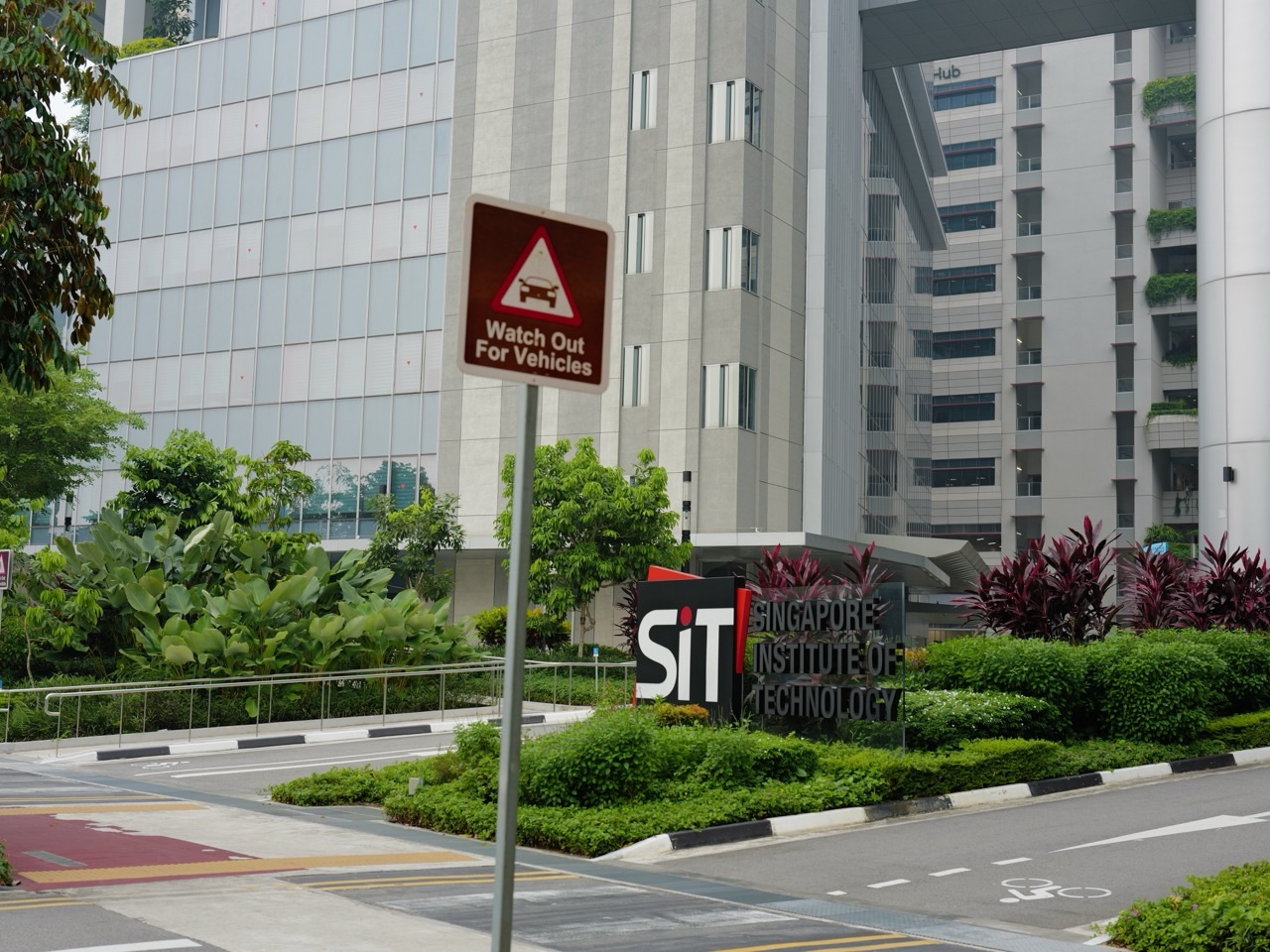
This matters especially in Punggol because the Singapore Institute of Technology (SIT) Punggol Campus opened in September 2025, creating a visible university landmark near the neighbourhood. SIT’s location does not make G1 SEC an automatic university entry qualification. Instead, parents can plan a realistic sequence: select a fitting Higher Nitec course at ITE College Central in Ang Mo Kio, East in Simei or West in Choa Chu Kang; build academic and practical results; choose the later diploma route; and only then examine universities that recognise the actual diploma and satisfy programme prerequisites. Compare travel from the real Punggol home at every stage, because an ITE classroom, a polytechnic, a workplace and the university may be in different locations.
Quick progression guide for Punggol families:
- SEC G1: identify an eligible ITE route from the actual subject grades and levels; do not infer direct polytechnic or JC eligibility from a G1 A alone.
- Higher Nitec Year 1: use the applicable 2028 four-subject G1-equivalent criteria and named course MERs.
- Polytechnic route: from AY2027, qualifying Higher Nitec graduates have a general minimum net GPA 2.5 threshold to apply for relevant polytechnic programmes; selection still depends on conditions and places.
- Mapped-diploma guarantee: Higher Nitec graduates with raw GPA at least 3.5 have a published guarantee of admission to a mapped polytechnic course, not unlimited choice of programme or institution.
- ITE Technical Diploma: a different full-time diploma option, commonly around two to two-and-a-half years, with relevant qualifications and programme-specific selection.
- ITE Work-Study Diploma: an apprenticeship route commonly lasting about 2.5 years, with an employer and a mix of on-job and off-job training; employer screening matters.
- University: SIT and other universities consider qualifying diplomas under their own admissions criteria. A Punggol campus address is not a guaranteed offer.
- Transport: a class at ITE and an employer’s workplace are different destination problems; check each actual route separately.
- Family action: choose the next appropriate qualification, identify its possible mapped diplomas, and revisit the plan using the student’s real results.
The first distinction: a pathway is not an entitlement
A national education system offers many routes, but not all are available immediately to every student. An SEC subject grade at G1 records performance at that examined level. Higher Nitec admission has its own subject requirements; diploma admission depends on further qualifications; university degree admission has different requirements again. Parents help most when they make these stages clear without describing any route as a permanent judgement on the child’s potential.
Posting Group 1 is a secondary-school admission label under Full Subject-Based Banding. It is not a future occupation and it is not a grade on every SEC subject. Some pupils who entered through PG1 may later offer subjects at G2 or G3. For each student, the actual final certificate must be checked before deciding which immediate options are available.
For an all-G1 profile, the ITE Year 1 route uses four qualifying subjects at G1-equivalent level under the announced 2028 structure, plus the intended course’s specific minimum entry requirements. The 2027 SEC is the first such examination, and the first relevant admissions round begins in January 2028. A child starting Secondary 1 in 2027 will normally graduate later and must use the rules for that future cohort.
The family’s aspiration can be larger than its immediate shortlist. A student may want to study computing at university one day. That goal can guide which technical foundations and projects are worth developing now. It cannot be used to skip a missing prerequisite or pretend that a G1 grade has the same admissions meaning as a G3 grade.
First gateway: selecting a genuinely suitable Higher Nitec course
Before discussing university names, choose the eligible first qualification. ITE’s full-time Higher Nitec course directory includes areas such as Engineering, Electronics and Info-Comm Technology, Design and Media, Business and Services, Health Sciences and Hospitality. Each named programme has its own module descriptions, required skills and, where applicable, safety or other entry conditions.
Ask the student to describe what they would learn to do. “I want to investigate why a circuit fails” is different from “I want to produce digital illustrations”. “I want to organise guest services” differs from “I want to build a spreadsheet for stock control”. The everyday course tasks matter because the student will need to practise them repeatedly, not simply carry a qualification title.
The programme should also be selected with realistic future flexibility. A Higher Nitec qualification is not automatically a feeder for every diploma. The family can review current relevant-course mappings as guidance, but must recheck the mapping at the time the student actually applies to a diploma. Course codes and admission rules may change in intervening years.
Do not choose a poorly fitting Higher Nitec programme only because its title seems connected to a famous university subject. A learner who becomes competent and engaged in their actual course is better positioned for later progression than one who spends years in a field they dislike.
A concrete first-year learning plan
A student who begins Higher Nitec after mainly G1 SEC results may encounter new technical vocabulary, independent projects, assessment rubrics, workshop safety requirements and teamwork. Parents can help by asking what the next learning objective is and whether the student understands it, rather than turning each week into an anxious discussion about future universities.
For a technical learner, useful first-year habits include keeping measurement units consistent, checking procedures before operating equipment, documenting faults and explaining how a solution was tested. For a service learner, useful habits include accurate recordkeeping, dealing with changing instructions and reviewing the result of a customer interaction. Different industries require different specific skills.
If English or Mathematics gaps affect current work, identify their exact cause. Perhaps the learner can carry out a task but cannot understand a written instruction; perhaps a calculation is wrong because of decimal placement. Correct that component through focused explanation and practice. A first-principles approach builds reliable foundations for later diploma-level complexity.
The student should also learn to ask lecturers about course maps and progression. Independence does not mean never seeking help. It means knowing which official information to use, how to check a requirement and when to speak with an adviser.
The polytechnic route: minimum threshold versus guaranteed mapped place
For Higher Nitec graduates progressing to a polytechnic, MOE’s announced changes apply from the AY2027 polytechnic intake. The general minimum entry requirement for applying to relevant diploma programmes rises from net GPA 2.0 to net GPA 2.5, with applicable course rules. This is a threshold to apply, not a guaranteed offer. The institution still considers qualifications, mapping, programme-specific conditions, competition and places.
Separately, Higher Nitec graduates with a minimum raw GPA of 3.5 have a published guarantee of admission to a polytechnic diploma mapped to their Higher Nitec course, subject to the governing criteria. The word “mapped” is important. It is not a guarantee of the applicant’s first-choice diploma or an unlimited set of institutions. Parents should inspect the actual official course-mapping tables.
These two numerical values are often confused. An applicant with net GPA 2.5 may be eligible to compete for certain relevant diplomas but has not satisfied the 3.5 raw-GPA guarantee. An applicant with raw GPA 3.5 may benefit from the mapped-course guarantee but cannot assume that an unrelated diploma will accept their feeder qualification.
A family should record the raw GPA, any valid CCA adjustment, the net GPA where applicable, the exact Higher Nitec course and the intended diploma mapping separately. Combining them into a single number makes it easy to overstate what the student can apply for.
Worked raw-versus-net GPA example
Imagine a fictional Higher Nitec graduate with raw GPA 3.35. Suppose the admissions exercise recognises a legitimate CCA addition of 0.15 for the student. The resulting net GPA would be 3.50 in that arithmetic example. But the student has not attained a raw GPA of 3.50 and should not claim eligibility under the published raw-3.5 mapped-course guarantee.
Now imagine another graduate with raw GPA 3.50 and an eligible mapped diploma. Their raw score reaches the numerical requirement for the published guarantee, but the actual diploma mapping and other applicable rules must still be checked. It would be incorrect to promise that the student can select any of the five polytechnics or skip straight into a named high-demand diploma.
A third student has a net GPA 2.65 and an ITE qualification that maps to several relevant diploma options. They may be able to apply under the general minimum threshold, but that does not predict which offer will be received. Course relevance and admissions competition remain important.
These examples are not descriptions of actual students or an official GPA calculator. They demonstrate three different statuses: ability to apply, qualifying for a mapped-course guarantee and securing a particular chosen place. Parents should use current institutional guidance when applications occur.
Five polytechnics, not one “poly route”
Singapore has five polytechnics: Nanyang Polytechnic (Ang Mo Kio), Temasek Polytechnic (Tampines), Ngee Ann Polytechnic (Clementi), Republic Polytechnic (Woodlands) and Singapore Polytechnic (Dover). They have different campuses, course lists and progression mappings. A family should compare the diplomas that the student can actually enter, not five institution names as if the qualifications were interchangeable.
From a general Punggol reference, earlier journey-planner snapshots put NYP around 35 minutes, TP around 48, NP around 53, RP around 63 and SP around 65 minutes by public transport. These are illustrative reference itineraries, not door-to-door guarantees or a ranking of educational quality. A home near Punggol Coast has a different first stage from one near Oasis or Sumang.
For a theoretical five-day attendance week, compare the baseline of 35 minutes each way against 65: (65 − 35) × 2 × 5 = 300 extra travel minutes, or five hours weekly. If two diploma courses are academically comparable and both eligible, that difference may matter. If the farther diploma teaches a distinctive specialisation important to the learner, the family may accept the time cost deliberately.
The actual timetable, campus building, fares and industry attachments also matter. A diploma can involve project work away from the campus. A route planner should be recalculated when the student is actually offered a place, not fixed years in advance.
The ITE Technical Diploma: a different option from polytechnic
ITE itself offers Technical Diplomas. Its November 2026 diploma information explains that these are nationally recognised diploma qualifications, often delivered full time over about two to two-and-a-half years, with relevant entry qualifications and programme-specific requirements. Some have partnerships with international vocational institutions and specialised applied training.
A Higher Nitec graduate interested in becoming a skilled technical specialist may find a relevant Technical Diploma worth exploring. The student should compare content, occupational outcomes, qualification recognition, possible future degree programmes, full-time commitment and financial cost. A Technical Diploma is not simply “the same as every polytechnic diploma” for every university application, even if it is nationally recognised and MOE-approved at diploma level.
Ask which programme accepts the actual Higher Nitec feeder qualification. Check whether there is an interview, aptitude assessment or experience requirement. An advertised duration does not guarantee that all candidates can enter every programme or that all modules are taught at the same campus.
A family should review university recognition for the named diploma if a degree remains a later goal. A local university may accept selected ITE diploma qualifications for selected degree courses, while another may have a more restricted recognised-qualification list.
The Work-Study Diploma: earning while learning
ITE’s Work-Study Diploma (WSDip) is an apprenticeship-based option. Its published October 2026 description sets a typical duration of 2.5 years and describes about 70%–80% on-the-job training at the workplace and 20%–30% off-the-job training at ITE. The student is employed while completing a nationally recognised diploma.
For fresh or in-employment ITE graduates, ITE’s current admission information generally requires an eligible status such as Singapore citizen, permanent resident or the specified LTVP+ category, together with a relevant Nitec GPA requirement or a relevant Higher Nitec qualification. Actual employer selection and course-specific rules apply. A WSDip applicant cannot assume that finishing Higher Nitec automatically produces a company offer.
This route can appeal to students who are motivated by actual workplace tasks and want to build experience while earning income. It also demands responsibility: attendance at the workplace, punctuality, safe conduct, teamwork and completion of formal assessments. The student may be accountable to both employer and institute.
It differs from a full-time diploma because the timetable is organised around work and training. Parents should ask what company will employ the trainee, where the workplace is, what the shifts or reporting hours are and how off-the-job classes are scheduled. A generic ITE campus travel estimate is not sufficient.
The Punggol employer-location problem
A student who attends ITE College Central for a preparatory qualification may later accept a Work-Study Diploma with an employer located far from Punggol, even if some class sessions take place at a familiar ITE campus. The workplace may be in an industrial estate, commercial district, care facility or service site outside the student’s original route. The commute therefore has two or more destinations, not one.
Suppose an illustrative WSDip trainee reports to an employer three or four days a week and attends ITE training on other days. The family should calculate each route separately and weight the weekly journey by the number of actual reporting days. Do not use the college’s address to estimate every day’s travel.
If a weekday journey from the Punggol home to the employer takes an invented 80 minutes one way and a college-training day takes 50 minutes, a sample week of four employer days and one college day produces (4 × 80 + 1 × 50) × 2 = 740 minutes, or 12 hours 20 minutes of two-way travel. These are entirely hypothetical journey times used to demonstrate accounting, not measured workplace or college trips.
Now compare the student’s working schedule, shifts, rest periods, transport concessions and any travel expenses. A work-study programme may be highly attractive, but the household needs to understand the lived experience rather than assume earning a salary solves every practical difficulty.
WSDip admissions: relevant course and employer screening
An applicant should check that the actual Higher Nitec qualification is listed as a relevant feeder for the intended WSDip. Next, review the employer positions available and whether the candidate needs an interview or test. ITE’s published information describes employer screening and successful full-time hiring as part of the pathway.
The fact that a WSDip exists in a certain field does not mean there is a guaranteed job or unlimited company choice. A parent may reasonably ask about work location, job description, supervision, development opportunities and any contractual obligations. The student should understand the responsibilities attached to being an employee while studying.
Some programmes have health, industry, safety or regulatory requirements. These must be checked individually; do not invent a universal clearance requirement. If the child needs learning or accessibility support, enquire through the appropriate employer and ITE channels.
Where a company requires a bond or return-of-service condition, read the actual contract carefully. A family should not commit based only on a promotional summary of salary and benefits.
WSDip, Technical Diploma and polytechnic: a useful comparison
The three diploma paths can be compared by entry gate, teaching format, workplace exposure, recognition and possible later study. Polytechnic diplomas have their own admissions mapping, module structure and campus. ITE Technical Diplomas are specific applied full-time diploma qualifications. ITE WSDip places substantial learning inside an employer and combines salary, work and formal teaching.
None of the three can be described as universally best. A student who wants deep full-time theoretical and applied study in a particular diploma may prefer a polytechnic if eligible. Another might value specialist Technical Diploma content. Another might thrive with structured employment and WSDip training. The decision depends on actual acceptance requirements and the learner’s interests.
Parents should not use the same GPA rule for every route. The polytechnic GPA thresholds discussed above are not automatically the admission rules for WSDip or Technical Diploma. Each programme specifies its own relevant feeder and selection criteria.
If the student hopes eventually to enter university, ask which degree programmes consider the specific awarded diploma. Do not assume every degree admissions office treats every national diploma identically for every course.
Financial assistance and progression awards: do not total headline numbers blindly
ITE’s current Work-Study Diploma materials describe employer sponsorship of course fees and salary benefits, with certain incentives for eligible fresh Singaporean graduates from relevant feeder courses. These are real scheme descriptions but not automatic cash awards to every trainee. Citizenship, graduation timing, feeder relevance and continued participation can affect eligibility.
The ITE Progression Award is another government support intended to help eligible Singaporean ITE graduates aged 30 and below pursue recognised diploma qualifications. Depending on the qualification route, official documentation describes Post-Secondary Education Account and CPF Ordinary Account top-ups, with different handling for Work-Study Diploma participants and other diploma routes. These are scheme-specific and conditional, not amounts that should be added together from multiple webpages.
A parent should create a separate budget for fees, equipment, transport, meals and possible income. Put confirmed bursary, salary or incentive information in one column and potential scheme applications in another. A headline award may be paid only after a milestone, may not be cash to the household and may need to be repaid under certain programme termination conditions.
For a student considering WSDip, ask the actual employer and ITE how salary, leave, training days, sponsorship and any bond operate. This is not the same budget as a secondary-school student taking public transport to a college each morning.
Is SIT in Punggol the final destination?
SIT officially opened its purpose-built Punggol Campus on 16 September 2025, within the Punggol Digital District. It is a university with degree programmes and applied industry partnerships. It is not a sixth polytechnic or an automatically available destination for a child with only G1 SEC grades.
SIT’s published admissions guidance for polytechnic diploma holders recognises applicants with qualifications from the five local polytechnics, subject to degree relevance and programme-specific rules. Its admissions FAQ also says that certain local diplomas from institutions including ITE may be considered for selected programmes. That is an important distinction: the university evaluates the qualification and the intended degree course rather than treating the word “diploma” as an unrestricted passport.
A Punggol family may appreciate that a future university is nearby. The learner may even take inspiration from the Digital District’s visible engineering, sustainability and technology activities. But the immediate educational plan should focus on earning the right qualifications, maintaining strong performance and developing real interest. Short travel to a campus cannot replace an academic entry requirement.
If the graduate later qualifies for an SIT programme, the family can calculate a new local journey. If the best-fitting degree is elsewhere, it may be worth travelling. University location should not predetermine the child’s first Higher Nitec course at age sixteen.
University entry varies by institution and degree
Different autonomous universities have different admissions requirements. Some consider polytechnic diplomas under published relevant-course lists, interviews, portfolios, practical experience or programme-specific academic prerequisites. Certain professions may require regulated or supervised training beyond a degree. Do not generalise that completing any Higher Nitec or any diploma guarantees a university place.
For instance, SUSS’s published full-time undergraduate admissions criteria list full-time diplomas from the five local polytechnics and expressly distinguish several other diploma categories that are not accepted for that specific route. SIT’s FAQ provides for consideration of selected other local diplomas. Those two public policies should not be flattened into one universal rule.
A family should therefore verify the qualification’s name, awarding institution, whether the diploma is full-time or work-study, and the exact degree programme. Ask the university’s admissions office to clarify any unusual qualification. If the answer is negative for one course, it does not mean the student has no other legitimate study or career options.
Some learners may choose employment and part-time further education later rather than immediate full-time study. That route can be appropriate when practical experience, family responsibilities or financial circumstances make it more sustainable. Adult learning is a continued educational pathway, not evidence that the first plan was mistaken.
Punggol to campus: a different map at every stage
For an initial ITE course, the three main campus destinations are Ang Mo Kio, Simei and Choa Chu Kang. Illustrative public transport baselines from Punggol MRT have been around 35, 53 and 64 minutes one way respectively. The household’s actual access from Northshore, Matilda, Oasis, Damai, Sumang or Punggol Coast changes the total. Measure from the actual home gate to the classroom.
For a later polytechnic diploma, the destination set changes to NYP, NP, RP, SP or TP. A course may only be offered at some of them and may require specific ITE feeder mapping. Do not make transport plans to all five as if admission were available at each. Filter first for real mapped and admissible programmes.
For WSDip, the destination may be the employer, perhaps with separate ITE training days. For a Technical Diploma, the primary teaching location depends on the specific ITE programme and any partner arrangements. For university, SIT Punggol may be attractive, but other universities could be farther away and may be more suitable if the student is eligible.
In short, the education journey has a series of changing geographic nodes. Parents help by measuring each current transition rather than trying to freeze a lifelong commuting map years in advance.
A simple multi-stage timing model
A family can compare one stage at a time. Imagine, only for illustration, a three-year Higher Nitec route. Suppose a student’s actual one-way commute is 60 minutes on five attendance days. Weekly two-way transit is 60 × 2 × 5 = 600 minutes, or ten hours, if the timetable really involves five such days.
Later, suppose the same learner qualifies for a diploma at a different institution requiring an 80-minute one-way commute for four attendance days. The comparable weekly exposure is 80 × 2 × 4 = 640 minutes, or ten hours forty minutes. More minutes each way need not produce dramatically more total travel if the number of campus days changes.
If the learner instead takes WSDip, workplace and college days must be calculated separately. A salary may offset some financial cost, but time and fatigue still matter. The family should not assume that a paid apprenticeship is always easier or harder than full-time academic study.
These are mathematical examples, not claims about real ITE or polytechnic timetables. When an offer arrives, replace assumptions with the course calendar, employer reporting hours, actual transport route and measured journey.
Three fictional students, three different sensible futures
Alicia has G1 Mathematics A and enjoys troubleshooting. She chooses an eligible Higher Nitec course with modules she can describe. In her first year she learns to document technical problems and correct measurements. If she later earns qualifying results and the course maps to a relevant polytechnic diploma, she may apply. A university goal is reassessed after the diploma rather than promised now.
Ben likes culinary work and customer service. After a suitable Higher Nitec programme, he may be drawn to a Work-Study Diploma if his actual qualification is a relevant feeder and he secures an employer. His daily journey might involve a restaurant or hotel rather than the college’s main gate. For his family, employer location, work schedule and employment conditions are as important as lecture modules.
Mira is a strong practical learner who may prefer a Technical Diploma’s specialist training rather than a broad polytechnic route. Her parents review the relevant feeder qualification, course selection, costs and possible degrees before comparing universities. A narrower qualification may be an excellent career fit even if it does not make every degree programme available.
All three examples are imaginary. They illustrate why “G1 to university” should be understood as a set of possible conditional educational stages, not a deterministic ladder that every child must climb.
When the child changes their mind
A secondary-school student may love media production today and discover industrial design, logistics or care work later. That is ordinary development. The family can encourage broad transferable skills: literacy, numeracy, digital organisation, problem-solving, safe practice, teamwork and reflective learning.
A change of interest can affect diploma mapping. A Higher Nitec feeder qualification may not articulate into a new, unrelated diploma. In that case the learner needs to ask about alternative admissions routes, additional bridging qualifications, employment experience or other pathways. The answer depends on the institution; it cannot be invented in advance.
Avoid the sunk-cost trap. Time spent learning a useful technical skill is not automatically wasted if the person later changes direction. Equally, an unnecessary detour can be expensive, so careful initial programme research matters. Revise the plan when evidence changes rather than force the child to maintain a mistaken assumption.
The most robust planning question is “What is the next qualification or skill that keeps a useful range of options open for this learner?” It is more actionable than “Which university will they definitely enter in eight years?”
A first-principles study system that travels with the student
The student should learn to observe, identify the missing prerequisite, practise the correction and test it independently. This process works in Mathematics, electronics, computer programming, hospitality and many workplace settings. It is the foundation for later applied study because a student who can diagnose errors is less dependent on memorising one fixed answer.
For a technical project, the method may be: describe the intended output, list the inputs, test one variable, record the result, revise and repeat. For a written customer service task, it may be: identify the request, locate relevant information, form a response, check accuracy and document the outcome. These structures are simple but powerful.
Parents can support with weekly review questions rather than doing the work. What did you try? What was confusing? What helped? What will you do differently next week? Encourage a short record of completed projects, feedback and improvements, which may later support employment or diploma admissions where permitted.
The process is especially important for a student who did not perform strongly on the SEC. Foundational skill gaps should be repaired, but the learner also needs evidence that their own effort produces reliable progress. A programme choice should make this kind of learning possible.
A family progression worksheet
Write Stage 1: SEC and record original subject levels and grades. Under Stage 2: Higher Nitec, record the eligible course, campus, modules and entry requirements. Under Stage 3: diploma or employment, write the possible named mapped diploma, Work-Study Diploma, Technical Diploma or relevant job route, with its prerequisites. Under Stage 4: degree or specialist career, leave a provisional goal and mark the future admissions criteria as subject to verification.
Next add a separate location row at each stage. The ITE college may be in Ang Mo Kio, Simei or Choa Chu Kang. The diploma may be in one of five polytechnics or an ITE training/workplace arrangement. The future university may be in Punggol or somewhere else. This makes the transport burden visible instead of treating “Singapore” as one uniform travel time.
Finally, add a review date. A family might review after the first ITE term, at subject-specialisation points, before graduation and before any later diploma application. The plan should become more precise as the student’s actual results and interests develop.
FAQs: from G1 to diploma or university
Can a student with only G1 subjects enter SIT Punggol directly? A G1-only SEC result does not itself satisfy standard undergraduate admission requirements. The campus’s proximity is not a waiver. A student may pursue suitable higher qualifications and later apply if the university recognises them.
Does Higher Nitec guarantee a polytechnic place? Not generally. The published raw GPA 3.5 policy offers a guarantee for a mapped diploma, subject to the stated rules. Other applicants must meet applicable requirements and compete for available places.
Is GPA 2.5 the same as the mapped-diploma guarantee? No. The announced general minimum net GPA 2.5 relates to eligibility to apply for relevant polytechnic routes from AY2027. The separate mapped-course guarantee uses raw GPA 3.5.
Does a CCA bonus turn raw 3.35 into raw 3.50? No. Any valid addition may affect a net calculation, but it does not change the student’s raw GPA.
Can a Higher Nitec graduate apply for an ITE Work-Study Diploma? Potentially, with a relevant feeder qualification and the applicable eligibility, employer screening and other programme conditions. It is not an automatic job offer.
Is Work-Study Diploma always 2.5 years? The published programme is typically 2.5 years, but some course variations and particular conditions apply. Check the specific diploma listing and current intake.
Does the ITE Technical Diploma count as a diploma? ITE describes its Technical Diplomas as nationally recognised and approved at diploma level. Universities still set course-specific qualification acceptance and other entry requirements.
Are all diplomas accepted for every university degree? No. Each university and degree has its own recognised qualifications, relevance and selection rules.
Is SIT the same as Singapore Polytechnic? No. SIT is a university with a campus in Punggol; Singapore Polytechnic is a different institution in Dover.
Should parents choose a distant course solely to reach university? Usually the immediate eligible course and the child’s ability to succeed in its content should come first. Future university opportunities can be assessed as real qualifications and results become available.
Official sources and continued reading
Start with ITE’s Secondary School Leavers pathway, ITE full-time Higher Nitec courses, ITE diploma overview, ITE Work-Study Diploma admission, ITE Technical and Work-Study progression pages, and MOE’s revised 2028 PSE announcement.
For polytechnic-to-university distinctions see Republic Polytechnic’s ITE applicant guidance, SIT’s polytechnic diploma admission requirements, SIT’s admissions FAQ, SUSS’s full-time admission criteria and SIT’s Punggol Campus opening announcement. Confirm future policy and programmes when the student is eligible to apply.
This guide connects to Punggol G1 initial eligibility, five polytechnics and distance from Punggol, G1 course fit, ITE fees, bursaries and travel and the 2028 PSE choice guide. The immutable Clementi presentation model remains unchanged. Reviewed 14 November 2026.
Continue with the connected guide: The SEC Examinations and JC/Poly/ITE Pathway. Use its linked index to compare the related questions and choose your next reading.


