Punggol families looking for an environmental or sustainability CCA should compare the activities schools actually offer rather than assume that every “green” programme is equivalent. Punggol Secondary publishes an Environmental Club with e-waste campaigns, beach clean-ups, tree planting and biodiversity monitoring. Greendale Secondary included a Greendale Green Club in its 2026 Secondary 1 CCA list. Yusof Ishak Secondary’s STEM Club combines biodiversity, urban farming, drone programming and glider engineering. Edgefield Secondary publishes other clubs, including Robotics and New Media, but not a dedicated Environmental Club in its current club directory. A child interested in ecology, conservation or environmental technology may enjoy these options for very different reasons.
A strong environmental CCA does not guarantee a JC, polytechnic, ITE or university place. The child’s PSLE result first affects realistic secondary-school choices; the receiving school then applies its own CCA registration, selection and vacancy rules. Students can contribute meaningfully regardless of whether their academic subjects are taken at G1, G2 or G3 level under Full Subject-Based Banding. The most useful parent decision balances genuine curiosity, project quality, practical safety, the journey from home, ordinary training hours and the family’s capacity to support four years of participation.
- Punggol Secondary: Environmental Club, with published recycling, conservation and biodiversity activities.
- Greendale Secondary: Greendale Green Club appears on its 2026 Secondary 1 registration list.
- Yusof Ishak Secondary: STEM Club includes biodiversity and urban farming alongside engineering activities.
- Edgefield Secondary: do not assume a dedicated environment club exists merely because its other clubs teach science or design.
- PSLE: school entry and CCA allocation are separate; a PSLE AL score is not an environmental aptitude rating.
- LEAPS 2.0: Participation, Achievement, Leadership and Service all matter; green club membership does not guarantee two points.
- Future study: environmental experience may inform later science, engineering, geography, design or community interests, but academic prerequisites remain.
1. The word “environmental” hides several different interests
Some children love wildlife and want to identify birds, plants and insects. Others care about plastic pollution, climate, recycling or the relationship between infrastructure and nature. A technically curious student may prefer measuring energy use or building a device that monitors a changing variable. A child who loves community action may enjoy organising a school campaign more than analysing data. All could reasonably describe themselves as interested in the environment, but they do not need the same CCA.
Parents should ask the child which activity they would actually choose on a Wednesday afternoon: observing nature carefully, designing a public message, collecting data, growing plants, organising a clean-up or prototyping an invention. This question separates a genuine preference from a broad topic label. It also helps parents distinguish programmes that offer weekly practical projects from those whose strongest visible experiences are occasional public events.
The educational goal is to turn curiosity into careful observation, responsible action and reflection. Environmental education can be rigorous without requiring a child to make grand claims about saving the planet. A modest experiment, properly documented, may teach more than a publicity event the student cannot explain.
2. Punggol Secondary’s Environmental Club: evidence from its official page
The official Environmental Club page, updated in July 2026, describes e-waste awareness activities, tree planting, a clean-up at Changi Beach and school bird-monitoring activities. It also describes the club’s participation in environmental competitions and learning journeys. These are concrete examples of what members have done, though they do not guarantee every new Secondary 1 student will repeat the same external activity.
The page’s descriptions help parents ask better questions. In an e-waste campaign, students might need to understand what can be collected, how to communicate instructions and how to measure participation. In biodiversity monitoring, the work may involve accurate identification, observation and appropriate records. In a clean-up, safety and responsible handling matter as much as enthusiasm. Each experience can involve different skills and risk controls.
Ask what the current cohort will practise in ordinary sessions. Are students given time to research and understand a problem before they organise a campaign? Do beginners learn how to keep records? How are environmental claims checked? Is fieldwork supervised and are permissions obtained? A child should be able to learn and contribute even when they are not on the competition team.
3. A recycling campaign should teach more than a collection target
Collecting a number of items can be motivating, but counting alone is not enough to show environmental benefit. Students should know what belongs in the chosen collection stream, whether materials are actually recyclable under local arrangements, how contamination affects processing and what happens after an item leaves the school. A campaign can accidentally encourage unnecessary consumption when prizes reward the number of containers collected without context.
A useful student investigation begins with a baseline: what kinds of items are currently discarded and where? Next, the team chooses a specific intervention, such as clearer signage or better-separated bins. They define a measurement plan and run a small trial. Only then should they compare results. A drop in contamination may be more meaningful than a dramatic pile of material that cannot be processed appropriately.
Parents can help by asking the child to explain the method. What exactly did we measure? Could the apparent improvement be due to the timing of school events? Did students change behaviour, or did the club merely move items from one container to another? These questions teach scientific humility and make environmental work more credible.
4. Biodiversity monitoring: observe without disturbing
Environmental projects often encourage pupils to notice living things that they previously walked past. This can be especially relevant in a densely populated town with landscaped estates, parks and waterways. Yet observing biodiversity is not the same as collecting animals or touching every organism. Students should follow school and site rules, avoid disturbing wildlife and understand when photos and notes are sufficient.
An introductory biodiversity exercise can focus on a small, approved observation area. Pupils record the date, approximate habitat, environmental conditions and what they can identify reliably. If uncertain about a species, they should mark the record as uncertain rather than manufacture an answer. Repeated observations can reveal patterns, but they do not automatically establish that a population has increased or declined.
Punggol Secondary’s official page mentions bird monitoring; Yusof Ishak STEM describes biodiversity workshops. Parents can ask how pupils are trained to identify species and whether teachers check records. This supports the habits of careful science, not simply a checklist of local animals.
5. Greendale Green Club: distinguish a published 2026 registration option from next year’s guarantee
Greendale’s 2026 Secondary 1 CCA registration notice includes Greendale Green Club among its Clubs and Societies. That is a credible historical intake listing, but it does not automatically prove the same programme capacity, timetable or activities for 2027. Parents should obtain the next registration notice and ask the school what new members actually do.
A green club might organise sustainability awareness, school-based environmental projects or outreach. The public registration table establishes the club’s name but not the complete curriculum. It would be misleading to invent detailed activities that the school has not confirmed. Ask the teacher for examples of projects, the regular week, opportunities for fieldwork and how students are trained to evaluate claims.
Greendale is at 51 Edgedale Plains. For a family deciding between its Green Club and another school’s Environmental Club, compare academic fit and the actual commute as well as the environmental activity. A named programme is valuable only when it is accessible and enjoyable for the child.
6. Yusof Ishak STEM Club: environmental science and engineering in one programme
The official Yusof Ishak STEM Club page describes biodiversity, urban farming, drone programming and unpowered glider design. Its published 2026 regular training is on Friday afternoons, with possible additional sessions for selected competitions. This breadth means the club is not solely an environmental service group or a robotics club.
For a pupil drawn to plants and ecosystems, the urban farming and biodiversity elements may be especially engaging. For a child who prefers technical design, the glider and drone work may be more attractive. Parents should ask how the programme rotates through themes and whether every member experiences each area. A broad title can be a strength for exploration, but the actual balance should match the student’s interests.
The school is at 8 Sumang Walk. Even a child living nearby needs a workable weekly routine, particularly when Friday training and additional competition sessions intersect with schoolwork or family activities. Learn the actual end times before making transport promises.
7. Edgefield: do not relabel Robotics as Environmental Club
Edgefield’s official club directory lists Art, New Media, Singapore Youth Flying Club and Robotics, not a dedicated Environmental Club in that published menu. Its technical programmes could inspire sustainability-related thinking, but parents should not sell them as something the school has not advertised. A pupil primarily interested in wildlife or environmental volunteering may prefer a confirmed environmental programme elsewhere, or may discover other interests at Edgefield.
A Robotics project can be connected to energy efficiency, sensing or automation, but not every robotics activity is an environmental project. Similarly, aviation and glider design can teach about air resistance and engineering, but it would be wrong to promise conservation fieldwork merely from an aerospace club description.
A parent who strongly prefers Edgefield for academic or transport reasons can still ask about school-wide environmental initiatives, subject-based learning and legitimate external opportunities. These are worth knowing, but should remain clearly distinguished from an assigned CCA.
8. The first-principles framework for a school environmental project
Start with a real question that can be answered. Instead of “How can we solve climate change?”, a school group might ask whether adding a simple sign changes how often a particular category of waste is placed correctly in an existing bin. The smaller question is more useful because students can define observations, collect evidence and test a mechanism.
Next, identify the relevant system. Where does the waste come from, how is it sorted and what downstream process is intended? What other causes could influence the result? Then design an intervention that is proportionate, safe and permitted by the school. Decide what data will count as evidence before collecting it.
Finally, compare results and communicate limitations. If the sample was small, say so. If a weather event or exam week reduced activity, do not pretend the intervention caused every change. The habit of presenting uncertainty is not weakness; it is responsible inquiry. This method transfers to Science, Mathematics, Social Studies and future project work.
9. Punggol’s waterway and green spaces: learning context, not unrestricted fieldwork
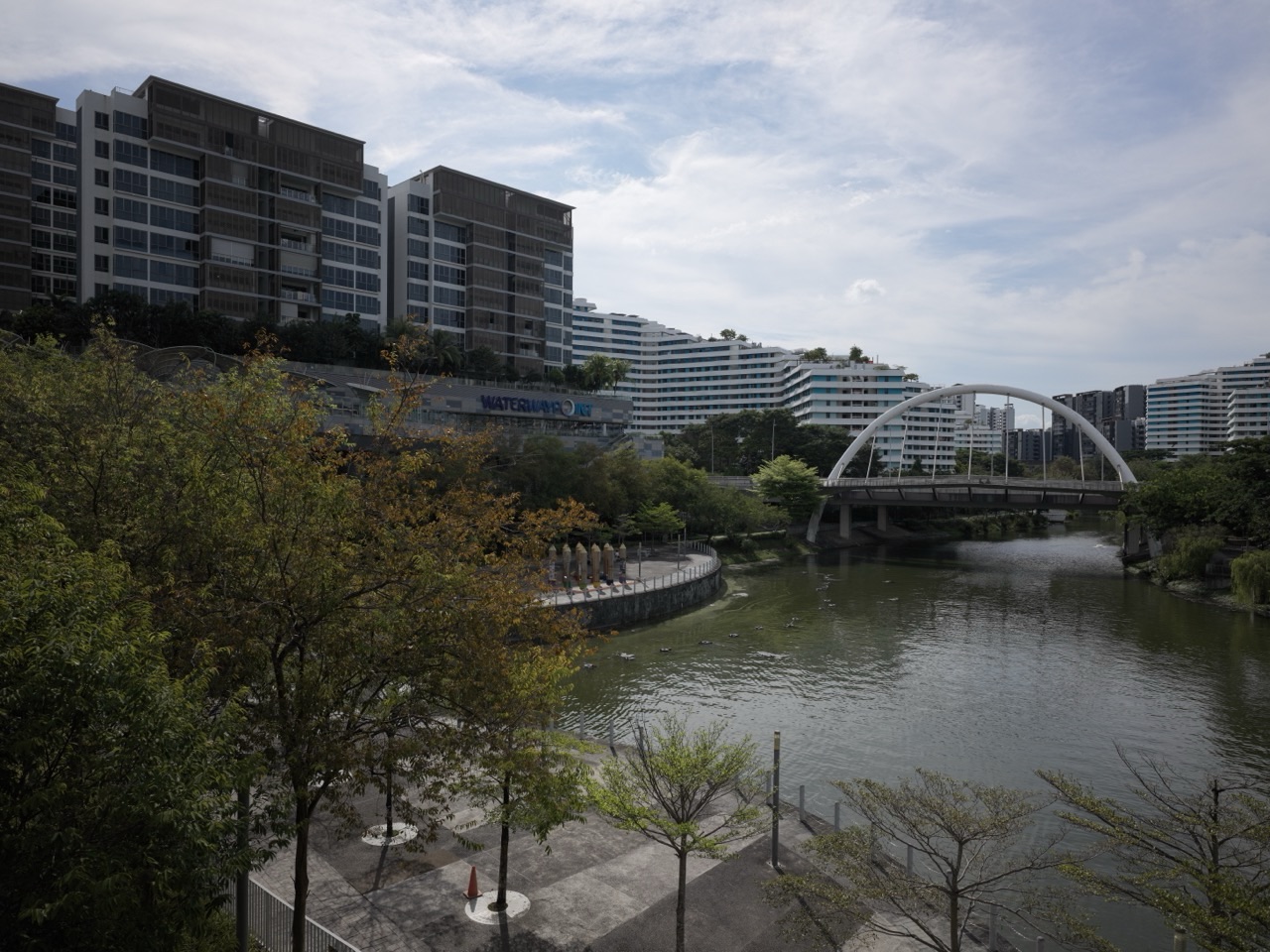
Punggol’s waterways and nearby green areas may make environmental topics concrete for families. Students can notice drainage, vegetation, litter, recreational use and the relationship between urban planning and public space. But those observations are not permission to sample water, enter restricted areas, handle wildlife or organise unsupervised clean-ups.
A school-based field activity needs the teacher’s approved destination, a safety plan, appropriate supervision and any necessary permission. A private family outing can involve observing and discussing nature, but it should not be represented as an official CCA activity without school approval. Parents should respect protected spaces and the welfare of others using the area.
The best starting point may be close to school: recording changes in a garden, reviewing published environmental data or auditing signs around a sanctioned recycling point. Strong environmental literacy does not depend on expensive expeditions.
10. Safety during environmental service
Clean-ups can contain sharp objects, hazardous waste or contaminated materials. Students should not touch unknown chemicals, medical waste or dangerous items. Teachers should set clear rules on personal protective equipment, prohibited objects, collection methods and what to do when something unsafe is discovered. A child should know when to stop and alert an adult.
Fieldwork introduces weather, heat, rain, slippery paths and travel considerations. A parent should ask whether sessions occur off campus, how students reach the site, what happens if conditions change and where they will be dismissed. A small environmental project can be excellent learning without unnecessary physical risk.
Responsible environmental education also includes respecting people. Students should not photograph members of the public for campaigns without appropriate consent, make unsupported allegations against local businesses or publish misleading environmental claims. Accurate, respectful communication belongs beside technical knowledge.
11. Projects for a curious Secondary 1 learner
A beginner can investigate how a school communicates recycling instructions. Record the existing signage, test whether classmates understand it, suggest improvements and seek school approval. Another project might involve counting visibly misplaced litter in a permitted area at consistent times, carefully noting that counts do not prove the total amount generated.
A nature-oriented pupil could build a photo-based, non-invasive observation journal, keeping uncertainty labels when species identification is not reliable. A student interested in engineering might design a hypothetical low-cost sensor for plant care and test it under teacher supervision. A language-oriented pupil could draft a plain-English guide explaining a local environmental issue and check every claim against an authoritative source.
No project needs to be impressive from the beginning. A child who can explain why the measurement is trustworthy and what the data cannot show is learning to think well. That is more valuable than an attractive poster with unsupported statistics.
12. Meaningful service versus environmental theatre
A public campaign can make students feel that they are doing good, but the educational value depends on substance. Did the campaign identify a real problem? Did the team consider the people affected? Did the chosen action help? Was there a plan to maintain improvement after the event? These are questions pupils should learn to ask.
Parents need not demand that every activity produce a measurable citywide impact. A student’s first service project is often small. The important habit is to listen to community needs and avoid declaring success before evidence exists. A supervised school clean-up may teach planning, safety and shared responsibility even if it covers only a limited area.
If an activity is organised with a community partner, students should understand the partner’s role and follow its rules. Service hours or certificates should not displace the real purpose of contributing to others and the environment.
13. School choice comes before CCA choice
A parent may hear that Punggol Secondary has an Environmental Club and immediately want to rank it first. But the child must first be eligible and suitable for the school’s academic programme. PSLE Achievement Level scores, the posting framework and published school options matter. Historical cut-offs are references to previous cohorts, not guarantees of the next posting outcome.
Under Full Subject-Based Banding, Posting Groups provide an initial pathway and particular subjects may be taken at G1, G2 or G3. These academic arrangements do not define a child’s potential for conservation or scientific curiosity. An enthusiastic student may be ready for real community work while still needing support in English or Mathematics.
Parents should compare the whole-school learning environment, transport, wellbeing support and CCA availability. An appealing activity is a good distinguishing feature among otherwise realistic schools, not a reason to ignore every other part of fit.
14. LEAPS 2.0: a green badge is not automatically two points
LEAPS 2.0 considers Participation, Achievement, Leadership and Service. Environmental clubs may provide natural opportunities for projects and service, but an individual pupil must still meet the relevant recognised levels. A member who launches a campaign but neglects sustained participation or other domains cannot assume Excellent attainment.
The official LEAPS 2.0 recognition page explains that Excellent requires at least Level 3 across all four domains and Level 4 in one, worth two applicable bonus points. Good requires at least Level 1 in every domain and one of the specified additional combinations, worth one point. Fair provides no bonus.
Ask the school how endorsed achievements, leadership roles and service projects are recorded. The student should continue learning whether the final attainment is Good or Excellent. The CCA’s purpose is bigger than a two-point transaction.
15. The 2027 SEC and 2028 PSE transition
The first graduating students take the Singapore–Cambridge Secondary Education Certificate from 2027, with subjects offered at their applicable G1, G2 and G3 levels. MOE’s new Post-Secondary Admissions Exercise begins in 2028 for eligible applicants to JC, Millennia Institute, polytechnics and ITE. These policy changes affect academic applications, not the basic idea that a pupil can value an environmental CCA.
For the announced 2028 JC framework, the five-subject G3 L1R4 gross eligibility threshold is 16, subject to minimum subject grades and other conditions. The JC/MI bonus-point cap is three. Polytechnic, PFP and ITE have separate entry criteria; families must not use one pathway’s formula for another.
A student entering Secondary 1 in 2027 will generally graduate later than the first 2027 SEC cohort. Parents should learn the current direction of reform but verify the actual admission criteria when their own child applies.
16. JC, polytechnic and ITE: what environmental experience may show
A junior college may assess certain declared aptitude areas under DSA-JC, depending on the institution. Some polytechnic or ITE courses may consider relevant science, design, engineering or community project evidence under suitable aptitude-based routes. An environmental CCA may provide material worth discussing if the pupil can explain authentic work.
The student should not claim that a recycling poster proves laboratory competence or that one nature walk establishes mastery of environmental science. A stronger portfolio records the research question, method, evidence, revision and personal contribution. If the project involved others, give them proper credit and follow the school’s permission rules before publishing material.
Academic eligibility remains separate. A pupil interested in environmental engineering should attend to the Mathematics and Science subjects relevant to future courses. A student exploring community work may need communication, social science or vocational skills. The CCA can support exploration without determining a single route.
17. University: interests can evolve
A child who enjoys biodiversity at thirteen might later choose environmental science, ecology, civil engineering, architecture, geography, business or a field that seems unrelated. Each university programme has its own accepted qualifications, prerequisites and selection criteria. A school environmental project may illustrate interest in some contexts, but it cannot replace an eligible diploma, A-Level, IB or other accepted qualification.
The two LEAPS bonus points do not simply carry forward as a universal university admission deduction. Parents should not tell children that one CCA choice locks in an educational future. The durable value lies in learning how to observe, ask questions, work with others and act responsibly.
There is room for the student to change direction. Environmental awareness can remain useful in civic life and workplaces even if the person never studies an environmental major.
18. Four family situations
A child who likes animals. Compare the biodiversity and observation components at Punggol Secondary and Yusof Ishak STEM. Ask what members actually study and how wildlife is protected. Do not promise frequent animal encounters without checking.
A student who loves technical invention. Greendale Robotics or Yusof Ishak STEM may offer different project opportunities; confirm the current programme. A technology interest does not necessarily mean the child wants to organise awareness campaigns.
A child who prefers volunteering to competitions. Punggol Secondary’s Environmental or Interact Club may be worth exploring. Ask about real service activities, ordinary participation and how the school records contributions.
A family with a long after-school commute. Compare on-campus sessions with any field trips. The best fit may be the programme that the student can attend safely and consistently, even if another programme has a more eye-catching award history.
19. Questions for the CCA teacher
– Does the incoming cohort have an environmental or sustainability-focused CCA?
– Is the club centred on biodiversity, recycling, engineering, community service or rotating themes?
– Are complete beginners welcome, and how is fieldwork taught?
– Which activities require leaving school grounds and what consent is needed?
– What supervision and protective equipment are provided for outdoor work?
– Does the school use real measurement, project evaluation and student reflection?
– How are projects approved before students engage with the community?
– Are there equipment or event costs, and is assistance available?
– How are a pupil’s contributions recognised under LEAPS 2.0?
– Do competition opportunities involve all members or a selected team?
– What is the actual training day and dismissal point?
– What CCA alternatives exist if the preferred club is unavailable?
20. A seven-day parent decision plan
Day 1: identify realistic school posting choices using current MOE information. Day 2: read the official CCA menus of those schools. Day 3: ask the pupil which environmental activity they would actually enjoy doing every week. Day 4: contact the school about places, entry conditions and beginner support. Day 5: test the journey home after the normal session. Day 6: consider any off-campus activities, costs, study commitments and rest. Day 7: rank genuine preferences and prepare alternatives.
This method preserves the child’s agency while giving adults the information needed to make the choice workable. A small, carefully executed environmental project can teach responsibility far beyond the immediate CCA. What matters is real learning, not a promise of a glamorous career.
Frequently asked questions
### Does Punggol Secondary offer a dedicated Environmental Club?
Yes. Its official club page describes sustainability campaigns, nature-related activities and off-campus service examples. Check the incoming intake’s availability and schedule.
### Does Greendale offer a Green Club?
Its 2026 Secondary 1 registration notice listed Greendale Green Club. This does not guarantee the identical offering or arrangements for the next intake.
### Is Yusof Ishak STEM Club the same as Environmental Club?
No. Yusof Ishak STEM includes biodiversity and urban farming, but also engineering, drone programming and gliders. Ask about the current module balance.
### Can a PG1 or PG2 student do environmental science activities?
Posting Group is not a national rating of curiosity or practical ability. The school decides CCA entry and subject-level rules separately.
### Do environmental CCAs automatically give Excellent LEAPS?
No. The student’s recognised levels across all four domains determine attainment.
### Will an environmental CCA lead directly to university?
No. It may help a student explore interests or provide genuine evidence in a suitable application, but qualifications, prerequisites and selection rules remain.