
For Punggol families choosing a Posting Group 3 (PG3) secondary school, Sengkang is the nearest useful expansion beyond Punggol’s four local campuses. The completed 2026 Secondary 1 intake shows seven Sengkang schools to research: Nan Chiau High (PG3 last-admitted PSLE Score 11 with a Higher Chinese Merit notation), Pei Hwa Secondary (14), CHIJ St. Joseph’s Convent (14 for non-affiliated applicants), Outram Secondary (17), Compassvale Secondary (18), North Vista Secondary (18) and Seng Kang Secondary (19). Their CCAs are not interchangeable. Compassvale lists robotics-related interests, Pei Hwa publishes Robotics and outdoor activities, North Vista has performing arts and outdoor adventure, and Seng Kang Secondary offers a broad arts, sports and uniformed-group menu. Start with the child’s score and wishes, then confirm the school’s actual incoming-cohort offerings.
A PSLE Score is not a reservation. These figures describe the last posted students in the completed 2026 Secondary 1 exercise, based on the 2025 PSLE cohort; they are not confirmed 2027 cut-offs. PG3 is the entry grouping, while G3 is an individual subject level under Full Subject-Based Banding (Full SBB). PSLE Scores 4–20 normally enter PG3; eligible pupils scoring 21 or 22 may choose PG2 or PG3 for all six school preferences. Families travelling from Punggol should not assume that a Sengkang address always means a shorter journey: the home block, transfers, school gate and return after CCA change the answer. A good choice is one the child could genuinely attend for four years, even if the first-choice CCA is full.
- 2026 historical PG3 reference: Nan Chiau High 11M; Pei Hwa 14; CHIJ St. Joseph’s Convent 14 (non-affiliated); Outram 17; Compassvale 18; North Vista 18; Seng Kang Secondary 19.
- Local comparison: Punggol’s four historical PG3 last-admitted scores were Edgefield 14, Yusof Ishak 15, Greendale 16 and Punggol Secondary 19.
- CCA possibilities: Pei Hwa Robotics and ODAC; North Vista String Ensemble and Infocomm; Seng Kang Media Services and Drama; CHIJ SJC arts and service; confirm vacancies.
- Special conditions: Nan Chiau is a SAP school where students read Higher Chinese; CHIJ SJC is a girls’ school with possible affiliation-related score distinctions.
- New location: Outram Secondary admitted new Secondary 1 cohorts at its Anchorvale campus from 2026; do not confuse it with the older York Hill campus.
- Future routes: SEC results and subject prerequisites—not CCA prestige—govern eligibility for JC/MI, polytechnic and ITE, followed by further study where qualified.
1. What makes Sengkang different from Punggol for a PG3 parent?
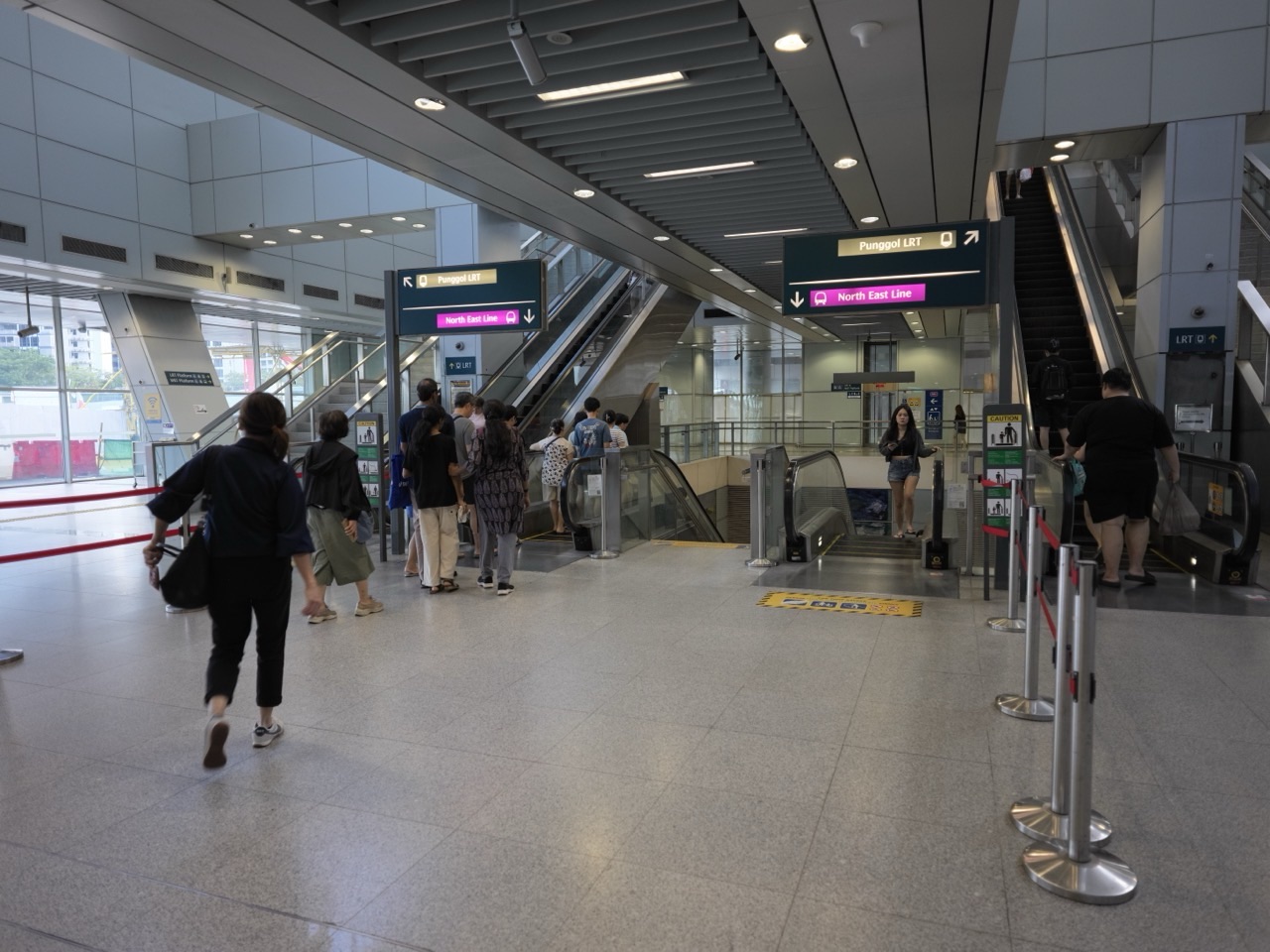
Sengkang is not one homogeneous cluster. Some schools are by Anchorvale, some by Compassvale or Rivervale, and others require a different LRT or walking connection. A Punggol family near Waterway Point might find a school reached through the Sengkang interchange practical; a family in Punggol Coast or a far eastern precinct may experience a less convenient end-to-end journey. The North East Line connects Punggol and Sengkang, but a railway map omits walking, waiting, crowded platforms, school-gate approaches and the late journey after rehearsals. Test the journey rather than accepting a distance estimate.
The choice also widens school identity. Nan Chiau High has a SAP emphasis and Higher Chinese requirements; CHIJ St. Joseph’s Convent is a girls’ school with its own ethos and affiliation context; other listed schools are co-educational government schools with distinct programmes. Each offers ordinary secondary learning alongside CCAs. Neither proximity nor a narrower historical cut-off can establish which school is best for an individual twelve-year-old.
A useful first conversation with the child asks three things: which school-day environment seems comfortable, which activities they would sincerely practise after the novelty passes, and what travel burden they can manage. Then check the official admission profile. This order avoids making the child justify every preference against a pre-selected rank list.
2. Seven schools and what to verify before selecting them
| School | 2026 PG3 last-admitted reference | What deserves investigation |
|---|---|---|
| Nan Chiau High School | 11M | SAP, Higher Chinese, bilingual and co-curricular learning; school-specific entry requirements. |
| Pei Hwa Secondary School | 14 | Robotics, Outdoor Activities Club, arts, sports and uniformed groups. |
| CHIJ St. Joseph’s Convent | 14 (non-affiliated) | Girls’ school; Angklung & Kulintang, arts, clubs, sports and group availability. |
| Outram Secondary School | 17 | New Secondary 1 Anchorvale campus, 48 Anchorvale Crescent; confirm programme and campus arrangements. |
| Compassvale Secondary School | 18 | Aeronautics-related applied learning, clubs including robotics, and community leadership. |
| North Vista Secondary School | 18 | String Ensemble, symphonic music, drama, sports, outdoor activities and service. |
| Seng Kang Secondary School | 19 | Band, Choir, Dance, Drama, Guzheng, hockey, football, media and uniformed groups. |
These are historical non-affiliated PG3 reference numbers where applicable, not the score required for the next posting. Nan Chiau’s 11M means the last admitted pupil at that score met the indicated Higher Chinese Merit condition in the completed exercise; check current SAP entry rules. At an affiliated school the cut-off for eligible affiliated applicants may differ from the general non-affiliated figure. A Punggol child cannot simply assume that an affiliated figure applies. Each applicant’s circumstances and the official school listing matter.
Outram’s relocation deserves special attention. Its official school website says the school began welcoming new Secondary 1 cohorts at 48 Anchorvale Crescent, Singapore 549936, from 2026 while older cohorts continued temporarily at York Hill. Therefore parents researching 2027 entry should verify the campus for their child, not use old travel directions to central Singapore. A school can have a long history while operating a new campus; both facts matter.
3. Pei Hwa: the child who enjoys building, exploring and movement
Pei Hwa Secondary’s published CCA directory names an Infocomm Club, Outdoor Activities Club (ODAC), Pei Hwa Art Council, school publication activities and Robotics Club. Sports include badminton, basketball, girls’ floorball, football, table tennis, taekwondo and wushu; the arts include drama, dance, Guzheng, Choir and Symphonic Band. This is unusually practical information for comparing two interests that parents often treat as opposites: technical problem-solving and outdoor movement.
Its ODAC description mentions orienteering, fitness, camp craft, park-connector runs, climbing and kayaking-related enrichment. Those are published programme descriptions, not a blanket guarantee that every member will undertake every activity in a particular year. Ask about selection, safety briefings, participant readiness, equipment and the current timetable. A pupil attracted to outdoor adventure may prefer that ordinary week to hours in a coding club; another may want Robotics because they enjoy controlled experimentation and repeated refinement. Both can learn resilience through different means.
The school’s completed 2026 PG3 last-admitted score was 14. A family with Score 15 should not quietly call it a secure option, and a family with Score 12 should not mistake a numerically stronger score for a CCA offer. Research the school’s educational fit first and allocation details second. The CCA teacher can explain how new members are accepted.
4. Compassvale: aviation, media and practical curiosity
Compassvale Secondary’s official pages describe co-curricular opportunities intended to develop character, interests and leadership. Public school profiles list an aeronautics-focused Applied Learning Programme and activities including robotics, design, environmental and media interests. Parents must distinguish what the ALP exposes a cohort to from what requires CCA membership. The former may be part of a broad curriculum experience; the latter has a participation and allocation process.
If the child says they want to study aerospace engineering one day, the correct secondary-school response is not to promise an aviation career because the school offers an aeronautics programme. Ask what mathematical reasoning, scientific observation, measurement, safety and teamwork are practised. Then check the student’s ordinary Mathematics and Science readiness. A pupil may ultimately study computer science, media, logistics or something unrelated. Strong foundations will keep the future open.
Compassvale’s historical PG3 cut-off was 18 for the 2026 intake. That makes it useful to investigate for a broader range of scores than some more selective Sengkang options, but the next cohort’s applicant decisions can change its boundary. The family should record the last official score, school’s current profile and whether the child likes the actual campus and teaching atmosphere.
5. North Vista: when performance and sport matter as much as a label
North Vista Secondary’s 2026 official CCA page lists Athletics, Basketball, Golf, Netball, Football, Outdoor Adventure Club, Choir, Chinese Dance, Modern Dance, Drama Club, String Ensemble and Symphonic Band, among others. It also lists an Infocomm Club and Service Learning Club. That range provides meaningful alternatives for a pupil who has not yet decided whether they prefer performance, active team sport or community contribution.
The school’s String Ensemble page explicitly welcomes students with or without prior experience, while its published training schedule illustrates that rehearsal sessions can extend into the afternoon. A child who loves music but has never played strings should still confirm the current intake process, equipment requirements and actual selection capacity. Published welcome language is encouraging, not a reservation of a place.
North Vista’s 2026 PG3 cut-off was 18. Compare its ordinary school experience with Seng Kang Secondary and Compassvale if the child’s score is in this region. Do not treat two schools with the same historical cut-off as interchangeable. One may have a more attractive CCA, one a shorter commute, and one a teaching culture that better meets a learner’s needs.
6. Seng Kang Secondary: the everyday CCA timetable counts
Seng Kang Secondary’s official CCA table, updated in November 2026, lists Media Services and Art clubs; Band, Choir, Dance, Drama and Guzheng; badminton, basketball, football, netball and hockey; and uniformed groups including Girl Guides, NCC, NPCC and Red Cross. The school provides more than a decorative list: individual CCA pages explain their aims and examples of the kinds of practical contributions students make.
The Media Services Club, for instance, describes audio systems, photography, videography, post-production and event support. This is a meaningful match for a pupil who prefers careful behind-the-scenes work to public performance. The school’s Drama CCA page emphasises expression, collaboration and resilience. Families should ask which activities suit a beginner and whether they require additional rehearsals in event periods. A child who enjoys media should not be told that their only respectable choice is robotics.
Its 2026 PG3 cut-off was 19, identical numerically to Punggol Secondary’s completed 2026 reference. This does not make either school an automatic alternative to the other. If the child’s PSLE Score is 19, meeting the previous last-admitted figure is not guaranteed entry; citizenship, school choice order and remaining places still matter. The family must prefer one school for genuine reasons and then place it appropriately among six choices.
7. CHIJ St. Joseph’s Convent: do not overlook gender and affiliation rules
CHIJ St. Joseph’s Convent is a girls’ school at 62 Seng Kang East Way. Its official 2026 CCA page describes twenty CCAs, including Angklung & Kulintang Ensemble, Choir, Concert Band, Guitar Ensemble, Handbell Ensemble, Modern Dance, Culinary Arts, student clubs, sports and uniformed groups. A pupil drawn to music and community could find several distinct possibilities there; these are not the same as a single generic ‘arts programme’. Ask how activities are allocated and whether any auditions, previous experience or resource limits apply.
The completed 2026 non-affiliated PG3 cut-off was 14. A parent must not apply an affiliation-adjusted score range unless the child genuinely qualifies under MOE’s criteria. School gender, ethos and religious environment also deserve a thoughtful family discussion, not a reflexive conclusion based on prestige. One girl may love a single-sex learning environment; another might prefer co-education. Their preferences can reasonably differ.
The goal is a genuinely suitable learning community. Include the pupil’s own response to the campus, open house, curriculum and expected day. If the attraction is a single ensemble, ask what happens if CCA allocation changes. A school’s ordinary form-class experience lasts far longer than an introductory CCA showcase.
8. Nan Chiau High: SAP and Higher Chinese are substantive commitments
Nan Chiau High is a Special Assistance Plan school at 20 Anchorvale Link. Its official 2026 DSA information states that enrolled students read Higher Chinese Language. The same page lists talent areas such as bilingualism, Chinese Orchestra, sports and visual arts. Parents need to distinguish its ordinary S1 admission process from DSA-Sec selection, which is a separate earlier route with commitments and conditions.
Its 2026 PG3 historical last-admitted record was 11M, meaning the last admitted score was accompanied by the Higher Chinese Merit notation. This is not simply ’11 like every other school’. Confirm the current SAP language requirement, the child’s interests and workload readiness, and the latest official admission details. A child with strong Chinese may enjoy the environment; a child not interested in the school’s language emphasis should not be pushed there only because the number looks academically selective.
Higher Chinese takes time and effort. Ask whether the family’s academic plan balances reading, writing, Mathematics, Science, CCA, transport and sleep. A student may enjoy Chinese Orchestra but not want a heavy language commitment; the decision should be based on the full school experience. No famous school name can replace this discussion.
9. Outram Secondary: a new Anchorvale school location changes the travel calculation
Outram Secondary has an established school identity but changed its physical intake arrangement. Its official 2026 information confirms new Secondary 1 cohorts at its Anchorvale campus at 48 Anchorvale Crescent, near the Sengkang LRT network, while older cohorts remained temporarily at York Hill. For a Punggol family, this could put a formerly distant school into a practical north-east shortlist. It is an example of why old internet lists are unreliable without location checks.
Outram’s completed 2026 PG3 last-admitted score was 17. The parent’s research should focus on the specific Anchorvale cohort: the campus facilities actually available, CCA provision, transport route, subject levels and school support. Do not copy an old page describing a York Hill journey and assume it applies to Secondary 1. Ask the school which campus a 2027 entrant would use throughout the four-year course.
A new campus can feel exciting and unfamiliar. Parents should avoid turning unfamiliarity into a negative rating without evidence. The better question is whether the specific learning environment and daily journey suit the child, with room for the student to grow.
10. How to interpret Scores 11, 14, 17, 18, 19, 20, 21 and 22
At Score 11, many schools in this Sengkang table may appear numerically plausible against the completed 2026 PG3 cut-offs, but Nan Chiau’s 11M notation and SAP requirements matter; a score alone is not the whole eligibility story. At Score 14, Pei Hwa and non-affiliated CHIJ St. Joseph’s Convent had historical boundaries matching the score, while Compassvale, North Vista and Seng Kang Secondary had numerically weaker historical cut-offs. That is useful comparative context, not a forecast.
At Score 17, Outram’s previous cutoff was exactly 17, Compassvale and North Vista were 18 and Seng Kang Secondary 19. At Score 18, a family might research the latter three and also alternatives outside the estate; matching an earlier boundary is not guaranteed. At Score 19, Seng Kang Secondary’s previous last admitted figure matched; other schools may need to be treated as aspirational rather than assumed. At Score 20, all seven Sengkang 2026 historical PG3 boundaries were numerically more competitive, so searching beyond this set is especially important.
At Scores 21 or 22, MOE’s current rules may allow PG2 or PG3. The family should first make the Posting Group decision with the child, taking account of academic readiness and support. An eligible child choosing PG2 uses PG2 school ranges, not the PG3 cut-offs printed here. The chosen Posting Group applies to all six options, so do not construct an impossible mixed-group list. A learner’s later individual subject levels under Full SBB may differ from the initial Posting Group.
11. Work the commute from the child’s home block, not the district name
Write down the real home starting point and the school gate destination. Measure the ordinary school-morning journey including walking to the station, waiting, train and LRT transfers, school-gate access and any long pedestrian crossings. Repeat the test for a plausible after-CCA dismissal. A student carrying an instrument, sports equipment or art materials may experience a route differently. Parent assumptions about comfortable adult travel do not automatically translate to a Secondary 1 child.
Do not add invented numbers to a spreadsheet. Travel-time apps change by time of day and the source address. Record a real trial, along with the route date, departure time and weather. For a younger child who is still learning independent travel, prefer a route with understandable transfers and a contingency if one service is disrupted. Families with siblings or changing work schedules should include those constraints too.
No school’s geographic proximity itself confers an admission tie-break advantage. For ordinary S1 posting, ties among equally scoring pupils are resolved by citizenship, then choice order, then balloting. Distance matters for family life, not as a substitute for the official posting mechanism. That distinction prevents a common misunderstanding.
12. How to choose a CCA without trapping a child in a future career
Try a three-column parent–child worksheet. In the first column write the activity: robotics, music, drama, service, cadets or a sport. In the second write the ordinary skill the child hopes to learn: persistent troubleshooting, listening, teamwork, communication, practical responsibility or fitness. In the third write a question for the school about access and weekly commitment. This is more useful than asking which school has the most impressive CCA headline.
A child interested in a Robotics Club does not need to become an engineer. A child in English Drama does not need to become a lawyer. A uniformed group member does not need to join a uniformed service later. These experiences can build transferable skills, offer belonging and support wellbeing. Future academic choices should draw on classroom performance and deeper interests as they emerge.
MOE’s LEAPS 2.0 recognises Participation, Achievement, Leadership and Service. Its overall Excellent and Good levels can contribute applicable CCA bonus points to post-secondary admission, but not every pupil in a particular CCA receives the same recognition. Do not equate winning one medal or joining one popular group with a guaranteed bonus. Check the official framework and school explanations.
13. What these PG3 choices mean for JC, polytechnic, ITE and university
A child entering Secondary 1 in 2027 on a standard four-year pathway will ordinarily graduate later, not sit the first 2027 SEC examination immediately. The Singapore-Cambridge Secondary Education Certificate, introduced for graduating cohorts from 2027, records subjects at the relevant G1, G2 and G3 levels. In Secondary 2, the child should investigate available upper-secondary subject combinations and any course prerequisites. In Secondary 3, use actual school grades and teacher feedback to plan responsibly.
MOE’s new Post-Secondary Admissions Exercise begins in 2028 for eligible graduating cohorts, covering applications to JC/MI, polytechnics and ITE. JC criteria are moving to a five-subject L1R4 with published eligibility threshold 16 and prescribed subject conditions; individual institutions can be more competitive. Polytechnic admission has course-specific requirements, while ITE Higher Nitec provides a meaningful alternative that can support further progression to a diploma where eligibility permits.
University study is reached through different routes: eligible pre-university qualifications, selected polytechnic diplomas and other recognised progression arrangements. Some students reach higher education after employment or further qualifications. A Secondary 1 CCA is useful developmental evidence, but it never removes required Mathematics, language, science or other course prerequisites. Recheck the exact regulations when the child actually applies.
14. The six-school choice order: a child-specific decision, not a popularity ranking
Parents should prepare a shortlist before PSLE results, then verify everything after the score is released. For each school, capture the current official PG3 score range, the child’s eligibility, the CCA of interest, one reason the ordinary teaching environment suits the learner, and the tested commute. Record what is uncertain, such as club availability or an affiliation condition. Include realistic alternatives and do not reserve all six places for schools with markedly more competitive past cut-offs.
For an example, a pupil scoring 18 may compare Compassvale (historical 18), North Vista (18) and Seng Kang Secondary (19) with Punggol Secondary (19). That shortlist still needs schools with a margin beyond the prior boundaries where possible, because no cut-off repeats by rule. A pupil scoring 12 may have a wider numerical set but should still ask what the child wants. Different scores change the probability landscape, not the definition of a good daily education.
Ask the child to explain the top two preferences and a backup they would happily attend. This is neither an invitation to disregard parents nor a demand that the child bear the entire risk. It is a guided decision. A thoughtful parent makes clear that no single placement defines the pupil’s worth.
15. A seven-day verification plan
- Day 1 — Confirm the official PSLE result, eligible Posting Group, S1 deadline and any DSA commitment.
- Day 2 — Review all seven Sengkang school profiles, removing those that do not fit the child’s needs or eligibility.
- Day 3 — Inspect current official CCA menus and ask whether new members need trials or auditions.
- Day 4 — Check the Anchorvale campus details for Outram and affiliation/SAP conditions where relevant.
- Day 5 — Time at least two plausible journeys on a school morning or comparable weekday.
- Day 6 — Compare academic subjects, support systems, school culture, timetable and child’s preferences.
- Day 7 — Rank up to six genuine choices, retaining realistic alternatives and dated evidence.
Keep the school list as a working document rather than an argument. Where the parent and child disagree, identify whether the difference concerns academic readiness, safety, travel, CCA availability or simple reputation. The first four can be investigated. The fifth often needs to be challenged with better questions.
16. Frequently asked questions
Is Sengkang automatically closer than Hougang for every Punggol household?
No. The quickest route depends on the exact home block, station access, transfers, bus frequency and school entrance. Test travel both in the morning and after CCA.
Does a PSLE Score of 18 guarantee North Vista or Compassvale?
No. Each had a historical PG3 cut-off of 18 for the completed 2026 intake. The next admissions boundary, applicant priorities and tie-breakers are not determined in advance.
Is Nan Chiau High an Integrated Programme school?
It is a SAP mainstream secondary school, not an IP school. It has its own Higher Chinese expectations. Verify programme and admission conditions in the current official profile.
Can a child admitted under PG3 later take a different subject level?
Full SBB allows subject-level flexibility subject to MOE rules and school arrangements. The Posting Group is not a permanent label for every subject.
Does joining an excellent CCA guarantee a place in JC or university?
No. LEAPS 2.0 may contribute recognition and applicable points, but post-secondary and university admission require specified academic qualifications and, where relevant, programme-specific assessment.
Why include Outram when its name sounds like a central Singapore school?
For new S1 cohorts from 2026, the school operates an Anchorvale campus at 48 Anchorvale Crescent. Confirm the 2027 cohort’s location directly; older online directions may refer to York Hill.
17. Official sources and further reading
- MOE: Secondary 1 posting rules and MOE SchoolFinder — current school profiles.
- Pei Hwa Secondary CCA directory and North Vista Secondary CCAs.
- Seng Kang Secondary CCAs and Compassvale Secondary CCAs.
- CHIJ St. Joseph’s Convent CCAs and Nan Chiau High official admissions information.
- Outram Secondary: campus addresses and school relocation history.
- MOE 2028 Post-Secondary Admissions Exercise announcement; LEAPS 2.0 framework.
- Companion Punggol PG3 STEM and Robotics guide.
Editorial note, 14 November 2026: Historical cut-offs refer to the Secondary 1 intake in 2026, not the coming exercise. School programmes, campuses, affiliations, CCA allocation and post-secondary rules can change. The original Clementi reference article remains unchanged.


