
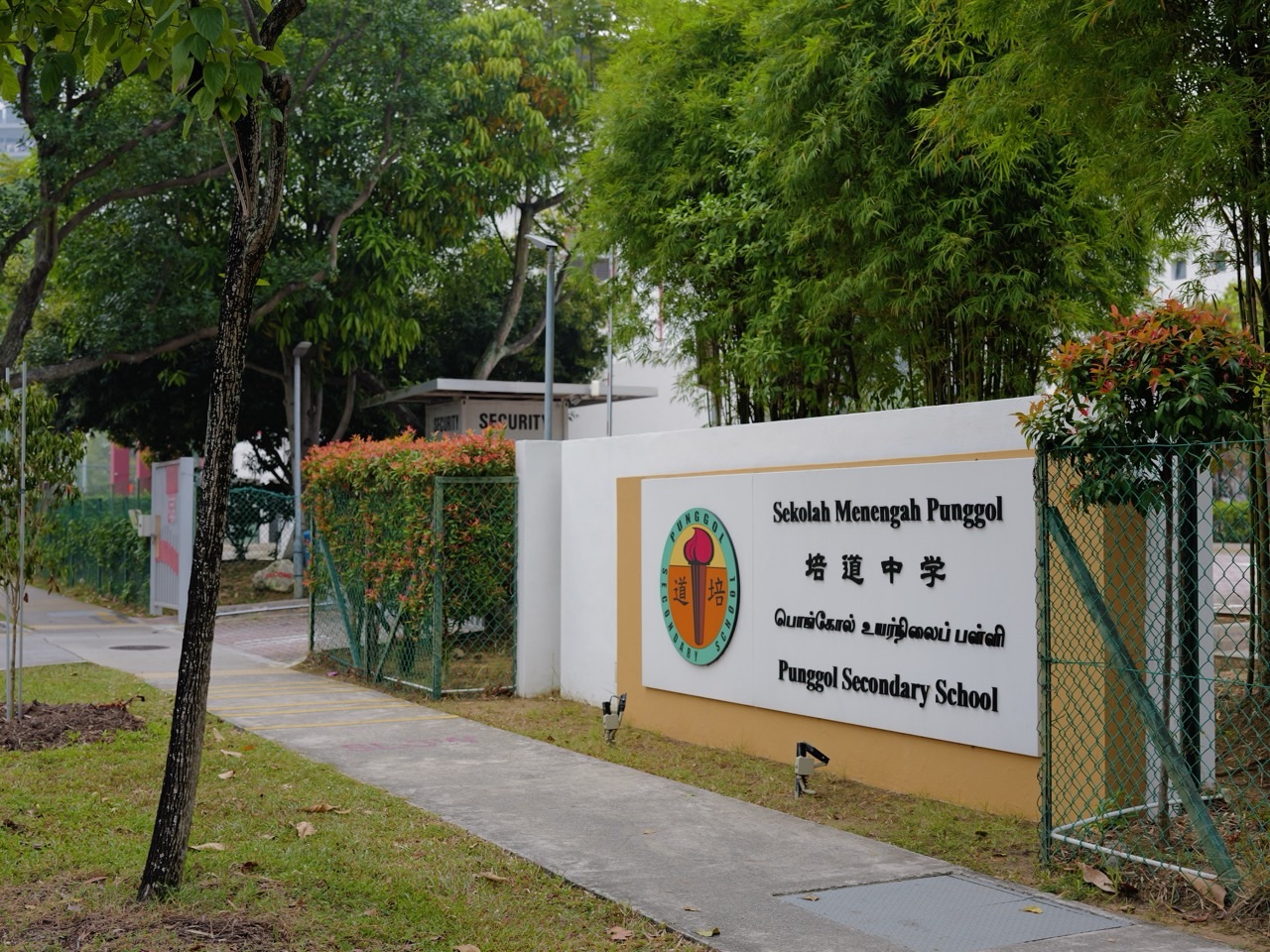
For a Punggol family considering Posting Group 3 (PG3) after PSLE, there are several secondary-school types worth understanding: mainstream government schools, autonomous and Special Assistance Plan (SAP) schools, independent schools, Integrated Programme (IP) schools, and schools leading to the International Baccalaureate (IB). These labels do not describe five versions of PG3. PG3 is a Secondary 1 admission grouping for the relevant mainstream posting route; IP and IB are different programme or qualification arrangements, with their own eligibility and application conditions. The practical first shortlist for a Punggol household includes Edgefield Secondary, Greendale Secondary, Punggol Secondary and Yusof Ishak Secondary, before adding suitable schools in Sengkang, Hougang and other areas.
For the completed 2026 Secondary 1 intake, the four Punggol mainstream schools recorded historical PG3 last-admitted PSLE Scores of Edgefield 14, Yusof Ishak 15, Greendale 16 and Punggol Secondary 19. These are previous results, not fixed 2027 cut-offs or benchmarks for IP admission. PSLE Scores 4–20 generally correspond to PG3; eligible students with Scores 21 or 22 can choose PG2 or PG3 under MOE’s rules. School type should be evaluated alongside the child’s learning style, subject offerings, CCAs, daily journey and the route to SEC, JC or MI, polytechnic, ITE and eventually university where the relevant qualifications allow.
- Government/mainstream: the four Punggol secondary schools are co-educational government schools; compare each actual programme, CCA list and commute.
- Autonomous and SAP: additional options exist outside Punggol; SAP describes a bilingual Chinese-language and cultural emphasis, not an IP guarantee.
- Independent: school governance, fees, financial assistance and programme design may differ; check them directly.
- IP: a six-year route for suitable students that normally proceeds to pre-university qualification without the standard SEC route; admission is not simply a PG3 score comparison.
- IB: a qualification or programme, not a general synonym for IP or for every independent school; verify the exact programme and awarding pathway.
- CCA choice: sports, arts, technical clubs and uniformed groups remain important, but available places and allocations vary by institution.
- Long-term planning: preserve legitimate alternatives to JC, polytechnic, ITE and university instead of assuming a child’s path is fixed at Primary 6.
1. Five labels that parents often put into the same box
Singapore’s secondary-school system has several overlapping descriptions. A government school is a school type. An autonomous school has a particular status and additional flexibility within the school system. A SAP school has a distinctive emphasis on Chinese language and culture. An independent school has its own governance and fee arrangements. An Integrated Programme is a particular educational pathway. The International Baccalaureate is a qualification and curriculum family. A school can carry more than one of these descriptions. None should be presented as if it means “PG3 but more advanced.”
Posting Groups serve a narrower purpose. From the 2024 Secondary 1 intake, PG1, PG2 and PG3 facilitate entry and guide the initial subject levels for pupils under Full Subject-Based Banding. G1, G2 and G3 are academic subject levels; an individual pupil’s later subject portfolio may mix levels according to applicable rules. Some schools instead admit to IP or specialised programmes. For these, the family must read the relevant school’s own entry criteria and official MOE guidance rather than importing a mainstream PG3 cut-off.
It helps to imagine two independent questions. The first is “How can this child be admitted to this school and programme?” The second is “What educational experience and eventual qualification will the child receive?” Parents make mistakes when they answer the second question using only a PSLE numerical boundary, or answer the first by looking at an attractive CCA photograph. Both questions require current evidence.
2. The four mainstream government schools inside Punggol
| School | Address | Completed 2026 PG3 last-admitted Score | One local question to investigate |
|---|---|---|---|
| Edgefield Secondary | 36 Punggol Field, Singapore 828814 | 14 | Do its Robotics, arts, sports and uniformed-group activities suit the pupil and have accessible places? |
| Yusof Ishak Secondary | 8 Sumang Walk, Singapore | 15 | Would the child enjoy its published STEM, Robotics, arts and sports options and the ordinary school culture? |
| Greendale Secondary | 51 Edgedale Plains, Singapore 828866 | 16 | How would its design and engineering ALP and Outdoor Adventure LLP fit the student’s learning style? |
| Punggol Secondary | 51 Edgefield Plains, Singapore 828870 | 19 | Are its environmental, arts, service, sports and language options consistent with the child’s interests? |
These four schools are co-educational mainstream options within Punggol; none is a local IP school. Their past PG3 cut-offs are admission data, not educational rankings. Their programmes do not mean that every incoming pupil receives any particular CCA or subject. Families should review the schools’ official current information, confirm Secondary 1 subjects and CCAs, inspect their approach to student support and visit where feasible. A child who would enjoy Punggol Secondary might not enjoy the same everyday routine at Edgefield, and vice versa.
The school addresses also explain why one family’s travel recommendation cannot apply to the whole estate. Punggol Field, Sumang Walk, Edgedale Plains and Edgefield Plains are not the same doorstep. A child living near an eastern LRT station may have a different shortest and safest journey from a family near Punggol Coast or the western waterfront precincts. Compare door-to-door travel rather than the label “Punggol school.”
3. What government and government-aided schools mean for choice
Government schools form the most straightforward category for a local family to understand, but “government” does not mean “identical.” The national curriculum and admissions framework coexist with each school’s different leadership, programmes, interests and CCA list. Government-aided schools form another category with their own governance and traditions; a parent should not infer that all government-aided schools are religious schools, affiliated schools, single-gender schools or IP schools. The exact description belongs to the individual school’s current official record.
Families comparing Punggol with neighbouring towns can look at schools such as Compassvale Secondary, North Vista Secondary, Seng Kang Secondary and Pei Hwa Secondary in Sengkang, and suitable options in Hougang. These names are geographical research candidates, not automatic recommendations or assurances of admission. A pupil with a specific learning need may find better support in a school outside the Punggol boundary. A school with an appealing name may be unsuitable if the actual commute or subject combination is a poor fit.
For ordinary posting, PSLE achievement, citizenship and choice order matter under the relevant rules. Primary-school home-distance priority is not a reason to assume that a Secondary 1 school will admit a pupil simply for living nearby. There can be school-specific distinctions such as affiliation; check them only where relevant and verify the applicable route. Parents should make the six school choices in genuine preference order rather than gaming the list based solely on rumours about popularity.
4. Autonomous schools: extra flexibility does not mean a guaranteed advantage
Some schools in the wider region hold autonomous status; MOE’s published school-type list includes Xinmin Secondary in Hougang. An autonomous school may have particular programmes and greater flexibility in designated areas, but the label itself is not a comparison of teaching quality against Punggol’s schools. A family should investigate the actual subject offerings, culture, current CCAs, student guidance and entry ranges for the child’s programme. Do not tell a pupil that an autonomous school’s name alone creates a university advantage.
Consider a child who thrives with academic extension and independently organised learning. An autonomous option might be worth asking about if its published programmes genuinely match that pupil’s needs. Another child may value close supervision, steady routines and a shorter journey to a Punggol campus. The correct decision is based on how the child learns. Extra programme choice has value only when a student can participate and still cope with the complete school week.
Parents should also examine fees and assistance where applicable. Avoid making broad claims that every autonomous school has exactly the same costs. Get the current fee schedule from the receiving institution and compare the total family expense, including travel, meals, learning materials and optional activities.
5. SAP schools: understand language and cultural emphasis
Special Assistance Plan (SAP) schools emphasise Chinese language and cultural learning alongside the wider curriculum. For Punggol families, Nan Chiau High School in the Sengkang area is a useful school to research when the child’s language interests and qualifications make it relevant. But SAP is not another term for IP. A school can have a SAP identity without offering the same curriculum and progression arrangement as a six-year Integrated Programme school.
Questions for a family include whether the child genuinely enjoys studying Chinese language and literature, whether the school’s learning environment is appealing, and which eligibility conditions apply to the chosen programme. Higher Chinese Language performance may matter for certain SAP admissions tie-breaking arrangements; the exact rules and outcomes must be read from current official instructions. Parents should not assume that any pupil with a strong overall PSLE score will have identical admission prospects regardless of language results.
A child who speaks Chinese confidently may still prefer a different school’s teaching style or CCA, and a pupil interested in bilingualism may find meaningful language opportunities in mainstream schools too. SAP should be an informed educational preference rather than a status symbol. Confirm the expected academic load and daily journey from Punggol to Sengkang before making the decision.
6. IP schools: the key difference is the curriculum and qualification route
The Integrated Programme typically offers a six-year pathway in which academically able students progress through secondary and pre-university education without sitting for the standard examination used for mainstream secondary graduation. Depending on the institution, the terminal qualification may be the Singapore-Cambridge GCE A-Level or the IB Diploma, while specialised arrangements such as the NUS High School Diploma have their own structures. The relevant school’s official programme description, admissions eligibility and progression conditions should always be checked.
For a family in Punggol, examples of IP institutions to research outside the estate include Temasek Junior College’s Integrated Programme in the east and other schools with IP routes across Singapore, such as Dunman High School or the Victoria School/Victoria Junior College route. These examples are not ranked by travel time, admission competitiveness or suitability. Confirm each school’s current campus and programme-specific application details. IP is not guaranteed simply because the child’s PSLE Score falls in the PG3 range.
IP can suit a child who enjoys sustained inquiry, demanding independent learning and a longer academic pathway. It may be less attractive to a child who would benefit from an external qualification checkpoint after four years or who is unsure whether a pre-university route suits them. No responsible adult can know at twelve that a student will definitely prefer an A-Level or IB pathway six years later. Families should investigate the programme’s support structures, transfer or exit arrangements, assessment style and student wellbeing provisions before concluding that bypassing a national examination is automatically advantageous.
7. IB: understand exactly what the abbreviation describes
The International Baccalaureate is not a Secondary 1 Posting Group. It refers to international education programmes and qualifications, with the IB Diploma Programme typically associated with the later years of schooling. Some Singapore schools offer routes that culminate in the IB Diploma, including established independent-school programmes; for example, parents may investigate St. Joseph’s Institution and Anglo-Chinese School (Independent) through their official programme information. A family must check whether the exact entry route of interest is IP, another secondary programme or admission to the pre-university years.
Parents should avoid the claim that “IB is always better than A-Levels.” Universities may recognise both, subject to their own standards, course prerequisites and competition. The two approaches have different assessment structures, curricular demands and student experiences. One child may enjoy the breadth and sustained assessment of an IB route; another may prefer A-Level specialisation or the applied education provided by a polytechnic diploma. A school’s marketing language cannot decide the fit for every pupil.
For Punggol parents, there is also a practical travel and cost question. Some IB-pathway schools are much farther from parts of Punggol than the local government schools, and independent-school fee arrangements may differ. Check actual transport routes and financial assistance; do not estimate or promise a travel time from the estate name alone. The child must be able to sustain not only the programme’s lessons but also its assignments, activities, social life and rest.
8. Independent schools and financial reality
Independent status is a school-governance category, not a synonym for being selective, offering IB or possessing a single teaching style. Some independent schools have IP; others have different programmes. They may have different school fees and financial-assistance arrangements. Families should obtain the current official schedule and ask whether the child’s eligibility for any assistance has been checked. An attractive programme that produces serious and preventable financial strain deserves a careful second look.
Cost includes more than tuition. Consider transport passes, meals, instruments, uniforms, equipment, school trips and the possibility that a late school dismissal changes family arrangements. Not all optional experiences are necessary. A pupil should not feel inadequate because their family chooses a school that offers a strong ordinary education at a more manageable cost. A responsible school-choice process recognises household resources as part of ensuring that the child can learn securely.
Where financial assistance or scholarships exist, apply using the institution’s current rules and deadlines. Do not assume that a historically advertised award still exists in the same form or that meeting a PSLE score automatically earns it. Check the eligibility, documents, duration and any continuing conditions in writing.
9. Specialised independent schools require another decision process
MOE materials also describe specialised independent schools for pupils with distinctive talents and interests, including the School of Science and Technology, School of the Arts, Singapore Sports School and NUS High School of Mathematics and Science. These should not be inserted casually into a normal PG3 six-school comparison as if their routes were interchangeable with local mainstream posting. Their admission exercises and qualification outcomes are school-specific. A child strongly interested in advanced science, applied learning, performing arts or competitive sport may wish to explore them, but the family must read each institution’s official eligibility, application and assessment requirements.
School of the Arts, for example, offers an arts-centred curriculum with IB-related qualification routes according to its published programmes. School of Science and Technology has a distinctive applied-learning profile. The NUS High School Diploma and Singapore Sports School’s qualifications are not automatically the same as the mainstream SEC path. Do not infer an outcome from a school category; identify the exact award and the next education routes accepted by institutions the pupil may later wish to enter.
Specialised pathways can be a strong fit for particular learners. They can also be very demanding and may require substantial commitment. Parents should ask whether the child enjoys the everyday work in that field, not just its most spectacular achievements. A twelve-year-old who likes one science competition may still prefer a balanced secondary experience with time to explore literature, music or service. A genuine interest does not oblige a pupil to select the most specialised available route.
10. How CCA comparisons change across these school types
Parents sometimes focus so heavily on IP, IB or SAP that they overlook the student’s daily life. A pupil still needs peers, teachers, safe spaces, a meaningful contribution and time to grow. In Punggol’s mainstream schools, the published CCA categories include sports, uniformed groups, performing arts and clubs. Edgefield lists Robotics and artistic groups; Yusof Ishak lists Robotics, Infocomm Technology, STEM Club, music and sports; Punggol Secondary publishes environmental, arts, service and sporting activities; Greendale highlights design, technology, engineering and outdoor learning in its school programmes. Actual individual membership still depends on allocation rules.
For a school beyond Punggol, do not assume the CCA catalogue is identical. Check the official list, training days, availability to Secondary 1 pupils, competition commitments and how the school supports beginners. A pupil who is certain they want fencing, debate or a particular instrument should have that requirement verified directly. Another child may be content to explore whichever group feels welcoming after school starts. Either approach can be reasonable if made explicitly.
LEAPS 2.0 recognises Participation, Achievement, Leadership and Service within the relevant framework. Under the published recognition arrangements, Excellent attainment can provide two bonus points, Good one, and Fair none, subject to admissions rules. This is not an instruction to select the most prestigious CCA. A child’s consistent contribution and character development matter. For IP or specialised pathways, families should check whether the exact school or subsequent admission exercise uses the same, different or additional recognition rules.
11. A score-based decision sequence for Punggol parents
Begin with the official PSLE Score and Posting Group eligibility. Numerically lower scores represent stronger PSLE performance. Scores 4–20 generally fit PG3 in the ordinary posting system, but this alone does not establish admission to an IP or specialised route. Scores 21–22 can permit a choice between PG2 and PG3 under MOE rules. If the child is eligible for two groups, draft two separate six-school scenarios, examine the starting academic subject levels and then select one Posting Group for the submission according to the current official process.
Next, examine past school-level data with the correct label. The Punggol completed 2026 PG3 last-admitted values were 14 at Edgefield, 15 at Yusof Ishak, 16 at Greendale and 19 at Punggol Secondary. A Score-13 child was numerically stronger than all four old boundaries, but that did not guarantee a place. A Score-16 pupil matched Greendale’s old boundary but was numerically weaker than the completed Edgefield and Yusof Ishak cut-offs. A Score-19 pupil matched Punggol Secondary’s old boundary; Score 20 was numerically weaker than all four old local cut-offs. These are descriptive references, not eligibility decisions for 2027.
For non-Punggol schools, obtain the actual school’s current admission programme and historical range, not a number copied from an unrelated posting group. For an IP route, read the IP reference and any programme-specific requirements. For a SAP school, examine relevant language rules. For a successful DSA applicant, comply with that confirmed route instead of assuming ordinary six-choice posting remains open. Admissions accuracy comes from comparing like with like.
12. Widen the geography without pretending every school is near
The first geographical ring contains the four mainstream Punggol schools. The next search area often includes Sengkang, with schools such as Compassvale Secondary, North Vista Secondary, Seng Kang Secondary, Pei Hwa Secondary and Nan Chiau High School, and appropriate schools in Hougang. Beyond this, families may investigate schools in Pasir Ris, Tampines, Bedok, the central corridor and elsewhere where a specific programme justifies the extra journey. These are planning areas for research, not a universal ranking of convenience from every Punggol home.
For IP or specialised schools, a cross-island commute is a real possibility. A programme may be excellent but unsuitable if the pupil spends too much of each day travelling, becomes exhausted after CCAs or lacks dependable transport. Start from the child’s actual home block and school gate, and time a realistic morning journey. Then simulate a return after an after-school activity. Consider transfers, shelter, the pupil’s age, costs and backup plans. The route should remain workable during examination periods and ordinary rainy days, not just an open-house weekend.
Parents should resist using a fixed travel threshold for everyone. A family with an independent commuter and a direct connection may accept a journey another family finds burdensome. What matters is whether the trade-off is consciously made and the child understands it. For a four- or six-year educational commitment, the effect on sleep and daily learning deserves as much attention as the school name.
13. The path from mainstream PG3 to SEC and post-secondary choices
Under the mainstream Full Subject-Based Banding route, pupils may offer G1, G2 or G3 subjects as appropriate. From 2027, the Singapore-Cambridge Secondary Education Certificate replaces the former N- and O-Level examinations, reflecting subjects at the levels offered. A child starting Secondary 1 in 2027 on a normal four-year route would ordinarily graduate later than 2027; parents should avoid applying 2027 exam dates to a child who has just started Secondary 1.
At the later post-secondary decision point, eligible pupils may apply to junior colleges or Millennia Institute, polytechnics or ITE Higher Nitec programmes using the applicable rules. MOE announced a new Post-Secondary Admissions Exercise beginning in 2028 and changes including a five-subject L1R4 threshold of 16 for JC eligibility, with prescribed subject groups. An eligibility threshold is not an individual JC’s guaranteed admission cut-off. Polytechnic programmes have relevant aggregate and subject requirements, while ITE courses offer a legitimate applied education with possible subsequent progression.
Some pupils take a direct route from a polytechnic diploma to a university application. Others may study in ITE, progress to polytechnic and later apply for a degree. Some enter work and pursue further qualifications over time. These routes depend on programme-specific admission standards, performance and available places. Parents should not rank JC as a sign of personal worth and ITE as a failure. The right post-secondary route supports the learner’s strengths, preferred curriculum and future goals.
14. The path from IP or IB to university is different, not automatic
Some IP programmes lead to A-Level examinations and others to the IB Diploma. The pupils’ secondary assessment experience, pre-university curriculum and terminal qualification therefore differ from the mainstream SEC pathway. However, IP admission is not a university admission offer. The learner must meet programme requirements, progress successfully and later satisfy the entry criteria of any university and course applied to. A family should ask the school how students receive academic and wellbeing support when learning is demanding.
Universities may accept A-Level, IB Diploma, local polytechnic diplomas and other recognised qualifications through distinct admissions routes. Eligibility rules and course prerequisites vary. For example, some degree courses demand particular prior subjects or competencies, and a diploma may be more directly relevant to some programmes than others. Parents should not tell a Primary 6 pupil that entering IP or IB guarantees entry to an elite university, or that entering a mainstream government school blocks later university study. Both claims are misleading.
A responsible parent can still plan backwards. If a child has a strong interest in engineering, ask about Mathematics and Science foundations across the school’s subject options. If language or humanities is central, ask what subjects will be offered later. If the child has no firm career idea, prioritise broad foundational learning and a place where asking questions feels safe. Every decision should preserve realistic later options rather than force a fixed story onto the child’s future.
15. How the same PSLE Score can lead to different good choices
Family A: Score 10, academically strong, enjoys independent research
This pupil may be a plausible candidate to explore IP and other demanding academic programmes, but the family still needs to check each particular school’s IP admissions and entry conditions. The child also enjoys Robotics and wants a manageable week. Compare the IP route’s independent learning expectations with the mainstream Punggol experience and actual CCA opportunities. A high score expands possibilities; it does not oblige the child to choose the farthest or most selective school.
Family B: Score 15, keen on Chinese language, lives near Punggol central
A SAP option in Sengkang may be worth exploring if the pupil values the Chinese-language environment and meets the applicable conditions. At the same time, Punggol’s local schools provide varied CCAs and may be more convenient. The family’s actual decision is between educational experiences, not between a “better” and “worse” school type. Nan Chiau High’s current admission route and language details must be verified directly; do not borrow Edgefield’s or Yusof Ishak’s historical PG3 score to guess Nan Chiau’s admission.
Family C: Score 19, enjoys environmental work and wants a nearby school
Punggol Secondary’s completed 2026 PG3 cut-off was 19, matching this pupil’s score historically, and its official CCA directory includes an Environmental Club. The family can investigate it while including realistic alternatives and checking the current year’s school profile. IP may be irrelevant to this child’s interests, though it is part of the national landscape. A shorter route and a strong general academic environment may provide an excellent foundation for later polytechnic, JC or ITE choices.
Family D: Score 21, likes science, unsure about academic pace
The core choice may be PG2 versus PG3 eligibility. Do not let school prestige obscure the question of which initial subject demand suits the learner. MOE’s rules permit eligible pupils at Scores 21–22 to choose one of the two groups, with the choice applying to all six school options. The family should explore school support, subject flexibility and possible later changes under Full SBB, then submit one coherent list. A particular pupil may flourish by building secure foundations before attempting more demanding individual subjects where appropriate.
16. Check fees, help and admissions conditions rather than guessing
A family shortlist should include the current fee category, eligibility for assistance, uniform and materials, commuting costs, and the effect of optional activities. Government and independent schools can have different fee structures. Do not assume that a prestigious independent school is unaffordable without first checking assistance; equally, do not assume that support will be awarded automatically. Ask for the latest written conditions and record the deadline for applications.
Where special educational needs, learning differences or personal circumstances matter, check the school’s actual support resources. The correct choice is not necessarily a particular school category. It is a place where the child can access appropriate instruction and participate safely. Ask whether teachers and support staff can explain the ordinary arrangements, whether facilities are suitable, and how parents work with the school when needs change. This is more useful than relying on a generic statement that all schools provide support.
For a DSA application, ask whether the school offers the relevant talent area, what evidence is required and which current deadlines apply. The existence of a robotics or volleyball CCA does not prove there is DSA admission for that CCA in every year. Do not confuse DSA, ordinary S1 posting and a later CCA allocation exercise. Treat them as separate administrative routes with distinct results.
17. A six-step decision method that families can actually use
- Confirm eligibility. Read the child’s official PSLE result slip, eligible posting group or groups, and any confirmed separate admission outcome.
- Classify each candidate properly. Write its governance category, any SAP identity, whether the intended programme is mainstream SEC, IP, IB-related or specialised, and the exact route for admission.
- Build two school lists where needed. For Scores 21–22 eligible for PG2/PG3, evaluate each route independently before selecting the one used for the entire normal submission.
- Investigate reality. Check present subjects, CCA availability, support, fees, past admissions data, and the child’s own interest and readiness.
- Travel the journey. Test home-to-gate and after-CCA routes, including transfers and weather contingency; record time rather than invent it.
- Submit meaningful preferences. Rank six ordinary school choices according to the current rules, keeping realistic and acceptable options; follow any separate DSA or specialised-school outcome appropriately.
Keep the decision record to one page per school. Note its source and date for any numerical claim, programme feature or eligibility rule. When the family revisits a shortlisted school, it should be obvious which facts are official, which are awaiting confirmation and which reflect the child’s preference. That separation reduces conflict because adults and students can talk about evidence rather than argue over impressions.
A good school-choice process does not promise certainty. It improves the odds that the pupil will end up in a place with a sustainable workload, suitable academic guidance, room to grow and a manageable commute. That is a stronger objective than collecting impressive school names.
18. Frequently asked questions
Are IP and IB schools “PG3 schools”?
Not as a general classification. PG3 is an admission group for the relevant mainstream S1 posting process. IP is a programme, and IB describes a curriculum and qualification. Their admissions routes must be checked separately.
Is Nan Chiau High an IP school because it is SAP?
No. SAP and IP are distinct descriptions. Check the individual institution’s current programme listing rather than assuming all schools with a Chinese-language emphasis offer IP.
Does every child in PG3 sit SEC in 2027?
No. The SEC starts in 2027 for relevant graduating cohorts. A pupil beginning Secondary 1 in 2027 would ordinarily have a later graduation year on a four-year mainstream pathway.
Can an ordinary Punggol government secondary-school pupil later enter university?
Yes, if the pupil subsequently meets the applicable entry requirements through a recognised pathway such as JC/A-Levels or polytechnic diploma, or another accepted qualification. Nothing about the Punggol school label itself rules university out.
Is IB automatically more internationally recognised than A-Levels?
Recognition depends on the receiving university, country, programme and admission requirements. Both are established qualifications. Families should compare the specific institutions and the child’s learning fit rather than broad slogans.
Which school should a Score-20 child choose?
There is no universal answer. The previous 2026 PG3 Punggol cut-offs were all numerically better than 20, so a family should research suitable schools beyond the estate and use current SchoolFinder data. Fit and realistic eligibility must be assessed together.
Does attending an autonomous school confer a university bonus?
No general university entitlement arises merely from autonomous status. Academic qualifications, subject prerequisites and university admissions criteria matter.
Can a child choose a mainstream school because of the CCA rather than a specialist programme?
Yes, if the school is a good overall fit and the desired activity is available under its rules. CCA interest is a legitimate consideration, but the family should also evaluate academics, welfare, admissions realism and transport.
Official sources and further reading
- MOE Secondary 1 Posting and MOE SchoolFinder for the applicable admission data and school profiles.
- MOE PSLE and Full SBB resources for posting groups, subject levels and pathways.
- MOE school-type lists for autonomous and independent school examples; verify current classification.
- MOE DSA-Sec and MOE 2026 post-secondary admissions framework.
- Edgefield Secondary CCAs, Greendale Secondary programmes, Punggol Secondary CCAs and Yusof Ishak Secondary CCAs.
- Punggol PSLE scores and school-choice hub.
- Punggol four-school comparison.
Information checked November 2026. Actual admission conditions, school programmes, CCAs, fees, campus locations and post-secondary entry rules can change. Confirm with MOE and the individual institution before submitting any application. The original Clementi-format reference was preserved unchanged.


