
Punggol parents considering Posting Group 3 (PG3) secondary school entry should include Hougang when the pupil’s preferred CCA, PSLE Score or school environment makes a neighbourhood-only list too narrow. For the completed 2026 Secondary 1 intake, Hougang’s historical non-affiliated PG3 last-admitted PSLE Scores were Paya Lebar Methodist Girls’ School (Secondary) 10, Xinmin 13, Holy Innocents’ High 14, Bowen 16, Hougang Secondary 20, Serangoon Secondary 20, Montfort 22 and Yuying 22. These schools offer substantially different cultures and activities: Xinmin’s 2026 CCA registration featured rock climbing, debate and sports trials; Bowen publishes boys’ and girls’ football and wide arts choices; Montfort has maker and sport opportunities; Yuying publishes a centre-based table tennis arrangement. The best option is not simply the one with the lowest cut-off.
Those are past intake results, not promises for the 2027 school year. PG3 is the Secondary 1 entry group, whereas G3 is an individual subject level under Full Subject-Based Banding; scores of 21 or 22 may provide a choice of PG2 or PG3. A Hougang school is not automatically more distant than every school in Sengkang or Punggol for every child: bus stops, transfers, journey time after late CCA and the exact home block matter. Parents should verify admission eligibility, school type, official CCAs and a real journey before deciding. Later JC, polytechnic, ITE and university pathways depend on subject grades and qualification rules rather than on which CCA has the most impressive competition record.
- 2026 historical PG3 cut-offs: PLMGS(S) 10; Xinmin 13; Holy Innocents’ High 14; Bowen 16; Hougang and Serangoon Secondary 20; Montfort and Yuying 22.
- Affiliation matters: PLMGS(S), Holy Innocents’ High and Montfort have affiliated-primary admission contexts; use the non-affiliated column unless the child meets the criteria.
- Gender: Paya Lebar Methodist Girls’ School is girls-only; Montfort is boys-only; the other listed Hougang schools are coeducational.
- CCA opportunities: inspect Xinmin trials, Bowen sports and performing arts, Montfort clubs, Yuying centre-based sport, and other schools’ official offerings.
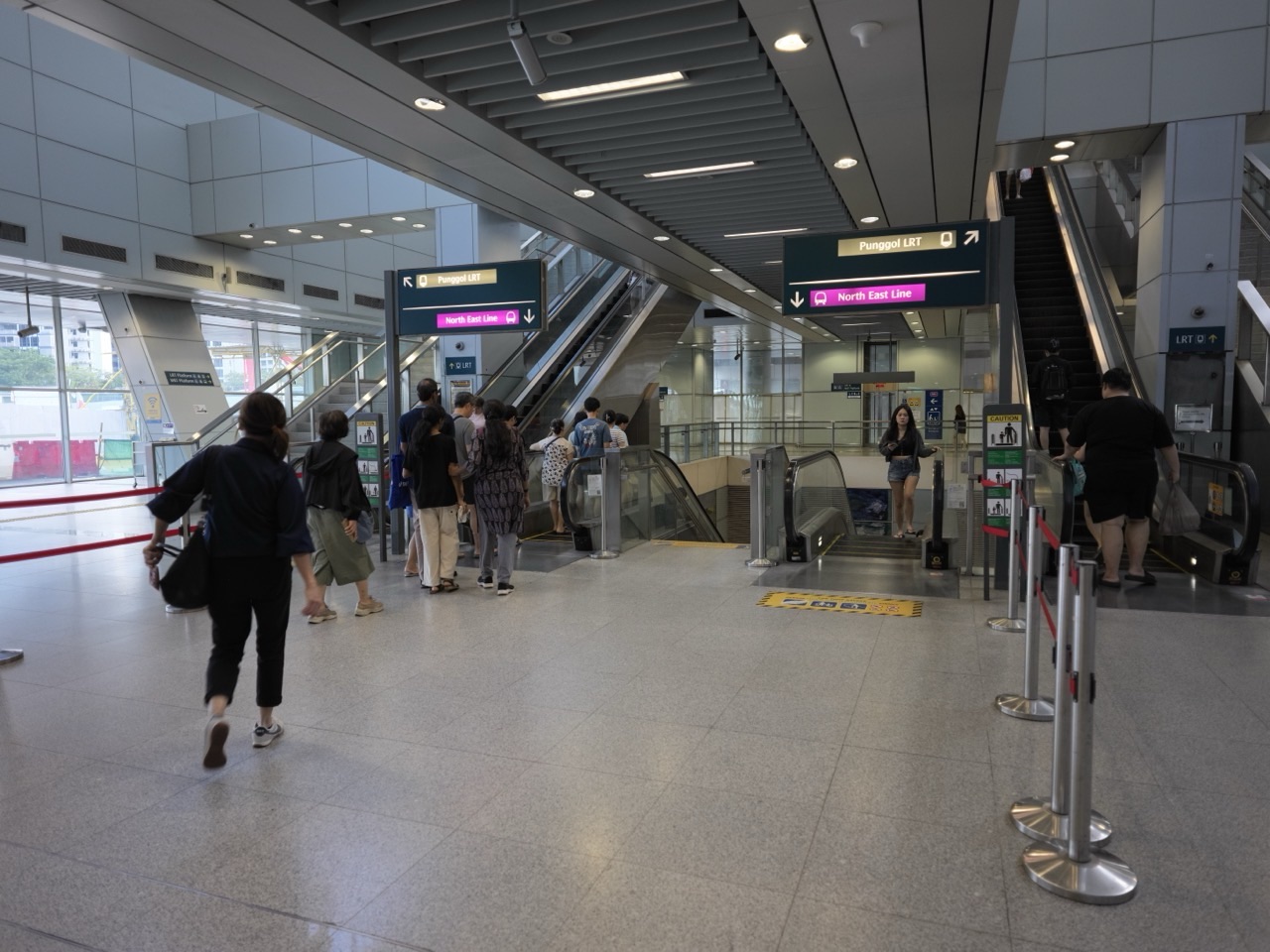
- Travel: compare routes via the North East Line and local buses with actual early and late journeys; do not presume straight-line distance equals convenience.
- Future: choose subjects carefully through Full SBB and SEC, then compare JC/MI, polytechnic and ITE entry requirements for the actual graduation year.
1. Why look at Hougang from Punggol?
A family’s six secondary-school preferences should represent six credible educational environments, not six pins within one town boundary. Punggol has four mainstream schools in the estate, with 2026 PG3 historical cut-offs from Edgefield 14 to Punggol Secondary 19. Hougang offers a broader historical range, including schools with PG3 last-admitted Scores of 20 and 22. For a child whose score is numerically higher than the old boundaries at the Punggol schools, this wider set can be especially important. It remains necessary to check the current MOE information, since last year’s figures do not ensure next year’s admission.
Hougang is also educationally varied. Some families value girls’ or boys’ learning environments, some want coeducation; others care more about a technical club, an appropriate sport, a creative outlet or teaching support. A child who already plays football, enjoys structured cadet activities or learns best in a quieter community might find an appealing school outside the family’s immediate precinct. On the other hand, a Punggol school close to home may leave more time for rest and homework. Neither advantage should be dismissed.
Start by writing what the pupil is searching for. A school is not a prize to collect; it is where the child learns, eats, makes friends and grows over several years. The child should be able to name at least one ordinary aspect of the school they like, apart from its historical cut-off or an open-house highlight.
2. The eight Hougang schools at a glance
| School | Completed 2026 PG3 cut-off (non-affiliated unless noted) | Parent decision point |
|---|---|---|
| Paya Lebar Methodist Girls’ School (Secondary) | 10 | Girls’ school; check affiliation, culture, music, sport and journey. |
| Xinmin Secondary School | 13 | Autonomous-school programmes; sports, debate, rock climbing and the actual CCA allocation process. |
| Holy Innocents’ High School | 14 | Affiliation conditions and the full academic, pastoral and CCA environment. |
| Bowen Secondary School | 16 | Girls’ and boys’ football, dance, band, drama, uniformed groups and beginner suitability. |
| Hougang Secondary School | 20 | Current clubs, performing arts, sports, uniformed groups and school support. |
| Serangoon Secondary School | 20 | Current timetable and programme offerings; check its Upper Serangoon View location. |
| Montfort Secondary School | 22 | Boys’ school; sports excellence, maker, infocomm, band and uniformed groups. |
| Yuying Secondary School | 22 | Girls’ volleyball, boys’ basketball and centre-based table tennis; check off-campus logistics. |
The table shows prior admission thresholds, not a quality ranking. A school with a historical cutoff of 22 is not necessarily academically weak, nor will a pupil scoring 22 necessarily be admitted next year. To interpret a score correctly, remember that a lower PSLE numerical total denotes stronger performance and a cut-off indicates the last successful pupil for a particular group and exercise. Other applicants, places, order of choices and tie-breakers can change the outcome.
The affiliation distinction is particularly important. For Paya Lebar Methodist Girls’ School (Secondary), its own 2026 admissions guidance says eligible pupils from its affiliated primary school must put it as first choice to receive affiliation priority and that the priority still does not guarantee a place. A Punggol family whose daughter attended a different primary school must not copy an affiliated score boundary as though it applies automatically.
3. Paya Lebar Methodist Girls’ School: strong arts options but understand eligibility
PLMGS (Secondary), at 296 Lorong Ah Soo, is a girls’ school with an established Methodist identity. Its official CCA overview lists sports including badminton, netball, rhythmic gymnastics, swimming, table tennis and volleyball; uniformed groups; and performing arts such as Choir, Concert Band, English Drama, Guitar Ensemble, Guzheng Ensemble, Handbell Ensemble and Harp Ensemble. It also lists clubs including debate and media production. For a child excited by music and communication, this breadth can be meaningful, but the environment and admission details must both suit her.
A Punggol parent may view the school’s non-affiliated 2026 PG3 last-admitted score of 10 as a reason to investigate or a reason to conclude it is unrealistic for a particular result. Both responses should be informed by the official current intake range. The affiliated last-admitted figure in earlier data is different; it is not an option available to every applicant. Parents should read the school’s own rules and MOE’s affiliation guidance. Also ask how places in specialised arts, sport or leadership groups are allocated to Secondary 1 entrants.
School identity matters as much as club quantity. The pupil should feel comfortable with the school’s values, expectations and daily social environment. A long list of music groups is not sufficient if the child does not enjoy the wider school experience. The parent’s task is to test the whole fit rather than collect an impressive set of possibilities.
4. Xinmin: ask about real CCA trials, not advertised promises
Xinmin Secondary’s official 2026 CCA registration information provides a particularly useful lesson: some CCAs involve trials, auditions and final selections. The published 2026 details include activities such as badminton, boys’ and girls’ volleyball, floorball, rock climbing, Choir, Chinese Dance, debate and shooting-related CCA selection. It is tempting to describe all of these as instantly available to a newly admitted student. That would be wrong. The school’s specific exercise determined how interested pupils participated and where final trials were required.
The proper question is how a new pupil should approach the next allocation exercise. Ask whether beginners may attend, how many available places there may be, whether the child needs equipment, and whether there are physical prerequisites. A pupil curious about rock climbing may want a gradual and supervised introduction. A child drawn to debate may enjoy researching issues but need help speaking confidently. A sport may require more regular practice than the child has previously experienced. The teacher’s answer about beginner support can be more valuable than historic tournament results.
Xinmin’s completed 2026 PG3 cut-off was 13. A child with Score 14 does not become unsuitable for its CCA options as a person; it simply means the previous year’s boundary was numerically more competitive than that score. Keep expectations evidence-based and include other schools that suit the child. Never confuse DSA, ordinary posting and post-admission CCA trials as a single selection route.
5. Holy Innocents’ High: examine affiliations and school culture before comparisons
Holy Innocents’ High School is at 1191 Upper Serangoon Road. For the completed 2026 PG3 exercise, its non-affiliated historical cut-off was 14, while eligible affiliated pupils had a different previous last-admitted score. Families must ask whether the child genuinely meets affiliation rules and which cutoff is appropriate. An address near the school does not itself create affiliation. The official MOE school profile is the authoritative starting point.
Some parents compare its name and cut-off with Edgefield’s historic PG3 14 and conclude they are interchangeable. They are not. A school’s academic offerings, leadership approach, language support, religious heritage, CCAs, facilities and journey can make a substantial difference to the child. Check the current official school website and ask the school for the new cohort’s CCA information instead of copying a hobby list from another school.
For an uncertain pupil, ask to hear from student guides about an ordinary week. Where does a pupil seek help after a difficult Maths lesson? How are new members introduced to clubs? Is there support for a student whose study habits need refinement? These questions focus attention on education rather than the symbolism of a cutoff.
6. Bowen: boys’ and girls’ football plus wider arts choices
Bowen Secondary, at 2 Lorong Napiri, has official sports pages describing badminton, boys’ basketball, boys’ football, girls’ football, girls’ netball, boys’ table tennis and taekwondo. Its arts pages identify Bowen Artists, Band, Chorale, Dance Club, Drama, Indian Dance and Malay Dance, among other choices. This makes Bowen useful to investigate for two types of pupils: those who know they enjoy a particular team sport, and those who are still discovering whether performance or visual art is more satisfying.
The school’s girls’ football offering is an example of why parents should inspect actual official lists rather than assume which sports are available by gender at a given school. Its 2026 pages also describe uniformed groups including NCC, NPCC, NCDCC, Girl Guides and Boys’ Brigade. The CCA’s week and selection arrangement will differ. It would be misleading to promise that an admitted child has a place in any particular team, even where the sport is listed.
Bowen’s completed 2026 PG3 cut-off was 16. A parent with a child scoring 16 should interpret that as last year’s boundary, not a booking confirmation. Check the current intake and compare with Greendale’s historic 16. The two schools share a number but not an identical campus, timetable or culture. A suitable Bowen choice requires a genuine reason from the child and a manageable route.
7. Hougang Secondary and Serangoon Secondary: investigate ordinary support as well as the score
Hougang Secondary’s official 2026 CCA pages divide offerings into sports and games, performing arts, uniformed groups and clubs and societies, explaining that participation supports character, friendship and student development. A parent should open the current pages for the precise activity of interest and ask the CCA coordinator about 2027 places. Without that check, a broad category heading cannot prove that a named sport or club remains available in the same form.
Serangoon Secondary is at 11 Upper Serangoon View. Despite its name, it is part of the Hougang school-search landscape and its physical location should be checked on a current map. If the family near Punggol finds a manageable bus route, the school may enter the shortlist. Do not assume that the name ‘Serangoon Secondary’ means it is right next to Serangoon MRT or the Serangoon town centre. This is a simple but consequential geographic mistake.
Both schools had historic 2026 PG3 cut-offs of 20. Those figures may be useful to families whose scores are numerically higher than Punggol’s four local 2026 boundaries. However, it is still not accurate to call either ‘guaranteed admission’. Examine actual support for English, Mathematics and other subject-level learning, ask about upper-secondary subject choices, and check the school’s current learning culture. The child’s four-year experience matters more than a single favourable number.
8. Montfort: a boys’ environment and real clubs that take commitment
Montfort Secondary, at 50 Hougang Avenue 8, is a boys’ school. Its official 2026 co-curricular pages describe a sports excellence programme as well as performing arts, sports, uniformed groups and clubs. Published 2026 scheduling materials name activities such as the Maker Club, Infocomm Club, Military Band, Chorale, English Language Drama and Debating, NCC, NPCC, NCDCC and Scouts. The school’s affiliated-primary and non-affiliated admissions contexts must be checked separately.
The Maker Club gives a useful example of a developmental activity that can suit a boy who enjoys problem-solving even when he has not yet decided on a career. An unfamiliar club may teach design, tools, teamwork and documentation. Equally, a musical group may offer expressive confidence and patience. Ask the school about ordinary lessons, practical facilities, safety and how newcomers are mentored. Do not translate a CCA name into an unsupported claim about degree outcomes.
Montfort’s historical 2026 non-affiliated PG3 last-admitted score was 22. For a pupil scoring 21 or 22, entry-group eligibility and academic readiness need particular care: the family may have a choice of PG2 or PG3 and should prepare each potential school list separately before final submission. Do not assume that a Score-22 historic cutoff means an eligible pupil should always select PG3; this is a personal academic decision with long-term consequences.
9. Yuying: a shared CCA may change the commute more than the school address
Yuying Secondary, at 47 Hougang Avenue 1, had a historical 2026 PG3 cut-off of 22. Its official 2026 pages describe girls’ volleyball and boys’ basketball; notably, its centre-based table tennis CCA operates in collaboration with other schools, including Bartley Secondary, Peicai Secondary and St. Gabriel’s Secondary. One published schedule lists training on Tuesdays at St. Gabriel’s and Fridays at Bartley. Those are 2026 details to confirm, not permanent timings for a new cohort.
This is a critical practical distinction. A parent might look up Yuying’s address, calculate a plausible home-to-school journey and stop. But if the desired CCA trains at another campus, the weekly route must include that off-site venue and the return trip. Ask who supervises travel, whether transport is arranged, the departure time, and what happens in rain or schedule disruptions. These questions can turn a superficially simple choice into a better-informed decision.
A shared CCA can be positive. It may give pupils more teammates, specialised coaching and new friendships across schools. It may also create extra travel and organisation demands. A family should not dismiss an appealing programme because it is off campus, but neither should it conceal the inconvenience until after the child joins.
10. Read a Score 10, 13, 16, 19, 20 or 22 honestly
A child scoring 10 may have numerically strong historical references across much of Hougang, but still needs eligibility and a realistic six-school submission. A child scoring 13 matched Xinmin’s prior boundary, was numerically stronger than Holy Innocents’ High’s 14 and Bowen’s 16, but was numerically weaker than PLMGS(S)’s 10. These comparisons only describe a completed posting exercise; they do not rank children’s capacities or guarantee that one school will admit next year.
Score 16 matched Bowen’s old non-affiliated boundary and was numerically stronger than Hougang and Serangoon Secondary’s 20. Score 19 matched none of those earlier boundaries exactly, yet may be closer in score to the schools historically taking pupils up to 20 or 22. Score 20 matched Hougang and Serangoon Secondary’s last admitted historical scores; again, no certainty arises from matching. A Score-22 pupil may wish to research Montfort and Yuying while checking PG2 or PG3 eligibility and the wider pool of schools. The right group choice must be made before using the corresponding score column.
Do not use a school’s affiliated figure for a child without the qualifying affiliation. Do not assume that being Singaporean and applying close to home guarantees the last available place. In ordinary S1 posting, where equally scoring pupils contend for the last place, MOE’s tie-breakers are citizenship, choice order and then computerised balloting. Home distance is a family cost, not one of those tie-breakers.
11. Punggol-to-Hougang route planning: three different geographic questions
The first question is where the family lives in Punggol: near Punggol Coast, the eastern LRT loop, Waterway Point, Sumang or another precinct. The second is where the school physically stands: Upper Serangoon Road, Lorong Napiri, Hougang Avenue 8, Hougang Street 93, Upper Serangoon View and Hougang Avenue 1 are not interchangeable. The third is where the child’s chosen CCA trains. Yuying’s centre-based table tennis illustrates how a third point can matter.
Use an official or dependable public transport planner, but do not rely only on a single online result. Try the route during a weekday school morning and examine the late return after the likely CCA. Record walking, expected waiting, transfers, road crossings and whether the child can cope when one bus is missed. For an outdoor sports CCA, include a wet-weather plan. For music, include instrument weight. For parents working irregular shifts, include what happens if the child needs assistance.
The aim is not to find the school with the smallest number of minutes at any cost. It is to see whether the routine is sustainable. A pupil may genuinely prefer a farther school’s learning environment, and the family may be able to support the extra journey. Another child may learn better with more rest near home. Present the trade-off plainly, using actual evidence.
12. A child’s CCA should reveal an interest, not predetermine a career
Consider three pupils. The first likes rock climbing and technical challenges; Xinmin’s 2026 CCA trials make it worth asking whether there is an appropriate beginner route. The second prefers expressive work; Bowen’s drama and dance information offers a different kind of challenge. The third enjoys volunteer work or small-team technical projects; Montfort’s clubs or community-related experiences elsewhere may be appealing. None of the pupils needs to choose a university major during Primary 6.
Parents can help by asking what activity the child would enjoy attending even without a competition or public award. Then ask how the school coaches beginners, recognises contributions and manages study demands. A student who feels safe learning from errors can develop confidence over several years. The object is to build interests and habits, not simply to earn a certificate for later applications.
MOE’s LEAPS 2.0 recognises Participation, Achievement, Leadership and Service. Sustained, meaningful participation matters. Excellent overall attainment can be linked to two co-curricular bonus points and Good to one, where permitted under the relevant admissions framework; the name of the CCA itself never guarantees that outcome.
13. From SEC subject levels to the post-secondary admissions exercise
Under Full SBB, PG3 pupils generally begin most subjects at G3, but subject-level arrangements can change according to MOE rules and school decisions. The SEC begins from the 2027 graduating cohort; a Secondary 1 child starting in 2027 will normally sit the exam in a later year if following a four-year route. The family should revisit which subject combinations the school actually offers and ensure prerequisites for possible future courses are understood before upper secondary.
From the 2028 admissions cycle, the new Post-Secondary Admissions Exercise lets eligible applicants consider JC/MI, polytechnic and ITE routes in a coordinated process. MOE also announced a revised five-subject L1R4 basis for JC admission with the published threshold of 16, alongside subject requirements; each JC may require a more competitive result. For diplomas and Higher Nitec, check the relevant course-specific English, Mathematics and other subject requirements. Do not tell parents that joining a sports or maker club automatically produces a qualification.
University is a later decision. An eligible A-Level or other recognised pre-university applicant may apply for a degree; a diploma graduate may apply through a different qualification route; an ITE student can sometimes progress through further education before university. These routes have different entry standards, competition levels and lengths. They are all educationally serious, and families should not demean one option while discussing another.
14. Four school years: a simple decision sequence
Secondary 1: settle into the new learning environment
Prioritise comprehension in English, mathematical reasoning, study habits and the ability to ask for help. Let the pupil learn the CCA’s ordinary routine before judging whether it is a success. A first-year student needs friendships and confidence as much as a list of achievements.
Secondary 2: check interests and subject eligibility
Review teacher feedback and the child’s real strengths. Ask which upper-secondary subjects are offered, what the selection requirements are, and whether the future course areas the pupil is curious about have important prerequisites. Avoid making subject choices solely for image or prestige.
Secondary 3: compare route requirements with real evidence
Use actual grades and interests to investigate JC/MI, polytechnic diploma and ITE pathways. If an aptitude-based application route may suit the child, understand its eligibility and portfolio expectations early. CCA records can be useful evidence where relevant, but they never replace required academic results.
Secondary 4: protect flexibility and act on official information
Check the graduation cohort’s precise SEC timetable, post-secondary criteria, application calendar, course requirements and financial information. Seek school guidance and build sensible alternatives. A child should leave secondary school with usable knowledge, realistic options and confidence to continue learning.
15. Worked family scenarios from Punggol
A child with Score 14 loves competitive football
Punggol’s local options are only the start. Bowen’s official pages list boys’ and girls’ football, while other schools may offer different age-group training. The child’s Score 14 was numerically stronger than Bowen’s historic 16, but admission remains uncertain and CCA selection is separate. The family can compare school culture, coaching, appropriate team provision, route and alternatives rather than choosing purely on the old cutoff.
A child with Score 20 enjoys quiet technical work
The completed 2026 historical Hougang and Serangoon Secondary PG3 boundaries were 20, and Montfort and Yuying were 22. The child may investigate clubs or other interests at each rather than assume that a famous autonomous school is the only worthwhile option. Ask for an ordinary project example and whether the pupil could genuinely belong to the group.
A child with Score 22 wants a uniformed group and worries about G3
The family should first understand the option to choose PG2 or PG3. Do not advise the pupil to choose the most demanding entry group solely because a school once had a PG3 cut-off of 22. Examine academic foundations, adjustment support and the child’s own wishes, then build two possible lists before choosing one valid submission.
16. A parent–child checklist for Hougang schools
- Confirm the child’s official PSLE Score and eligible Posting Group; identify any DSA commitment.
- Check each named school in the current MOE SchoolFinder rather than relying on an old comparison table.
- Read the receiving school’s current CCA page and distinguish selection trials from ordinary membership.
- Identify girls’, boys’, coeducational and affiliated-school conditions without making assumptions.
- Ask which upper-secondary subject choices, learning support and student guidance are available.
- Time the morning commute and the late return from the actual CCA venue.
- Calculate costs for regular travel, equipment and meals without inventing school charges.
- Ask the child to rank activities they would pursue voluntarily, not only for bonus points.
- Place up to six genuinely acceptable schools in honest order, with realistic alternatives.
- Recheck dates, admissions instructions and programme changes before final submission.
17. Frequently asked questions
Is Montfort suitable for any child with PSLE Score 22?
It is a boys’ school, and 22 was its completed 2026 PG3 historical cutoff, not a guaranteed future entry score. Verify the current intake, affiliations and the student’s actual eligibility.
Can girls join football at Bowen?
Bowen’s official sports pages include a girls’ football CCA. Confirm the incoming year’s allocation, training schedule and entry process directly with the school.
Does choosing Xinmin automatically secure rock climbing or debate?
No. Xinmin’s official 2026 information includes trials and auditions for various CCAs. Admission to the school and allocation to an activity are distinct.
Does proximity to Hougang give priority in the S1 tie-break?
No. Ordinary S1 posting tie-breakers for equally scoring applicants are citizenship, choice order and computerised balloting. Home-to-school travel still matters greatly to family routines.
Is university still an option after ITE?
Potentially, via further qualifications such as an eligible diploma and meeting university entry requirements. This is not an automatic or uniform route; the exact opportunities should be checked at each stage.
18. Official sources and recommended reading
- MOE S1 posting and MOE SchoolFinder — current eligibility, scores and school details.
- PLMGS(S) official affiliation and posting guidance and CCA overview.
- Xinmin CCA overview, Bowen sports and Bowen performing arts.
- Hougang Secondary CCAs and Montfort CCAs.
- Yuying centre-based table tennis — confirm current venue and transport.
- MOE 2028 Post-Secondary Admissions Exercise and LEAPS 2.0 official framework.
- Companion guide to Sengkang PG3 options.
Reviewed 14 November 2026. Historical cut-offs in this article concern the 2026 Secondary 1 intake, not the coming exercise. Verify all programmes and rules with MOE and the relevant school. The source Clementi article is immutable and has not been modified.
Continue with the connected guide: PSLE Scores 4–32 in Punggol | 2027 Secondary School Choice Hub. Use its linked index to compare the related questions and choose your next reading.


