
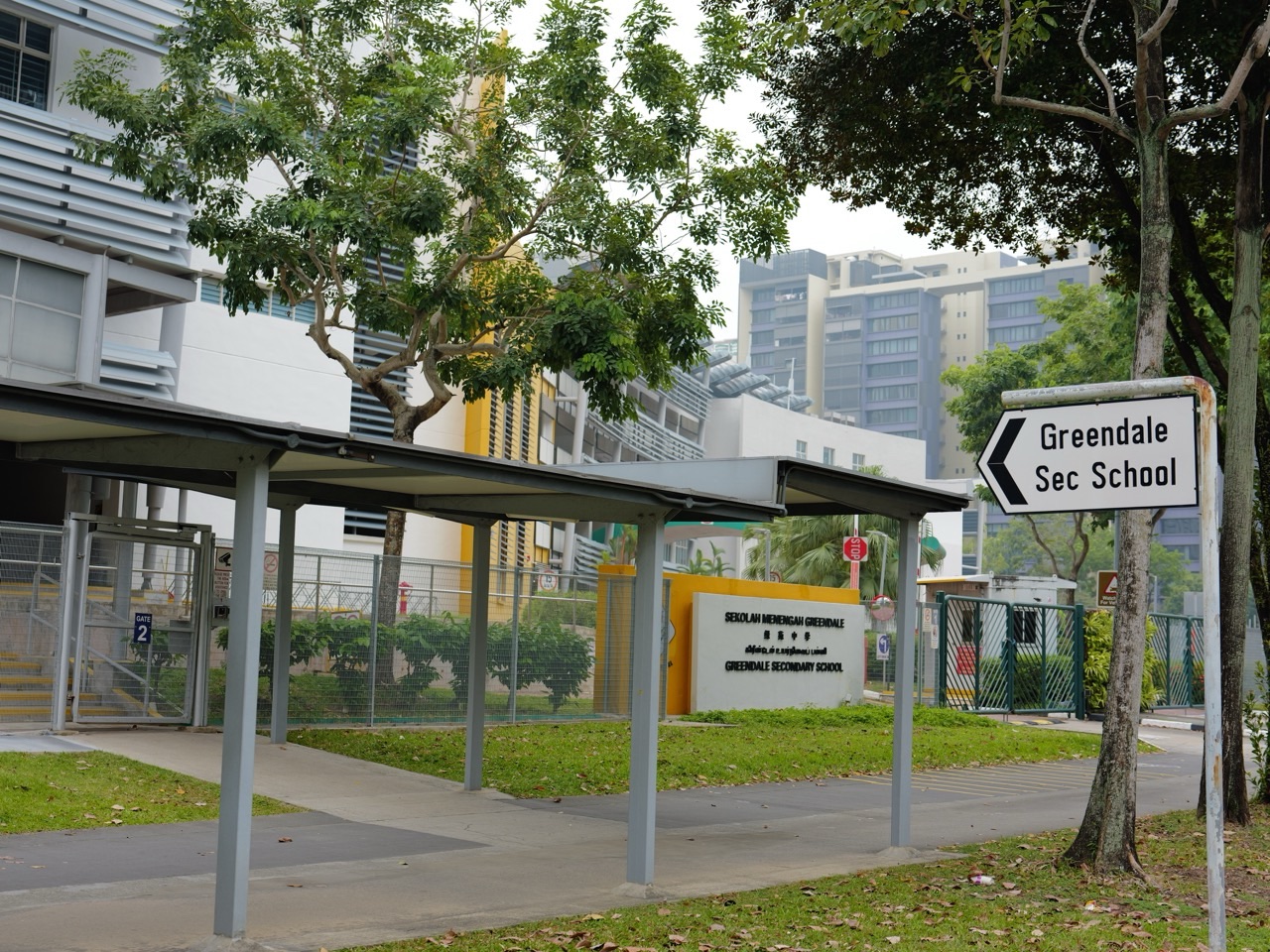
Punggol parents seeking a Posting Group 2 (PG2) secondary school with technology, robotics, engineering or environmental learning can begin with four local mainstream schools rather than assuming they must travel far for STEM. Greendale Secondary has an Applied Learning Programme in Design, Technology and Engineering; Yusof Ishak Secondary describes sustainability and smart-city STEM; Punggol Secondary emphasises environmental education; and Edgefield Secondary describes entrepreneurial, future-ready problem-solving and clubs including robotics. These programmes are different educational experiences, not four identical routes into engineering or university.
Admission must still be checked separately from the programme. For the completed 2026 Secondary 1 intake, historical PG2 last-posted PSLE Scores were Greendale 23, Yusof Ishak 22, Punggol Secondary 24 and Edgefield 23. A PSLE Score of 23–24 normally maps to PG2; scores 21–22 may permit a PG2/PG3 choice and 25 may permit PG1/PG2. The listed numbers are not promised 2027 cut-offs. Compare current MOE SchoolFinder profiles, access to the actual programmes, CCA selection rules and the child’s Mathematics and English foundations before ranking six schools.
- Four STEM-related local profiles: Greendale—design and engineering; Yusof Ishak—sustainability/smart-city STEM; Punggol Secondary—environment education; Edgefield—entrepreneurial problem-solving and technology clubs.
- PG2 is not G2 Science: PG2 concerns school admission while G1/G2/G3 concern subjects under Full SBB.
- 2026 intake PG2 references: Edgefield 23, Greendale 23, Punggol Secondary 24, Yusof Ishak 22; previous intake only.
- Do not assume entry to a robotics team: Class learning, school-wide ALP, selected competition and a CCA may have different rules.
- Compare the whole child: Interest, reading, writing, mathematical reasoning, project habits and wellbeing matter together.
- Check actual CCA options: Edgefield’s Robotics; Greendale’s Robotics; Yusof Ishak’s Robotics and STEM Club; Punggol Secondary’s Environmental and AVA-related clubs are examples to research.
- Verify the route home: Project, practice and competition afternoons may finish later than normal lessons.
- Future pathways: Relevant SEC subject levels and grades, not a school’s STEM label, establish eligibility for JC, polytechnic, PFP and ITE; subsequent qualifications shape university options.
1. The first distinction: a school with STEM is not a specialised STEM admission stream
Most families mean one of three different things when they ask for a STEM school. They may want a mainstream secondary school where all pupils encounter hands-on science, technology or environmental learning. They may want a particular Co-Curricular Activity such as Robotics, AVA or an innovation club. Or they may be seeking a selective enrichment, talent programme or competition route for a child who already shows unusual interest. These choices overlap, but they are not the same. A public webpage saying ‘robotics’ does not tell you whether every pupil participates or whether a trial is needed.
The distinction protects the family from disappointment. A school may do creative design work with every Secondary 1 cohort, offer an after-school robotics CCA to pupils who select it, and then enter only some members for a competition. That is a healthy arrangement, not a contradiction. But an honest parent guide must identify each layer before treating one activity as the reason to select a school. Ask staff what is compulsory, what is offered by choice, what has limited places and what requires a team selection.
2. PG2 admission and subject levels are separate decisions
PG2 is a Posting Group used for Secondary 1 admission under Full Subject-Based Banding. G2 is the curriculum level at which a particular subject may be offered. The student who enters via PG2 does not necessarily study every subject at precisely one level for the next four years. Individual PSLE subject performance and later school assessments can inform offers at more demanding levels under the applicable requirements. In this way, a child with secure Mathematics but weaker extended English writing may have a different profile from a child who writes confidently yet needs consolidation of fractions.
Science and design programmes do not override these formal subject rules. A pupil who builds a compelling prototype still needs to meet the G-level and grade prerequisites for the course they eventually apply to. Conversely, a teenager who does not join a robotics competition can later thrive in engineering if their academic preparation, curiosity and pathway decisions are appropriate. Do not turn today’s preferred club into a permanent label of what the child can become.
| PSLE Score | Usual published eligibility | Immediate subject and school decision |
|---|---|---|
| 21–22 | Choose PG2 or PG3 when permitted | Compare two school lists and the learning demands of the resulting subject offers. |
| 23–24 | PG2 | Build one PG2 list; ask about optional stronger subject offers. |
| 25 | Choose PG1 or PG2 when permitted | Look at readiness, support and school fit, not only which group sounds higher. |
3. Compare the four local STEM approaches in one place
Greendale’s Design, Technology and Engineering emphasis asks pupils to consider a problem, design, test and improve a solution. Yusof Ishak’s S4TEM@YI focus addresses sustainability and smart-city ideas, connecting technological choices to the needs of people and environments. Punggol Secondary’s environmental learning brings attention to local surroundings and responsible action. Edgefield’s entrepreneurial and future-ready approach highlights problem identification, ideas and real-world problem-solving, alongside technology-related CCA options. These are distinct learning lenses, even when all four schools teach the national curriculum.
Parents should not rank them according to which label sounds most advanced. Ask whether the child enjoys patient construction, field observations, teamwork, communication, experimental evidence or community action. A learner who likes building a device but dislikes explaining its purpose may need both the project and the writing practice that accompanies it. Another who loves ecology might prefer collecting and interpreting observations before touching a robot. A school works best when it helps a child grow beyond a single strong point.
| School | Published programme or club emphasis | Family’s best verification question |
|---|---|---|
| Greendale Secondary | Design, Technology and Engineering ALP; Robotics CCA; Outdoor Adventure LLP | What do all Sec 1 pupils learn, and which teams are selected? |
| Yusof Ishak Secondary | S4TEM@YI sustainability/smart city; Robotics and STEM Club | How does an ordinary PG2 entrant participate in STEM? |
| Punggol Secondary | Environment Education ALP; Environmental Club; AVA | How do environmental projects connect to the broader curriculum? |
| Edgefield Secondary | G.E.M./future-ready problem-solving; Robotics and aviation-related clubs | What is cohort-wide and what involves CCA allocation or trials? |
4. Greendale: when engineering means testing a real decision
Greendale Secondary’s published Applied Learning Programme is built around Design, Technology and Engineering. Families can look for work involving coding, sensors, design, models and revised solutions. The educational strength of such work is not the number of electronic components. It is whether a pupil can explain a problem, identify constraints, compare possible designs and understand why the first attempt failed. The same reasoning appears in Mathematics word problems: translate the situation, test a method and check whether the answer is sensible.
Greendale also publishes an outdoor-adventure Learning for Life Programme. This may sound separate from engineering, but outdoor activity adds cooperation, planning and judgement under changing conditions. A child who can persist through a difficult task learns something valuable for academic work. Still, check which activities are part of the ordinary cohort, which have age or safety conditions and which are selective. Do not guarantee kayaking or rock-climbing to every new Secondary 1 pupil simply because a school highlights them.
5. Greendale CCAs: robotics is only one valid route
A student excited by coding might naturally inspect Robotics, while another who enjoys mechanisms might prefer a sport or a stage production after a demanding academic day. Greendale’s official CCA information has identified sports such as Canoeing, Fencing, Floorball, Football and Softball; performing arts including Angklung, Dance, Chorale, Orchestra and Theatricks!; and clubs including Robotics. Families should read the current CCA allocation rules and timetable rather than assume every listed activity has equal availability for every beginner.
An engineering-minded teenager can learn a surprising amount from theatre. A production requires timing, sound, lighting, measurement, team coordination and troubleshooting. Sport teaches practice, feedback and iteration. Parents can therefore ask the child to distinguish an academic interest from a desired way to spend CCA afternoons. A STEM-themed school and a non-STEM CCA may be a better combination than constant exposure to the same activity.
6. Yusof Ishak: sustainability is a problem of evidence and people
Yusof Ishak Secondary’s S4TEM@YI direction connects STEM to sustainability and smart-city thinking. That offers an inviting way to make science meaningful: measure rather than guess, look for patterns, consider the needs of different users, and ask what trade-offs a proposed solution creates. A school sustainability project might involve observations, simple data, design, explanation and communication. Not every authentic project requires advanced programming; a carefully controlled comparison can build excellent scientific reasoning.
The school’s official CCA list includes Robotics, STEM Club and Infocomm Technology as well as many sports, arts and uniformed groups. A parent should ask whether the child wants to learn a skill deeply over time, contribute to a club’s projects, or simply gain broad exposure through lessons. None is inherently inferior. The right choice depends on the learner’s current readiness and willingness to attend consistently. Confirm programme and club entry conditions for the upcoming cohort.
7. Yusof Ishak: balance practical technology with language
Many children can explain a design fluently when speaking but struggle to write the same explanation. That gap matters. Technical work increasingly depends on specifications, reports, instructions, argument and communication with other people. A student who wants to pursue technology later benefits from precise English paragraphs as much as from a confident demonstration. The parent might ask the school how pupils write reflections or explain design decisions, and what support exists for pupils whose English subject level differs from Mathematics or Science.
A practical home exercise is to give the child sixty seconds to explain how a simple household system works, then ask them to write four sentences covering purpose, input, process and result. Look for a clear chain of thought, not just correct vocabulary. This exercise also shows why a technology-rich programme should not crowd out literacy. An explanation that another person can follow is itself a useful design.
8. Punggol Secondary: environmental education is applied reasoning
Punggol Secondary identifies Environment Education as an area of applied learning. A family living near waterways, parks and densely built residential spaces can discuss how observation supports responsible decisions without pretending that the public landscape is a school laboratory. The child might consider what information would be needed to reduce waste, understand water use or compare energy choices. The important habit is distinguishing what can be measured from what is only assumed.
Its listed Environmental Club, AVA Club, Interact Club and speaking-related opportunities offer other ways to develop confidence, technical skills and service. Yet a student choosing Environmental Club still has ordinary English, Mathematics, Science and humanities commitments. A sustainable weekly pattern is more educationally useful than a schedule crowded with attractive projects that leave no room for sleep or correction of schoolwork.
9. Punggol Secondary: the difference between doing good and measuring impact
An environmental activity may produce an eye-catching photograph: pupils collecting litter, designing a poster or presenting a campaign. Parents can go one question further. How does the activity help the child understand causes, consequences or trade-offs? Can pupils describe the baseline situation and what changed after their work? Can they acknowledge when the evidence is weak? Those habits transfer to school Science and data handling.
The same approach improves service-learning. A pupil might design a useful communication material, but should also ask whether the intended audience understands it. When schools connect project work with leadership or Values-in-Action, the meaningful result is not simply a certificate. It is a more capable teenager who can observe a need, work with others, revise an approach and explain what was learned.
10. Edgefield: entrepreneurial thinking begins with a real problem
Edgefield Secondary has described entrepreneurial learning and future-ready problem-solving. Entrepreneurship in school need not mean that children are expected to start businesses. It can mean recognising an unmet need, comparing ideas, identifying resources and testing whether something is genuinely useful. These are developmentally valuable habits for secondary pupils. The parent should ask for examples of the normal learning experiences and which activities are available beyond the compulsory curriculum.
Edgefield’s official CCA pages include Robotics and an aviation-related club alongside performing arts, uniformed groups and sports. A child interested in flight might enjoy models and systems thinking; another might discover that their stronger contribution is drawing, presenting, coordinating or explaining rather than programming. A useful school allows different strengths to become visible. Confirm the name and current offerings directly with the school before using a particular club as a deciding factor.
11. What robotics clubs actually require from beginners
A robotic device may involve mechanics, sensors, coding, motors, power, testing, documentation and teamwork. But a beginner does not need to master everything on the first day. Families should ask the CCA leader how new members are introduced to safety, basic equipment and small projects. Do pupils first assemble guided models? Are they paired with seniors? Can someone with no coding background join? Is selection based on aptitude trials, numbers or interest? A school’s answer is far more important than an internet ranking of robotics competitions.
Parents should also watch whether the child enjoys debugging. Many young people love watching a robot move but lose interest when the system fails repeatedly. That is normal and teachable. A child who learns to check one component at a time, record the result and make a controlled change is building the same disciplined habit used in experimental Science, algebra and technical trades. Frustration can become useful feedback when an adult resists solving every problem for the child.
12. Compare engineering and environmental work through a simple task
Give the pupil a harmless design brief: create a folded-paper stand that holds a small eraser. Ask for a sketch, two dimensions, a prediction about stability and a test. After the first attempt, invite the child to change one design feature. The work may reveal whether they enjoy constructing, measuring, explaining or testing. A second exercise could ask the child to observe how much paper was wasted and suggest a more efficient process. Neither task requires expensive materials or specialist tools.
Most importantly, do not grade a twelve-year-old on whether the first structure works. Ask whether the pupil can explain why it failed and what evidence would justify a new design. In a STEM setting, the lesson is often in the difference between confidence and verification. A confident but untested answer is not necessarily better than a careful revision. Schools that cultivate this distinction may be especially helpful for students who have learned to rush for right answers.
13. The Mathematics prerequisites hidden inside attractive projects
A student can be enthusiastic about technology while still confusing negative numbers, ratio or unit conversion. Those gaps do not eliminate the interest; they show the next teaching priorities. Design work requires measuring lengths and angles, interpreting scales and estimating quantities. Sensors create data that pupils need to read and compare. Coding frequently introduces variables, conditions and logical sequences. These applications become more satisfying when the Mathematics is understood from first principles.
Parents can support the transition by asking the child to show their reasoning rather than merely produce an answer. If a design scales from 10 centimetres to 15, what changes and why? If a class collects three measurements, are they comparable? If a chart rises, what does that actually establish? Gentle questions reveal whether the pupil is thinking mathematically. The objective is not to turn home into an engineering lab, but to see how school fundamentals support enjoyable projects.
14. English is part of engineering, even when the child prefers machines
A pupil who can build but cannot describe a problem will struggle to share useful ideas. English helps the learner read specifications, evaluate claims, follow safety instructions, write reflections, prepare presentations and explain trade-offs to non-specialists. This is especially important for mixed subject profiles: some PG2 entrants may have stronger Mathematics than English and vice versa. Ask the school how differentiated language support works and what subject-level options are available under Full SBB.
One practical strategy is to teach a short engineering explanation with four stages: ‘The problem is…’; ‘I chose this design because…’; ‘The evidence from the test was…’; and ‘Next time I would change…’. A pupil should be able to say the sentences before writing them. This structure is valuable beyond Science: it helps organise persuasive writing, reflection and even explanations during oral assessment. A good technical interest can motivate improvement in language rather than compete with it.
15. The CCA selection trap: seeing the name is not joining the activity
CCA brochures rarely display the full reality of vacancies, beginner places, training days or selection trials. Parents should ask whether clubs are open to all eligible pupils, whether preference ranking is used, how oversubscription is handled and what happens if the child does not enter their first choice. The existence of a robotics or STEM CCA at the school is evidence of an opportunity, not a contractual place for an incoming child. The alternative choices still need to be acceptable.
For a student considering more demanding academic subjects, this question is also about weekly energy. A technically challenging club may be exhilarating for one child and exhausting for another. Ask about late training, competition seasons, weekend obligations and safe travel home. School choice and CCA choice are linked to family logistics; they cannot be evaluated independently of daily routine.
16. How to read ALP and LLP labels without confusion
An Applied Learning Programme (ALP) generally describes a school’s applied-learning focus, connecting academic knowledge with authentic tasks or contexts. A Learning for Life Programme (LLP) focuses on values, character and developmental opportunities. Neither label is an SEC examination subject in its own right. A school may deliver substantial parts across a cohort while selecting individuals for additional enrichment. That distinction must be checked for each programme and each cohort.
Parents should request an example of one ordinary Secondary 1 experience and one optional enrichment experience. The first tells you what the child is likely to encounter after admission; the second tells you what might be available if the child develops further interest and meets selection conditions. Do not assume the marketing headline describes a four-year guaranteed activity. Programmes evolve, staff change and student opportunities may be revised.
17. From interest in STEM to Secondary 3 subject decisions
At twelve, a child may say they want to become an engineer, scientist or game designer. Encourage curiosity, but avoid treating that sentence as a binding contract. Upper-secondary subject combinations require attention to school offerings, eligibility, subject strengths and workload. A pupil should have enough grounding in Mathematics, English, Science and relevant areas to make an informed choice when the time arrives. Some post-secondary courses have specific relevant-subject requirements that should be checked in the actual admissions year.
A responsible plan keeps an options sheet rather than a single predicted job. Under one column write current strengths; under another the subject skills needing repair; under a third a few possible course fields, such as engineering, business, media, health, design or environmental studies. Revisit it as the child matures. The objective is not to maximise the number of G3 subjects without regard to grades; it is to build a qualifying, sustainable profile for genuine later opportunities.
18. How post-secondary pathways relate to a PG2 STEM-minded child
The SEC examination begins in 2027 for graduating cohorts. MOE’s announced pathways from 2028 include JC and MI routes requiring appropriate G3 subject results, direct polytechnic Year 1 with defined G3 core and relevant subjects plus the permitted G2/G3 Best subject arrangement, the Polytechnic Foundation Programme (PFP) subject to its separate aggregate and grade rules, and ITE Higher Nitec programmes. A STEM interest does not exempt the student from the English, Mathematics or course-specific rules that apply.
From 2028, JC’s revised L1R4 approach uses five relevant G3 subjects; the published gross qualifying threshold is 16 for JC and 20 for MI, alongside subject requirements. A student cannot simply bring five G2 grades and call them five G3 results. Polytechnic Year 1 and PFP use different computations, and qualifying is not a guarantee of admission to a competitive course. Parents should read official policy when these milestones become relevant rather than mixing several admissions systems into one imagined universal point score.
19. The 2027 Secondary 1 cohort will not sit the 2027 SEC
This timeline mistake causes unnecessary confusion. The first graduating students take the new SEC in 2027. A child entering Secondary 1 in 2027 would ordinarily sit Secondary 4 examinations in 2030 and apply for post-secondary education in 2031, assuming standard progression. Published 2028 rules are the latest useful framework for planning, not a legally fixed promise about 2031. Policymakers, institutions and course prerequisites may change details over those four years.
Parents should therefore teach their child to monitor official requirements at the right moment. During Secondary 1 and 2, prioritise foundation and confidence. During subject selection, check the pathways that depend on subjects at particular levels. During the graduating year, verify the live post-secondary admissions and course pages. This is more reliable than using a single article written years earlier as the permanent rule book.
20. University comes later, through qualifications and course selection
A polytechnic diploma may support applications to universities, subject to programme requirements, relevant results and competitive selection. JC normally leads to pre-university qualifications and subsequent degree applications. Some ITE students progress to relevant diplomas through applicable routes and may later pursue further study. There is no honest basis to conclude that a child in PG2 is either guaranteed or excluded from university at age twelve. The university is not selecting pupils on the name of their Secondary 1 Posting Group.
Similarly, a robotics CCA is not an undergraduate engineering admission credential in itself. What matters later may include grades, portfolio, ability, subject prerequisites and the institution’s actual selection process. A school CCA can help develop the habits and interests behind such evidence. It should be valued for what the student learns now, not advertised as a shortcut past subsequent assessments.
21. Four profiles: which STEM environment might suit which child?
Profile A—curious builder: A pupil loves taking apart simple mechanical models and is comfortable when a prototype fails. Greendale’s applied engineering and the other schools’ technology clubs are useful research leads. The family should ask about actual project content, access for beginners and weekly demands, and verify the child’s PSLE posting eligibility independently. A better fit may emerge after talking to students rather than only reading a school website.
Profile B—nature observer: The child notices litter, birdlife, water features or plant growth and enjoys asking why patterns change. Punggol Secondary’s environment education may provide an inviting context; Yusof Ishak’s sustainability focus may also be worth exploring. The family should check whether the pupil prefers outdoor observation, design, public communication or coding, because environmental interests can take many forms.
Profile C—technology-and-people thinker: A pupil likes technology but talks constantly about how residents or classmates would use a new system. Yusof Ishak’s smart-city and sustainability approach, Edgefield’s problem-finding emphasis and projects elsewhere could all be relevant. Ask what pupils actually produce and how they test whether it helps real users. The objective is to keep curiosity broad, not choose a school from one fashionable phrase.
Profile D—enthusiastic but academically uneven: A learner likes robotics yet struggles with fractions or long English instructions. That does not mean avoiding STEM. It means choosing a school whose actual subject support and starting G-level profile are appropriate. A steady commute and clear intervention can matter more than the largest collection of clubs. The child might continue technology as a manageable CCA while repairing foundational Mathematics and reading.
22. Evaluate the real value of a school open house
At an open house, look for what is available to an ordinary new Secondary 1 pupil rather than only top performers. Ask to see a typical project, a timetable, a display of work in progress and an explanation of how teachers respond to mistakes. Listen to student guides: do they sound able to describe the learning process, not just awards? Ask whether a project involves every class or only a selected team. A school’s willingness to describe limitations is often more useful than a long list of adjectives.
School atmosphere also matters. Notice whether the child feels comfortable asking a question, whether they can imagine joining the clubs and whether the journey is sustainable after a long day. If the school has an appealing project but no suitable CCA backup or the commute is draining, those facts belong in the decision. Admission-score feasibility remains a separate check through MOE SchoolFinder.
23. The weekly timetable test for project-heavy pupils
Write a realistic week with lesson time, transport, CCA, homework, meals, family time and sleep. Mark days when projects or competitions are likely to add stress. A secondary-school student is not a university researcher with unlimited time. The child may enjoy a technical challenge but still need support to organise deadlines or avoid spending five hours polishing a model while leaving an English essay untouched. Parents should help set priorities without extinguishing ownership.
A useful rule is to reserve one short weekly review: What did you learn? What is unfinished? Which task truly requires help? What can wait? The conversation should not become a constant audit of performance. Responsible independence grows when a child learns to estimate time, check work and tell an adult early when a project is going off course.
24. A parent checklist for a meaningful six-school submission
Begin with the child’s confirmed eligibility and chosen Posting Group. Record the historical PG2 range for each candidate with the correct intake year. Then note the ordinary Sec 1 ALP, the actual CCA offerings, likely access conditions, subject-level support, commute and your child’s own reaction to the school. Use all six choices where appropriate and include a sensible spread rather than only highly demanded schools. Rank the list according to genuine preference while understanding tie-breakers.
The process should end with a sentence the child can understand: ‘We chose these schools because you can learn, have activities you might enjoy, and travel there reliably. We know the final allocation is uncertain, and we will make a good plan wherever you are posted.’ That is more helpful than making a predicted school placement sound like a life-defining verdict.
25. Frequently asked questions
Is Robotics a subject all PG2 students must take?
No. Robotics may be a CCA, enrichment, project context or part of applied learning. Ask the individual school which experiences are compulsory, elective or selective.
Is a school’s ALP part of the SEC examination?
An ALP is a school applied-learning programme, not itself a G1, G2 or G3 SEC subject. The student still needs the prescribed SEC subjects and examinations for later routes.
Are Greendale, Yusof Ishak, Punggol Secondary and Edgefield all PG2 options?
Their reported completed 2026 intake score ranges included PG2. Future offerings and cut-offs must be verified against the relevant MOE SchoolFinder entry and child’s eligibility.
Which school guarantees an engineering career?
None. A school can cultivate interest and skills, but later course admission, qualifications and work depend on the learner and formal requirements over time.
Can a PG2 student take G3 Mathematics?
It can be possible under published subject-based criteria and school arrangements. The child’s individual results and school offer govern; PG2 alone does not promise G3 for any subject.
Does a competition medal automatically make a child eligible for JC?
No. Co-curricular recognition and possible bonus points are distinct from JC’s prescribed G3 subject and aggregate criteria.
Can a PG2 pupil go to polytechnic without entering JC?
Yes, subject to meeting the direct Polytechnic Year 1 or PFP rules applicable to the cohort. Different routes use different subject levels, aggregate scores, grades and selection arrangements.
Is university possible via a diploma or ITE progression?
A recognised diploma can support later university applications, and some ITE pathways lead to diploma study. Each progression is conditional and competitive; the PG2 label is not a lifetime barrier.
What should we ask before choosing a robotics CCA?
Check beginner access, selection trials, coach support, equipment costs, safety procedures, practice schedule, competitions and a realistic alternative if not allocated.
Should a child choose the school with the lowest historical PSLE cut-off?
No. That number describes the previous admission outcome, not a quality measure. Genuine interests, subject needs, support and travel should be weighed alongside admissions feasibility.
Official references and follow-up routes
- MOE SchoolFinder: school details, CCAs, programmes and dated score ranges
- Greendale Secondary: Applied Learning, Outdoor Adventure and learning experience
- Yusof Ishak Secondary: CCA list, Robotics and STEM Club
- Punggol Secondary: Environmental, AVA and other clubs
- Edgefield Secondary: school CCA categories
- MOE: SEC examination and polytechnic Year 1 policy changes
- MOE: revised JC admissions criteria from 2028
- MOE: post-secondary admissions exercise from 2028
- eduKate Punggol: local ALP and LLP comparison
- eduKate first-principles Secondary 1 Mathematics transition reference
Reviewed 14 November 2026. Historical PG2 admission figures refer to the completed 2026 Secondary 1 intake. No school or CCA admission, G3 subject, polytechnic diploma or university place is guaranteed by these figures or programme descriptions.
Continue with the connected guide: PSLE Scores 4–32 in Punggol | 2027 Secondary School Choice Hub. Use its linked index to compare the related questions and choose your next reading.


