
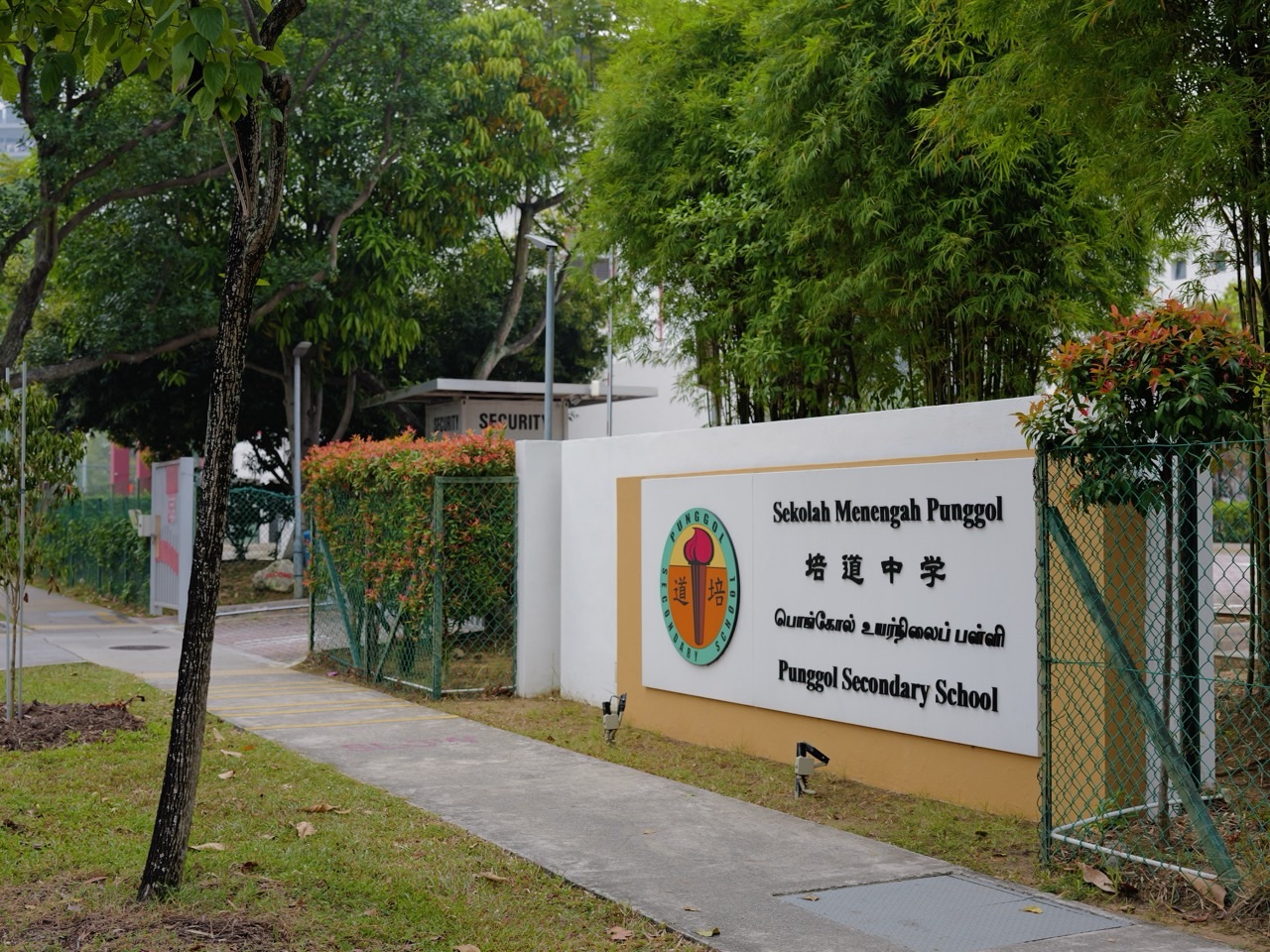
For a Punggol family choosing a Posting Group 2 (PG2) secondary school, Co-Curricular Activities (CCAs) can turn a feasible school into a school the child genuinely wants to attend. Edgefield, Greendale, Punggol Secondary and Yusof Ishak Secondary have different sports, performing arts, uniformed groups and clubs. A good comparison asks which activities are actually offered, how new Secondary 1 pupils are allocated, whether there are trials, and how the child will travel home after practice. PG2 does not create a special or restricted menu of CCAs: school-specific criteria and available places govern participation.
The admissions numbers must be read independently. In the completed 2026 Secondary 1 intake, reported PG2 last-posted PSLE Scores were Edgefield 23, Greendale 23, Punggol Secondary 24 and Yusof Ishak 22. These are past intake references, not a promise for 2027. Scores 23–24 normally indicate PG2 eligibility; 21–22 may allow PG2/PG3 choice and 25 may allow PG1/PG2. Read MOE SchoolFinder and the child’s actual eligibility before using CCA preferences to complete six ordered school choices.
- Sports-oriented comparison: Edgefield offers choices including Badminton and Wushu; Greendale lists Canoeing and Fencing; Punggol Secondary lists Basketball, Netball and Volleyball; Yusof Ishak lists Fencing and Table Tennis, among others.
- Performing arts: Compare the actual ensembles, drama, rehearsal demands and beginner opportunities, not only performance awards.
- Uniformed groups: Ask about camps, service, structure, attendance and the child’s comfort with the activity.
- Clubs: Robotics, environmental action, AVA, art, leadership and language-related groups create different forms of participation.
- 2026 PG2 cut-offs: Edgefield 23; Greendale 23; Punggol Secondary 24; Yusof Ishak 22—historical only.
- Selection is not guaranteed: Check trials, capacity, ranked choices, age, prerequisites and gender-specific team descriptions.
- LEAPS 2.0: Participation, Achievement, Leadership and Service can lead to recognition and applicable bonus points, not automatic course admission.
- Longer route: Later JC, polytechnic, PFP, ITE and university options depend on academic eligibility, qualifications and choices, not the CCA title.
1. First, separate the school posting decision from the CCA decision
A family may approach Secondary 1 with a child who loves football, plays an instrument or wants to try a uniformed group. Those interests are valuable, but ordinary school posting is still governed by the child’s PSLE score, selected Posting Group, school preference order, nationality tie-breakers and available places. A school’s football team does not independently confer a place through the usual PG2 exercise. Direct School Admission has separate rules and commitments; families should never mix a normal posting estimate with an assumed talent offer.
After a child is posted, the school has its own CCA selection process. A school may organise a fair, trials, ranked applications, allocation results and review procedures. Other activities have limits based on safety, capacity or team requirements. An honest school guide therefore asks two questions: ‘Can my child realistically be posted here?’ and ‘If posted, what is the realistic CCA experience?’ Treating these as separate decisions prevents a favourite club from becoming an imagined school admission guarantee.
2. PG2 is not a sport, arts or leadership classification
Posting Group 2 is a secondary-school admission route under Full Subject-Based Banding. G2 refers to a subject curriculum level. Neither determines whether a pupil is artistic, athletic or suited to teamwork. A child entering through PG2 might excel in music while finding Mathematics challenging. Another might be a strong reader who prefers Red Cross service rather than competitive sport. A school’s CCA selection should be read from its published procedures, not inferred from the academic admission group.
Full SBB means students may take subjects at different levels when relevant eligibility and school arrangements allow. It does not mean every child is offered every club or every advanced subject. The parent should avoid phrases that turn ‘PG2’ into a label for personality or ambition. The more helpful language is specific: ‘You seem to enjoy rehearsing as a team’ or ‘You like problem solving but will need time to organise homework’ or ‘You may want a CCA with a strong social element.’
| School | Campus location | Historical 2026 intake PG2 COP | Illustrative 2026 CCA strengths to check |
|---|---|---|---|
| Edgefield Secondary | 36 Punggol Field | 23 | Robotics, NPCC (Sea), Festive Drums, Taekwondo, Wushu |
| Greendale Secondary | 51 Edgedale Plains | 23 | Canoeing, Fencing, Floorball, Angklung, Orchestra, Robotics |
| Punggol Secondary | 51 Edgefield Plains | 24 | Shooting, Basketball, Volleyball, Drama/Debate, AVA, Red Cross Youth |
| Yusof Ishak Secondary | 8 Sumang Walk | 22 | Fencing, Wushu, Chinese Orchestra, Robotics, STEM Club, Brigades |
3. A CCA portfolio is a starting point, not a promise
The school’s list establishes that an activity exists in published information. It does not prove that every Sec 1 applicant will enter it, that training occurs at the same time every year or that the activity is open without prerequisites. Some sports teams are designated for boys or girls; parents must not generalise a listed team to every pupil. An ensemble may have an audition or a suitable beginner route. A club may be oversubscribed. Ask which conditions apply this year, especially when the child has one absolute favourite.
Make a two-choice CCA plan before choosing the school. Preference A is the activity the child most wants to explore. Preference B is a genuinely attractive alternative that would still make school life meaningful. The second choice must not be a punishment option. Ask the pupil what they would enjoy about ordinary weekly participation, not only competitions or performance nights. If both options are attractive, the school fit becomes more resilient to uncertain allocation.
4. Sports: compare the discipline rather than the trophy cabinet
Sports CCAs differ greatly. Team games involve group tactics, position changes and frequent communication. Individual or paired disciplines may involve close technical feedback, self-regulation and performance under pressure. Canoeing introduces water-based safety and endurance demands. Fencing can involve specialised technique and equipment. Shooting depends on the school’s supervised procedures and eligibility. An adult who simply writes ‘sports school’ on a shortlist misses these distinctions.
A pupil who enjoys casual basketball at the void deck may love a school team, but structured training and selection are different from informal play. Ask about weekly training frequency, beginner pathways, safety and equipment, changing competition schedules and the actual coach or school contact. If the child already plays an external sport, consider whether school training and the outside commitment can coexist without compromising sleep or academic attendance.
5. Edgefield sports and active character development
Edgefield’s official CCA information identifies sports including Badminton, Basketball, Shooting, girls’ Softball, Taekwondo, boys’ Volleyball and Wushu. The school has also described character development through sport as part of its broader learning experience. This may appeal to a pupil who wants a structured physical challenge, but families should understand the precise activity rather than assume all sports carry the same weekly requirements.
For example, Taekwondo and Wushu have different techniques and traditions; trying one should not be treated as evidence that the pupil will enjoy the other. Shooting requires careful supervision and compliance with school procedures. A parent should ask which sessions are open to beginners, the physical demands and the way the activity develops discipline and confidence without replacing the child’s need for academic support.
6. Greendale sports: land, water and team activities
Greendale’s official 2026 sports pages describe Canoeing, Fencing, Floorball, Football and Softball. Those choices provide a varied physical environment. A child drawn to water activities may enjoy the challenge of canoeing but should understand safety instructions and possible travel to training sites. A pupil seeking fast, collaborative play might prefer floorball. Fencing may appeal to someone who likes precise technique and strategic decision making. What looks impressive on a school photo can feel different during an ordinary training session.
Do not calculate a universal transport time or suggest that all training occurs inside the school’s gates. Ask the actual location, bus arrangements, school dismissal timing, wet-weather alternatives and how families are informed of changes. Training away from campus can alter an apparently easy Punggol route. These practical details matter just as much as the activity’s name when the child has to return home independently.
7. Punggol Secondary sports: multiple team options
Punggol Secondary’s official sports pages list Basketball, Football, Netball, Shooting, Table Tennis and Volleyball among its offerings; some published teams are gender-specific. This may be helpful for families seeking a particular team discipline or a broad range of movement-based activities. Nevertheless, a team page is not evidence that a new pupil has been selected, nor is a competition result a measure of all members’ experiences.
Parents can compare the student role, practice commitment and path from beginner to dependable contributor. Some pupils are happiest when they can improve quietly with a coach; others enjoy matches and immediate team feedback. Ask about selection trials, whether novice pupils can build skills, and whether students who do not make the competition squad still have meaningful CCA participation. The child’s sense of belonging deserves as much attention as medals.
8. Yusof Ishak sports: technique and team culture
Yusof Ishak Secondary’s official list includes Badminton, boys’ Basketball, Fencing, girls’ Softball, Table Tennis and Wushu. Its range gives parents options to explore but still requires careful checking of age, gender, skill and CCA allocation rules. A pupil who likes a sport should see or experience a normal session when opportunities permit, rather than relying exclusively on an open-house performance.
Try asking the child two questions after looking at the list. ‘Do you enjoy repeating a technique until it improves?’ and ‘Do you enjoy coordinating with a group?’ The answers will not mechanically dictate a choice, but they open a conversation about fit. If the pupil is uncertain, choose a school whose wider education and culture would remain appealing whichever CCA is eventually assigned.
9. Performing arts: the rehearsal is the education
Choir, band, orchestra, dance and drama teach a different kind of discipline. Students must practise parts, follow direction, listen, coordinate with peers and accept corrections that may initially feel uncomfortable. The visible reward is a performance; the developmental work happens during repeated rehearsals. For a pupil who is nervous about public speaking or social belonging, a supportive arts CCA can build confidence gradually. But a family should not confuse a strong school performance with a promise of instant skill or selection.
Ask how newcomers are introduced, whether auditions apply, what instruments or costumes may be needed and how rehearsals change before important events. Some pupils thrive in a larger ensemble where they contribute one part; others prefer smaller drama roles with more direct interaction. The practical question is whether the child wants to show up for the ordinary training, not only whether parents would enjoy attending a concert.
10. Edgefield arts: several ways to perform
Edgefield’s school information identifies Choir, Concert Band, English Language Drama and Debate, Festive Drums, Guzheng and Modern Dance among its offerings. Different forms require different interests: rhythm and coordination, pitched instruments, ensemble listening, dramatic expression or prepared argument. Parents should verify actual names, year-level access and audition or allocation arrangements on the school’s current CCA pages.
A child who avoids speaking in class might become comfortable in an ensemble, but the outcome is personal and gradual. Another who loves verbal argument may be happier in drama and debate than in band. A parent should ask how teachers support beginners and how activities build positive peer relationships, not only whether a CCA recently won an award.
11. Greendale arts: music, dance and theatre work
Greendale’s official performing-arts pages describe Angklung and Kulintang, Dance Ensemble, Greendale Chorale, Orchestra and Theatricks! Its theatre programme includes roles such as technical support in addition to performance. This is important for a child who enjoys storytelling but does not yet want to act on a stage. Sound, lights, props and organisation can be meaningful creative contributions.
An orchestra or choir provides a long developmental arc: rehearsing regularly, respecting other sections and improving through precise feedback. The family should ask what a first-year member does, whether instruments are supplied and what additional rehearsals occur before performances. A school arts programme is strongest for an individual child when the ordinary practice is satisfying enough to sustain.
12. Punggol Secondary arts and communication
Punggol Secondary’s school resources identify Concert Band, Choir, Guzheng Ensemble and Modern Dance, while its clubs and societies include English Language Drama and Debate Society and Indian Language Drama and Debate Society. This offers a useful distinction between musical/dance performance and communication-focused practice. Some children want to master an instrument; others want to become more confident expressing a reasoned position before an audience.
Parents can connect these interests to English learning without turning every rehearsal into exam preparation. A child who tells a story clearly during drama may begin to understand paragraph sequence better. A pupil who learns to listen carefully in band may become more attentive to instructions. These benefits are plausible developmental connections, not a guarantee that joining an arts CCA automatically raises an SEC grade.
13. Yusof Ishak arts, music and visual expression
Yusof Ishak’s published CCA list includes Art Club, Chinese Orchestra, Choir, Concert Band and Modern Dance, alongside English Drama among clubs. A child who enjoys drawing and design might be attracted by Art Club; another may prefer performing with peers. The family’s choice should consider the child’s desire to practise regularly and whether a school has a suitable beginner entry route.
Ask whether activities require equipment, prior experience or auditions, how pupils choose and what support is available. Do not infer from the published list that every art discipline is offered separately or that any selected showcase is available to all. A school should be evaluated by the normal student’s experience rather than by one impressive performance video.
14. Uniformed groups: structure, service and responsibility
Uniformed groups can provide training in routines, teamwork, community service, leadership and outdoor skills. They may also involve camps, physical activities, uniforms or additional event days. Some teenagers enjoy clear expectations and a reliable group identity. Others may prefer a less structured club or creative setting. Neither preference should be presented as a moral judgement about the child. What matters is appropriate participation that builds competence and positive character.
Parents should ask about attendance requirements, approximate training frequency, transport after camps, equipment assistance and how the group supports new members who are shy or inexperienced. If a pupil has medical, sensory or physical limitations, discuss suitable adjustments with the school rather than assuming that every group is equally accessible or inaccessible. A CCA should be challenging in a developmental way, not an unmanaged burden.
15. Compare the four schools’ uniformed options carefully
Edgefield’s published list includes Girl Guides, Scouts, NPCC (Sea) and National Civil Defence Cadet Corps (NCDCC). Greendale has identified National Cadet Corps Air, National Police Cadet Corps and Red Cross Youth in its 2026 CCA registration information. Punggol Secondary lists National Cadet Corps, National Police Cadet Corps, Red Cross Youth and Scouts. Yusof Ishak lists Boys’ Brigade, Girls’ Brigade, NCC (Land) and NPCC. The exact incoming-year offerings and participation conditions must be verified with each school.
These differences might matter to a child with a genuine interest in civil defence, community first aid, policing-related activities or outdoor scouting. But parents should not equate the subject matter of a youth uniformed group with guaranteed future entry to a profession. A CCA can help teenagers discover interests, self-discipline and service; later professional recruitment and qualification rules are separate.
16. Clubs and societies: technology, language, environment and community
A PG2 pupil can thrive outside a sports team or performing group. Edgefield offers clubs including Art and Robotics; Greendale has published Robotics, Broadcasting and environmental-related clubs; Punggol Secondary lists AVA, Environment, Art, Interact and language-related drama or debate; Yusof Ishak lists Infocomm Technology, Robotics, STEM Club and English Drama. These activities can develop communication, problem solving, creative production, observation and service.
A pupil who has not discovered a strong passion at age twelve should not be pushed to invent one. Ask what club members do in an ordinary meeting. Does the group publish school media, run a project, learn basic coding, organise an event or prepare public speaking? The best answer connects the activity to something the child wants to learn, not merely a title that sounds useful for a future application.
17. LEAPS 2.0: four domains, three broad attainment outcomes
LEAPS 2.0 recognises Participation, Achievement, Leadership and Service. The school’s official descriptions explain attainment as Excellent, Good or Fair, translating where applicable to two, one or zero co-curricular bonus points. Excellent requires specified minimum levels across all four domains, including at least one higher level; Good has its own permitted patterns; Fair does not produce the same bonus. A medal alone does not automatically create Excellent, and consistent attendance alone does not satisfy every domain.
The right approach is to ask the school how the student’s record is monitored and what meaningful opportunities for service and leadership exist. A teenager who takes responsibility for small tasks may be learning valuable habits before receiving a formal title. The award system should support that growth; it should not become the only reason for joining an activity. Do not imply that a CCA award can remove required SEC grades.
18. The apparent CCA bonus is not the same as admission eligibility
Families sometimes calculate a future school-to-JC route by subtracting two points from an imagined examination score and declaring success. That skips the distinction between gross eligibility, net merit ranking, subject prerequisites, choice order and vacancies. JC, polytechnic Year 1, PFP and ITE each have specific conditions. Some recognise applicable co-curricular attainment in selection, but this cannot transform G2 subjects into G3 subjects or remove minimum grade requirements.
MOE’s announced 2028 changes include JC entry using L1R4 with five relevant G3 subjects, direct polytechnic admission with the specified ELR2B2 subject mix and one permitted G2/G3 Best subject, and expanded PFP access under separate rules. Families considering a CCA for a 2027 Secondary 1 entrant should know that the pupil would ordinarily take SEC in 2030, with post-secondary application in 2031. Verify the rules again then.
19. Where JC, polytechnic, ITE and university enter the story
The practical pathway after secondary school is not a single escalator. JC or MI may suit students with the required G3 subject profile and results who want a pre-university route. Polytechnic diploma education may suit learners interested in more applied courses and leads to employment and possible further study. PFP provides a conditional route into diploma education for eligible students; ITE Higher Nitec provides technical and applied education with further progression opportunities. These routes have different requirements and learning styles.
University comes later through appropriate qualifications and competitive course admission. A pupil who begins in PG2 is not categorically barred from reaching university. Nor does joining Robotics or attaining an Excellent CCA result ensure a degree offer. The family can support future options now by protecting strong English and Mathematics foundations, developing good work habits and choosing CCAs that help the child persist and contribute.
20. The travel test: normal dismissal versus late CCA
At school-choice time, parents should compare morning journeys and post-activity journeys. Edgefield is at Punggol Field, Greendale at Edgedale Plains, Punggol Secondary at Edgefield Plains and Yusof Ishak at Sumang Walk. The preferred route differs for households near Waterway Point, the eastern LRT loop, Riviera, Punggol Coast and other parts of town. A school map can show the location but cannot tell you how tired a child will feel after a long practice or whether the chosen transfer works well in rain.
Make the child practise the journey where appropriate. Include the actual school gate, permitted crossings, after-school transport arrangements, meal stops and a plan if a service is delayed. For an off-campus activity, ask where pupils are dismissed and whether transport is arranged. Never publish a made-up fifteen-minute travel time for every Punggol pupil. The right figure must be measured for the household and the actual training schedule.
21. A seven-question CCA selection interview
Before the child ranks activities, ask: What does the club do most weeks? What do beginners learn first? What would you enjoy even if there were no competition? What parts may be frustrating? How often do you need to attend? What will you do after a late practice? Which second option would you genuinely enjoy? A twelve-year-old may answer with uncertainty. That is acceptable: CCAs are partly about discovering interests through experience.
The parent’s role is to help translate enthusiasm into realistic commitment. If the child says ‘fencing looks cool’, ask what regular training looks like. If they say ‘choir is easier’, explain that singing in an ensemble also needs persistent practice. If they say ‘Robotics sounds like a future job’, ask whether they would enjoy patient testing and debugging. The aim is a chosen experience the pupil will attend with purpose.
22. A four-family comparison exercise
Family A—sport first: A child has played badminton casually for years and wants more structured coaching. Edgefield and Yusof Ishak may be worth researching, but the family must check selection, available places and PG2 admissions separately. The ideal result is a school whose ordinary lessons, commute and backup CCA would still suit the child if the preferred team place is not offered.
Family B—music without experience: A pupil has never played in an ensemble but loves listening to orchestral music. Greendale, Yusof Ishak, Edgefield and Punggol Secondary list different musical options. The family should ask whether beginner admission, instruments, rehearsals and support are practical. Choosing based on a single concert clip would be too thin an evidence base.
Family C—structure and service: A pupil wants a uniformed group and enjoys practical responsibilities. Compare the specific groups and weekly cultures rather than assume that NCC, Red Cross, Scouts and NPCC are interchangeable. Ask about service, physical demands, camps and leadership opportunities. The parent should also consider how predictable the late return journey is.
Family D—a mixed subject learner: A pupil with a genuine arts interest still needs careful G2 Mathematics consolidation. A suitable school would support the child academically and provide a manageable rehearsal schedule. It would be unwise to choose a faraway arts activity at the cost of sleep and basic schoolwork. The most sustainable plan lets both school learning and CCA participation improve gradually.
23. Six-school choices: avoid putting CCA above eligibility
Begin with the official PSLE result and any permitted PG choice. Use the correct 2026 intake PG2 historical column only as a dated reference, then check the current MOE records. For scores 21–22, compare PG2 and PG3 in separate draft lists before selecting one. At 25, compare PG1 and PG2, not two incompatible groups on the same submission. Use up to six ranked genuine school choices and include a range of previous admissions outcomes where possible.
The child’s dream CCA is a strong preference factor once the school’s admissibility and broader suitability have been considered. If a school is very uncertain for the pupil’s score, the family should not make every choice equally risky because of club prestige. The school-choice form is not a CCA application; its job is to give the child the best realistic chance of a suitable school place.
24. Keep the child healthy through four secondary years
A good CCA choice should survive exams, friendships, growth, difficult weeks and changes of interest. Help the pupil learn to pack the right items, eat properly, sleep adequately and plan homework around training. Ask for help early if attendance, injury, anxiety or timetable conflicts arise. If a change of CCA is considered later, follow school procedures; do not quietly stop attending and assume accumulated participation will remain unaffected.
Parents also need to protect the child’s sense of identity. A teenager is more than their PSLE result, school posting, competition medals or LEAPS grade. A meaningful school experience includes discovering strengths, working through disappointment, learning to cooperate with others and building ordinary confidence. Those are outcomes worth pursuing whether the eventual route is JC, polytechnic, ITE or another appropriate programme.
25. Questions to take to each Punggol school
Ask the school’s CCA coordinator what is available for the incoming cohort and how choices are allocated. Ask a subject teacher how mixed G-level learning is supported. Ask about ordinary Secondary 1 dismissal and CCA schedules. Ask whether a particular club is limited to a team, year level or gender. Ask about equipment, safety and financial assistance. Ask what happens when a child is not allocated a first preference, and who advises pupils on future subject choices.
Document the answers by source and date. An open-house volunteer may give helpful personal impressions, but official selection procedures and current school notices govern. Where two statements conflict, request clarification from the school. This discipline turns an attractive afternoon’s school visit into a decision the family can defend calmly when posting results arrive.
26. Frequently asked questions
Can a PG2 child join the same CCA as a PG3 child?
Posting Group is not a fixed CCA category. School-specific allocation, capacity, trials and participation rules govern the activity. Ask the school directly about the proposed CCA.
Is a school’s sports list a guarantee of a team place?
No. A published team proves it is an advertised offering; trials, capacity, safety and member requirements may still apply.
Do CCAs have to match the student’s intended career?
No. They should support authentic interests, learning and participation. Career plans often change, and a student may benefit from creative or community activities outside an academic focus.
Does Excellent in LEAPS 2.0 guarantee two points for every education route?
Excellent can translate into two co-curricular bonus points where the relevant admissions framework permits. Each route has its own conditions and gross academic prerequisites.
Is a formal leadership title required to learn leadership?
No. Students can develop responsibility through service, practice, collaboration and smaller roles. Official LEAPS recognition follows the framework’s criteria.
Which Punggol school has fencing?
The published official CCA lists for Greendale and Yusof Ishak include Fencing. Verify current cohort places, trials and eligibility before relying on it.
Which school offers canoeing?
Greendale Secondary publishes a Canoeing CCA. Confirm session locations, safety and training arrangements with the school.
Which school lists NPCC (Sea)?
Edgefield’s official CCA information identifies NPCC (Sea). Check the current list and allocation requirements directly.
Can a student change CCA after Secondary 1?
Schools set their own review and transfer procedures, and any participation record implications should be discussed before a change.
Does PG2 prevent JC or university later?
No categorical prohibition follows from PG2 alone. Later eligibility depends on actual subject levels, SEC results, subsequent qualifications, institution-specific admissions and merit.
Official school and policy references
- MOE SchoolFinder: verify admission group, school profile and current offers
- Edgefield Secondary official AskGov CCA list
- Greendale Secondary official sports list
- Greendale Secondary official performing arts list
- Punggol Secondary official sports list
- Punggol Secondary official uniformed groups
- Yusof Ishak Secondary full official CCA table
- Punggol Secondary: LEAPS 2.0 attainment and bonus points
- MOE 2026: new post-secondary admission exercise
- eduKate Punggol: PG2 weekly CCA planning
- eduKate Secondary 1 first-principles Mathematics transition reference
Reviewed 14 November 2026. Examples come from school-published CCA information and may change for the incoming cohort. The PG2 cut-offs cited are historical results from the completed 2026 Secondary 1 intake. This guide does not guarantee admission, CCA allocation, future subject levels or any post-secondary place.
Continue with the connected guide: PSLE Scores 4–32 in Punggol | 2027 Secondary School Choice Hub. Use its linked index to compare the related questions and choose your next reading.


