
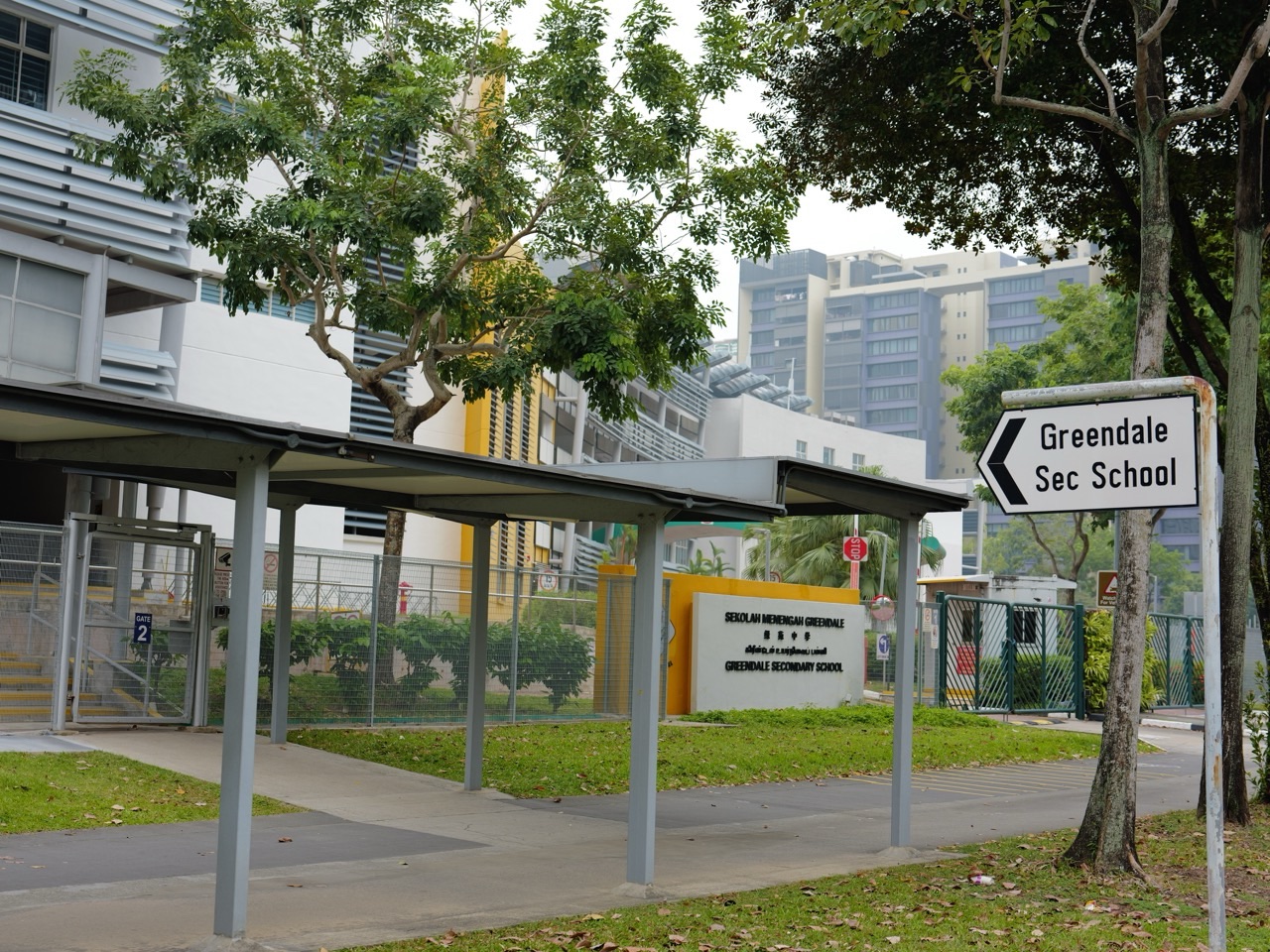
For Punggol parents selecting secondary schools with a PSLE Score from 21 to 25, the most important first decision is to read the actual Posting Group eligibility before ranking schools. Scores 21 and 22 can permit a choice between PG2 and PG3; scores 23 and 24 ordinarily lead to PG2; Score 25 can permit a choice between PG1 and PG2. This decision changes which historical school cut-off column the family should use. Then compare actual schools—Edgefield, Greendale, Punggol Secondary, Yusof Ishak and reachable alternatives in Sengkang, Hougang or beyond—by subjects, CCAs, travel, school culture and the child’s genuine preferences. The goal is a realistic six-school list, not an invented guarantee.
The completed 2026 Secondary 1 intake showed PG2 last-posted scores of 22 for Yusof Ishak, 23 for Edgefield and Greendale, and 24 for Punggol Secondary. In neighbouring Sengkang, 2026 PG2 references included 23 for Pei Hwa, 24 for Compassvale, North Vista and Seng Kang Secondary, while affiliated schools can have separate score entries. These are historical outcomes, not confirmed 2027 cut-offs. A family must use MOE SchoolFinder, the current PSLE eligibility statement and current posting instructions. At a later stage, G-level subject results determine suitability for JC, polytechnic, PFP, ITE and possible university progression; the PSLE admission label is not a lifetime assignment.
- Score 21: Compare one PG2 plan with one PG3 plan, then choose a single group for all six preferences.
- Score 22: The same dual-group decision; the 2026 PG2 historical local cut-offs were 22, 23, 23 and 24.
- Score 23: Normally PG2. Edgefield and Greendale matched this score historically; Punggol Secondary’s last-posted 24 was numerically more permissive; Yusof Ishak’s 22 was more demanding.
- Score 24: Normally PG2. Punggol Secondary matched historically; broaden the list beyond Punggol instead of assuming the other three must admit.
- Score 25: Compare PG1 and PG2; local PG1 historical figures were 27 at the four Punggol campuses, but local PG2 historical cut-offs did not reach 25.
- Six-school choices: Rank actual preferences, include a sensible range of prior admission outcomes and use the correct affiliation category.
- CCA fit: Check the child’s two preferred activities, trials, training, travel and backup options in each school.
- Post-secondary plans: Keep English, Mathematics, actual G-level choices and later qualifications central; no cutoff guarantees JC or university.
1. Learn the vocabulary before touching the school-choice form
A PSLE Score is the total from the four PSLE subjects under Singapore’s Achievement Level system. A numerically lower score is better. A Posting Group is used for Secondary 1 admission. Once posted, pupils take academic subjects at G1, G2 or G3 levels as appropriate, with Full Subject-Based Banding allowing mixed profiles and opportunities to progress in particular subjects. A school’s 2026 PG2 last-posted score is the score of a student who was actually posted to that school in that group for the completed intake, not a mark that the school fixes for the next exercise.
Parents sometimes make three mistakes at once: calling PG2 a separate school type, reading a PG3 cut-off as if it applies to a PG2 applicant, and translating a previous admissions number into a guarantee. Clear definitions prevent the rest of the decision from collapsing. Start with the child’s personalised result notice rather than the online reputation of a school.
| PSLE Score | Usual published group choice | Parent’s planning instruction |
|---|---|---|
| 21 | PG2 or PG3 | Write two separate draft six-school lists; compare subject readiness and schools. |
| 22 | PG2 or PG3 | Check the selected group, local historical ranges and commuting trade-offs. |
| 23 | PG2 | Use only PG2 ranges; ask about stronger individual subject offers if eligible. |
| 24 | PG2 | Use PG2 ranges and a realistic spread of Punggol and nearby options. |
| 25 | PG1 or PG2 | Compare starting level, school options and suitability before choosing one group. |
2. The four Punggol schools, correctly compared
The four mainstream local campuses are Edgefield Secondary at 36 Punggol Field, Greendale Secondary at 51 Edgedale Plains, Punggol Secondary at 51 Edgefield Plains and Yusof Ishak Secondary at 8 Sumang Walk. Their 2026 intake PG2 historical last-posted scores were respectively 23, 23, 24 and 22. These numbers give a useful picture of the previous cohort’s decisions. They do not explain teacher quality, school safety, inclusion, CCA places or the next year’s applicant demand.
Two practical details matter. First, Edgefield and Punggol Secondary have names and addresses that can be mixed up: write down the exact school and actual gate. Second, even two campuses in the same estate can involve very different routes from homes near Punggol Coast, Waterway Point, Sumang Walk or Riviera. Test ordinary morning travel and late-CCA travel. A family that ignores that daily commitment may struggle even after a successful posting.
3. Use a correct, dated 2026 intake reference table
The table below shows historical PG2 scores for practical candidates around Punggol. Figures are a research starting point and should be verified using the current MOE SchoolFinder listing, especially if the next cohort has a different number of available places. A non-affiliated child must not use an affiliated category’s score simply because the number is attractive.
Affiliated schools such as CHIJ St. Joseph’s Convent, Holy Innocents’ High and Montfort may have differentiated score entries; consult the relevant category and the child’s actual affiliation status. A table without that distinction can mislead parents and should not be used as a definitive application plan.
| School | Area | 2026 intake PG2 historical COP | Special check |
|---|---|---|---|
| Yusof Ishak Secondary | Punggol | 22 | Sustainability/STEM and Sumang Walk route |
| Edgefield Secondary | Punggol | 23 | Punggol Field; technology and arts CCAs |
| Greendale Secondary | Punggol | 23 | Design/Engineering ALP; outdoor activities |
| Punggol Secondary | Punggol | 24 | Environment education and CCA fit |
| Pei Hwa Secondary | Sengkang/Fernvale | 23 | Robotics, ODAC, arts, Fernvale travel |
| Compassvale Secondary | Sengkang | 24 | Aeronautics/coding ALP; Compassvale Crescent |
| North Vista Secondary | Sengkang | 24 | Infocomm/media; Rivervale Link |
| Seng Kang Secondary | Sengkang | 24 | Compassvale Lane; current CCA timetable |
| Hougang Secondary | Hougang | 24 | Academic support, CCA and Hougang Street 93 |
| Bowen Secondary | Hougang | 24 | Lorong Napiri route and school environment |
| Xinmin Secondary | Hougang | 23 | Current PG2 and actual subject opportunities |
4. What a pupil with Score 21 should actually compare
At Score 21, the student may be eligible to choose PG3 or PG2. A parent should examine both likely school environments and the child’s subject readiness. PG3 commonly involves a more demanding starting academic load, but it can also affect available school choices. PG2 can allow a different starting profile and opportunities for subject-level challenges where the student qualifies. The better route is not automatically whichever group sounds more prestigious.
The completed 2026 intake PG3 last-posted scores for the four Punggol campuses were Edgefield 14, Greendale 16, Punggol Secondary 19 and Yusof Ishak 15. Thus, a Score 21 pupil considering PG3 should not pretend that these four previous local cut-offs established ready access through PG3. Other PG3 schools beyond Punggol may need to be researched. If the family chooses PG2 instead, the relevant local historical figures are 22 to 24, producing a different starting shortlist. The choice must be made on eligibility and fit, not fear.
5. Score 21: why an attractive PG3 idea may demand more travel
A family may admire a school outside Punggol that admits PG3 pupils with higher numerical scores than the four Punggol campuses historically did. That is a possible research lead, but a longer journey can impose a real daily cost. The child could face early departures, multiple transfers and later CCA travel. A subject-level and school-brand choice should be weighed against actual wellbeing, not treated as abstract ranking mathematics.
Build a realistic PG3 shortlist and a realistic PG2 shortlist separately. If one plan includes a distant school, rehearse the route rather than simply writing ‘accessible’. Evaluate what the child needs academically and socially over the next four years. Do not mix the two lists in the actual S1 submission.
6. Score 22: historical PG2 options expand locally
For a pupil with Score 22 selecting PG2, Yusof Ishak’s completed 2026 last-posted score of 22 is an exact historical match, while Edgefield and Greendale recorded 23 and Punggol Secondary 24. Numerically, the child would have been better than several of those historical cut-offs. This makes the four local schools relevant research candidates, but not guaranteed offers. Parents should still compare actual subject programmes, CCAs, support and commuting.
A Score 22 family should also explore Sengkang choices such as Pei Hwa, Compassvale, North Vista and Seng Kang Secondary, and other reachable schools if they suit the child. The opportunity is to create a list with genuine preferences and some admissions spread, not simply label the most permissive historical school ‘safe’.
7. Score 22: the PG3 route needs its own feasibility check
The same Score 22 child may be tempted to choose PG3 because they want more demanding subject exposure. That can be a legitimate consideration, but it does not erase school-posting numbers. In the completed 2026 intake, none of the four Punggol campuses had a PG3 last-posted score reaching 22. A family would need to research realistic PG3 schools farther afield rather than assume a local school will admit at that score.
Check the child’s actual four subject ALs and discuss readiness. If the pupil performs strongly in one subject and less securely in another, PG2 with a suitable subject-specific offer may be educationally sensible. If a PG3 route appears realistic and the child is ready, compare its daily demands honestly. There is no universal answer that fits every Score 22 student.
8. Score 23: do not read ‘equal to cut-off’ as guaranteed
With Score 23, a pupil ordinarily enters PG2. Edgefield and Greendale recorded a last-posted PG2 score of 23 for the completed 2026 intake; a future applicant with 23 is therefore at that previous boundary. Punggol Secondary recorded 24, which was numerically more permissive; Yusof Ishak recorded 22, which was more demanding. Parents should not tell a child that equality with an old boundary means admission is confirmed.
At Score 23, a six-school plan might research all four local campuses and one or more Sengkang alternatives, but the specific order should come from the child’s own preferences and the applicable current official record. The family should include several plausible alternatives instead of filling every slot with highly demanded choices. Admission risk and school fit belong together.
9. Score 23: ask whether stronger subjects can be offered at G3
PG2 does not fix all subjects permanently at G2. MOE’s Full SBB framework recognises individual subject strength, with initial eligibility for more demanding subject offers tied to relevant PSLE subject ALs and later opportunities based on school performance and arrangements. A pupil strong in Standard Mathematics, for example, may need an explanation of their actual G3 offer while another pupil might benefit more from consolidating English at G2. The formal school offer, not an online guess, governs.
Parents should ask how the receiving school handles mixed subject levels, workload and subsequent reviews. The aim is not to collect the most G3 labels. It is to help the teenager earn durable understanding and become ready for suitable upper-secondary and post-secondary decisions.
10. Score 24: one local historical boundary, several other possibilities
For Score 24, Punggol Secondary had a completed 2026 PG2 last-posted score of 24. The other three Punggol campuses had historical cut-offs of 22 or 23, making them more uncertain for a future Score 24 applicant. A parent may still have genuine reasons to prefer one, but should not rely on a new cut-off becoming more permissive. A responsible shortlist widens beyond Punggol.
Compassvale, North Vista, Seng Kang Secondary, Hougang Secondary and Bowen each had 2026 PG2 historical figures of 24, while several additional schools elsewhere also admitted PG2 students. The family should check current listings, school fit and travel. An apparent numerical match is only one piece of evidence; the objective is to rank six suitable options with a reasonable spread, not force a predicted result.
11. Score 24: compare actual learning support and CCA workload
An incoming Secondary 1 pupil with Score 24 may need a steady transition, but the score alone says nothing about disability, confidence or potential. Ask what a typical school week looks like, whether one subject is especially difficult, and how teachers support basic algebra and structured English responses. Consider CCAs that help the child belong and learn a skill without exhausting the week.
For example, Punggol Secondary has environmental and leadership opportunities, Compassvale has aeronautics and coding, Pei Hwa offers a broad club menu, and North Vista highlights Infocomm. A student may enjoy any of these, but a published activity does not mean every entrant will be allocated to it. Check beginner access and the child’s second acceptable CCA.
12. Score 25: why the PG1/PG2 decision changes the shortlist
Score 25 can be an important boundary because a pupil may be eligible to select either PG1 or PG2. In the completed 2026 intake, all four Punggol campuses showed a historical PG1 last-posted figure of 27, while their PG2 cut-offs ranged from 22 to 24. Thus, for this particular score and those particular historical results, a PG1 plan had local Punggol options that appeared numerically more feasible than a PG2 plan. That is evidence to consider, not a promise about the upcoming cohort.
Choosing PG1 is not a failure, and choosing PG2 is not proof of future success. The child’s overall subject readiness, English and Mathematics fundamentals, school support and interests matter. The family should understand the potential starting subject mix and opportunities to progress before selecting a group. This decision should not be made only from an adult’s fear of a school label.
13. Score 25: a PG2 plan may need schools beyond Punggol
A Score 25 pupil who selects PG2 might find some historical 2026 local cut-offs numerically tighter than their score. Other schools outside the immediate estate had PG2 last-posted scores of 25 in that intake, including Serangoon Secondary and several schools farther away. These are research leads, not suggestions that any particular campus will guarantee admission. A family must confirm the current school, its PG2 offerings and the practical journey before using it in the actual six-school list.
The alternative is to examine a PG1 list with schools in Punggol and neighbouring estates. That may provide a different set of plausible daily school experiences. Think through academic readiness and support with the primary school; the correct choice depends on the child rather than a universal preference for the numerically ‘higher’ group.
14. Admissions history does not make a ‘safe school’ invulnerable
Parents often want a single school that will absolutely accept their child. A previous cut-off can inform plausibility, but it cannot bind the future cohort. The actual number of places, score distribution, applicant preferences and tie-breaks may change. The term ‘safety choice’ is therefore a planning shorthand, not a contract. Even a child with a numerically better score than previous admitted pupils should not receive a certainty promise.
MOE’s school-choice guidance encourages including schools where the child’s PSLE score is better than the previous cut-off and using all six options. This is a reason for thoughtful diversification, not for choosing a school the child would genuinely dislike. A reliable list balances meaningful preferences and varying levels of historical admissions demand.
15. Choice order is not a cosmetic field
When two or more eligible pupils with the same PSLE Score compete for the last place, MOE’s published tie-breaks include citizenship, school preference order and then computerised balloting. A family should therefore rank a preferred school higher rather than incorrectly assume that placing a ‘safer’ school first magically raises the odds of getting another school later. The actual submitted order should reflect genuine preference within a sensible overall list.
The practical conversation is: if the child could choose freely among the schools on the page, which would they actually want first? Then verify that the remaining schools provide realistic and acceptable possibilities. Choice order matters, but it cannot overcome an inadmissible Posting Group or guarantee places.
16. Affiliated school numbers need a separate column
Some schools publish score ranges for affiliated and non-affiliated applicants. These categories can be different, sometimes substantially. A child who has no eligible affiliation should not use another child’s affiliated cutoff. In the Sengkang and Hougang region, families researching CHIJ St. Joseph’s Convent, Holy Innocents’ High or Montfort must read the relevant category in the current official school profile.
School affiliations do not all operate identically, and a future junior-college relationship is a different admissions question from primary-to-secondary posting. Verify what applies now. It is especially risky to copy a last-posted number from a simplified table without knowing which category it represents.
17. CCA first choices and second choices: compare both
School programmes and CCAs can make a child feel excited about a campus. Edgefield lists technology and performing-arts options; Greendale has Design/Technology/Engineering and outdoor activities; Punggol Secondary highlights environment education; Yusof Ishak emphasises sustainability-related learning and various clubs. Nearby schools provide other combinations, such as Compassvale’s aeronautics and North Vista’s media work. These can help a family decide what school life might feel like.
Yet CCA allocation can involve trials, auditions, capacity or ranked preferences. A child should be able to name two activities they would enjoy and one feature of the school unrelated to CCA. If the preferred activity is not allocated, the school should still remain a welcome place. This makes the six-school list more robust.
18. LEAPS 2.0 should be understood but not used as a false promise
Co-curricular participation and development may count towards LEAPS 2.0 recognition across Participation, Achievement, Leadership and Service. Excellent and Good can result in relevant bonus points where a post-secondary admissions exercise permits. Those points cannot replace compulsory gross eligibility requirements or turn a G2 subject into a G3 subject. Parents should not promise future JC places in return for joining a CCA.
The deeper benefit of CCA is regular practice, responsibility, teamwork and service. These skills can develop the pupil regardless of whether they later choose a pre-university, diploma or technical route. A suitable school lets the child participate without allowing every evening to become an exhausting competition for credentials.
19. Compare a route from the home block, not Punggol MRT only
A journey described as ‘Punggol to Sengkang’ is not precise enough for school choice. Families near Punggol Coast, Samudera, Waterway East, Oasis or Riviera begin with different walks and transport options. A school may be a short ride from one station yet require an awkward final transfer or crossing. Plan the actual school gate, not merely the middle of the campus.
Test the journey on a school morning and after a likely CCA finishing time. Include waiting, crowding, rain, a missed bus, meal arrangements and who the child contacts if delayed. A daily routine the child can understand and complete independently may help their learning more than a difference of one historical cut-off point.
20. A four-column comparison parents can actually complete
For each school, record: admission plausibility based on the correct historical group and affiliation category; learning fit based on the pupil’s subject strengths and needed support; school experience based on CCAs, values and environment; and daily feasibility based on actual travel and family arrangements. Keep the source link and date beside each fact. Avoid giving a numerical ‘teaching quality score’ based on one open house or online comment.
Let the child contribute something concrete under each heading. A parent may care about travel; the pupil may care about drama or robotics. Good decisions consider both, while the adult retains responsibility for admission feasibility and safeguarding.
21. How parents should discuss difficult scores
Some children hear that a score of 23, 24 or 25 decides their intelligence for life. That is untrue and unhelpful. The number is a current academic result used in a posting system. It has consequences for school choices but is not a comprehensive measure of personality, character or possible future learning. Parents can be factual without turning the school choice into a judgement of the child.
Say what is known: ‘These Posting Groups are available, these schools are plausible based on last year, and these are the journeys we can manage.’ Then explain what remains uncertain: exact cut-offs will only be known after the actual posting process. This helps the teenager focus on a positive start whichever school is eventually assigned.
22. The first post-secondary gateway comes from actual SEC subjects
Singapore’s Secondary Education Certificate begins in 2027 for graduating students. Under Full SBB, pupils take subjects at G1, G2 or G3 levels. Announced changes from the 2028 post-secondary exercise include revised JC L1R4 criteria involving relevant G3 subjects, direct polytechnic Year 1 arrangements with a prescribed G3/G2 Best-subject mix, and PFP access under its distinct score and grade framework. ITE Higher Nitec remains an applied route with appropriate progression possibilities.
A pupil entering Secondary 1 in 2027 ordinarily sits SEC in 2030 and applies for post-secondary study in 2031. Today’s policy helps the family understand the direction but may change by then. Future eligibility is determined by actual subject offers, grades and requirements, not by an old Secondary 1 COP.
23. JC and MI require more than a strong CCA
From 2028, JC’s revised L1R4 framework uses five relevant G3 subjects with the published gross qualifying threshold of 16, and MI has its own 20-point benchmark and subject conditions. A student who starts in PG2 may later develop a suitable G3 profile, but a family cannot automatically count G2 subjects as the required G3 subjects. Both academic prerequisites and subsequent school performance matter.
Schools should be asked about how subject-level strengths are nurtured, when reviews occur and what guidance is available before upper-secondary subject choices. A family should not pressure the child into a timetable they cannot sustain merely to keep a JC dream alive at age twelve.
24. Polytechnic, PFP and ITE deserve equal clarity
Direct polytechnic Year 1 is a separate route with specified English and relevant-subject requirements, aggregate scoring and course competition. The Polytechnic Foundation Programme uses a different eligibility calculation and minimum grades. ITE programmes serve a wide range of applied fields and have further study routes for eligible students. These are not interchangeable calculations; parents should check each programme’s current requirements rather than assuming the same point total works everywhere.
Some pupils learn especially well through hands-on projects. Others prefer a longer pre-university route. Neither preference can be established solely by a PSLE Score at twelve. The best school can help children acquire the fundamentals and maturity to choose well later.
25. University is not a straight line from a PG label
University applications come after a suitable pre-university qualification, polytechnic diploma or other recognised route. Institutions consider actual results, relevant subjects and programme-specific admissions requirements. A pupil who entered secondary school through PG2 is not automatically blocked from later university study. Equally, no school name, LEAPS grade or CCA medal guarantees a future degree place.
Parents can hold a long-term aspiration while keeping the immediate plan simple: strengthen English, Mathematics and independent study, participate in a meaningful CCA and learn to seek help. These habits support progress across JC, polytechnic and technical education, and through later work and reskilling.
26. Seven steps to a careful final submission
First, read the official PSLE result and eligibility. Second, select the Posting Group or prepare separate comparison plans if more than one is permitted. Third, use SchoolFinder to check current school offerings and previous score ranges under the correct group. Fourth, visit or research the campuses, programmes, CCAs and support. Fifth, test routes from the actual home. Sixth, rank six genuine preferences and examine whether the list contains a sensible admissions spread. Seventh, follow the official submission instructions and verify the entries carefully.
The process is a private decision sequence, not a statement that the official application period lasts seven days. If the pupil has accepted a DSA offer, different obligations apply. Parents should not advise the child to disregard an official allocation or acceptance rule based on a general online article.
27. What if none of the six choices works?
MOE’s posting system has official procedures for allocating pupils and handling results. A family should read the current instructions and contact the relevant authority or school if unsure of the next step. Do not promise that a parent can simply appeal into a favourite school based on dissatisfaction with the assigned campus. Vacancies, eligibility and published administrative rules matter.
Once a school is assigned, use its Secondary 1 orientation and official communication channels to help the child settle. A pupil can still learn well and build meaningful relationships even when the first choice was not obtained. Continuing to compare the child with friends posted elsewhere is less useful than supporting the actual transition.
Frequently asked questions
Can a Score 21 pupil choose PG2?
Under ordinary published eligibility, Scores 21–22 can permit a PG2 or PG3 choice. Read the personalised notice and choose one group for the full list.
Does Score 22 guarantee all four local Punggol PG2 schools?
No. All listed numbers are historical and actual admissions are determined by the new cohort’s posting process.
For Score 23, which Punggol PG2 school had the most permissive historical last-posted score?
Punggol Secondary recorded 24 in the completed 2026 intake; this is not a guarantee or a school-quality ranking.
For Score 24, should I include schools in Sengkang?
It can be sensible to research suitable schools such as Compassvale, North Vista or Seng Kang Secondary, but verify current admissions history and daily travel.
Can Score 25 choose PG2?
A PG1/PG2 choice can be available under the ordinary framework. Compare both complete school plans and the child’s readiness rather than assuming PG2 is automatically better.
Why can’t we use the PG3 cutoff when applying via PG2?
Different Posting Groups correspond to different admission categories. Use the score range for the group selected in the actual application.
Should a preferred school be ranked lower to increase safety?
Rank genuine preferences while including a sensible spread. School choice order is part of tie-breaking, so moving a favourite lower for a misunderstood tactic can be counterproductive.
Can my child select PG3 for one school and PG2 for another?
No. In the ordinary S1 process the chosen Posting Group applies to every school choice.
Will joining a CCA guarantee a future JC bonus?
No. LEAPS attainment has specific rules, and qualifying bonus points cannot remove subject prerequisites or guarantee an offer.
Can PG2 pupils later reach university?
Potentially, via suitable later qualifications and competitive programme-specific admission criteria. PG2 itself is not a permanent barrier.
Verified sources and deeper decision guides
- MOE SchoolFinder—school details, actual Posting Groups and admissions history
- MOE PSLE and Full SBB: eligibility, subject level and school choice
- MOE Secondary 1 posting: official process, dates and choices
- MOE 2025: revised JC entry criteria from 2028
- MOE 2026: post-secondary admission changes from 2028
- Compassvale: ACES STEM ALP
- Pei Hwa: official CCA list
- North Vista: Infocomm and media CCA
- eduKate Punggol: Sengkang alternatives and travel
- eduKate Punggol: Hougang school environments
- eduKate Punggol: learning, wellbeing and SEN support questions
- eduKate immutable Clementi Secondary 1 Mathematics first-principles guide
Reviewed 14 November 2026. Historical 2026 intake figures are not 2027 guarantees. Affiliation, current school offerings and eligibility must be checked in official sources. Future JC, polytechnic, PFP, ITE and university pathways have independent and potentially changing requirements.


