
When a Punggol child is eligible for Posting Group 2 (PG2), parents should compare not only school scores and CCAs but also the support available when Secondary 1 becomes challenging. Edgefield, Greendale, Punggol Secondary and Yusof Ishak are local mainstream choices; nearby Sengkang and Hougang schools widen the search. For a pupil with uneven subject strengths, a disability, special educational needs (SEN), anxiety about a new school, weak foundational English or Mathematics, or an unfamiliar independent commute, the right school is the one that can meet the child’s documented educational and everyday needs in practice. A previous cut-off point cannot tell a family that.
For the completed 2026 Secondary 1 intake, historical PG2 last-posted scores for four Punggol campuses were Edgefield 23, Greendale 23, Punggol Secondary 24 and Yusof Ishak 22. These are past results, not guaranteed 2027 entry scores. PSLE Scores 23–24 normally indicate PG2; 21–22 may offer PG2/PG3 choice, and 25 may allow PG1/PG2. MOE SchoolFinder is the starting point for schools, programmes, CCAs and locations. If the child has significant support needs, speak with the primary school and relevant qualified professionals before deciding which educational setting can meet them.
- Four local schools: Edgefield, Greendale, Punggol Secondary and Yusof Ishak; verify school-by-school support directly.
- 2026 intake PG2 historical figures: 23, 23, 24 and 22 respectively; never use them as a quality or inclusion ranking.
- PG2 and G2 are different: PG2 is school admission; G1/G2/G3 are individual subject levels under Full SBB.
- Ask for practical support: literacy, numeracy, timetables, communication, transitions, counselling and appropriate specialised resources.
- Do not infer a diagnosis: a low mark, distraction, fatigue or shyness alone does not establish SEN.
- CCA fit: Check trials, physical accessibility, sensory demands, equipment, attendance and safe travel after practice.
- Family costs: Financial assistance may cover eligible school expenses; verify current schemes through the school and MOE.
- Future pathways: SEC grades and relevant qualifications determine JC/MI, polytechnic, PFP, ITE and potential university options; PG2 does not permanently assign a destination.
1. A school that supports learning can be more valuable than an impressive label
Two pupils may receive the same PSLE score and need very different things. One might be ready for G3 Mathematics but need help writing English paragraphs. Another may read fluently and struggle with self-organisation. A third may have physical or sensory access needs that affect ordinary school routines. It is therefore unhelpful to call one secondary school universally the best for PG2. Parents should identify what would make each child more capable, confident and safely included.
MOE’s school-choice guidance explicitly advises families to consider school culture, programmes, subjects and CCAs, location and transport, and, where relevant, specialised facilities or resources for students with SEN. Those are planning dimensions, not a checklist that every school satisfies in exactly the same way. Some resources are broadly available through mainstream schools while particular needs require verified specialist arrangements. Families should seek current school-level details before assuming a campus can provide a specific service.
2. Understand PG2 before discussing support
Posting Group 2 facilitates Secondary 1 admission under Full Subject-Based Banding. It does not mean pupils are locked into one uniform teaching group for every subject. A learner may offer a subject at G3 or G1 when eligibility and school arrangements permit, while taking other subjects at G2. Mixed form classes and different subject groupings are part of the experience. Parents should ask what the timetable means for their own child rather than rely on broad phrases.
A suitable beginning subject level must be judged by actual foundation and readiness, not family prestige. If a student has a strong PSLE Standard AL in Mathematics but is less comfortable with English, the discussion should be subject-specific. A G3 offer in one subject is not an invitation to overload every other subject. Consistent participation, actual comprehension and manageable homework are the foundation for later opportunities.
| School | Campus address | 2026 intake historical PG2 COP | Support questions to ask, not assumed answers |
|---|---|---|---|
| Edgefield Secondary | 36 Punggol Field | 23 | How are mixed G-level timetables, literacy difficulties and CCA access handled? |
| Greendale Secondary | 51 Edgedale Plains | 23 | What support accompanies hands-on design, engineering and outdoor activities? |
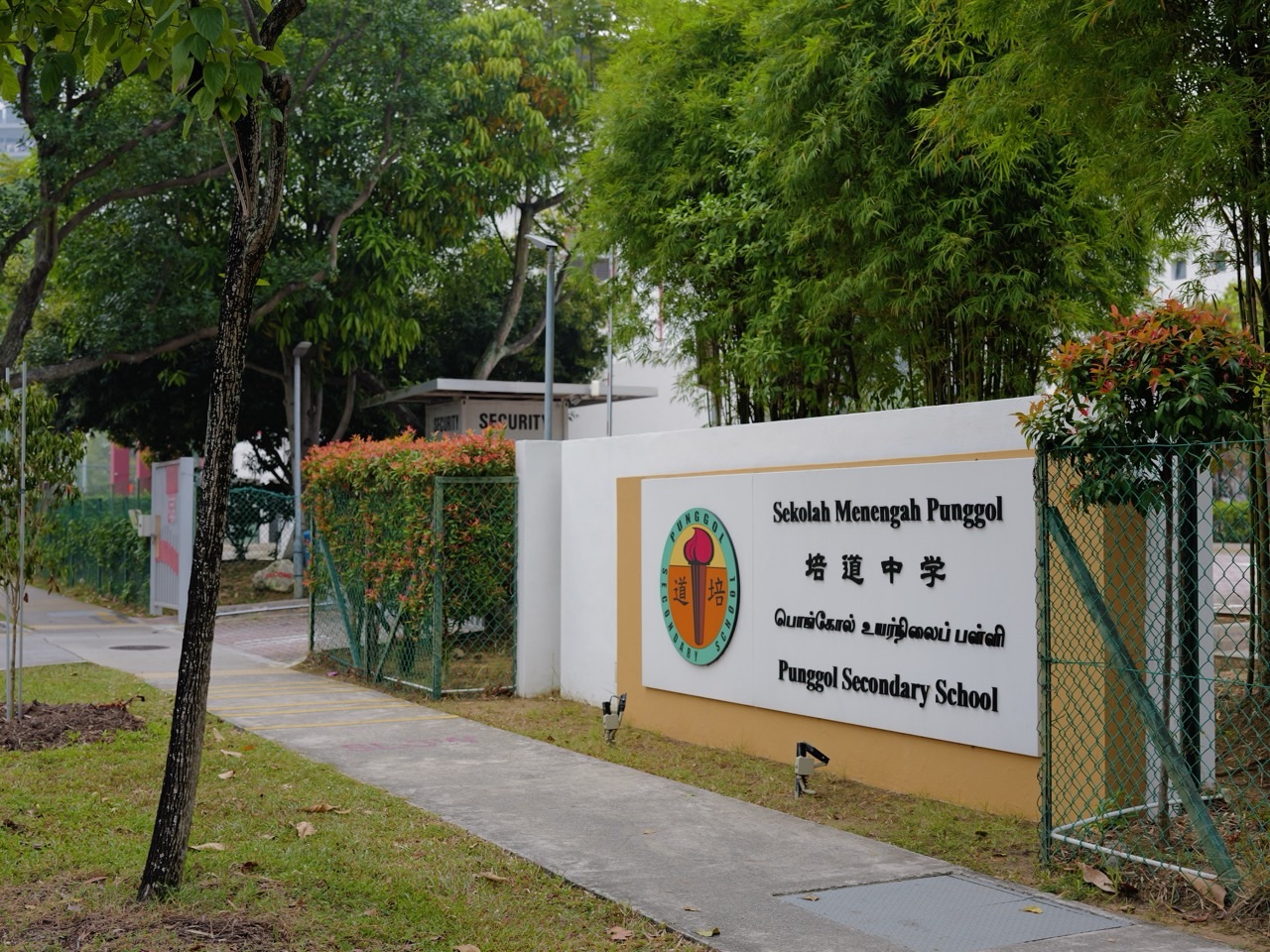
| Punggol Secondary | 51 Edgefield Plains | 24 | How are academic support, environment activities and student wellbeing coordinated? |
| Yusof Ishak Secondary | 8 Sumang Walk | 22 | How do sustainability/STEM activities and subject-level support fit together? |
3. An admissions score is not a measure of additional support
Parents sometimes assume the school with the lowest numerical PG2 cut-off has more resources or more effective teachers. The figure does not support that conclusion. A last-posted PSLE score reflects the previous cohort’s applications and available places. It does not reveal the support process for a child who has trouble following multi-step instructions, managing a device, reading unfamiliar words or travelling independently.
A school can have a less demanding historical cut-off and still offer a helpful pastoral community; another school with strong demand may be suitable for a different pupil. Instead of attempting to infer support from admissions, ask staff what happens on a typical difficult day. Who checks with the student? How does a parent reach the form teacher? When are issues escalated? What resources are available, and what are the limits?
4. Distinguish a learning gap from SEN without guessing
A student who gets algebra wrong may not understand negative numbers, fraction operations or the meaning of an unknown. The appropriate response might be careful teaching and practice. A pupil who reads slowly may need vocabulary and comprehension support. These situations should not automatically be treated as a medical or educational diagnosis. Likewise, a child who appears comfortable in a brief school visit might still have a genuine documented need requiring planning.
If parents suspect or know of SEN, the suitable route is discussion with the primary school, relevant qualified professionals and the receiving institution. MOE’s placement guidance considers a child’s strengths, learning needs, adaptive skills and the resources available in different settings. Families should not decide mainstream or SPED placement from an online score table, nor assume one arrangement is right for every child.
5. What mainstream SEN support can mean
MOE describes support in mainstream schools through teachers with appropriate training, Special Educational Needs Officers, targeted interventions and, where relevant, assistive technology or specialised services. But a general statement about the system is not proof that a specific school has exactly the resource, device or staffing arrangement a child needs at a given time. The parent should contact the school with a practical description of the child’s functioning and ask how the transition would be planned.
For example, a pupil may need a clear visual timetable or help managing a complex set of classrooms; another may need accessible transport and movement around the campus; a third may need help reading instructions or coping with sensory overload. The most useful question is concrete: ‘How would this pupil complete a normal Tuesday here, including lessons, recess, PE, CCA and travel?’
6. Physical access is a route, not only a lift
A family planning for mobility support should consider more than whether a school has a lift. Look at the usual entrance, route to classrooms, toilet access, school hall, canteen, labs, library and CCA venues. Ask whether activities sometimes take place outside the campus and what arrangements are possible. Families should not assume full accessibility from a modern exterior or treat an existing impairment as evidence that a child cannot participate.
The route from home also matters: lifts in housing blocks, kerbs, station access, weather, crowds, transfers and the final gate. A transport plan should be reviewed with the child and appropriate school staff. If a route or activity may require assistance, find out who can arrange it and what limitations must be considered before promising independent travel.
7. Sensory and communication needs: test a normal school day
A pupil may find the noise of assembly or a crowded canteen challenging, or have difficulty interpreting rapid verbal instructions. Others may require communication support to explain when they are confused. Parents should ask how ordinary routines work, whether predictable information is given, and how teachers respond to requests for clarification. Avoid making broad claims that an entire school is ‘quiet’ or ‘autism-friendly’ without school-specific evidence and the student’s own experience.
A practical orientation could include identifying the form classroom, general office, relevant support contact and a clear way to ask for assistance. The family should also teach the pupil to communicate a need in a safe and age-appropriate way. The goal is participation and growing independence, not isolating the child from every demanding experience.
8. Dyslexia or reading difficulty: focus on access to learning
A child who struggles to decode unfamiliar words may also miss important details in Science questions, Mathematics word problems and homework notices. Ask the school what literacy support, reading strategies or approved tools are appropriate for that specific student. The presence of assistive technology in a national policy does not guarantee it will be available to every pupil or permitted during every assessment. Check current school and assessment rules rather than making promises.
At home, parents can practise short explanations before increasing the quantity of reading. Have the child paraphrase a question, identify the required action and explain the meaning of key terms. If specialised assessment or support has been recommended, continue communicating with the relevant professionals. A good plan respects both the pupil’s strengths and actual barriers.
9. Attention and organisation: look at systems before labels
Secondary 1 is a major organisational transition. Many students are learning to manage a timetable, move between subject rooms, charge a device, bring CCA clothing and meet different teachers’ deadlines. Some pupils need more scaffolding than others. A planner, short checklist or a designated weekly review can help regardless of whether the child has any formal diagnosis.
Ask whether the school communicates homework clearly, offers guidance on device use and helps a child recover when they miss instructions. Teach one habit at a time: pack school items before bed, check the next day’s schedule, record unfinished tasks and ask for help early. The goal is not an adult controlling every minute. Independence develops when the student practises manageable routines repeatedly.
10. Anxiety about secondary school: make the unknown concrete
A child may worry about getting lost, not making friends, joining a club or facing harder work. Parents can respond by separating questions that have answers from predictions no one can guarantee. A map of the school and a trial transport journey may solve uncertainty about location; a conversation about orientation may clarify what happens on the first day. New friendships and assessment results, however, cannot be promised in advance.
If anxiety is significant or persistent, seek appropriate school or professional support instead of relying only on reassurance or study drills. Avoid implying that a school with a certain cut-off automatically has happier pupils. Ask what pastoral, counselling and parent-contact processes exist, and help the child develop a trusted route to adults at school.
11. The first month of Secondary 1: practical questions
Which teacher can the parent contact? How does the pupil find classrooms? Where can they receive help if sick or late? What do pupils do before CCA allocations are final? Is the usual dismissal time different on CCA days? How is the school device provided and supported? Which communication platform provides official notices? These questions can be more immediately valuable than debating a hypothetical university course.
A useful first-month goal is that the child knows the normal routine, can explain where to seek help and has completed a few pieces of schoolwork with understanding. The family should build regular conversations about what is improving and what is difficult, without turning every school day into an interrogation.
12. A school-specific inquiry for Edgefield
At Edgefield Secondary on Punggol Field, the family can ask how its normal academic timetable interacts with CCAs in sports, performing arts, uniformed groups and technology-related clubs. If the child needs help with language or a particular subject, request a clear explanation of the ordinary support and assessment review process. If the pupil is interested in Robotics or aviation-related activities, ask what is available to beginners and whether selection applies.
The point is not to label Edgefield as more or less supportive than other local schools without evidence. The parent should use comparable questions for all four campuses, then evaluate the answers against the child’s real needs and travel pattern.
13. A school-specific inquiry for Greendale
Greendale Secondary’s Applied Learning Programme emphasises Design, Technology and Engineering, while its outdoor-adventure programme involves additional forms of learning. These opportunities may suit a hands-on pupil, but a parent should ask about safety requirements, physical participation, accessibility and appropriate alternatives if the student has a relevant need. Do not assume that every child must undertake an identical activity at every level.
A child who excels in making things but struggles to write project reflections may need language scaffolding; another who is anxious about group tasks may need guidance to participate. Ask what ordinary students do, what optional experiences exist and how the school supports different forms of participation rather than relying on attractive photographs.
14. A school-specific inquiry for Punggol Secondary
Punggol Secondary’s published experience includes environment education and community leadership, plus a varied CCA menu. Families can ask how projects are structured and whether a pupil with reading, organisation or accessibility challenges can participate meaningfully. They should also ask about the academic assessment cycle, teacher contact and wellbeing procedures for new Secondary 1 students.
Environmental club or service work can be valuable because it allows pupils to contribute in different ways. But the published list does not guarantee allocation or a particular role. The school should provide the actual current CCA rules, and the family should choose two activities the child would genuinely like.
15. A school-specific inquiry for Yusof Ishak
Yusof Ishak Secondary on Sumang Walk describes sustainability and STEM-related learning along with sports, arts and uniformed groups. A pupil might enjoy its project opportunities but still need thoughtful support with subject pace, writing or transitions. Ask which experiences are school-wide, which are selective and how a new PG2 entrant accesses appropriate subject-level lessons.
Families in north-west Punggol may find the campus geographically convenient, while others may need a more elaborate journey. Do not infer the route from the school name. Test the actual home and arrival pattern and consider how the pupil will feel after a late CCA.
16. Broaden the school list when the specific support is unavailable
Punggol’s four local campuses are a natural starting point, not a closed list. If a child’s needs require a particular resource or the family strongly prefers a programme absent locally, look at relevant Sengkang and Hougang alternatives using official information. Compassvale, North Vista, Seng Kang, Pei Hwa, CHIJ St. Joseph’s Convent, Hougang Secondary and other reachable schools may warrant discussion depending on eligibility and individual fit.
Do not assume that a nearby alternative has a specialised SEN facility solely because it appears in an internet shortlist. MOE advises checking individual schools and appropriate support provisions. Where a particular hearing, vision or other specialised resource is needed, placement and school suitability must be discussed with the relevant qualified professionals and official MOE guidance.
17. CCA participation can be adapted, but ask the school
Co-Curricular Activities help young people practise cooperation, service, skill development and commitment. A student with a disability or SEN may benefit greatly from participation, but the best activity will depend on interest, safety and what reasonable support is appropriate. Ask about physical demands, sensory environment, communication, attendance, off-campus sessions and whether current school arrangements can meet the pupil’s needs.
The family should not assume a child with a learning difference must choose an academically related club or avoid sport altogether. Equally, it would be wrong to promise access to a hazardous or highly selective activity without an individual assessment. Aim for an informed conversation that enables participation where practical and safe.
18. LEAPS 2.0 is recognition, not a pressure system
LEAPS 2.0 recognises Participation, Achievement, Leadership and Service. Excellent attainment can confer two bonus points and Good one, where the admissions exercise permits. These bonuses do not remove mandatory SEC subject or raw aggregate conditions. A child with special needs or a difficult transition should be supported to participate meaningfully rather than pressured to chase a particular outcome at any cost.
Ask the school what contributions are possible and how its record system works. A pupil might contribute through steady attendance, service or a manageable leadership responsibility. Schools, parents and pupils should value the genuine developmental benefit rather than turn the programme into another source of comparison.
19. Financial assistance can make school participation more sustainable
Transport, meals, uniforms, textbooks, devices and CCA materials can create additional pressure on a family. MOE’s Financial Assistance Scheme and school-based assistance may help eligible students with school expenses, and current application channels include the Student Finance System. Conditions, benefits and individual eligibility must be verified for the relevant academic year rather than inferred from older advice or another family’s experience.
If the pupil is offered a club that involves equipment or external training, ask what is provided and whether any extra cost exists. A parent should not reject a suitable school solely because an unverified rumour claims all CCAs are expensive, nor assume every programme is entirely free. Reliable school contacts can clarify the actual position.
20. What English support should a family look for?
Read a recent piece of the child’s writing. Can they organise a paragraph with a clear idea, relevant evidence and logical sequence? When reading, can they explain unfamiliar words in context and identify the central claim? These questions reveal learning skills more accurately than a broad label such as ‘weak at English’. Ask the school about how teachers diagnose and address recurring problems at the level the student is taking.
A child who struggles with vocabulary or comprehension may also find Mathematics word problems and Science instructions difficult. Improving language is therefore part of strengthening the whole school experience. If the child has specialised literacy needs, coordinate the pedagogical strategy with school personnel and relevant professionals.
21. What Mathematics support should a family look for?
Secondary Mathematics builds on fractions, ratio, percentages, negative numbers and logical operations before moving into more sustained algebraic thinking. A child who is insecure about one foundational concept can still succeed with careful teaching and practice. Ask the school how it identifies conceptual gaps, teaches complete working and supports revision after assessment. A pupil should learn to explain why an equation step preserves equality, not merely follow a memorised rule.
Families might choose focused small-group tuition when it is appropriate and does not overload the child. The aim is to repair an identified obstacle, not compete in a frantic race to advanced topics. The healthier outcome is a pupil who understands and can use Mathematics independently.
22. How subject-level movement changes the future plan
Under Full Subject-Based Banding, a pupil who begins through PG2 may be eligible for certain subjects at more demanding G levels. The relevant offer and later review depend on official criteria and school decisions. Parents should watch the child’s mastery, workload and wellbeing rather than equate more G3 subjects with unconditional success. Subject choices later matter for JC, polytechnic and certain diploma prerequisites.
Ask for current subject-combination information when the child approaches upper secondary. A school may offer courses and electives with specific requirements, and the teenager may have interests that have changed since Primary 6. Good decisions are revisited at the right time, with actual grades and information.
23. A 2027 Secondary 1 pupil’s realistic timeline
Singapore’s Secondary Education Certificate starts in 2027 for graduating students. A pupil entering Secondary 1 in 2027 would ordinarily take Secondary 4 SEC examinations in 2030 and seek post-secondary admission in 2031. The 2028 framework for JC, direct Polytechnic Year 1 and PFP is relevant current guidance but may evolve by the child’s own application. Parents should store the date of each official policy rather than treat one screenshot as permanent.
Potential paths include JC or MI with the required G3 profile, direct polytechnic or PFP under their distinct subject and aggregate rules, and ITE technical or applied learning with appropriate progression. Subsequent university applications depend on relevant qualifications, grades and programme-specific admissions. Starting in PG2 is not a fixed exclusion from any possible later degree.
24. Avoid the claim that an SEN label predicts a career
No diagnosis or learning difference on its own determines a child’s final educational destination. Some pupils require substantial support and some pursue later qualifications through various routes. Predicting a specific outcome at age twelve would be both unreliable and unfair. The better question is what environment and teaching approaches are suitable now, and how progress and goals can be reviewed over time.
A well-supported student may discover strengths in art, technology, hospitality, service, literature, commerce or science. These discoveries can influence later decisions, but any course still has real entry conditions. Families can be hopeful without promising a result that education and admissions systems do not guarantee.
25. Parent-school meeting: questions that produce useful answers
Ask what an ordinary pupil with your child’s profile does during lessons, recess and CCA. Ask about the named contact for learning support or special needs, what documents help planning, whether the school has experience with relevant strategies, and who reviews the support. Ask for the full timetable, known accessibility issues, homework communication and how parents are informed if the student is distressed or absent. Respect privacy and discuss sensitive matters directly with the school rather than on public forums.
Record what is confirmed and what still requires checking. A vague statement such as ‘all children are supported’ is less useful than an explanation of how a teacher will ensure the pupil understands instructions and knows where to seek help.
26. Build a shortlist that protects the pupil and the family
Use the child’s confirmed Posting Group to select plausible schools. Compare admissions history for the correct group, then check the educational fit, SEN resources where relevant, CCA access and travel. Rank up to six genuine preferences while including reasonable spread across historical outcomes. A family may prefer the closest campus, but if a necessary support arrangement is unavailable there, a reachable alternative can be more appropriate.
After posting, continue planning rather than treating the school allocation as the last decision. A careful orientation, appropriate support discussion and realistic CCA choice can make a good beginning. The child should know that asking for help is a normal part of learning and is not proof that they do not belong.
Frequently asked questions
Does PSLE Score 24 indicate a child has SEN?
No. PSLE is an academic result, not a diagnostic assessment. Investigate actual learning needs and consult qualified professionals when appropriate.
Does PG2 restrict pupils to G2 subjects forever?
No. Full Subject-Based Banding can allow subjects at different G levels according to the official eligibility and school rules.
Which Punggol school has the best SEN support?
There is no credible universal ranking from cut-off points. Confirm the specific resources and arrangements each school can provide for the child’s actual needs.
Can a pupil with SEN attend a mainstream secondary school?
Some pupils can access the national curriculum in mainstream schools with appropriate support. Educational placement should follow individual assessment and professional and MOE guidance.
Can a child with SEN join a CCA?
Participation can be meaningful and appropriate; discuss actual activity requirements, safety and possible support or adjustments with the school.
Are MOE SEN Officers the same as private tutors?
No. SEN Officers are part of specialised school support arrangements, while tuition addresses academic learning outside the school’s official support system.
Is financial assistance available for secondary students?
MOE and schools provide assistance under criteria that depend on the academic year and household circumstances. Apply through official channels and check eligibility.
Can extra tuition replace school SEN support?
Not as a general rule. Academic coaching may help particular skills, but specialised educational or professional support should be coordinated through appropriate channels.
Can a PG2 student reach JC or university?
It can be possible through later qualifications and admission criteria. The student’s actual SEC subject profile and subsequent results matter.
Do historical COP figures predict wellbeing?
No. They describe admissions outcomes, not psychological support, inclusion or individual educational fit.
Official parent resources and related reading
- MOE SchoolFinder: campuses, programmes, subjects and current school information
- MOE: special educational needs and support pathways
- MOE parent’s guide to educational placement for children with SEN
- MOE PSLE and Full Subject-Based Banding microsite
- MOE Student Finance System—financial assistance applications
- Greendale: published programme descriptions
- Punggol Secondary: published CCA options
- Yusof Ishak Secondary: CCA choices
- eduKate Punggol: four local schools and daily travel comparison
- Immutable eduKate Secondary 1 Mathematics first-principles guide
Reviewed 14 November 2026. Historical admission figures refer to the 2026 Secondary 1 intake. This general educational guide is not an individual diagnosis, placement assessment or promise of support services. Verify current school and MOE arrangements with the relevant qualified personnel.


