
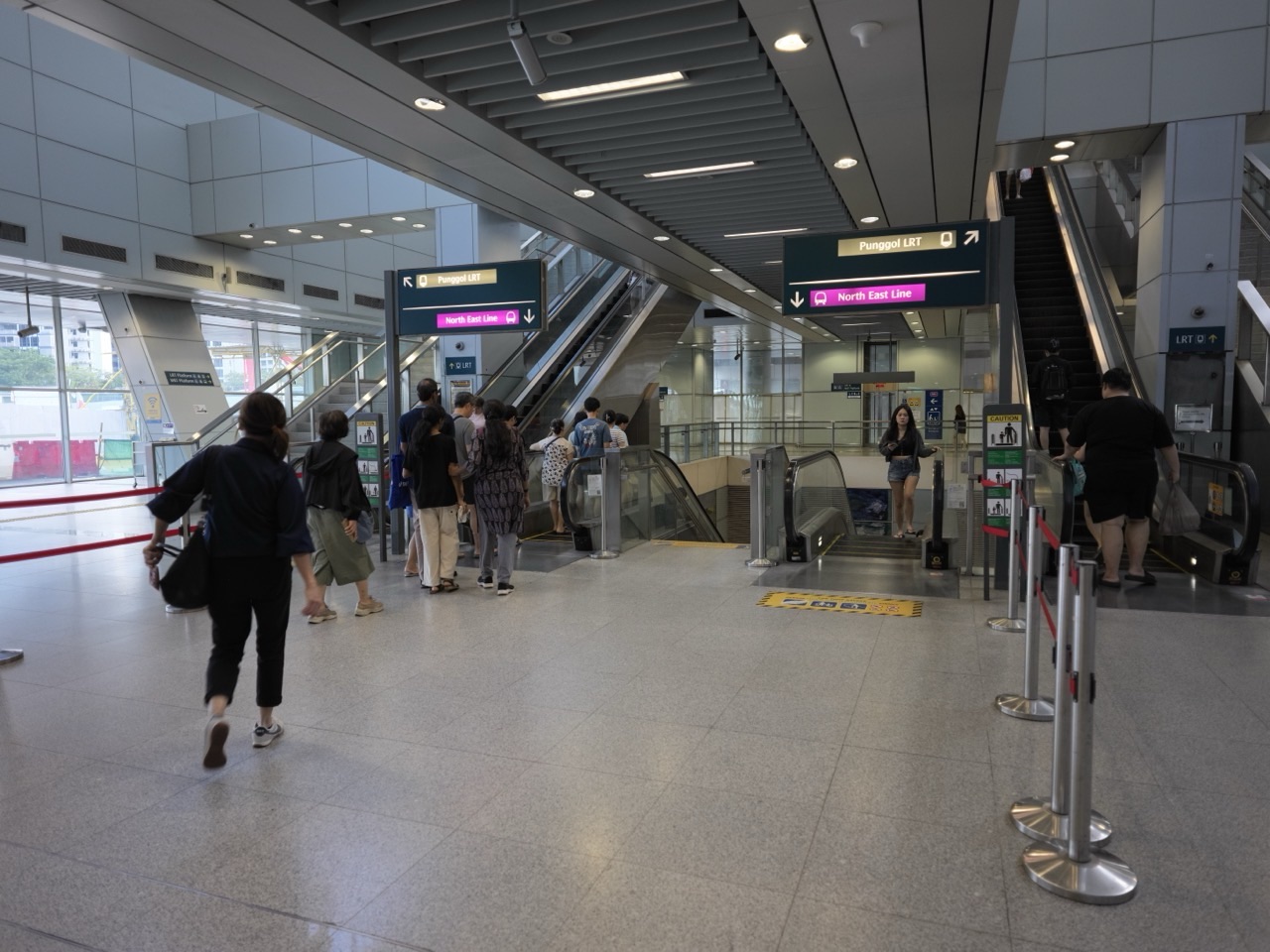
A Punggol child eligible for Posting Group 2 (PG2) can consider secondary schools in Pasir Ris and Tampines when local Punggol choices do not fully match the student’s PSLE score, school environment, subject needs, Co-Curricular Activities (CCAs) or preferred journey. In Pasir Ris, look at Hai Sing Catholic School, Pasir Ris Crest Secondary, Loyang View Secondary and Meridian Secondary. In Tampines, East Spring, Tampines, Junyuan and Pasir Ris Secondary offer other comparisons. The last name needs particular care: Pasir Ris Secondary School is physically at 390 Tampines Street 21, not in the Pasir Ris estate. Every school should be assessed by the correct campus address and an actual weekday journey from the family home.
For the completed 2026 Secondary 1 intake, historical PG2 last-posted PSLE Scores were Hai Sing Catholic 23, Pasir Ris Crest 24, Loyang View 25 and Meridian 25 in Pasir Ris. Selected Tampines figures were Pasir Ris Secondary 23, Tampines Secondary 24, Junyuan 25 and East Spring 25. These are not guaranteed cut-offs for a pupil applying after the 2026 PSLE. Scores 23–24 generally map to PG2; 21–22 may permit PG2 or PG3, and 25 may permit PG1 or PG2. Consult the official MOE SchoolFinder and each school’s current CCA and subject offerings before selecting a single Posting Group and submitting six genuine school choices.
- Four Pasir Ris schools: Hai Sing Catholic, Pasir Ris Crest, Loyang View and Meridian; all are coeducational in the completed 2026 intake records.
- 2026 PG2 historical figures in Pasir Ris: Hai Sing Catholic 23, Pasir Ris Crest 24, Loyang View 25, Meridian 25.
- Selected Tampines PG2 references: Pasir Ris Secondary 23, Tampines Secondary 24, Junyuan 25 and East Spring 25.
- Names can mislead: Pasir Ris Secondary is in Tampines; Pasir Ris Crest is a distinct school in Pasir Ris.
- Applied learning differences: Loyang View explores clean energy, East Spring focuses on Health Science, Meridian has an Enhanced Art Programme for selected pupils.
- CCA choices: Meridian identifies sports, art, Robotics and a conditional external-partnership scheme; East Spring lists AVA, Journalism, performing arts, sports and uniformed groups.
- Travel: Test buses and rail changes from the home block to the actual school gate, including post-CCA evenings; no fabricated universal travel times.
- Pathways: Later JC, polytechnic, PFP, ITE and university options depend on individual SEC G-levels, grades and subsequent qualifications.
1. Why the eastern corridor belongs in a Punggol shortlist
Punggol is close enough to the eastern residential region that some households can reach Pasir Ris or Tampines schools through useful direct buses or connections. But a convenient journey for one block near Punggol East may be uncomfortable for a child living near Punggol Coast or Sumang. A school that sounds close on the map may require transfers and an awkward final walk. It is better to measure the journey than to accept a broad claim that all eastern schools are ‘near Punggol’.
Parents should broaden their shortlist for a reason: a school may offer a particular CCA, a practical applied-learning programme, a comfortable school culture or a historical PG2 score range worth considering. The extra distance must still earn its place in the decision. A student who loses sleep to an unnecessarily complicated commute may find the attractive programme harder to enjoy.
2. Score eligibility comes before the school logo
Posting Group 2 is an admission grouping under Full Subject-Based Banding. G2 is a particular curriculum level, while G3 and G1 are different subject levels. The student may have different subject strengths and, under formal rules, take qualifying subjects at different levels. Parents should not assume that a PG2 pupil is confined to one unchanging set of subjects through Secondary 4. Equally, one G3 subject offer does not mean the child has changed the Posting Group used for their original school posting.
The personalised PSLE result and current MOE instructions determine whether the pupil can select PG2. A Score 21 or 22 family must compare PG2 and PG3 in separate plans before choosing one for the final list; a Score 25 family may need to compare PG1 and PG2. Do not use a PG3 school-cutoff figure as evidence that the pupil can enter under PG2.
| School | Confirmed location | 2026 intake historical PG2 COP | Parent’s first check |
|---|---|---|---|
| Hai Sing Catholic School | 15 Pasir Ris Street 21 | 23 | School culture, CCA choices and actual commute |
| Pasir Ris Crest Secondary | 11 Pasir Ris Street 41 | 24 | CCA experience, subject support and transport |
| Loyang View Secondary | 12 Pasir Ris Street 11 | 25 | Clean-energy ALP, outdoor programme and late journey |
| Meridian Secondary | 31 Pasir Ris Street 51 | 25 | Art, Robotics, CCA partnerships and entry conditions |
| Pasir Ris Secondary | 390 Tampines Street 21 | 23 | Do not confuse name with physical estate |
| Tampines Secondary | Tampines; verify current gate in SchoolFinder | 24 | Programmes, CCA and weekday route |
| Junyuan Secondary | Tampines; verify campus entrance in SchoolFinder | 25 | Subject support, CCA places and journey |
| East Spring Secondary | Tampines; verify current gate in SchoolFinder | 25 | Health Science ALP, AVA and student-development needs |
3. Interpret the completed 2026 PG2 figures correctly
A previous last-posted score records one cohort’s actual admission outcome. It is not a fixed admission requirement for the following year. If a pupil scored 24 and a school ended the previous intake at 25, that difference may be helpful for planning, but does not guarantee entry. A school whose past score was 23 may still be considered if it genuinely appeals, but families need more realistic choices elsewhere rather than filling every slot with speculative hopes.
Cut-offs are not a school-quality ranking. A school with a 25 last-posted PG2 score might offer a programme the child loves and a supportive daily environment. Another school with 23 might be appropriate for a different pupil. Parents should consider teaching, subject fit, social belonging, CCAs and commute as separate factors.
4. Hai Sing Catholic: a school choice is more than its name
Hai Sing Catholic School is a coeducational secondary school in Pasir Ris at 15 Pasir Ris Street 21. Its completed 2026 PG2 historical last-posted score was 23. A family should examine the school’s ethos, subject offerings, CCAs and transport instead of choosing or excluding it only from its religious heritage. A student of another background or one who prefers a different school environment may have valid reasons to compare alternatives.
The family should also distinguish any future junior-college association from formal eligibility in the Secondary 1 exercise. A secondary school’s tradition or relationship with a later institution never guarantees a pupil’s eventual place. Future JC entry still depends on appropriate SEC subjects, results and the then-current admissions process.
5. Pasir Ris Crest: a separate campus with its own CCA experience
Pasir Ris Crest Secondary is at 11 Pasir Ris Street 41. Its 2026 historical PG2 last-posted score was 24. The school directs families to its current CCA Experience resources, covering the activities offered to its pupils. This is a useful place to investigate what the child could do beyond lessons, including any trials or restrictions that apply to a newcomer.
Do not confuse Pasir Ris Crest Secondary with Pasir Ris Secondary School. The latter is in Tampines, and their historical PG2 scores are different. A parent who saves the wrong address or school name could misjudge the daily route and build a faulty shortlist. Use the complete official school title on the six-choice worksheet.
6. Loyang View: sustainability through clean-energy design
Loyang View Secondary School is at 12 Pasir Ris Street 11. Its Applied Learning Programme focuses on sustainability and clean energy, with the school describing lower-secondary design-and-engineering work such as solar-car fabrication and investigations of clean-energy technologies. Pupils apply design thinking, test ideas and explain trade-offs. This is a concrete way to connect Science with ordinary environmental questions, not a direct promise of an engineering career.
Ask which parts of the ALP every Secondary 1 and 2 pupil experiences and which later enrichment opportunities are selective. A child who enjoys building things may still have weaker Mathematics or English foundations. The school must help the pupil learn those core subjects appropriately; an engaging project should motivate learning rather than replace it.
7. Loyang View: outdoor learning and future-ready guidance
Loyang View’s Learning for Life Programme uses sport and outdoor experiences to develop character, teamwork and resilience. Its official site also describes a Future-Ready Programme for graduating students, including visits and conversations about education and careers. The latter is not an automatic post-secondary placement; it is guidance intended to help pupils understand their own options.
For a Punggol family, the useful questions are whether the child enjoys outdoor participation, how activities are supervised, what the timetable entails and how travel home works after practical sessions. Some pupils need support with physical access or stamina; schools should be contacted about specific needs rather than assumptions being made from photographs.
8. Meridian: art, media, robotics and student development
Meridian Secondary is at 31 Pasir Ris Street 51. Its published school profile describes an Enhanced Art Programme for selected students with particular interest in visual art. Its listed CCAs include sports such as Badminton, Basketball, Floorball, Football and Netball; arts such as Choir, Concert Band, Dance, English Drama and Angklung/Kulintang; and clubs including Infocomm Technology (Media Production) and Robotics.
An incoming child may be delighted by visual art or media, but the EAP is described as a selected programme and should not be advertised as guaranteed to every new PG2 pupil. Ask whether a beginner can join Art or Robotics, how ordinary CCA allocations work and what evidence is needed for any extra programme. The school has to work for the child even if a preferred selected enrichment place is unavailable.
9. Meridian’s external CCA partnership is a useful distinction
Meridian publishes an external CCA partnership arrangement for Secondary 1, including selected cluster-based CCAs and Strategic Partnership CCA opportunities. Its 2026 information described options such as athletics, water polo, canoeing, hockey and ethnic dance under specified arrangements and subject to availability. This shows that a school’s opportunities may extend beyond only the clubs physically based at that campus.
It does not mean every student can enrol in every external activity without conditions. Parents should ask about eligibility, selection, training venue, supervision, travel and whether the option can substitute for the normal school-based CCA under the school’s current scheme. For a pupil travelling from Punggol, an off-campus CCA might change the return journey substantially.
10. Pasir Ris Secondary is in Tampines: avoid a naming error
Pasir Ris Secondary School is at 390 Tampines Street 21. The school’s official directions identify Tampines MRT and nearby bus stops, including bus services along Tampines Avenue 4 and Tampines Street 21. Its completed 2026 PG2 last-posted score was 23. A Punggol family who assumes it is near Pasir Ris MRT because of the name may construct an incorrect transport plan.
The positive lesson is to research the real campus rather than the historical name. The school also publishes counselling, learning and behavioural support contacts and Education and Career Guidance channels. Those are practical reasons to look past the label: the family can ask how the institution helps a pupil settle, seek support and plan future subject choices.
11. Pasir Ris Secondary: student support is part of the comparison
Parents selecting a school for a child with uneven learning strengths should ask what happens after an English or Mathematics assessment identifies recurring problems. Pasir Ris Secondary’s official information describes channels through home class teachers, counselling, SEN support and ECG. The existence of contacts does not guarantee a particular intervention will be appropriate for every child, but it gives the family an official starting point for a responsible conversation.
A pupil’s PSLE score does not diagnose a disability or predict mental health. Families should work from actual learning evidence and, where appropriate, qualified professional guidance. A school that explains its procedures and communicates clearly may be a better fit than a school chosen solely because of a slightly more demanding historical cut-off.
12. Tampines Secondary: the broad-range PG2 alternative
Tampines Secondary had a completed 2026 historical PG2 last-posted score of 24. It may be a candidate for some Score 23 or 24 pupils, but suitability still depends on the school’s actual programmes, subject options, current CCA list and home-to-gate route. A family should not infer the school’s entire educational experience from a district name or the single numeric result.
Ask what the ordinary Secondary 1 programme looks like and how pupils with different G-level subject strengths learn. Then assess whether the child sees at least two promising CCAs and whether practice days are feasible from Punggol. A family can prefer a less prominent programme if the teenager is likely to participate regularly and learn well there.
13. Junyuan: a Score 25 research option with a route to test
Junyuan Secondary had a completed 2026 PG2 last-posted score of 25, making it relevant to some families exploring the PG2/PG1 boundary. But the new cut-off may be different, and a Score 25 child must still decide which Posting Group to use across all six choices under the current official rules. Junyuan’s school environment and daily travel should be researched independently of last year’s numerical match.
For parents considering Junyuan because their local Punggol favourites historically had more demanding PG2 cut-offs, the travel test is especially important. A school should not appear ‘safe’ numerically while being impractical for four years of early starts, activities and homework. Ask for current directions, actual gate access and the weekly CCA timetable.
14. East Spring: Health Science for pupils who ask how things work
East Spring Secondary’s Applied Learning Programme focuses on Health Science and problem-solving, with practical investigations and technology-related learning connected to everyday health issues. This provides a different lens from Loyang View’s clean energy and Meridian’s selected Enhanced Art Programme. A pupil interested in human biology or evidence-based reasoning might find it motivating, but a secondary ALP is not a healthcare professional qualification or a promise of medical-school admission.
At this age, the valuable skill is learning to observe, measure, ask a well-defined question and distinguish evidence from an unsupported claim. The child still needs strong reading, Mathematics and Science foundations. Parents should ask which ALP experiences are offered to all pupils and how teachers scaffold difficult language or technical concepts.
15. East Spring CCAs: arts, journalism and service alongside science
East Spring publishes CCAs including AVA, Journalism Club, Chinese Dance, Choir, English Drama, Malay Dance, Concert Band, sports such as Badminton, Basketball, Floorball and Netball, and uniformed groups such as NCC, NCDCC, NPCC, Scouts and St John Brigade. The school has described CCA development through values and leadership routines. Its activity list may appeal to a pupil who likes science lessons but wants to spend after-school time performing or producing school media.
Parents should check the incoming-year list and allocation process. A CCA published on a website may involve capacity, age, gender or other selection rules. A student should identify two realistic favourites and understand that training time, rehearsals and service commitments may increase during certain periods.
16. Health and Science interests do not require a career decision at twelve
A primary-school child might say they want to become a doctor, engineer or marine biologist. That is a valuable interest to nurture, not a contract. A Health Science ALP may encourage the pupil to ask better biological questions; a clean-energy project may build design confidence; an environmental club may develop observational skills. Later course admissions involve subject combinations, actual qualifications, grades and competition.
Parents should preserve the child’s ability to change interests. The right Secondary 1 environment offers strong general foundations and meaningful exploration. A programme is a chance to learn, not a shortcut through professional registration or university entry conditions.
17. The eastern corridor and the ‘one bus’ assumption
A direct bus may look convenient, but route quality varies with where the child boards, congestion, time of day, the exact gate and whether the service remains useful after CCA practice. The fact that Loyang View lists bus routes such as 12, 21, 39, 53, 81, 109 and 359 does not mean one of those serves every Punggol block directly. Similarly, Meridian and Pasir Ris Crest are separate school destinations with different last walking segments.
Plan three journeys: the normal school morning, a late practice return and a rainy-day alternative. Record transfers, waiting and crossing points. If the child attends an external CCA at another campus, add that actual training address too. A school that is convenient from a particular family home may be inconvenient for someone living on the other side of Punggol.
18. Do not confuse residential proximity with admission priority
Parents sometimes assume that living closer to a secondary school improves the pupil’s posting priority as it can matter in other school exercises. The standard Secondary 1 posting tie-breaks are based on PSLE Score, citizenship, school-choice order and computerised balloting where necessary; distance from home is not an ordinary tie-break. A Punggol family can apply to a Pasir Ris or Tampines school without a distance priority category, but it must still meet admission eligibility and compete through the process.
Distance matters to family life, not as an invented hidden score in the S1 allocation algorithm. This distinction helps parents use geography for the right reason: sleep, travel cost, CCA attendance, emergency arrangements and everyday wellbeing.
19. Use two CCA options at every school
A family may rank Meridian because of Robotics or East Spring because of Journalism. Before deciding, ask whether beginners can join, whether there are trials, how many places exist and when activities run. Compare a second activity that the pupil would genuinely welcome. A school can be educationally attractive even if the first preferred team place does not materialise.
CCA is not simply a qualification strategy. An enjoyable weekly activity can strengthen friendship, resilience, concentration, responsibility and self-expression. If every spare afternoon becomes another competition for certificates, the child may lose those benefits. Parents should help balance the activity with academic needs and rest.
20. LEAPS 2.0 can recognise participation but does not guarantee a course
LEAPS 2.0 recognises Participation, Achievement, Leadership and Service. Excellent and Good attainment can translate into co-curricular bonus points where the relevant later admissions rules permit. But a badge or medal is not automatically an Excellent result, and the applicable bonus cannot substitute for compulsory SEC subject grades or other course prerequisites.
Parents should teach students to contribute consistently and reflect on the experience. A pupil who helps younger teammates or learns a demanding skill may gain more personally than one focused only on collecting a credential. School CCA options should support healthy development alongside academic competence.
21. A quick school comparison for Score 23
A pupil scoring 23 normally considers PG2. In the completed 2026 eastern corridor, Hai Sing Catholic and Pasir Ris Secondary both recorded PG2 last-posted scores of 23. Pasir Ris Crest was 24, while Meridian and Loyang View were 25. These are potential research options, not guarantees; the child’s interests and journey are still decisive.
One child with Score 23 might prefer Meridian’s visual arts and clubs, even though its historical 25 was numerically more permissive. Another might value Pasir Ris Crest’s CCA environment or a specific subject-support approach. The six-school order should reflect actual preference, with a sensible range of past admissions outcomes.
22. A quick school comparison for Score 24
A Score 24 pupil ordinarily chooses PG2. Pasir Ris Crest, Tampines Secondary and several other eastern schools had 2026 historical PG2 last-posted scores of 24, while Loyang View, Meridian, Junyuan and East Spring had 25. Parents can use the old ranges to find potential candidates but cannot assume that every future applicant at 24 will be admitted.
Include the ordinary Punggol and Sengkang alternatives in the same comparison, rather than treating the east as a separate competition without reason. The family may find a better commute or more appealing CCA near home. What matters is a genuine, feasible six-school plan.
23. A quick school comparison for Score 25
A pupil scoring 25 may be able to select PG1 or PG2. A PG2 historical last-posted figure of 25 at Loyang View, Meridian, Junyuan or East Spring can be useful evidence for a PG2 draft, while a PG1 plan may open a different set of schools and starting subject levels. The correct choice depends on the individual pupil’s readiness, priorities and current official eligibility.
Do not tell a child that choosing PG1 destroys any future chance of polytechnic or university, or that selecting PG2 will automatically yield G3 subjects. The pathway depends on later learning, assessment, subject-level opportunities and qualifications. Compare two complete lists before choosing one group for the actual submission.
24. How the SEC affects later options
Students in graduating cohorts from 2027 take the Singapore-Cambridge Secondary Education Certificate at the G levels of their subjects. From the 2028 admission exercise, the announced JC and MI pathways require appropriate G3 subject results under the revised L1R4 framework; direct polytechnic Year 1 has defined subject-level requirements and aggregate calculations; PFP has different rules; ITE Higher Nitec provides applied learning and progression opportunities under its own criteria.
For a Punggol child entering Secondary 1 in 2027, the ordinary Secondary 4 examination year would be 2030 and post-secondary application in 2031. A diploma, pre-university qualification or other relevant qualification may later support a university application, subject to course-specific competitive requirements. A school’s Health Science ALP, selected art programme or CCA is not itself an admission credential for those later routes.
25. What to ask about upper-secondary subject combinations
A pupil interested in health science may later need a particular Mathematics and Science profile. A child attracted to visual art or media may want a different combination while still retaining strong literacy and numeracy. Schools differ in subject offerings, timetables, elective availability and requirements. Parents should ask how choices are explained in Secondary 2 and what bridging or counselling support exists before upper-secondary selection.
The purpose of early research is not to force one profession. It is to understand that courses have prerequisites and students should learn accordingly. Families can review the plan with actual results as the teenager matures.
26. A realistic travel-and-study balance
Write down lessons, transport, meal times, CCA, homework, family commitments and rest for a normal week. Compare the pupil’s potential travel from Punggol to each school rather than making a general statement about eastern Singapore. A route that appears convenient when one adult drives to an open house may be quite different by public transport at the actual school start time.
If the child is likely to need focused English or Mathematics help, reserve space for practice without turning every evening into tuition. A sustainable routine makes it more likely that the school’s programmes will have educational value.
27. Make the six-school list with actual preferences
Check the child’s PSLE eligibility notice, choose a Posting Group when necessary and use the corresponding historical cut-off column. Record every school’s correct address, current programme, two CCA choices and tested home-to-gate journey. Include school-specific questions about subject levels and student support. Rank up to six schools where the pupil would genuinely want to study, while including plausible alternatives based on dated admissions data.
MOE’s current instructions and any accepted DSA commitments govern the actual process. The family should not invent a school reservation, assume an appeal will override eligibility or promise placement because an old list shows an equal score. The final choice should remain responsible even if the first preference is not obtained.
28. Frequently asked questions
Is Pasir Ris Secondary School in Pasir Ris?
No. Its official campus is at 390 Tampines Street 21. Pasir Ris Crest Secondary is a different school at 11 Pasir Ris Street 41.
Which Pasir Ris schools historically admitted PG2 up to Score 25 in the 2026 intake?
Loyang View Secondary and Meridian Secondary recorded PG2 last-posted scores of 25. These historical figures do not guarantee the next intake.
Is East Spring’s Health Science ALP the same as a medical qualification?
No. It develops applied learning and scientific reasoning; later healthcare courses have independent prerequisites and admission processes.
Does Meridian’s Enhanced Art Programme accept everyone?
The school’s published description identifies an EAP for selected students. Parents must ask about actual entry and the incoming cohort’s rules.
Can Meridian students choose an external CCA?
The school described eligible external and cluster-based options for the 2026 Secondary 1 cohort, subject to availability and conditions. Verify the current scheme.
Does living nearer to a school give automatic S1 posting priority?
No. Proximity is not a standard Secondary 1 posting tie-break. It still matters greatly to transport, rest and daily feasibility.
Does a cut-off of 25 guarantee admission for Score 24?
No. It is a historical last-posted score. Applicant demand, vacancies and official tie-breaks affect a new cohort.
Can PG2 pupils take G3 subjects?
Eligible individual subject offers can be made under Full Subject-Based Banding rules and school arrangements. PG2 itself is not the same as G2 for every subject.
Will CCA points guarantee polytechnic admission?
No. Relevant bonuses do not replace compulsory subject, gross-score and course-specific conditions.
Can a PG2 child eventually reach university?
Potentially, through suitable later pre-university or diploma qualifications and course-specific competitive admission. No secondary school can guarantee that outcome.
Official school sources and linked reading
- MOE SchoolFinder — current school, programme and posting data
- Pasir Ris Crest — address and transport
- Pasir Ris Crest — school CCA Experience
- Loyang View — address and bus information
- Loyang View — clean-energy Applied Learning Programme
- Loyang View — Education and Career Guidance
- Meridian — Enhanced Art Programme and full CCA list
- Meridian — external CCA participation conditions
- Meridian — correct Pasir Ris campus address
- Pasir Ris Secondary — official Tampines location and support contacts
- East Spring — Health Science ALP
- East Spring — CCA categories and programmes
- MOE — 2028 post-secondary reforms and entry rules
- eduKate Punggol — compare the four local options before travelling
- eduKate Punggol — alternative Serangoon corridor options
- Immutable eduKate Secondary 1 Mathematics first-principles reference
Reviewed 14 November 2026. Historic score figures describe the 2026 Secondary 1 intake based on the 2025 PSLE; they do not predict 2027 cut-offs. School programmes, CCAs, transport, eligibility and later education rules may change. Confirm with MOE and each institution before acting.


