
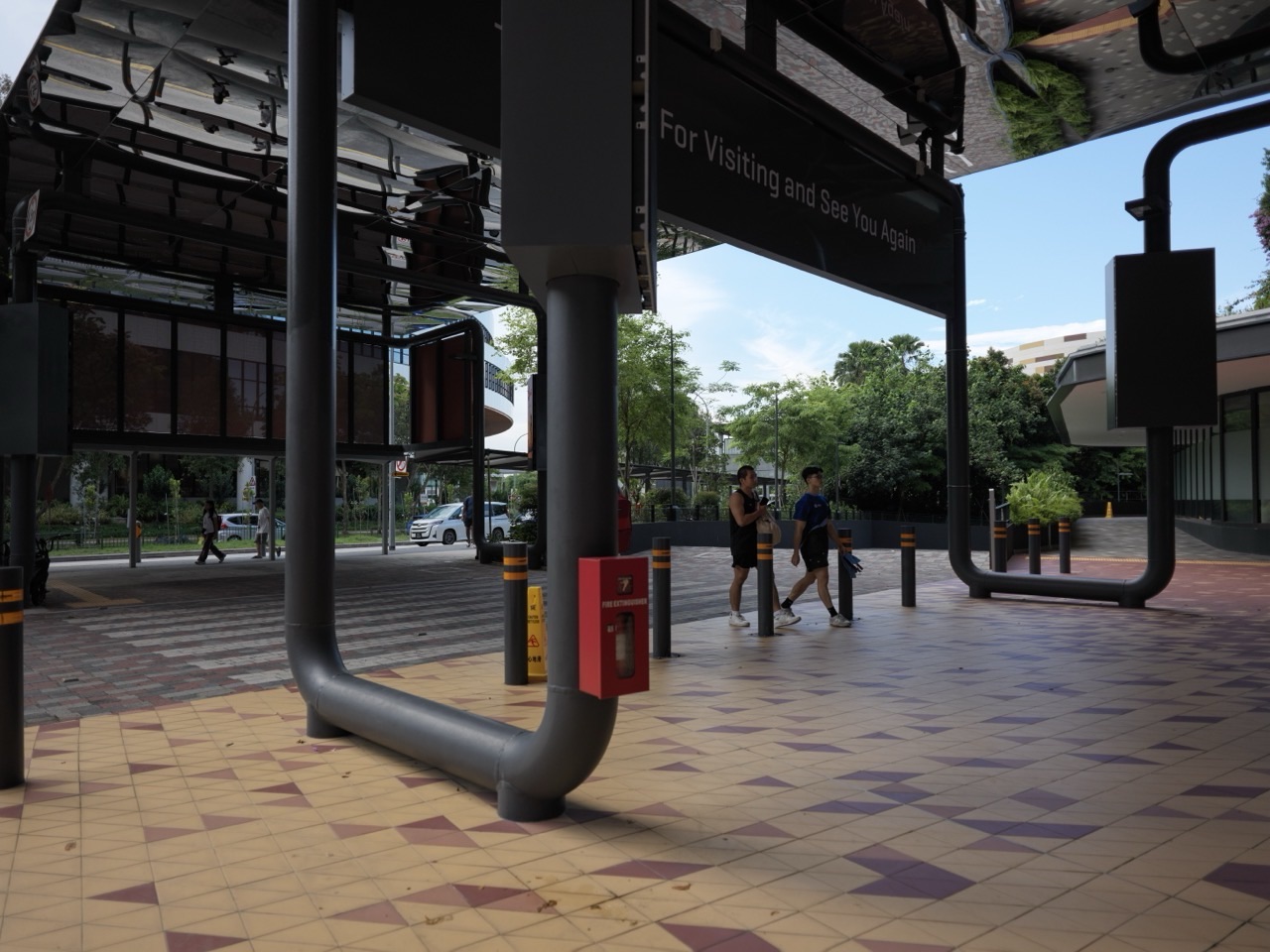
A deaf, hard-of-hearing or low-vision visitor can consider ActiveSG Punggol’s free public Play Street, an eligible gym visit, a booked racket sport or a real public sports event, but the activity should be planned around the person’s actual communication and navigation needs. Punggol Sport Centre is at 11 Sentul Crescent, Singapore 828656, near Sam Kee LRT (PW1). Sport Singapore describes the Play Street as a free 24-hour public thoroughfare. However, the published venue overview does not establish that every sign has Braille, every announcement is captioned or that sign-language interpretation and trained guides are available on demand. Check specific arrangements with the operator before relying on them.
Different visitors use different ways of communicating and navigating. A deaf person may prefer written directions or Singapore Sign Language, while someone with partial hearing may use spoken communication in a quieter space. A low-vision visitor may prefer an audio route, high-contrast signs or a trusted companion and may not require a wheelchair or other mobility equipment. Ask the person what works rather than making assumptions. The new Punggol gym has some inclusive machines with removable seats for wheelchair users, but those features alone do not confirm an adapted treadmill interface for low-vision visitors. Choose a genuinely suitable activity, verify the accessible path and keep a flexible exit plan.
- Venue: ActiveSG Punggol Sport Centre, 11 Sentul Crescent, Singapore 828656.
- Free public option: Play Street through-route, described as open 24 hours by SportSG.
- Nearest commonly recommended station: Sam Kee PW1 on Punggol West LRT Loop.
- For deaf visitors: ask what communication method the person prefers; do not presume all visitors use sign language.
- For hard-of-hearing visitors: avoid relying exclusively on distant verbal announcements or rapid instructions in a noisy hall.
- For low-vision visitors: verify the route, crossings, lift and entrance arrangements rather than assuming complete Braille or audio navigation.
- Booking: use the proper MyActiveSG+ product; an ordinary public route does not create gym or court entry.
- Gym: inclusive equipment is advertised, but specific adaptive controls should be confirmed directly.
- Sport events: a venue’s large spectator seating capacity does not guarantee accessible announcements or interpreting.
- Safety: agree on meeting points, alert methods and what to do if a route or programme changes.
- Assistance animals: request current advice about applicable access rights and arrangements; do not treat an ordinary pet restriction as a complete legal answer.
- Official reference: SportSG contact page and the Punggol venue listing. Checked 14 November 2026.
A disability-access guide must begin with individual choice
Deafness, partial hearing and low vision are different experiences, and no two people necessarily use the same tools or prefer the same sport. A person may communicate fluently in writing, use speech, rely on sign language or prefer to read information from a companion. Someone with low vision may navigate independently in familiar places but welcome specific directions in a new multi-level building.
A useful guide does not decide what a person can or cannot do merely from a label. It identifies the actual facility, communication barriers, route information and support options to check. The visitor remains the decision-maker about an enjoyable activity. A public Play Street walk can be as valid as an organised sports programme when it suits the individual.
What the official venue overview actually confirms
SportSG’s November 11 account of Punggol Sport Centre describes a free Play Street, a large gym, five swimming pools, indoor halls and sheltered courts. It highlights inclusive equipment and water areas with accessible features. These facts are meaningful but do not amount to a full accessibility audit for hearing or vision requirements. The article does not specify the availability of visual fire alarm indicators, captioned public announcements or Braille room labels in every facility.
Therefore, visitors should treat those details as questions for the operator rather than promises from a third-party guide. SportSG’s Punggol facilities article is an appropriate starting point for the public amenities, while actual access arrangements should be confirmed separately.
Choosing the activity before discussing assistance
Someone may wish to enjoy the public architecture, play badminton with a friend, exercise in the gym, swim or attend a real public sports event. Each activity has different communication demands. A brief public walk may require accurate wayfinding, while a gym session may require understanding machine controls. A team sport involves other participants and sometimes audible calls. Swimming can include lifeguard instructions and emergency signals.
Begin with what the person wants to do, then identify which communication or navigation arrangements matter. Do not offer an unwanted guided tour when the visitor would prefer a quiet independent trip. Conversely, do not assume complete independence when a specific new environment creates an obstacle.
The public Play Street is an accessible-intent destination, not a guarantee
SportSG describes the Play Street as a free 24-hour through-route connecting Sam Kee LRT, One Punggol, the waterway and other destinations. It offers slides, play tubes and movement stations. A visitor with low vision might enjoy the journey, architectural descriptions and public gathering areas, but must still know whether the actual route is suitable for their needs. A general promotional statement does not verify tactile markers or a particular accessible exit.
For a deaf visitor, the practical issue may be visual notices and how changes are communicated. The public space can have temporary closures or safety instructions. Check current signs and ask staff when necessary. The route’s free access does not change restricted sports-area rules.
How to request written instructions
A visitor who prefers text can ask staff for the facility name, entry process, floor, timetable and any restrictions in writing where feasible. A short note on a phone or paper can reduce ambiguity, especially in a busy sports hall where the environment is noisy. Do not assume all staff know sign language, or that a particular reception has a captioning device available.
If the visitor prefers speech or sign language, respect that instead. The aim is communication that works for the actual person. A companion should not automatically answer every question on the visitor’s behalf. Direct communication preserves dignity and helps ensure important details are accurately understood.
Noise and hard-of-hearing visitors
Sports halls can contain ball strikes, whistles, announcements and several simultaneous conversations. Someone with partial hearing may have trouble following instructions from a distance even when face-to-face speech works well in a quiet room. Consider arranging a short conversation away from competing noise, asking staff to face the visitor and confirming important details in text.
Do not assume that speaking much louder solves every hearing difficulty; it may be uncomfortable or distort speech. The visitor can state their preferred method. A booking code, written court location and clear start time can help far more than repeated verbal directions that were never understood.
Why not everyone uses Singapore Sign Language
Some deaf people use Singapore Sign Language, while others rely on speech, lip-reading, written English or different combinations. There is no one universal communication preference. A useful visitor enquiry asks directly: “What is the easiest way for us to share the directions?” It should not assume someone is unable to read, unable to speak or in need of an interpreter for every interaction.
If a specific class, briefing or event requires interpreting, ask whether the organiser can arrange it and what advance notice is needed. A new sports complex’s publicity is not proof that an interpreter will be present without an appointment. Confirm actual service availability before promising participation.
Visual alerts and emergency communication
An audible alarm or announcement may not be sufficient for every deaf or hard-of-hearing visitor. Before participating in an activity where emergency communication matters, ask the operator about the actual visual alerts, staff procedures and suitable support arrangements. Do not assume that every room has flashing indicators simply because the building is new. The building’s emergency plan is governed by its operator, not this article.
A visitor and companion may agree on a simple way to communicate a need to leave, while following official evacuation instructions. A personal plan can help, but it should never replace the venue’s emergency procedures. If an alarm or staff signal occurs, respond through the safest authorised route.
Finding the correct entrance with low vision
Punggol Sport Centre is a large multi-level development, so the entrance to Play Street may differ from the entrance used for a booked hall or gym. A low-vision visitor may benefit from the exact address, a description of nearby landmarks, the correct building approach and current access information. Do not assume all entrances have identical tactile signage or that a map’s shortest line is the safest route.
Check the route in advance with current operator or transport information, especially if visiting alone. A trusted companion may help if desired, but should not be imposed as a requirement when the person navigates independently. If the wayfinding is unclear, ask authorised staff rather than entering service areas.
The last-mile route from Sam Kee PW1
Sam Kee PW1 belongs to the Punggol West LRT Loop and is commonly recommended for the sport centre. A person travelling by the North East Line can change at Punggol MRT NE17. From Sam Kee, the visitor still needs to identify the lawful crossing and the correct public entrance. The operator’s route information should be checked for any temporary works, closures or changes that affect the visitor’s navigation.
A short map distance does not automatically mean a continuous accessible walkway with audio or tactile guidance. Do not publish a detailed step-by-step blind-navigation route without having verified every junction. The sensible advice is to check precise current conditions and choose the approach that suits the person’s established travel methods.
Crossings and shared paths
Punggol’s public walking network includes connections with cyclists and other pedestrians. A visitor with low vision may want to know whether the intended route crosses a shared path, a road or a crowded area. That requires actual route details and safe mobility judgement. Do not encourage a person to follow an unverified shortcut along the waterfront merely because it looks direct on a map.
People accompanying a low-vision visitor should ask how they can help rather than grabbing the person’s arm or changing direction without notice. Respect the individual’s established mobility techniques. Safe public movement depends on clear communication and appropriate space for everyone.
Using digital navigation without assuming it works indoors
Smartphone maps can be useful for approaching 11 Sentul Crescent, but they may not accurately identify floors, temporary barriers, reception desks or the exact play equipment within a complex building. A low-vision visitor may use screen-reader tools, audio instructions or other preferred systems. Those tools should be supplemented by current venue information when a detailed route is essential.
A public website can list an address without providing an accessible navigation route for every interior destination. If the visit depends on reaching a particular court or gym machine, contact the operator for more specific instructions. Do not convert generic online map data into a guarantee of safe independent travel.
Gym equipment with accessible design
The Punggol gym is approximately 1,500 square metres, and SportSG describes inclusive machines with removable seats for wheelchair users, alongside HUR pneumatic resistance apparatus. These are confirmed features. They do not specifically establish that every treadmill has Braille-labelled controls, screen-reader output or audio instructions. A visitor with low vision should ask about the exact machines they intend to use.
An equipment orientation may be useful if the person wants it and the operator offers it. Do not assume a visitor needs medical rehabilitation simply because they have a disability. A public gym is for eligible exercise and still follows admission, age and conduct rules.
Do not confuse Enabling Village’s equipment with Punggol
SportSG’s Enabling Village ActiveSG Gym has a published description mentioning treadmill control panels with Braille dots. That is a particular feature at the Enabling Village gym, not proof the same machines are installed at Punggol. Copying accessibility claims between different SportSG locations is a serious information error when a visitor plans a trip around a needed feature.
If Braille controls or another specific adaptation are essential, check the exact Punggol equipment first. A visitor may choose another verified facility if it suits their requirements better. The goal is a genuine usable experience rather than insisting the newest venue must have every inclusive feature offered anywhere in Singapore.
A deaf visitor entering the gym
An eligible gym member who is deaf may prefer receiving rules and machine instructions in writing or through an accessible communication method. The public gym’s underlying requirements still apply, including proper attire, a personal towel and shared equipment etiquette. Entry does not automatically include a personal trainer or interpreter, so specific assistance should be checked before travelling if it is essential.
The visitor can ask how staff communicate safety warnings or a temporary equipment closure. A written explanation can be useful but must reflect the real operator policy. The person’s own experience and preferred communication style should guide the interaction, not a stereotype about what deaf people can do.
Hearing needs during racket sports
Badminton, tennis and pickleball can involve spoken calls such as “mine”, “yours” or a player’s score. A deaf or hard-of-hearing participant may prefer agreed visual cues with a partner, depending on the sport and venue rules. A casual pair can discuss how they will communicate during an ordinary practice. Do not change official competition rules without the organiser’s permission or assume every public event offers accommodations automatically.
A real court reservation is still required. A player who prefers visual cues should arrange them with participants before play and remain aware of adjacent courts and moving equipment. Inclusive recreation is often supported by simple mutual agreement rather than pressure to perform exactly as others do.
Visual signals in sport are a wider subject
SportSG’s October 2026 article about Project StartBright describes a visual starting-signal innovation developed to make running more equitable for deaf and hard-of-hearing athletes. The underlying idea is that relying solely on sound can disadvantage some participants. This is a useful example of accessible sport design, but it is not evidence that the device is currently installed at Punggol Sport Centre.
If a reader is interested in deaf athletics or a formal competition, they should consult the actual organiser and sport rules. Do not promise special starting equipment at a particular venue without confirmation. A broader national innovation does not automatically become a local facility feature.
Low vision and racket sports
A person with partial sight may still enjoy a range of recreational sports, depending on their preferences and circumstances. Standard badminton or tennis involves tracking a fast-moving object, which may or may not suit an individual. There are also adapted sports and organised programmes elsewhere, but the Punggol venue description does not confirm a specific low-vision racket class.
If someone wants a suitably adapted session, look for a legitimate provider, equipment and venue. A general public court booking does not include specialist coaching. Ask the participant what they prefer, check the real arrangements and avoid suggesting a sport that requires an unsuitable visual task solely because courts are available.
Goalball should not be promised at Punggol
Goalball is a team sport designed for athletes with visual impairments, using an audible ball and specific court conditions. Punggol’s published facility list does not establish that a goalball programme is currently held there. A reader should not infer that any indoor hall can be used for goalball without a booking and the correct equipment or organiser.
The Singapore Disability Sports Council and relevant sport organisations are better starting points for finding genuine adapted sport opportunities. If a named session is at another venue, publish that location accurately instead of labelling it as a Punggol event. Accurate access information is part of inclusion.
Watching a stadium or hall event
Punggol’s stadium and indoor halls can accommodate large crowds, but spectator capacity does not guarantee that every event has captioned announcements, signed interpretation or suitable viewing for a low-vision visitor. An organised match may have its own ticketing and access procedures. Ask the actual event organiser which accommodations, seats, entry routes and staff support are available.
A visitor might attend for the atmosphere, to support an athlete or to enjoy the sport, but should be able to make an informed choice about how event information will be communicated. Avoid advertising “fully accessible commentary” or a designated hearing loop unless the organiser has confirmed it.
A captioned public screening is not guaranteed
Someone may hope that a sports hall’s large screens display all spoken announcements. The Punggol promotional descriptions do not verify that arrangement. A live fixture, score display and captions are separate systems. If access to announcements in text is essential, ask the organiser rather than assuming a visible scoreboard resolves every communication need.
A team representative can also help communicate practical schedule updates to participants by an agreed method, provided the person wants that arrangement. The key is not delegating all information to a companion without consent. Visitors should receive accurate details in a format they can use.
Swimming and lifeguard communication
Swimming requires attention to water safety and staff instructions. A deaf or hard-of-hearing swimmer may need to know how lifeguards signal a closure, emergency or direction change when audible whistles are used. A visitor with low vision may need particular information about pool depth, entry points and hazards. The operator should explain the actual arrangements for the named pool and session.
Do not assume the five-pool complex has a universal adapted-swimming class or that all pools are already open in the phased launch. A legitimate swimming pass and appropriate lifeguard conditions still apply. Individual suitability is a matter for the person and, where needed, relevant qualified guidance.
Waterway Plaza’s interactive water play
SportSG describes interactive water play at Waterway Plaza, near the free Play Street and overlooking Punggol Waterway. It is separate from swimming-pool admission. The public thoroughfare’s twenty-four-hour access does not guarantee that water-play equipment operates continuously. A low-vision visitor may need a clear explanation of wet surfaces and changing boundaries; a deaf visitor may prefer written safety signs that are easy to locate.
Do not let children or companions enter unfamiliar wet areas without checking the current instructions. The feature can be skipped without losing the value of a public walk. Safe access should be guided by the actual individual and operating conditions.
Accessible emergency plans need accurate information
The sports centre may have multiple floors, but its actual evacuation plan is controlled by the operator. Before attending an unfamiliar large event, a visitor can ask what should happen if an emergency alarm is sounded, which exits are appropriate and how assistance can be requested when needed. Do not publish an invented evacuation map or claim that a particular staircase is accessible to everyone.
A personal companion plan can supplement official procedures, but must not replace staff directions. Clear communication, knowing the meeting point and understanding the authorised route are useful. Safety systems should be verified with the venue rather than copied from another building.
An assistance dog is not an ordinary pet issue
SportSG’s general rules state that pets are not allowed on its premises. The access of a trained assistance dog can involve different rights and operational considerations, and a local blog should not give an unsupported blanket approval or refusal. A visitor who relies on an assistance animal should contact the operator about applicable access arrangements, including the specific gym, hall or public route.
The goal is to respect legitimate disability access while avoiding false promises about what one general pet rule means. Do not leave an assistance animal unattended during a swim or make an improvised care plan. Specific arrangements are more useful than slogans about inclusion.
How to contact SportSG in advance
SportSG publishes a general contact page with links to sport centre directory information and a formal feedback channel. A visitor can ask about the specific Punggol facility, intended date, communication method or route question. The enquiry should describe practical needs without requiring disclosure of unnecessary private medical details. For a booked sports programme, the organiser may also have a relevant contact.
A good enquiry is specific: “I am coming to the Punggol Sport Centre gym on this date. Can you confirm whether instructions are available in writing and which staff can explain the entry process?” Such a question is easier to answer than “Is everything fully accessible?” It also avoids asking for features that are not relevant to the person’s actual visit.
A sample preparation checklist for a deaf visitor
Decide the activity and find the official booking or public-access details. If a class or event includes important instructions, ask whether they can be supplied in a preferred format. Confirm the correct location and how event changes are announced. Agree on a simple way to communicate with a companion if one is attending, without requiring the companion to speak for the visitor.
On arrival, allow enough time for check-in and any clarifying questions. Do not rely only on a public-address system from another part of the building. The purpose is making a visit predictable and comfortable, not creating an unnecessary medical discussion.
A sample preparation checklist for a low-vision visitor
Begin with the exact address and public transport connection, then check the actual safe route to the desired entrance. If tactile, audio or high-contrast signage is essential, ask about its availability rather than assuming it exists. A visitor may bring their usual mobility aid, navigation tool or companion, depending on personal preference. Follow legitimate public crossings and current construction notices.
The final activity also matters. An indoor gym machine, a booked racket court and a Play Street walk all have different spatial information needs. Choose the one the visitor wants and can use appropriately. A person should never be forced to rely on another individual’s guesses about hazards.
When friends want to help
Friends and family members can be helpful with transport, communication or a new venue, but they should ask how assistance is preferred. Grabbing a low-vision visitor’s arm, shouting at a hard-of-hearing person or speaking only to a companion can be intrusive and ineffective. Treat the visitor as the primary participant in the decision.
A companion may help by sharing a verified address, booking confirmation or public sign. They should not invent the venue’s emergency procedures or promise an interpreter. Good support combines respect for choice with accurate practical information. The aim is participation on the person’s own terms.
Children who are deaf or have low vision
A child may enjoy the Play Street, a gentle appropriate sport or a family outing, but parents should plan for communication, supervision and actual equipment suitability. A public slide is not automatically appropriate for every child, and a gym has a strict minimum age of twelve. A parent-linked MyActiveSG+ profile does not override those facility rules.
A school or family might want an organised inclusive sport session. Check whether the specific provider, programme and venue are genuinely available at Punggol rather than assuming a national sports initiative runs in every ActiveSG centre. The right programme is the one that suits the child, not the most impressive new facility.
Cost and booking should be transparent
An access arrangement does not automatically mean that every paid sport is free or that ordinary reservations are waived. A visitor should check the actual pass, programme cost, concession and eligibility through official channels. SportSG’s Play Street is a genuinely free public route, while gym, pool and court products have separate requirements. A large event can also have ticketing.
Do not tell people that a disability itself guarantees an unspecified free pass. If a specific concession or assistance arrangement is available, the operator should confirm its terms. Transparent information enables the visitor to compare options and avoid embarrassing surprises at the entrance.
What to do if a facility cannot meet the need
If the actual venue cannot confirm a necessary communication or access arrangement for the desired visit, it is reasonable to choose another legitimate facility, date or activity. This should not be framed as the visitor failing to try hard enough. A public sports system contains multiple venues and programmes, and the best choice is the one that is genuinely usable.
SportSG lists particular inclusive gym features at Enabling Village and other facilities, so a person may compare them if those features matter. Do not copy the equipment descriptions to Punggol or assume all venues operate identical sessions. The correct next step is reliable information, not false reassurance.
A short first visit to Play Street
A visitor can begin with a limited lawful public route, identify a comfortable turning point and see whether the surroundings are manageable. A companion may accompany them if desired, but no long sporting programme needs to be completed. Public Play Street access does not require a badminton booking, so the visit can remain flexible. Check weather and the actual accessible route before arriving.
The visitor may enjoy the architecture, public movement or waterway connection without entering restricted spaces. Ending after ten minutes is not a failure. An accessible leisure experience is one in which the person has genuine choice about beginning, continuing and leaving.
A sports event example without an invented fixture
Imagine a deaf visitor who wants to support a friend in a basketball competition at Punggol Team Sport Hall. First they check whether the match is actually scheduled and spectators are permitted. Then they ask the organiser how changes in court, start time or emergency information will be communicated. They may request written instructions, depending on preference. The plan is based on a real fixture rather than the assumption that a large hall always has an event.
If the date or venue changes, they follow the organiser’s official update. The example does not promise captioning, interpreter provision or free admission. It illustrates how a few precise questions make the outing more predictable.
A gym example without claiming a machine
Imagine a low-vision adult who wants to try Punggol Gym. They first confirm eligible admission, opening and the equipment they intend to use. Before travelling, they ask whether necessary controls or orientation arrangements are suitable. If the exact machine cannot be confirmed, they may choose a different verified gym or a public Play Street walk instead.
This is not a medical assessment or a statement that low-vision users cannot exercise independently. It illustrates why equipment details matter more than a general marketing claim of inclusion. The decision belongs to the visitor.
A four-week confidence and participation plan
Week one: identify one activity that genuinely interests the person and use official information to confirm its public or booked status. Ask about any necessary communication or route arrangements.
Week two: make a short manageable visit or register for a legitimate session. Note what actually worked and what should change, without requiring disclosure of private health details.
Week three: repeat if comfortable, or try another appropriate activity with verified information. If a particular accessibility feature is unavailable, seek an accurate alternative rather than relying on assumptions.
Week four: decide whether the venue fits a repeatable routine. A public walk, a suitably adapted gym session or a real event may all be meaningful choices. Respect personal preference and the rights of other users.
Frequently asked questions about hearing and low-vision access
Is Punggol Play Street free? SportSG describes it as a free 24-hour public thoroughfare, subject to actual access and feature conditions.
Is sign-language interpreting guaranteed at the sport centre? No such on-demand service is verified in the public Punggol venue overview; ask the operator.
Are all announcements captioned? Do not assume so. Confirm the actual event and facility communication arrangements.
Are there Braille signs everywhere? This guide does not verify every sign or route; request specific current information.
Does Punggol Gym have accessible equipment? SportSG confirms some removable-seat machines and HUR pneumatic resistance, but specific adaptations should be checked.
Do its treadmills have Braille controls? The current Punggol overview does not confirm this. Do not import information from another gym.
Can deaf visitors play badminton? Appropriate recreational play may be possible with legitimate booking and agreed communication, subject to the person’s preferences and rules.
Does Punggol host a goalball programme? No specific current local programme is confirmed by the cited venue description.
Can a trained assistance dog enter? Contact the operator regarding the applicable legal rights and facility arrangements; ordinary pets are restricted.
Is every entrance accessible for low-vision travel? A precise navigable route must be verified; no universal guarantee is made here.
Can a visitor request written instructions? Ask staff or an organiser about the available communication options.
Are the swimming pools operating today? Confirm the exact current public pool and its entry, lifeguard and safety arrangements.
Where can I ask questions? Use SportSG’s official contact page and the relevant event organiser.
Official references and related community reading
Use SportSG’s official contact page for centre enquiries, Punggol’s latest venue description for the confirmed facilities, and SportSG’s Project StartBright article for the distinction between audio and visual sporting signals. For particular adapted equipment, the Enabling Village Gym listing describes features at that location, not at Punggol. SportSG’s sport association directory lists the Singapore Disability Sports Council.
Related eduKate Punggol guides are the stroller and wheelchair visit, calmer and lower-pressure visits, and the inclusive gym guide. This independent article was checked on 14 November 2026. It does not guarantee sign-language services, tactile wayfinding, an adaptive class, or a personally suitable exercise or medical outcome.


