
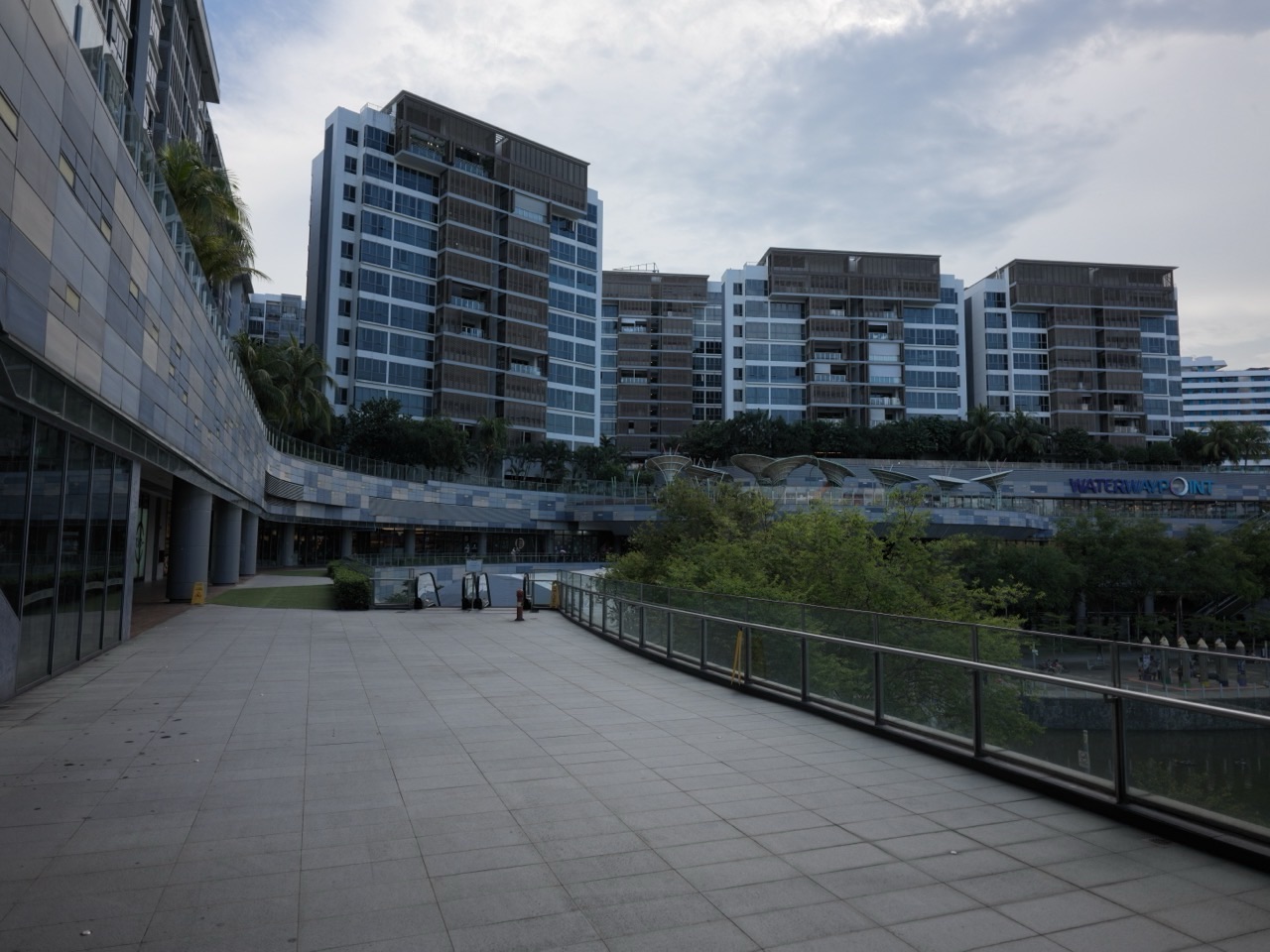
A family living near Waterway Point, Punggol Central, Oasis (PE6), Riviera (PE4) or Coral Edge (PE3) should not use the same ‘Punggol to college’ travel figure for the 2028 SEC-to-JC, polytechnic or ITE decision. LTA confirms that Punggol’s light rail system links residential areas to Punggol MRT and its bus interchange. More importantly, existing bus routes offer real choices: SBS Transit lists Service 3 serving Coral Edge and Riviera before reaching stops on Pasir Ris Street 71; Service 50 serves Oasis and Riviera toward Sengkang and Bishan; and Service 83 serves Riviera and Coral Edge toward Sengkang. Temasek Polytechnic separately lists Bus 118 from Punggol Bus Interchange. These verified corridors can help parents build school-specific journeys, but none is a guaranteed travel time or proof that the chosen course is suitable.
The student must first meet the real academic route. From the 2028 intake, an eligible JC applicant needs a valid five-G3 L1R4 with the general gross threshold of 16; MI’s is 20; direct polytechnic Year 1 uses the different revised ELR2B2; and ITE Higher Nitec or the Polytechnic Foundation Programme have their own subject-level calculations. For a Punggol family comparing Tampines Meridian JC in Pasir Ris, Nanyang JC in Serangoon, TP in Tampines, NYP in Ang Mo Kio, RP in Woodlands or ITE’s three colleges, the useful choice combines subject eligibility, programme content, actual home-to-teaching-block time, peak-hour reliability, transport costs and the teenager’s preference. This guide makes those checks concrete without inventing a 2028 admission offer.
- Scope: Punggol Central, Waterway Point, Oasis, Riviera, Coral Edge, Punggol Field and the east LRT loop.
- First SEC: 2027 examinations, January 2028 results and the new Post-Secondary Admissions Exercise.
- LRT: Punggol’s two loops connect residential stations to Punggol MRT and interchange, but add first-mile time to many campus routes.
- Bus 3: published service route includes Coral Edge, Riviera and Pasir Ris Street 71; investigate the correct final stop for TMJC.
- Bus 50: route includes Oasis, Riviera and connections toward Sengkang/Bishan; compare against LRT plus rail for the actual destination.
- Bus 83: published route includes Riviera and Coral Edge and a Sengkang corridor; do not assume it is fastest for every campus.
- Bus 118: TP lists a connection from Punggol Bus Interchange to its campus in Tampines.
- JC score: five eligible G3 L1R4 components, general gross 16 and subject minimums; not guaranteed placement.
- Poly score: direct Year 1 net ELR2B2 generally 22, plus programme-specific requirements and a mapped Best component.
- Transport: verify school gate, route and evening return; never convert straight-line kilometres into an asserted trip time.
- Concessions: compare actual fares against monthly passes using current SimplyGo rules and the student’s concession card type.
- Decision: course fit and student readiness come before a transport convenience ranking.
Start by drawing two Punggol journeys, not one
A teenager at Waterway Point may walk to Punggol MRT in a few minutes; a pupil living beside Riviera LRT may use the East Loop or nearby buses, and someone at Oasis may choose between a direct bus and an LRT connection. The same college destination therefore has different first-mile times. Parents should avoid comparing an estimate starting from Waterway Point with another starting at the actual flat and declaring the difference an institutional advantage.
For every shortlist row write the home entrance, first stop or station, departure target, expected interchange and destination building. Repeat the process for the return after the ordinary latest activity. This reveals whether the real burden lies in the cross-island segment or in reaching Punggol MRT from the home.
Punggol LRT is a real part of the school journey
LTA describes the Punggol LRT as a light rail system that connects residential areas with Punggol MRT and the bus interchange, running around two loops and serving fourteen stations. The East Loop includes stations such as Coral Edge, Riviera, Kadaloor and Oasis. A student who begins on the loop needs to include walking to the station, waiting, LRT riding and the transfer into the North East Line or a bus.
A journey-planner headline that begins only after the pupil reaches Punggol MRT can omit a significant cost. But an LRT can also improve access and make a farther institution more practical than a bus route with several uncertain stops. The family should time the actual transition at school-start hours, not treat the LRT as either always slow or always convenient.
Bus Service 3 connects useful eastern Punggol and Pasir Ris corridors
SBS Transit’s published Service 3 route contains stops by Coral Edge and Riviera and also serves Pasir Ris Street 71. This is particularly relevant because Tampines Meridian Junior College’s campus is at 21 Pasir Ris Street 71. It makes a bus-based route worth testing from some eastern Punggol homes, subject to the actual stop direction, the final walking distance and the service pattern at the intended hour.
Do not promise that every home beside Coral Edge has a one-seat trip to the college gate. Buses have direction-specific stopping patterns, and a student may need to cross roads or walk from a stop some distance away. Check the correct directional route on a weekday and measure the final approach. The source confirms the corridor, not a universal journey time.
Bus Service 50 may be worth testing from Oasis and Riviera
SBS Transit’s published Service 50 route lists stops near Oasis and Riviera and continues through parts of Sengkang towards Bishan. This creates an alternative to always taking the LRT to Punggol MRT before changing onto the North East Line. For a particular home, a directly accessible bus may reduce first-mile steps; for another, the rail path may still be substantially faster or more predictable.
The route is not a guarantee of direct access to every college in Serangoon or Ang Mo Kio. A family should match its actual destination to the bus route and calculate the remaining travel. Only then can it compare Service 50 with the LRT and rail alternative, including late evening waiting when the student is tired.
Bus Service 83 is another eastern Punggol option
The published Service 83 route includes Riviera, Coral Edge and other Punggol Field stops before continuing to the Sengkang area. This makes it another option to investigate for households near those stops. It may help in particular transfers or destinations, but it should not be described as the best route to a school without a door-to-door test.
Ask whether the bus stops close to the home, how frequent it is at the relevant time, and where the student would transfer if using it. Sometimes staying on the same bus is more comfortable than multiple trains; sometimes an interchange makes the bus choice slower. The answer depends on the actual school gate and timetable.
Bus 118 from Punggol Interchange to Temasek Polytechnic
Temasek Polytechnic’s official getting-there page lists Bus 118 from Punggol Bus Interchange and also explains access via Tampines West MRT and other services. For students at Waterway Point who can reach the original Punggol Bus Interchange conveniently, this is a clear candidate to test. For a Riviera or Oasis household, reaching the interchange first may be less efficient than an alternative journey depending on routes and waiting.
Do not confuse the original Punggol Interchange with the Punggol Coast Interchange opened in 2025. Each has its own service patterns, which may change before the 2028 intake. Confirm the actual boarding stop and destination block when planning a polytechnic student’s morning and late return.
TMJC is in Pasir Ris, not Tampines Polytechnic
Tampines Meridian JC is at 21 Pasir Ris Street 71, Singapore 518799. Despite the name, it is a separate pre-university school from Temasek Polytechnic at 21 Tampines Avenue 1. A family can therefore use the published Service 3 corridor as a starting point for examining the TMJC journey, while considering Bus 118 as a possible TP route. They must not confuse the two destinations or the subjects offered.
TMJC offers A-Level H1/H2 subject combinations subject to its current rules. TP offers diploma programmes with course-specific ELR2B2 minimums and applied learning. A convenient route to one does not make it a substitute for the other. Begin with the student’s desired academic programme and scores.
Nanyang JC and the Serangoon rail corridor
Nanyang JC is at 128 Serangoon Avenue 3. Families near Waterway Point can examine a North East Line approach toward Serangoon and an onward connection or walk to the college. Those at Coral Edge or Riviera should first compare reaching Punggol MRT through the LRT with other available transport. The correct route may vary by the actual home and desired morning arrival.
NYJC’s published subject guidance notes that H2 Mathematics assumes Additional Mathematics knowledge and that certain subjects, including Further Mathematics and Computing, involve diagnostics. A low SEC L1R4 does not grant every H2 subject combination. Parents should confirm academic fit before deciding whether the journey is worth the time.
ASRJC’s 2028 Ang Mo Kio campus and the old holding address
Anderson Serangoon JC is scheduled to return to its rejuvenated campus at 4500 Ang Mo Kio Avenue 6 for January 2028. Older directions to the holding campus in Upper Serangoon Road can be misleading for the first SEC cohort. The planned return should be checked against the school’s current notice before final travel decisions are made.
From an Oasis or Riviera home, rail-and-bus approaches to Ang Mo Kio may differ markedly from the route to Serangoon or Pasir Ris. A parent should identify the correct gate and test the timetable. Admissions competitiveness and the student’s H2 subject options remain independent of transport accessibility.
Millennia Institute and the western pre-university alternative
MI at 60 Bukit Batok West Avenue 8 normally offers a three-year pre-university structure. The revised general gross G3 L1R4 qualifying boundary is 20, subject to prescribed subject categories and minimum grades. It may be suitable for a student who values its academic pace and course options, but a Punggol East household should examine the cross-island journey carefully.
Record early reporting, interchanges, walking and the return after CCA. An extra year of study is not an automatic disadvantage, and a long commute is not an automatic prohibition. The family should weigh real curriculum value against a multi-year daily routine.
NYP: Ang Mo Kio from the east LRT loop
Nanyang Polytechnic is at 180 Ang Mo Kio Avenue 8. A student living near Coral Edge may approach through the LRT and North East Line or another combination, depending on the practical route and time. The actual teaching block can be far enough inside a large campus to affect morning arrival.
Check the intended diploma’s mathematics, science, English and relevant-subject requirements. The revised direct Year 1 ELR2B2 is course-specific and not the same as JC L1R4. If the course is genuinely available, compare the commute with similar diplomas at TP or RP.
RP: Woodlands and the limitations of a northern map shortcut
Republic Polytechnic is at 9 Woodlands Avenue 9. Its official directions describe routes using the Woodlands rail network and local buses; some services are subject to particular school-term hours. An eastern Punggol home may need several connections, and a northern campus location does not establish a direct or fast trip.
RP offers different programmes and PFP clusters with distinct entry requirements. A student who wants a particular field should examine course content and the current eligibility rules before weighing the journey. Late projects can make the return path as important as the morning route.
SP and NP: cross-island study with the correct course
Singapore Polytechnic is at 500 Dover Road and Ngee Ann Polytechnic at 535 Clementi Road. From eastern Punggol, both may involve long rail journeys with different last-mile conditions. A trip to Dover station is not automatically the whole SP journey, and a trip to Clementi station is not the whole NP journey. Timed campus gate and classroom access matter.
A strong specialist diploma may justify the distance. Compare its modules with similar courses nearer home and ask about laboratory, studio or internship locations. If two programmes offer comparable preparation and the teenager accepts both, a simpler journey can protect hours of study and rest every week.
ITE campuses require a course-first comparison
ITE College Central is at 2 Ang Mo Kio Drive, College East at 10 Simei Avenue and College West at 1 Choa Chu Kang Grove. The three colleges do not necessarily offer the same Higher Nitec courses. A student should check the exact qualification, entry requirements and teaching location before measuring travel from Punggol Central or its eastern stations.
Some technical courses involve early workshops, uniforms, equipment or industrial placements at other sites. A seemingly manageable trip to the main campus may not capture the entire learning schedule. Ask about the actual timetable and practical arrangements so the family can plan for consistency rather than just an orientation-day visit.
The correct 2028 G3 JC score is separate from the commute
From the 2028 intake the general JC qualifying framework uses five eligible G3 L1R4 subjects with a gross threshold of 16, plus minimum subject grades. L1 covers English or eligible Higher Mother Tongue, R1 Humanities, R2 Mathematics or Science, R3 a further Humanities/Mathematics/Science subject and R4 another eligible subject. A G2 subject cannot simply be converted upward to fill a required G3 position.
Even if a college lies along a convenient bus route, a family must not rank it as a realistic choice without checking this qualification and the intended H2 subjects. Travel and academic eligibility are distinct parts of the decision. A convenient destination cannot solve an invalid application.
Polytechnic and PFP scores need their own calculations
Direct diploma Year 1 from 2028 uses a different ELR2B2: G3 English, two relevant G3 subjects, another Best G3 subject and a final eligible Best that may be G2 or G3 calculated on the G2-equivalent scale. The general net threshold is 22, subject to diploma minimum entry grades. PFP instead uses a raw G2-equivalent ELMAB3 of 12 or better and its own cluster-specific subject minima.
Do not carry the student’s JC gross L1R4 into a polytechnic form. A strong G2 Best grade may be valuable for one route and unusable in a different position. When the family compares TP, NYP and RP journeys, it should compare courses actually accessible to the teenager rather than every diploma listed on the institution’s front page.
Choice order in the 2028 PSE is meaningful
MOE’s 2026 announcement sets the PSE tie-breaker sequence for applicants with equal net aggregates as citizenship, choice order, gross aggregate and computerised balloting. That means the teenager should rank eligible programmes according to genuine preference, not select an unwanted nearby course purely to fill a slot. Choice order cannot waive a grade minimum or create a vacancy.
A family should build a range of programmes the pupil would genuinely attend, with source links and verification dates. If two suitable options are closely preferred, measured transport reliability and the student’s learning style can guide the ranking. Do not promise a 2028 cut-off that does not yet exist.
How SimplyGo concession cards affect the budget
SimplyGo’s November 2026 information distinguishes School Smart Cards for school and junior college students, Diploma Student Concession Cards for qualifying full-time diploma students and ITE Student Concession Cards. The current published monthly pass options for the relevant student categories include bus, train and combined bus-and-train coverage. An actual student may be better off using ordinary concession fares rather than buying a pass every month.
At the time of this guide, SimplyGo lists a $49 hybrid monthly concession pass for qualifying diploma and ITE students, but this is a 2026 published price, not a guaranteed 2028 rate. Card eligibility, fare rules, included transport and study attendance may change. The family should check the live official information after receiving the new card rather than lock a two- or three-year budget to an old figure.
An example comparison of fares, not a fare quotation
Suppose a student makes twenty-two days of travel in a month and a hypothetical concession fare is $0.78 for each of two eligible daily journeys. The illustrative pay-per-ride total is 22 × 2 × $0.78 = $34.32. That is lower than the currently published $49 hybrid monthly pass price. But actual fares can be different, there may be other rides, and qualifying discounts can depend on the time and route. The arithmetic does not say which pass this teenager should purchase.
Build the fare comparison from the actual planned journey and likely additional rides. A student with frequent CCA travel, weekend projects or multiple buses may have a different cost pattern. Always verify 2028 fares and the concession card type, and remember that the time burden remains important even when a pass caps certain travel expenses.
How to compare LRT-first and bus-first routes fairly
Enter the same home door and destination classroom for two candidate routes. For LRT-first, include walking to the platform, waiting, riding, transfer to the North East Line, onward travel, the final stop and campus walk. For bus-first, include the walk to the directional stop, waiting, travel time including traffic, any transfer, final walk and buffer. Use the same school arrival target, not one Monday morning and one Sunday afternoon.
Run each on at least two plausible weekdays and compare normal and worse ordinary outcomes. The fastest suggested route can fail if the bus frequency is variable, and the shortest walking route can be inaccessible for some students. A meaningful comparison is one the teenager can repeat with reasonable confidence.
A time budget from an east-loop home
Consider two hypothetical routes to otherwise suitable programmes. Route A takes 52 minutes each way after including the LRT and final walk. Route B takes 69 minutes each way. The difference is seventeen minutes outbound and seventeen minutes returning, or 34 minutes each attendance day. Over five days this is 170 minutes, or 2 hours 50 minutes. Across forty illustrative school weeks it becomes approximately 113 hours more travel. These are examples, not live times to NYJC, TP or TMJC.
A teenager may choose the longer route for an especially good subject combination or diploma. Another may find that protecting time and sleep helps them learn more effectively. The family should state the educational advantage that justifies an extra weekly burden, rather than using ‘it’s only seventeen minutes’ as an unexamined dismissal.
Example family: Riviera student comparing TMJC and NYJC
Imagine a fictional learner living near Riviera who meets the broad JC eligibility criteria and wants a particular Mathematics and Economics combination. The family notices that Service 3 reaches Pasir Ris Street 71 and that NYJC is accessible through a Serangoon-oriented rail journey. Before concluding that one is easier, the parent checks the intended H2 subjects and then times the actual home-to-gate journeys at the required hour.
If both colleges provide suitable subject combinations and the learner genuinely accepts both, compare support, school culture, late returns and route resilience. A number on a transport app is useful only after the academic decision is grounded. The child should be able to describe why each school is desirable in terms of learning, not just location.
Example family: Oasis student comparing TP and NYP
Another fictional student near Oasis wants an applied diploma and has a mixed G3/G2 transcript. The family first calculates the appropriate ELR2B2 and checks Mathematics/English minimums for the intended courses. It then compares Service 50 and LRT connections toward Ang Mo Kio with the journey through Punggol Interchange and TP’s published Bus 118, or another route indicated by a current planner.
The family’s decision depends on actual diploma content, not a generic ranking of the five polytechnics. If TP teaches the preferred field and Bus 118 is practical, it may be the stronger choice. If a particular NYP programme fits better, the additional transport may be justified. Both must be checked using the same home origin and arrival target.
Example family: a learner with late CCA and a younger sibling
A third student may have an eligible JC or diploma programme but be expected to help with a younger sibling after school. A late CCA and a 70-minute return could make the original family routine unworkable. Instead of expecting the teenager to cope silently, adults should compare the real school timetable and ask which responsibilities can be redistributed.
The learner’s academic choice should not be determined by an avoidable household scheduling problem, but practical obligations must be acknowledged. A family may secure other help, choose a comparable closer programme or accept a different daily routine. Honest planning respects the teenager’s future and the people depending on them.
A wet-weather and last-bus test
A route planner may provide a promising school-morning arrival but obscure an exposed path or an inconvenient late return. Visit the correct station and campus gate if possible, observe crossing points and consider carrying a sports bag or lab materials. At evening hours, check whether the onward bus frequency changes and what a reasonable fallback would be if the usual service is disrupted.
Do not claim that a particular bus service will operate unchanged in 2028 just because its current route is documented. Use SBS Transit or the actual operator’s latest timetable. A robust plan includes one feasible alternative, a safe return route and sufficient time to get home and rest.
Academic readiness should shape the transport trade-off
Students who can follow lessons confidently may cope with a demanding journey differently from pupils already struggling with homework and sleep. A course may require substantial independent study, practical laboratory hours or group projects. A family should ask how the teenager uses time on a crowded train: can they read lightly, or do they simply need recovery? Neither answer is a character judgment.
Where foundational English or Mathematics weaknesses exist, a more manageable commute may leave time for purposeful practice and support. A longer journey can still make sense for a distinctive academic opportunity, but the advantage should be clear enough to explain. Selecting the right educational route includes designing a routine the student can sustain.
The Punggol parent decision matrix
Create rows for each eligible course or college and columns for the official admission formula, required subject grades, exact campus address, course modules or H2 combinations, home origin, published transport options, measured morning journey, measured late return, likely weekly travel hours, concession fare assumptions, support availability and student preference. Put a date beside each verification.
Keep numerical eligibility separate from subjective fit. An institution that does not meet the child’s compulsory course needs should not be rescued by a high transport score. Where two genuinely eligible programmes are close, the measured everyday journey and the teenager’s willingness to study the curriculum can break the tie.
A seven-step action plan for the 2028 intake
First, obtain the complete SEC transcript and grade levels. Second, calculate JC L1R4, diploma ELR2B2 or foundation/ITE scores using the correct formulas. Third, identify named courses with verified minimum grades. Fourth, confirm the exact 2028 campus and teaching location. Fifth, compare Waterway Point, Oasis, Riviera or Coral Edge origins using current bus and LRT routes. Sixth, test early and late journeys and check the fare budget. Seventh, submit genuinely preferred eligible choices under the new PSE instructions.
The objective is not to publish one shortest journey for all Punggol students. It is to help each family ask the right questions, use trustworthy route information and choose a course the teenager can actually enter, travel to and learn from for the next several years.
Frequently asked questions
Does Punggol LRT connect Oasis and Riviera to the North East Line?
Yes. LTA describes the Punggol LRT loops as connecting residential stations to Punggol MRT on the North East Line. The actual wait and transfer time must be measured.
Does Bus 3 serve Riviera and Pasir Ris Street 71?
SBS Transit’s published route includes Riviera, Coral Edge and stops along Pasir Ris Street 71. Check the correct directional stop and last walk to TMJC in the actual timetable.
Does Bus 50 serve Oasis and Riviera?
SBS Transit lists both Oasis and Riviera stops on the Service 50 route towards the Sengkang/Bishan corridor. It is a possible option to evaluate, not a guaranteed fastest connection to a particular college.
Does Bus 83 serve Coral Edge?
The published route includes Coral Edge and Riviera. How useful it is depends on the destination, direction, departure time and any onward transfer.
Can students use Bus 118 to Temasek Polytechnic?
TP officially lists Bus 118 from Punggol Bus Interchange. The home-to-interchange time and actual bus service should be verified for 2028.
Is TMJC part of Temasek Polytechnic?
No. TMJC is a junior college in Pasir Ris Street 71; TP is a diploma institution at Tampines Avenue 1. They have different admissions formulas and curricula.
How can an L1R4 of 16 help choose a polytechnic course?
It cannot simply be reused. Direct polytechnic Year 1 uses a course-specific revised ELR2B2 with its own G3 and G2-equivalent components.
Is the $49 combined concession pass guaranteed in 2028?
No. That is the current published 2026 SimplyGo hybrid monthly pass price for qualifying student categories. Recheck fares and eligibility after enrolment.
Should we buy a monthly pass automatically?
Not necessarily. Compare actual expected concession pay-per-ride costs, trips and pass coverage, and confirm the 2028 rules.
Are 52 and 69 minutes real Punggol commute times?
No. The article uses those hypothetical one-way numbers only to illustrate weekly and annual time arithmetic.
Does choice order help overcome a missing prerequisite?
No. MOE’s 2028 tie-breaker sequence uses choice order in defined net-score ties, but compulsory subject requirements still govern eligibility.
What if the student needs step-free access?
Check the real route and campus with the receiving institution. The shortest suggested journey may not be the most accessible or reliable.
Can a nearby diploma be better than a farther JC?
That depends on formal eligibility, what the teenager wants to learn, the academic structure and the daily routine. The two pathways are different, not ranked by proximity alone.
Official transport, admission and fare sources
- LTA — Sengkang-Punggol LRT and two loops
- SBS Transit — Bus Service 3 stop sequence
- SBS Transit — Bus Service 50 from Oasis and Riviera
- SBS Transit — Bus Service 83 stops
- TP official getting-there page including Bus 118
- MOE 2026 new PSE and posting tie-breaker
- MOE 2025 JC L1R4 and campus renewal
- SEAB SEC G1/G2/G3 subject mapping
- Republic Polytechnic direct diploma and PFP rules
- SimplyGo student fare rules, updated December 2025
- SimplyGo diploma concession card and current passes
- Punggol Coast and Northshore companion guide
- Punggol SEC G3 results score directory 5–45
Parent guidance checked 14 November 2026. Bus corridors and 2026 concession rates were checked against published sources but may change by the 2028 intake. All sample journey durations and personal scenarios are hypothetical; apply the student’s actual SEC results and campus timetable.


