
For a Punggol teenager with special educational needs, a disability, learning differences, travel anxiety or another practical access requirement, choosing PFP, direct Polytechnic Year 1, JC, MI or ITE after SEC G2 results involves more than checking a grade and an MRT station. Eligibility is determined by the child’s actual 2027 SEC G1, G2 and G3 subjects, the relevant 2028 aggregate formula and each course’s compulsory entry requirements. But whether a child can attend, learn and participate consistently also depends on access to suitable teaching spaces, academic support, assessment arrangements, transport reliability and any workplace placement conditions. Having a support need does not automatically exclude a pupil from post-secondary education. Institutions can explain what support is available and what essential course requirements must still be met.
For a family living in Northshore, Matilda, Sumang, Punggol Coast or near Waterway Point, an accessible journey to the actual teaching block may matter more than the shortest route displayed on a map. ITE has Learning Accessibility Offices at College Central in Ang Mo Kio, College East in Simei and College West in Choa Chu Kang. Temasek Polytechnic’s SEN Support Office explicitly advises prospective full-time diploma and PFP students; Republic Polytechnic and Nanyang Polytechnic also publish accessibility, assessment and assistive-technology support. This independent parent guide explains how to approach institutions before applying, protect the student’s privacy, test barrier-free public transport and choose among genuine academic routes without making promises about individual accommodations.
- First verify the student’s actual SEC subject levels, grades and valid post-secondary course choices; support requirements do not erase academic admission rules.
- ITE’s 2026 Learning Accessibility Office (LAO) guidance covers course counselling, transition, assistive technology, access arrangements and placement support, subject to assessment.
- TP publishes SEN support for both full-time Diploma and PFP students and offers pre-admission course advisement and support.
- RP and NYP publish SEN assistance including examination access arrangements, assistive technology, academic support and employment or internship preparation.
- MOE’s SEN Fund may support eligible full-time students with assistive devices and services; the actual award, proof and course eligibility are prescribed.
- LTA reports barrier-free routes at rail stations and interchanges and wheelchair-accessible public buses and trains, but an individual bus stop, lift or crowded vehicle can still affect a real trip.
- Check from Punggol home to the correct course block or workshop, including morning transfers, accessible entrances, weather and the journey home.
- Respect the child’s involvement, consent and confidentiality; course needs should be discussed with authorised institutional staff rather than posted publicly.
First principle: admission eligibility and participation support are distinct
A student’s SEC certificate lists each subject at the level examined. A learner who began in Posting Group 2 may have G2 and G3 results in different subjects. The announced 2028 PFP general route uses raw G2-equivalent ELMAB3 12 or better, plus mandatory English, Mathematics, relevant-subject and other grade minima. The ITE direct Higher Nitec Year 2 route has a separate raw G2-equivalent ELMAB3 19 gate with course requirements. Direct Polytechnic Year 1 generally uses four appropriate G3 components plus a G2-equivalent Best, while JC and MI use five relevant G3 subjects.
These are academic gates. An institution’s learning support office does not simply replace a missing compulsory subject, but a support need should not be used by a parent to rule out a course without asking what participation and reasonable adjustments may look like. The practical question is whether the student is eligible and whether the course, with available support, is genuinely suitable. The answer may differ between programmes involving laboratories, studio work, field activities or customer interaction.
Some specific courses have medical, safety, vision, colour-appreciation or other essential learning conditions. ITE’s current general admissions guidance says applicants should seek course advisement when a disability or support need intersects with course demands, and its Learning Accessibility Office can help explore options. This does not imply that every student with a particular condition is ineligible; decisions require individual information and the actual course rules.
What the student needs should be described functionally
A family can begin by discussing which situations are difficult: reading dense technical text, following long oral instructions, navigating a platform transfer, managing timetable changes, using a laboratory bench, hearing an instructor, producing handwriting under time pressure or working in a crowded area. These concrete descriptions are more useful for arranging support than vague labels such as ‘not suited to polytechnic’.
A student may need text-to-speech, an alternative input device, clear written instructions, accessible routes, a rest arrangement or help with the transition from structured secondary lessons to independent college work. The family should ask which supports are appropriate and available, not declare that any one solution fits every learner. A programme with carefully organised project work may be easier for one student than a programme with many unpredictable field placements, while another pupil may have the opposite preference.
The teenager should participate in these conversations wherever possible. Post-secondary education develops independence. Parents can support preparation and follow up on deadlines without taking over every communication or publishing sensitive information that the child has not agreed to share.
ITE: three Learning Accessibility Offices, three college locations
| ITE college | Official address | LAO location stated by ITE |
|---|---|---|
| College Central | 2 Ang Mo Kio Drive, Singapore 567720 | Student Care @ Central, Block A, Level 3, Unit 08 |
| College East | 10 Simei Avenue, Singapore 486047 | Student Care Department, Admin Block, Level 2, A02-02 |
| College West | 1 Choa Chu Kang Grove, Singapore 688236 | Student Care Department, Block 3, Level 6 |
ITE’s published 2026 Learning Accessibility Office page describes course counselling, transition support, advice on assistive devices, facilities, behaviour-related support, access arrangements for tests, industrial attachment and career counselling. The office can advise on appropriate next steps before or during enrolment, although particular adjustments are assessed under applicable rules and available resources.
A Punggol family must still find which college offers the named Higher Nitec course. A course in applied health sciences may be taught at a different college from a specific engineering or design qualification. Do not select the shortest trip to College Central and discover afterward that the student’s desired course is located at East or West. The exact building may also matter for lifts, accessible facilities and a reliable route between workshops.
ITE’s page encourages students to contact their LAO when enrolling and describes supporting documents for examination access arrangements. Students needing arrangements should make contact early enough for assessment; do not assume that an arrangement used in secondary school will automatically carry forward without a new institution’s review.
Temasek Polytechnic: explicitly includes PFP and full-time diploma
Temasek Polytechnic publishes a SEN Support page expressly covering full-time Diploma and PFP students. It explains that prospective students can contact Admissions or SEN Support for pre-admission course advisement and transition support. For enrolled students, assistance can include learning and social check-ins, coordinated classroom access, assistive technology and examination arrangements, and internship preparation.
This is particularly relevant to a Punggol pupil who meets the published PFP aggregate and relevant-subject grade minima but worries about a new campus, large lecture spaces or independent learning. The family can ask staff what a foundation-year Mathematics or English class looks like, how assessments are arranged and how students are introduced to academic support. Such questions should be made before ranking a course, not only when classes begin.
TP is at 21 Tampines Avenue 1 and lists Bus 118 from Punggol among services reaching its campus. A direct bus may be easier for a teenager who finds multiple interchanges difficult, but a direct route is not automatically fast or accessible from every Punggol home. Verify the actual stop, walkway and course building, and test at the anticipated weekday start hour.
Republic Polytechnic: learning and assessment arrangements
Republic Polytechnic’s 2026 SEN Support page lists academic support, assistive technology, counselling referrals and possible assessment arrangements such as extra time, supervised rest breaks or adjusted paper formats. These are examples of support the institution may assess and approve, not a blanket entitlement for every student. The page explains that relevant certification is generally needed for a formal arrangement request.
RP states that its Woodlands campus includes accessible features such as lifts and ramps. A student requiring step-free access should still check the path from the chosen bus stop or train station to the correct classroom and any specialised laboratory. On-campus accessibility and the full commute are separate questions.
A learner may prefer a course that uses regular practical or collaborative tasks, but should examine its actual modules and assessment demands. A programme with many team projects may create both opportunities and challenges for students who need predictable communication. Ask about expectations and available support rather than assuming a particular teaching style guarantees suitability.
Nanyang Polytechnic: transition, accommodations and the SEN Fund
Nanyang Polytechnic describes support involving classroom and examination accommodations, counselling, assistive technology, campus accessibility and internship preparation. Its published SEN services also include transition and executive-function-related resources. A family with a student considering a diploma in applied science, engineering, healthcare or media can ask for programme-specific advice before deciding that a challenging subject is either impossible or trivially manageable.
NYP’s SEN Fund page describes financial support for eligible full-time Singapore Citizen diploma students who have declared a relevant need and provided appropriate professional documentation. Published 2026 amounts include up to $5,000 for some physical, learning or behavioural conditions and higher limits for certain sensory needs, with higher-needs circumstances assessed case by case. These are capped and conditional funding arrangements, not an automatic cash payment to every student with a diagnosis.
The same programme may require both academic readiness and practical support. For a learner who likes engineering but has difficulty copying rapidly from a board, the institution can discuss usable learning materials. That discussion does not remove the course’s Mathematics requirements, and the family should still plan how the student will learn and check technical calculations.
How the MOE SEN Fund differs from ordinary bursaries
| Support type | Primary purpose | What family must check |
|---|---|---|
| Learning and assessment support | Access to teaching, reasonable adjustments and participation | Institution-specific process, evidence and approval |
| Assistive technology / SEN Fund | Approved devices or services linked to educational needs | Citizenship, course status, professional documentation and permitted expenditure |
| Ordinary financial bursary | Help with fees or living costs under income criteria | Household income, citizenship and institution scheme |
| Counselling and ECG | Wellbeing, course choices, transition and careers | Appropriate authorised office and privacy |
| Transport support | Practical travel/access arrangements or eligible concession schemes | Actual route, card type, conditions and current availability |
Do not treat every fund as interchangeable. The SEN Fund exists for specific assistive devices and services and has qualification and evidence rules. The Higher Education Community Bursary and other financial aid use different income-based eligibility. A family may qualify for one, more than one or neither, depending on applicable schemes. Ask the institution what can legitimately be combined rather than assuming one award pays for all educational expenses.
The published RP and NYP SEN Fund details restrict ordinary full-time diploma funding to eligible Singapore Citizens with specified documentation. Families considering PFP or another qualification should ask whether that programme is eligible under its current support provisions rather than copying the diploma criteria without verification. TP’s SEN team specifically provides support to PFP students, but the funding conditions still need checking.
Make a barrier-free Punggol journey, not just a short journey
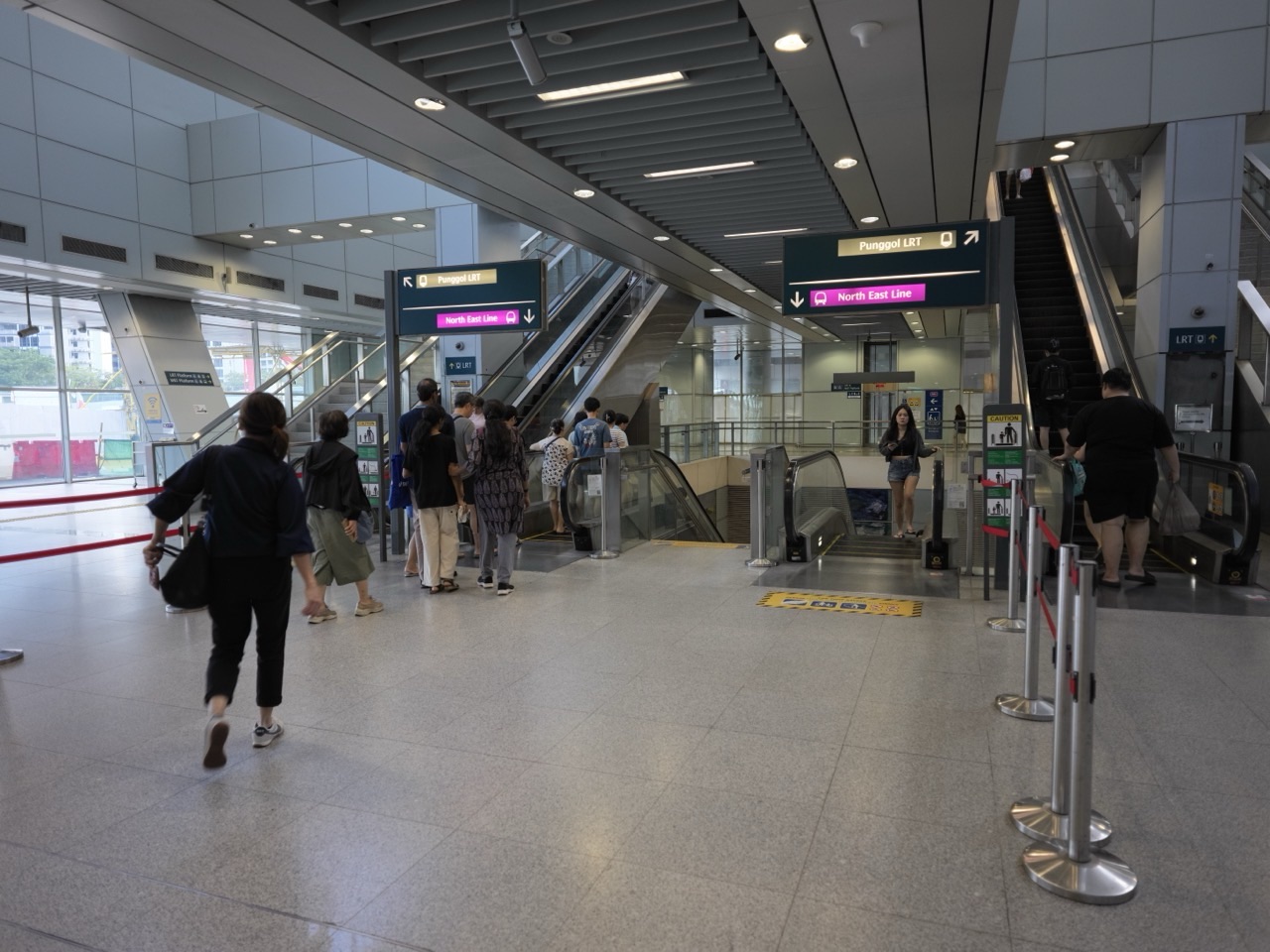
LTA’s published inclusive public transport guidance explains that public buses and trains have wheelchair-accessible provisions and barrier-free station or interchange paths. It also warns about real-life constraints: a crowded bus or occupied designated wheelchair space can mean waiting for another service. It lists very high but not universal bus-stop barrier-free coverage. A parent should not infer from the accessibility of a station that every pavement, bus stop and final campus entrance on a particular route is appropriate.
For a teenager who uses a wheelchair or other personal mobility aid, check vehicle and ramp compatibility, stop accessibility, lifts, platform transitions and the chosen campus gate. Other pupils might require an audible information source, clear signage, extra transfer time or a less crowded route. The right travel plan describes the individual’s needs and conditions, not just what the map labels as the fastest service.
A Punggol home near Sumang LRT may have a different first-mile than one near Punggol Coast MRT or Waterway Point. In bad weather, exposed paths can change the practicality of a route. The parent should rehearse the morning trip with the student where helpful, observe the actual timing and keep their address private.
A practical route worksheet from Punggol to post-secondary campuses
| Stage | Access and reliability questions | Evidence to collect |
|---|---|---|
| Home to first vehicle | Sheltered path, crossing, ramp or lift, feasible walk | A weekday rehearsal from the private home location |
| Bus/LRT/MRT boarding | Accessible vehicle and stop, service frequency, platform transfer | LTA/MyTransport route details and observed waiting |
| Interchange | Lift location, crowding, signage and safe transfer time | Test the actual change at school-start hour |
| Campus entrance | Which gate is accessible and nearest the real teaching block? | Campus map and institution’s accessibility advice |
| Class or workshop | Lift, seating, equipment, lab access and emergency procedure | Course staff / support-office response |
| Return journey | Late class, field placement, disruption and fatigue | Second rehearsal and a viable alternative |
The worksheet applies to all students, not only those with registered disabilities. A teenager who needs predictability may value one direct Bus 118 journey to Tampines over a route with multiple fast transfers, while another learner may comfortably use a rail-based route to Ang Mo Kio or Dover. The route should be tested as a whole, including the last campus walk.
For a hypothetical example, Route A takes 55 minutes but has no transfers and a clear sheltered final walk; Route B takes 42 minutes but includes two crowded transfers and an exposed 500-metre walk. The 13-minute time saving does not automatically make Route B better. Evaluate reliability, comfort, access and the student’s participation in class. These are invented scenarios for comparison, not measured times to any particular campus.
Some courses have essential practical requirements
Certain health-related, engineering, outdoor or laboratory programmes have safety standards, physical task requirements, colour recognition conditions, placements or compulsory professional communication. A family should ask the admissions and support teams how these are assessed for the specific course. The institution may explain possible adjustments, but neither an independent article nor a parent should promise that all practical tasks can be waived.
Students should be included in the conversation and treated as capable of understanding the requirements. A young person might have a strong interest in caring work but require an accessible simulation environment, or be technically gifted yet find some apparatus difficult to operate. There may be suitable adaptations, related alternatives or specialist support. The important step is to obtain current course-specific advice rather than rely on stereotypes.
Where appropriate, ask whether an internship or industry attachment is mandatory, how placements are selected, what accessibility and workplace support exist and whether travel could be substantially different from the campus journey. A college that is accessible at its main teaching site may have placements across Singapore. Early planning is helpful.
Transition from a familiar secondary school to an independent campus
Some students have become accustomed to a known timetable, small classroom and regular teacher reminders. A polytechnic or ITE course may introduce new digital systems, project groups, changing timetables, assessments and large campuses. A transition plan can identify the first week’s routes, who to contact about timetable confusion, how to request clarification, and what to do if the student falls behind.
Try a staged independence routine. The learner can locate one classroom, practise asking a staff member for directions, save the relevant office contact, and independently check the next day’s timetable. The parent can support these rehearsals without managing every message. A plan that builds agency is more sustainable than either withdrawing all support immediately or controlling every part of college life.
A brief first-principles study check also helps. If a pupil struggles with reading technical instructions, isolate vocabulary, sentence meaning and the ability to follow a sequence. If Mathematics is difficult, distinguish fragile number operations from interpreting word problems or diagrams. Academic support is strongest when it addresses the real source of confusion rather than giving the same generic worksheets to every learner.
Protect privacy and consent
A student’s health, neurodevelopmental or disability information is personal. Families should contact official admissions or SEN offices using secure channels rather than include full medical reports, diagnostic notes or a home address in a public school-choice discussion. Ask what evidence is required, who may access it, how it will be used and whether the student can participate in decisions about sharing.
The student should understand that disclosure for appropriate educational support is not a public announcement of their personal situation. Institutional pages describe specific privacy and consent principles, and information may need to be shared where law or safety requires. An independent website should not try to determine the individual’s disclosure obligations. Ask the authorised institution directly.
Three family scenarios
Case A: a PFP-eligible learner who needs structured instructions
A fictional Punggol child has a valid raw G2-equivalent ELMAB3 of 11 and meets the relevant PFP minimum grades, but benefits from written step-by-step instructions and support with timetable organisation. The family can compare genuine Sciences, DET or HAMB programmes and ask the polytechnic what transition and class-support systems exist. A short journey may be valuable, but a better-matched course and clear support process could matter more.
If TP’s PFP curriculum interests the student, the family can contact its published SEN support office and investigate the actual campus route. The child should also see sample foundation-year Maths and English tasks, because PFP remains a genuine academic bridge before the diploma stage.
Case B: a Higher Nitec applicant with a mobility requirement
A second learner has a correctly calculated G2-equivalent ELMAB3 of 17 and meets an ITE technical course’s published minima. The family identifies the actual college and consults its LAO about equipment, laboratory participation, accessible routes and any necessary assessment arrangements. They then test public transport from the Punggol home to the actual workshop block, not merely to the nearest MRT station.
The family should not presume the course is unsuitable based solely on a disability, or promise that every physical task can be changed. The institution can advise on essential requirements and possible accommodations. This provides a firmer basis for a course choice than assumptions on either side.
Case C: two academically sound courses, different access demands
A third student is eligible for related diplomas at two polytechnics. Campus A appears 40 minutes away on a nominal planner but requires several difficult transfers; Campus B is 55 minutes via a direct and predictable journey. After rehearsal and speaking with support offices, the student may reasonably prefer the latter. These are hypothetical times, not travel claims about named colleges.
The learner should still inspect the modules and future opportunities. A practical access advantage is important, but the course must genuinely fit the student’s interests and requirements. A family can use a small decision table rather than treat one numeric travel estimate as the final answer.
Practical checklist before making the 2028 application
- Record the student’s actual SEC subject levels and grades and calculate the right route-specific eligibility.
- Shortlist only named courses or clusters for which academic requirements are met.
- Read each course’s actual modules, assessments, workshops and placement requirements.
- Ask the student what day-to-day tasks they most want to learn and which situations require support.
- Contact the institution’s authorised SEN or Learning Accessibility Office for pre-admission advice.
- Clarify any official assessment arrangements and what evidence or deadlines apply.
- Check the course’s essential medical, practical, colour-appreciation or safety conditions privately with staff.
- Test public transport from the actual Punggol home to the teaching block on a weekday morning.
- Verify bus stop, lift, entrance, late return and disruption contingency for the student’s needs.
- Investigate assistive technology, the SEN Fund and any separate financial-aid schemes with their eligibility rules.
- Involve the teenager in deciding which course and campus are realistically suitable.
- Order genuinely acceptable options and save official 2028 PSE, offer and support contacts.
Frequently asked questions
Does a disability automatically prevent an SEC G2 graduate from joining ITE?
No. ITE publishes course advisement and Learning Accessibility Office support. Individual course requirements and suitability still need discussion.
Does TP offer SEN support to PFP students?
Yes. Its published SEN Support page explicitly includes full-time PFP and diploma students, with transition and learning services.
Can a polytechnic offer assessment arrangements?
Some institutions publish examples such as extra time or rest breaks, subject to assessment and evidence. The student must follow the specific institution’s process.
Is the MOE SEN Fund unrestricted cash for any diagnosed student?
No. It supports approved assistive technologies or services for eligible students and has course, citizenship, documentation and funding conditions.
Are all Punggol bus stops and campus paths barrier-free?
LTA reports extensive accessible public transport, but not universal access to every stop or path. Test the actual journey and campus entrance.
Should the child always choose the closest college?
No. Choose a genuinely eligible and appropriate programme and compare its accessible and sustainable full journey with other valid options.
Does a student’s existing school exam arrangement automatically transfer?
Not necessarily. The college may require its own documentation, review and approval. Contact the appropriate office early.
Do parents need to share medical details publicly to seek college advice?
No. Use the institution’s authorised confidential channels and involve the learner in decisions about disclosure.
Official guidance and connected Punggol articles
- ITE: Learning Accessibility Offices, SEN Fund and assessment support
- ITE: course-specific practical requirements and pre-admission advisement
- Temasek Polytechnic: PFP and diploma SEN support and transition advice
- Republic Polytechnic: learning support and assessment access arrangements
- Republic Polytechnic: SEN Fund eligibility and applications
- Nanyang Polytechnic: SEN services and transition support
- Nanyang Polytechnic: SEN Fund conditions and limits
- LTA: barrier-free rail, bus, bus stop and mobility-aid guidance
- MOE: ITE internship and employment support for students with SEN
- SEAB: SEC subject-level grading and examination rules
- eduKate Punggol: financial aid and study budgets
- eduKate Punggol: home-to-campus commute methods
- Immutable Clementi reference for direct, clear first-principles delivery
Independent parent guide prepared 14 November 2026 from publicly available policies and institution information. No individual condition, diagnosis, course suitability or accommodation is assessed by this article. Funding, entry, course support and access arrangements require official institutional confirmation. Hypothetical routes are examples, not measured 2028 service data. The Clementi reference has not been edited.


