
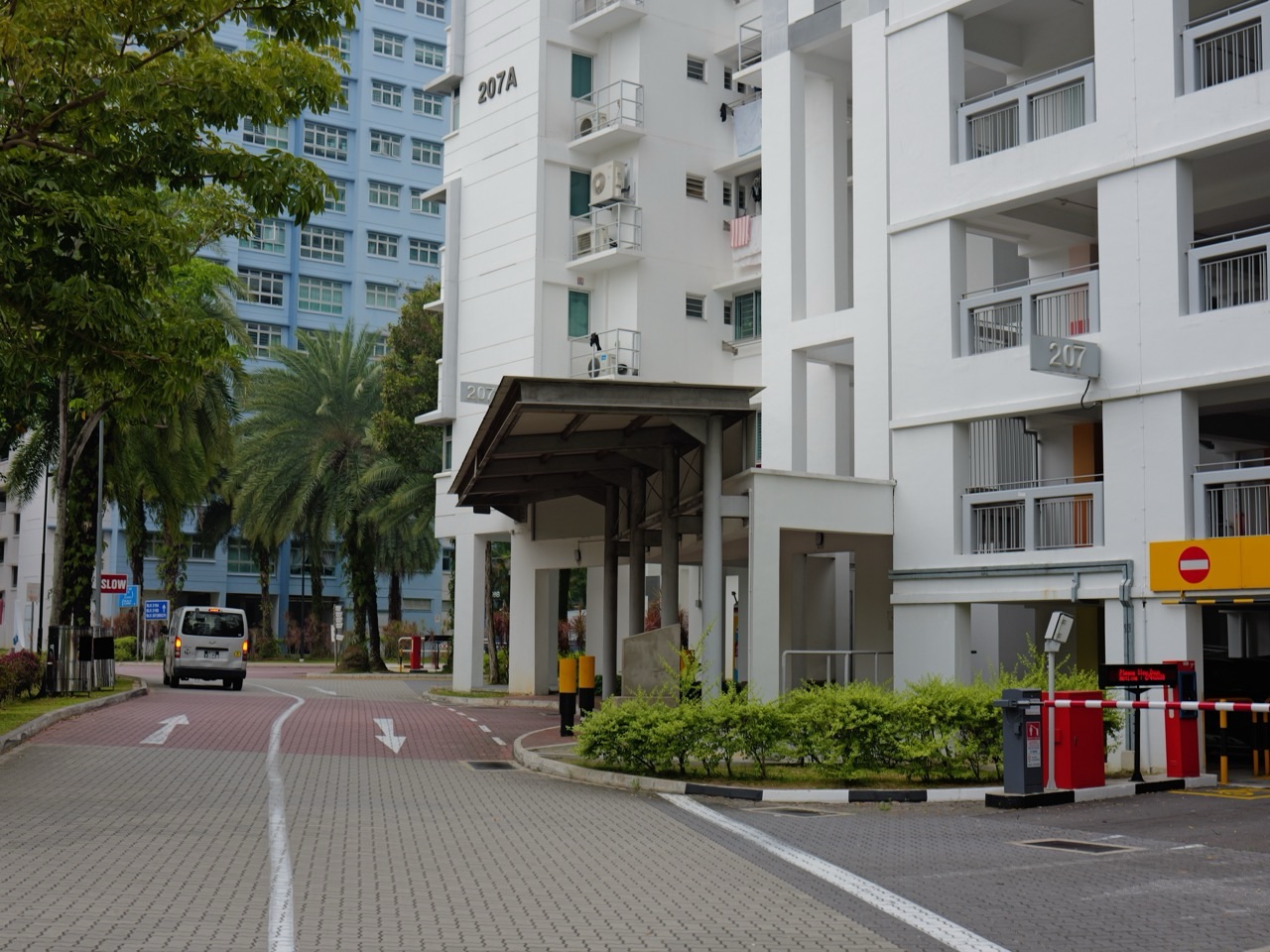
How much does hiring a domestic helper cost for a Punggol family? Budget for the agreed monthly salary, MOM’s foreign domestic worker levy, required medical and personal accident insurance, food, suitable accommodation, medical care, rest-day arrangements and any agency or application fees. In November 2026, MOM’s standard levy is S$300 per month for a first migrant domestic worker (MDW) and S$450 for subsequent helpers. Eligible caregiving households may receive a S$60 concessionary monthly levy, subject to specific conditions. An ordinary Punggol HDB address does not automatically qualify a family for the concession.
Rest days and care are legal and human responsibilities, not optional benefits. An MDW is entitled to one weekly rest day, with mutual agreement about scheduling. If she agrees to work on an eligible rest day, the employer must compensate her with at least one day’s salary, but one rest day every month must actually be taken and cannot be exchanged for money. A helper’s work permit is tied to permitted domestic work for the registered employer and address. This guide explains fair household arrangements for families managing children, older relatives, work shifts and ordinary chores, without treating a person as an unlimited 24-hour employee.
- Standard MOM levy: S$300 monthly for the first helper; S$450 for a subsequent helper.
- Concessionary levy: S$60 monthly if qualifying caregiving criteria are met.
- Employer: at least age 21, with capacity, suitable accommodation and sufficient financial ability; first-time employers normally need the Employer Orientation Programme.
- Monthly salary: agreed and declared amount; pay within seven days after the salary period ends.
- Rest: one day weekly under mutually agreed arrangements; one day a month cannot be compensated away.
- Insurance: medical insurance annual claim limit at least S$60,000 and personal accident insurance sum assured at least S$60,000.
- Security bond: S$5,000 for each non-Malaysian MDW; it is not a salary deduction.
- Accommodation: safe shelter, a proper sleeping space, ventilation, amenities and privacy.
- Agency: read written contract and fees; qualifying early termination can trigger at least 50% agency service-fee refund.
- Alternative: part-time domestic help through a legitimate Household Services Scheme provider may suit light or occasional chores.
Before hiring: what problem does your household need help with?
A Punggol family may want assistance with three different types of work: basic household chores, looking after children, or helping an older relative with daily needs. These activities overlap but are not identical. Someone who occasionally needs the kitchen cleaned may be better served by a part-time service. A working parent with two preschoolers may need a stable approved care arrangement. An older adult with significant medical needs may require trained day care, home nursing or personal care in addition to any household help.
The starting question is therefore not ‘Which agency has the cheapest helper?’ It is ‘What tasks actually need doing, at what times, and what training or judgement do they require?’ A helper is not automatically qualified to manage a complex medical condition or replace a licensed nurse. A family should separate ordinary supervision and domestic assistance from clinical tasks that require professional assessment.
Household space also matters. A flat with several generations, young children and limited private sleeping space needs to assess whether it can provide adequate accommodation and rest for another person. MOM’s requirements are not suspended because Punggol HDB flats can be compact. A proper budget includes the worker’s wellbeing and privacy alongside family convenience.
Full-time helper, part-time cleaner or professional care?
MOM’s Household Services Scheme (HSS) allows participating companies to provide part-time household services such as cleaning, shopping, car-washing and pet-sitting. Selected providers can also offer basic elder-minding. The scheme is different from a household personally employing an MDW under a Work Permit. The service company is responsible for its own workers under applicable arrangements.
A family with limited cleaning needs may save money and avoid full-time employer duties by purchasing a legitimate weekly service. Compare the actual number of hours required, whether household members can manage other chores and the availability of suitable providers. A full-time worker can be valuable for more continuous legitimate care needs, but it is not automatically the only choice.
MOM’s HSS guidance notes that basic child-minding was no longer supported with manpower concessions under that pilot from March 2026 because of low demand. Do not copy old articles saying HSS will provide subsidised child-minding for every Punggol family. Check the exact service scope and provider’s current authorisation. For childcare, ordinary preschool and student-care arrangements may still be more appropriate.
Who is eligible to employ a migrant domestic worker?
MOM requires an employer to be at least 21, not be an undischarged bankrupt and have capacity to understand and discharge employer responsibilities. The authority assesses financial ability, caregiving needs and suitable accommodation, including family circumstances. First-time employers need to complete an Employer Orientation Programme, subject to any applicable exemptions, before applying.
The Work Permit application may be submitted by the eligible employer, sponsor or authorised employment agency. The worker must also meet MOM’s nationality, age, education and other criteria. A prospective employer should not bring someone to Singapore to begin paid domestic work before receiving the correct immigration and work-pass authorisation. The process includes in-principle approval, required insurance and bond, any settling-in programme, issuance and registration steps.
MOM’s Work Permit key facts say the permit can generally be valid for up to two years, subject to conditions, and is renewable. This does not mean the household can indefinitely transfer the worker to another employer, have her work in a commercial shop or assign her to a friend. Work-pass conditions are specific and should be checked before changing an arrangement.
Employer and helper obligations are separate from agency promises
Some employment agencies offer matching, application assistance, training or other services. An agency’s sales material cannot override MOM rules. The employer remains responsible for legal salary, safe accommodation, rest and medical obligations once the worker is employed. A worker’s rights do not disappear because an agency has collected a fee from the employer.
Ask the agency for its licence, itemised charges, contract, replacement/refund terms and the worker’s actual relevant experience. Do not treat an interviewer’s claim that every helper is skilled in eldercare as evidence of qualified medical training. The family should decide what duties it needs and explain them honestly. A good match is built around real expectations and a mutually understood agreement.
Where there is a language difference, allow a clear explanation of tasks, safety procedures, rest times and how to ask questions. A few days of orientation in a new home may be necessary. Respectful communication is not an optional extra; it helps prevent mistakes involving cooking equipment, children, medication and household security.
MOM levy rates in 2026: S$300, S$450 and S$60
MOM’s levy schedule lists S$300 a month for the first MDW under the standard category, S$450 for a subsequent helper and S$60 for qualifying concessions. The levy is a government employment charge separate from the worker’s salary. Employers do not make CPF contributions for MDWs under this Work Permit regime, but they must still pay the levy and meet all other obligations.
These amounts should not be confused with agency commissions or a helper’s income. The worker’s salary is paid to her under the agreement, while the levy is paid through MOM’s system. A household might receive a concession because of caregiving needs, but it must not reduce the worker’s agreed salary by the value of the concession. The purpose of the reduced levy is to support qualifying families, not justify lower worker pay.
MOM’s monthly levy generally becomes due by the 17th of the following month, subject to its rules for weekends and public holidays. An employer can use an approved GIRO or another permitted payment channel. Record it in the household budget as a recurring obligation. Late or missed payment can cause consequences affecting the Work Permit.
Who qualifies for the S$60 concession?
MOM’s concession page describes qualifying care households including a Singapore Citizen child below 16, an eligible elderly person aged 67 or above, or a person with disability meeting the relevant assistance and residency conditions. Some concessions are granted automatically when the agency already has the necessary records, while others require adding an eligible household member or obtaining relevant assessment documentation.
The concession is not a blanket entitlement for every first helper. If the household no longer meets the relevant caregiving conditions, the rate can change. A family should use MOM’s actual eService or official enquiry process to verify eligibility. A social-media post saying that all parents of teenagers automatically qualify could be wrong where citizenship, age and residence conditions differ.
MOM caps the concession at one helper per eligible person and generally two helpers per household under the relevant criteria. An employer with one eligible parent cannot automatically claim the reduced rate for unlimited helpers. Check the exact case before committing to another worker’s monthly costs.
The complete household cost is larger than the levy
Suppose a family agrees to an illustrative monthly salary of S$750 and qualifies for the S$60 levy. Before counting food, toiletries, insurance premiums, rest-day compensation where agreed, agency costs, medical needs and the value of additional accommodation, that household already has S$810 in salary-plus-levy obligations for a full month. This is a hypothetical budgeting example, not a market quote or a statutory minimum salary.
If the family is charged the standard first-helper levy instead, the same illustrative salary plus levy would be S$1,050. A household must also understand one-off placement, bond/insurance arrangement and permit costs. These totals can vary substantially. A family should not compare the cost only with the price of a part-time cleaner and ignore the very different obligations.
Budget for annual costs, not only the first month. A medical appointment, insurance renewal, replacement of personal items or work-pass administration may occur at different times. A responsible employer should be financially able to care for the worker even when a family member becomes unemployed or an unexpected bill arrives.
Every helper needs regular rest and at least one mandatory rest day monthly
MOM’s employer guide states that an MDW is entitled to one rest day weekly under arrangements mutually agreed with the employer. If she agrees to work on some rest days, she must be paid at least one day’s salary for each rest day worked. However, at least one rest day in every month cannot be replaced by payment. This protection was introduced from 1 January 2023.
The requirement remains relevant for households caring for young children or older relatives. A family that depends on the worker for every Sunday pickup must make alternative arrangements for her mandatory rest. It is not acceptable simply to say there is nobody else available and insist that she work every day for several months. A reliable care plan has to include a lawful and realistic rest schedule.
Rest days should be mutually planned, documented and communicated. MOM allows flexible arrangements such as splitting the appropriate rest into two half days under its guidelines. The worker’s need for rest and social contact matters. A healthy employment relationship does not treat the person as permanently on duty just because she lives in the same flat.
How to calculate payment for an agreed worked rest day
MOM’s rest-day calculation FAQ says one day’s salary for this purpose can be computed by dividing the monthly salary by 26 working days. If the agreed monthly salary is S$650, one daily rest-day payment is S$25. If the worker mutually agrees to work two eligible rest days in a month, the minimum additional payment for those days would be S$50, on top of the monthly salary.
Do not use this calculation to remove the mandatory monthly rest day. The formula supports compensation for eligible agreed work only. A household should maintain records showing which days were actually taken off and which were worked with compensation. This prevents uncertainty and makes it easier to discuss schedules fairly.
A person returning late from a family trip may need to adjust tomorrow’s arrangements, but the change must respect agreement and law. Last-minute demands for the helper to abandon a planned day off can be disruptive and unfair. Families benefit from a shared calendar and an authorised backup caregiver rather than assuming all uncertainty can be transferred to the worker.
Salary payment: on time, recorded and controlled by the worker
MOM requires the employer to pay the agreed and declared salary monthly, within seven days after the end of a salary period no longer than one month. MOM encourages direct bank transfer to the worker’s own account and requires it when she requests that payment method. If paying cash, the employer must maintain signed salary payment records under the guidance.
Employers must not keep the worker’s salary, bank card, bank book or other money belonging to her, even if she asks the employer to do so. Her income is her own property. A family should not treat the household’s PayNow access or bank app as a substitute for the worker having control of her finances. Provide appropriate records and opportunities to verify the correct payment.
Do not invent a universal statutory minimum salary for MDWs under this Work Permit category. MOM’s key facts state that no general qualifying salary minimum is specified, although the actual agreed salary and any source-country or contractual requirements still matter. Pay the declared and agreed amount and review terms fairly rather than relying on a generic internet salary chart.
Employment contracts and safety agreements
MOM encourages a written employment contract covering salary, rest days, placement loan, notice period and termination conditions. A separate safety agreement is required before work begins. MDWs are not covered by the Employment Act’s ordinary hours provisions in the same way as most employees, but Work Permit conditions and welfare obligations still apply. The absence of conventional office hours does not make unsafe overwork acceptable.
The contract should be understood by both parties. A clear list of household tasks, food arrangements, expected privacy, child supervision and emergency contacts helps prevent misunderstandings. It is worth discussing what the worker should do if a child becomes ill, an older person falls or a stranger arrives at the door. Complex medical decisions remain with qualified professionals and authorised family members.
If the employment arrangement is no longer suitable, follow the contract and MOM requirements for notice, transfer, cancellation or repatriation. A family should not informally move the worker to another employer’s home and assume the permit continues unchanged. Seek proper advice before taking an action that affects immigration status or legal obligations.
Insurance: minimum S$60,000 medical and accident cover
MOM’s current insurance page requires medical insurance for inpatient care and day surgery with an annual claim limit of at least S$60,000. It also requires personal accident insurance with a sum assured of at least S$60,000. The employer must purchase this cover and cannot pass its cost to the worker. Since July 2025, enhanced medical insurance requirements have included further standardisation of exclusions, age bands and direct payment provisions.
The presence of insurance does not mean every healthcare cost will be paid in full. Plans may have exclusions, co-payment and other terms. MOM’s enhanced medical insurance rules specify a particular framework above the first S$15,000 of admissible medical claims. Families should compare coverage and understand their obligations before an illness or accident occurs.
Employers remain responsible for necessary medical care and safe employment arrangements. Do not ignore a worker’s reported illness, deny access to medical help or ask her to continue risky tasks because the family is busy. A healthy household protects everyone who lives and works there, not only the people whose names appear on the flat title.
Security bond: what does S$5,000 actually mean?
MOM requires a S$5,000 security bond for each non-Malaysian MDW, arranged through a bank or insurer before arrival, subject to the published exceptions. It is a guarantee related to compliance with Work Permit conditions, not an amount an employer should deduct from the worker’s monthly pay. Employers must not require the worker to pay for the bond.
A bank or insurer can charge a premium or commercial fee for issuing the bond, which should be assessed as part of the actual employment cost. A family should not describe the entire S$5,000 bond value as an ordinary monthly expense or confuse it with the insurance premium. The scheme and its financial implications are separate.
MOM says to ensure that bond information is submitted and becomes effective at the correct arrival time, with lead time for processing. Work-permit applications should be planned accordingly. Do not book the person’s travel before the family has understood the required formal steps and actual approval.
Accommodation and privacy inside a Punggol HDB flat
MOM requires adequate shelter, a mattress, pillow, blanket, bathroom amenities, suitable ventilation and a safe sleeping space. The worker must not be made to sleep near dangerous equipment and must have appropriate privacy and modesty. A flat’s limited size does not remove those requirements. Families should consider whether they can offer a dignified sleeping arrangement before deciding to employ someone live-in.
MOM’s 6 May 2026 parliamentary reply confirms that helpers are not required to reveal their whereabouts on rest days. Employers must provide accommodation with adequate space and privacy and inform MDWs about any home video recording devices. Cameras must not be installed in areas that violate privacy or modesty, such as sleeping, changing or bathroom areas.
Employers may need legitimate home-security arrangements, but surveillance should never become a blanket licence to monitor the worker in private spaces. Discuss what is recorded, where cameras are placed and the family routines that affect privacy. Respectful and clear expectations help everyone feel secure.
High-rise HDB window safety and dangerous domestic tasks
A domestic worker should not be asked to lean out of high-rise windows to clean the exterior or carry out unsafe work. MOM’s required safety agreement includes rules about window cleaning and other hazards. A family in a high-rise Punggol block should obtain appropriate professionals for dangerous external maintenance rather than transfer the risk to someone with less power to refuse.
Explain safe use of gas appliances, electricity, cleaning materials and equipment. Do not instruct someone to mix strong chemicals or climb on unsafe furniture for access. A worker who reports a dangerous tool or loose window should be taken seriously. The employer has responsibility for a safe working environment.
Children can learn to respect the worker as an adult and a member of the household’s daily social environment, without placing caregiving decisions on her that require professional or parental authority. A clear chain of responsibility protects both the helper and children.
A practical household task and care plan
A weekly plan can distinguish routine cleaning, cooking, laundry, school pickup and family support from tasks that require professional care. Agree on priority activities and realistic rest time. A family that expects a helper to clean every room, prepare three meals, supervise two toddlers and care for a bedridden person simultaneously is likely setting up unsafe and unrealistic conditions. Some responsibilities require another adult or professional service.
For preschool pickup, provide the authorised collection rules, real school address, travel route and approved emergency contact. A worker should not be expected to make independent medical or legal decisions about a child without agreed direction. Parents remain responsible for their children’s welfare and should know the actual daily routines.
For an older relative, distinguish help with ordinary meals or companionship from physical lifting, medication administration or clinical monitoring. When the latter is necessary, consult the treating clinician, AIC or suitable care provider. The helper may support daily routines within her abilities and legitimate scope, but should not be turned into an unqualified nurse.
What if both adults work long hours?
Some Punggol households use a helper because parents work early, return late or alternate shifts. Planning can reduce last-minute demands. Create a shared calendar for school, childcare, medical appointments and groceries. Decide which adult handles sudden illness and who covers the worker’s mandatory rest day. A schedule that depends entirely on one person never becoming tired or ill is not sustainable.
Discuss household holidays and public holidays in advance. MDWs’ rest-day rights and employment contracts differ from the ordinary public holiday provisions for employees covered by the Employment Act. The family should not assume that a helper is legally required to work every public holiday without discussing the arrangement and applicable terms. Be clear, fair and respectful.
When the family’s care needs change, review the actual employment arrangement and whether extra professional assistance is necessary. A newborn, a parent’s hospitalisation or a shift change can make the original task plan unrealistic. Address changes openly instead of silently adding major duties.
Annual leave, overseas travel and work-permit conditions
Travel arrangements for a worker depend on the contract, the Work Permit and the relevant immigration rules. A family visiting Malaysia or another country may not automatically be able to bring the helper without considering her passport, visa and employment conditions. The household should follow current MOM and destination-country guidance before booking travel or requiring work overseas.
If the worker is taking overseas leave, discuss the timing, travel arrangements, communication and lawful administrative requirements. Do not hold the passport or prevent legitimate rest as a routine control measure. MOM’s current employer guidance should be checked for detailed work-pass and permit conditions.
For a domestic worker who will remain in Singapore while the family travels, agree on lawful work, accommodation, food, safety, contact arrangements and rest days. She should not be assigned to another household’s commercial or personal work without proper authorisation. The employer’s responsibilities continue even when the family is abroad.
How to hire through an employment agency without misunderstanding the refund rule
MOM’s employment-agency refund rule requires at least 50% of the employer-paid agency service fee to be refunded when an MDW’s employment ends within the first six months and specified conditions are met. Exceptions and replacement arrangements apply. It is not a promise of an automatic full refund of every payment, placement loan, insurance or levy.
Read the agency contract to identify which part is an agency service fee, which part is an administrative cost or insurance and which part relates to any legitimate placement loan. If the worker and family are not a good match, notify the agency within a reasonable time as required and ask for the proper terms. A family should not make threats or impose unauthorised penalties on the worker.
MOM’s October 2026 reply reaffirmed the model of shared responsibility and worker safeguards. Agencies need to match appropriately, but employers are still responsible for care during employment. A good selection process does not guarantee that every relationship will succeed; fair documentation and professional support make difficulties easier to handle.
Recognising when the problem is a mismatch, not wrongdoing
A family may hope for a worker who cooks several cuisines, communicates fluently in English and provides expert eldercare. A person cannot be expected to possess all those skills without appropriate experience or training. A short orientation and clear feedback may resolve ordinary differences in method. A serious safeguarding problem, however, requires appropriate prompt response and official support.
Explain one task at a time and confirm understanding. Avoid constantly changing instructions between multiple adult family members. A worker who receives conflicting demands from parents, grandparents and older children may struggle even when trying to do the job correctly. Choose one household coordinator while preserving appropriate consent and respect.
Do not use public photographs or personal accusations to shame a worker or the family during a dispute. Seek lawful agency or MOM guidance, keep relevant records and follow appropriate employment processes. People can leave a mismatched arrangement without having to be portrayed as morally defective.
Part-time household cleaning through the Household Services Scheme
MOM’s Household Services Scheme is intended for companies that deploy permitted workers to provide part-time services, rather than a private HDB owner casually hiring an MDW employed by someone else. A provider may offer cleaning, grocery shopping or basic elder-minding within the pilot’s conditions. Check what services are actually available in Punggol and whether the company is authorised and insured appropriately.
For a household that needs cleaning two hours a week, part-time service might be more practical than employing a live-in worker. But part-time workers may not be permitted to perform the same tasks as a full-time MDW under a different employer, and professional clinical care has its own requirements. The family should not blur categories because the word ‘helper’ appears in an advertisement.
Compare the real total: booking fee, hours, supplies, cancellation terms, quality and supervision. If a person depends on regular childcare or physical care for a senior, confirm whether the provider offers that service lawfully and reliably before deciding to end another support arrangement.
Safety and respect for the worker on her day off
MOM says workers are entitled to privacy about where they go on rest days. A family should not make rest conditional on sharing live phone location or every detail of personal relationships. Discuss a reasonable contact arrangement for genuinely necessary communication without turning it into surveillance. Rest and human dignity are important for the worker’s wellbeing.
The family can plan who handles children and household meals on that day. Use a parent, agreed relative, suitable preschool or licensed service where appropriate. The fact that a helper normally cooks dinner does not prevent family members from preparing a simple meal themselves once a week. Household competence improves when duties are shared realistically.
Do not treat the mandatory day off as a negotiable inconvenience that is suspended during school examination periods or holidays. The household should anticipate it as part of normal employment. A worker who is rested and respected is better positioned to perform agreed tasks safely and reliably.
Three Punggol family examples
A couple needs routine cleaning but no continuous care
Both adults work and their flat is empty much of the day. Their main problem is deep cleaning and laundry backlog. They compare a weekly authorised part-time household service with the salary, levy, insurance and accommodation obligations of a full-time live-in MDW. If the actual need is limited, a properly arranged service may be simpler.
A family with a Singapore Citizen child below sixteen
The family has legitimate childcare and household needs. It checks MOM’s concession rules, confirms the eligible household member information and obtains the actual levy outcome through the official service. The reduced S$60 levy may apply, but it does not change the helper’s salary or rest-day rights. Parents still plan for mandatory rest and emergency care.
An older resident needs help with daily personal care
The family considers whether basic assistance, a trained home-care provider, an Active Ageing Centre or day care is suitable. A helper may support ordinary domestic routines, but complex lifting, medication or clinical monitoring needs professional direction. The household obtains suitable assessment before hiring someone primarily to meet a care requirement beyond her training.
Four-week preparation before hiring
Week 1: define legitimate needs and budget
List actual tasks, hours, family schedules, care needs and appropriate accommodation. Compare the costs of full-time employment, part-time Household Services Scheme help and specialised care services. Include salary, levy, insurance, food and other employer obligations.
Week 2: study MOM requirements and suitable candidates
Check employer eligibility, orientation, permitted worker criteria, current agency licences and the Work Permit process. Read actual qualifications and experience instead of relying on a generic promise that a worker can manage all household needs.
Week 3: agree on tasks, rest and privacy
Discuss the written contract, salary, pay method, rest-day calendar, safe working instructions and accommodation. Prepare the required safety agreement. If using an agency, understand service-fee and replacement/refund terms before paying.
Week 4: prepare orientation and backup care
Confirm lawful arrival and permit arrangements, insurance and bond where applicable. Plan school routes, emergency contacts and safe use of appliances. Agree which adult takes over childcare or eldercare on rest days. A clear start protects both the worker and the household.
Frequently asked questions about domestic helpers in Punggol
What is the first-helper levy in 2026?
MOM lists S$300 per month for a normal first MDW.
What is the levy for a second helper?
MOM’s standard subsequent-helper rate is S$450 a month.
How much is the concessionary levy?
S$60 per month for households meeting the applicable care criteria.
Can a child qualify a family for levy concession?
An eligible Singapore Citizen child below sixteen can support concession under MOM’s rules.
Can an elderly person qualify?
An eligible elderly household member aged sixty-seven or above may qualify under the citizenship and residency conditions.
Can a person with disability qualify?
Yes, subject to qualifying daily-living assistance and relevant AIC/MOM documentation.
Is a helper’s salary included in the levy?
No. Salary and the levy are separate employer costs.
Is there a universal MOM minimum MDW salary?
MOM’s MDW key facts state no general qualifying salary minimum, but agreed and declared salary must be paid.
When must salary be paid?
Within seven days after the end of a salary period, which must not exceed one month.
Can the employer keep a helper’s bank card?
No. MOM says employers must not keep the worker’s money, bank card or bank book.
How many rest days does a helper get?
One weekly rest day under a mutually agreed arrangement.
Can every rest day be paid away?
No. At least one rest day each month must be taken and cannot be exchanged for cash.
How is an additional worked rest day paid?
At least one day’s salary, with MOM’s standard calculation using monthly salary divided by 26.
Does a first-time employer need an orientation course?
MOM generally requires the Employer Orientation Programme, subject to applicable conditions.
How old must an employer be?
At least twenty-one and meet the other MOM eligibility criteria.
Is a Work Permit needed?
Yes, for a migrant domestic worker, with the applicable employer and worker conditions.
How long can the Work Permit last?
Generally up to two years depending on permit and other validity conditions.
What is the minimum medical insurance coverage?
At least S$60,000 annual claim limit for inpatient and day surgery cover.
What is the minimum personal accident cover?
At least S$60,000 sum assured under MOM requirements.
Do employers need to buy a security bond?
For a non-Malaysian MDW, generally a S$5,000 security bond arranged through a bank or insurer.
Can the worker pay for the bond?
No. MOM prohibits employers from passing the bond cost to the MDW.
Can an MDW be asked to work for the employer’s neighbour?
Work Permit conditions restrict permitted employment; do not assign other-household work without proper authorisation.
Does a helper have privacy on her rest day?
Yes. MOM’s May 2026 reply says she need not disclose her rest-day location.
Can cameras be placed in a helper’s sleeping area?
No. MOM prohibits arrangements that compromise modesty and privacy in sleeping, changing or bathroom areas.
What if the family needs help only once a week?
A legitimate Household Services Scheme provider may be a suitable alternative, depending on the task.
Can a helper replace a qualified nurse?
Not automatically. Clinical tasks and complex care need the appropriate professional assessment and authorised support.
Can a family get a refund from an employment agency?
Qualifying early terminations within six months can trigger a minimum 50% service-fee refund under MOM’s rules and exceptions.
Does MOM require a safety agreement?
Yes, before the worker begins employment.
Are MDWs covered by the ordinary Employment Act hours rules?
No. MOM explains that MDWs have a distinct legal framework and Work Permit conditions, including required rest and welfare safeguards.
Where should a family check the current rules?
Start with MOM’s Work Permit for Migrant Domestic Worker pages and the actual case’s approved status.
Official sources and further Punggol reading
- MOM: Work Permit for migrant domestic workers
- MOM: employer requirements and orientation
- MOM: normal and concessionary levy rates
- MOM: who qualifies for levy concession
- MOM: rest, accommodation and worker wellbeing
- MOM: salary and bank-account rules
- MOM: medical and personal accident insurance
- MOM: S$5,000 security bond rules
- MOM: refund of employment agency fees
- MOM: Household Services Scheme part-time alternatives
- eduKate: MDW legal and insurance background
- Lifestyle in Punggol: school pickup and childcare planning
- Lifestyle in Punggol: senior and caregiver services
Checked against MOM guidance and 2026 parliamentary information in November 2026. Specific permit, salary, subsidy, insurance and agency refund arrangements depend on the actual case. The employer must follow live MOM instructions and protect the worker’s lawful wellbeing.
Continue with the connected guide: Lifestyle in Punggol | Complete Guide to Living, Food, Parks, Shopping, Families and Everyday Life. Use its linked index to compare the related questions and choose your next reading.


