
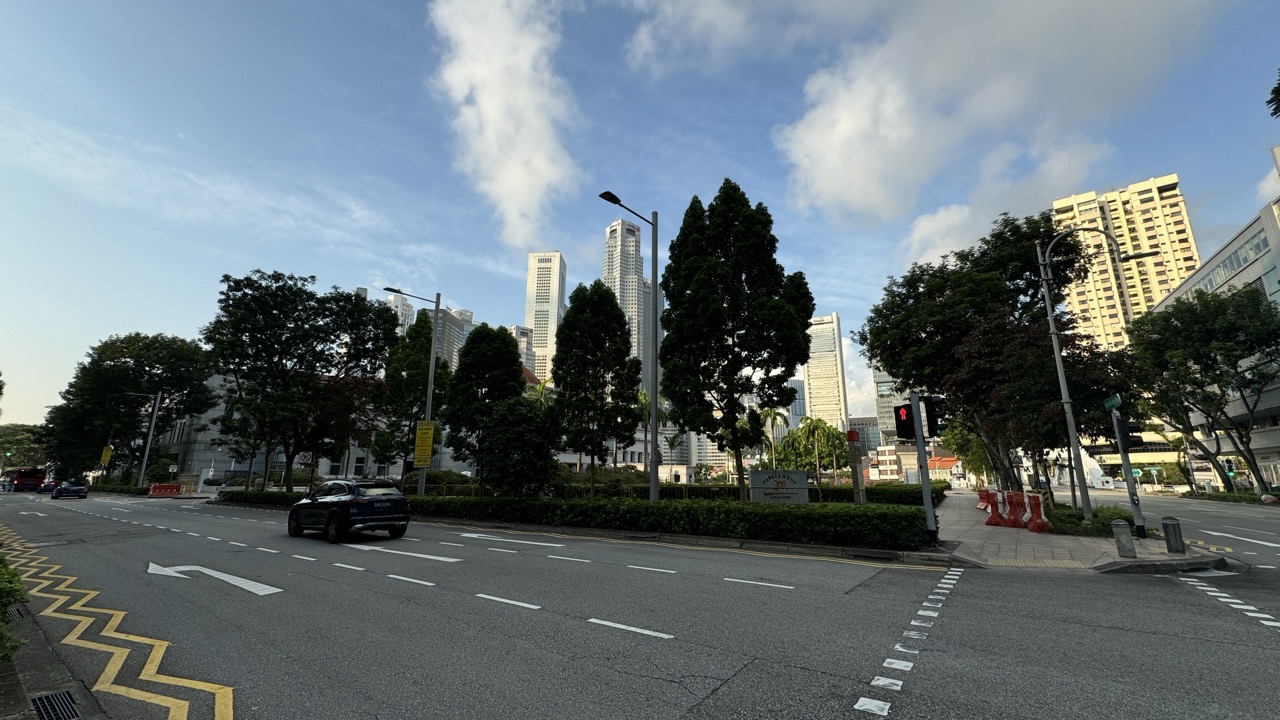

Singapore Education 2027: Students curious about government, international relations, diplomacy and public policy can study these areas through social-science, global studies or specialised postgraduate programmes. The subject is not a single corridor into becoming a minister or diplomat. At undergraduate level, NTU’s Bachelor of Social Sciences (Honours) in Public Policy and Global Affairs, NUS Global Studies and NUS Political Science offer distinct approaches. At postgraduate level, the Lee Kuan Yew School of Public Policy (LKYSPP) offers the Master in Public Policy, Master in International Affairs and other advanced professional programmes.
Quick answer: NTU Public Policy and Global Affairs (PPGA) is a four-year direct-honours degree covering politics, international relations, public administration, policy analysis and evaluation. NUS Global Studies combines international issues, global political economy, global governance and research across disciplines. NUS Political Science studies political institutions, political ideas, strategy and comparative or international politics. LKYSPP’s Master in Public Policy is a postgraduate qualification: it requires an appropriate existing bachelor’s degree and preferably two to five years of relevant experience. No university programme guarantees appointment to the Singapore diplomatic service or a public-sector job.
- Secondary students: strengthen English, Humanities, Mathematics, critical reading, research and respectful discussion of competing ideas.
- NTU undergraduate: PPGA and possible second-major or double-major combinations according to admission and selection rules.
- NUS undergraduate: Global Studies and Political Science, with different methods, themes and academic plans.
- Postgraduate: LKYSPP MPP, Master in International Affairs and Master in Public Administration have different intended applicant profiles.
- Career: policy research, programme evaluation, public administration, international organisations, business, NGOs and other fields depending on qualification.
- Application caution: school admission and public-service recruitment are separate, competitive processes.
- 2027 cohort distinction: a student entering pre-university study in 2027 is not necessarily completing the first SEC examination and applying for higher education that year.
What does public policy actually do?
Public policy is concerned with decisions and arrangements that affect people collectively. It can involve transport, housing, healthcare, education, public safety, the economy, environmental protection or digital services. The public sector must often decide how to use limited resources, how to balance different groups’ interests and how to evaluate whether an intervention actually works.
A policy proposal should answer more than whether an idea sounds appealing. What problem is it meant to address? Which population is affected? What evidence indicates that the problem exists? Which alternatives have been considered? What does the proposal cost? How will the outcome be measured? And what could go wrong?
These questions explain why public policy can use Mathematics and Economics alongside History, English, Geography, Sociology and Political Science. A decision about transport needs travel and capacity information; a housing proposal needs demographic, land-use and financial evidence; a school support programme needs a way to examine whether students actually benefit.
Public policy versus politics versus international relations
Politics examines power, institutions, collective decision-making and how groups compete or cooperate. Public policy focuses on the design, implementation and assessment of collective decisions and programmes. International relations examines how states, organisations and other actors interact across borders, including diplomacy, security, trade, development and global institutions.
They overlap, but a student interested in evaluating school meal assistance may need different practical tools from one studying the causes of armed conflict or international trade negotiation. Neither can be understood by memorising news headlines alone. The learner needs a clear question, reliable sources and the ability to distinguish what is known from a preferred interpretation.
NTU Public Policy and Global Affairs: four-year honours
The Nanyang Technological University School of Social Sciences publishes a four-year BSocSci (Honours) in Public Policy and Global Affairs. The programme includes introductory international relations and foreign policy, political theory, public administration and policy, Singapore politics, comparative institutions, policy analysis, financial management and related prescribed electives.
NTU describes a combination of research, professional preparation, critical communication and broader academic learning. Students can explore themes across Singapore, Asia and global affairs, and may complete a research-oriented graduation project if they meet the relevant programme requirements.
A student should not assume that a course title containing the word policy requires every lecture to focus on Singapore legislation. Public policy includes economic trade-offs, organisational processes, research methods, political systems and the ways people interact with public services.
NTU second majors and interdisciplinary choices
NTU currently lists combinations such as PPGA with a Second Major in Media and Journalism Studies, an Economics and Public Policy and Global Affairs double major, and a combined pathway involving Environmental Earth Systems Science and Public Policy and Global Affairs. Each has its own academic structure, module commitments and admission requirements.
These combinations make sense for particular career interests. A student who wants to analyse economic outcomes may benefit from deeper Economics. Someone interested in public communication may value journalism and media studies. A future environmental-policy analyst may need technical understanding of climate, ecology or Earth systems.
More modules and more majors are not automatically better. The student must be able to meet the workload and demonstrate genuine academic depth. A qualifying second major may have a GPA threshold or competitive place allocation, and should not be presented as an unconditional entitlement.
NUS Global Studies: studying global connections
NUS Global Studies is a multidisciplinary field examining the processes and effects of globalisation. Its curriculum includes Global Issues, Origins of the Modern World, Global Political Economy and Global Governance, together with research methodology and theme- or region-related study. The programme also connects learning to language and international contexts.
The educational value is in connecting what may otherwise seem unrelated. A change in an international supply route may affect Singapore prices, companies and workers. A global environmental agreement may influence local infrastructure and reporting. A migration policy may have economic, social and legal dimensions.
NUS explains that Global Studies may be declared as a major under the university’s applicable curriculum rules after relevant introductory study. Prospective applicants must check how the current college admission structure and major declaration work for their 2027 cohort, rather than assume admission to a particular degree automatically fixes every major from the first day.
NUS Political Science: institutions, power and evidence
NUS Political Science examines government, ideas, political behaviour, conflict, diplomacy and strategic relationships, from domestic and international perspectives. The department’s curriculum emphasises research, reasoning, political theory, comparative politics and international relations.
A student can use these tools to understand different explanations for the same event. One account might emphasise historical institutions; another economic incentives; a third political leadership or external pressures. A strong political-science student learns to evaluate the evidence for each perspective rather than assume that the argument they agree with is necessarily the most accurate.
Political Science can prepare someone for research, communications, administration, international work and other sectors. It is not a job title that dictates one employer. Students should read the modules and the kinds of analysis they will practise.
When should a student choose Economics?
Many policy decisions involve costs, incentives and scarce resources. Economics helps a student reason about choices, trade-offs and unintended consequences. Statistical methods help them evaluate whether an intervention changed outcomes. Qualitative research helps understand experiences that are difficult to summarise in a single number.
For example, if a government agency introduces a programme to help residents find jobs, a simple count of registrations may not tell whether those participants obtained sustainable employment. A better evaluation needs an outcome definition, appropriate evidence and a consideration of what might have happened without the programme.
Students should not take a difficult quantitative subject simply for prestige. They should examine prerequisites and build a secure foundation so that Economics and statistics become tools for understanding rather than obstacles that obscure the policy question.
LKYSPP Master in Public Policy: a postgraduate qualification
The Lee Kuan Yew School of Public Policy at NUS offers the Master in Public Policy (MPP). Its admission criteria call for an appropriate bachelor’s degree, good academic standing, strong English and evidence of intellectual and leadership capabilities. The school states that two to five years of work experience is preferred, and applicants should preferably have some preparation in Economics and Mathematics.
That experience preference should not be exaggerated into a universal rule that every applicant without exactly two years of work must be rejected. Conversely, a student who has not completed an undergraduate degree should not treat the MPP as a direct post-Secondary 4 qualification. The official programme and the applicant’s education stage determine the appropriate route.
The MPP can help eligible graduates and professionals learn to design, implement and evaluate public decisions. It is not a certificate of political office or a guarantee of a senior civil-service position. Academic and professional selection remain competitive.
MPP, Master in International Affairs and Master in Public Administration
LKYSPP also publishes a Master in International Affairs (MIA) and Master in Public Administration (MPA). Their purposes and admissions profiles differ. A prospective applicant interested in global diplomacy may examine the MIA curriculum, while an experienced public-sector professional may investigate MPA. The applicant should compare academic requirements, appropriate professional experience, modules and intended career direction.
The school’s published annual application windows currently run 1 August to 15 December for MPP and MIA, and 1 August to 31 December for MPA. For a future academic year, use the current portal to verify which intake the dates refer to and whether a programme is accepting applications. A calendar statement alone is not an offer or an eligibility decision.
Does a public-policy degree make someone a diplomat?
No. Diplomatic work is a specific kind of public-sector employment with its own recruitment, appointment and professional requirements. An International Relations or Global Studies degree can provide useful background, but it does not create a legal right to join the Ministry of Foreign Affairs or any overseas mission.
Candidates considering a diplomatic career should examine the current Careers@Gov listings and the Ministry of Foreign Affairs’ published recruitment opportunities. Selection can depend on the actual job, education and experience, communication skills, suitability and other agency requirements. It would be inaccurate to promise that one particular undergraduate major is compulsory for every public officer or diplomat.
Singapore’s Public Service has more than policy analyst roles
Careers@Gov describes opportunities in teaching, planning, data science, public communications, operations, corporate services and other areas. Singapore’s public-sector workforce includes people with technical and specialist qualifications as well as Social Sciences degrees. An engineer may contribute to transport policy, a healthcare professional may work on service improvement and a data specialist may support the evaluation of public programmes.
The official careers site emphasises recruitment based on relevant competencies, qualifications, performance and competitive selection. A young person should therefore not view ‘working in government’ as a single university course choice. It is an ecosystem of occupations that requires different forms of knowledge.
What public administration looks like in practice
Public administration concerns making programmes work reliably: service delivery, budgets, procedures, staffing, public communication, procurement and appropriate accountability. A policy proposal that sounds excellent can fail if no one has considered how it will be implemented or whether front-line staff can actually deliver it.
For example, a neighbourhood library may introduce a new service to make resources easier for residents to access. The policy question might be which residents need the service and why. The administrative question is how opening hours, staff, equipment and communications are organised. The evaluation question asks whether use increased and whether that increase represented meaningful access.
All three require different skills, and no single polished presentation substitutes for evidence of implementation.
How to evaluate a public programme
- Define the issue: identify the problem and the people affected.
- Describe the current situation: use reliable data and relevant experiences, noting gaps in the information.
- Identify alternatives: compare more than one reasonable course of action.
- Consider trade-offs: recognise cost, time, fairness, implementation capacity and unintended effects.
- Plan delivery: identify responsible organisations, resources and practical constraints.
- Choose a measurable outcome: explain how improvement will be evaluated.
- Learn and revise: determine what to do if the original assumptions were wrong.
A local public-policy learning example
Imagine a class wants to understand whether a public study space is easy to use after school. Students could examine published opening hours, transport connections and publicly available facilities. They might identify different user needs, such as a pupil who must return home early, a reader needing quiet access or someone requiring accessible entry.
A useful report would separate observed facts from assumptions and explain which additional evidence would be necessary before a proposal. It would not invent surveys, collect identifiable personal information without permission or promise that a public authority must change its policy because the class prefers a particular answer.
The student can learn to write in clear language: what the problem is, whom it affects, which options are plausible and what evidence would support a recommendation. This form of disciplined reasoning is useful well beyond public service.
Secondary school preparation: English, Humanities and Mathematics
English matters because public-policy analysis involves reading lengthy documents, identifying the exact meaning of conditions and communicating complex choices accurately. Humanities help the student examine history, institutions, geography, cultural differences and sources. Mathematics provides a foundation for interpreting statistics and public finance, while Science helps when policy involves health, environment or technology.
A student who hopes to study Global Affairs does not need to memorise every current headline. It is more useful to explain one situation thoroughly: what happened, which institutions are involved, what different perspectives argue, which facts are established and what remains uncertain.
This approach produces more reliable understanding than trying to sound sophisticated through the use of abstract vocabulary without precise meaning.
Portfolio and internship preparation
An undergraduate applicant can demonstrate interest through documented school activities, research writing, approved community projects or thoughtful reflections on current affairs. The emphasis should be authentic analysis rather than a grand claim that the student has ‘solved’ a national problem.
A prospective postgraduate applicant can present professional experience more concretely: which programme they worked on, what responsibilities they held, what they learned and how evidence changed their thinking. Leadership is more credible when it is shown through responsible action than when described by an invented title.
Internships and public service work opportunities depend on the employer and applicant’s eligibility. A university’s career page may list options for students, but an internship is not automatically allocated to every person who selects the major.
How to choose the correct 2027 route
- Decide whether the learner is choosing an undergraduate major, planning graduate study or exploring a specific public-service career.
- Compare NTU PPGA, NUS Global Studies and NUS Political Science by their actual modules, research methods and subject focus.
- Check the applicant’s A-Level, IB, diploma or other accepted qualification and the live 2027 university admission rules.
- For LKYSPP postgraduate study, check bachelor’s qualification, prior experience, English standards and appropriate programme choice.
- Consider the student’s readiness for Economics, statistics, research writing and evidence-based reasoning.
- Read actual public-service job descriptions if employment is the objective, without assuming a degree guarantees recruitment.
- Compare fees, scholarships, commuting and the practical fit of the programme before applying.
What not to do
- Do not assume a Public Policy or International Relations degree guarantees a diplomatic appointment.
- Do not confuse an undergraduate NTU PPGA programme with an NUS LKYSPP postgraduate MPP.
- Do not interpret a preferred work-experience range as an inflexible rule without reading the actual admissions criteria.
- Do not replace evidence with partisan slogans or one-sided summaries when evaluating a public problem.
- Do not assume every public-sector professional has to major in Politics or Public Policy.
- Do not use a previous application cycle’s deadlines without verifying the current intake.
- Do not claim a good university score eliminates the need for employer or scholarship selection.
Frequently asked questions
Which Singapore undergraduate programme explicitly teaches Public Policy and Global Affairs?
NTU offers a four-year BSocSci (Honours) in Public Policy and Global Affairs, with related second-major and interdisciplinary possibilities subject to programme requirements.
Can an NUS Global Studies graduate work in public service?
Global Studies can develop relevant research, global affairs and communication skills. Actual public-service recruitment depends on the position and employer’s criteria; the degree does not guarantee a job.
Can a Secondary 4 student apply straight to LKYSPP’s Master in Public Policy?
No. It is a postgraduate programme that requires an appropriate prior bachelor’s degree, with relevant experience preferred and a competitive selection process.
Is Mathematics useful for an International Relations student?
Yes. Statistics, economics and interpreting numerical claims can support sound policy research. The amount of Mathematics required depends on the chosen programme.
Official programmes and next reading
- NTU — Public Policy and Global Affairs undergraduate options
- NTU — Four-year PPGA honours degree and curriculum
- NUS — Global Studies programme and curriculum
- NUS — Political Science major and methods
- LKYSPP — Master in Public Policy admissions criteria
- LKYSPP — Postgraduate application periods and instructions
- Careers@Gov — Recruitment and public service career paths
- Careers@Gov — Early careers and internships
- eduKate Punggol — University prerequisites and admissions
- eduKate Punggol — Law studies and professional pathways
- eduKate Punggol — Social work and community programmes
- eduKate Punggol — Career guidance and internships
Reviewed 13 November 2026. Academic curricula, public service recruitment, 2027 intake details and scholarship decisions may change. Follow the actual institution and employing agency’s current qualification and application rules.


