

Singapore Education 2027: University admission is not a single application that opens on the same date for every Singapore student. Students with Singapore-Cambridge A-Levels, polytechnic diplomas, International Baccalaureate (IB) Diplomas, NUS High School Diplomas or international qualifications may have different application windows, subject prerequisites and assessment requirements. A student who wants to begin a degree in 2027 should identify their qualification category and chosen programme before looking at deadlines.
Quick answer: Singapore has six autonomous universities—NUS, NTU, SMU, SUTD, SIT and SUSS. Admissions generally consider academic merit and programme-specific conditions, with many universities also using interests, aptitude, interviews or assessments. A high overall score is useful but cannot replace a compulsory subject prerequisite. For AY2027, universities have announced different application dates for A-Level, polytechnic, IB and other applicants; check the exact admissions portal instead of copying one date to every category.
- Choose a course first: read the actual module list, teaching style and graduation requirements, not only the university’s ranking.
- Identify the applicant category: A-Level, local polytechnic diploma, IB, NUS High diploma or other recognised qualification.
- Check prerequisites: some programmes require specific Mathematics, Science, language or diploma preparation.
- Plan assessments: certain degrees require admission tests, interviews, portfolios, auditions or other evidence.
- Read application dates separately: university and qualification routes can open and close at different times.
- Plan for costs: tuition grants, bursaries, scholarships and student loans are different arrangements with different obligations.
- Keep alternatives: a missed prerequisite or unsuccessful offer is a reason to review other credible routes, not proof that all progression is over.
The six autonomous universities and how to compare them
The National University of Singapore (NUS), Nanyang Technological University (NTU), Singapore Management University (SMU), Singapore University of Technology and Design (SUTD), Singapore Institute of Technology (SIT) and Singapore University of Social Sciences (SUSS) are different institutions, not six interchangeable names for the same degree. They offer different disciplines, curricula, class experiences, industry connections, placement arrangements and routes for working adults.
A student interested in computing should compare the specific Mathematics foundation, programming modules, security or data focus, capstone projects and available work placements. Someone considering engineering should understand the balance between mathematics, physics, design and field experience. A prospective social-sciences student should look at research methods, statistical reasoning, reading and writing demands. Course names are only entry points for investigation.
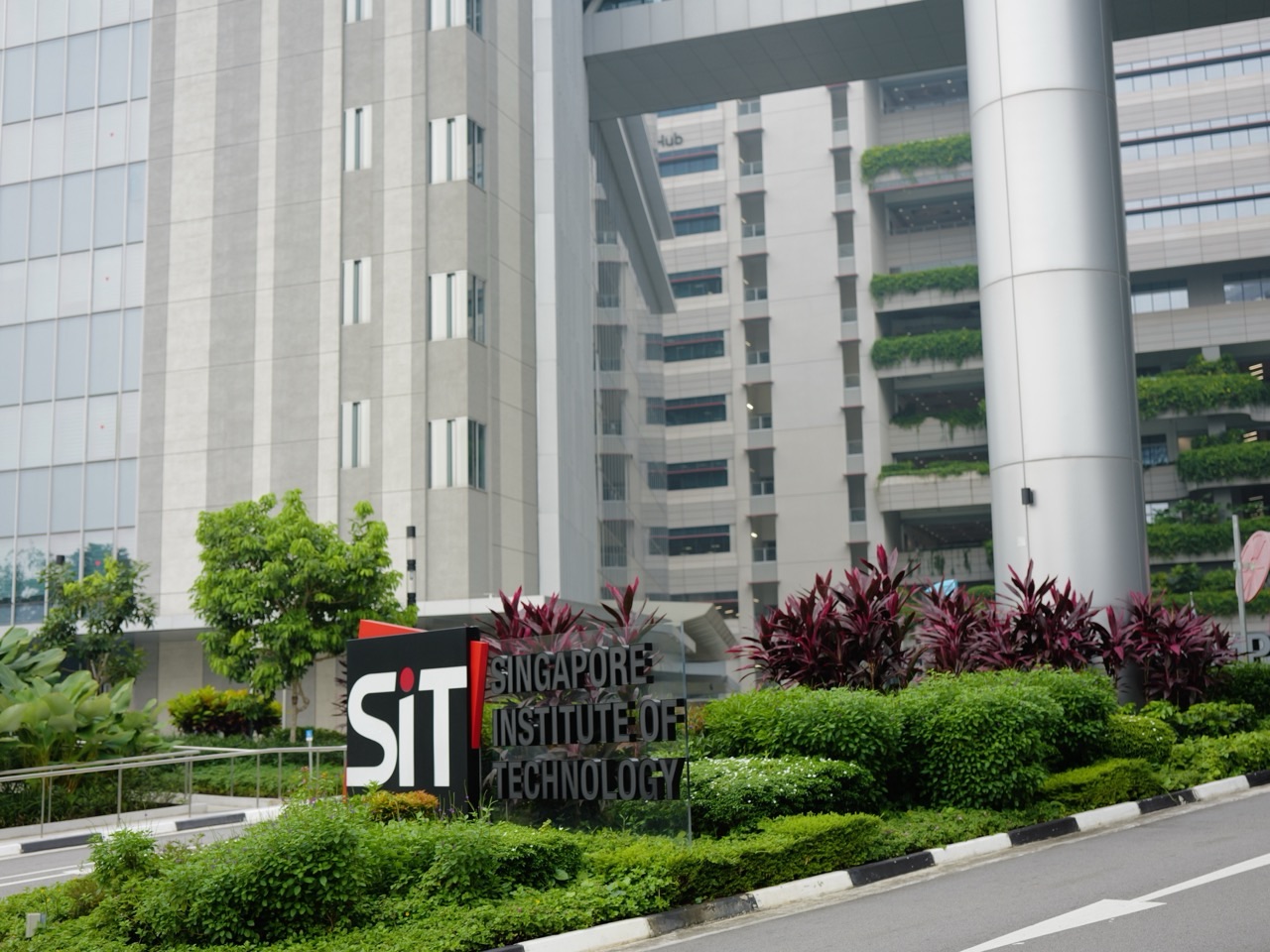
For North-East residents, the SIT Punggol campus provides a local example of applied university education and workplace-related study. Proximity can improve commuting for some families, but it cannot guarantee admission or make the nearest course the best academic fit. Compare the actual degree and its prerequisites before allowing location to settle the decision.
Admission year, qualification year and matriculation year
An applicant sitting the GCE A-Levels in 2026 might seek entry to university in 2027. Another applicant might graduate from a polytechnic diploma in the first half of 2027. A student who enters junior college in 2027 would ordinarily take A-Levels in a later year and should not apply using the same expected-results timeline. These cases call for different planning.
Some applicants may have national-service obligations or other reasons to defer matriculation. Any available reservation of a university place and deferral process depends on the institution and admission offer. Do not assume an applicant can accept a place and choose any start date without notifying the university.
What university application dates have been published for 2027?
The published NTU AY2027 admissions page offers a useful example of how calendars differ. It lists applications for local polytechnic diploma applicants from 1 to 21 February 2027, for Singapore A-Level applicants from A-Level results release to 19 March 2027, and for IB Diploma applicants from 15 October 2026 to 19 March 2027. NTU’s NUS High School Diploma route has a separately listed window. These dates apply to NTU’s stated categories and can be updated.
The published NUS AY2027/2028 important-dates information likewise has separate periods for polytechnic diploma, IB, NUS High School Diploma and A-Level applicants, with some applications beginning in December 2026. SUSS’s published full-time July 2027 intake guidance identifies an application opening on 19 November 2026. The practical lesson is not to memorise a general ‘university applications start in February’ rule. Students should keep each intended university, course and category in a separate row, with the date copied from its own current official admissions page.
An official page may show a status label such as ‘open’ or ‘closed’ that changes over time; an article written in November 2026 cannot be used to determine whether a form is still available months later. Before applying, check the live application button, supporting-document deadline and whether selection tests have separate registration dates.
Academic merit is the starting point, not the entire application
Universities need evidence that a student can succeed in the course. Grades, diploma GPA and academic preparation give important information. But institutions also consider suitability, subject prerequisites, interests and prior experiences in the manner set out by their own admissions policies. A student should therefore work on academic foundations while developing authentic evidence of interests, initiative and learning.
NUS describes its admissions approach as holistic and asks applicants to provide up to four relevant achievements, co-curricular or non-academic activities, together with short responses. These might include school projects, volunteering, sustained CCA involvement, leadership responsibilities, internships, software work or other genuine accomplishments. The university notes that each faculty may use different factors and that some applicants will be called for interviews or tests.
A meaningful achievement is one the applicant can explain. ‘I built an application’ is less useful than ‘I designed a simple app to solve a real scheduling problem, tested it with users and found that one feature confused them, so I redesigned it’. Honest reflection reveals both competence and judgement. An expensive portfolio template or copied essay cannot replace ownership of the work.
Programme prerequisites are a separate filter
NUS’s official Programme Prerequisites pages tell applicants to check the subject and qualification requirements for the actual degree, noting that these may change annually. NTU also publishes programme-level subject requirements. A student with a strong overall result may still need an appropriate H2 subject, a relevant polytechnic diploma, specified Mathematics preparation or another qualification.
For example, an engineering-related course may specify Mathematics and relevant Science preparation. A computing course may require quantitative foundations. A health-related professional programme may have distinct science, interview or fitness-for-practice requirements. A degree in law, design, medicine or music may involve admissions assessments that differ from those of a general academic programme.
A teenager planning their JC subject combination or polytechnic diploma should look backwards from several possible degree programmes. Identify which subject choices keep pathways open. This is different from telling a Secondary 2 child to choose a lifelong career immediately. Students can remain exploratory while still understanding the consequences of dropping a core prerequisite.
A-Level applicants: understand the revised university admissions score
For students taking the A-Level examinations from 2025, the University Admission Score (UAS) framework has been revised. NTU’s current guide states that the three H2 content-based subjects and H1 General Paper form the core calculation, while the fourth content-based subject and/or H1 Mother Tongue may count when they improve the score. Project Work is graded Pass/Fail under the revised arrangements. Earlier examination cohorts can have different score-conversion provisions.
The purpose of understanding the formula is to select and prepare subjects wisely, not to reduce two years of learning to a single arithmetic calculation. Students still need to meet the programme’s subject and language requirements. H3 may provide evidence of advanced academic interest or ability, but NTU says H3 is not included in the UAS calculation itself.
Polytechnic diploma applicants: is GPA the whole story?
A polytechnic diploma represents work in a particular discipline and may offer excellent preparation for a related university degree. But a high GPA in one diploma does not automatically make an applicant eligible for every unrelated major. Universities publish accepted diplomas, relevant course mappings and additional prerequisites. Read the diploma-to-degree rules before selecting programmes.
NUS provides separate programme prerequisite tables for different Singapore polytechnics; NTU encourages diploma applicants to use its diploma match resources. Applicants may also face interviews, tests, portfolio requests or questions about final semester results. Final-year students should monitor whether their qualification has to be completed before matriculation.
A good diploma portfolio might contain a clearly explained capstone project, laboratory analysis, design process or workplace learning report, accompanied by honest reflection. An internship should be described in terms of what the student actually did and learned, while respecting the employer’s confidentiality and intellectual property.
IB and NUS High School Diploma applicants
IB applicants should confirm that the university recognises their particular Diploma qualification and that their chosen Higher Level or Standard Level subjects meet course prerequisites. The IB Diploma’s broad curriculum and core obligations can provide useful preparation, but particular degrees still have requirements. Applicants taking a May examination session may have different result-submission and offer schedules from applicants with already published results.
NUS High School Diploma applicants have a separately recognised qualification route at participating universities. This does not mean they can ignore the specific degree’s subject and achievement conditions. NUS and NTU publish admissions information expressly for this applicant category; parents should not apply an A-Level table to a NUS High student without checking its equivalent rules.
Which courses may require interviews or special tests?
NUS identifies programmes with interviews or tests, including Architecture, Dentistry, Industrial Design, Landscape Architecture, Law, Medicine and Music. Other universities also have course-specific assessment processes. NTU’s published medicine admissions guidance refers to the University Clinical Aptitude Test (UCAT) within the applicable time window before admission. A prospective medical applicant should verify the correct test sitting and booking requirements early.
Do not assume that every university interviews every candidate or that an interview is an automatic sign of admission. An interview may assess motivation, communication, reasoning, values, a portfolio or professional suitability, depending on the course. Preparation should include familiarity with the programme and reflection on real experiences rather than memorising a scripted story.
An interview preparation process that is useful rather than theatrical
- Understand the course: read its core modules and explain in your own words why you want to study them.
- Know your evidence: choose one or two authentic experiences that show relevant skills and discuss the actual decisions you made.
- Practise explaining uncertainty: interviewers may ask what you would do when evidence is incomplete; it is reasonable to explain what you would check next.
- Respect the profession: where ethical or safety questions arise, listen carefully, identify who may be affected and avoid making unsupported claims.
- Practise communication: answer the question asked rather than delivering a long memorised speech.
- Prepare logistics: verify venue or online access, identity documents, allowed materials, test registration and reporting time.
University financial aid is not a single discount
Before accepting an offer, distinguish tuition grants, bursaries, scholarships and loans. A tuition grant reduces an eligible course’s subsidised tuition under specified terms. A means-tested bursary provides support to eligible students based on the scheme criteria. A scholarship may carry academic, service or other conditions. A loan is repayable and can have guarantor and interest obligations.
The published MOE Higher Education Student Loan provides different financing components and maximum amounts depending on applicant citizenship, qualification and needs. A student should calculate the full cost of university—tuition, materials, transport, food and possible accommodation—then check confirmed support and the amount the household can sustain. Do not assume that submitting a scholarship application ensures an award.
How to choose between two offers
Suppose Student A has offers for a broad computing degree and an applied work-study degree. The broad programme may permit more elective exploration and theoretical depth. The work-study path may provide closer integration with industry and a participating employer, but it can involve particular work commitments and selection requirements. Neither is universally better. Compare modules, work placements, professional recognition, costs, location and the graduate’s learning goals.
A student considering multiple universities should use one sheet with: degree title, exact qualification awarded, prerequisites fulfilled, academic structure, interview requirements, application status, offer deadline, financial-aid arrangements and outstanding questions. Review the actual offer letter carefully before accepting; universities may use a joint acceptance process for some applicant categories and their own portals for others.
What not to do for the 2027 university intake
- Do not assume one published application deadline applies to every university and qualification type.
- Do not treat meeting a minimum admission requirement as a promise of a place in a competitive programme.
- Do not choose a degree only from a university ranking while ignoring modules, prerequisites and career relevance.
- Do not invent achievements, buy recommendation letters or copy another applicant’s motivation statement.
- Do not book a professional admission test without checking the specific university’s recognised test and validity window.
- Do not assume a scholarship, a tuition grant and a loan are interchangeable financial awards.
- Do not accept a place without reading payment, matriculation, deferral and withdrawal requirements.
- Do not assume every polytechnic diploma automatically provides entry to every degree.
Frequently asked questions
Can a Singapore polytechnic graduate apply to an autonomous university?
Yes, subject to the particular degree’s accepted diploma, GPA, prerequisite and admissions criteria. Some applicants may also need interviews or portfolios.
Does every Singapore undergraduate programme require an interview?
No. Certain programmes require tests or interviews while others may assess applicants differently. Check the exact course and university.
Does NUS consider non-academic achievements?
Yes. NUS’s published holistic admissions approach includes relevant interests, preparation and short answers about achievements or experiences alongside academic results.
When do 2027 undergraduate applications close?
There is no universal date. NTU, NUS, SUSS and other universities have qualification-specific windows. Use the official admissions timetable and check whether the application and supporting-document deadlines differ.
Official sources and related eduKate reading
- NUS — Undergraduate admissions
- NUS — 2027/2028 application dates by qualification
- NUS — Programme prerequisites
- NUS — Holistic and aptitude-based admissions
- NTU — AY2027 admissions and qualification-specific dates
- NTU — General requirements and revised UAS computation
- SUSS — Full-time undergraduate application guide
- SIT — Undergraduate admissions
- MOE — Higher Education Student Loan
- eduKate Punggol — Universities, Career Courses and SkillsFuture 2027
- eduKate Punggol — Financial Assistance and Student Loans 2027
Reviewed 4 November 2026. Published AY2027 admission windows are examples from the institutions’ information and are subject to updates. Confirm live application status, qualifications, prerequisites, interviews and offer terms with the relevant university before acting.


