
A lifebuoy or rescue float beside a waterfront is there for an emergency, not decoration. If you notice an empty life-ring holder, a damaged ring, a fraying rope or access blocked by bicycles or stored materials along a Punggol waterside path, report the exact location to the responsible park or waterfront operator. Do not go down a steep bank, lean over the railing, enter the water or dismantle the safety equipment to check it. A missing ring is a preparedness concern; someone actively struggling in the water is an immediate emergency that requires a very different response.
The Singapore Civil Defence Force (SCDF) advises members of the public who are not trained in water rescue not to enter the water to save someone. Call 995, look for an available flotation aid, and help from a safe, stable position only where it can be done without endangering yourself. Punggol Waterway Park is managed as a public park within the Park Connector Network, but the ownership and maintenance of an individual rescue point can depend on the precise waterfront segment, facility or water-activity operator. Do not assume every railing is required to have an identical lifebuoy station or that an empty bracket establishes theft.
- Someone in the water now: call 995 immediately, provide the exact waterside landmark and follow SCDF directions. Do not jump in as an untrained rescuer.
- No emergency, but safety equipment appears missing: document the empty holder and nearby landmarks without approaching the edge.
- Damaged ring or rope: do not pull, cut, replace or test the equipment; report it.
- Blocked access: report bicycles, containers, parked equipment or other obstructions preventing a ring from being reached.
- Choose the correct operator: NParks for its park facilities, a venue manager for private or activity facilities, and relevant water or estate authorities for their assets.
- Use OneService where appropriate: include a safe photo, date and accurate map location.
- Warn children: a lifebuoy is not for play, practice throwing or taking home.
- Keep reporting factual: say ‘the marked holder is empty’ rather than claiming someone stole it without evidence.
1. What a lifebuoy is meant to do
A lifebuoy is a buoyant rescue aid that can be thrown or made available to a person in the water. Some are ring-shaped and may have a line attached; other rescue aids use different forms. The purpose is to give a struggling person flotation without forcing a bystander to enter the water. Its usefulness depends on being in the appropriate location, reachable, maintained and deployed safely in a genuine emergency.
A ring may be kept on a wall bracket, post or in a cabinet. Do not assume a particular holder is defective because the equipment uses a shape unfamiliar to you. The operator’s safety plan specifies what equipment belongs at each location. Members of the public can notice obvious absence or damage but cannot certify rescue readiness by looking at the ring.
2. Why a missing life ring deserves a report
A rescue point that is marked with a lifebuoy sign but has no ring could leave nearby users without that intended option during an emergency. Even when there are other safety features elsewhere, the specific marked provision should be checked by the owner. The proper response is to report, not to wait until a real incident tests whether another ring is available.
A ring may be temporarily out of service for authorised inspection or may have been used recently and taken away for replacement. It could also be missing for another reason. A passer-by cannot determine which explanation is true from an empty bracket, so the report should identify the observed condition and let the operator investigate.
3. Punggol Waterway is a real local context
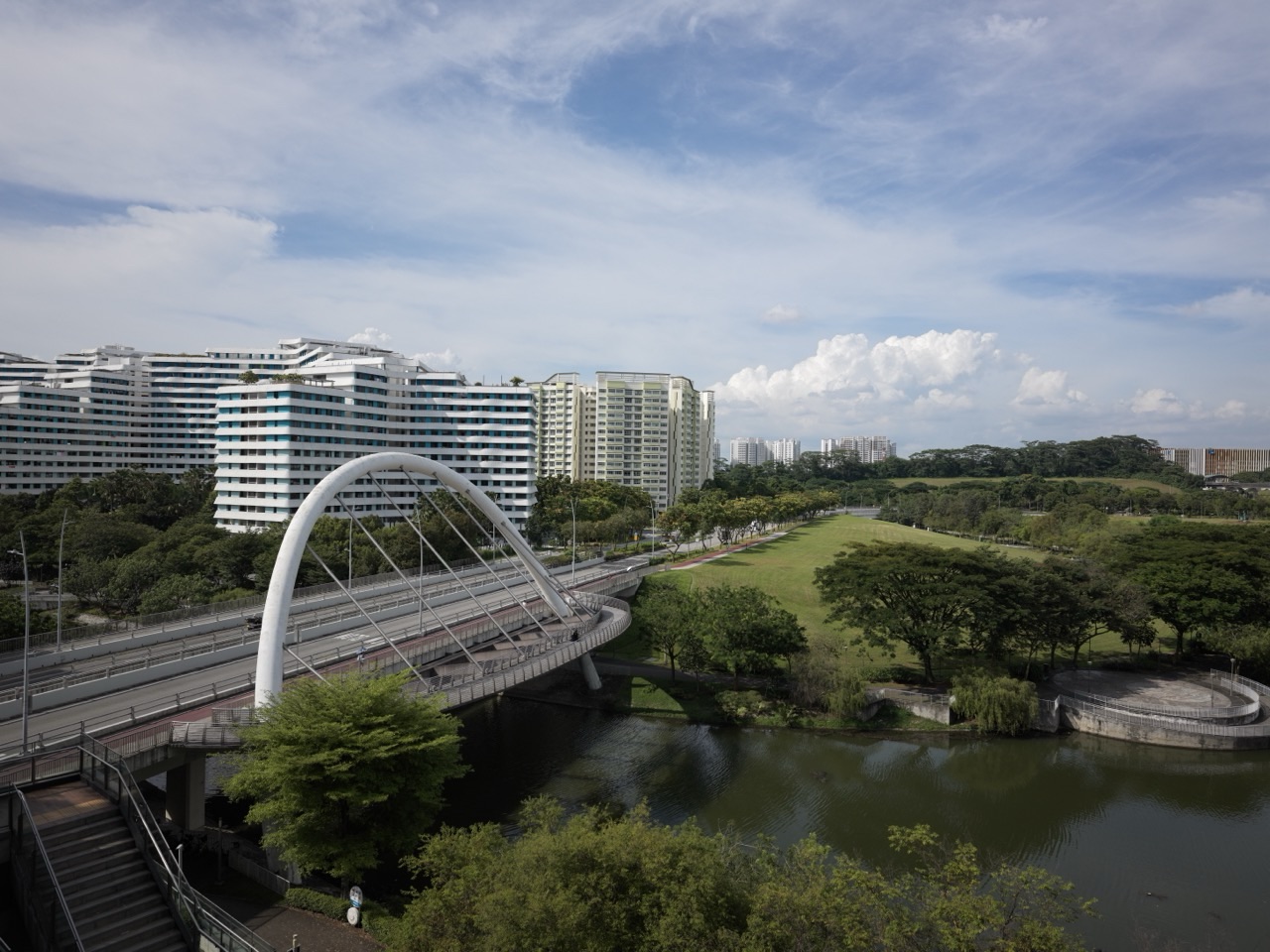
NParks describes Punggol Waterway Park as a 25.79-hectare park along Sentul Crescent Road with Nature Cove, Recreation Zone, Heritage Zone and Green Gallery. It forms part of the North Eastern Riverine Loop of the Park Connector Network and is visited by walkers, cyclists and families. Different waterfront access points and railings mean a report needs more than the words ‘Punggol Waterway’.
This guide does not claim a lifebuoy is installed at every bridge or every part of the park. Some areas may have other safety arrangements or no public rescue ring at all. The relevant question is whether a marked piece of equipment at a specific place is missing, damaged or obstructed. Always identify the actual asset before alleging a deficiency.
4. What a historical Punggol report tells us
A dated Waterways Watch Society field report from February 2021 noted a missing safety buoy at a boardwalk during a Punggol Waterways patrol. This is a useful illustration that community observers can notice waterfront safety equipment issues and raise them. It is not evidence that the same buoy remains missing in November 2026.
Old reports are not live incident alerts. A reader should never circulate the 2021 observation as a present-day warning without revisiting the location and verifying the current status. The lasting lesson is the quality of a specific, dated report: where the issue was, what was observed and which party could check it.
5. How SCDF says a bystander should help
SCDF’s account of its DART water-rescue team quotes a rescue officer emphasising that untrained people must not enter the water. Instead, call 995 and, where available and safe, throw a rescue float to the casualty or reach with an appropriate long object without overstretching.
This guidance protects the person in trouble and potential rescuers. A second person entering the water without training can create a second emergency. The reader should not attempt a heroic leap, swim out with a ring or lean so far over a railing that they fall. Professional responders and the dispatcher must direct the actual rescue.
6. What to tell 995 in a water emergency
A useful emergency call identifies that someone is in the water, the exact waterfront or park, the nearest bridge, entrance, landmark or access road and whether the person is visible. Explain how many people may be involved, what is happening now and which side of the waterway you are on. A location such as ‘beside a bridge on Punggol Waterway’ may be too vague if several bridges look similar.
Follow the call taker’s questions and instructions. If another bystander can do so safely, send them to a public access point to guide emergency responders. Do not leave a child unattended at the bank or abandon an essential call simply to find a more dramatic place to film.
7. Why the emergency and maintenance actions differ
An empty holder noticed on an ordinary afternoon should be reported to the operator for inspection and replacement. There is no person in distress and no reason to call an emergency ambulance merely to log the missing equipment. A person actively struggling in the water is an emergency, even if the life ring is present and appears intact.
These are different workflows. During a real incident, call 995 first, provide the location and follow safe rescue guidance. Later, when people are safe, the owner can investigate any missing or damaged equipment. The existence of a maintenance ticket does not mean someone should delay calling for help when an actual drowning risk arises.
8. Identifying the correct rescue point
Some emergency equipment is labelled with a station number, pole marker, cabinet label or other identifier. If one is visible from safe pavement, include it. Otherwise use the nearest bridge, path junction, park entrance, activity facility and side of the waterway. A photograph showing the holder and a recognisable surrounding landmark can help an inspection team find it.
Do not climb a rail or enter a closed service zone to obtain a hidden serial number. The owner should be able to identify the asset from the physical location. If multiple similarly shaped points are nearby, distinguish the one you observed without guessing at its official name.
9. Empty holder, missing cabinet or hidden ring
An empty metal hook might have been intended for a life ring, but another type of holder may belong to maintenance or temporary activity equipment. Check for any official sign rather than assuming every hook by the water is a rescue station. If a signed lifebuoy cabinet is empty, that is more specific evidence of a possible problem.
A cabinet may also be partly obscured by foliage or an adjacent facility, so a ring might be present but not obvious from one angle. Do not enter vegetation or restricted areas to investigate. The correct report can say ‘the rescue-ring sign is visible but the unit could not be seen from the public path’, acknowledging what remains uncertain.
10. A damaged or frayed line
Some rescue rings are fitted with a rope or line. If the line is visibly frayed, tangled around another object or cut, it may affect an intended use or retrieval arrangement. A resident should not test it by pulling against the ring or throwing it into the water as a rehearsal.
The owner or qualified contractor should inspect compatibility, length and condition according to the local safety plan. Using a random household rope to replace the line could make the device unsuitable for its intended purpose. Report what is visible and let the operator decide on serviceability.
11. Cracked ring or broken fitting
A ring with a visible split, deformed material or missing attachment may be unsuitable for rescue, but a passer-by cannot determine its buoyancy from appearance. The prudent action is to report the suspected defect. Do not sit on it, use it as a seat, squeeze it to see whether it cracks further or attempt to float it for a test.
If the equipment is already on the ground, avoid tampering with it or leaving it in the middle of a path. Notify the operator so an authorised team can inspect and secure it. A child should not be invited to carry the ring as part of a game, however light it appears.
12. What if the rescue ring is in a locked cabinet?
Emergency equipment may be held in different types of boxes or mounted on brackets. Some cabinets include a tamper-evident panel or other access arrangements. A locked-looking cover is not proof that it cannot be opened in a genuine emergency; the operator’s approved design and posted instructions determine access.
Outside an emergency, do not break glass or test an access mechanism out of curiosity. If the access label is missing, a lock appears damaged or the equipment cannot be reached from the normal public side, report that precisely. During a real emergency, follow 995 and any authentic cabinet instructions rather than guessing how the hardware works.
13. Access can be blocked without the ring being damaged
A bicycle, delivery trolley, temporary event booth or stack of cleaning supplies can prevent someone from reaching a rescue point. The ring may be intact but practically unavailable. Report the obstruction and the time it was observed. Do not move heavy or hazardous items near a water edge yourself.
The responsible operator may be able to clear the route or change site management practice. A repeated obstruction can require better placement or signage. The public report should focus on the actual access loss, not allege that a person deliberately endangered others without evidence.
14. Risk from the water’s edge
A waterfront can have steep slopes, slippery edges, wet vegetation, railings and uncertain depth. Trying to reach a ring mounted outside a safe boundary may create danger even when the water seems calm. SCDF’s rescue guidance specifically cautions against overstretching while reaching towards someone in distress.
For routine maintenance reporting, stay on a secure public path and do not approach the edge. If the equipment appears placed where public access would be unsafe, mention that concern to the manager for assessment. A member of the public should not relocate the ring without authorisation.
15. The role of railings
Railings and barriers can reduce accidental falls and help guide movement near water. A ring mounted nearby is a separate safety provision. If the railing is broken as well as the lifebuoy being missing, report both defects. Their repair may involve different specialists or asset owners.
Do not lean on a visibly loose railing to photograph the missing ring. A safe overview from farther back is more useful than a close shot that risks a fall. For an actual waterfront decking fault, see the separate Punggol boardwalk safety guide.
16. Why water level and flow matter
The movement of water can change with rain, drainage and reservoir management. PUB’s water activities guidance warns that water-level regulation and flows in reservoirs and waterways can create hazards, particularly where help is not immediately available. This reinforces the need to avoid unauthorised entry into water.
A shoreline that appears shallow at one time may not remain the same during heavy rain or water releases. Even a confident swimmer should not enter casually to retrieve a lost item or rescue ring. The proper way to address a missing public ring is reporting, not swimming after it.
17. Do not confuse water activity gear with rescue equipment
Kayaking or canoeing operators may keep personal flotation devices, paddles or other equipment for organised participants. Those are managed according to the activity operator’s safety procedures, which are distinct from fixed public emergency stations along a footpath.
Do not take a life jacket from a closed activity facility to replace a public lifebuoy without permission. If the issue concerns equipment inside an organised water-sport venue, contact its staff. If the issue concerns a public park rescue point, the park or waterfront manager is the relevant starting place.
18. Who manages Punggol Waterway Park?
NParks publishes the official Punggol Waterway Park information, park rules, access points and its relationship to the Park Connector Network. It provides a Contact Us page for parks, greenery and facility matters. This is a reasonable starting point for an observation within the NParks-managed park.
However, a structure beside the waterway may belong to a commercial development, activity operator, water authority or estate-management body. Do not promise that NParks will personally service every rescue ring visible from the park. Give the precise location and allow the relevant organisations to coordinate.
19. When PUB may be the appropriate contact
PUB manages Singapore’s water resources and publishes contact channels for waterways, reservoirs and relevant water-safety matters. If a safety issue appears tied to an asset under PUB’s management, its official contact page can receive a precise enquiry or help direct it.
A missing ring at a private activity pontoon is not automatically a PUB fault simply because water is nearby. Distinguish waterbody management from the exact physical equipment owner. For a clearly dangerous situation, contact 995 rather than first trying several maintenance helplines.
20. Private waterfront buildings
A residential condominium, shopping facility or waterfront commercial operator may maintain its own safety equipment within controlled premises. A resident who notices a missing or damaged ring there should notify the MCST, security desk or building manager rather than assume a public Town Council has the key or maintenance contract.
If the ring is on a shared access route crossing two sites, report the exact boundary and visible sign. The property owners can determine who is responsible. A visitor should not access locked private areas to inspect equipment or accuse management of non-compliance without knowing the applicable plans.
21. OneService as a practical municipal channel
The OneService App and chatbot accept reports about damaged municipal facilities and route suitable cases to the relevant public agency or Town Council. A description such as ‘marked lifebuoy holder empty beside the eastern bridge at [park/landmark]’ is more useful than ‘lifebuoy missing in Punggol’.
OneService’s public instructions encourage location details and a photograph. If a close photograph would require approaching the water’s edge, use an overview taken safely and explain the limitation. No maintenance reporting tool requires a person to risk falling into the water for evidence.
22. A precise report has six main facts
First identify the park, waterway, promenade or managed building. Second name the nearest stable landmark, bridge or entrance. Third state the exact object: ring, rope, cabinet, holder or sign. Fourth describe what is visible, such as missing, broken, frayed or obstructed. Fifth record the date and time. Sixth provide a safe context photograph where feasible.
A written description can also mention the side of the waterway and direction of travel. For example, ‘on the north-side path heading towards the bridge’ can help an inspection team. Do not invent a marker or emergency station number. An honest approximation is preferable to a precise-looking but incorrect location.
23. How to report an empty ring holder
Use a message such as: ‘At [park or promenade], beside [fixed landmark] on [side of path], the signed lifebuoy holder appears empty as of [date/time]. I did not touch the equipment. Please verify whether the rescue aid is temporarily removed or requires replacement.’ This wording allows a legitimate maintenance explanation without dismissing the concern.
If a ring is visibly lying nearby, state that separately. Do not carry it away and then report it missing. The responding team can determine whether it was used, displaced, removed for repair or otherwise unavailable.
24. How to report a damaged or unreadable sign
An emergency equipment sign may identify the location or explain access. If it is faded, broken, hidden or gives incorrect information, the defect can affect whether someone finds the aid in time. Report the sign’s position and the actual text that is missing or obscured.
Do not write new instructions on the sign or attach a homemade QR code. Safety information needs to match the equipment and the relevant operator’s approved procedure. A community member can report confusing signage and request verification without being responsible for producing technical content.
25. A safety ring is not a toy
A child may be curious about the bright colour or round shape. Removing a lifebuoy for play can leave the intended emergency point empty. Parents should explain that this equipment is kept ready for someone who may need help in the water and should not be taken, thrown or used in ordinary recreation.
A family can discuss safe water behaviour without physically testing a public ring. If the child sees a ring lying away from its holder, tell an adult or park staff rather than dragging it along the path. The correct response models respect for shared emergency infrastructure.
26. What about photos for social media?
A photograph of a damaged piece of equipment can help a maintenance team, but publishing it with a claim that the park is unsafe or the ring has been stolen may spread an unsupported allegation. The exact state and cause may be unknown. Use official feedback first, and avoid showing unrelated children or visitors.
If raising local awareness, identify the observed issue and date, not a dramatic prediction of a future accident. A maintenance ticket and any verified operator update are stronger evidence than an old image without context. Do not broadcast that a specific rescue point is permanently unavailable unless the operator confirms its status.
27. What if a ring is used in an emergency?
If a flotation aid is used to help someone, emergency responders or the operator may need to retrieve, inspect and return it to its intended station. Members of the public should not assume a ring immediately goes back into service after any use. Water exposure, damage or missing rope may require assessment.
After the emergency, tell the manager what equipment was used and where it ended up if you know. Avoid interfering with any rescue or evidence gathering. The authority should coordinate replacement or safe restoration so the station remains available for the next incident.
28. How not to report a suspected theft
An empty bracket is not proof that someone stole the ring. The equipment may be on loan to an authorised maintenance team, moved after use or temporarily stored for replacement. If you personally witnessed theft or deliberate damage, report the actual observation through appropriate channels; otherwise stick to a neutral maintenance report.
This protects both the public and people working at the site. Inaccurate accusations can distract from getting the ring replaced. The fastest useful outcome is an inspected, functioning rescue station, regardless of how the temporary absence arose.
29. Safety around Punggol bridges
Bridges and crossings create useful landmarks, but a location near a bridge can also have sloped approaches, cycle traffic and changes in railing layout. If you identify an empty rescue holder near one, remain on the designated pedestrian route. Do not stand on a parapet or step onto a maintenance ledge to photograph the ring’s former position.
Give the bridge’s known name if available or describe the nearest street and the side of the crossing. A precise landmark can also help 995 responders in a real emergency. Do not invent a bridge name from an online photo when the physical sign is unclear.
30. Cyclists and shared paths
A cyclist who notices a missing lifebuoy on a promenade should stop at a safe place outside the riding line before making a report. Parking a bike across the narrow route or abruptly stopping beside other riders can create an additional hazard. Use the nearest safe pull-off area and avoid approaching the water.
If the ring’s access is blocked by cycles locked to a railing, report that actual obstruction. Do not cut locks or move someone else’s bicycle without authority. The park manager can address both the access problem and any appropriate cycling-parking arrangements.
31. Weather can change a routine observation
High winds, intense rain and lightning can make a waterfront unsafe. It is not sensible to wait for dramatic weather to photograph a loose rescue cabinet or attempt to confirm whether a ring would float. A safe report can be submitted from home using what was observed on an earlier walk.
If someone is in the water during severe weather, immediately obtain professional emergency assistance and do not put another person at risk by entering water or standing near a slippery edge. SCDF guidance prioritises the rescuer’s safety, which is especially important in poor visibility.
32. How a parent can prepare a child for waterfront walks
A parent can teach children to stay behind railings, respect ‘no entry’ signs, avoid leaning over edges and tell a trusted adult if an emergency ring seems missing. They should also know that an adult facing a water emergency will call for professional help and should not jump in untrained.
The lesson is not that a child must memorise a rescue technique or learn to operate an unfamiliar cabinet. It is that public spaces have safety systems and responsible operators. Observing, reporting and following safe instructions are positive contributions to neighbourhood life.
33. A hypothetical family encounter
A family walking beside the Punggol Waterway sees a sign indicating a lifebuoy location, but the holder appears empty. There is no emergency. The parent keeps children on the public path, notes the nearest park feature and submits a location-based report to the park operator. They do not step around the railing to confirm whether the ring has fallen into the water.
The case is illustrative and not a report of any current Punggol defect. It shows how to report effectively without risking safety or making an allegation of theft. The park operator can check the rescue station, verify whether equipment is temporarily removed and restore the approved provision if needed.
34. A different example: someone actually falls in
A bystander sees a person struggling in the water. They call 995 immediately and provide the nearest bridge and side of the waterway. Without entering the water or overstretching, they follow SCDF advice about making available flotation aids and safe assistance if possible. They keep other people, especially children, away from the dangerous edge.
If no lifebuoy is available, the emergency still demands a call and clear instructions. The absence of a ring does not justify an untrained jump. Rescuers need accurate information about visibility, current, the casualty’s position and safe access. Any equipment issue can be documented later once people are safe.
35. What a responsible repair response looks like
The relevant operator can inspect the holder, ring, rope, cabinet and access route. It may need to replace damaged parts, restore markings or relocate an obstruction. If equipment is missing, it can investigate the circumstances and arrange a suitable replacement according to the safety plan. The public cannot independently certify that process.
A resident can refer to the report number and ask whether the equipment is available for its intended purpose. Do not expect detailed security or maintenance records to be shared publicly. The practical outcome is reliable lifesaving equipment and understandable signage, not a social-media dispute about responsibility.
36. Why this is not a tourist attraction checklist
Many people visit Punggol Waterway Park for walking, cycling, photography and family outings. A lifebuoy is not another activity to try or a photo prop. This guide is useful because a small safety defect can be noticed by ordinary people and routed to someone authorised to correct it.
The broader principle applies to other waterside places: keep clear of hazards, observe what is genuinely wrong, report the exact location, and call for help immediately when a person is in danger. A functioning emergency system depends on maintenance as well as sensible public behaviour.
Quick reporting checklist
- Confirm that no person is currently in the water or immediate danger; if there is, call 995.
- Stay on safe public ground away from the edge.
- Identify the park, promenade, bridge or activity operator.
- Note the exact sign, cabinet or holder and its condition.
- Describe missing ring, damaged float, frayed rope or blocked access separately.
- Include date, approximate time, side of path and nearest access point.
- Take a safe, privacy-respecting context photograph if possible.
- Use NParks, the relevant premises manager, PUB or OneService as appropriate.
- Keep the case reference and report any worsening hazard promptly.
- Do not move or test the rescue equipment outside a genuine emergency.
Frequently asked questions
Should I call 995 if a lifebuoy is missing?
Only a missing ring with no current danger is normally a maintenance issue. Call 995 immediately when someone is in the water or another relevant emergency is occurring.
Can I jump into the water to rescue someone?
SCDF strongly advises untrained members of the public not to enter the water. Call 995 and use a safe available flotation aid from stable ground if appropriate.
What should I do if the ring’s holder is empty?
Record its exact signed location and report it to the park or waterfront operator. Do not assume theft or a permanent absence without verification.
Does every Punggol Waterway railing have a lifebuoy?
No such universal claim is supported. Different sections have different safety arrangements. Report a missing item at an actual marked provision.
Who manages Punggol Waterway Park?
NParks lists and manages the park, but an individual rescue point may belong to another operator depending on its exact site or facility.
Can I report via OneService?
Yes, OneService can route suitable damaged public-facility reports. Give a safe photograph and precise landmark when possible.
What if a lifebuoy is frayed but still hangs in place?
Do not test or use it recreationally. Report the visible damage so the operator can assess whether replacement is needed.
What if someone has blocked access with bicycles?
Report the obstruction and location. Do not cut locks or move other people’s property without authorisation.
Can children play with a lifesaving ring?
No. It must remain available for emergencies and should not be removed or thrown as a game.
Is a bright orange ring always a certified rescue device?
Appearance does not prove suitability or maintenance status. The operator must ensure the approved lifesaving equipment is present and serviceable.
What if a rescue cabinet is locked?
Follow genuine instructions during an emergency and seek 995 guidance. Do not break or test it out of curiosity.
Should I throw a ring during a real emergency?
SCDF advises looking for available flotation aids and, where it is safe from stable ground, throwing them to the casualty while emergency help is requested. Follow dispatcher guidance.
What if the missing ring was reported years ago?
An old report does not establish the present condition. Verify what you can safely observe now and submit a fresh dated report if appropriate.
What if a ring is near a private water-sports facility?
Contact the facility’s operator or managing agent. Its safety equipment may be part of a separate activity-management arrangement.
Do I need a photograph of the equipment’s serial number?
No. The exact landmark, holder location, description and a safe overview are usually enough to begin an inspection.
Can I use a personal rope to replace a missing ring?
Do not make unauthorised substitutions. The operator must select and maintain equipment suitable for the approved rescue station.
What if water levels rise during heavy rain?
Avoid the water’s edge, follow official warning signs and move to safe ground. PUB warns that water levels and flows can change.
What if the equipment has been used in a rescue?
Tell responders or the operator if you know where it is. The owner should assess and restore the station afterward.
Can I share the missing-ring photo on social media?
Avoid unverified accusations or claims of current park-wide risk. A dated factual report to the operator is the better first step.
What is a useful one-line report?
‘At the marked lifebuoy station beside [exact landmark], [ring/rope/cabinet] appeared [missing/damaged/blocked] on [date/time]; please inspect.’
Official sources and local reading
- SCDF — Water Rescue: Call 995 and Do Not Enter the Water Untrained
- NParks — Punggol Waterway Park
- NParks — Report Park and Facility Issues
- PUB — Waterway and Reservoir Safety
- PUB — Official Waterway and Water-Service Contacts
- OneService — Municipal Facility Reports
- Waterways Watch Society — Dated Punggol Patrol Observation, February 2021
- eduKate Punggol — Waterfront Boardwalk Safety
Reviewed 10 November 2026. General public information and reporting guidance, not a verified live equipment audit. This article does not allege that a specific lifebuoy is currently missing. In a water rescue emergency, call 995 and follow SCDF instructions rather than entering the water untrained.


