
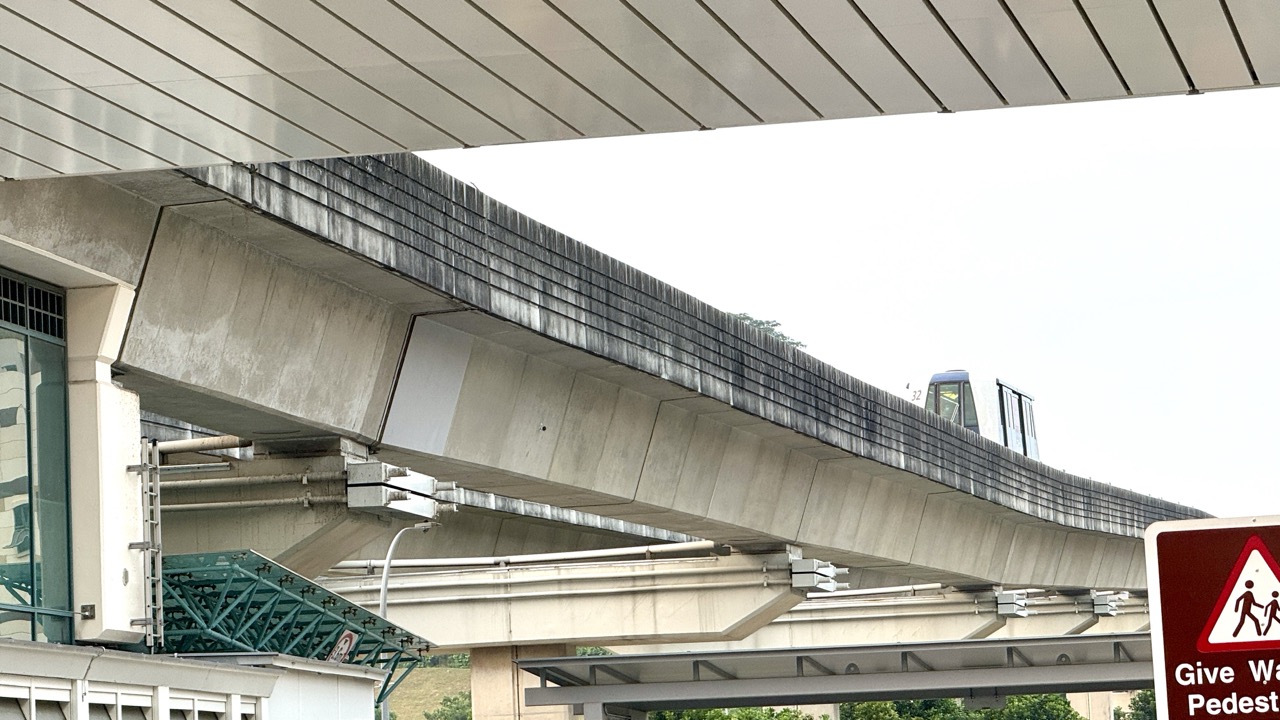
For a short train-themed outing with children in Singapore in 2027, start at Punggol MRT and take a Punggol LRT service that calls at Sam Kee. Leave the station and watch one or two trains from a suitable public path near One Punggol. Then choose a snack, a visit to the community hub or the return to Punggol MRT.
Allow about an hour from Punggol interchange for the ride, a short look from street level and a flexible return. The train ride requires a normal fare. Watching from a public path has no attraction charge. Follow station signs and give regular passengers and pedestrians room. Keep the outing small enough that you can finish after one good view.
- Start at Punggol MRT and follow the signs to the Punggol LRT.
- Check the live service display for Sam Kee, station code PW1.
- Watch from a suitable public point after leaving the station.
- Use One Punggol for a break or as an indoor fallback when it is open.
- Return by LRT or take a suitable signed walking route if your group is comfortable.
EDUKATE PUNGGOL · SINGAPORE 2027
Find the part you need
- Why Sam Kee works for a short train outing
- Find the train to Sam Kee at Punggol interchange
- Give a child one small train-spotting activity
- Choose how to return to Punggol MRT
- Three versions of the trip
Route and first stops
Some children enjoy the ride itself. Others want to see how the train looks from outside the station. Sam Kee makes it possible to do both without planning a whole day around transport. The People’s Association identifies Sam Kee LRT as adjacent to One Punggol. That gives the group an easy second destination and a place to make a weather decision.
Use a small goal: take the train, see it from below and tell someone one thing that looked different from outside. There is no need to stay for a set number of trains or try to cover the whole LRT loop. If a child has already had their fill after one ride and one observation, continue to a drink or return home. A short first trip can be more memorable than a long one when the child is still enjoying the view at the end.
Explain the difference between MRT and LRT
The MRT brings people across a wider network. The Punggol LRT connects the interchange with stations serving nearby neighbourhoods. At the station, compare the names on the route diagram. The child can find Punggol, then look for Sam Kee or PW1. The numbers and letters provide another way to check the same destination when several names are unfamiliar.
Tell the child that the journey is part of an ordinary transport service. Other people are travelling to school, home or work. A family can watch and enjoy the train while making room for passengers getting on and off. You can save a longer look at the route diagram for a quieter public point outside the passenger flow.
Follow the current signs from Punggol MRT towards the LRT. Use the live platform displays and current route information to choose a train that calls at Sam Kee. Sam Kee is on the West Loop. Service direction and stopping order can differ, so check the station name on the display instead of assuming the first arriving train is the one you want.
Give the family time to reach the platform together. A young child may need an extra moment at a lift or escalator, and an adult can check the display without the rest of the group moving ahead. If you miss a train, use the waiting time to read the map or talk about what you are going to look for. Follow staff instructions and keep clear of doors and busy platform areas.
Make the first ride easy to follow
Before boarding, tell the child which name to listen for. Ask them to notice the announcement or station display as part of the ride. Keep an adult responsible for the actual stop. A child who is enjoying the view may miss an announcement, and the trip should feel enjoyable rather than like a test they can fail.
When the train arrives, let people get off before boarding and move away from the doorway as appropriate. Give anyone who needs a seat a chance to sit. A young train fan may want to change sides or follow every curve. Pick one place that works for the group and let the view change naturally. The short ride will have a clear end at Sam Kee.
Contents · Previous section · Next section

After arriving, follow the signed exit and walk towards the One Punggol side or another suitable public space. The photos in this guide show the elevated tracks and nearby paths. Use them to recognise the general setting. Current signs and the people using the path should determine exactly where you stop.
Choose a point with enough room to stand without blocking the route. Stay on public paths and away from roads, restricted infrastructure and cycle lines. A long lens or a zoomed phone view can be useful if the train looks small from where you are. The location is worthwhile when you can see the movement while everyone stands comfortably.
What to look for as a train passes
First, watch for where the train comes into view. Then see what happens as it approaches the station, passes or leaves. The child’s experience from inside the train can feel very different from watching the same movement from ground level. Ask what they could see from the train and what is easier to understand from outside.
Look at the track, pillars and space below as separate things. The train needs its own path. People at ground level have public walkways, and nearby spaces have their own activities. This is a useful example of how a neighbourhood fits transport into everyday life. You do not need to identify every part of the system. A child can enjoy seeing the upper route and the lower route at the same time.
Contents · Previous section · Next section
A preschooler can point out whether the train came from the left or right. A primary school child can mark an arrow on a simple sketch showing the train’s movement. A teen can compare the elevated rail, the ground-level path and the entrances to nearby buildings. Each version gives the child something real to notice and can be finished after one or two trains.
If the child wants to count trains, choose a short amount of time and a comfortable waiting point. Keep the target flexible, since the actual service can vary. A child who is more interested in sounds can describe what they heard as the train approached. If the sound is uncomfortable, stand farther away or finish sooner. The outing is about noticing the place in a way that suits the child.
Try a three-picture family record
Take one picture of the public station sign or approach, one of a train from a suitable viewing point and one showing the public path in context. Keep people’s faces and private activities out of the frame where possible. Stay on the public route and put the phone away while crossing a road or using a busy station connection.
Afterwards, put the images in order and ask the child to tell the story of the trip. A simple sequence is enough: “We read the sign, took the train and looked back at the tracks.” If the child draws instead, use the same sequence. A short record can be useful when they want to explain the trip to a grandparent or ask to do it again.
Contents · Previous section · Next section

One Punggol is a community hub near Sam Kee, according to the People’s Association. It is a practical place to build a second stop around current facilities and opening hours. A family might go inside for a short break, a library visit or a meal in the area. Check the particular venue or service if it matters to your outing. Building access and the operating hours of a library, stall or programme can differ.
Use the break to decide what comes next. A child who is still interested may want one more view of the tracks. A grandparent may prefer to sit down or leave from the nearest suitable pickup point. If another group is joining you for food, meet at a named place and floor. They can go straight there without trying to find the public path you are using.
Keep the hub visit separate from the train activity
A library visit can be a whole outing on its own. If you have only an hour, use the hub as a comfortable stop and save a longer library activity for another day. If your child wants to explore books or the Punggol Stories exhibition, check current access and keep enough time to enjoy it. A brief train outing and a substantial library visit can work together when you have a longer morning.
The same principle applies to play or sport nearby. If a specific activity is the reason you are going, check the venue’s own terms and any booking. A photo of activity near the station is a record of the setting. It is not a promise that a facility, court or programme will be available when you arrive. The train-spotting trip works without depending on any booked activity.
Contents · Previous section · Next section
The simplest rail return is to use a current service that stops at Punggol interchange. Check the display again rather than relying on the direction you used earlier. If you would rather walk, the People’s Association describes One Punggol as a short walk from Punggol MRT. Use signed public routes and current directions, and choose the option that suits the group’s time and mobility.
Walking back can help an older child understand how close the two places are in the neighbourhood. Compare what they saw on the ride with what they can see along the public path. Someone using a stroller or walking more slowly may prefer the most straightforward step-free route available on the day. Include the time for the station platform or public crossings when deciding which return is easier.
Do a one-way ride if the family only needs one
A child who has just enjoyed the short LRT ride may be happy to walk back. A family that took an outdoor path first can finish with a train ride if the appropriate service is available. Plan the return around your actual next stop rather than assuming every outing must include two rides. If you are already near a venue where you will eat, let the meal decide which way you go.
If a service disruption affects the route, follow the operator’s information. You can still visit One Punggol on foot from Punggol MRT when the public walking route suits you, or save the ride for a day when it is operating as planned. Keep the original goal flexible. Watching a train is an optional part of a family day, and a service change need not turn it into a rushed search for a replacement.
Contents · Previous section · Next section
Start with the forecast and your child’s tolerance for waiting. The LRT and public paths can be busy. If someone is uncomfortable with noise or crowds, keep the first ride and outdoor stop short. Choose a suitable indoor break nearby or take the return as soon as the child has seen what they wanted. A quiet look from farther away can work as well as a close view.
During a storm, use appropriate indoor shelter and avoid exposed paths or crossings until conditions improve. One Punggol can be a fallback when the relevant area is open. If you are still at Punggol interchange and the weather is unsuitable, decide whether the ride alone is enough or whether you would rather come back later. Check real-time train information and venue hours rather than assuming the rest of the trip will run to the same plan.
Let the child know when the visit will finish
A simple plan helps younger children: “We will get off at Sam Kee, look for a train, then have a drink or go home.” Give them a way to say they are ready to finish. If they want to watch more, decide how much time you can comfortably stay and tell them before the next train comes. The return is easier when the group already knows the sequence.
A teen can help with the practical choices. Ask them to find the return station on the map, choose a suitable place for a photograph and share the route home. Make clear where public paths and station rules take priority. An older child may appreciate being allowed to lead a small part of the outing rather than being asked to complete a list of activities.
Contents · Previous section · Next section

A 45-minute outing after an appointment
Meet at Punggol, check the next suitable service and ride to Sam Kee. Take a brief look from a public path and make the return your next stop. This is enough for a child who mainly wants to go on the LRT and see it from street level. If the train or lift wait takes longer, shorten the observation rather than hurrying.
About an hour with a snack
Start at Punggol interchange, take the train to Sam Kee and let the child make one observation or photo. Use a suitable snack stop near One Punggol, then decide how to return. This works for two adults with a young child or relatives meeting for an easy afternoon.
A longer morning with a library or meal
Start with the train if that is the part the child is most looking forward to. After watching from a public point, go to the hub and give the next activity the time it needs. Check the venue hours before you travel. If the child prefers books or the weather turns wet, shorten the outdoor part and keep the indoor plan.
Contents · Previous section · Next section
When you leave the train, trace where the next public route goes. Point out the elevated track above and the path people can use below. One Punggol gives the rail trip a visible nearby destination. A child can understand that a station serves a neighbourhood by seeing where people walk after the ride. You can make that observation without trying to identify where an individual passenger is going.
Look at the public wayfinding. Some signs give a station name and code. Other signs show an exit or a nearby destination. Ask which sign you would use while still on the platform and which you would use after leaving the station. These are different problems. The first helps you get off at the right place, and the second helps you choose the direction to walk.
Draw a tiny map from memory
At the end of the visit, put three items on a page: Punggol interchange, Sam Kee and One Punggol. Draw one line for the train and another for the walk. If you returned on foot, show that as a separate line. The drawing need not have the correct scale. Its purpose is to show the order of the trip and the different ways you moved.
With an older child, compare the drawing with the official network map. The map shows lines and stations while your drawing shows a local walk and public landmarks. You can use both to answer a practical question such as how to take a relative to the hub. Have the child describe the trip in two sentences. If they can name the line, stop and next destination, the activity has done its job.
Contents · Previous section · Next section

A person inside a train sees the surroundings moving past. A person outside sees the train moving through the surroundings. Choose one detail the child can notice from each viewpoint. From inside, they might look at the station names or see part of the neighbourhood from higher up. From outside, they might see the curve of the tracks or how the train enters the station.
The same comparison works if the ride is shortened or you only watch one train. A child can describe how the view changed after taking the lift or stairs to ground level. If they like drawings, have them sketch two lines, one high and one low, and add what happens on each. It is an easy way to talk about the different uses of public space.
Give a child control over one simple choice
Let them choose whether to take a photo, make a sketch or just watch. They can also choose which detail to look for, such as a station sign or the direction the train is moving. Keep the decisions about route, traffic and station safety with an adult. A little freedom over the activity helps a child stay interested while the family keeps the visit simple.
If the child is especially interested in vehicles, use this as the first of several small outings. On a later day you can compare a different station, view or route. If the child is more interested in the hub or snack, move on after the first train and let that be the main stop. The outing works for children who like trains intensely and for children who are simply curious for a few minutes.
Contents · Previous section · Next section
Preview the three steps at home: go to Punggol, ride to Sam Kee and choose the next stop. If a child is worried about the change at the interchange, show them the station code and tell them which adult will lead. Give them a clear signal for when it is time to get off. A short explanation before you travel often works better than a long one on a busy platform.
A young child may be excited by the movement and still find the sound uncomfortable at close range. Try a suitable point farther from the track and shorten the wait if needed. A child who does better with fewer changes can skip the rail return and walk with the group if the route is suitable. Let the weather and the child’s comfort guide the plan once you arrive.
Make a mixed-age group easier to coordinate
If grandparents prefer a direct route to the hub, meet them there after the ride. Give the exact entrance and meeting time, and keep the train-spotting part short. If the whole group wants to ride, allow time to use lifts and reach the platform together. Choose a place to stand where no one feels hurried. A family outing works well when the people who need the simplest route have it from the start.
An older sibling can help by reading the line map or sending the meeting point to a relative. Give them one job that ends when the group reaches the next stop. Avoid asking one child to watch the signs, lead the whole group and also look after a younger sibling at the same time. Keep the ordinary travel decisions with the adults so that both children can enjoy the ride.
Contents · Previous section · Next section
A food stop, library visit or conversation in the hub can make the trip longer, but each has its own hours and access. Decide which one matters before adding it. If a meal is booked, work backwards from the venue and keep time for the short walk from Sam Kee. If no appointment is fixed, let the group choose after the train passes. An easy return is part of the outing’s value.
A separate library route in this series gives families a way to spend longer at One Punggol. Use it if your child wants an exhibition or an activity indoors. You can also do both on different days. A child who is fresh for the train may enjoy a much shorter library visit afterwards, while a child coming mainly for the library may be happy to see the tracks on the walk back.
Check the trip in the order you will use it
Check the station and service first, then the public path, then any indoor opening hours. Tell the child one thing to look for and give the group a return option. If a service change or shower affects the route, use the hub or the easiest ride home. You can come back for another look when the next visit fits your plans.
Check the return fare and walking choice separately
A short rail trip still uses the ordinary public transport system. If the group wants to ride both ways, confirm the relevant service and allow for the wait on the return. If you walk back, check the pedestrian connection and give a slower walker enough time to reach Punggol MRT. For a family that only wants one ride, there is no need to make a second journey just to recreate the first. Use whichever return leaves enough time for the next part of your day.
Put both Punggol and Sam Kee in your directions so another adult can follow the trip independently. Share the full station name and the One Punggol entrance if the group plans to meet there afterwards.
Contents · Previous section · Next section
Is the Punggol LRT ride free?
Normal public transport fares apply. Looking at trains from an appropriate public path has no attraction charge.
Which station should I use for One Punggol?
The People’s Association identifies Sam Kee LRT as adjacent to One Punggol. It also notes a walking approach from Punggol MRT.
Is Sam Kee near Punggol Coast MRT?
Use Punggol MRT interchange to change to the Punggol LRT for this guide. Punggol Coast MRT serves a different area.
Can I do the trip without riding the LRT?
Yes. Use the public walking approach from Punggol MRT if it suits your group. You can watch from an appropriate public path and keep the ride for another trip.
How long should we wait to see a train?
Keep the wait flexible and check current service information. One view is enough for a short outing, and the schedule or group’s comfort may determine when you move on.
Is the route good in heavy rain?
Use the ride or an open indoor venue as the main activity when conditions are wet. Leave exposed path viewing for a suitable weather window.
Contents · Previous section · Official visitor information


