
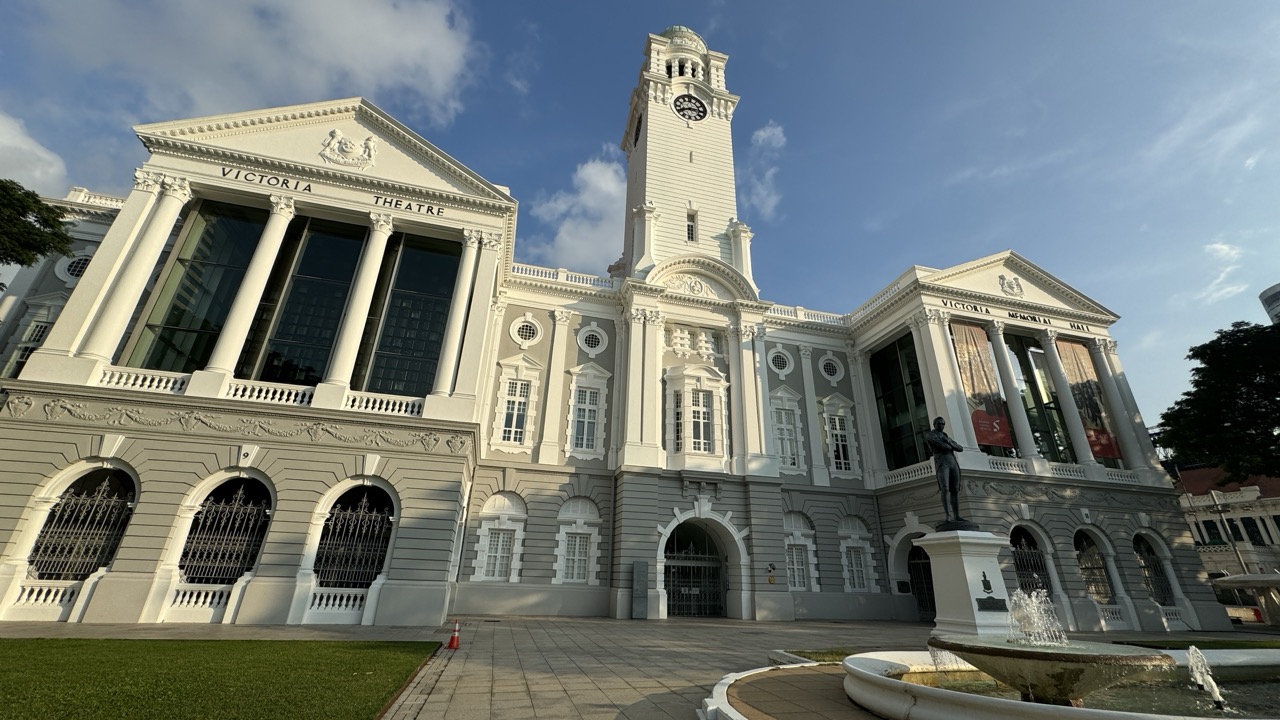
Start at the Asian Civilisations Museum at Empress Place, spend about an hour in one part of its collection, then walk past Victoria Theatre and Concert Hall and the historic bridges on the Singapore River. This is a compact Civic District outing for 2027 with an indoor main stop and a free public waterfront walk. Allow about two hours, or longer if you have tickets for a special exhibition or want to stop for a meal.
The museum and the outdoor route work independently. If it rains, spend more time inside and leave the bridge for later. If you arrive after museum entry has ended, you can still see the buildings and river from public paths. Check the museum’s current admissions page for your gallery and visitor category, particularly if you are choosing between the permanent collection and a special exhibition.
- Start at the Asian Civilisations Museum, 1 Empress Place.
- Choose one permanent gallery theme before trying to see the whole building.
- Walk outside to Victoria Theatre and Concert Hall, then pick Cavenagh Bridge or Anderson Bridge as your waterfront stop.
- Use the current Civic District Heritage Trail map and follow local detour signs.
- Check museum entry, exhibition hours and any separate performance schedule before leaving home.
EDUKATE PUNGGOL · SINGAPORE 2027
Find the part you need
- Start where you want to spend the most time
- Walk through Empress Place to Victoria Theatre
- Pick Cavenagh Bridge or Anderson Bridge
- Change the order when the weather changes
- Make a museum-and-river visit interesting at different ages
Route and first stops
- Start where you want to spend the most time
- Choose one museum theme for the first hour
- Check admission and access before you travel
- Walk through Empress Place to Victoria Theatre
- Pick Cavenagh Bridge or Anderson Bridge
- Build an itinerary for 75 minutes, two hours or an afternoon
- Change the order when the weather changes
Itineraries, practical tips and FAQs
If you want to see the museum, start there while the group has energy and the galleries are open. The outdoor part can be moved, shortened or skipped depending on the weather. If your group wants an evening walk and has little interest in galleries, set Empress Place as a public meeting point and make the river your first stop. The two versions share the same neighbourhood but depend on different hours.
Raffles Place MRT is a practical approach from the business district and Fullerton side. The museum also has its own visitor directions, which are useful if you prefer a different station, a vehicle drop-off or a step-free approach. Save the museum itself as the pin, since “Civic District” covers a much larger area. If you have a child with you, give them a clear target such as the museum entrance, then point out the theatre once you arrive.
Decide where the route will finish
An out-and-back visit can finish at the museum entrance or the same station you used at the start. A one-way walk can end on the Fullerton side or near Esplanade, depending on the direction you choose. Pick the return before making a meal reservation. A restaurant on the other side of the river may be close in a straight line, but you still need the appropriate bridge, crossings and time to get there.
When friends are joining halfway through, agree on the exact building and entrance. Victoria Theatre and Victoria Concert Hall share a landmark complex, while the Asian Civilisations Museum occupies another historic building nearby. A message that names Empress Place alone can still leave several choices. Give the full venue and a recognisable public point. A clear meeting plan is especially useful when one group is inside a ticketed gallery and another has just arrived.
The Asian Civilisations Museum presents artistic heritage from across Asia. Its permanent galleries give you several ways to start. Maritime Trade is a useful choice for someone curious about goods, trade routes and the sea. Faith and Belief works for a visitor interested in how objects can have religious meaning. Materials and Design suits someone who likes craft, surfaces or how objects are made. Check the museum map for the galleries actually open when you go.
There is more to see than most families can comfortably fit into one hour. Choose one object or display to slow down for, then look at nearby pieces that help you understand it. If a child asks a good question, spend time on that question before moving floors. The museum becomes easier to remember when a visit has a few real discoveries rather than a long list of rooms you walked through.
Use the river to give the objects context
If you choose a maritime theme, carry one question outdoors afterwards. How would a waterfront help people move goods or meet trading partners? The Singapore River outside the museum is a good place to think about the relationship between transport and a city. The objects you see in the museum may be from different places or periods. Use their labels for specific claims and treat the river as a setting for a broader question.
For example, a child may notice that several vessels or bowls have a similar shape. Ask what that might tell them and use the label to see where the items were found or made. Then go outside and notice what present-day boats, bridges and river paths are doing. The historic objects and the modern river answer different questions. Comparing them gives the child a reason to look at each more closely.
Contents · Previous section · Next section
NHB lists free admission arrangements for Singapore citizens and permanent residents at its museums, including the Asian Civilisations Museum. Check the museum’s admissions page for which galleries are covered, what identification is accepted and whether a special exhibition has a separate ticket. Visitors from overseas should check the applicable charges and any ticket categories for their party. The public exterior walk is a separate activity that does not require museum admission.
Use the museum’s current opening and last-entry information if you plan to come late. Exhibition hours and gallery access can change. Read the date and admission terms for the particular exhibition you want to see. Give yourself time to reach the museum entrance, use the facilities you need and find the first gallery. A two-hour outing does not have to include two hours in the museum.
Decide whether a tour would help
The museum’s visitor page lists tours and other ways to explore. If a guided session is important, check the current time, language, meeting point and availability. A tour can give a first-time visitor a starting place in a large collection. An independent visit may work better for a family that wants freedom to leave early or follow a child’s questions. Plan around the version your group will enjoy.
A group of visitors might choose a permanent gallery and one quiet pause, then meet outside at a set time. Someone who wants longer with a display can stay while another person takes an outdoor break, subject to the museum’s current entry arrangements. Agree on how you will regroup before splitting. If your party needs specific accessibility information, ask the venue about the route, facilities and any assistive services before travelling.
Contents · Previous section · Next section

Once outside, take a few minutes to see the two buildings as part of the same public area. The former Empress Place Building houses the museum, while Victoria Theatre and Concert Hall has its own history and use as a performance venue. The National Heritage Board’s trail map gives you a way to connect the landmarks to the surrounding streets and river. Use the map to orient yourself rather than to force a full heritage circuit into the same afternoon.
Look up at the theatre’s clock tower and then step back far enough to see the building in context. The change of viewpoint helps you distinguish details that are easily missed when you stand close to the façade. You can make this an exterior stop without a performance ticket. If you want to enter for a concert or other programme, check the event separately and use its own entrance and timing instructions.
Take two views instead of one
Take a close look at the tower or a repeated architectural feature, then move to a suitable public viewpoint and compare it with the skyline behind. One image tells you something about the building. The wider one helps you remember where it stood in relation to the water, streets or towers. If another group is using the same viewpoint, leave room for them and stay clear of any event queue.
With a young child, ask which building would be easiest to identify from a drawing. Let them choose the feature that helped them tell it apart. Older children may want to ask what the building is used for now and how that relates to the historical label. Keep the activity short enough to do on the way to the river. An exterior stop is most useful when you leave time to actually look.
Contents · Previous section · Next section

Cavenagh Bridge offers a useful link between the Empress Place side and the Fullerton side. Anderson Bridge is a separate landmark nearby and can be viewed from public routes in the area. Choose one as your main bridge stop. Check the trail map, local signs and available crossings on the day. Works and large events can change the approach even when the bridge itself is still visible.
A bridge is also a place people need to pass through. Take photographs from somewhere with room to stand, and keep the route moving when it is busy. With younger children, cross together before stopping to decide where to go next. If you want another view, choose one from the riverbank after you have crossed. This usually gives the group more space than stopping midway.
Make the bridge a question rather than a checklist
Ask how the bridge changes the journey between the two sides of the river. What would happen to your visit if the nearest crossing were closed? Use the current map to find the next plausible way across. This simple exercise works especially well with children who like directions. It also helps a family make a real decision about whether to continue, turn back or take the train from the side they are already on.
A photography group might use the bridge as a subject from one bank, then use the opposite bank to frame the buildings it just visited. Allow time to look around without stepping into a cycle or walking line. If conditions are wet, choose an appropriate sheltered stop rather than trying to protect a camera while crossing. The river and the buildings remain available for a separate outdoor visit.
Contents · Previous section · Next section
75 minutes with a first-time visitor
Make one museum gallery the main stop and keep the exterior visit short. After the gallery, walk to the theatre façade and go to the nearest comfortable river viewpoint. If you are still near your preferred station, finish there. This is a useful version when someone is visiting during a lunch break or has another appointment across town.
Two hours with children
Use the first hour for museum arrival, orientation and one gallery. Let the child pick one item to describe later. After a short rest, head outside to look for the clock tower and choose one bridge or river view. Give the last portion of the visit to the route back and any food stop. If the child has had enough indoors, switch to the public walk earlier and leave a second gallery for another day.
An afternoon with visitors who enjoy history
Start early enough to visit a second gallery if the first holds their interest. Afterwards use the Civic District trail map for one more exterior landmark, choosing a route that ends where you want to eat or catch a train. Keep any paid activity distinct from the public walk. If you have timed exhibition or performance admission, work backwards from that time and make the rest optional.
Contents · Previous section · Next section
The museum is a useful anchor because it offers a substantial indoor visit. In steady rain, go directly to the museum and use the time there. If the weather improves later, choose a brief theatre and river stop. If a storm continues, use current directions for the simplest route to your next destination and leave the open waterfront for another visit. Prepare an umbrella for short gaps, but give yourself somewhere indoors to wait.
On a hot afternoon, the outdoor route may work better first or last, depending on the weather and what matters most to your group. Keep the bridge and riverbank portion short if people are uncomfortable. Choose a seated break before adding any extra landmark. A visitor can enjoy the scale of Empress Place in a few minutes without needing to walk the full heritage trail.
Plan for wheels and slower walking
If you are with a stroller or wheelchair user, confirm the suitable museum entrance and ask about the indoor route where needed. Outdoors, check the specific surface, curb and crossing on your intended path. A bridge that looks nearby can take extra effort to approach. Leave the decision to cross until you see what works for your group. A river view from the current bank can be a complete stop.
Grandparents may be comfortable walking slowly but prefer fewer standing waits. Decide before you arrive whether a seated break comes after the gallery or after the bridge. If you are meeting for a meal, give the meal a clear address and choose it on the side you want to finish. The route works best when you can remove the longest section without losing the experience people came for.
Contents · Previous section · Next section

A preschooler can choose one shape or material to look for. Ask which object looks smooth, heavy or bright, then read the label if the child is curious. Finish the indoor visit while they still want to see another thing. Outside, ask them to spot the tower or tell you which way the river runs from where you are standing. These small tasks give them a role without making the visit feel like school.
A primary school child can choose an object and write down one detail the label confirms. At the river, ask a different question about how people and goods move through a city. A teen can compare a museum label, a heritage trail entry and a photo they made that afternoon. Each source tells them something different. Let them explain that difference in their own words rather than asking for a long report.
Make time for somebody who wants to look more slowly
If one person wants to read every label while the others mainly want a short walk, set a flexible time and a clear place to meet after the gallery. Another adult can take a child to an agreed nearby point if the child is ready to leave. This is also useful when someone uses a slower walking pace. Everyone can have time with the part of the trip they value and still spend the last stop together.
A solo visitor can take the same approach without a meeting time. Choose a gallery, look at one object closely and decide outdoors whether you want the bridge or a coffee. A specific route gives you enough structure to leave the museum with a clear next step. Keeping an optional stop lets you stay longer with a display that turns out to be more interesting than you expected.
Contents · Previous section · Next section
A civic and museum visit gives you a different perspective from the Merlion-to-Helix Bridge walk. Choose the Civic District when you want a museum and older buildings. Choose Marina Bay when the skyline and open waterfront are the main attraction. If you have an afternoon and evening, you can do a short version of both, but leave time for a meal and travel between the parts you select.
For a meal with a different kind of heritage setting, save the Telok Ayer and Lau Pa Sat route for another evening or add only the meal itself. That avoids trying to visit two museums, a temple street and the waterfront in one rush. A first-time visitor usually remembers the stop they had time to understand. Plan the day around the display, building or meal you actually want.
Before you go
Confirm the museum gallery and entry conditions for your date. Decide whether the outdoor finish is one bridge or a longer walk. Download the trail map if you will need it outdoors and save the museum address separately. If you are going with relatives, tell them the expected walking and standing time and give them a clear option to meet for the shorter part. You can adjust the plan on the day when everyone knows which stop is the priority.
Contents · Previous section · Next section
If you want a specific starting point, check the museum’s Maritime Trade and Tang Shipwreck information. The ninth-century shipwreck is a way to think about how goods, designs and materials travelled long distances. Look at a group of objects rather than one piece in isolation. A collection of similar items can prompt a question about who made them, how they were packed or what buyers valued. Read the display text for the evidence the museum uses.
A useful short activity is to compare two objects that seem alike. Pick a feature to examine, such as colour, shape or decoration. Look at the label to see whether the museum explains their origins or uses. Then ask what the label leaves open. An object found in cargo can show that it travelled. The reason it was selected or who would have bought it may be a separate question. This way of looking makes a small part of the gallery enough for a good visit.
Follow one question rather than covering every floor
A child might ask why several bowls have similar shapes, while an adult might be more interested in how archaeologists identify a shipment. Let each person choose one example. A family can read the museum’s short gallery material before going or after the outing. If the gallery you wanted is unavailable, use the same method with two objects from an open collection.
Contents · Previous section · Next section
At Empress Place, look for how the museum and theatre receive people. There are doors, paths and places where visitors gather or pass through. Ask why a museum visitor and someone going to a concert might arrive at different times or wait in different places. Look at current signs to see how people are directed. A performance queue and a museum entrance are part of separate venues even when they look close on the map.
From a comfortable public spot, compare the view of the theatre’s clock tower with the view of the riverbank. One gives you a prominent landmark to orient by. The other shows how the area connects to nearby bridges and the rest of the city. If you are with older children, ask them to choose one landmark they would use to give directions to a friend. This is a practical way to remember the place after you leave.
Use the heritage map to check names
The Civic District trail map is useful because a bridge, building and waterfront path can have different names even when they are part of the same short walk. Check each name before writing a photo caption. For example, the theatre photographs in this guide show Victoria Theatre and Concert Hall, while the bridge photograph shows Anderson Bridge. Use your own pictures to compare public views from different points and avoid attaching one bridge’s name to the other.
Contents · Previous section · Next section
If you reach the museum and the exhibition you wanted is unavailable, decide whether an open permanent gallery still interests the group. If so, give it one focused hour. If not, continue outside when conditions are suitable and put the museum first on a future visit. The public route is complete as a short walk past the museum, theatre and a river viewpoint.
If the museum is open and the riverside route has a detour, protect the indoor time and choose the closest suitable public view before finishing. Do not assume you can return to a ticketed gallery after leaving. Ask the venue about re-entry if you are planning a split visit. A shorter public walk is easier than repeatedly switching between admission and outdoor access.
When travelling with friends, tell them the next exact stop after a change. “Meet outside the museum entrance” is easier to use than “we are somewhere by the river.” Put the meeting time after the time needed for ticketing, lifts or crossings. A fixed meal or show can anchor the end, while the number of galleries and landmarks can remain flexible.
Leave a little time to orient at the first gallery
On entering, look at the floor plan before deciding where to begin. A case you see near the entrance may make a useful first stop, especially if the room you intended to visit is busy. Check whether photography is allowed for the particular objects or displays you want to capture. If it is, take a picture of the label as well as the object for your personal reference. If you prefer to make notes, write the gallery name and one detail. That will give you enough information to look up the object later.
Contents · Previous section · Next section
Is the Asian Civilisations Museum free?
Check the museum’s current admissions page. Singapore citizens and permanent residents have free admission arrangements for the permanent galleries, while other visitor categories and special exhibitions may have different charges.
Can I do the Civic District walk without visiting the museum?
Yes. You can see the museum exterior, Victoria Theatre and the river from public routes. Check current access around major events or works.
Which bridge should I choose?
Cavenagh Bridge is useful for a crossing between the Empress Place and Fullerton sides. Anderson Bridge is another nearby heritage landmark. One bridge or viewpoint is enough for a short visit.
Is this a good rainy-day outing?
Yes, if you make the museum the main stop and leave the exposed waterfront optional. Check the museum’s current opening and entry details before going.
Can I go into Victoria Theatre with a museum ticket?
Museum admission and theatre access are separate. Check the theatre’s own arrangements if you want to attend a performance or visit inside.
How long do I need with children?
Allow about two hours for one gallery, a short exterior walk and time for transitions. Use the shorter version if the group needs an early finish.
Contents · Previous section · Official visitor information


