
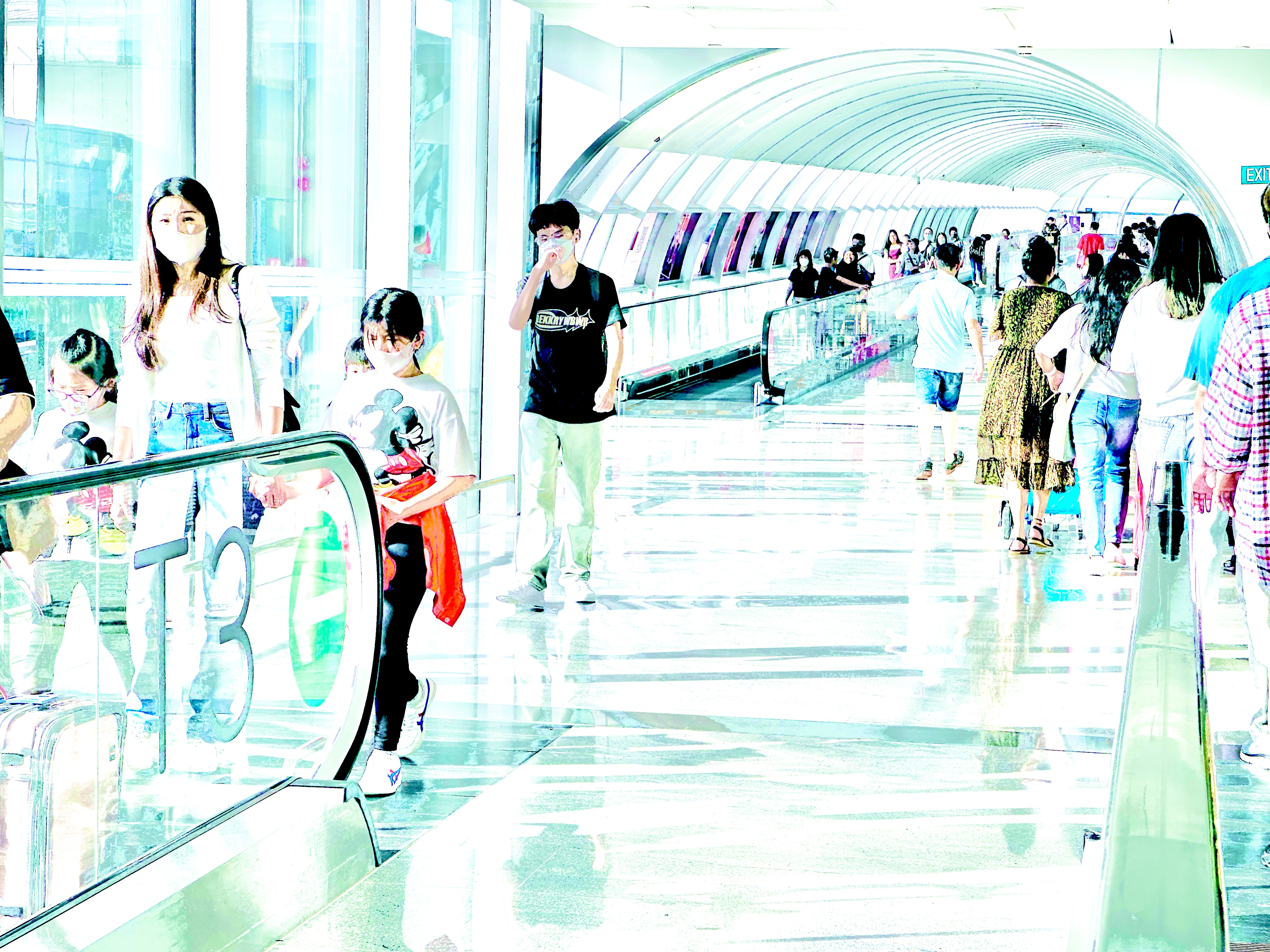
Changi Airport’s Butterfly Garden is in the Terminal 3 transit area on Levels 2 and 3. Start near the B gates on Level 2 and follow signs for the garden. Changi currently lists it as open 24 hours daily. You can visit if you are already airside and have enough time before your flight.
The Butterfly Garden is a free transit attraction with flowering plants, butterflies and a six-metre grotto waterfall. If you are visiting Changi from Singapore without a flight, choose a public attraction instead. For a 2027 transit visit, check the airport’s current map, your onward terminal and gate before setting aside time for the garden.
- Find the garden in Terminal 3 Transit, near the B gates on Departure Level 2.
- The habitat spans Levels 2 and 3. Use the current airport map to choose the entrance and route you need.
- Changi lists the garden as open 24 hours daily. Follow any maintenance or temporary access notices.
- The number and kinds of butterflies visible can vary. Allow time to stand still and look near plants.
- Leave the garden early enough to reach your gate under your airline’s boarding instructions.
1. Where to find the Butterfly Garden
Go to Terminal 3’s transit area and use the airport map for Departure Level 2 near the B gates. The official attraction lists Levels 2 and 3. Start with the B-gate side because that is where Changi’s sensory map places its Level 2 approach. Signs on the day will help you choose the best way in from your position.
The terminal number and the access side matter before the level. Terminal 3 has public and transit floors with separate facilities. When sharing a meeting point with a travelling companion, include the word ‘Transit’. If the companion is still in the public terminal, check whether you can meet before departure procedures or later when both of you are airside.
Changi lists the garden as open around the clock. A 24-hour listing means the attraction is ordinarily available through the day and night. It does not promise a particular number of visible butterflies or guarantee uninterrupted access during works. If you are considering a detour between terminals solely for the garden, check the latest airport information and any signs before committing.
Already in Terminal 3
Check your gate and the direction you will need to leave. If the gate is near your intended garden approach, you may be able to enjoy a short visit without adding much walking. If the gate is on the other side of the terminal, include the trip back. A gate assignment can change, so look again before choosing how long to stay.
Coming from another transit terminal
Use Changi’s current instructions for inter-terminal travel on the transit side. Work out both the journey to Terminal 3 and the trip to your onward gate. Conditions can differ by terminal, itinerary and time. Ask airport staff if you are unsure how to make the connection. On a short wait, choosing an activity nearer your gate can give you a more relaxed break.
2. Who can visit without entering Singapore?
The garden is an airside attraction. It can fit a connection when you are able to remain in transit and reach Terminal 3 within the time allowed for your itinerary. Use the airport’s current transit guidance if you have separate bookings, baggage to collect or questions about your route. If those details are unsettled, resolve them before making a sightseeing plan.
A person at Changi to meet a passenger can use public attractions. That person cannot treat the Butterfly Garden as part of a normal visit to public Terminal 3. Jewel and ST3PS, for example, are public places. They have different activities and separate access from the Butterfly Garden. Choose a meeting point where both people are able to arrive.
If you are departing from Singapore, decide about the garden after accounting for check-in, departure procedures and boarding. The airport’s public entrance and the garden are two stages of the journey. You can make the decision closer to the gate when you know how much time is available.
Send precise directions to a companion
Try ‘Butterfly Garden, Terminal 3 Transit, Level 2 near the B gates’ as a starting description. Add a nearby sign or agreed place where you can wait without blocking the path. If one person is delayed, set a time to continue towards your gate. The garden is small enough to enjoy as a short stop, so there is little reason to use up the whole connection waiting for everyone to find it.
Contents · Previous section · Next section
3. What you will see inside
A habitat shaped around plants and water
Changi describes a tropical habitat with flowering plants, greenery and a six-metre waterfall. Take a moment after entering to let your eyes adjust and to notice where the plants and paths are. A butterfly may be hard to see immediately when there is movement around you. Look for a point where you can stop briefly without getting in anyone’s way.
The waterfall is a recognisable feature if you want to orient yourself. If its sound is strong for someone in your party, keep the first visit short and choose another part of the route if appropriate. Changi’s sensory map identifies sound and the natural smells of the planting. The atmosphere can differ from the surrounding terminal even though the two spaces are close.
Why the number and kind of sightings vary
The airport describes more than a thousand tropical butterflies and as many as forty species across different seasons. Those figures describe the collection across the year. You may see only a small part of it on a short visit. Some butterflies are easier to notice when they are resting on a plant. A visitor looking for every butterfly in flight can miss a good close view.
Ask a child to look for movement, then choose one butterfly to watch. Notice whether it rests, feeds or moves through the planting. If it disappears, give another spot a chance. You can see something meaningful without making a list of all the species. Use on-site labels when you want a name.
Look for educational displays or enclosures
Changi mentions areas that explain aspects of butterfly breeding and feeding. Check which displays are available when you visit. A family can compare something seen in an enclosure with a butterfly moving through the wider garden. The two views can help children understand why the habitat needs more than pretty flowers and a path.
Contents · Previous section · Next section
4. A short nature activity for children between flights
Find a place to watch before moving again
Choose an available spot beside planting and give everyone a minute to look. Ask one child to describe a colour, another to notice what the butterfly is doing and an adult to check that the group leaves room for other visitors. A younger child can point out where they saw movement. An older child can say whether they think it was feeding or resting and describe the evidence.
Avoid trying to make a butterfly land for a photograph. Leave the insects and plants undisturbed. If it moves before you have a clear picture, look for another observation from the path. A child can remember the difference between a resting insect and a flying one even if they have no photo.
Connect one observation to the life cycle
If a display shows part of the life cycle, compare it with the adult butterfly in the habitat. Ask what changed and what the earlier stage would have needed from its surroundings. A visitor can see different kinds of evidence in the same small space. The display can help explain a stage that is harder to observe, while a living butterfly shows movement and behaviour directly.
Give a child one thing to tell you afterwards
Ask them where they saw the butterfly, what it was doing and how long they had to wait. A good answer can be as short as ‘It stayed on one flower until another person walked past.’ They do not need a species name to have made a useful observation. If they want to identify it later, remember any sign or feature they were able to see clearly.
This task is easy to stop when it is time to leave. Tell children the garden is one part of the airport journey and choose a single place to look closely. A short, calm visit can be better than several hurried stops. You can talk about the rest on the walk to the gate.
Contents · Previous section · Next section
5. How long to allow before boarding
Plan from the time your airline expects you at the gate. Include the walk from the garden and any other procedures on your route. Departure time gives a different piece of information. If you only check when the aircraft is scheduled to leave, you can overestimate the time available for the stop.
Once you know the gate route, choose the amount of garden time you can comfortably use. A ten- to twenty-minute look can work when you are already nearby. That is an example of time inside the garden. It does not include terminal transfers, finding the entrance, using facilities or getting back to the gate. If the gate is farther away or your connection is uncertain, shorten or skip the visit.
Set a leave time your group understands
Decide when you need to be walking out of the garden. Set an alarm if that will help. Agree that the alarm means it is time to move. A child may need an extra moment to stop watching, and a companion may have luggage to reorganise. A few minutes of margin is easier to build in before the visit than to find afterwards.
If you are taking a photo, leave room for people to finish and continue together. The garden can be an easy place to lose track of time because the activity involves waiting for movement. Ask one person to keep an eye on airport updates. If the gate changes or the airline asks passengers to arrive early, follow the new instruction.
Take the shorter version if you are unsure
Look at one level or the part nearest your route if access permits. You can see planting and watch for butterflies without trying to explore the entire attraction. If the detour starts to feel rushed, go towards the gate and make the garden a plan for another trip. The visit fits best when the rest of the connection is already clear.
Contents · Previous section · Next section
6. Photography, accessibility and late-night visits
Keep a photograph simple
Start with one picture of the habitat if there is space to stand. Then look for a butterfly that has settled. A wide picture can explain the setting. A close picture can show a pattern or the relation to a flower. Use the light available and follow on-site photography instructions. Keep your device and bags clear of the plants and other visitors.
At quieter times you can spend longer looking at a single plant. During a busy visit, one photograph and a clear memory may be enough. The photograph can show where you looked, while your own description can explain the movement that made you notice it.
Ask about the particular route you need
The attraction spans two levels. If you need step-free access, are using a stroller or prefer to avoid stairs, ask Changi for the current route and entrances. A general terminal map may not tell you everything about movement inside the garden. Use the airport’s accessibility information and on-site directions if a particular path matters to your group.
If sound or damp garden air is uncomfortable, decide whether a brief view is enough. Have a clear way to leave as a group and choose another terminal area if you want a break. The sensory map gives a starting point for that decision.
Expect a different visit at night
The listing says 24 hours, while what you see can vary with conditions and time. At night the plants, waterfall and overall setting may be the most visible parts. Keep your expectations flexible if you are coming chiefly for photographs of butterflies in flight. Check gate and terminal connections first and enjoy the visit for whatever is clearly visible.
Contents · Previous section · Next section
7. What to combine with the garden in Terminal 3
Pick one other airside stop
Changi’s Terminal 3 sensory map identifies koi ponds near the A and B gates. Use the current map and signs to see whether one fits your gate route. The garden and a pond can make a short pair of stops if they are on the way. If you only have time for one, choose according to how much walking it adds.
Terminal 3 also has a separate airside Movie Theatre on Level 3 near Ambassador Transit Hotel. A film is a different kind of activity and can take more of your time than the garden. Choose it if your connection has enough room, check current hours and set an exit time. Public ST3PS screenings are at Basement 2 and have separate access.
Keep public and transit options on separate lists
If one traveller is in the terminal before departure procedures and another is airside, neither should assume they can join the other at the garden. Public areas such as Jewel can work for a meeting before a flight, and the garden can be an optional airside activity afterwards. If you are connecting and are considering a public attraction, check all entry and onward requirements before leaving transit.
A useful airport itinerary has one main activity and a nearby backup. If the garden is temporarily unavailable, look at the current map for something on the route to your gate. If the gate is already calling passengers, make that your next stop. An attraction’s availability matters less than getting through your connection comfortably.
Contents · Previous section · Next section
8. Three visits that work at different paces
A brief look near the B gates
If your gate route passes nearby and you have time, enter the garden and choose one place to watch. Spend a few minutes there and leave in the direction you already checked. This version suits someone who wants to see why there is a butterfly habitat inside an airport without turning the connection into a longer excursion.
A family stop with a clear time limit
Give children one thing to find and agree when you will leave. Look at plants, choose a place to watch for movement and read a label if there is time. If you have another stop, choose one close to the onward route. The garden can be the activity you remember even if you stayed only long enough to see a butterfly rest or feed.
A longer wait with time to compare spaces
Use the garden as one stop in a larger terminal break, then choose a place to sit. A visitor may find the atmosphere of the habitat a pleasant change from the main terminal. A companion may prefer a quieter seat or a different activity. Decide where to regroup and leave room to check flight updates. The terminal gives you different ways to use the same waiting time.
Contents · Previous section · Next section
9. Look for feeding and resting behaviour
Give a single patch of planting a little time
A visitor moving along the path tends to see the butterflies that cross an opening or pass near a face. A visitor who stands quietly can also find insects resting on leaves or near flowers. Choose a spot that leaves room for others, then give your eyes time to pick out movement. If nothing is visible, look at a different height or use another section of the route.
Changi’s children’s activity book gives examples of feeding resources used in the garden, including fruit and flowers, and highlights the Common Rose butterfly. Treat those examples as things to look for when they are present. A feeding display can change, and you may see other species instead. Check labels or ask staff when the name matters. Looking for one behaviour is easier than expecting to identify every butterfly you see.
Describe the action before you name it
A butterfly perched on a flower may be feeding, or it may simply be resting there. Look at how long it stays, whether it moves between flowers and what parts of its body you can see. An older child can make a tentative observation and explain why. A younger child can describe the colour and the place where it stopped. Both are ways to pay attention without disturbing the habitat.
A good photograph can help you revisit a detail, but you may see more if you take one look without a screen in front of you. Wait until the insect moves on by itself. If it is out of sight, change your own position within the public path. A visit to an airport garden can be an unusual chance to practise watching before reacting.
Compare the garden with the terminal around it
Ask what the plants, waterfall and enclosure contribute to the habitat. A child can point out the difference between the garden and an airport seating area. An older visitor might ask how the arrangement keeps visitors on paths while giving butterflies room to move through vegetation. The attraction combines a space for observing with a habitat that is managed separately from the rest of the terminal.
Contents · Previous section · Next section
10. Plan for different kinds of connection
A connection that remains in Terminal 3
Find your onward gate first and check the garden on the current transit map. If both places are close enough for the time you have, visit the garden and take the same route back towards the gate. If your gate is somewhere else in the terminal, choose a leave time with enough space for the walk. Stay alert to announcements and airport updates.
An arrival or departure involving another terminal
An attraction can look like a small detour on an airport map because several terminals are shown side by side. A transfer adds movement and sometimes waiting. Check the instructions for your airline and airport route, and build in the return leg if you need it. A person already near the garden and a person going from another terminal have different amounts of time available to spend there.
A long wait when different people want different things
A traveller who wants a short walk can visit the garden, while a companion who wants to sit may prefer another available place. Choose a meeting point that works with the onward gate and an agreed time to reunite. Check how you will communicate if a gate changes. If the group includes children, keep the route simple enough for everyone to move together when needed.
Know when the garden can be the backup
An early arrival at the gate can leave time to decide whether a nearby walk is realistic. Check the airline’s boarding information and use the garden only if you can get there and back comfortably. If you have already visited, you know which part of the route is worth repeating. If it is your first visit, a brief look at one level can give you a useful sense of the place.
Someone who wants to plan a future stop can note where the signs appear on the transit map. That makes the next choice quicker. A useful connection plan gives the garden a specific window and leaves enough time for an onward route that is likely to work even when the terminal is busy.
Contents · Previous section · Next section
Frequently asked questions
Is the Butterfly Garden free?
Yes. It is a free airport attraction for visitors who can access the Terminal 3 transit area.
Can I enter without a flight?
The garden is airside. For a public terminal visit without a flight, choose an attraction that Changi lists as public.
Where exactly is it?
The garden spans Terminal 3 Transit Levels 2 and 3. Changi’s sensory map places the Level 2 approach near the B gates.
Is it open at night?
Changi lists it as open 24 hours daily. Check current notices and expect sightings to vary.
How long does the visit take?
Ten to twenty minutes can suit a brief visit once you are there. Add time for terminal movements and your gate route.
Can a family use a stroller?
Check Changi’s current step-free routes and the garden entrance you plan to use. The attraction spans two levels.
Will I see all forty species?
The operator’s figure describes the range across different seasons. The butterflies visible on one visit can vary.
Is this at Jewel?
It is in Terminal 3 transit. Jewel is a separate public destination.


