
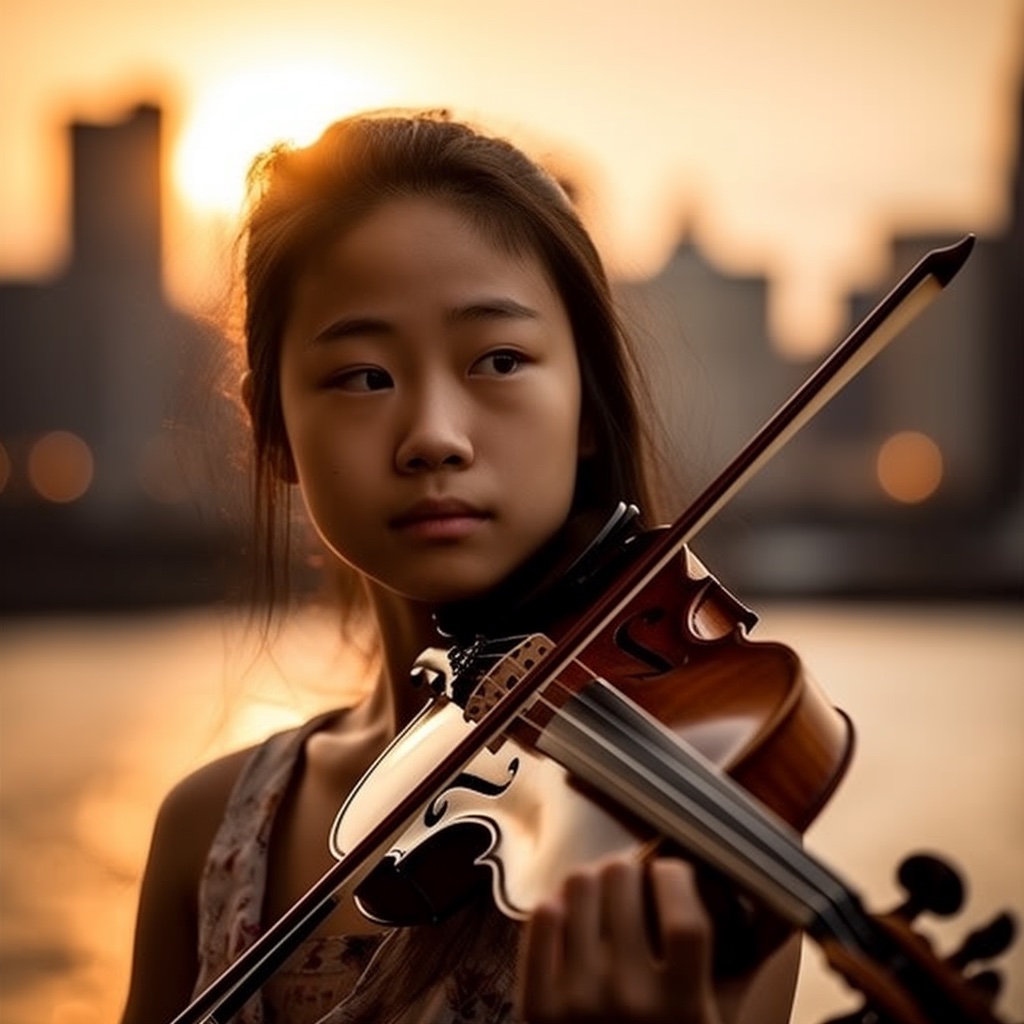
Under Full Subject-Based Banding (Full SBB), an academically eligible and artistically or musically inclined secondary student may explore special arts programmes such as the Art Elective Programme (AEP) or Music Elective Programme (MEP). MOE’s published centre-based information packages explain that students from all Posting Groups can apply for the relevant centres if their own school does not already offer the specified art or music programme. Selection, timetable, curriculum commitments and future subject combinations matter far more than simply liking art or owning a musical instrument.
For a Punggol family entering Secondary 1 in 2027, the biggest decision is whether a four-year external programme genuinely suits the child. The published MOE centre arrangements are AEP at National Junior College and MEP at Anglo-Chinese School (Independent) and Dunman High School. These are additional programme centres, not automatically new secondary-school admissions. AEP and MEP may replace lower-secondary Design and Technology and Food and Consumer Education for participating pupils, which can constrain upper-secondary D&T and Nutrition and Food Science choices. Confirm the current selection exercise, travel, timetable and actual subject combination before committing.
- Centre-based AEP has been run at National Junior College for eligible students from schools without AEP or EAP.
- Centre-based MEP has been available at ACS (Independent) and Dunman High School for eligible pupils from schools without MEP or EMP.
- MOE’s published 2025 centre packages state that students from all Posting Groups can apply, subject to the programme-specific school exclusions and selection exercise.
- Centre-based AEP and MEP are four-year commitments starting at Secondary 1, not general drop-in enrichment.
- From the SEC examination system in 2027, the published programmes lead to G3 Higher Art (K348) or G3 Higher Music (K351), if relevant conditions are met.
- At lower secondary, participants may replace D&T and FCE with the intensive programme and consequently cannot assume eligibility for those upper-secondary applied subjects.
- MEP or AEP does not automatically change every other academic subject to G3, confer DSA admission or guarantee a place at its host institution.
- An artistic or musical interest can also be developed through school Art or Music, EAP/EMP, CCAs and appropriate upper-secondary options.
- All 2027 dates and lesson timings must be checked afresh; MOE’s 2025 centre information is not a 2027 timetable.
Fast decision: AEP/MEP are four-year specialist opportunities, not automatic school transfers. Check the centre, selection criteria, weekly journey, G3 Higher Art/Higher Music route and subject-combination consequences.
Contents: AEP, MEP and centre-based life
- 1. Start by distinguishing AEP, MEP, EAP and EMP
- 2. Why the Posting Group does not tell the whole story
- 3. What centre-based means
- 4. AEP at the National Junior College centre
- 5. MEP at ACS (Independent) and Dunman High
- 6. Why AEP is a four-year decision
- 7. Why MEP is also a four-year decision
- 8. What art talent selection may consider
- 9. What music selection may consider
- 10. AEP studio practice beyond drawing
- 11. Art criticism and writing
- 12. MEP listening and analysis
- 13. MEP creating and composing
- 14. MEP performing and collaboration
- 15. G3 Music versus G3 Higher Music
- 16. G3 Art versus G3 Higher Art
- 17. The surprising D&T and FCE trade-off
- 18. Why timetable time is finite
- 19. What if AEP and MEP both appeal
- 20. What if a third language also appeals
- 21. Punggol transport and centre lessons
- 22. Does the host centre provide transport
- 23. What about fees and supplies
- 24. What a school Art CCA can offer instead
- 25. What a music CCA can offer instead
- 26. Can a student begin specialist Art in Secondary 3
- 27. Can a student begin specialist Music in Secondary 3
- 28. How to think about examinations and portfolios
- 29. Do AEP or MEP guarantee post-secondary bonus points
- 30. DSA admission versus an external arts centre
- 31. Making time for social life
- 32. A fictional AEP decision
- 33. A fictional MEP decision
- 34. Four-week parent preparation plan
1. Start by distinguishing AEP, MEP, EAP and EMP
The Art Elective Programme and Music Elective Programme provide extended specialist learning beginning in lower secondary. The Enhanced Art Programme and Enhanced Music Programme are related school-based opportunities with different structures. General Art or Music lessons and art- or music-related CCAs offer still other routes.
A family should not treat the abbreviations as interchangeable. The required starting year, location, subject expectations and workload matter. One child may benefit from an early specialist commitment, while another can keep a broader timetable and explore their interests through ordinary lessons.
Parent action: Ask the school which programme is genuinely available to the child, not just whether the brochure mentions art or music.
2. Why the Posting Group does not tell the whole story
Posting Groups 1, 2 and 3 guide Secondary 1 admission. G1, G2 and G3 refer to individual academic subject demand. MOE’s published centre selection documents state that pupils from all Posting Groups may apply to the relevant AEP or MEP centre when they meet other conditions.
That does not mean every applicant is offered a place or that every individual subject becomes G3. Admission to the arts programme follows its own selection exercise. Pupils still need suitable academic teaching, pastoral care and a manageable overall programme.
Parent action: Separate the child’s original Posting Group, specialist programme eligibility and school-approved subject levels on your planning sheet.
3. What centre-based means
A centre-based programme lets eligible students enrolled at one secondary school attend specified specialist lessons at another approved institution. The host institution provides the programme, but it does not automatically become the student’s ordinary form class, main school or DSA placement.
This distinction is particularly important for families planning travel from Punggol. The child may have a normal school timetable, CCA and homework, then travel to an external venue at designated times. Centre attendance and home-school responsibilities must fit together.
Parent action: Write down the actual home school, centre venue and weekly journey as three separate facts.
4. AEP at the National Junior College centre
MOE’s published AEP centre information identifies National Junior College as the centre for eligible pupils from non-AEP and non-EAP secondary schools. The programme includes making art, studying visual culture and participating in specialist learning experiences.
AEP is not simply a weekly painting club. Students explore studio practice, art analysis, research, critical thinking and sustained development. Some work involves discussion and writing as well as materials and visual composition. Each intake’s selection and timetable need current confirmation.
Parent action: Ask what a normal centre week looks like and how much work must be completed outside the session.
5. MEP at ACS (Independent) and Dunman High
The published MEP centre package identifies ACS (Independent) and Dunman High School as centre venues for eligible students from secondary schools that do not themselves offer MEP or EMP. These venues are programme locations, not promises of transfer to either institution.
Music learning includes listening, creating, performing and research across genres and traditions. The child must be able to practise regularly while keeping up with academic subjects and other school commitments. A Punggol family’s travel plan must use the actual designated centre and year.
Parent action: Confirm the current authorised centre assignment and lesson schedule before arranging transport.
6. Why AEP is a four-year decision
AEP is an extended art curriculum beginning in Secondary 1. It provides time for students to develop technique, visual reasoning, independence, art criticism and portfolio work across several years.
The longer duration creates depth but also a real commitment. A young pupil may be excited by drawing but not yet know how they feel about sculpture, photography, research or sustained art writing. Selection should reflect an informed willingness to learn broadly.
Parent action: Ask whether the teenager enjoys investigating art as well as making a favourite kind of picture.
7. Why MEP is also a four-year decision
The secondary Music Elective Programme is designed around substantial specialist study over four years. Students engage in performing, creating, listening and research, and the published programme encourages continuing regular instrument or vocal practice.
A teenager who enjoys singing in one context may find intensive study rewarding or challenging in unexpected ways. The programme can require listening across unfamiliar genres, collaboration and consistent practice. It is not simply an extension of a music examination certificate.
Parent action: Have the child describe which parts of music they want to study beyond a familiar performance piece.
8. What art talent selection may consider
Art-centre selection seeks genuine interest and potential. MOE’s FAQ notes that external private art certifications are not a universal prerequisite and that students may develop abilities through ordinary primary Art lessons or self-directed work.
Parents should avoid hiring someone to create a polished portfolio that hides the pupil’s actual process. Sketchbooks, experiments, revisions and a clear explanation of choices show the thinking behind the work. The selection exercise for the correct year is authoritative.
Parent action: Keep authentic examples that the student can explain independently, including unfinished work and corrections.
9. What music selection may consider
MOE’s published MEP package says formal external music certification is not compulsory for applying, although applicants should already be fluent in an instrument or singing and must complete the programme selection exercise.
A Grade certificate by itself is not a guaranteed place, and a learner without one should not automatically rule out applying. Families should read the actual selection components and support preparation that reflects the child’s real musicianship.
Parent action: Practise explaining the musical decisions in a piece rather than relying only on how impressive it sounds.
10. AEP studio practice beyond drawing
The AEP curriculum can introduce two-dimensional and three-dimensional media, digital forms, visual journalling and making processes. Students may encounter painting, sculpture, photography, design and other methods, depending on the programme.
A child who loves pencil drawing can learn new ways to communicate ideas, but that breadth may also be challenging. Parents should not promise that every session will involve the teenager’s favourite medium. Exploration is part of the educational purpose.
Parent action: Ask the student what one unfamiliar material taught them about design or observation.
11. Art criticism and writing
The AEP also involves studying and interpreting artworks, considering visual evidence and communicating observations. Students can examine composition, context, artistic intention and different interpretations rather than judging every image only as beautiful or ugly.
Strong art learning is not purely technical. A student may need to read, speak and write about work, respond to feedback and build evidence-based interpretations. This connects the programme with English and Humanities learning without replacing those academic subjects.
Parent action: Have the teenager explain one choice made by an artist and what in the artwork supports that explanation.
12. MEP listening and analysis
MEP examines music across Asian, Western Classical, Jazz, Popular and multimedia traditions, according to MOE’s published package. Listening involves recognising meaningful details in rhythm, texture, form, expressive choices and cultural context.
A pupil who practises one instrument may discover unfamiliar musical systems or genres. That is a valuable extension, not an indication that their existing repertoire is irrelevant. Parents can encourage curiosity without demanding immediate mastery of every style.
Parent action: Ask what the child heard, which evidence supports the observation and how it changed their interpretation.
13. MEP creating and composing
Music creation can involve developing musical ideas, choosing structures, revising arrangements and evaluating how sound communicates meaning. Students may use acoustic or approved digital tools as part of the process.
A polished recording generated by another person or software is not proof of independent understanding. The pupil should know why musical choices were made and what changed during revision. School academic-integrity and copyright rules remain relevant.
Parent action: Have the child explain one compositional decision and a different option they rejected.
14. MEP performing and collaboration
Performing may include solo, accompanying and ensemble work. Effective musical learning also requires rehearsal, listening to other musicians and adjusting a contribution to serve the whole group.
A family should distinguish programme participation from a promise of public prizes or lead roles. Performance opportunities can depend on suitability, selection and cohort arrangements. A student can contribute meaningfully without being the featured soloist.
Parent action: Ask what the ensemble needed from the child and how rehearsal feedback changed the result.
15. G3 Music versus G3 Higher Music
For SEC from 2027, SEAB lists G3 Music as K350 and G3 Higher Music as K351. MOE’s MEP package explains that Higher Music includes an additional Higher Elective element in creating, performing or research beyond shared elements.
Parents should not assume a child taking ordinary school Music is automatically registered for G3 Higher Music. The academic subject, programme, course eligibility and national exam registration are distinct pieces of information.
Parent action: Write down the exact approved subject name and code, and ask which additional assessment work applies.
16. G3 Art versus G3 Higher Art
SEAB’s 2027 subject listing distinguishes G3 Art (K347) from G3 Higher Art (K348). MOE’s AEP information describes Higher Art as part of the extended programme and includes additional studio, art-critical and enrichment learning.
A parent should not assume that every upper-secondary Art pupil is in a four-year AEP. Ordinary Art electives and enhanced routes may have their own syllabuses and eligibility. The current school combination matters.
Parent action: Ask whether the child is entering AEP, an enhanced art option or a regular examinable Art subject.
17. The surprising D&T and FCE trade-off
MOE’s published AEP and MEP centre packages say participating pupils may take the extended arts curriculum in place of lower-secondary Design and Technology and Food and Consumer Education. The documents also describe consequences for later eligibility in D&T and Nutrition and Food Science.
This matters because a family can like both art and product design or both music and food science. An early specialist commitment may reduce flexibility in subjects the child has not yet studied deeply. The real school must explain the final permitted combination.
Parent action: Before enrolment, ask specifically whether the child’s later D&T and NFS choices would be affected.
18. Why timetable time is finite
A school week contains academic lessons, common curriculum, CCA, travel, meals and rest. An extended specialist programme uses time that must come from somewhere. MOE’s information packages explicitly ask families to consider total commitment and whether the child can cope.
Parents should avoid filling every remaining hour with tuition because the specialist programme already sounds prestigious. A student needs adequate recovery to sustain four years of learning. The actual workload must be considered alongside strengths and other responsibilities.
Parent action: Map a real week before accepting an offer, including travel in both directions and ordinary homework.
19. What if AEP and MEP both appeal
MOE’s published centre material says an interested student can apply to both programmes, but if successful in both, the pupil can enrol in only one, so overall workload remains manageable.
The choice should reflect the teenager’s deeper interests and capacity for sustained learning. Parents should not treat two successful selections as a mandate to attempt both programmes by some informal workaround.
Parent action: Ask which programme the child would still want to attend on a difficult week, not just which success sounds more impressive.
20. What if a third language also appeals
A centre-based AEP or MEP and a third-language programme can create scheduling pressure. MOE materials advise families to review home-school policies and external programme obligations when considering concurrent commitments.
A child may have the intellectual curiosity for both but insufficient time for travel, practising, schoolwork and sleep. Eligibility alone is not proof that a combination is practical. Timetable conflicts may be unavoidable.
Parent action: Compare actual time blocks and ask both programme coordinators what is permitted before accepting two commitments.
21. Punggol transport and centre lessons
Travelling from Punggol to an external art or music centre can require transfers and a later return than an ordinary school day. The actual route depends on the home block, the home school, centre location and allocated lesson time.
A family should not use a single invented travel figure for every Punggol child. The right test is a normal school-day trip followed by the genuine external class and a safe return home. Late activity days may affect dinner and recovery.
Parent action: Try the route on the actual day and time, or map the full sequence with realistic transport waits.
22. Does the host centre provide transport
MOE’s programme information includes specific questions about venue, travel and arrangements. The published schedules are tied to the 2025 selection packages and must not be treated as current 2027 instructions.
Do not assume an arts centre operates a school bus from Punggol or that a place includes transport fees. Ask for the confirmed lesson venue and any required arrangements before making a financial or safety commitment.
Parent action: Record what the family is responsible for and ask the centre’s administrator about official options.
23. What about fees and supplies
Specialist arts learning may require materials, equipment, scores or practice resources. The total cost and what the centre provides should be checked with current organisers; students should not buy expensive instruments or artist-grade supplies from an unverified list.
Families can also ask about accessible participation and relevant school support when financial constraints arise. A child should not be discouraged solely by assumptions about cost, but neither should a parent promise all expenses are covered.
Parent action: Request the authorised current kit and fee list before buying anything.
24. What a school Art CCA can offer instead
An Art CCA or school-based visual arts programme may provide sustained practice, collaboration and creativity without the same four-year examinable specialist commitment. A student may also consider upper-secondary Art later, subject to school offerings and criteria.
This option can suit someone who likes art but wants to keep other academic and practical subjects open. It should not be described as a failed alternative; a different route can be appropriate for different interests.
Parent action: Ask what the student wants from art and whether a lower-commitment route better supports that goal.
25. What a music CCA can offer instead
A school choir, band, orchestra or music club can offer practice, ensemble experience and friendship. This is different from the academically examinable MEP, which includes listening, creating, research and higher-level coursework.
Some musicians flourish in CCAs while others want more theoretical and creative depth. The right route depends on interest and readiness, not a universal rank order of programme prestige.
Parent action: Compare actual curriculum and practice obligations rather than treating every music activity as interchangeable.
26. Can a student begin specialist Art in Secondary 3
MOE’s centre-based AEP selection begins at Secondary 1 and is not generally a programme a student joins halfway through Secondary 2 or 3. However, other school Art options may become available at upper secondary, depending on the school’s approved combinations.
Families should not interpret missing the early AEP selection as the end of every artistic pathway. There are multiple ways to study and develop art. The real requirement depends on the next programme’s syllabus and eligibility.
Parent action: Ask the school’s Art teacher what is offered at Secondary 3 and which criteria apply.
27. Can a student begin specialist Music in Secondary 3
MOE’s 2025 MEP package states that centre-based MEP selection is at the start of Secondary 1, while interested students can consider a separate upper-secondary G3 Music course through a selection process beginning around Secondary 2 in the published arrangement.
Those are different programmes. A parent should not tell a Secondary 3 pupil they can simply enter the four-year centre-based MEP at its third year. Confirmation from the current school music coordinator is essential.
Parent action: Check the actual upper-secondary Music route, application timing and requirements with the home school.
28. How to think about examinations and portfolios
AEP and MEP involve rigorous subject learning and relevant national examination or school-based components depending on the route. A portfolio may contain creative process, evidence of revision and independent work, not simply a final polished product.
Parents can support clear time management and honest authorship. Outsourcing a composition, art-critical reflection or artwork undermines learning and can violate school integrity expectations. Students should be able to explain the choices in their submissions.
Parent action: Keep process notes and teacher feedback rather than focusing exclusively on the final gallery photograph.
29. Do AEP or MEP guarantee post-secondary bonus points
Special arts programmes and post-secondary admissions have specific criteria. A programme may be relevant to the subjects offered, but an AEP or MEP place is not an automatic guarantee of admission, a fixed bonus deduction or a university pathway.
MOE’s older documents include pre-2028 admissions formulas; the SEC and revised 2028 Post-Secondary Admissions Exercise require the correct year’s official calculation. Parents must not mix historical L1R5 rules with a new L1R4 framework.
Parent action: Verify the actual subject grade and intake year’s aggregate rules instead of promising an admissions advantage.
30. DSA admission versus an external arts centre
A student may encounter DSA-Sec talent domains, AEP, MEP and school CCAs in the same conversation. These can be related to a passion but are not the same application. DSA concerns a secondary-school place; centre-based programmes concern specialist lessons for eligible pupils from other schools.
The child should know whether a successful application commits them to a particular secondary school or to an external arts curriculum. Confusing the two can cause serious errors in school choice.
Parent action: Read each offer letter’s exact institution, programme and commitment terms separately.
31. Making time for social life
Secondary school is also where teenagers build friendships, confidence and independent habits. A four-year specialist programme is worthwhile when it adds meaningful learning without making the child’s school week unlivable.
A pupil may find friends in the arts programme and in the ordinary mixed form class. Both networks matter. Parents should not demand a perfectly full schedule as proof of ambition.
Parent action: Ask whether the child has enough time to eat, rest, meet friends and engage in ordinary class learning.
32. A fictional AEP decision
Imagine fictional student Mira in Punggol who loves drawing and photography. She is interested in AEP but also imagines choosing D&T at Secondary 3. Her family reads the published programme information and discovers that the specialist curriculum can affect D&T and NFS eligibility.
They ask the home school about the actual subject pathway instead of treating the artistic programme as automatically superior. Mira explores examples of studio work and visual analysis before deciding whether she wants the extended commitment.
Parent action: The story is illustrative. Use the student’s genuine interests and school-confirmed rules to make the decision.
33. A fictional MEP decision
Imagine fictional student Ethan, who enjoys piano and making music but attends a secondary school with a demanding CCA schedule. An external music centre sounds appealing until the family places actual travel, practice, schoolwork and meals on one weekly calendar.
Ethan decides what balance he can realistically maintain, with advice from the music coordinator. The right answer is not automatically to take or reject MEP. It is to understand the workload and authentic interest.
Parent action: Build the real week before choosing, and include the teenager in the discussion.
34. Four-week parent preparation plan
Week one: distinguish AEP, MEP, EAP, EMP, ordinary Art/Music and CCAs. Week two: read current selection criteria and inspect examples of work. Week three: discuss future subject trade-offs, lesson timing and travel. Week four: speak with the home school and decide what the pupil can sustain.
This is a planning framework, not a replacement for official selection dates. A real deadline may arrive sooner, and the 2025 packages cannot be used as 2027 schedules. Current admissions instructions always take priority.
Parent action: End with one verified programme choice, an evidence-based reason and a workable weekly routine.
Four pathways compared
| Pathway | When | What parents must check |
|---|---|---|
| Centre AEP | Secondary 1 selection; four-year programme | Home school eligibility, NJC centre time, Higher Art, D&T/FCE implications |
| Centre MEP | Secondary 1 selection; four-year programme | Home school eligibility, centre venue, Higher Music, practice time |
| EAP/EMP | Designated school options | Actual school offering, admission or selection requirements |
| Regular Art/Music or CCA | School programmes; some upper-secondary electives | Available subjects, electives, CCA timetable, student interest |
Parent checklist before saying yes
- Confirm the programme and exact 2027 intake
- Check eligibility in relation to home-school AEP/EAP or MEP/EMP
- Understand whether there is a selection exercise and its deadline
- Know the current centre venue and actual lesson hours
- Map the journey to and from Punggol after school
- Verify the extent of the four-year programme commitment
- Ask what happens to lower-secondary D&T and FCE
- Ask about upper-secondary D&T and NFS eligibility
- Check G3 Higher Art or Higher Music subject arrangements
- Discuss CCA, third language, homework, meals and rest
- Confirm equipment, cost, attendance and parent contact
- Let the pupil explain their genuine reasons for joining
Frequently asked questions
Can a PG1 or PG2 pupil apply for centre-based AEP or MEP?
MOE’s published centre packages state that students from all Posting Groups may apply, subject to programme-specific school exclusions and selection criteria.
Does centre-based AEP mean my child moves to NJC?
No. The centre provides specialist lessons; school admission and programme selection are different processes.
Where are the MEP centres?
The published MOE centre package lists ACS (Independent) and Dunman High School; confirm the current 2027 arrangements.
Does AEP require private art certificates?
MOE says artistic development can come through ordinary classes and self-directed work, not necessarily private certification.
Does MEP require an external music grade?
The published selection package says it does not, although musical fluency and selection performance are relevant.
Can the student join both AEP and MEP?
The published centre rules allow applying to both but enrolling in only one if selected for both.
Can the child join centre-based AEP at Secondary 3?
The centre-based programme selects at the start of Secondary 1; other upper-secondary Art pathways may be available.
What subjects can specialist arts replace?
MOE’s centre packages describe possible replacement of lower-secondary D&T and FCE, with implications for later D&T and NFS eligibility.
Does MEP guarantee G3 in every subject?
No. Other G-level subject arrangements follow their own school eligibility and progression processes.
Are Higher Art and Higher Music the same as ordinary Art and Music?
No. They are separate SEC subjects with different syllabus requirements and codes.
Will external centre lessons have transport?
Do not assume it. Verify current venue, schedule and arrangements with the organising centre.
Is a programme place guaranteed to improve admissions odds?
No. Later eligibility depends on actual subjects, results and the relevant intake’s admission rules.
Where should parents verify everything?
Read the latest MOE AEP/MEP centre information, SEAB 2027 syllabuses and the pupil’s school programme notice.
Official sources and connected eduKate reading
MOE source documents: 2025 AEP Centre information package and 2025 MEP Centre information package. Verify national subjects with SEAB 2027 SEC G3 school-candidate syllabuses. For alternatives see Secondary 3 choices under Full SBB, ALP and LLP project learning and Music versus Higher Music.
Editorial review: 7 November 2026. MOE’s linked centre packages describe the 2025 exercise and are background sources, not 2027 selection announcements. Confirm current school, centre, timetable, fees and subject-combination rules before applying. Fictional student stories are illustrative.


