
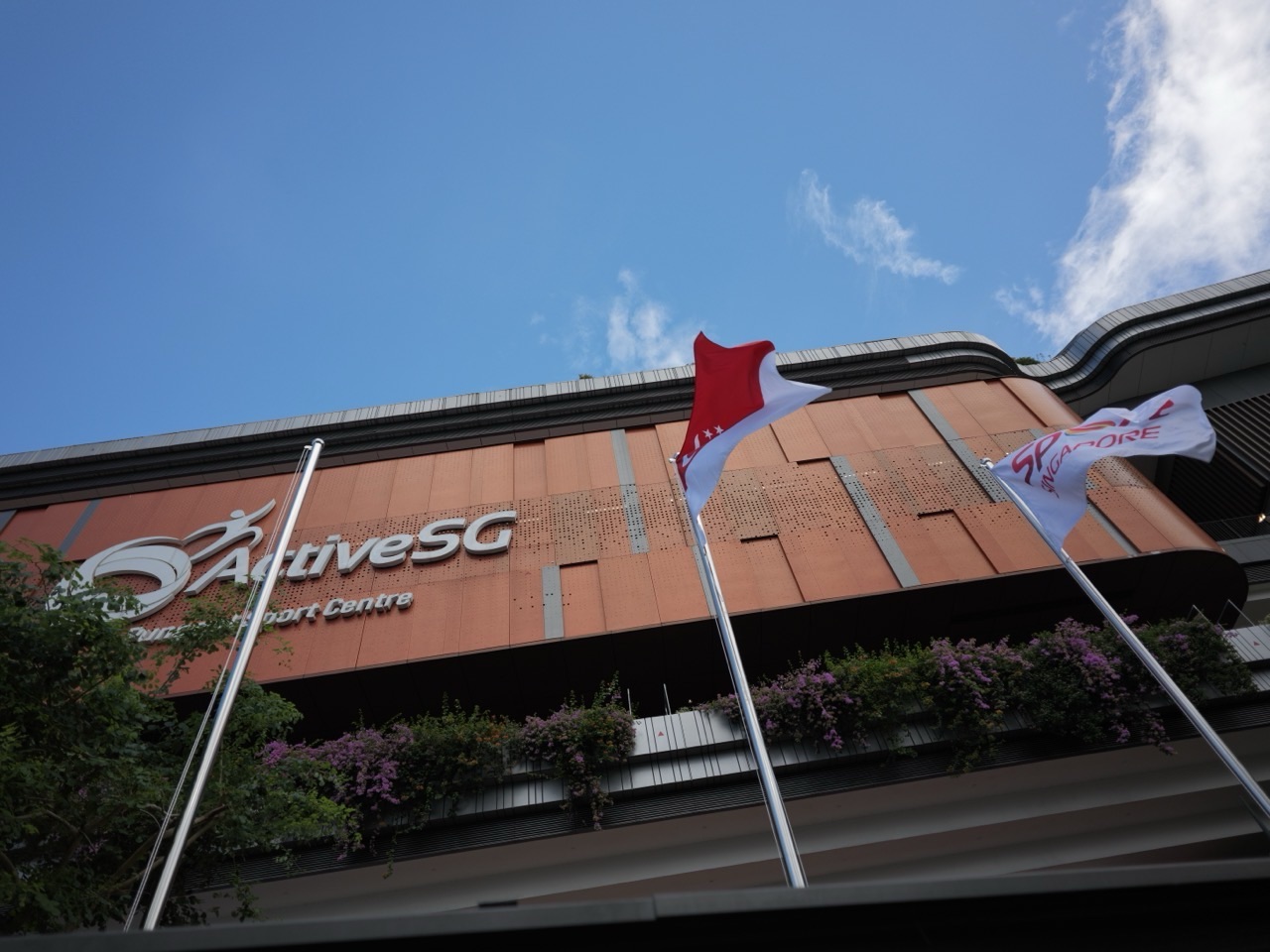
Planning a reunion with old school friends around ActiveSG Punggol? A friendly badminton or table-tennis match can be a simple way to reconnect, but only if the actual court is booked, the group size suits the sport and everyone understands the schedule. Punggol Sport Centre is at 11 Sentul Crescent, Singapore 828656, near Sam Kee LRT (PW1). For friends who do not want to play, a lawful public walk in nearby Punggol Waterway Park or a separately confirmed meal can work just as well. You do not need to organise a tournament, hire a coach or bring decorations to make the reunion worthwhile.
As checked on 7 November 2026, Punggol Sport Centre is in phased operation after selected gym and racket facilities began opening on 27 October. SportSG’s formal opening is announced for 22 November 2026, but its special free gym and pool admission offer does not mean private reunion courts are free. ActiveSG’s general rules prohibit unapproved league and business activities, restrict food and unauthorised filming within facilities, and require court users to respect their booked times. If your group wants something larger than an ordinary friendly game, ask the operator about the correct event permission before sending invitations. Use MyActiveSG+ for actual sports bookings.
- Place: ActiveSG Punggol Sport Centre, 11 Sentul Crescent, Singapore 828656
- Closest commonly recommended rail approach: Sam Kee LRT (PW1), Punggol West Loop
- Two friends: a suitable confirmed singles badminton, table-tennis, tennis or pickleball session
- Four friends: ordinary doubles when the correct sport and court are reserved
- Six or eight friends: ask about capacity and organise fair rotations rather than overcrowding one court
- Larger reunion: investigate authorised group or event arrangements; an ordinary booking is not a licence for a private league
- Food: arrange a meal at a separately permitted location instead of treating courts as dining rooms
- Equipment: choose one sport and assign rackets, paddles, balls, shuttlecocks and appropriate footwear before the day
- Photos: obtain relevant venue permission and participants’ consent; never photograph changing areas
- Not playing: a short permitted public waterway walk may suit some friends, depending on weather and route access
- Bookings: genuine confirmation and applicable operator rules, not informal resale or an old screenshot
- Checked 7 November 2026; current venue and transport information take priority
Why a sports reunion can feel easier than a formal dinner
Friends who have not seen each other for years sometimes find a formal meal awkward at first. A friendly rally offers a shared activity, giving people natural moments to laugh and remember their school days. That does not mean every person needs to be competitive or physically fit. The group can choose a gentle sport, a short walk or a meal depending on its interests.
An appealing reunion does not require expensive decorations, long speeches or a full programme. A manageable booking and clear communication may be enough. Some friends will enjoy badminton; others may prefer to watch if permitted or meet afterwards at a separately operating food venue. The plan should allow people to participate comfortably without being pressured into sport.
Begin with the people, not the facilities brochure
Count who genuinely intends to attend, rather than using the number of people in an old alumni chat group. Ask whether participants want to play, have appropriate equipment and feel comfortable with the activity. Someone may not have exercised regularly for years, while another may still play competitively. A mixed-skill reunion should not automatically become a fast match designed around the strongest players.
The most useful first message asks which date works, what sport sounds enjoyable and whether participants prefer a short game or a relaxed meet-up. A court booking should follow the answers. If only two friends confirm, singles may be the right choice. If nobody wants to play, a public waterway walk or separately planned meal is a legitimate reunion.
Punggol Sport Centre is one venue, not every Punggol sports facility
The new ActiveSG Punggol complex at 11 Sentul Crescent has indoor sport halls, sheltered courts, a gym and advertised future or phased facilities, including pools and a stadium. It should not be confused with One Punggol community facilities, SAFRA Punggol or courts elsewhere in the estate. These venues have different managers and booking arrangements.
Before sending invitations, name the exact venue, sport, date and intended use. A photograph of a tennis court does not establish that badminton can be played there, and a stadium illustration is not an invitation to organise a football reunion on the pitch. During phased opening, operating status can differ by facility. The actual SportSG listing remains the authority.
Two friends: the easiest sports reunion
If just two former classmates are free, a singles badminton or table-tennis session may be the simplest format. The players need a genuine court or table booking, suitable footwear and the correct equipment. They can warm up gently, rally cooperatively and talk during rests. It is not necessary to keep a serious score if the main purpose is spending time together.
Tennis or pickleball singles can also work with the appropriate sport-specific court and equipment, subject to availability and weather. Do not reserve one sport and attempt another without permission. A smaller reunion may be more enjoyable than repeatedly postponing a large meeting because not every classmate can attend.
Four friends: friendly doubles without a trophy
Four people are a natural fit for ordinary doubles in badminton, tennis, pickleball or table tennis. The sport, rules and equipment differ, so choose one appropriate booking. A relaxed doubles game can rotate partners or play short sets if everyone agrees and the booking permits it. Avoid making experienced school-team players dominate friends who are trying the sport again after a long break.
The group should decide in advance whether competitive scoring is desired. A former school athlete may enjoy a more serious match, while another friend prefers cooperative play. Neither preference is wrong. A clear discussion before the booking reduces disappointment. Our sport-by-group-size guide explains these formats in detail.
Six or eight friends: rotations need agreement
A larger reunion may require court rotations because a normal doubles game still uses four active players. Do not allow eight people to crowd one badminton court at once or treat the surrounding hall as a private waiting room. Check the relevant capacity, safety and booking rules, then agree on fair turns and suitable places for non-playing participants.
Short games with regular partner changes can help old friends reconnect, but a winner-stays-on format may leave beginners watching for most of the reservation. A fair plan matters more than creating an elaborate tournament bracket. For a fuller example, read the four-to-eight-friends badminton rotation guide. The actual court allocation still governs the group.
Ten or more people: when a friendly game becomes an event
A group of ten friends may think of futsal or other team sports, but this requires the correct publicly available pitch, approved number of participants and booking terms. A large alumni gathering may also need formal event permission when it involves private tournaments, commercial services, catering or other organised use beyond ordinary casual play. The operator can explain the appropriate arrangement.
Do not assume an ordinary public court reservation allows a league operation, public ticketing or paid coaching. SportSG’s general rules expressly require prior written approval for coaching, league operations and business activities. If the reunion is large, investigate the permission process before collecting money or printing a schedule. A modest approved match is better than an unauthorised event.
Why the court booking must be real before collecting money
A common mistake is to ask everyone to pay their share before a court has been confirmed. Popular facilities can have booking or ballot arrangements, and an available-looking slot may disappear before payment. Use the current MyActiveSG+ procedure to secure the actual venue and time, then communicate the confirmed details. Do not tell friends a court is guaranteed while an application is still pending.
Agree on one booking holder and what happens if the preferred time is unavailable. Avoid unofficial resellers who claim to control special slots, and do not assume bookings are transferable outside the operator’s rules. If the reservation cannot be made, offer a different legitimate time or choose a non-court reunion. Clear finances protect friendships.
Making the group invitation easy to understand
A useful reunion invitation includes the exact sports centre address, booked sport, start and finish, cost-sharing arrangement, required equipment and a precise public meeting point. If some friends plan to join only for a meal, make that separate time and location clear. Do not write only “meet at Punggol ActiveSG” and assume everybody will find the correct floor.
Ask participants to reply with a firm attendance decision rather than a vague reaction emoji. The organiser can then choose the right sport and number of players. Keep any personal phone numbers or contact information within an appropriate private group; there is no need to publish an alumni list openly on social media. Simple communication removes most avoidable confusion.
Old classmates may have very different fitness levels now
Some friends may have continued playing badminton weekly, while others have spent years working at a desk or recovering from a demanding period of life. A reunion should not recreate the intensity of a secondary-school competition without consent. Start gently, ask people how they feel and keep the format flexible. There is no reward for pushing someone beyond their readiness.
A person with relevant health concerns or a recent injury may need qualified individual advice before strenuous sport. An informal group organiser should not prescribe exercise or promise that a short warm-up eliminates risks. A friend can choose to watch from a permitted area or join the separate meal instead. Participation should be an invitation, not an obligation.
A ten-minute friendly warm-up
If the actual court reservation is valid, begin with gentle familiar movement and cooperative rallies rather than powerful shots. This is a social warm-up, not a personalised training prescription. The players can check the court boundaries, recover their racket timing and decide whether the chosen game intensity feels comfortable. The group should not enter the court before its allotted booking begins.
ActiveSG’s sport-hall rules specify non-marking footwear, and shared facilities require players to clear the court at the correct end time. Our beginner-friendly badminton warm-up article gives a practical example. The reunion can still work if someone prefers fewer rallies or a shorter match.
The value of cooperative games for old friends
A cooperative rally shifts attention from beating another person to keeping the shuttle or ball in play together. That can be appealing when participants differ in skill, age or current confidence. Partners may aim for five gentle returns, then laugh when the shuttle falls. The task is small, but it creates a shared moment without putting anyone on display.
Competition can also be enjoyable when everyone wants it, but a reunion does not need a leaderboard to be meaningful. A group might play a few games normally and then spend the rest of the session on cooperative exchanges. The best choice is one that makes friends comfortable meeting again next month.
How to include someone who does not want to play
A former classmate may enjoy the reunion but not want to use a racket. Respect that decision. Do not assume they may sit in every sport-hall area without permission: spectator or non-player access depends on actual venue arrangements. Ask SportSG if an appropriate waiting space is available for the particular booking, or plan to meet the person afterwards elsewhere.
A short lawful public-area walk near Punggol Waterway may suit a non-playing adult when weather and personal needs allow. Another person may prefer to join only for a meal. A sports reunion is successful when friendships are renewed, not when every participant completes the same number of rallies. Our waiting and spectator guide explains shared-facility access.
A school friends reunion is not automatically a class lesson
Sometimes one former school athlete offers to teach the others. Friendly advice between participants is different from a commercial coaching service or formally organised league. ActiveSG prohibits coaching, personal training, league operations and business activities on its premises without prior written approval. Do not hire a paid coach or advertise a training package based only on a normal court booking.
If the group genuinely wants formal instruction, find a properly authorised programme and confirm its availability, provider, participant requirements and cost. A casual reunion can remain casual. It does not need to be transformed into a paid enrichment class, and no one should feel pressured to purchase coaching.
Can the reunion use a microphone or play music?
A court reservation does not turn the hall into a private event space. Loudspeakers, decorations, microphones, public announcements and similar arrangements may disturb other users or require permission. Before planning speeches or background music, ask the operator what is permitted. Do not bring equipment expecting to set it up beside a court.
For a reunion focused on conversation, a small group can usually talk naturally during appropriate breaks without formal sound equipment. If the organiser wants a ceremony or amplified presentation, a separately booked event venue may be more suitable. Choose the space for the intended activity rather than asking a sport hall to serve as a banquet room.
Food and birthday cake are separate from sports court use
ActiveSG’s general regulations prohibit consumption of food and drinks within the facility, while the gym rules include a specific exception for resealable water bottles. A group cannot simply set up takeaway food or a buffet on the side of a rented badminton court. The sports booking concerns playing space; it is not a catering or dining authorisation.
If friends want dinner or a reunion cake, arrange a separately confirmed legitimate dining venue with suitable seating and current opening hours. One Punggol and SAFRA Punggol are nearby separate destinations, not extensions of the ActiveSG booking. Our food and drink rules guide explains the distinction.
A photo of old friends: check privacy first
Many school reunions naturally involve photographs, but ActiveSG’s regulations restrict unauthorised filming and photography within its facilities. Before recording the sports session, check the named venue’s permission requirements and respect people on adjacent courts. Never photograph in changing areas or publish recognisable images of strangers without appropriate consent.
The group should also ask whether each former classmate wants their image shared on social media. Some people prefer a private memory rather than a public post that identifies their school, workplace or present location. A respectful approach can preserve the reunion’s warmth without placing anyone under unwanted attention. The best photograph is one that everyone is comfortable keeping.
What to do if you cannot book the preferred court
If badminton is full on the desired evening, do not take another sport’s court or enter an empty-looking sports hall. Check a different valid time, sport or date using the operator’s system, and decide whether participants still want the alternative. Tennis, pickleball and table tennis have distinct equipment and rules, so a change of sport may require genuine preparation.
The group can also choose a public walk near the waterway or a separate meal if an appropriate venue is available. The purpose is seeing friends. Rescheduling a court is a practical inconvenience, not a reunion failure. Our fully booked alternatives guide covers the booking problem directly.
The public waterway walk as a backup
Punggol Waterway Park is a separate NParks public space with lawful walking routes, nature features and shared paths. It may be an appealing alternative when friends want to catch up without a court. Choose a comfortable public route and a clear turnaround point. Do not turn the walk into an unplanned long hike simply because the group wants to use the remaining time.
Respect cyclists, other pedestrians and the park’s nature rules. A large group should avoid blocking narrow paths for photographs or conversation. Heat, rain and lightning may make an outdoor walk inappropriate. Our waterway nature walk guide offers a distinct, non-sport activity near the centre.
Transport when friends live in different towns
Not everyone will be coming from Punggol. Some may travel by MRT and LRT, others by bus, bicycle or car. Sam Kee (PW1) on the Punggol West LRT Loop is the commonly recommended rail approach to the sports centre, reached from Punggol MRT. The precise transfer and walking time depend on the person’s origin and current conditions.
Choose a public meeting point and give enough margin before the booking. Do not tell a friend travelling from another part of Singapore that the trip will take a fixed number of minutes without checking their route. An out-of-town guest should not be asked to run through a station to make a paid sports slot. Our transport guide covers the different options.
An evening reunion needs a return plan
After-work sports gatherings often end when some friends are tired and others want to continue talking. Before the game, agree on the approximate finish and whether a separate dinner is planned. If the court slot ends near a facility’s closing time, leave enough time to collect equipment and depart. Do not assume the same public transport service will be available at any hour.
Friends should check their own last-service information or arrange an appropriate return. A group need not stay together until every participant has finished eating. Respect individual work, childcare and family responsibilities. The reunion is more likely to be repeated when attending does not create a stressful late journey home.
What if rain changes the plan?
The Punggol sheltered tennis and pickleball courts can close during inclement weather despite their roofs, and public waterway paths can become unsafe in heavy rain or lightning. Even indoor sports access can be affected by operator restrictions or events. Check official venue closures and current weather alerts before everyone leaves home.
If a reservation is cancelled, follow the relevant official support procedure. Do not assume an automatic refund or claim another unbooked court. The organiser can offer a different legitimate venue or date and keep the group informed. Good reunion planning includes knowing when to postpone rather than pushing friends into an unsafe trip.
Sharing costs without creating awkwardness
Start with the actual MyActiveSG+ booking amount rather than an approximate price from a blog. The final cost may include transport, sport-specific equipment and an optional meal. Agree how the court fee will be shared and who pays before making the reservation. If some friends will not play, decide whether they are contributing only to their own meal or transport.
A transparent budget avoids arguments over small sums. Do not use someone’s ActiveSG credit balance without their consent or assume credits operate as unrestricted cash. Do not collect a large pooled fee for a speculative booking. A short friendly match should be financially modest enough that most people can comfortably decide whether to attend.
Avoid treating a private reunion as a public league
An organiser who wants fixed teams, paid entry fees, repeated fixtures or commercial coaching may be moving beyond ordinary social sport into an activity requiring formal approval. ActiveSG’s published premises rules explicitly mention league operations and business activities among uses requiring prior written permission. An individual court booking should not be used to bypass these rules.
If the group has grown into a regular competitive organisation, ask SportSG about the correct framework. An authorised programme or a different appropriate venue may be better suited to recurring fixtures. There is no need to invent a ‘friendly’ label while actually operating a paid league. Being clear protects the organiser, participants and other court users.
Why a standard sport interest group is different
SportSG also operates official ActiveSG Sport Interest Groups with their own registration, participant criteria and scheduled programmes. These are not the same as a group of alumni casually renting one court. The official interest-group page explains how verified members can register and that participation rules and group-size limits differ by sport.
Do not assume a Punggol session is available simply because the national programme exists. Check the actual location, registration and dates on MyActiveSG+. An older group seeking a regular social sport routine may find an authorised programme useful, but a once-off reunion can remain a single appropriately booked friendly game. The distinction prevents confusing readers about membership, fees and access.
The challenge when participants have children
Former classmates may now be parents, and some will need to bring their children. That changes supervision and the available activity. A booked badminton court is not a childcare space, and children under twelve cannot enter ActiveSG public gyms as companions. If a friend must bring a toddler, arrange a suitable responsible adult and permissible waiting or alternative activity before the date.
Do not assume the entire family can watch from inside the hall without checking the venue’s spectator arrangements. A parent may prefer to meet after the match at a separate suitable location rather than bring a child to a busy court. A successful reunion respects the reality that friends’ lives have changed.
Old classmates with accessibility or mobility needs
A friend using a wheelchair, walking aid or other support may want to participate, watch or simply attend a meal. Ask the person directly what access information is useful, then check the actual venue route, lifts, toilets and admission conditions. A modern sports building is not proof that every specific activity or path suits every user.
During a phased opening, some entrances or routes may change. Do not promise a guaranteed step-free walk from Sam Kee without verifying the current conditions. A public waterway route or separate meal may be more practical if the sports activity cannot be made comfortable. The goal is inclusion through real arrangements, not a vague assurance that everyone will be fine.
Making the match welcoming for someone who feels rusty
A former school badminton player may not have held a racket in ten years. Their first reunion game should not become an examination of whether they are still as fast as they were at fifteen. Begin with gentle rallies, allow breaks and ask about comfort. The group can change partners or use cooperative play rather than measuring everyone against a past performance.
Even experienced adults can feel hesitant about rejoining a group. A patient atmosphere makes it easier to participate. If someone wants to stop playing and simply talk, let them do so in a permitted location. The quality of the reunion is not measured by who records the highest score. Shared memories and new conversations are enough.
A sixty-minute sports reunion example
Imagine four friends with a genuine one-hour badminton reservation at Punggol Sport Centre. They agree on equipment, arrive in time to change into suitable footwear, warm up gently and play short friendly doubles games. They finish promptly when the booked slot ends and collect their bags. Nobody assumes they can occupy the next court or remain to set up a meal.
The group then travels to a separately confirmed open food destination, or returns home if there is no convenient option. This is an illustrative arrangement, not a claim that a particular slot or restaurant table is available today. The clear separation of sport and social time makes the outing easier to organise.
A reunion with no sports booking
If court availability is poor or several friends prefer conversation, the group may decide not to book sport at all. A lawful public waterway walk in suitable conditions can provide a place to talk, while a separately confirmed dining venue can provide seating and refreshments under its own rules. These are legitimate choices, not inferior substitutes for an organised match.
Keep the plan realistic for the slowest person and the weather. Avoid making promises about benches, sheltered paths or open food outlets without checking. A small group can enjoy catching up even if it spends only a short time in the Punggol neighbourhood. Community sport facilities are one option among several ways to reconnect.
The four-week reunion preparation plan
Week one: ask old friends which activity they genuinely want and find out who can attend. Count realistic players rather than group-chat members. Check whether the proposed event is ordinary social play or needs special permission. Choose a date that does not impose unnecessary travel pressure.
Week two: secure the actual court or choose a separate legitimate public outing. Confirm equipment and an exact meeting point, then communicate cost sharing. Week three: check the real operating status, weather alternatives and any accessibility or childcare needs. If dinner is planned, verify the separate business. Week four: share final reminders, enjoy the gentle game and finish on time. Afterward, ask whether the group would like another informal meetup without demanding a permanent weekly commitment.
Frequently asked questions about reunions at ActiveSG Punggol
Can we hold a small school-friends reunion on an ActiveSG court? A normal friendly game may be possible with a genuine booking and compliance with the venue’s rules. Larger organised events may need separate permission.
Can we hire a private coach for the reunion? Do not assume an ordinary court booking permits paid coaching. SportSG requires prior written approval for coaching and business activities.
Can six or eight friends use one badminton booking? Check the relevant court capacity and usage terms, and organise fair rotations rather than crowding active play.
May we run a commercial alumni league? Formal league operations need SportSG’s prior written approval under its published general rules.
Can we bring a reunion cake? Food consumption is restricted within ActiveSG facilities. Arrange cake at a separately permitted venue.
Can we use a microphone or install decorations? Ordinary court rental does not automatically authorise event setups. Ask the operator beforehand.
Is everyone allowed to watch from inside the hall? Spectator access depends on actual facility and event instructions; check instead of assuming.
Do two people need a tournament? No. A friendly singles game or public walk can be enough.
What if the court is fully booked? Use another genuine booking or choose a lawful alternative rather than taking someone else’s court.
Can foreign visitors attend? Check the relevant booking-account and admission rules; do not promise universal access based on a friend’s account.
Does the 22 November opening make private courts free? No such blanket rule is stated. The event specifically advertises free gym and pool entry.
Where can we verify the real reservation? Use MyActiveSG+ and the current named facility information.
Official sources and further reading
Use MyActiveSG+ for court availability and passes, ActiveSG’s published rules for court times, prohibited league operations, food and filming, and SportSG’s Sport Interest Group programme for the separate official group registration model. The 22 November 2026 opening announcement covers its specific public celebration.
For related reader questions, visit badminton doubles rotation, sports event and birthday permissions and evening sports travel planning. This independent article was reviewed on 7 November 2026 and does not organise a private tournament, guarantee a court, authorise commercial activity or reserve a meal.


