
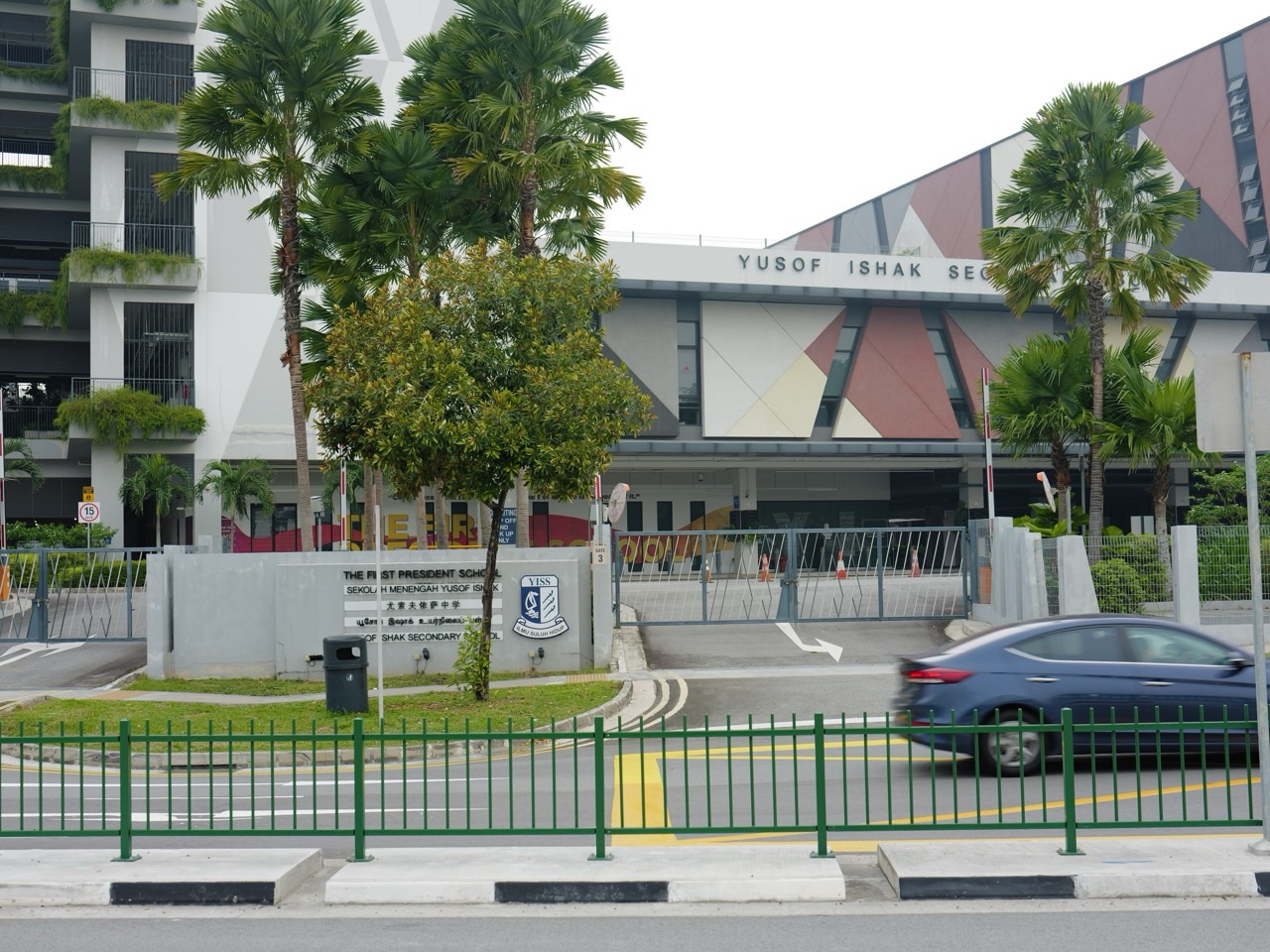
After receiving the 2026 PSLE results and submitting eligible Secondary 1 school choices, families wait for the Ministry of Education’s Secondary 1 (S1) Posting Results. The exact 2026 posting-results release date and the 2027 reporting procedures must be confirmed in MOE’s cohort-specific announcement. In the 2025 exercise, families checked their posting through the S1 Portal using a parent’s Singpass, by SMS if a local mobile number was supplied, or through the child’s primary school. MOE also stated that students did not need to report physically to the new secondary school immediately on posting-results day. Do not copy last year’s dates into the 2026 application calendar.
The parent’s next job is to identify the confirmed posted school, open that school’s current website, read its booklist, uniform, orientation and reporting instructions, and make a manageable plan for the child’s first week in January 2027. This is different from deciding which six schools to list after PSLE. Punggol families should compare the actual commute, after-school CCA arrangements and any necessary care arrangements, while keeping the new school informed if the student cannot attend on the first day for a valid reason.
- Before posting: follow the current S1 option-form submission window and save the official confirmation.
- Posting-results date: check the 2026 MOE release notice; the 2025 dates of 18–19 December were for a different cohort.
- Portal route used in 2025: MOE’s S1 Portal through a parent’s Singpass, via the official S1 Posting site.
- Other 2025 channels: SMS when a local number was provided, or enquiry through the primary school.
- Once posted: verify the school name and programme, read the school’s official reporting and orientation information.
- No immediate reporting in 2025: MOE expressly said students did not need to physically report on posting-results day; confirm the corresponding 2026 instruction.
- Parents Gateway: participating parents may receive instructions directly from the receiving school.
- Items to check: textbooks, uniform, approved devices, subject arrangements, student information forms and first-day timetable.
- If the first day cannot be attended: contact the posted school promptly; the specific procedure follows MOE’s current instructions.
- Appeals and transfers: require separate procedures, eligibility and sometimes vacancies; an unhappy preference alone does not guarantee a different place.
- For Punggol: practise morning and afternoon travel before school starts and consider realistic CCA schedules.
Why S1 Posting Results are a separate stage from PSLE results
The PSLE result tells the family the student’s subject Achievement Levels and overall PSLE score. The S1 posting result identifies the secondary school allocated through the ordinary exercise, after the student submits school preferences and the system applies eligibility, merit, vacancies and the applicable tie-breakers. These two events happen at different points in the transition.
Parents sometimes use the phrase ‘PSLE results day’ to describe both, creating confusion about deadlines. A child may receive a good PSLE score in late November but not know the assigned secondary school until December. School choice submission and school posting are distinct steps. The practical job is to follow the official sequence rather than attempt school reporting before a place has been assigned.
What is confirmed for the 2026 PSLE release window?
SEAB’s important-dates page lists 24–25 November 2026 as the tentative results-release period and says the exact date is announced once all processes are completed. That is the primary-examination results stage. It is not itself the S1 posting result date, and it does not establish a confirmed Secondary 1 reporting appointment.
The family should bookmark SEAB’s important-dates page and MOE’s Secondary 1 posting site. After PSLE results arrive, MOE and the school provide the current submission period and subsequent posting-results arrangements. Always label dates by the exercise year. An article published with a ‘2027’ headline may merely be describing admission for 2027, not an event that takes place in 2027.
What happened in the 2025 S1 exercise?
On 25 November 2025, MOE and SEAB announced a S1 school-choice window from 11.30am that day to 4.30pm on 1 December 2025. The announcement stated that posting results would be released on either 18 or 19 December 2025. Those details illustrate the typical sequence, but they belong only to the 2025 PSLE cohort starting secondary school in 2026.
For the 2026 cohort beginning Secondary 1 in 2027, wait for the corresponding current instructions rather than copying the previous dates. The distinction matters particularly when parents apply for leave, book transport or tell relatives when school reporting must happen. Give the family a flexible plan until the official date is confirmed.
How did parents check the S1 posting outcome?
The 2025 official release listed the S1 Portal, SMS if a local mobile number was provided in the application, and the primary school as ways to access the result. The portal used the parent’s Singpass. Students and families should check the current year’s instructions in case the interface or available methods change.
Use the link from MOE’s official website instead of an unfamiliar link forwarded by a stranger. A real posting outcome is a formal school allocation, not a prediction from an old cut-off point. Once the result is available, record the correct school name and the programme or Posting Group arrangement where relevant.
What is the S1 Portal?
The S1 Portal is MOE’s online route for the ordinary Secondary 1 Posting Exercise. During the relevant stages, authorised parents can submit the school’s ordered choices, review acknowledgements and access posting information according to current MOE instructions. The portal is not a public leaderboard showing every candidate’s marks.
Parents should confirm they can use Singpass before the application deadline, including having the correct phone or authentication method available. Do not give account credentials to a tuition centre, distant relative or online school-choice consultant. If an authorised parent has difficulty logging in, the child’s primary school can provide directions on the current official support route.
What if the SMS does not arrive?
An SMS is only one of the release channels described in the 2025 statement, and it depended on the family supplying a local mobile number. A missing message does not by itself mean the student has not been posted. Parents should try the current official portal or contact the primary school as MOE directs.
Before asking strangers online, check whether a mobile number was correctly submitted, whether the phone can receive messages and whether the stated release time has arrived. Avoid responding to a suspicious SMS that requests bank details or Singpass passwords. A school posting notice should be verified through an official source.
Why the school’s official website becomes important after posting
The primary school explains PSLE results and the S1 application process, while the receiving secondary school provides details of what students need for the first term. That includes reporting instructions, school communications, booklists, uniforms and sometimes device or form requirements. The specific arrangements vary by school.
On posting-results day, search for the exact official secondary school website and the incoming Secondary 1 page. Prefer a current notice bearing the correct year over an old PDF circulated by another parent. If two documents conflict, ask the school which one controls the 2027 intake.
Do students have to report to secondary school on posting-results day?
In its 2025 official announcement, MOE said students did not need to report physically to their posted secondary schools upon receiving S1 Posting Results. Instead, they were to check the posted school’s website for instructions, and families using Parents Gateway could expect communications from the receiving school after release.
That statement is a reliable historical example, not an unconditional guarantee for every future exercise. For the 2026 posting outcome and January 2027 entry, parents should follow the latest cohort-specific MOE and posted-school instructions. Do not travel to a secondary campus simply because a relative remembers a different procedure from several years ago.
What is Parents Gateway?
Parents Gateway is a communication channel through which schools can deliver notices and request relevant responses from parents. In the 2025 S1 announcement, MOE said parents of the incoming cohort already on Parents Gateway would receive instructions from the posted schools from the afternoon the posting results were released.
Check whether the parent’s account, phone and notifications are working, but do not assume every school message is delivered through one channel. The school website and formal letters may also carry essential information. A parent responsible for the child’s admission should review communications consistently through the first weeks.
What should parents record when a school is assigned?
Write down the full name of the receiving secondary school, programme or entry route, official website, school office contact and relevant reporting dates. Keep the posting result securely with the PSLE result and any DSA correspondence. Verify that the child is not confusing two campuses with similar names.
Then create a short checklist of immediate actions. Do school forms need to be submitted? Is there a particular uniform collection period? Does the school require students to bring a specified device or stationery on the first day? Avoid guessing. Each receiving school is the authoritative source for its own operational arrangements.
How does Full Subject-Based Banding affect the start?
Under Full SBB, students enter secondary school using Posting Groups 1, 2 or 3 and take subjects at G1, G2 or G3 levels according to the relevant eligibility and school arrangements. Posting Group does not necessarily determine the level of every subject throughout the student’s school life. The receiving school will explain subject options and any invitations to take certain subjects at a more demanding level.
Parents should ask which subjects the student has actually been assigned, how the timetable works and how progress will be monitored. Avoid purchasing advanced textbooks solely because the student obtained a strong AL in one primary subject. The right materials depend on the final school and subject-level arrangements.
A worked example: a student with a strong Science grade
Imagine a child with a PSLE aggregate making them eligible for Posting Group 2 and a particularly strong Standard Science AL. That subject result may make a more demanding secondary Science level possible under MOE’s criteria and the receiving school’s process. However, the school must confirm the actual offer and placement.
The parent should not simply assume ‘All PG2 students study G2 Science only,’ nor should the family promise automatic G3 Science because of a previous year’s rumour. Read the school’s subject-level invitation and ask about readiness, teaching support and timetable implications. A good transition starts from the real assigned programme.
How to read the secondary school booklist
Booklists may distinguish textbooks, workbooks, stationery and optional items. A school with mixed G1, G2 and G3 subject classes might provide different books for the same subject depending on assigned level. It is wise to wait for the correct list before buying everything based on the child’s Posting Group label alone.
Check the year, class level and school name on the document. Ask whether books may be reused or bought through an official supplier. Keep receipts until the family confirms that the correct edition has been purchased. For families seeking financial assistance, check the application route before making large expenses that may be covered through approved benefits.
How to plan uniform purchases
Uniforms, shoes, sports attire and school-specific accessories can create a notable one-off cost in December. Follow the receiving school’s published requirements and official suppliers. Do not assume that all secondary schools use the same PE attire or that every item seen in an older photograph is compulsory.
Check the child’s size carefully and consider whether a small spare set is useful for laundry. Families with financial difficulties should enquire about MOE or school-based assistance through the official channel rather than skipping essential items. The aim is a comfortable and dignified first week, not an unnecessarily expensive wardrobe.
What about personal learning devices?
Secondary schools may use approved personal learning devices or school-managed digital systems, but the purchase, configuration, collection and subsidy arrangements should be confirmed with the receiving institution. A general laptop advertisement does not establish which device the school requires or whether a family is entitled to support.
Wait for the official new-student instructions, then check the current device programme, costs and expected usage. Students should also learn responsible password management, school cyber-wellness rules and the difference between legitimate learning help and submitting work that is not their own. Technology supports study when its purpose is clear.
Does a new Secondary 1 student have a fixed CCA on the first day?
Co-curricular activity orientation and selection arrangements vary by school. A pupil may explore sports, arts, clubs or uniformed groups before confirming a choice under the school’s process. Parents should read the school’s schedule rather than assuming that the first week already requires every student to attend a full afternoon training session.
Encourage the child to try activities aligned with genuine interests. Compare training demands, travel home after CCAs, schoolwork and wellbeing. A child who enjoys an activity is more likely to commit and develop through it than one placed into a club solely because adults believe it will look impressive later.
Punggol commute planning is different for different homes
A family living near Northshore can experience a different journey to an assigned secondary school from one living near Punggol Field or the Punggol MRT interchange. A route that appears short on a map may include an LRT transfer, a walk in the rain or a busy bus interchange. Try the journey at the actual school start time when possible.
Test both directions. An after-school CCA may mean the child returns home in a different traffic or weather pattern. Prepare a safe alternative when a service is disrupted and ensure the student knows whom to contact. The best school commute is one that is predictable and manageable for the child, not simply a number of kilometres.
What if the family is unhappy with the posted school?
First read the official posting outcome and compare it with the submitted choices, eligibility and previous score ranges. A result outside the preferred list can be disappointing, but the allocation should be understood before assuming an administrative error. School cut-off points are historical, not guaranteed thresholds for a new cohort.
Appeals and transfers are separate, regulated processes. Some may require meeting the current year’s cut-off point and depend on vacancies, while exceptional medical circumstances can have their own guidance. Contact the relevant school or MOE through official channels instead of paying someone who promises a place. Continue preparing for the posted school while any request is considered.
What if none of the six choices could accommodate the child?
MOE has processes for allocating an eligible student when no chosen school can admit them, subject to available places and the posting framework. The precise resulting school depends on the official exercise, not merely on which campus is nearest the family home. A child may understandably feel frustrated by an unfamiliar school.
Explain that the posted school is still an educational place to explore seriously. Review its programmes, teachers, support and travel. If the family has legitimate grounds for a transfer request, follow the current rules. Do not tell the student the assigned school is a punishment or evidence of low personal worth.
What if the child has a confirmed DSA-Sec allocation?
A student successfully allocated a secondary school through DSA-Sec generally follows the DSA commitment rather than the ordinary six-choice posting exercise, subject to the relevant academic entry conditions. The family should check the actual DSA outcome letter and receiving school programme instead of assuming the ordinary portal will assign a second school.
At the same time, a student who merely applied for DSA or received an unsuccessful final outcome may need to follow the usual S1 posting instructions. A Wait List is not automatically a confirmed school place. Clarify the final status before spending money on uniforms or announcing the chosen school.
What if the child cannot attend the first day of school?
In the 2025 official release, MOE advised that students unable to report on the first day of January 2026 because of valid reasons should inform their posted secondary school directly after receiving the posting result to confirm that they are taking up the place; the school would reserve it. Parents should check the corresponding instructions for January 2027 rather than assuming a different year’s rule applies word for word.
If the child is ill, travelling for a legitimate reason or facing another disruption, contact the posted school promptly and follow its documentation requirements. A parent should not simply leave the first-day absence unexplained. A short, accurate message preserves clear communication and helps the school prepare an appropriate welcome when the child arrives.
What if there is a home move after school posting?
A move from one Punggol neighbourhood to another does not automatically change a Secondary 1 allocation. The family should first assess whether the student can still travel safely and reliably. School transfers depend on formal procedures, eligibility and places; a new address is not an instant right to choose another secondary school.
Where a significant family circumstance arises, communicate with the current or posted school and ask for the applicable options. Keep evidence of the move privately if needed. It is often more productive to test revised bus and MRT routes before beginning a complex application whose outcome cannot be guaranteed.
How to prepare a child who fears a new social environment
Many Primary 6 students know the classmates, teachers and routines of their primary school very well. A new secondary school brings unfamiliar faces, a larger campus and different expectations. The child may be excited and nervous at the same time. Parents can make this transition less intimidating by discussing what to expect and practising small independent tasks.
Ask the student to identify one thing to look forward to, one concern and one adult at the school they can approach for help. Encourage healthy friendships without promising that every familiar primary-school friend will be posted to the same institution. Belonging develops through ordinary participation and time.
A practical conversation about timetable and homework
Secondary school lessons may involve multiple subject classrooms, teachers and assignments. A child must become more capable of managing a timetable and checking deadlines. Rather than making an elaborate colour-coded system that only parents maintain, start with one simple planner the student can use independently.
Practise writing the next day’s needed materials and checking them before bed. Encourage questions when instructions are unclear. A pupil who learns to manage small routines will cope better with the transition than one who has every decision made for them until the first day.
What if the student is offered a more demanding subject?
Read the school’s formal offer and eligibility explanation. A strong primary Achievement Level can create options under Full SBB, but taking a subject at a higher level adds learning demands. Ask whether the child understands the new content, wants the challenge and has a workable study routine. There is no virtue in accepting every advanced option without understanding the timetable.
Discuss support arrangements and future review criteria with the school. The child’s strengths and limitations may differ across subjects. A wise decision builds on actual readiness and motivation rather than making a Posting Group label the central feature of family identity.
What if the family needs financial assistance?
The period between posting and the first school day includes book, uniform, transport and meal costs. MOE’s Financial Assistance Scheme and school-based arrangements can help eligible families with parts of those expenses. The 2026 MOE FAS criteria and benefits should be checked before assuming a 2027 award or purchasing all materials at retail prices.
Contact the receiving school or official student finance service early. Keep any application status and approved benefits distinct from estimates. Families may have siblings in different schools, changing income circumstances or specialised programme costs; the correct application route depends on the actual school and current official rules.
How to verify the first school-day date
The receiving school and MOE publish the actual school calendar and the school’s reporting information. Parents should not infer a child’s first day by assuming every year’s January starts on the same weekday. Some schools arrange special orientations, induction activities or different reporting times for incoming Secondary 1 pupils.
Check the official school notice for the relevant 2027 start date and arrival time. Put the information in the household calendar only once it is verified. If parents must coordinate work leave or a caregiver’s transport support, they can prepare a flexible arrangement while waiting for final details.
A four-week transition plan for Punggol families
**Week one after posting:** confirm the school allocation, official contacts, programme and reporting instructions. **Week two:** organise uniforms, books and financial assistance applications where appropriate. **Week three:** practise a realistic school journey and help the child learn basic timetable and bag-packing habits. **Week four:** focus on sleep, friendships, orientation expectations and a calm first-day routine.
These weeks are a parent-friendly organisation sequence, not a fixed MOE schedule. The exact posting and school start dates must be checked for the 2026 PSLE / 2027 Secondary 1 cohort. Avoid filling the entire holiday with revision merely because the child will soon enter a more demanding environment.
A case study: two preferred schools but a different allocation
Imagine a child, Ryan, who listed a nearby school and a more distant school as top choices, but received a third school. His family may be disappointed because they had already imagined his first choice. Before discussing appeals, they check the official allocation and read about the assigned school’s programmes, travel and support. They discover one appealing activity and a manageable bus journey.
Ryan’s parents allow him to express disappointment without calling the new school ‘second-rate’. If there is a valid administrative issue, they ask the school or MOE about the actual process. Otherwise, they prepare a positive first visit and find ways to keep friendships with primary-school classmates.
A case study: the child will miss the first day for a valid reason
Imagine another family whose child is medically unable to attend the first school day after posting. The parent should not wait until that morning to tell the school. After the official posting result is known, they contact the receiving school, explain the situation accurately and ask how the place is confirmed and what documentation or alternative orientation materials are needed.
That is consistent with the principle in MOE’s 2025 guidance, although the exact 2027 instruction should be checked. The child can then join when medically ready with school support. The correct action is timely communication, not guessing that an empty desk means the admission has disappeared.
Frequently asked: is 25 November 2026 the confirmed S1 posting date?
No. SEAB lists 24–25 November as a tentative PSLE examination-results window. S1 posting results come later and need their own MOE release announcement.
Frequently asked: must I visit the secondary school on posting-results day?
In 2025, MOE said no immediate physical reporting was required. For the 2026 exercise, use the current official instructions and the receiving school’s website.
Frequently asked: can I check S1 posting using SMS?
The 2025 process supported SMS when a local mobile number was provided, alongside the Singpass portal and primary-school channels. Confirm the 2026 release channels.
Frequently asked: what if the school website is not updated yet?
Check current Parents Gateway messages and school communication, then contact the school through its official telephone or email if a time-sensitive detail remains unclear.
Frequently asked: should I buy all books before posting?
No. Wait for the actual receiving school’s booklist and subject-level arrangements, especially under Full SBB.
Frequently asked: can the student request a different school immediately?
Transfers and appeals are subject to formal rules and vacancies; an ordinary preference is not a guaranteed reassignment. Follow current MOE and school guidance.
Frequently asked: what if a DSA place was accepted?
A successful allocated DSA place usually means the student does not follow the ordinary six-school posting route. Read the actual DSA offer and final allocation.
Frequently asked: how should we plan transport from Punggol?
Test the actual school-day departure and return journeys, including LRT, MRT or bus transfers, CCA time and a safe alternative route.
Frequently asked: does Posting Group determine every subject?
No. Full SBB allows subject-level differentiation within school rules. Ask the receiving school what the student is actually offered.
Frequently asked: should we start Secondary 1 tuition immediately?
Only when a genuine learning need is identified. First understand the assigned school’s starting curriculum, the child’s strengths and available school support.
Continue reading: connected PSLE parent guides
Find the next official decision or learning question without having to start another search. These guides cover the full transition from exam preparation to the new school.
- PSLE prelim vs actual AL: predictions and four-week revision
- Lost PSLE certificate: MySkillsFuture, Singpass and digital results
- Secondary 1 costs and MOE financial assistance after PSLE
- PSLE results day and the first 48 hours
- PSLE AL1–AL8 and Posting Groups
- Secondary school cut-off points and six school choices
Official posting information and further reading
- SEAB/MOE — Release of 2025 PSLE Results (historical S1 process example)
- SEAB — Important Dates for 2026 PSLE candidates
- MOE — Secondary 1 Posting
- MOE — SchoolFinder
- MOE — Parents Gateway
- MOE — Full Subject-Based Banding
- eduKate Punggol — Six S1 choices and school cut-off points
- eduKate Punggol — Starting Secondary 1 in 2027
Checked 6 November 2026. The 2025 S1 submission and posting dates are identified as historical examples. The 2026 exercise’s posting-result date and January 2027 reporting instructions require the relevant current official MOE and school announcements. This is an independent parent guide.


