
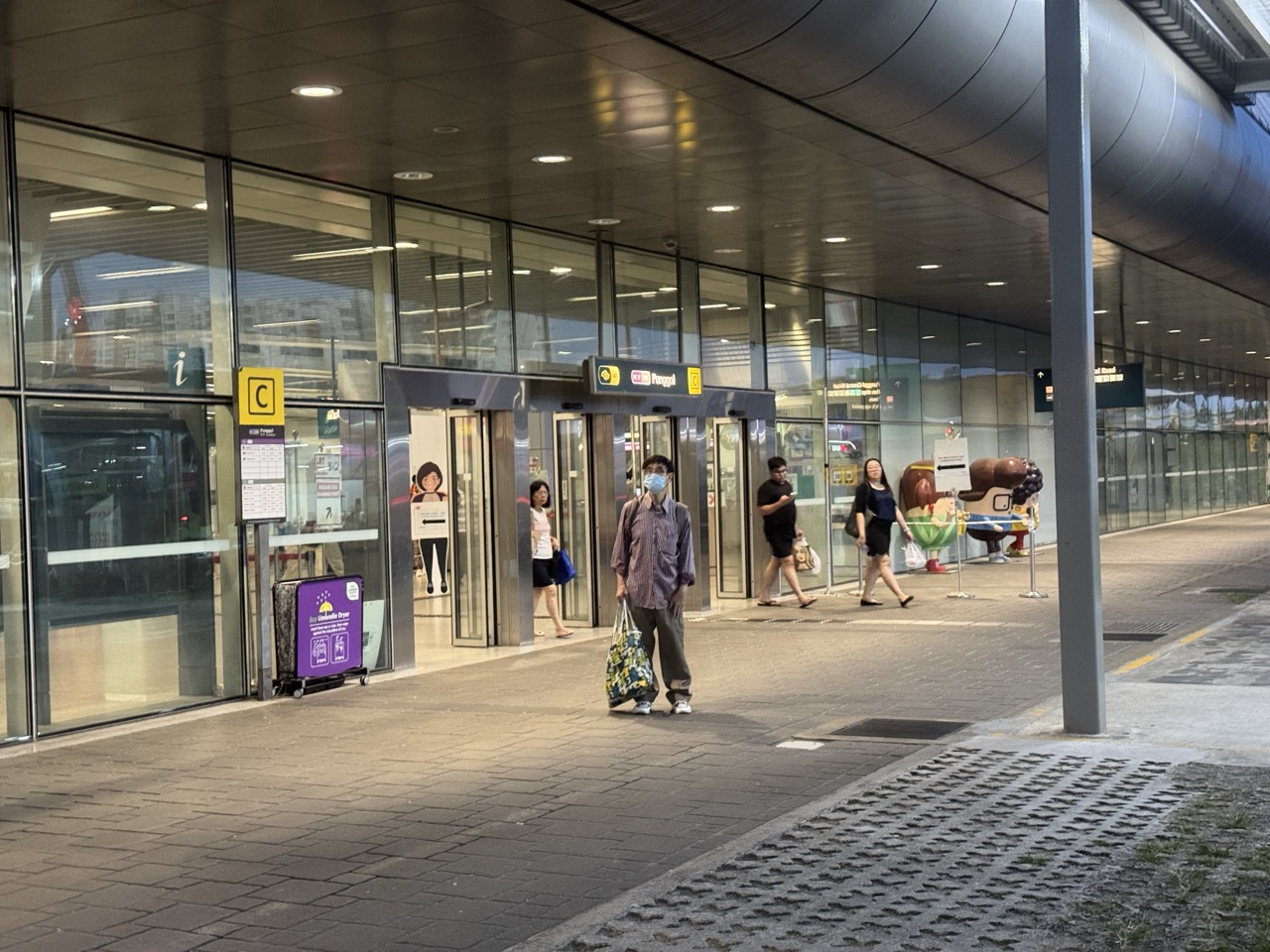
How does a PG1 student pay for MRT, LRT and bus travel when starting Secondary 1 in 2027? Posting Group 1 (PG1) does not affect public-transport concession eligibility. Eligible pupils attending government or government-aided schools use the School Smart Card system to pay student fares or buy a Monthly Concession Pass. SimplyGo’s published secondary-school monthly passes currently cost S$29 for basic buses, S$26.50 for trains, and S$49 for a hybrid bus-and-train pass. Students can also continue paying concessionary fares per journey without buying a monthly pass.
For Punggol parents moving from Primary 6 to Secondary 1, the immediate task is to check when the primary-school School Smart Card remains valid, follow the new secondary school’s instructions for receiving the secondary-level card, keep enough travel value for the first school day and understand how any old-card balance will be refunded. The current SimplyGo guidance says a Secondary 1 student should return the Primary School Smart Card to SimplyGo after receiving the Secondary School Smart Card. Do not discard the old card, lend it to a sibling, or assume its stored travel value automatically transfers to the new one.
Quick information for a family:
- Eligibility: School Smart Card concession is for eligible full-time students at Singapore government and government-aided schools, regardless of PG1/PG2/PG3.
- Secondary monthly pass prices shown on SimplyGo: bus S$29; train S$26.50; hybrid S$49.
- Pay-per-ride: student concession fares apply when the card remains valid; a monthly pass is optional.
- Basic bus fares: published student card fares range from S$0.52 to S$0.78 according to distance.
- MRT/LRT: published distance-based card fares are S$0.52–S$0.78 at standard times, with a weekday early-train fare adjustment for journeys beginning before 7.45 am, excluding public holidays.
- Minimum card balance: School Smart Card requires S$1 minimum travel value for MRT/LRT entry; SimplyGo recommends maintaining more as a practical buffer.
- Monthly pass coverage: basic buses and/or trains according to pass type, not Express, Premium or City Direct bus services.
- Old Primary 6 card: follow school and SimplyGo rules during the concession transition; return it after receiving the new secondary card for any applicable refund.
- Lost card: contact SimplyGo and the school; a reported lost card is deactivated under the applicable rules.
- 2027 fares: check SimplyGo for any subsequent fare revision before purchasing the first 2027 monthly pass.
1. Why public transport becomes a major Secondary 1 parent question
During primary school, a child may have walked to school, used a school bus or travelled with a parent. Secondary 1 can change the routine completely. The new school may be in a different estate, school begins earlier than the child’s preferred wake-up time, and CCAs can end after the usual class dismissal. Suddenly the family must think about fare cards, transfers, safe walking routes and whether the pupil can manage a journey independently.
In Punggol, many families use the LRT network, buses, the North East Line and connections towards Sengkang or other towns. But the actual route depends on the family’s home location and the new school. There is no universal “Punggol secondary school commute” that will work for every pupil. Some journeys are short walks; others involve interchanges and multiple modes of transport.
Posting Group 1 is only an admission route. A PG1 child does not receive a different concession card from a PG2 or PG3 classmate because of that label. What matters for student fares is the actual eligibility for the School Smart Card, card validity and whether the journey is covered by the relevant fare or monthly pass rules.
Parents can reduce first-week stress by sorting out the card before the first school day. A child who understands which card to carry, how to check the remaining value and what to do when a gate rejects the card can concentrate better on the new school experience.
2. What exactly is a School Smart Card?
The School Smart Card is a student travel card used by eligible pupils for concessionary fares on Singapore’s public transport system. In school contexts it is sometimes referred to as a student smart card or School Smart Card (SSC). SimplyGo also publishes information about Non-MOE School Smart Cards for eligible pupils in other educational arrangements. Those products have different criteria and should not be treated as interchangeable.
For an eligible pupil attending a government or government-aided school, the school plays a role in issuing the card and determining concession eligibility. SimplyGo states that non-homeschooled primary pupils at such schools automatically receive their School Smart Card through school. During the transition to secondary school, the receiving school explains when and how the new secondary-level card is issued.
A School Smart Card is not a general-purpose bank card or an adult contactless payment card. It identifies a pupil for the relevant concession and may also be used for other authorised school or library functions according to the card’s arrangement. The child should not lend it to a sibling or friend just because the other person has forgotten a travel card.
Check the official SimplyGo School Smart Card guidance for eligibility, card validity, purchases and refund instructions.
3. Does PG1 change the price of a train ticket?
No. Student concessionary fares do not depend on whether a child entered school through PG1, PG2 or PG3. The fare is based on the transport system’s applicable distance, timing and service rules, as well as the card’s current student-concession validity. A student in a mixed form class may study G1 English or G2 Mathematics, but that has nothing to do with what the MRT gate charges.
This distinction matters because families sometimes mix education support with transport support. MOE’s Financial Assistance Scheme may provide transport subsidies to eligible households under separate income criteria. That financial assistance is not a new PG1 fare class. A student may qualify for a concession card without qualifying for income-based financial assistance, and vice versa depending on the actual scheme conditions.
Parents who are worried about cost should work on two separate tasks: confirm the concession card and the most economical travel-payment method, and check whether the household qualifies for any relevant school-based or MOE financial support. Each task has its own rules and instructions.
4. Current student MRT and LRT fares: distance and early morning
SimplyGo’s published student fare table, effective 27 December 2025, shows standard MRT/LRT concession fares by distance. At normal times, these range from 52 cents for a short journey to 78 cents at longer distances. The student fare table also includes a reduced early-journey column for eligible MRT/LRT tap-ins before 7.45 am on weekdays excluding public holidays. The early fare ranges from 2 cents to 28 cents based on distance under the published table.
| Distance | Standard student MRT/LRT card fare | Early weekday fare when applicable |
|---|---|---|
| Up to 3.2 km | S$0.52 | S$0.02 |
| 3.3–4.2 km | S$0.60 | S$0.10 |
| 4.3–5.2 km | S$0.66 | S$0.16 |
| 5.3–6.2 km | S$0.71 | S$0.21 |
| 6.3–7.2 km | S$0.74 | S$0.24 |
| Over 7.2 km | S$0.78 | S$0.28 |
This is a simplified presentation of the train fare table for orientation, not an individual fare calculation for a specific origin and destination. The detailed table contains more distance bands, and fare calculation can involve transfer rules. To check the exact Punggol-to-school journey, use SimplyGo’s official fare and journey tools.
The early-train adjustment is tied to the stated tap-in time and calendar conditions. Do not assume a pupil will receive the same reduction on a weekend, public holiday or a journey using only a basic bus service. Equally, do not advise a child to rush dangerously to catch a discount; arriving safely and rested matters more than a few cents.
Review the SimplyGo student concessionary fare table for current values.
5. Student basic bus fares are not exactly the same as express-bus fares
SimplyGo’s student fare table for basic trunk buses shows concessionary card fares starting at 52 cents and rising with distance to a published maximum of 78 cents. Feeder-bus fares have their own rules, and eligible integrated journeys are subject to the public transport transfer-fare framework. Parents should not simply add the highest bus fare to the highest MRT fare for every trip and call the sum the actual charge.
Express bus services have different fares. Under the 27 December 2025 student structure, the published express-bus card fare can reach S$1.28. A monthly pass covering basic bus services does not automatically cover the express, premium or City Direct services named in SimplyGo’s exclusions. This matters when a family sees two routes to a school and assumes both are included in the same monthly pass.
Parents should check the actual bus service number and fare type before choosing the route. A school bus service is different again; private contracted buses have their own fees and availability arrangements and are not covered simply because the pupil holds an MRT concession pass.
When a pupil has to take an unfamiliar bus, practise identifying the correct direction and alighting stop. A slightly cheaper service is not worthwhile if the student routinely boards the wrong direction and becomes distressed.
6. What secondary-school Monthly Concession Passes cost
SimplyGo’s School Smart Card page publishes these current secondary-school Monthly Concession Pass (MCP) prices: S$29 for the Bus Concession Pass, S$26.50 for the Train Concession Pass and S$49 for the Hybrid Concession Pass. They allow the relevant unlimited travel on covered basic buses and/or train services for the purchased period, subject to terms and card validity.
| Secondary student pass | Published price | Coverage to check |
|---|---|---|
| Bus Concession Pass | S$29 | Covered basic bus services |
| Train Concession Pass | S$26.50 | Covered train journeys |
| Hybrid Concession Pass | S$49 | Covered basic bus and train journeys |
Buying a pass is optional. The child still enjoys eligible concessionary card fares without it. Families should compare realistic actual spending with the pass price rather than assume the most expensive hybrid option is automatically best for a child who takes both LRT and bus occasionally.
Remember that a monthly pass must be activated in accordance with the published conditions and is non-refundable for unused days or portions under the standard rules. It cannot overlap an existing pass. SimplyGo states that a pass can be activated up to seven days before the intended travel start date. Check the live terms at purchase.
In particular, a child who usually walks to school but occasionally takes the MRT on a rainy day may spend less using ordinary concessionary fares. A pupil travelling by multiple covered modes every weekday may find a pass more practical. The right answer depends on the real route, usage pattern and current fares.
7. Is a hybrid pass worth it for Punggol LRT and bus journeys?
Not automatically. The hybrid pass costs S$49 under the published current secondary rate, but basic student per-ride fares are comparatively low. A pupil who makes only a modest number of covered journeys may find pay-as-you-go cheaper. Another who travels frequently, includes weekend activities and uses several covered modes may benefit from the predictability of a monthly pass. These are different households with different routines.
Parents can compare a typical school month. Count the actual journeys the child expects to make, including the journey home after CCA. Then use the official fare calculator or recent card records to estimate the cost of the relevant distance-based trips. Compare that amount with the pass price and remember any express or non-covered services.
Do not estimate a complex multi-transfer journey by multiplying the maximum fare for each bus or train stage. Singapore’s integrated fare rules may treat qualifying transfers differently from independent trips. The actual ticketing record or official fare planner is the right source.
There is also a convenience factor. Some families prefer the predictability of a pass even when the arithmetic difference is small. Others prefer pay-per-ride to avoid paying for school holidays and weeks when the child does not travel much. Both decisions can be reasonable when made with accurate information.
8. What happens to the Primary 6 School Smart Card?
SimplyGo’s official guidance says the School Smart Card concession eligibility period is determined through the relevant school. At the end of the primary-level concession period, the Primary School Smart Card may remain usable for the applicable extension period. MOE secondary schools typically give specific instructions on continuing primary-card concessions while the new secondary-level card is being issued.
For example, Naval Base Secondary’s August 2026 registration information advises pupils awaiting a secondary card to continue using the primary-level card for concessionary travel in the interim, with further instructions from MOE and the school. This illustrates an actual school process, not a guarantee that every later cohort will have identical extension dates.
Parents should therefore avoid two opposite mistakes. Do not throw away the Primary 6 card on the last day of school merely because a new school is coming. And do not assume it remains valid indefinitely without checking the issued concession period. During the handover, keep the card secure and follow the receiving school’s latest instructions.
When the new secondary card arrives, confirm that it works for travel and check how the old card’s balance should be refunded. Never let the pupil use an expired or invalid concession with the assumption that the gate will automatically extend it.
9. Does the secondary school issue the new card automatically?
For eligible pupils attending government or government-aided schools, the school’s prescribed card issuance process is the starting point. Families should read the Secondary 1 registration instructions rather than submit a duplicate self-application without being asked. Different schools may issue cards during orientation or through another process, and a family should not infer the exact collection date from an unrelated school’s older FAQ.
If the student is transferring between schools, has lost a card, is an international student or attends a different type of educational institution, additional checks may apply. Verify the correct eligibility and application route with the school and SimplyGo. A Non-MOE card is not simply the same product renamed for a new campus.
Parents should ensure the pupil can identify the card and knows where to keep it safely. A pocket secured inside the schoolbag may be less likely to lose the card than a loose item kept alongside coins and receipts. Avoid attaching sensitive personal information visibly to the card.
Ask the school whether the card is also used for school library or identification purposes before considering a replacement or refund. Do not make the child surrender the only functioning school card without checking the proper handover process.
10. How to recover remaining money from the old Primary School Smart Card
SimplyGo’s official Card Return/Refund section states that a Secondary 1 student should return the old Primary School Smart Card or relevant Non-MOE card once the new secondary-level card has been received. Remaining travel value may be refunded under the applicable conditions at an authorised SimplyGo Ticket Office. The return procedure requires relevant proof of identity, with specific documentation for representatives.
Parents should not assume that the old card’s stored money automatically appears on the replacement card. Keep a note of the remaining balance and follow the official return process. Before visiting an office, check the current opening hours and document requirements. A missing passport or identification document can turn a simple errand into an unnecessary second trip.
SimplyGo also states that immediate refunds depend on the relevant card being within the prescribed return period. An expired card may require deferred processing instead. Do not wait months merely because the remaining value seems small; completing the card handover promptly is simpler.
Read SimplyGo’s current Card Return/Refund instructions for the applicable proof-of-identity conditions and deadlines.
11. What is the minimum value needed to enter the MRT or LRT?
SimplyGo’s current concession-card FAQ lists a minimum travel value of S$1 for the School Smart Card. This is a gate-entry threshold, not an instruction to keep exactly S$1 on the card at all times. A child with a barely sufficient balance can easily encounter difficulty after several journeys or a change in route.
SimplyGo recommends keeping a larger practical buffer for smoother travel. Families can set a simple weekly balance check. For example, the pupil can check the card value at a supported machine or through the appropriate official app where the card type permits. Parents do not need to track every journey obsessively; the aim is to reduce the risk of being stranded at a gate or unable to board a bus.
Payment top-up methods and minimum top-up amounts vary by channel and card type. A cash top-up at a kiosk may have a different minimum from an app-based top-up. Check the current instructions before promising the child a particular method will work. Avoid sending a pupil to an unavailable top-up point based on an old website.
Teach the child one backup plan. If the balance is insufficient, they should approach authorised transport staff or contact a trusted adult instead of borrowing a stranger’s card or sharing account credentials.
12. How can a parent check whether the card is valid?
SimplyGo lists ticket offices and supported kiosks as places to check the School Smart Card’s concession expiry date. This is important during the Primary 6 to Secondary 1 transition and again when a student approaches the end of their school course. A card may still physically work as a stored-value card after student concession eligibility has changed, but the fare charged can be different.
The school determines the concession eligibility period under the prescribed scheme. For some groups, the system provides extension or follow-on arrangements. Families should distinguish a card’s physical expiry from the student’s concession entitlement and monthly-pass validity. These dates are related but not identical.
Ask the receiving school about any transition instructions that appear unusual. A child should not be penalised at home for a card-record update the school or ticketing system has not yet completed. At the same time, parents should not ignore a clear expiry message simply because the card was issued only a year or two earlier.
Keep a small note of when the new secondary card was issued and any official reminder about concession renewal. That prevents last-minute confusion during examinations or school activities.
13. What if the School Smart Card is lost?
A lost card is stressful because it may be both a travel card and an item used for school identification or library access. SimplyGo provides a lost concession-card reporting and replacement process. Its guidance explains that a completed loss report is irreversible and the reported card can no longer be used even if found later. Families should therefore search carefully in likely locations before reporting, while acting promptly when misuse or exposure is a concern.
Tell the pupil to check a consistent sequence: uniform pockets, bag compartments, classroom desk, CCA room and the last known place where the card was used. Contact the school’s general office or form teacher to ask about lost property. If a card is not recovered, follow SimplyGo’s official report and replacement process and notify the school where necessary.
SimplyGo recommends informing the school and National Library Board about a lost student card to prevent misuse of any other linked functions. Any remaining travel value is subject to the card’s terms, reporting time and refund rules. Do not promise that every dollar will be recovered automatically.
For the current reporting and replacement contacts, visit SimplyGo’s concession-card overview.
14. What if the MRT gate rejects the card on the first day of school?
The child needs a simple plan that can be remembered under stress. First, stop and read the displayed message. Second, avoid repeatedly tapping a wallet full of bank cards and concession cards at once, since multiple contactless cards can interfere with correct detection. Third, if the balance or card status appears to be the problem, seek help from authorised station staff. Fourth, notify a trusted adult and school if the issue may cause lateness.
Parents can practise this sequence during a trial journey. It is better than instructing a nervous twelve-year-old to “solve it yourself” without knowing the available help points. Transport staff handle ordinary card and gate problems regularly; asking them for assistance is a normal and sensible action.
Make sure the child knows an appropriate emergency contact number and what to do if the phone battery is flat. Do not require the child to accept a stranger’s offer of a ride because an MRT gate has a technical error.
When a school notice gives a reporting time, plan a reasonable buffer rather than rushing through the station at the last minute. A calm, safe arrival is more important than shaving a few minutes off a journey.
15. Planning the journey from Punggol to secondary school
For a family using the Punggol LRT loop, the first question is whether the child can reach the correct platform and direction. For a family transferring to the North East Line, the next question is how long the interchange and final walk take at school-day times. Others may rely mainly on buses. Each route needs to be checked against the child’s specific school and home location.
Use an up-to-date journey planner and then complete a real practice journey where possible. A map can show distance and service connections, but it does not reveal every crowded escalator, busy crossing or long queue on a rainy morning. Parents should observe the part of the journey that is difficult for the child, not only count stations.
The trip home may differ. After CCA the buses and trains may run at different frequencies, the pupil may be carrying sports equipment, and a route that seemed straightforward in the morning might feel unfamiliar after sunset. Make a separate plan for late dismissal and service disruption.
Do not invent a universal travel time for “Punggol to school”. Travel depends on the actual origin, destination, departure time and route. An extra fifteen minutes of sleep can matter more than a slightly shorter theoretical travel distance.
16. Why safe walking belongs in the transport budget
Transport planning is not only a calculation of fares. A pupil may need to cross a busy road, navigate an interchange or walk through an unfamiliar area near the school. Practise using signalised crossings, checking traffic and following the school’s recommended entrance route. Encourage the child to avoid looking at the phone while crossing and to stay aware of bicycles, turning vehicles and other pedestrians.
Some families prefer a more direct route even if it costs slightly more because it removes a difficult transfer or unsafe walking section. That is a valid educational decision. The child’s ability to arrive reliably and feel confident also matters to learning. A journey that generates daily anxiety can affect attendance, sleep and concentration.
Parents should help the child identify safe places to wait and how to approach authorised staff if something goes wrong. The student should know what to do if they miss a connection or accidentally alight at the wrong stop. These skills can be practised calmly without creating excessive fear.
For additional details, see eduKate Punggol’s safe school commuting guide.
17. How to budget transport alongside meals and school fees
A family should not compare the cost of public transport in isolation from the rest of Secondary 1. The daily budget can include lunch, CCA-related travel, school materials, occasional school trips and other necessary expenses. When money is tight, it helps to distinguish essential daily costs from optional purchases and one-off events.
MOE’s Financial Assistance Scheme includes a public transport subsidy for eligible secondary pupils under the published 2026 arrangements. This assistance is based on the relevant household and student criteria; PG1 alone is not the qualifying condition. Parents can ask the receiving school about financial assistance before committing to an expensive daily routine.
Families can list five items: regular travel payment, meal budget, school materials, CCA-related expenses and a small emergency buffer. Review the numbers after the first month of school when the actual route and daily routine are known. That is more accurate than attempting to forecast every cost from the beginning.
The aim is not to minimise every expense regardless of the child’s wellbeing. It is to choose an affordable and sustainable school routine that supports attendance and learning.
18. Fictional example: the family buying a hybrid pass too early
Consider fictional pupil Mira, who enters a Punggol-area secondary school through PG1. Her parents buy the S$49 hybrid pass before they have tested the journey, assuming that anyone who uses both the LRT and a bus needs it. After several weeks, they discover that Mira travels far less frequently than expected because part of the route is walkable and some days she is collected by a family member.
The family realises that a monthly pass is not automatically the cheapest choice. They compare actual card spending against the published pass cost and decide whether to continue buying it. The lesson is to measure the real usage pattern, including covered versus non-covered services, rather than infer value from the pass’s name.
Mira’s case is fictional. The article does not calculate a specific travel fare for a real Punggol route, and the family must follow SimplyGo’s current prices and rules.
19. Fictional example: a lost concession card after CCA
Another fictional student, Ethan, notices after a late CCA that his School Smart Card is missing. He remembers the family plan: check the schoolbag and recent locations, inform the school, contact a parent and use authorised transport assistance. The family reports the loss only after following the appropriate steps and understanding that the loss report is irreversible.
The pupil is not told that one lost card proves he is irresponsible forever. Instead, the family chooses a consistent storage place and practises checking for the card before leaving the school. A useful response to a mistake includes replacing the card correctly and improving the routine so it is less likely to happen again.
The example is fictional and cannot establish the refund amount or replacement fee for an individual card. Those depend on SimplyGo’s current rules and the card’s circumstances.
20. Does a school farther away create an academic disadvantage?
Distance does not automatically determine educational quality, but a difficult commute can reduce time for sleep, meals, homework and family life. A student who spends a great deal of time travelling may arrive tired, especially after CCA or a long school day. The effect depends on the child’s ability to manage the route, the timetable and how well the family supports the routine.
Parents should include travel in school selection decisions without treating it as the only factor. A school with a distinctive programme may be worth a longer commute if the child genuinely benefits and the route is sustainable. Another school may provide an equally suitable environment closer to home. The family should choose with realistic information rather than prestige alone.
When a child’s grades are weak, look at the total daily routine before assuming more tuition is required. If the student is exhausted, adding another late lesson may make matters worse. A calmer commute, stronger homework organisation and clear teaching can sometimes improve learning conditions before extra academic support is considered.
21. Four-week travel preparation plan for Secondary 1
Week 1 — Confirm the card and the receiving school’s instructions
Check whether the pupil’s Primary 6 card is valid during the transition and note the school’s process for issuing a secondary card. Review current SimplyGo fares and monthly pass prices. Ensure the child knows which card belongs to them and where it should be kept.
Week 2 — Practise the complete journey
Travel from the real home location to the assigned school’s actual entrance at a realistic time. Identify transfers, walking sections, safe crossings and help points. Repeat the return journey after a likely CCA dismissal if practical. Record the most confusing part and practise it again.
Week 3 — Test the payment arrangement
Ensure adequate stored value. Compare the actual travel pattern with the appropriate monthly pass price, excluding services the pass does not cover. Do not buy a pass for a long period without checking school holidays, route use and the published terms.
Week 4 — Make the routine independent
Teach the pupil to check for the card before leaving, identify a balance problem, seek station assistance and contact a trusted adult if travel is disrupted. Once the secondary card is received, follow the old-card return and refund process. Review the routine after the first month of school.
22. How eduKate small-group learning fits into a realistic school day
Academic help is useful when the pupil has a specific English, Mathematics or Science gap that needs targeted instruction. It should be coordinated with travel, CCA, rest and the school’s own learning support. A pupil who arrives home exhausted after a long journey may need a better daily routine before another regular activity is added.
eduKate provides small-group tuition in Punggol. The sensible starting point is to examine what the student can understand independently and where schoolwork breaks down. Sign up for Mathematics tuition only after the student’s starting position is clear. PG1 by itself is not a diagnosis or a reason to fill the child’s week with extra lessons.
Parents can use the first month of Secondary 1 to learn the real rhythm of the school day. Once travel and homework are stable, it becomes easier to judge whether a targeted additional lesson is worthwhile and where it can fit without reducing sleep or recreation.
Frequently asked questions about PG1 School Smart Cards and transport
Do PG1 students get different travel fares from PG2 students?
No. Posting Groups do not determine the student transport concession.
What is the secondary-school bus concession pass price?
SimplyGo currently lists S$29 for the Secondary Bus Concession Pass, subject to any later fare revision.
How much is the secondary train pass?
SimplyGo currently lists S$26.50 for the Secondary Train Concession Pass.
How much is the hybrid bus-and-train pass?
SimplyGo currently lists S$49 for eligible secondary pupils.
Must I buy a monthly pass?
No. A valid School Smart Card provides student concessionary fares for individual eligible journeys.
Can the hybrid pass be used on express buses?
SimplyGo says monthly passes do not cover Express, Premium or City Direct bus services under its stated exclusions.
Is there an early-morning MRT/LRT student discount?
The published fare table includes reduced fares for eligible weekday tap-ins before 7.45 am, excluding public holidays. Check the current fare table and conditions.
What is the minimum card value for MRT/LRT?
SimplyGo lists S$1 minimum travel value for a School Smart Card. Keeping a larger practical buffer is sensible.
Can a Secondary 1 pupil keep using the old Primary 6 card?
During the permitted transition period, subject to school and SimplyGo instructions. Check validity rather than assuming the card works forever.
What should we do with the old card when the new one arrives?
Follow SimplyGo’s return and refund instructions, including the relevant proof of identity and return deadline.
Does the old travel balance transfer automatically?
Do not assume it does. SimplyGo describes a separate card return and refund process for eligible remaining value.
What if the student loses the card?
Check likely locations, inform the school as appropriate and follow SimplyGo’s official loss report and replacement procedures. A confirmed loss report makes the reported card unusable.
Should we choose the nearest school solely because of transport?
Not solely. Compare eligibility, programmes, support, the child’s interests and a safe sustainable journey together.
Can families receive financial help for transport?
Eligible households may qualify for assistance under the relevant MOE scheme; PG1 itself is not a means test. Ask the school about the current criteria.
Official references and connected eduKate guides
- SimplyGo: Student MRT/LRT, basic bus and express bus fares
- SimplyGo: School Smart Card, secondary concession passes, refunds and validity
- SimplyGo: Card minimum travel value and top-up FAQ
- Naval Base Secondary: Primary 6 to Secondary 1 card transition example
- eduKate: After PSLE School Smart Card and refunds
- eduKate Punggol: Safe travel by LRT, MRT, bus and walking
- eduKate Punggol: MOE financial assistance, meals and transport
- eduKate Punggol: Choosing a school with journey and family fit in mind
Reviewed 6 November 2026. The fares quoted are those published for the period effective 27 December 2025 and visible at review time. Confirm current 2027 fares, pass validity, card transitions and school reporting instructions before making a purchase. This independent parent guide does not guarantee an individual route price or travel time.


