
On AEIS test day, follow the individual entry proof and current candidate instructions, not a venue or timetable copied from another family. SEAB’s published test guidance requires arrival at least 45 minutes before the test and seating at the assigned desk at least 15 minutes before it starts. It identifies a photocopy of the passport data page and a copy of the entry proof for identity verification. The assigned venue is on the child’s entry proof. Check these essentials against the official AEIS test-details page.
A calm test day is built before the morning itself. Download and inspect the examination documents, practise the journey, pack only appropriate materials and explain how the child should ask an invigilator for help. Keep adult responsibilities, such as travel and document control, separate from the child’s responsibility to attempt the paper honestly. For Punggol families, the key is the journey to the actual allocated test venue, wherever it is—not the school the family hopes the child may eventually attend.
- Read: the candidate’s own entry proof and the instructions supplied for that exercise.
- Print: the required entry proof and passport-data copy; do not rely solely on a phone screen.
- Plan: arrival before the official reporting requirement, with a sensible personal travel buffer.
- Pack: permitted writing materials and the mathematical instruments specified for the level.
- Practise: answer-sheet handling and a simple way to request help.
- Problems: report them to the appropriate official; do not assume extra time, a substitute paper, a refund or a rescheduled test.
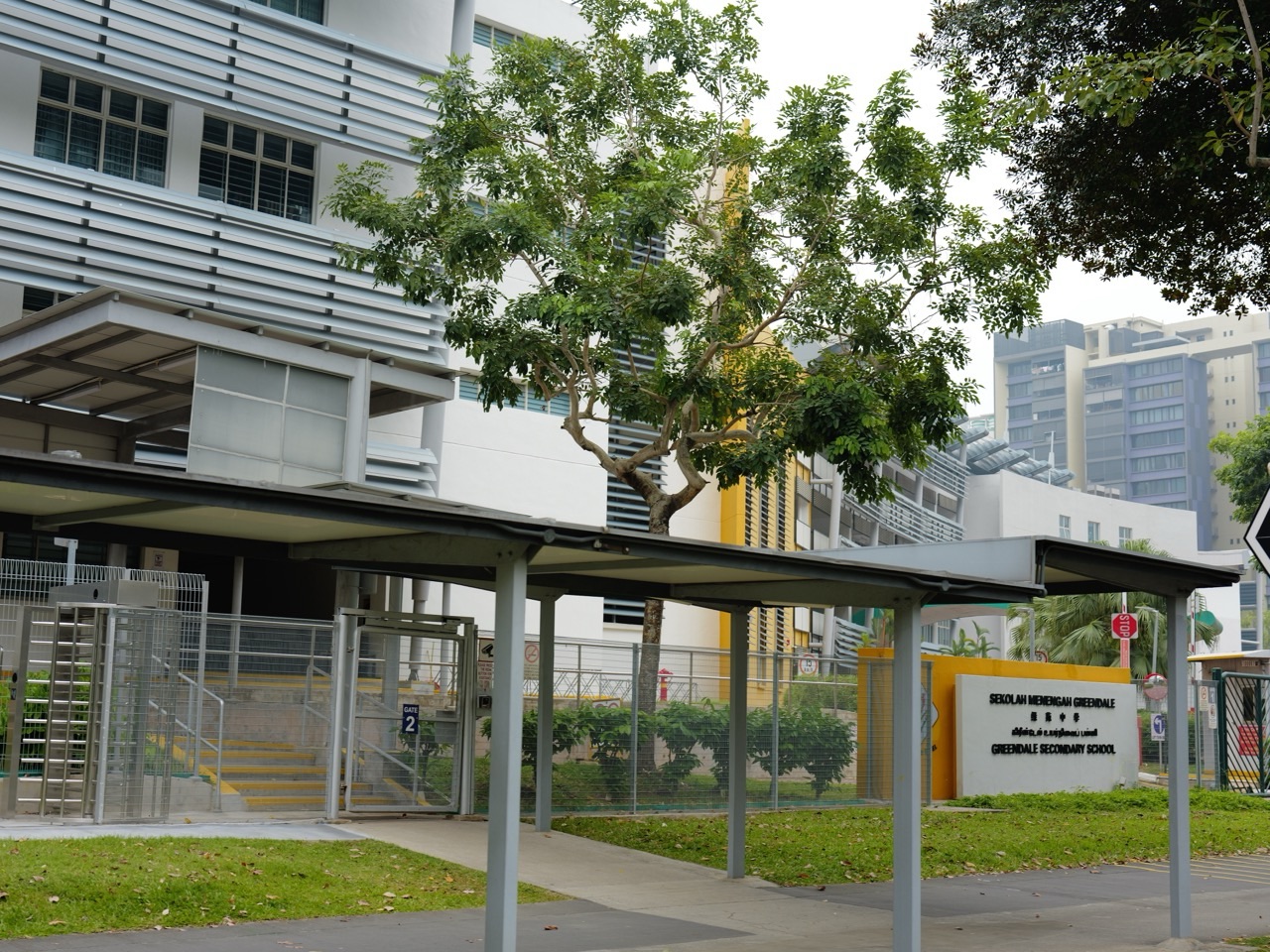
Reviewed 6 November 2026. The detailed AEIS/S-AEIS Instructions to Candidates linked from SEAB’s application page is marked June 2025. Read the latest instructions provided for the child’s own sitting; any later official instructions take priority. Planning routines and scenarios below are our suggestions, not extra examination rules. The featured school photograph is contextual and does not identify an allocated AEIS venue.
1. Retrieve the entry proof, then read the whole document
SEAB’s entry-proof FAQ explains that successfully registered candidates receive an email advising them to download the document from the Candidates Portal, around two weeks before the tests. It contains the dates, times and venues. Monitor the email address used for the application rather than assuming the document will arrive through a tuition provider or messaging group.
Our recommendation is to read the proof with a pen and a separate planning sheet beside you. Record the information on the planning sheet, not on the official document. Identify the candidate, the paper or level, the venue, the reporting requirements and any instructions that need clarification. A parent who reads only the headline date may miss information needed for a second paper or collection arrangements.
Give the child an age-appropriate explanation of the day. They do not need to memorise every administrative detail, but they should recognise that the document belongs to them and understand which adult is responsible for the journey. Older students can participate in checking the schedule while a responsible adult verifies the final plan.
When the expected entry proof is not available
First establish the actual application state and whether an official email has arrived. Check the registered inbox and relevant folders. Then use the official portal instructions. Do not download a blank-looking document from an unrelated website or assume another candidate’s proof can be adapted. The examination document is individual, not a generic ticket.
If a genuine access problem remains, describe it through the admissions-exercise technical assistance route on SEAB’s contact page. Include the relevant reference and the precise problem through the secure official channel, without exposing passwords or unnecessary personal details.
A clear enquiry distinguishes “the download button does not work” from “the application is still Pending”. Those are different problems. Avoid creating a new application simply to obtain a different screen, especially near the examination date.
2. Prepare the document copies required for the venue
The candidate booklet specifies a printed entry proof and a photocopy of the passport data page for the test venue; it explicitly says not to bring the hardcopy passport for that purpose. It also says not to write on those documents. See the identification section of the official instructions. Overseas travel still requires the family to manage its actual travel documents separately.
Our suggested preparation is to inspect the printouts in good light. Are the identifying details, index information and venue instructions readable? Has the printer omitted part of a page? Does the copy belong to the correct child? These checks should happen before the morning departure, when a printing problem is easier to resolve.
Keep the examination copies in a simple protective folder and make sure the responsible adult knows where they are. If the family has more than one candidate, separate the documents clearly. Do not depend on remembering which identical envelope contains which child’s proof.
A private backup copy may help the family recover from a lost printout, but it does not replace the required format at the venue. Plan the required paper documents first. Digital convenience should support the official procedure, not be treated as permission to ignore it.
3. Pack stationery from the current instructions, not from habit
The candidate booklet specifies ordinary writing materials and level-dependent mathematical instruments. It calls for a 2B pencil for the optical answer sheet and black or dark-blue pen for written answers, and does not allow calculators or dictionaries. Read the current candidate instructions for the complete list and packaging requirements. A device or reference book permitted in a different examination is not automatically permitted here.
Our practical recommendation is to test the materials before packing. A pen should write clearly, an eraser should remove pencil cleanly and any instrument the student is expected to use should be familiar. Buying an unfamiliar instrument the night before the test can create a new problem rather than solve one.
Keep the kit simple. The purpose is not to carry a whole study desk into the venue. Select what the official instructions require or allow, remove unrelated materials and check that the child can find the necessary items without emptying a crowded bag. Extra complexity creates more objects to manage under pressure.
A small rehearsal is more useful than an impressive pencil case
At home, ask the child to take out the materials needed for a short practice task, complete the task and put them away. Observe whether they can manage the equipment independently. If an instrument is awkward, practise its basic use calmly rather than waiting for the examination room to expose the difficulty.
This rehearsal is especially useful for a student used to completing most work digitally or receiving materials from a teacher. It should remain a practical exercise, not another high-stakes test. The aim is a familiar routine: sit down, locate the required item, use it appropriately and keep the work organised.
Do not add handwritten reminders to objects or documents taken into the examination. Keep study notes at home or follow the official storage instructions. A helpful home prompt should not become an unauthorised aid in the test environment.
4. Remove prohibited aids deliberately
The candidate instructions prohibit unauthorised notes and communication and regulate electronic devices. They also require candidates to return examination materials rather than take them away. Read the conduct rules in the official booklet before deciding what the child will carry.
Our recommended bag check is deliberate rather than casual. Look through the compartments the child uses for ordinary schoolwork. Remove revision cards, loose worksheets and objects that are not needed. Check clothing pockets as well. Do not assume a child remembers every item placed in the bag during a long preparation period.
Discuss the difference between asking an invigilator for procedural help and communicating with another candidate. A child may be used to borrowing an eraser or quietly checking an instruction with a classmate. The examination setting requires a different response. Practise directing a request to the appropriate adult instead of relying on a neighbour.
Honest preparation includes understanding the rules. It is not enough to know the subject while being unclear about what counts as an unauthorised aid or communication.
5. Plan the journey to the allocated venue
Use the venue stated on the individual entry proof. Do not infer the location from last year’s test, a friend’s allocation or the school your family prefers. SEAB identifies the entry proof as the source of venue information on its test-details page.
Our suggested route check covers the full journey: leaving the flat, reaching the transport connection, transferring where necessary, walking from the arrival point and finding the correct entrance. A map’s estimated vehicle time is not the same as the time required to reach the reporting point. Identify which part of the journey is least familiar and resolve it early.
For a Punggol household, this may mean leaving enough time for an initial LRT or bus connection before the main journey. The exact route depends on the assigned venue, so this article does not invent a universal travel time. Check current transport information for the actual date and route.
Arrange a backup where practical. A backup is not a promise that another mode will always be available instantly. It is a decision about what the family will do if the first plan becomes clearly unworkable, with the adult responsible knowing the alternative.
Work backwards from reporting, not from the paper’s start
For an illustrative calculation, suppose a paper starts at 9:00 am. The published requirement to arrive at least 45 minutes earlier means 8:15 am is the latest arrival consistent with that minimum. A family might choose an earlier personal target. The 9:00 am example is invented for explanation; use the child’s actual schedule.
Then add the expected journey, the walk to the correct entrance and a personal contingency margin. If the journey is unfamiliar, the margin should reflect that uncertainty. Do not quietly remove the reporting requirement to make a convenient departure time appear adequate.
Write the departure time plainly and agree who will check it. On the day, one adult should be able to answer three questions without searching through a chat history: where are we going, when must we be there and which documents are with us?
6. Separate the parent’s packing list from the child’s examination kit
Our recommendation is to make two lists. The child’s kit follows the examination instructions. The accompanying adult’s list covers practical responsibilities outside the test: contact information, route details, collection arrangements and any ordinary personal needs. Mixing the lists can result in the child carrying items that belong with the adult or the adult retaining something the candidate needs.
A family with two accompanying adults should decide who holds the master schedule and who will collect the child. Do not assume both adults have understood an informal conversation in the same way. If one person leaves for work or another errand, make the handover explicit.
Where the child has a known support need, ask the official organiser in advance about the relevant arrangements. Do not presume that a provision used in another school or examination applies automatically. Retain the actual response and follow the approved procedure rather than trying to negotiate it informally at the entrance.
7. Prepare the child for the handover at the venue
The candidate booklet says parents are not allowed into the test hall. It gives specific arrangements for Primary-candidate dismissal. Read the version provided for the child’s sitting rather than assuming adults may accompany the child to the desk or wait wherever they prefer. The official instructions govern that boundary.
At home, explain the handover in ordinary language: “We will bring you to the reporting arrangement. The officials will guide you from there. We will follow the collection instructions and meet you afterwards.” This is a proposed conversation, not a description of every venue’s exact layout.
Practise how the child can identify a problem: “I cannot find the place indicated on my document” or “I need help understanding where to go.” The purpose is not to rehearse elaborate speeches. It is to make asking the appropriate adult feel normal.
Do not promise that a parent can remain beside the child throughout the paper. A reassuring statement should be accurate enough to survive the real handover.
8. Listen to the room instructions before trying to work
The candidate booklet instructs students to follow the paper’s directions and alert the invigilator to a wrong paper, missing pages or missing materials. It also requires permission before leaving the seat. Those are the practical procedures to use when something appears wrong; see the test-regulation section.
Our preparation suggestion is to practise a pause before beginning a home task. Read the directions, identify what must be answered and check what materials are required. This does not mean wasting time. It means avoiding a fast start on the wrong task.
A student who is anxious may be tempted to copy what a neighbour appears to be doing. Explain why that is unreliable and inappropriate. The student should follow the actual instructions and ask the official when a procedural issue needs clarification. A neighbouring candidate is neither an authority on the rules nor an appropriate source of assistance.
9. Treat answer-sheet handling as a separate skill
The official instructions specify how to shade the optical answer sheet, including using one answer for each question and erasing a changed answer cleanly. Use the example in the candidate booklet for the required convention. Do not assume that circling an option in a question booklet is equivalent to recording the answer in the required place.
For an original home rehearsal, draw a few numbered rows with answer choices and ask the student to transfer a short set of decisions. Introduce a deliberate skipped question and ask how they will keep the numbering aligned. The exercise is about orderly recording, not about imitating an official sheet’s security features or appearance.
Then practise changing one response without leaving an ambiguous record. Check the question number again after the change. A student can understand the subject and still lose control of a response sheet if numbering and recording are unfamiliar.
Keep this practice brief. Once the child understands the convention, return attention to the subject. The goal is to remove a practical obstacle, not to make shading itself the centre of preparation.
Skipping a difficult item should not shift every later answer
An illustrative problem occurs when a student leaves Question 6 unanswered but places the answer to Question 7 in Row 6. The mistake is not a lack of subject knowledge. It is a recording mismatch that may affect subsequent responses.
Teach a simple checking habit during practice: match the question number with the answer location before recording the choice. At natural review points, confirm that the numbering still matches. Do not mark the official answer sheet in an unauthorised way to create a personal tracking system; follow the supplied instructions.
This is one reason to include realistic response handling in a home rehearsal. A worksheet that allows answers anywhere on the page may not reveal the practical challenge of recording them in a prescribed place.
10. Written Mathematics needs a readable chain of reasoning
SEAB’s test details require working steps for written Mathematics questions, not just a final result. The official format page explains that requirement. Our teaching recommendation is to make each line show a meaningful operation or relationship so the student can follow their own reasoning as well as communicate it.
For example, in an original practice problem, five identical notebooks cost S$20. Finding the cost of eight begins with S$20 ÷ 5 = S$4 per notebook, then 8 × S$4 = S$32. The explanation identifies the unit relationship. A bare “32” does not show whether the student understood the structure or guessed.
Use the appropriate units and check that the answer fits the question. If the problem asks for a number of notebooks, an answer written only as a price has not addressed the same quantity. These habits should be established during preparation so that examination conditions do not introduce them for the first time.
11. A difficult question does not require a dramatic reaction
Our suggested response is to slow the first decision, not abandon the whole paper mentally. Identify what is known, what is required and whether a familiar relationship applies. If a justified start is possible, write it clearly. If the task remains unresolved, manage the rest of the paper according to its instructions and the available time.
During practice, distinguish a genuine knowledge gap from a momentary failure to recognise a familiar structure. The response differs. A missing concept needs teaching later. A recognition problem may improve when the student compares several differently worded tasks using the same idea.
Do not promise a universal trick for every hard question. Do not tell the child that feeling uncertain proves failure. The useful skill is recovering attention and making the next sensible move without letting one item control the remainder of the attempt.
12. Plan the interval between papers from the actual schedule
Some candidates have more than one paper to manage. Read the individual schedule and the applicable official break instructions. Do not replace them with a remembered lunchtime or an assumption that the family can travel home between papers. The child must understand the required return arrangements, not merely when the first paper ends.
Our recommendation is to choose a simple break plan with a clear return point and enough time to settle. Avoid a long, unfamiliar excursion or a meal arrangement that depends on a queue moving unusually quickly. The practical aim is to make the next reporting step predictable.
Keep the break conversation calm. A detailed argument about answers from the first paper may not help the student approach the next one. Ask whether there is an immediate practical need, review the return instruction and focus on the work still ahead.
Any plan for food, water or personal items must respect the venue’s current rules. Do not assume that what is suitable outside the hall is automatically permitted at the desk.
13. What should a family do if it is running late?
The candidate booklet states that lateness without a valid reason does not bring extra time and that arrival after a test has ended results in absence for that paper. Read the full late-arrival provision. Do not interpret this article as a promise of entry at any particular late time or an entitlement to a replacement sitting.
Our practical advice is to prioritise safe travel and official directions. Do not drive dangerously, send a young child ahead alone or rely on a stranger’s assurance about another entrance. If an official contact route is available for the problem, describe the situation accurately. At the venue, speak to the authorised staff rather than arguing with another parent.
Keep a factual record where relevant: what happened, when it happened and whom you contacted. That record may help explain the situation, but it does not itself establish a right to extra time or another test. The official decision and applicable rules remain controlling.
14. Illness is a health issue first, not a paperwork strategy
The candidate booklet says candidates with contagious disease must not sit the tests and should inform MOE. Read the unexpected-situations section and seek appropriate medical advice when a child is unwell. Do not conceal a potentially contagious illness to preserve an examination plan.
If illness or another problem arises during a paper, the child should seek help from the invigilator rather than leave the seat or make an independent arrangement. Parents should use the official contact route for case-specific questions. This guide does not promise an alternative assessment, projected result, refund or rescheduled sitting.
Be especially careful about importing rules from a different examination. A webpage about PSLE or GCE special consideration does not, merely because it belongs to SEAB, establish the same provision for AEIS. Read the named examination and scope of any advice before relying on it.
For a child with an ongoing condition or a known support requirement, raise the practical questions well before the test. Obtain the actual applicable instructions rather than assuming an accommodation used elsewhere will transfer automatically.
15. Overseas applicants need a separate travel check
SEAB states that an AEIS entry proof is not permission to enter Singapore. Read its overseas-applicant information. ICA separately publishes the requirements for entering Singapore, including travel-document, visa where applicable, and arrival-declaration requirements.
Our planning recommendation is to keep examination documents and travel documents in separate checklists. The fact that the test venue requires a passport-data photocopy does not mean a photocopy replaces the actual passport for international travel. Conversely, permission to enter Singapore does not establish approval for a school place.
Allow practical time for the journey and unfamiliar surroundings rather than planning to solve every travel task immediately before reporting. Verify the family’s actual circumstances with the appropriate authority. Do not assume a tuition provider’s travel advice is an individual immigration decision.
Check the period of stay granted and any conditions relevant to the family’s plans. An examination date does not extend immigration permission by itself. Where the situation is complex, seek case-specific guidance before making commitments.
16. Two practical scenarios: avoidable confusion, different solutions
Scenario A: the parent has the right file but the wrong child’s printout
A fictional family is preparing two applicants. Both documents are saved correctly, but the printouts are placed in the wrong folders. The solution is a final identity match before leaving home: child, proof and passport-data copy. The lesson is not to make more copies indiscriminately. It is to establish a reliable matching step.
Assign one adult to perform that check and another to confirm it when available. Read the details rather than recognise the file’s colour or position. A folder system should make the right action easy, but the final comparison still matters.
Scenario B: the family reaches the building but not the reporting point
Another family estimates travel to the map pin but has not checked the entrance or internal reporting directions. Arrival near the building is not the same as completing reporting. The prevention is to include the last part of the journey in the route plan and read the individual venue instructions beforehand.
Neither scenario says anything about the child’s academic ability. They are organisational problems. Keeping them in the adult checklist protects the student from carrying unnecessary worry into the paper.
17. Rehearse asking for help without rehearsing dependency
Use short, ordinary phrases: “I think this is not my paper”, “A page appears to be missing”, “I need help with the instructions about where to write” or “I am feeling unwell”. The exact wording is less important than directing the issue to the invigilator clearly and respectfully.
Explain that procedural help is not an invitation to ask another candidate how to solve a question. The child can request clarification about a practical problem while remaining responsible for their own work. This boundary is particularly useful for younger students accustomed to a supportive classroom where peers routinely help one another.
At home, practise one small problem and the appropriate response. Then stop. The purpose is to make help-seeking familiar, not to fill the child’s mind with every possible disaster. A few clear routines can be more reassuring than an exhaustive list of things that might go wrong.
18. A preparation timeline that moves work away from the morning
When the entry proof becomes available
Download it through the official route, read it completely and resolve any genuine uncertainty. Record the venue and timings on the family calendar. Check who is accompanying the child and who is responsible for collection. Begin the route plan from the actual allocation rather than from an earlier assumption.
Several days before the sitting
Inspect the required copies and materials. Practise unfamiliar response handling or instrument use briefly. Review the candidate instructions with the child in age-appropriate language. Confirm the travel plan and any relevant official arrangements for an existing support need.
The day before
Pack the examination kit, check the documents against the candidate and agree the departure time. Keep the evening manageable. Do not introduce a large new course of work merely because anxiety rises as the test approaches. A final review should consolidate familiar routines, not create a new list of unresolved tasks.
The morning itself
Follow the prepared plan. Check the documents, permitted kit and destination once more, then leave with the chosen buffer. Keep adult conversations practical and calm. The child’s attention is better directed towards the day’s clear next step than towards a running commentary on everything that could go wrong.
After the final paper
Follow dismissal instructions, collect the child as arranged and check that personal belongings are accounted for. Keep the next administrative stage separate from an immediate judgement about the result. One completed test day is a real milestone even though the admission decision has not yet arrived.
19. What parents can say before and after the test
An original pre-test message might be: “Read the instructions, show your thinking and ask the official if something practical is wrong. You do not need to know every answer immediately. We have organised the journey and will follow the collection plan.” This gives the child a few useful actions rather than an impossible promise.
Afterwards, begin with ordinary care and a broad question about how the day went. Do not insist on reconstructing every question before the child has had a chance to rest. If the student reports a practical incident, listen carefully and establish the facts without coaching a story or assuming a particular remedy.
A family can review preparation later. The immediate post-test conversation should not turn into a verdict about the child’s intelligence, effort or future. The examination is one event within a much longer education journey.
20. The test ending does not make a school outcome immediately available
SEAB says AEIS school outcomes are released through AEIS-IS, not the Candidates Portal used for registration. Use its school-offer information and the current MOE notice for the applicable outcome arrangements. Do not repeatedly search the registration screen expecting it to become an ordinary marks report.
Our recommendation is to record the next verified official date and return the family to a sustainable routine. Continue appropriate schooling and learning while waiting. Avoid treating unofficial answer discussions as a reliable forecast of admission.
If an offer follows, the family will need to handle the receiving school’s instructions and relevant immigration arrangements. If no offer follows, the next route needs a fresh eligibility and education-planning review. Neither decision is settled by the child’s impression of one difficult question on the journey home.
Frequently asked questions about AEIS test day
Where is my child’s test venue?
Use the venue on the individual entry proof. Do not assume the location from a friend’s document, an old article or a school photograph. The image on this page is not an allocation notice.
When should we arrive?
SEAB’s published guidance requires arrival at least 45 minutes before the test and seating at least 15 minutes before it starts. Build the journey around the reporting requirement, not merely the paper’s start time.
Can we show the entry proof on a phone instead of printing it?
Follow the official requirement for a printout. Plan the correct documents before the day rather than assuming a digital display will be accepted as a substitute.
Should the child bring the original passport into the test venue?
The linked candidate booklet specifies a passport-data photocopy and says not to bring the hardcopy passport for venue verification. Manage actual travel documents separately and check any later instructions for the child’s sitting.
Can calculators or dictionaries be used?
The official instructions do not permit them. Prepare with the applicable test conditions rather than assuming an aid allowed elsewhere will be allowed in AEIS.
Can a parent sit beside a younger child?
No such arrangement should be assumed. The candidate booklet says parents are not allowed into the test hall. Read the specific reporting and collection instructions provided for the child.
What happens if we are late?
Follow official directions and do not assume extra time or another sitting. The candidate booklet contains the lateness and absence provisions. Safe travel remains more important than a dangerous attempt to recover minutes.
What if the child becomes unwell?
Prioritise appropriate health advice and inform the relevant official. During a paper, the child should seek the invigilator’s help. Do not assume rules for PSLE or GCE special consideration automatically apply to AEIS.
Will the child learn the admission outcome immediately after the test?
No. Follow the official outcome schedule and system. The registration portal and the later school-admission outcome serve different purposes.
Related AEIS reading
Return to the AEIS Singapore parent hub. For an earlier-stage problem, read registration and the Candidates Portal or retrieving entry proof. For learning, use the preparation and original-practice guide. For the next administrative stage, read what happens after a school offer.
The best test-day plan removes avoidable decisions. Know the official instructions, organise the practical details early and give the child a small set of clear routines. The family cannot guarantee an outcome, but it can avoid making the day harder through preventable confusion.


