
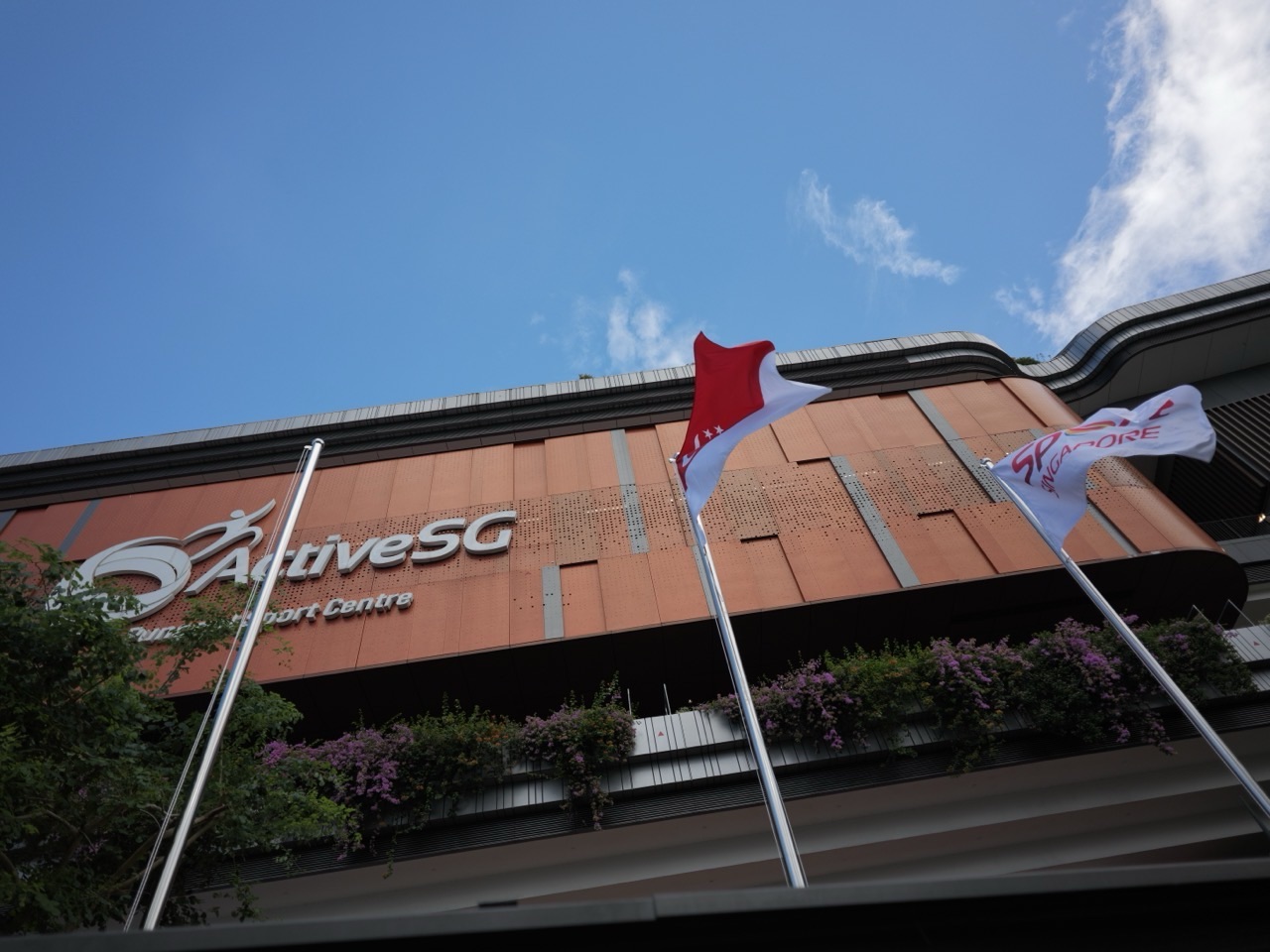
A photography walk around ActiveSG Punggol Sport Centre can be a pleasant low-cost outing even when you are not playing sport. Start from a safe, permitted public viewpoint near the building at 11 Sentul Crescent, Singapore 828656, then explore the surrounding Punggol Waterway paths where access, weather and lighting allow. The building’s rounded terraces, coloured façade, elevated LRT tracks and waterfront setting offer subjects for architecture, landscape and everyday-life photographs. You do not need to enter a booked court, gym, stadium, pool deck or restricted area to make interesting pictures.
As checked on 6 November 2026, the centre began a phased soft opening on 27 October with selected public gym and court operations. Its official launch is announced for 22 November 2026, but that does not confer public access to every interior space. SportSG has general rules restricting unauthorised photography and videography within its facilities, and particular events or venues may have further conditions. This guide is about respectful, non-intrusive photographs from lawful viewpoints, not professional filming permission or access behind security barriers.
- Location: Punggol Sport Centre, 11 Sentul Crescent, Singapore 828656.
- Rail approach: Sam Kee LRT (PW1) on Punggol’s West Loop; check station exits and the actual walking route.
- Best starting subjects: the exterior architecture, the changing light, permitted waterfront scenes and public-wayfinding details.
- Do not assume access to: stadium stands, football pitch, infinity pool deck, indoor halls, gym, roof terraces or archery training areas.
- Photography rule: follow SportSG signage and staff directions; obtain permission for activities that require it.
- Privacy: do not photograph children, gym users, swimmers or other identifiable strangers without appropriate consent.
- Equipment: a phone is sufficient; tripods or large stands may obstruct public paths and can be subject to restrictions.
- Weather: waterfront paths can be exposed; never remain outdoors during unsafe lightning conditions.
- Price: a normal public-area walk generally does not require a court booking, but other transport or admission costs can apply.
- Article fact-check: 6 November 2026; check current venue rules and route access before visiting.
Why the new sports centre makes an interesting photographic subject
Punggol Sport Centre differs from a small neighbourhood hall because it combines large-scale sports infrastructure with a waterfront setting and modern architecture. Its broad horizontal forms, glass and coloured panels, layered levels and surrounding landscape make it possible to practise different photographic approaches in one area. A photographer can study repetition, patterns, contrast, reflections and the relationship between buildings and public spaces without entering a single booked sports court.
A thoughtful photo walk also has a simple practical advantage: it can be adapted to the time and experience of the visitor. A family may spend twenty minutes taking photographs during a short stroll. A keen architecture student may linger at several lawful outdoor viewpoints. The purpose is observation, not collecting images from every restricted part of a new building.
Begin at a public viewpoint, not inside a closed facility
The central rule is to use only areas to which the public is legitimately admitted. Punggol Sport Centre contains places that may be reserved for sport, staff, competitions or maintenance. A glass door, open gate or visible staircase does not prove that visitors may pass through it for photography. Indoor photography may also require permission under SportSG rules. Ask staff when uncertain and follow posted signs.
The safest general starting idea is to photograph the exterior from an appropriate public walkway, without stepping onto a roadway or blocking an entrance. If barriers or construction works alter the path, respect them. Do not climb fences or plan a shortcut through a sports hall. Good composition begins with an acceptable viewpoint; it does not require special access.
The first photograph: show where the building sits
A useful establishing photograph gives viewers a sense of scale and setting. From a lawful public point, include enough surroundings to show the sport centre in relation to its road, greenery or waterway. Use a wider field of view if it is available, but avoid standing in the cycle path or stepping backwards into traffic to fit more of the building into the frame.
Try taking one horizontal image for context and one vertical image emphasising height or layered terraces. Compare how the building feels in the two compositions. You may find that the most accurate photograph is not the one that makes the building look largest, but the one that explains where a first-time visitor is standing.
The second photograph: the sport centre’s architectural layers
The new structure has distinctive tiers, rooflines and façades. These can create visual rhythm when photographed at an angle. Look for repeated bands, contrasting surfaces and the points where straight lines meet curved forms. Instead of squeezing the entire building into every picture, select one section that illustrates the design clearly.
A phone camera can do this effectively if the operator keeps the device level and chooses a safe distance. Avoid heavy digital zoom when possible because it may reduce detail. Take time to check whether other pedestrians are entering the frame; if they are, wait for a less intrusive moment rather than asking strangers to leave a public space for your photograph.
The third photograph: how the LRT fits into Punggol
Sam Kee LRT and the elevated Punggol rail infrastructure are part of the neighbourhood’s visual identity. From suitable public areas, you may be able to frame the tracks and surrounding buildings together to show how transport connects with sport and public space. Do not stand under restricted structures, enter operational rail areas or block station exits for a long exposure.
If a train appears, a quick handheld photograph may capture its movement. Keep the device secure and do not lean across railings. Photographers sometimes forget their position while watching a moving subject; safety at crossings and shared paths must remain the first priority. The train is an optional detail, not a reason to take unnecessary risks.
The fourth photograph: Punggol Waterway as a different visual story
Waterway photographs are less about the building and more about its environment. A legal public waterside route may allow you to show reflections, tree lines, bridges or the contrast between open sky and urban architecture. Choose a composition that respects barriers and does not require climbing down a bank or approaching the water’s edge. Keep a comfortable distance from cyclists and other path users.
Notice how changing cloud cover alters colour and texture. A bright midday image may emphasise architectural outlines; softer light can reveal subtler reflections. Neither is inherently better. The useful exercise is to notice what the conditions allow rather than promising a spectacular sunset on a specific date.
A small phone camera is enough
Photography skill depends largely on noticing light, background and timing rather than owning an expensive camera. Most phones can create clear images of architecture when held steadily. Clean the lens, choose an unobstructed public viewpoint and tap the important part of the scene to set focus where the camera allows. Take one frame with the building centred and another with more space to the side.
Compare the results and ask which one better shows the subject. A simple change in angle can remove a distracting object without needing editing software. Do not walk backwards while watching the screen. Stop in a safe place, make the picture and move on without obstructing others.
Architecture photography: use lines without trespassing
Straight lines, curves and repeated edges can organise a photograph. Find a legal viewpoint where the building’s rooflines lead the viewer’s eye into the frame. If the camera tilts upwards, vertical lines may seem to converge. This can create a dramatic effect, but also distort the way the building is represented. Decide whether the goal is documentary accuracy or a stylised image.
You can experiment by moving a short distance along an approved path rather than changing lenses. Do not cross planted areas, climb retaining walls or enter staff corridors to achieve a symmetrical angle. A strong photograph is not evidence that the photographer got closest to the building. Sometimes the wider, safer view communicates more.
The useful role of negative space
A crowded photograph may contain the sports centre, LRT, parked vehicles, people, trees and sky without a clear focal point. Try leaving one part of the frame relatively empty. A section of sky or water can help viewers understand the building’s shape. This is called negative space in composition, though the phrase simply means an area that supports rather than competes with the subject.
One photograph might place the building in the lower third, using the sky to communicate openness. Another might place it to one side, leaving room for the public path in the foreground. There is no compulsory rule of thirds. The point is to make deliberate choices rather than photographing every feature at once.
Colours and textures tell a separate story
The contrast between modern façade materials and greenery is part of the visual character of Punggol Sport Centre. Look for adjacent surfaces, such as a bright panel beside muted concrete or a planted terrace beside glass. These combinations can produce a more interesting photograph than a distant overall view. Keep the location honest; do not caption a rendered architectural impression as though it were your own first-hand image.
If using a phone’s automatic image enhancement, consider whether the colours still resemble the real scene. Excessive saturation may attract attention but can make the picture less informative. For a family guide, clear and believable documentation is usually more useful than artificial drama.
Photography and children: keep privacy at the centre
A new sports centre can attract families, school groups and young athletes. Their presence does not make them available as photographic subjects. Before sharing any recognisable picture of another child, seek appropriate parental or guardian consent. Avoid pointing a long lens at someone else’s game or recording people entering changing areas. SportSG rules also place restrictions on unauthorised photography and videography within facilities.
For a family outing, photograph your own group only where permitted and with consideration for the child’s wishes and privacy. You can tell a complete visual story through architecture, shadows, signs and landscapes without showing identifiable strangers. This approach is often more respectful and produces images that remain useful for years.
Are interior photos of the gym, courts or swimming pool allowed?
Do not assume that purchasing a gym pass or court booking includes permission to record unrestricted interior images. SportSG has venue rules relating to photography and video, and facility staff may impose further restrictions to protect users, private areas and competitions. This is especially important around gym equipment, pools and changing facilities, where people may not expect to be filmed.
If you want an interior image for a specific legitimate purpose, ask the operator about its current permission process before taking it. Even authorised filming must respect other participants and any conditions attached to the space. Avoid presenting a photo walk as a back-door tour of restricted areas. A public exterior outing can be enjoyable without those images.
Commercial photography needs separate permission
A person making personal travel photos has a different purpose from a business setting up a paid commercial shoot or bringing lighting and models for an advertisement. Commercial photography may require explicit approvals, insurance, booked space or other arrangements depending on the venue and activity. Do not assume a free public walkway authorises any scale of production without regard to public access, local regulations or operator conditions.
If the images will be used for commercial campaigns, ask the relevant land or venue operator about permissions and restrictions. Keep equipment clear of paths and emergency routes. This independent guide cannot grant photography rights or speak for SportSG, SAFRA, park managers or private property owners.
Tripods, drones and special equipment
A lightweight phone can be unobtrusive on a public walk, but a large tripod, reflector or lighting stand may obstruct pedestrians or cyclists. Do not set up equipment where others must step into a road or around a dangerous obstacle. If staff advise that stands are not allowed, follow the instruction. Bringing equipment does not give a visitor priority over public circulation.
Drone use is governed by separate aviation and local restrictions. Do not assume you may fly over a sports centre, homes, rail infrastructure or public crowds simply because the area looks attractive from above. Check current Civil Aviation Authority of Singapore requirements and any additional relevant permissions before planning aerial operations. For this walking itinerary, ground-level photography is sufficient.
Planning light without promising a sunrise or sunset
Photography websites often recommend “golden hour”, the period of warm light close to sunrise or sunset. At Punggol, surrounding buildings, cloud cover, weather and the particular viewpoint affect what a camera actually sees. The sun’s position changes through the year, and a visible horizon may not be available from every path. Do not advertise a guaranteed dramatic sunset behind the sport centre.
A practical alternative is to visit when the weather is safe and you have time to explore calmly. Soft overcast light may give accurate façade colours, while stronger daylight can emphasise shadows. If the visitor is accompanying children, grandparents or someone with limited mobility, comfort and safety should take priority over chasing a narrow lighting window.
A thirty-minute photography walk
Begin from a lawful public point near the sport centre, take one establishing image and notice the main façade. Move only along permitted paths and choose a second composition focusing on a small detail, such as repeated lines or a relationship between the building and greenery. If time and conditions permit, make a third photograph showing the wider waterway environment. Then return to the planned meeting point.
This short version does not rely on paid sports admission, a guide service or the availability of a specific building entrance. It is suitable for a small group that wants a relaxed visual activity, subject to the route’s actual accessibility and weather. The aim is three thoughtful images, not hundreds of nearly identical photos.
A sixty-minute photography walk for teenagers
A teenager interested in design, media or visual art might spend a little longer comparing three visual ideas: architecture, movement and landscape. Take a clear building photograph, an optional safe image of the transport environment, and a public-waterway landscape. Avoid recording strangers or entering facilities to imitate professional sports photography.
Afterwards, compare the pictures. Which one tells viewers where they are? Which conveys scale? Which uses colour or light most effectively? This can become an enjoyable informal learning activity without requiring a written assignment. For students interested in formal media concepts, our sports photography and composition guide covers exposure and motion separately.
A family photo walk with primary-school children
Young children can enjoy taking pictures of shapes and colours when an adult keeps the route safe and supervises their device use. Ask them to find one curved line, one rectangle and one natural object visible from a permitted public spot. Avoid competitions that encourage children to run ahead or climb to get a better angle. A parent can help with framing without insisting every picture be perfect.
The child can describe what they saw in a few words: “the train is high”, “the roof is curved” or “the water is shiny”. These simple observations connect language with the environment. The walk does not have to become a school project; it can remain a playful family activity. If the child gets tired or loses interest, finish early.
A slower photography visit with grandparents
A grandparent may be interested in how Punggol has changed over time. A short public walk with one or two photographs can provide an opportunity for conversation about the older waterfront, new rail connections and community developments. Do not assume everyone wants to walk a long route or stand for extended periods while the photographer experiments.
Check transport and resting arrangements, especially if someone uses a mobility aid. A short distance on a map does not prove every crossing, station lift or path is accessible. Ask the person what they want to see and move at a comfortable pace. For a more detailed accessibility focus, read our seniors and grandparents activity guide.
The waterway is a shared path, not a photo studio
Cyclists, walkers, commuters and families use Punggol’s public routes for practical reasons. Do not stop suddenly in the centre of a shared path, leave camera bags across walking space or create a human barrier for a group portrait. When you need time to compose an image, move to a lawful place where other users can pass without difficulty.
Be especially careful near bridges, slopes, crossings and water. Do not lean over guardrails for reflections or ask a child to stand close to a barrier. If an approaching cyclist or pedestrian is present, let them pass. An ordinary courtesy is often the simplest way to protect everyone while still enjoying a creative outing.
Weather and cameras: a realistic plan
Singapore’s changing cloud cover can produce attractive photographs, but heavy rain and lightning are safety concerns. Check official weather advisories before leaving, particularly for exposed waterfront routes. A roof on a nearby sheltered court does not make the whole area safe during lightning. Never use a camera shoot as a reason to remain on an exposed path against warnings.
A light shower may still make a walking route slippery. Protect equipment appropriately and be willing to reschedule. If the sport centre closes a facility, do not enter it to seek shelter or photograph an empty room. Our Punggol rainy-day guide explains public-sports access and weather decisions separately.
What not to mistake for a public rooftop garden
Sports-centre promotional images may show landscaped terraces and rooflines, but a visible green level does not establish that it is a public garden open to every visitor. Some areas may be for maintenance, tenancy, staff, sport access or controlled events. Do not use stairs or lifts to reach an upper level without checking signage and operator rules.
The same applies to stadium seating and poolside terraces. The fact that these spaces create attractive high-angle views is not permission to enter them. A photo walk is about finding interesting images from legitimate viewpoints, not accessing the highest place possible.
A nearby food stop is a separate destination
After a photo walk, some visitors may want a snack or meal. One Punggol community hub and SAFRA Punggol are nearby but operate separately from ActiveSG Sport Centre. Check the actual outlet, opening hours and access conditions before making a long detour. Do not assume commercial spaces within the new sports development are all trading just because some units appear in tender documents.
The photographic outing itself can remain inexpensive because a permitted public walk does not require a sports-court reservation. Food, transport or equipment purchases are optional costs. For visitors with children, the comfortable finishing point may matter more than another photograph. Plan an easy return journey instead of trying to complete every nearby attraction.
Sam Kee LRT and the arrival decision
Sam Kee (PW1) is on the Punggol West LRT Loop, connected to Punggol MRT on the North East Line. It is the commonly recommended station for reaching the sports centre. Follow the correct loop direction and current route signs; do not assume that a short walk is completely covered or step-free. A visitor carrying equipment or accompanying a person who needs assistance may require extra time.
You may want an establishing photograph from near the transport route, but do not block station entrances or cross roads for a better angle. If the public path is temporarily affected by works, use the lawful signed alternative. Our Punggol transport guide covers bus, car, bicycle and rail choices in more detail.
How to caption photographs accurately
A photograph of the Punggol Sport Centre exterior should be described as an exterior photograph, not as evidence that every planned facility is open. A picture of the swimming complex from outside does not prove it is operating today, and an architectural rendering is not a first-hand photograph. When sharing images, note the location, date and whether the image shows a public space or a separate nearby destination.
This is important for visitors who rely on photos to decide where to go. Captions should help readers understand what is real and what has changed, rather than creating a misleading impression of unrestricted access. A well-labelled image can remain informative even after booking schedules and promotions change.
Editing photos without distorting the visit
Basic editing can improve brightness, crop distractions and correct a slightly tilted horizon. It can also accidentally misrepresent the place if major structures, barriers or safety signs are removed. For a local information article, aim for clear representation. Avoid adding a fake open door, crowd or pool admission sign that was not part of the real scene.
If you use an illustrative or AI-generated image, identify it appropriately rather than presenting it as documentary proof of a venue’s current operations. This distinction is especially valuable for a new development with an evolving opening schedule. Families may make real travel decisions based on imagery.
A creative four-week photography exercise
Week one: make three establishing photographs from permitted public areas, showing the exterior, surrounding path and neighbourhood context. Keep the visit short and note the date. Do not enter booked sports spaces.
Week two: return in different safe lighting or weather conditions and compare one architectural detail. Notice how contrast, reflections and shadows change. No expensive equipment or special access is necessary.
Week three: try a visual story of movement and place from public viewpoints, such as a station approach, a safe crossing and the building exterior. Avoid photographing identifiable strangers without appropriate permission and never stand in a restricted transport area.
Week four: select your best five photographs and write concise factual captions. Explain what the images reveal about the neighbourhood, not what you wish the building allowed visitors to do. A small curated series can tell a stronger story than hundreds of repetitive images.
What to do when a staff member asks you to stop photographing
If a SportSG staff member or an authorised operator tells you that photography is restricted in a particular area, stop and follow the instruction. Ask politely whether an appropriate public exterior viewpoint is available, but do not argue that having a court booking or personal camera grants a special right to film. Some restrictions protect users, event operations, privacy or sensitive spaces. The safest next step may be to put the camera away and continue the outing as an ordinary visitor.
You can still build a useful photography collection from legitimately accessible public surroundings: architectural shapes, carefully framed landscapes and everyday transport context can tell a complete story without recording other people’s sport sessions. If the intended project requires interior, commercial or staged footage, arrange the relevant permission before a future visit. An accurate account of the limitations is more helpful to readers than photographs that were obtained by ignoring them.
Frequently asked questions
Can I photograph ActiveSG Punggol Sport Centre from the outside? A permitted public viewpoint may be suitable, subject to any current operator, land-use and safety restrictions. Do not block access routes.
Can I enter the gym just to take photographs? Do not assume so. Gym admission and venue photography rules apply, and privacy must be respected.
Is the rooftop publicly accessible? Do not infer access from photos of landscaped terraces. Follow actual signs and permissions.
Can I photograph the infinity pool? A view from a lawful public location is different from entering the pool deck or filming swimmers; check permissions and privacy rules.
Is a public photo walk free? Walking in lawful public paths generally does not require an ActiveSG court booking, although transport and other costs remain.
Can I fly a drone over the sports centre? Not without checking applicable aviation rules, restrictions and permissions. Ground-level photography is the appropriate default for this guide.
Is Sam Kee LRT the closest station? Sam Kee (PW1) is the commonly recommended LRT approach; check the actual route.
Can a schoolchild bring a phone camera? With appropriate adult guidance, privacy awareness and safe public-path behaviour, this can be a simple creative activity.
Will the stadium allow photography from the stands? Do not assume open access. Actual fixtures, venue permissions and event rules determine entry.
Can a professional photographer set up lighting equipment? Ask the relevant operator about permissions and do not obstruct public paths or sports operations.
Official venue rules and connected local reading
Check ActiveSG’s published rules, SportSG’s venue directory, facility closure notices and the official opening event if your visit coincides with scheduled activities. MyActiveSG+ is for sports bookings and passes, not a blanket photography permit.
Read our photography, filming and privacy guide for venue-specific caution; our waterfront boardwalk walk for the separate walking activity; and our toddlers and preschoolers guide for a slower family itinerary. This independent article was checked on 6 November 2026. It does not authorise photography inside facilities, predict weather, guarantee rooftop access or certify that any restricted area is open.


