
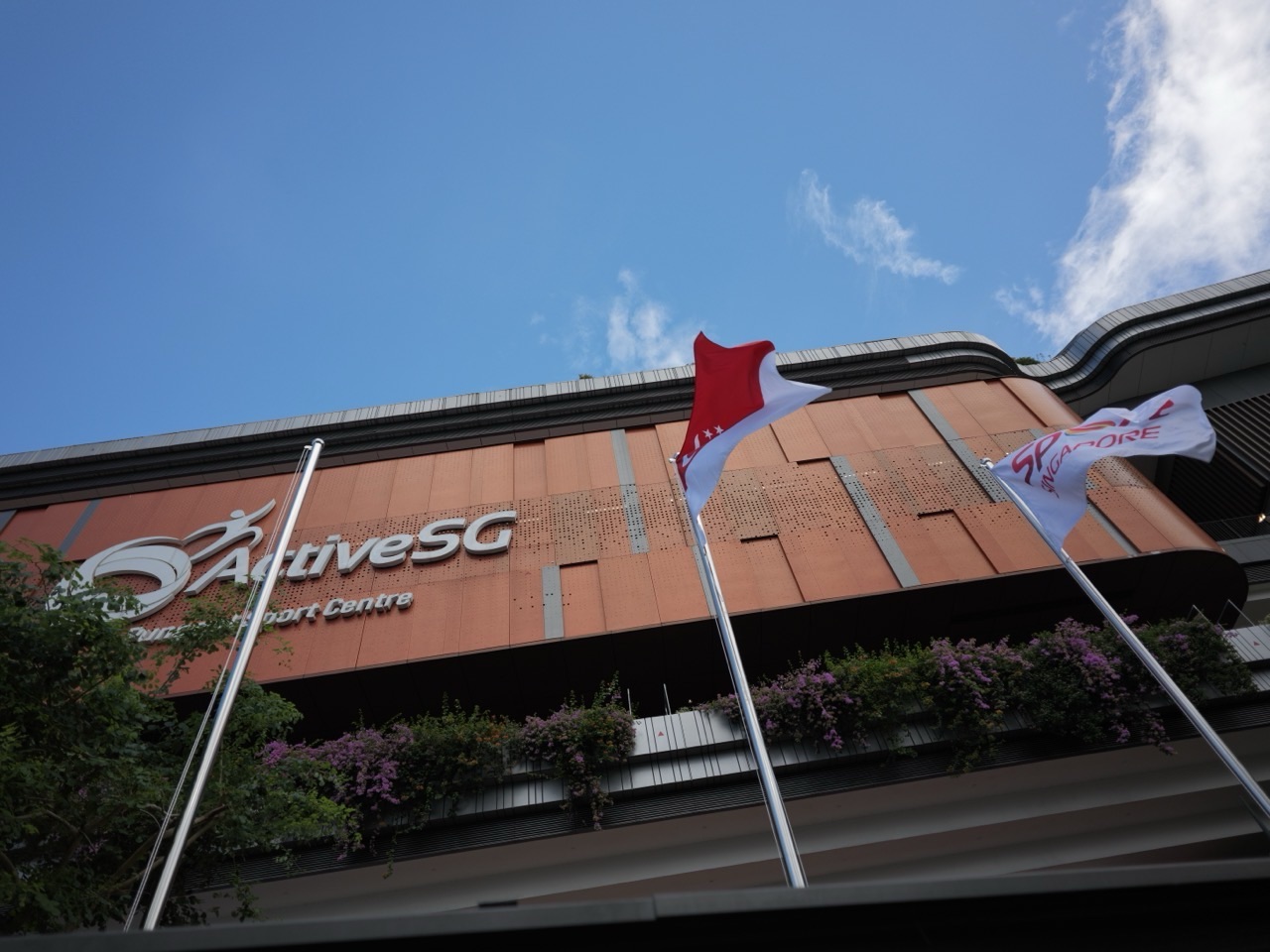
Looking for things to do in ActiveSG Punggol with children this weekend? Start at ActiveSG Punggol Sport Centre, 11 Sentul Crescent, Singapore 828656, near Sam Kee LRT and Punggol Waterway. A good family outing can combine a confirmed court booking or an age-appropriate activity with a gentle waterfront walk and a separate food stop. You do not need to fill the day with expensive programmes. The essential first step is to check what is genuinely open and bookable on the day you visit.
As of 6 November 2026, the sport centre has begun a phased soft launch following 27 October. The gym and selected courts were reported operating, but the availability of a pool, special event, stadium area or programme must be checked separately. SportSG advertises an official opening on Sunday, 22 November 2026, with sport tryouts, carnival games and all-day free gym and swimming-pool entry on that specific date. Do not mistake that one-day offer for permanent free admission or a guarantee that every pool is open before the event.
- Address: ActiveSG Punggol Sport Centre, 11 Sentul Crescent, Singapore 828656.
- Nearest LRT: Sam Kee (PW1), Punggol West Loop; check your actual exit and accessible walking route.
- Family-friendly starting point: a short public-waterway walk, then a suitable booked sport or confirmed programme.
- Courts: check real sport, date, facility and slot in MyActiveSG+ before inviting players.
- Gym: the published ActiveSG rules exclude children under twelve; check the precise age and account requirements for older young people.
- Swimming: check the specific Punggol Swimming Complex listing and pass availability; do not infer access from photographs.
- Food: nearby One Punggol and SAFRA Punggol are separate destinations with their own operators and business hours.
- Official launch: 22 November 2026; free gym and pool entry announced for that event day only.
- Checked: 6 November 2026; same-day closure, prices and bookings can change.
The three decisions that make a Punggol family outing work
First, decide who is coming. A family with a preschooler, a Primary 4 child and a grandparent has different needs from four teenagers who all know how to play badminton. Young children’s attention spans, access rules and supervision needs determine whether a short walk or a booking makes more sense. Ask what each person would genuinely enjoy rather than starting with a picture of a five-pool complex and expecting everyone to swim.
Second, distinguish a place from an activity. The sport centre is one address, but a gym entry, a rented court, a swimming pass, an Active Health appointment and a ticketed event are different access arrangements. A building may be visible while one room is closed. A booking is not interchangeable with a nearby sport. Third, build one enjoyable break into the day. Children often remember the relaxed conversation after a game more warmly than the number of activities completed.
Why this family guide is different from a facilities directory
A directory answers what the building contains. A family needs to know what is available for a particular child on a particular Saturday, how to arrive with equipment, what to do if the first plan fails, and when to stop. That practical journey is the purpose of this article. We are not reproducing a live court inventory or selling access on behalf of SportSG.
For formal facility status, read our Punggol Sport Centre visitor guide; for train and bus details, see the Sam Kee LRT travel guide. Those pages remain the primary reference for their subjects. This guide deals with the decisions families make after they know the venue is relevant.
Choose a family plan by age, not by advertised facility count
For younger children, a short outdoor discovery walk and unhurried snack can be the whole outing. Do not choose a public gym simply because a parent holds a gym pass; gym access for young children is restricted. If swimming becomes available, an adult should still select the appropriate pool, provide direct supervision and follow lifeguard rules. A learner pool does not mean adults can stop watching.
For primary-school children, an age-appropriate sport under active adult supervision is often more useful than an intense match. Table tennis can introduce turn-taking; a badminton session can focus on serving and movement; a walk can become a simple observation game. For teenagers, a booked court with friends or an eligible gym visit may be more appealing. Ask them to help plan timing and equipment while an adult remains responsible for safety and payment.
Getting to 11 Sentul Crescent without losing the morning
Sam Kee (PW1) is on Punggol’s West LRT Loop, close to the new sport centre. Travellers arriving by the North East Line can transfer at Punggol MRT (NE17), then use the appropriate LRT direction. The location is also near bus stops at One Punggol on Sentul Crescent, including stop numbers 65481 and 65489, but route directions and services should be checked using live transport information. The walk from Sam Kee has been described as short; allow extra time for toddlers, grandparents, rain or construction changes.
Driving is possible where lawful parking is operating, but a car-park space, rate or entrance cannot be guaranteed from a guide. If you have a court slot, factor in parking, getting out of the vehicle, finding the correct floor and reaching the actual court. Arriving at the complex precisely when the session begins is different from being ready on court at the start. A little extra time is kinder to everyone.
Option A: a simple 45-minute outing with no sports booking
Start with the public pedestrian areas near the sport centre and Punggol Waterway, subject to current route signs. Spend ten minutes orientating everyone: find a safe crossing, check where the water is, agree on the meeting point and confirm that the group will stay together. Take a gentle fifteen- to twenty-minute walk, adjusting distance to the slowest member. Use public seating only if available and do not treat a restricted training area as a public viewing gallery.
Finish by returning to a familiar meeting point and finding a separate, operating place for a drink or meal. This plan is deliberately modest. It suits families who cannot secure a court slot, have a young child who may need to leave early or want exercise without an expensive commitment. It is not a guarantee that every waterfront path, indoor corridor or commercial shop is accessible on the day. Follow current notices and weather guidance.
Option B: a 90-minute visit built around badminton
If all players are appropriately prepared, use MyActiveSG+ to find and pay for an actual badminton court, then confirm the exact venue. A successful session starts before anyone swings a racket. Bring serviceable rackets and shuttlecocks where required, proper sports shoes, drinking water and a clear plan for who plays when. A booking for badminton is not permission to switch to tennis or pickleball when a nearby court looks empty.
Use the first ten minutes to orientate and warm up without disrupting another game. Spend a portion of the booked time on simple short rallies, then play a friendly match at a pace all participants can manage. Rotate turns rather than allowing the most confident child to dominate. Finish on time, collect shuttlecocks and leave the area ready for the next booking. Our first badminton booking guide explains the sport-specific detail.
Option C: a swimming day only when the actual pools are operating
Swimming is a major reason people are interested in the new complex. SportSG’s 22 November opening announcement describes a swimming complex with five pools and one-day free pool entry for its official launch. That does not establish a public lane timetable, today’s swimming fee, exact maintenance day or the availability of each pool on 6 November. Check the relevant Punggol Swimming Complex facility page and the available swimming product on MyActiveSG+ before promising children a swim.
If the correct pool is confirmed operating, separate three aims: water confidence for non-swimmers, supervised family recreation and sustained lap swimming for competent swimmers. Those activities may require different water depths, programmes and permissions. Bring suitable swimwear, a towel and necessary personal items; follow pool hygiene and supervision rules. A family should never enter deep water merely because a striking photograph looks welcoming. See our first 50-metre lap-swim guide for competent swimmers, not beginners.
How to handle different abilities inside one family
A single family may include an adult who enjoys strength training, a child who prefers gentle activity and an older relative who walks more slowly. They do not have to complete exactly the same exercise. Instead, agree a shared beginning and ending, then use separate activities only where each participant has legitimate access and responsible supervision. An adult cannot assume that children may wait unattended inside the gym, poolside or hall.
One sensible arrangement is a shared public walk and meal, with a court session scheduled only for the members who truly want it. Another is a brief visit to observe the exterior and make a future booking rather than buying passes immediately. The point is participation without pressure. A family outing should create confidence and connection; it is not a test of whose stamina is highest.
What the 5,000-seat football stadium does and does not promise
The regional sport centre includes a 5,000-seat stadium in its advertised facilities. That does not mean visitors may walk onto the pitch, use the track or enter the stands without an event or permission. Stadium match attendance, public access and training arrangements can differ from a normal court booking. Before suggesting a football outing to a child, look for an official fixture, ticketing instructions and entry rules.
If no fixture has been announced for the desired date, the family can still talk about football, practise on a legitimate public court elsewhere or choose an unrelated activity. It is better to explain the difference between viewing a venue and attending a match than to reach a locked gate with disappointed children. Restricted archery training areas similarly should never be presented as open drop-in experiences.
Nearby food stops: plan a separate destination
After sport, families may look towards One Punggol, SAFRA Punggol or other nearby eating options. One Punggol is a community hub, not a room within ActiveSG Sport Centre; its hawker centre and other services operate under separate arrangements. SAFRA Punggol likewise has distinct membership and commercial facilities. Checking the location and current opening hours of the particular outlet prevents an unexpected extra walk at the moment everyone is hungry.
Think about the needs of the group. A family with a tired preschooler may prefer a simple meal with seats rather than a long search. A teenager may want a quick snack after badminton. Food should not be assumed to be available beside every court or inside the sport centre itself. Keep rubbish in the appropriate bins, and do not bring food into sports areas where the rules prohibit it.
Budgeting: free surroundings are not the same as free facility admission
One of Punggol’s attractions is that walking along permitted public areas can be a low-cost activity. A rented court, public gym entry, swimming admission, fitness class and commercial lesson may each have separate charges. Do not rely on a headline about free opening-week entry: the gym’s late-October launch promotion ended on 31 October, while the official 22 November opening announcement describes another event-specific free offer. Those dates are not interchangeable.
Before committing to a family booking, calculate the actual total. Include the price shown by the booking system, possible transport, necessary equipment and any food stop. Do not invent parking rates, class fees or concession eligibility from a generic Singapore-wide price chart. The meaningful question is whether the outing is enjoyable and repeatable at the budget the family has chosen, not whether every attraction has been ticked off.
Booking a court: one payment, one named sport and one timeslot
Search the official booking site for the precise Punggol facility, choose the correct sport, read the time and date, review the fee and conditions, then retain the confirmation. If the system uses ballots or special booking windows, follow the current instructions rather than assuming ordinary first-come rules always apply. Check how many players and what equipment the particular sport requires. If the booking is made by a parent for a group, ensure everyone knows the start time.
On arrival, follow the operator’s check-in, footwear and safety rules. Do not crowd another group’s court while waiting. A court that appears empty may belong to someone whose slot is starting, be undergoing maintenance or be reserved for an event. A polite question to staff is more reliable than claiming possession based on an empty floor. For booking problems, refer to the official support route rather than paying an unknown third party.
When a school-age child is nervous about trying a new sport
A child who has never played pickleball or badminton may imagine that every participant will be skilled. Begin by making the goal small: hold the racket comfortably, practise a legal serve or complete three cooperative returns. Tell the child that a friendly rally is a shared task rather than a contest to embarrass the other person. Do not demand that they perform for strangers or record the session on camera.
Offer a choice between two reasonable options, such as a short walk or a beginner-friendly activity, rather than promising a complete sports transformation in one afternoon. If they do not enjoy the first attempt, that feedback helps the next plan. A family can return to sport through several gentle experiences. There is no need to turn recreation into another examination.
Make school holiday sport useful without creating more homework
Children can develop physical literacy through ordinary movement: changing direction, controlling a ball, judging space, balancing and communicating with partners. They can also practise planning by remembering the right equipment and working out the sequence of a safe visit. These experiences happen naturally through play. A holiday outing does not need worksheets or a lecture about achievement to be valuable.
If a child is curious, ask simple questions while travelling: Why are some courts covered? What makes a walkway safe for both cyclists and pedestrians? Why must a pool have lifeguard rules? Why are different sports placed on different floors? Let the conversation end when the child is no longer interested. The learning comes from noticing the world, not from converting every family outing into tuition.
The rain and lightning decision before leaving home
Punggol’s waterfront setting is attractive, but an outdoor walk or sheltered court is not an all-weather guarantee. The official ActiveSG facility pages warn that outdoor facilities may close in inclement weather; a roof does not make lightning, wind-blown rain or wet surfaces irrelevant. Check the National Environment Agency’s weather information, the facility closure page and any direct operator announcement before the journey.
Keep a realistic alternative ready. If an outdoor activity is unsafe, a family might choose an indoor booking that is genuinely available, shorten the visit or go home. Do not enter an indoor facility without the correct pass merely to escape rain. A good plan includes the possibility of postponement. Children learn good judgement when adults are willing to change a plan for safety.
Practical waterway safety for children and cyclists
Near Punggol Waterway, identify which sections are pedestrian-only and which are shared paths. Keep small children within reach near water, respect cycling space and avoid abrupt stops in the centre of a path. A child looking at a boat or a building may walk sideways without watching a cyclist approach. Agree that nobody runs off towards the water, and do not climb barriers for a better photograph.
Use shade and rest stops sensibly in the heat. Bring enough water for the group’s needs, wear appropriate footwear and watch for signs that someone wants to stop. In heavy rain or lightning conditions, leave exposed paths and follow official instructions. A waterfront walk should feel restorative, not like an endurance challenge or an unofficial access route into a sports complex.
Accessible family planning: confirm the whole route, not just the entrance
A step-free building entrance does not automatically confirm a complete step-free journey from a particular station exit or car park to a particular court. Families using wheelchairs, prams or mobility aids should check transport lifts, safe crossings, the correct indoor entrance and any relevant facility-specific access conditions. Accessibility details can change with operational or construction arrangements during a phased opening.
If a participant needs an accessible toilet, changing area or particular seating arrangement, ask the operator about the exact location rather than relying on an unverified floor diagram. Similarly, a programme described as inclusive does not automatically mean it has room, staff support or equipment for every participant on demand. A short phone enquiry or official message can prevent wasted travel and make the outing more welcoming.
Privacy, photography and respectful use of public space
Public sports venues contain children, adults exercising, staff and people who may not wish to appear in photographs. Before taking images, check posted rules and avoid recording strangers, changing rooms, fitness assessments or restricted training spaces. A parent may photograph their own family where it is permitted, but that is not permission to film an entire neighbouring badminton group.
Follow signs marking staff-only or booked zones. Keep corridors, ramps and emergency routes clear. If a child is fascinated by the building, encourage observation from a legitimate public viewpoint. Curiosity is useful, but it must not override privacy or safety. Explain why shared facilities need rules: they let many unrelated families use the same space without imposing on each other.
Example itinerary: preschooler and grandparents
At home, choose a short time window and agree that the trip may end early. Travel to Sam Kee using the appropriate route, check the nearest safe crossing and orientate at the sport-centre exterior. Walk a modest distance along an open public path while the child points out plants, bridges and sporting activity visible from public space. Stop when the grandparent wants a rest rather than waiting until someone is exhausted.
Then choose a confirmed open food stop. This itinerary does not require a court, pool or gym pass. It also avoids placing a preschooler in a gym for which they are not age-eligible. If the weather is poor, choose a different indoor family activity or reschedule. A successful outing might be less than one hour; the measure is a comfortable shared experience.
Example itinerary: Primary 5 child and a parent learning badminton
Book a real badminton slot in advance and prepare two rackets, suitable shoes, shuttlecocks, towels and water. The parent can start with simple cooperative rallies rather than a competitive match. Spend a few minutes learning how to serve correctly and where the boundaries are. If either person is new, focus on three tasks: stand ready, move towards the shuttle and recover after the shot.
Once the booked time ends, clear the area promptly, then decide whether a short waterfront walk is still comfortable. Do not force another sport into the afternoon merely because the family travelled to the complex. The child may enjoy telling a story about the funniest rally over lunch. Positive experiences make it easier to return next month.
Example itinerary: two teenagers and their parents
Two teenagers may prefer choosing an activity together. Have them compare a suitable court booking, a legal gym visit if both satisfy the age and account rules, or a public walk that needs no entry pass. Let them calculate the visible booking cost and choose a time without conflicting with school obligations. Parents should still check transport, health and safety arrangements.
If their sport requires four players, arrange the correct group rather than arriving with too few people and assuming strangers will join. If they choose the gym, remember that younger siblings cannot simply accompany them inside. A calm agreement about who meets where after the activity prevents avoidable confusion. Give teenagers autonomy within a clear safety structure.
A useful four-week family plan instead of a perfect first day
Week 1: discover. Take a short public-area walk, identify the official entrances and read the ActiveSG booking pages together. Agree on one sport that genuinely interests the family. A first week can be successful without any paid admission.
Week 2: try. Book a suitable available court or confirmed beginner activity, prepare the correct equipment and practise one simple skill without competition pressure. Record only what the participants themselves noticed.
Week 3: repeat or adjust. Return to the same sport if it was enjoyable, or make one thoughtful change: a shorter time, a different partner or a more accessible route. Do not change five things at once.
Week 4: review. Ask who enjoyed the outing, who felt left out, whether the journey worked, what it cost and whether the household wants a monthly habit. If it reduced stress and made movement easier, it has done something useful.
What to check on the morning of your visit
Check the official ActiveSG venue listing and closure notice first. Check the specific court confirmation or gym/pass access next. Check the weather and your transport route third. If a swimming visit is planned, verify the named pool is publicly operating; never rely on an old article or a building photograph. For a large event, confirm any ticketing, public access or registration requirements separately.
Finally, tell everyone the plan in plain language: where to meet, what to carry, which activity is paid for and when to go home. Avoid planning a route that depends on three unverified claims. The more decisions are made ahead of time, the more room there is for a relaxed visit.
How to prepare if one child does not enjoy organised sport
Some children love team games, while others prefer quiet observation, imaginative play or gentle walking. A family trip to Punggol Sport Centre need not force everyone into a competitive sport. Begin by asking the child which activities feel comfortable. A short walk near the public waterfront, a simple observation game or a planned meal can create a shared outing without a court reservation. If the child is curious about badminton, let the first session involve gentle cooperative hitting rather than a score-focused match.
If the rest of the family has booked a court, plan how the non-playing child will be actively supervised. The child should not be left alone in corridors, pool areas or a public gym. A suitable adult can accompany them to a separately permitted public area, provided the route is safe and agreed in advance. A willingness to listen is more important than persuading every child to enjoy the same sport. The goal is family recreation, not compulsory athletic achievement.
Equipment checklist by the actual activity, not the whole building
For a badminton booking, consider suitable indoor sports shoes, rackets, shuttlecocks, drinking water and a towel. For a table-tennis reservation, check whether participants must bring paddles and balls. For tennis or pickleball, use sport-appropriate equipment rather than assuming the two sports are identical. A swimming visit, once the particular pool is confirmed available, requires suitable swimwear and a different set of personal items. Always read the specific operator conditions because the venue may restrict footwear or equipment.
Families frequently overpack because they treat the sports centre as a list of every possible attraction. It is easier to bring what the confirmed booking needs and keep extra plans optional. If appropriate gear is not available, a public walk may be the better choice that day. Do not assume a sports store, equipment rental counter or spare racket will be available onsite. A simple checklist on the phone can reduce forgotten items without adding unnecessary preparation stress.
What to do when family members arrive at different times
One parent might travel from work while another arrives with children by LRT. Agree on a precise public meeting point, the booking reference holder, the named sport and the correct start time before separating. Punggol Sport Centre is large enough that saying “meet inside” is not sufficiently clear for a first visit. If transport is delayed, communicate calmly and do not ask a child to wait alone for the rest of the group. Keep a practical fallback so the family knows what happens if the late arrival cannot make the booked session.
Do not let a child carry account credentials or payment details that they should not need. The responsible adult can retain the booking confirmation and deal with staff. If two groups later go to different legitimate activities, agree who supervises whom, where they will reunite and how they will get home. Shared public facilities work best when people do not rely on hurried last-minute instructions.
Planning a visit with a stroller, wheelchair or family member who needs rests
Sam Kee is the commonly recommended LRT stop, but a short geographical distance is not proof that every specific station exit, crossing or building route is step-free. Check transport lifts and the currently authorised venue entrance before leaving. A stroller may change which paths are comfortable, while someone using a wheelchair may need precise information about the route to the booked floor, toilets and permitted viewing or seating areas. Ask the operator for current details rather than relying on an unverified old floor map.
Include pauses in the itinerary. A family that needs fifteen extra minutes to reach the court should account for that before paying for a one-hour booking. A short, accessible outing can be more satisfying than an ambitious route that leaves someone exhausted. If access is uncertain, choose an activity and destination that are genuinely workable for everyone rather than leaving one relative behind while the rest complete a checklist.
Should a parent book a sports lesson or organise family play?
A formal children’s programme may provide structured instruction, group management and progression, while a family-led court session can be flexible and informal. Neither is automatically better. Before registering for a programme, verify that it is actually offered at the chosen venue, the eligible ages, teaching arrangements, dates, fees, collection procedures and any required equipment. A class advertised elsewhere in Singapore is not proof that the same programme operates at Punggol on the selected day.
For family play, the parent must still arrange the correct facility booking and keep the activity age-appropriate. Simple badminton rallies or basic ball-control games may be enough for a first experience, but a court rental is not an authorisation to run a commercial class. Watch whether the child enjoys participating, feels safe and wants to return. The quality of a recreation choice is not established merely by the length of its advertised syllabus.
When the visit is over, build a reason to return
Before leaving, ask each family member what they enjoyed, which part was tiring and whether the journey worked. Perhaps the grandparent liked the waterfront more than the sports hall, or a Primary 3 child enjoyed one ten-minute racket game and wanted a snack. These observations help plan a better visit next time. You do not need a complex performance chart. A short conversation on the way home is often enough.
Save the official booking portal and the relevant venue guidance rather than repeatedly searching for screenshots of introductory offers. Check access again before every future visit, because the phased opening, maintenance and public programme schedule can change. A repeatable, calm monthly outing may give a family more satisfaction than an exhausting one-time attempt to use every facility at Punggol Sport Centre.
Frequently asked questions about things to do in ActiveSG Punggol
Is Punggol Sport Centre open in November 2026? It began a phased soft launch in late October. Check each facility individually. SportSG announces a formal opening on 22 November 2026.
Can my seven-year-old enter the ActiveSG gym? No. Published ActiveSG gym rules exclude children under twelve; other activities have their own rules.
Can we swim now? Verify the individual Punggol Swimming Complex listing, pool status and pass before travelling. A new building and an event announcement do not prove same-day public swimming.
Are all sports free? No. Courts and gym/pool entry may have different charges. The 22 November free gym/pool announcement is event-specific.
Which station is nearest? Sam Kee (PW1) on the Punggol West LRT Loop is a commonly recommended approach.
Can we use a vacant court without booking? Do not assume so. Check the named sport and current facility rules or ask staff.
Does the venue have food outlets? Check actual tenants and hours. Nearby One Punggol and SAFRA Punggol are separate destinations.
What if rain starts? Follow weather alerts and facility closures, especially for open or sheltered courts and waterfront paths.
Is the football stadium open for casual play? Not automatically. Look for actual public access or fixture instructions.
Do we have to visit for several hours? No. A short, easy outing may be more useful than an exhausting itinerary.
Official checks and connected eduKate reading
Use MyActiveSG+ for passes, bookable slots and programmes; SportSG’s 22 November official-opening notice for the launch-day offer; ActiveSG facility closure notices for published closures; and the Punggol sheltered courts listing for venue details.
For deeper reading, use our existing facilities and opening guide, transport guide, waterfront walk and badminton first-match guide. This independent community article was checked on 6 November 2026. It is not an official ActiveSG booking service, a venue admission guarantee or a representation that all facilities have opened.


