
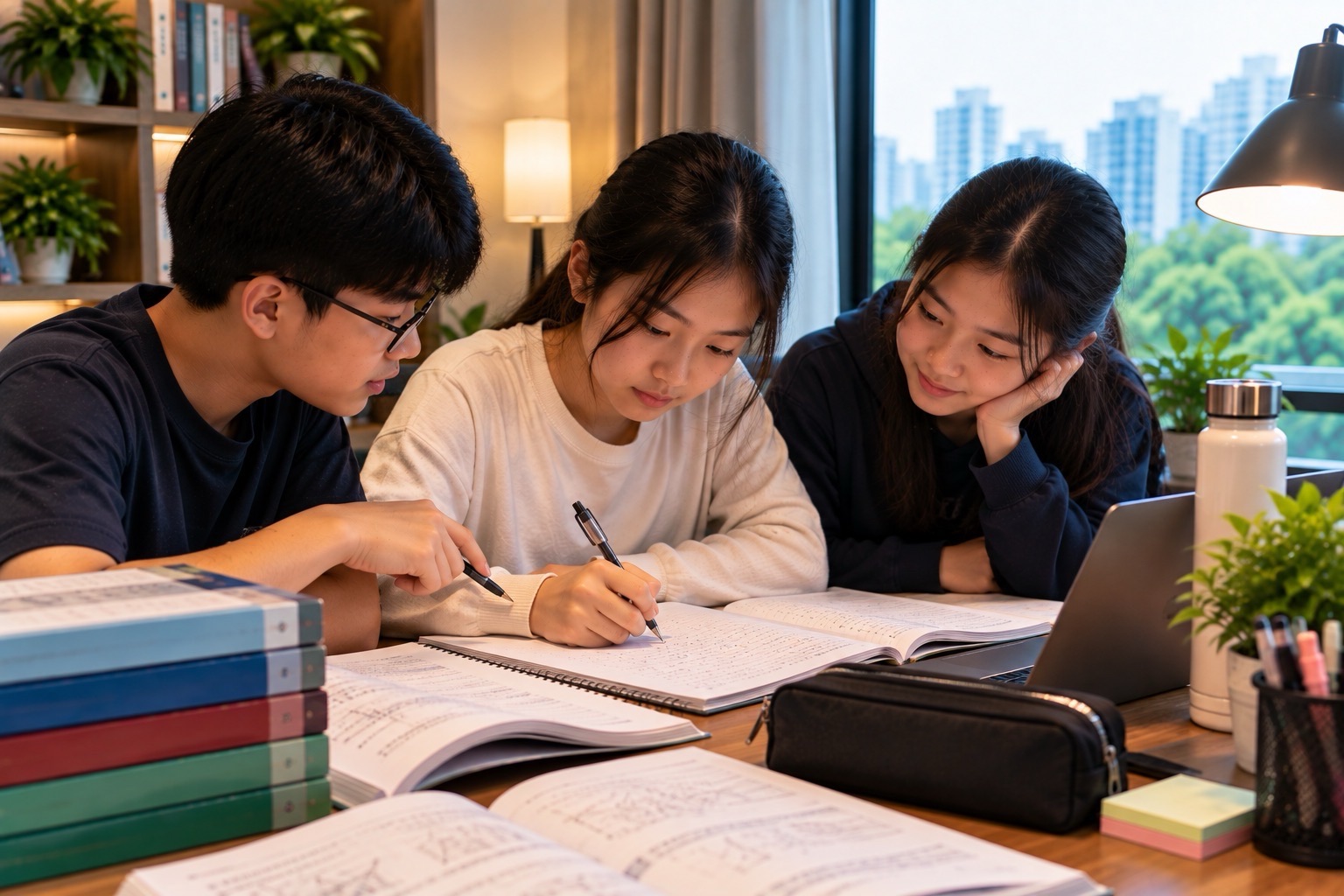
Secondary 4 G3 English tuition in Punggol should begin with the student’s actual examination year and subject entry. eduKatePunggol offers small-group tutorials of up to three learners, normally lasting ninety minutes. A useful tutor reads each pupil’s first writing or comprehension response, identifies a specific gap in task fulfilment, evidence, clarity or timing, and checks whether that correction works in a new independent task. The purpose is exam readiness through transferable language skill, not promises of unseen topics or grades.
A candidate graduating in 2026 follows the Singapore-Cambridge GCE O-Level English Language syllabus 1184. The first SEC graduating cohort is in 2027, when G3 English Language is K300, with 1184 listed by SEAB as the earlier reference code. The published 2027 K300 has Writing 35%, Comprehension 35%, Listening 10% and Oral Communication 20%. Although overlapping language skills remain useful, tutors must follow the candidate’s real examination-year instructions rather than automatically treating a 2027 guide as the 2026 paper.
The essential exam-year facts
- 2026 Secondary 4 G3 candidates should check their GCE O-Level English Language 1184 entry, syllabus and school examination instructions.
- SEC begins for the 2027 graduating cohort; G3 English Language uses K300, with 1184 the previous reference code.
- The 2027 K300 scheme has four papers totalling 180 raw marks and weighted 35% Writing, 35% Comprehension, 10% Listening and 20% Oral.
- 2027 situational writing is 250–350 words, continuous writing 350–500, comprehension includes an 80-word summary and oral uses a video stimulus.
- A three-person tutorial is valuable only if every learner receives personal diagnosis, changed-context practice and independent checks—not grade guarantees.
Navigate: 2026 vs 2027 · Three-person class · 31 exam-specific teaching examples · 90-minute tutorial · Parent checklist · FAQs · Official sources
The correct 2026 and 2027 English examination documents
The 2026 GCE O-Level school-candidate subject list names English Language 1184. The 2027 SEC G3 school-candidate list names English Language K300 and identifies 1184 as the earlier reference. Exam-year precision matters because families use paper instructions for revision schedules, writing lengths and timed conditions. An older examination question can remain useful for reading or writing practice, but it should never be represented as the exact present-year paper without verification.
| 2027 SEC G3 English K300 | Duration | Raw marks | Weighting |
| Paper 1 Writing | 1 h 50 min | 70 | 35% |
| Paper 2 Comprehension | 1 h 50 min | 50 | 35% |
| Paper 3 Listening | About 45 min | 30 | 10% |
| Paper 4 Oral Communication | About 20 min incl. 10 min preparation | 30 | 20% |
The official 2027 Writing paper has grammatical Editing for ten marks, Situational Writing for thirty marks and Continuous Writing for thirty marks. The candidate produces 250–350 words on a situational task involving a visual text, and 350–500 words on one of four continuous-writing topics. The Comprehension paper reads visual, narrative and non-narrative texts, with an 80-word summary response. Listening includes a single-play eight-mark note-taking section; Oral Communication involves a planned response and spoken interaction on a video stimulus. These are the stated K300 requirements for 2027, not a claim that every past paper is identical.
For a 2026 candidate, the official English 1184 document and their school registration are the authority. Where tasks overlap, a tutor can teach reading and writing skills across years while clearly marking which examples are for practice and which follow the actual examination blueprint. Avoid building an exam plan from a generic page that says only ‘Secondary English’.
SEAB 2026 GCE O-Level subject index (English 1184) · 2026 English Language 1184 syllabus · 2027 SEC G3 English Language K300 syllabus.
The first wrong decision matters more than the final mark
A writing answer can be beautifully grammatical and still fail because the candidate omitted a necessary detail from the prompt. A summary can be concise and fluent but select irrelevant points. A reading response may name a plausible emotion that the passage never supports. A prepared speech can sound confident yet ignore a follow-up. These are not identical weaknesses. The tutor should identify the decision that first led the student away from what the task required.
That diagnosis creates a useful lesson. For task fulfilment, teach the reader’s required information. For summary selection, teach relevance and distinction among points before paraphrasing. For inference, identify the exact passage clue. For oral response, teach listening and answering the new question. Only after the method is sound does timed practice reveal useful information about pacing.
Why three learners can make personal feedback possible
A tutorial capped at three students gives a tutor more chances to see each original attempt, compare alternative interpretations and give specific corrective feedback. The group can discuss which text clue supports an inference or whether a message includes the reader’s requested action. But the exam is individual. One pupil must not be allowed to supply the answer for everyone, and every learner needs a changed response without looking at the model.
- Begin with an independent response before the marking key is displayed.
- Find the first unsupported inference, omitted content item or invalid writing decision.
- Use a short meaningful comparison to explain why the original response failed.
- Allow respectful peer challenges without making class speed a contest.
- Give everyone a new individual writing, reading or oral task.
- Revisit previous errors after a delay, preferably in a mixed task.
- Consider whether additional tuition is still useful, sustainable and appropriately matched.
Some students need private or specialist support, while others are already making strong progress with school feedback and independent revision. A three-person class is one possible format, not a universal educational optimum. When the extra lesson makes a candidate exhausted or repeatedly dependent on other pupils’ answers, the arrangement should be reviewed. No group size or tutor’s examination prediction can guarantee a distinction.
The diagnosis–repair–transfer–return method
Find where the task went off course
Ask what the candidate believed the question required and which piece of source information was used. In writing, check writer, reader, purpose and content requirements. In comprehension, identify the relevant text clue. In speaking, compare the prepared response with the actual follow-up. Record the first changeable behaviour rather than writing only ‘careless’.
Teach a contrast that changes the right answer
Use two situations with a meaningful difference. One email needs a date; another needs approval. One summary point is essential; another is a repeated example. One character’s smile signals delight; another’s forced smile signals a more complicated feeling. The pupil should explain why a single stock answer would be inappropriate.
Remove the model and use a different prompt
After demonstrating the correction, offer a new stimulus, passage or situation. The student must identify the method without being told the chapter or seeing the original annotated answer. A correct rewrite of the first task is helpful practice but does not alone show independent transfer.
Retest after a delay and under suitable timing
Bring the same skill back later in a mixed and eventually timed setting. If the old error returns, refine the explanation or practise a prerequisite. If it survives without hints, increase the challenge or reduce intervention. Use realistic paper conditions for the student’s actual examination year rather than assuming a generic time-per-mark formula.
Thirty-one practical examination errors and targeted corrections
1. The 2026 GCE 1184 and 2027 SEC K300 check
Typical first error. A family buys a 2027 SEC K300 practice document and assumes every one of its timing and writing instructions automatically governs a 2026 O-Level candidate.
How the tutor corrects it. Confirm the school entry and official year-specific document. SEAB lists 2026 O-Level English Language as 1184 and the first 2027 SEC G3 English Language as K300, with 1184 the earlier reference code. Label overlap honestly without misrepresenting an old paper.
How all three learners contribute. Each pupil states the actual subject, exam year and paper reference before timed practice. The tutor checks suitability for each learner.
Unfamiliar independent check. A new commercial paper pack is assessed by its printed year and code, not the marketing cover.
Important caution. An older practice question can be useful without being the candidate’s official present-year paper.
2. Situational writing: sender and recipient
Typical first error. The student writes a friendly message to a school principal using the same register as a note to a classmate, although the purpose is formal.
How the tutor corrects it. Identify writer, recipient, relationship, purpose and action before drafting. Compare how the same request would be expressed to a friend and an adult administrator.
How all three learners contribute. Three pupils plan different communication situations and explain which features change because of the intended reader.
Unfamiliar independent check. An unfamiliar request to an organiser receives an appropriate form of address, purpose and closing.
Important caution. Formal language need not be pompous or filled with rare synonyms.
3. Situational writing: all required content
Typical first error. A candidate writes fluent paragraphs but leaves out the event date and the reason the proposed activity should be approved.
How the tutor corrects it. Create a short content checklist from the prompt and visual source. Separate factual requirements from optional elaboration and reread the draft from the reader’s perspective.
How all three learners contribute. Each learner identifies a different missing requirement and then checks an independent new response.
Unfamiliar independent check. A changed school-event email includes the necessary date, venue, reason and requested action without prompts.
Important caution. Good grammar does not compensate for missing information required by the question.
4. Situational writing: use a visual text accurately
Typical first error. The pupil reads a poster’s heading but invents a free meal because its photograph includes people eating.
How the tutor corrects it. Extract only the facts stated or necessarily implied by the visual and accompanying text. Distinguish an attractive illustration from explicit conditions such as eligibility, deadline or fee.
How all three learners contribute. Three students separately verify audience, actual action and restrictions before producing new individual writing.
Unfamiliar independent check. A new fundraising flyer is turned into a truthful relevant message without invented benefits.
Important caution. A visual text should be read critically, not treated as decorative inspiration.
5. Situational writing: 2027 length control
Typical first error. The candidate writes eighty words for a final national task asking for 250–350 words or writes five hundred without adding useful content.
How the tutor corrects it. The published 2027 K300 situational-writing range is 250–350 words. Allocate meaningful space to purpose, necessary details, explanation and closing instead of padding or omitting vital content.
How all three learners contribute. Each pupil reviews a different draft for completeness and relevance before practising an unfamiliar task under actual year-specific rules.
Unfamiliar independent check. A new 2027-style prompt produces a complete appropriate response within the stated range.
Important caution. Confirm the candidate’s real paper instructions before enforcing a word range.
6. Continuous writing: choose a viable topic
Typical first error. The student chooses the most dramatic topic from four options but has no experience or ideas to sustain a coherent piece.
How the tutor corrects it. Interpret each option, identify what form it invites, and build a brief outline with a defensible narrative or argument. Choose based on content, not a favourite memorised opening.
How all three learners contribute. Three learners plan different topics and challenge whether a proposed paragraph actually answers the prompt.
Unfamiliar independent check. An unfamiliar four-topic set is evaluated for a sustainable idea before drafting begins.
Important caution. Choosing a topic intelligently is a better first step than immediately writing a stock introduction.
7. Continuous writing: 2027 length and coherence
Typical first error. A pupil inserts repetitive descriptive paragraphs to reach a word target while the story’s main decision remains unclear.
How the tutor corrects it. The 2027 K300 continuous-writing range is 350–500 words. Develop an original progression of ideas and check each paragraph’s contribution rather than writing only for length.
How all three learners contribute. Each student identifies a repetitive paragraph, suggests a purposeful revision and then writes independently.
Unfamiliar independent check. A changed topic yields a coherent complete piece within the applicable exam-year range.
Important caution. Length is one requirement; relevance and structure remain central.
8. Narrative consequence rather than stock drama
Typical first error. A candidate forces a car accident into a story about responsibility, creating a dramatic scene unrelated to the prompt.
How the tutor corrects it. Build a believable goal, obstacle, decision and consequence. A small ordinary event can carry strong meaning when its stakes and character response are clear.
How all three learners contribute. Three learners test different plot structures for relevance and causal movement before writing new pieces.
Unfamiliar independent check. An unfamiliar prompt about admitting a mistake produces an original credible story without a forced crash.
Important caution. Memorised plot twists can make answers less adaptable.
9. A memorable but purposeful opening
Typical first error. The student spends an excessive amount of timed writing describing the weather before introducing the required event or argument.
How the tutor corrects it. Choose an opening that establishes situation, tension or viewpoint promptly. Use one relevant sensory detail only when it contributes to the purpose.
How all three learners contribute. Each pupil rewrites one overlong opening and checks whether the revised version helps the reader understand the topic.
Unfamiliar independent check. A new narrative starts with a clear event or decision within a sensible length.
Important caution. An elaborate opening is ineffective if it consumes time needed for the task’s development.
10. Discursive writing and real evidence
Typical first error. The candidate argues that every student learns better online and cites an invented percentage as proof.
How the tutor corrects it. State a specific position, support it with sound reasoning and verifiable or clearly illustrative examples, and acknowledge a relevant limitation. Do not manufacture research findings.
How all three learners contribute. Three students challenge one unsupported claim and propose a defensible real-world illustration.
Unfamiliar independent check. An unfamiliar question about public spaces gets a balanced evidence-aware argument.
Important caution. Confidence and fabricated statistics are not substitutes for reasoning.
11. Expository writing and logical explanation
Typical first error. The learner lists several facts about food waste without explaining how they relate or which idea the paragraph addresses.
How the tutor corrects it. Organise information by cause, process, effect or comparison as appropriate. Introduce a clear central idea and make each paragraph serve one explanatory purpose.
How all three learners contribute. Each student names a paragraph’s function and edits a different informative draft.
Unfamiliar independent check. A fresh topic about sustainable travel is explained in a coherent sequence instead of a list of unrelated facts.
Important caution. Different text types need different organisation.
12. Writing a conclusion that follows the case
Typical first error. A student ends a reasoned discussion with a new unrelated claim or a generic phrase about a bright future.
How the tutor corrects it. Return to the question and the key reasoning already developed, then state a proportionate implication. Avoid introducing a major unsupported argument in the final sentence.
How all three learners contribute. Three learners evaluate endings and identify which genuinely follows from the piece.
Unfamiliar independent check. An unfamiliar discursive prompt receives a conclusion tied to its central position.
Important caution. A conclusion is not a reward for using inspirational quotations.
13. Editing: head subject versus nearest noun
Typical first error. The pupil changes a correct verb because it is adjacent to a plural noun, forgetting the singular head of the subject phrase.
How the tutor corrects it. Identify the head noun: in ‘The group of volunteers is ready’, group controls singular agreement. Test with ‘The volunteers are ready’ to see the changed structure.
How all three learners contribute. Each learner explains one grammar relationship and edits an unfamiliar sentence alone.
Unfamiliar independent check. A new editing paragraph receives the appropriate verb despite an intervening plural phrase.
Important caution. The grammatical relationship, not the nearest word, controls agreement.
14. Editing: reference and pronouns
Typical first error. A student corrects spelling in a sentence whose real error is that its pronoun does not agree with the noun it refers to.
How the tutor corrects it. Trace the antecedent and check agreement in number and perspective. The published 2027 editing section tests grammatical errors rather than spelling or punctuation.
How all three learners contribute. Three pupils identify reference chains and reject a plausible but irrelevant spelling change.
Unfamiliar independent check. An unseen paragraph has accurate pronoun agreement after a justified revision.
Important caution. Exam-year instructions determine the exact editing target.
15. Editing: tense and time conditions
Typical first error. The candidate changes every past verb into the present because one paragraph contains a general truth.
How the tutor corrects it. Establish the timeline and distinguish narration, direct speech and timeless factual statements. Correct only the form inconsistent with its actual clause.
How all three learners contribute. Each learner analyses a different time reference, then edits a fresh passage independently.
Unfamiliar independent check. A new paragraph maintains consistent past narration while preserving appropriate dialogue.
Important caution. Automatic wholesale tense conversion creates new errors.
16. Visual text and intended effect
Typical first error. The child answers that an image exists only ‘to attract attention’ without explaining which audience or action it supports.
How the tutor corrects it. Identify sender, audience, message and call to action. Explain how a specific image or caption affects understanding of the actual purpose.
How all three learners contribute. Each pupil selects one visual feature and provides a grounded explanation before working on a new source.
Unfamiliar independent check. An unfamiliar awareness poster is interpreted without generic unsupported wording.
Important caution. An intention should follow from the available source, not be invented.
17. Narrative comprehension: motive versus result
Typical first error. A student copies a line describing what happened after the character left when asked why the character decided to leave.
How the tutor corrects it. Trace the event timeline, locate the trigger or motive and connect the response to supporting clues. Distinguish a consequence from the cause.
How all three learners contribute. Three students identify trigger, action and result before answering separate new questions.
Unfamiliar independent check. An unfamiliar narrative receives the correct reason with supporting context.
Important caution. An accurate quotation can still answer the wrong question.
18. Comprehension: an overconfident emotion inference
Typical first error. The candidate declares a character furious from a single forced smile, although surrounding evidence suggests nervous politeness.
How the tutor corrects it. Separate literal behaviour from emotional inference and compare multiple textual clues. Choose a conclusion proportional to the available evidence.
How all three learners contribute. Each student defends a different possible interpretation and checks how context changes it.
Unfamiliar independent check. A fresh scene leads to a nuanced explanation grounded in a line or action.
Important caution. Interpretation is not permission to invent a private history for the character.
19. Language for effect in a passage
Typical first error. The student writes ‘to capture the reader’s attention’ in response to every figurative-language question regardless of the expression.
How the tutor corrects it. Identify the actual word or image, explain its implication and connect the effect to the scene’s atmosphere or speaker’s perspective. Be precise rather than generic.
How all three learners contribute. Three pupils unpack different expressions and discuss how each affects the reader.
Unfamiliar independent check. An unfamiliar metaphor receives a specific explanation tied to its context.
Important caution. A stock phrase cannot be assumed to fit every image.
20. Point of view and narrator reliability
Typical first error. The learner treats a first-person narrator’s opinion as established fact about another character, ignoring evidence elsewhere in the passage.
How the tutor corrects it. Separate direct observation, narrator assumption and what the broader text confirms. Identify any contradiction or qualification.
How all three learners contribute. Each student states one claim, its evidence and the limits of certainty before a new individual task.
Unfamiliar independent check. An unfamiliar first-person account is interpreted without turning suspicion into proof.
Important caution. An unreliable narrator need not be wrong about everything.
21. Summary: select the question’s focus first
Typical first error. A student copies colourful examples but misses the main reasons requested by the summary question.
How the tutor corrects it. Underline the summary focus, identify distinct relevant content points and exclude examples that only repeat an idea. Selection precedes rewriting.
How all three learners contribute. Three learners independently choose a point list, then test whether each entry is truly necessary.
Unfamiliar independent check. A new informational passage yields a focused set of supported points rather than a favourite anecdote.
Important caution. Perfect grammar cannot rescue a summary that selected the wrong content.
22. Summary: paraphrase without overstatement
Typical first error. The pupil replaces ‘can help reduce’ with ‘will eliminate’, changing a cautious claim into an absolute promise.
How the tutor corrects it. Preserve the source’s conditions, degree and causal relation. Use natural equivalent wording or concise restructuring without changing meaning.
How all three learners contribute. Students compare an original line with several paraphrases and reject the misleading one.
Unfamiliar independent check. A new passage is rewritten concisely while retaining important qualifications.
Important caution. Paraphrase does not require replacing every term with a rare synonym.
23. Summary: control the eighty-word response
Typical first error. A learner writes 150 words for the 2027 K300 summary task, repeating examples and minor details despite a clear focus.
How the tutor corrects it. Select content first, combine related ideas and remove repetition, then check the length. K300 specifies an 80-word response for its non-narrative summary section.
How all three learners contribute. Each pupil compresses a different overlong draft while the tutor checks which essential points survive.
Unfamiliar independent check. A fresh article is summarised close to the required length without invented additions.
Important caution. The actual examination-year instructions always determine the relevant length.
24. Listening: a revised announcement
Typical first error. The candidate notes the first date heard and misses the later correction, even though both are explicitly spoken.
How the tutor corrects it. Listen to the entire announcement for amendment signals such as instead or rescheduled. Record the final active detail rather than the first familiar number.
How all three learners contribute. Three pupils answer independently, then identify the phrase that changed the instruction.
Unfamiliar independent check. An unfamiliar announcement is interpreted for its revised venue without prompts.
Important caution. Listening is interpreting a complete message, not finding the earliest keyword.
25. Listening: single-play note taking
Typical first error. A student attempts to transcribe every word of a short information recording and misses the categories on the note sheet.
How the tutor corrects it. Use the headings where permitted, anticipate the type of information needed and record concise facts. In 2027 K300, the eight-mark note-taking recording is played once.
How all three learners contribute. Each pupil makes private notes, compares which facts are useful and then practises on a new recording.
Unfamiliar independent check. An unfamiliar single-play information clip produces accurate short notes without a transcript.
Important caution. Different candidate years must follow their actual paper’s audio instructions.
26. Oral: a planned response to video
Typical first error. The learner recounts everything seen in a clip but does not answer the actual prompt or offer a coherent viewpoint.
How the tutor corrects it. Choose one relevant observation, a clear opinion, a reason and a concrete example. Use preparation time for organising thoughts, not writing a memorised speech unrelated to the question.
How all three learners contribute. Each learner prepares a different short perspective and then speaks individually without borrowing a classmate’s opening.
Unfamiliar independent check. A fresh video about community activities elicits a focused planned response answering the prompt.
Important caution. The published 2027 K300 planned response is up to two minutes and worth fifteen raw marks.
27. Oral: unscripted spoken interaction
Typical first error. The student repeats their prepared two-minute speech when asked for an alternative view and never engages with the examiner.
How the tutor corrects it. Listen to the exact follow-up, reply to it directly, explain one reason and, where appropriate, acknowledge another reasonable perspective.
How all three learners contribute. Three pupils ask respectful different follow-ups and each learner handles a new question alone.
Unfamiliar independent check. An unfamiliar oral topic receives a relevant flexible response rather than a recycled monologue.
Important caution. Communication is measured by response and clarity, not uninterrupted speaking.
28. Time management across Writing sections
Typical first error. The candidate uses most of the 110-minute Writing paper to polish an opening, leaving situational details or the conclusion unfinished.
How the tutor corrects it. Plan realistic time for reading both tasks, organising, drafting and checking. Adjust based on observed individual delays; content relevance should remain the first constraint.
How all three learners contribute. Each student identifies a different pacing bottleneck and tests a corrected approach on a short timed task.
Unfamiliar independent check. An unfamiliar mixed writing practice reaches all required sections with a final relevance check.
Important caution. Universal seconds-per-mark shortcuts may not fit different students or tasks.
29. Paper 2 task selection and checking
Typical first error. A pupil spends a disproportionate amount of time on a difficult inference while leaving more accessible information questions unanswered.
How the tutor corrects it. Practise a sensible move-on-and-return strategy and a brief check of question commands, evidence and summary focus. Time should follow understanding.
How all three learners contribute. Each learner reviews where time was lost, tests a personal decision change and compares the new result.
Unfamiliar independent check. A fresh comprehension section has fewer omissions and maintains answer precision.
Important caution. Speed cannot repair a missing reading concept by itself.
30. Personal error ledger instead of ‘careless’
Typical first error. The learner writes careless beside every wrong answer and repeats the same mistake in later papers.
How the tutor corrects it. Record the first concrete problem: missed audience, wrong passage clue, distorted paraphrase, verb disagreement or timing. Add what teaching was used and the result of an unseen retest.
How all three learners contribute. Each pupil keeps a private short log and revisits the relevant habit at a later lesson.
Unfamiliar independent check. A new mixed task shows a specific previous error repaired without a tutor’s cue.
Important caution. Labels without an actionable next decision are not learning feedback.
31. Knowing when to reduce tuition
Typical first error. A pupil is independently handling unfamiliar reading and writing but continues taking increasingly long extra homework only because examination day is approaching.
How the tutor corrects it. Review which skill still needs support, current fatigue and school feedback. Adjust or stop extra class time when little additional value is evident.
How all three learners contribute. The tutor checks progress with every learner and recommends an appropriate level of help without promising more is always better.
Unfamiliar independent check. A new independent paper and sustainable routine support an evidence-based continuation decision.
Important caution. A small class is a support option, not a guarantee or a permanent obligation.
Two teaching vignettes: a correct-looking answer is not enough
The email that forgot why it was sent
An illustrative Secondary 4 student produces a polished email proposing a school activity but omits the intended date and reason a coordinator should approve it. The tutor asks the learner to read it as the intended recipient and list which decisions cannot yet be made. The class compares task fulfilment with grammar quality, but every pupil then drafts a different new message alone. The correction is understanding the reader’s needs, not memorising a more formal greeting.
A summary that selected the wrong information
Another student writes an overlong summary with elegant sentences and several colourful examples, but two required reasons are missing. The tutor first identifies the prompt’s focus and asks which relevant distinct points are indispensable. Only afterwards does the learner combine and paraphrase, then summarise an unfamiliar text without the annotated model. These are hypothetical teaching scenes, not reports of an identifiable student’s marks.
A ninety-minute tutorial that protects time for real revision
| Illustrative minutes | Purpose |
| 0–10 | Unaided retrieval of a previously corrected English skill |
| 10–25 | Analyse an authentic script and diagnose the first costly error |
| 25–45 | Explain one reading, writing or oral distinction with a contrast |
| 45–65 | Individual correction and purposeful peer comparison |
| 65–80 | New independent and sometimes timed task |
| 80–90 | Student self-check, error note and a realistic home target |
These time blocks are illustrative, not a rigid promise. A candidate who has not mastered basic task interpretation needs focused teaching before time pressure. Another whose writing is accurate but slow may benefit from timed planning and checking. The tutor should make sure each learner works actively instead of waiting for the strongest student to supply the next answer.
An eight-week approach to exam readiness
First verify the subject code, exam year and applicable paper instructions, then inspect original writing, comprehension and oral or listening samples. In weeks one and two, identify a handful of recurring, high-cost errors. Weeks three and four repair those errors through targeted contrasts and unfamiliar retests. Weeks five and six mix tasks and introduce suitable timed sections. Weeks seven and eight review appropriate actual-year paper practice, revisit earlier errors after a delay and adjust the final priorities. The timeline is illustrative and not a guarantee of examination results.
A useful progress note should say what changed without claiming certainty about the final grade. For example: ‘Previously missed the deadline in a situational prompt; now identifies writer, reader, action and date in two unfamiliar notices.’ That is actionable feedback. A school mark can provide supporting context but the task’s difficulty and familiarity affect it. The independent changed response is closer to the teaching process.
Seven further parent decisions for G3 English
The wrong examination year makes a good practice plan unreliable
Singapore’s 2026 GCE O-Level English Language is 1184, while the first 2027 SEC G3 English Language uses K300. SEAB’s subject list explicitly connects these codes as historical reference and current designation, but the candidate must still follow the year printed on the actual examination documents. A teacher can use a past passage to practise an overlapping skill without claiming its entire format is the present national paper. This distinction matters when setting timers, word ranges, section order and access arrangements. A reliable tutor starts the revision calendar with school registration and official documents, not a commercial workbook’s generic title.
The next practical question is which different task the pupil now completes without seeing the tutor’s original solution. If the same starting hint remains necessary, revise the method rather than adding an unreviewed paper. If the skill persists after a delay, the candidate may be ready for greater challenge or less prompting.
Summary writing has two separate difficulties
A pupil may choose the wrong content points and still write beautiful sentences, or select all the right points but express them with repetition and inaccurate paraphrases. These are different problems requiring different feedback. First identify what the summary prompt asks for and mark distinct relevant ideas; only then compress and paraphrase. A tutor who begins by rewriting every word may leave the actual content error untouched. A changed source passage should be used to test selection. The 2027 K300 80-word response is a specific assessment instruction, not a reason to make every school summary identical.
The next practical question is which different task the pupil now completes without seeing the tutor’s original solution. If the same starting hint remains necessary, revise the method rather than adding an unreviewed paper. If the skill persists after a delay, the candidate may be ready for greater challenge or less prompting.
The audience test can prevent elegant but incomplete writing
Before calling a situational message complete, imagine being the recipient who has not seen the original visual prompt. Would the message explain why it was sent, give the requested information and make the next action clear? A pupil can produce fluent paragraphs yet omit a date or essential condition. A tutor can separate task fulfilment from language precision and test both. After revising the first response, the learner needs a new message with a different reader and purpose. That changed context is where the skill becomes independent rather than tied to a memorised letter template.
The next practical question is which different task the pupil now completes without seeing the tutor’s original solution. If the same starting hint remains necessary, revise the method rather than adding an unreviewed paper. If the skill persists after a delay, the candidate may be ready for greater challenge or less prompting.
Oral communication depends on listening as much as speaking
A good prepared answer is only part of the assessment. The student has to observe the video, form a viewpoint and respond flexibly to follow-up questions about related situations. A three-pupil group can help through respectful challenges and alternative perspectives, but a private first answer and an unfamiliar question remain essential. The tutor should give a quieter child thinking time rather than reward only confident volume. The ability to acknowledge an alternative view and explain one’s position is more transferable than memorising a speech about a few popular social topics.
The next practical question is which different task the pupil now completes without seeing the tutor’s original solution. If the same starting hint remains necessary, revise the method rather than adding an unreviewed paper. If the skill persists after a delay, the candidate may be ready for greater challenge or less prompting.
Full papers reveal timing but do not automatically fix concepts
A student can complete several practice papers each week and repeat the same reading mistake throughout. The paper count demonstrates effort, not necessarily learning. Review the original answer and find the earliest unsupported decision. Teach a short contrast, ask for a new response and check the principle again later. Full papers become most informative when the methods are already reliable and the student needs to test integration and pacing. A learner with high anxiety or fatigue may benefit from fewer deeply reviewed tasks rather than a compulsory additional paper every evening.
The next practical question is which different task the pupil now completes without seeing the tutor’s original solution. If the same starting hint remains necessary, revise the method rather than adding an unreviewed paper. If the skill persists after a delay, the candidate may be ready for greater challenge or less prompting.
A three-student group should produce three separate improvements
Peer discussion can be useful when one learner notices a word clue, another explains the writer’s purpose and a third tests a potential inference. But a collective answer is not a valid predictor of the individual’s national examination response. A good tutor therefore gets separate first attempts, uses a short group comparison and then asks every pupil to handle a new question alone. Progress notes should be individual and specific. If a student repeatedly waits for the fastest classmate, the teaching arrangement has to change. Group size helps only when the tutor uses it for meaningful attention.
The next practical question is which different task the pupil now completes without seeing the tutor’s original solution. If the same starting hint remains necessary, revise the method rather than adding an unreviewed paper. If the skill persists after a delay, the candidate may be ready for greater challenge or less prompting.
When a learner is already prepared, less may be more
Some pupils are capable of self-correcting and already receiving good guidance from school. Another ninety-minute class may displace sleep or independent reading without adding a needed skill. A responsible tutor should evaluate whether the pupil can manage unfamiliar writing, comprehension and oral work and whether a particular gap remains. If not, a lighter schedule or school-only support may fit better. For a learner with persistent specialised needs, one-to-one or school-arranged support may be more appropriate. The service should be judged by its usefulness to the individual child rather than a promise of indefinite tuition.
The next practical question is which different task the pupil now completes without seeing the tutor’s original solution. If the same starting hint remains necessary, revise the method rather than adding an unreviewed paper. If the skill persists after a delay, the candidate may be ready for greater challenge or less prompting.
Family support without unlimited practice papers
At home, ask the student what a writing prompt requires, which passage line supports an inference and whether the final answer actually meets the question. One deeply reviewed error can teach a more transferable habit than many almost identical questions. Parents do not need to rewrite the child’s essay or become a second examiner; preserve the original response for the tutor to understand.
Protect school assignments, rest, independent reading and family time. Increasing practice volume when a concept remains wrong may simply repeat the error while exhausting the learner. If school teaching and self-study are already sufficient, additional tuition may not add useful value. A responsible provider should be willing to reduce or change the arrangement.
Parent checklist before choosing Punggol tuition
- Verify 2026 O-Level 1184 versus 2027 SEC K300 from the student’s actual registration.
- Bring original marked scripts and the pupil’s own attempts, not only the corrected answers.
- Ask how all three learners receive personal diagnosis and a changed individual retest.
- Check whether class time teaches a specific error rather than only marks complete practice papers.
- Confirm how speaking and listening tasks are tested without memorised scripts.
- Check current fees, class vacancies, group matching and missed-lesson rules directly.
- Reassess whether the extra workload remains appropriate before examination day.
Secondary 4 G3 English tutorials in Punggol · Secondary 4 English tutor guide · English tuition enquiry
eduKatePunggol provides tutoring in Punggol, but a public information page cannot establish a vacancy in the precise G3 class or a fixed current tuition price. Official SEAB documentation is independent and does not endorse a private tuition provider.
Frequently asked questions
Which English subject code applies to 2026 G3 candidates?
For 2026 school candidates, the GCE O-Level English Language syllabus is 1184. Confirm the student’s actual national examination entry.
When does G3 English become SEC K300?
The Singapore-Cambridge SEC begins with the 2027 graduating cohort; K300 is the G3 English Language code, with 1184 the earlier reference.
What are the 2027 K300 paper weights?
Writing 35%, Comprehension 35%, Listening 10% and Oral Communication 20%.
What are the 2027 situational and continuous writing word ranges?
Situational writing is 250–350 words and continuous writing is 350–500, for the stated 2027 K300 paper.
Does the G3 paper have a summary?
The published 2027 K300 Comprehension assessment includes an 80-word summary based on a non-narrative text.
What is the 2027 G3 oral format?
It comprises a planned response to a video clip with an accompanying question and a related spoken interaction; the planned response is up to two minutes.
Should every session be a full English examination paper?
No. Targeted correction and new independent responses may be more effective when recurring comprehension or task-fulfilment errors remain.
Can the tutor predict the exact unseen essay topic?
No responsible provider can guarantee an unseen national topic. Practise flexible planning, clear evidence and appropriate writing.
Is a class of three always the best format?
No. Class matching, feedback, individual needs and available time determine whether it is useful.
Can tuition guarantee an English distinction?
No. Individual examination performance and multiple factors outside tuition determine the final result.
The outcome worth pursuing is independent G3 English
The best Secondary 4 G3 English tutor helps a learner make fewer unsupported decisions and become more confident handling unfamiliar text, writing, listening and conversation without the teacher’s next prompt. A three-person lesson can provide frequent individual feedback and peer comparison, but the group itself cannot earn the candidate’s examination marks.
Parents should evaluate the pupil’s changed independent responses, later retention and wellbeing. When extra tuition no longer adds meaningful value, reducing the workload can be a responsible choice. The goal is capability, not permanent dependence.
Other G2 and G3 Punggol small-group tutor guides
Secondary 1 G2 Mathematics small-group tutorials · Secondary 3 G2 Mathematics small-group tutorials · Secondary 2 G3 English small-group tutorials · G1/G2/G3 secondary tuition parent guide
Official SEAB sources and Punggol tuition routes
SEAB 2026 GCE O-Level subject list · 2026 English Language 1184 syllabus · 2027 G3 English K300 syllabus.
Secondary 4 G3 English tutorial information · Secondary 4 English small-group tutor guide · Punggol English enquiry.
Editorial verification: 6 November 2026. The 2027 K300 timings, raw marks and word limits are those of the specified SEC graduating cohort; candidates in 2026 must follow the relevant 1184 paper documents and their school registration. MOE and SEAB do not endorse the private tuition service.


