
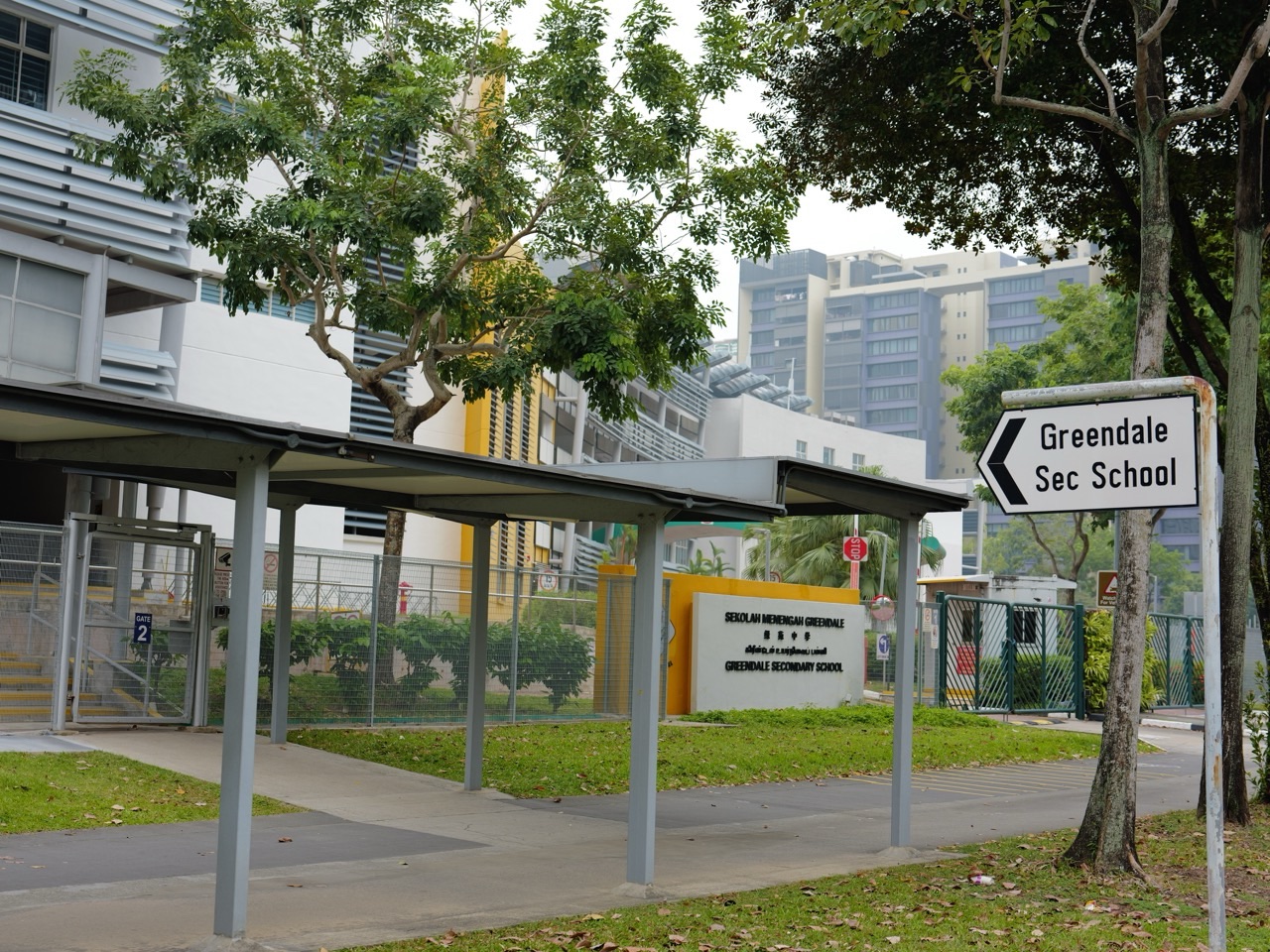
Schools and education at Punggol include different Applied Learning Programmes (ALPs) and Learning for Life Programmes (LLPs) across nearby secondary schools. Punggol Secondary focuses on Environmental Education and Community and Youth Leadership; Greendale Secondary describes Design, Technology and Engineering alongside Outdoor Adventure Education; Edgefield Secondary publishes its entrepreneurial G.E.M. programme and character development through sports anchored in Taekwondo. These are distinct educational emphases, not rankings or guarantees that every pupil joins a specialist team.
This guide explains what the programmes aim to teach, how they differ from CCAs and subject levels, and what Punggol families can ask before choosing a secondary school for 2027. The information is grounded in official school descriptions, including Greendale’s November 2026 open house. Parents should still verify which opportunities reach an entire cohort, which require selection, and how the ordinary timetable and safe commute fit the child. Programme names alone cannot guarantee DSA, posting, awards or later careers.
- ALP: applied and interdisciplinary learning linked to real-world problems.
- LLP: character, values and life competencies developed through meaningful experiences.
- Punggol Secondary ALP: Environmental Education and sustainable living.
- Punggol Secondary LLP: Community and Youth Leadership.
- Greendale Secondary ALP: Design, Technology and Engineering.
- Greendale Secondary LLP: Outdoor Adventure Education.
- Edgefield Secondary ALP: G.E.M., Growing an Entrepreneurial Mindset.
- Edgefield Secondary LLP: Character development through sports, anchored in Taekwondo.
- Broad school programmes and selective CCA or DSA activities are different.
- Check 2027 cohort programmes, travel and support rather than rank by school publicity.
Definition lock: secondary ALP, LLP, CCA and Full SBB
An Applied Learning Programme provides practical and interdisciplinary contexts in which pupils apply subject knowledge and reason about real problems. A Learning for Life Programme develops character and life competencies through suitable experiences. Co-Curricular Activities are separately organised student-development commitments with their own rules. Full Subject-Based Banding structures academic subjects and form classes. These four mechanisms can complement one another but must not be confused when families compare school options.
Seven family questions when comparing programmes
- What exact ALP and LLP does the school currently publish?
- What does an ordinary Secondary 1 lesson or cohort activity look like?
- Which opportunities are open to all and which require selection?
- How are pupils taught to reflect and demonstrate understanding?
- What safety, supervision and access arrangements apply?
- How do programmes fit Full SBB subjects, CCA and travel?
- Does the child enjoy the ongoing learning, not just the open-house demonstration?

1. Applied Learning and Learning for Life have different educational aims
Secondary schools in Singapore may offer distinctive Applied Learning Programmes, called ALPs, and Learning for Life Programmes, called LLPs. The titles can look similar on school websites, but the educational purposes are different. ALPs connect subject knowledge and thinking with practical contexts, while LLPs support values, character and life competencies through relevant experiences. An ALP can involve science, engineering or enterprise; an LLP may involve sports, leadership, service or outdoor learning. Neither is simply a promise that pupils will win competitions.
Families in Punggol comparing secondary schools should read what each programme actually asks students to do. A school that advertises engineering may teach design iterations and coding; one focused on environmental education may ask how evidence informs sustainable decisions. A leadership LLP may involve service and purposeful responsibility. These are not interchangeable merely because all use attractive words such as innovative or future-ready. The underlying question is which kind of thinking and behaviour the school hopes to develop.
A learning decision or example
An ALP or LLP is also distinct from a Co-Curricular Activity. Many programmes are embedded in cohort experiences or school curricula, while particular advanced competitions or CCAs can have separate selection criteria. Attending an open house and watching a showcase does not automatically entitle every Secondary 1 entrant to join the specialist team on stage. Ask which activities reach the entire cohort and which require additional selection or commitment.
These programmes coexist with Full Subject-Based Banding. Students may share common form classes and take subjects at G1, G2 or G3 according to their actual starting levels, while the school develops interdisciplinary and character learning. A distinctive programme should not be treated as a replacement for English, Mathematics or Science instruction. Strong curriculum foundations and suitable applied experiences can reinforce each other when planned thoughtfully.
A misleading assumption and transfer check
Parents may be tempted to rank schools solely by ALP equipment or LLP award photos. That can obscure a child’s travel time, safety, friendships, support and academic fit. A sophisticated engineering lab is not necessarily valuable to a pupil who does not enjoy repeated design testing. A service-oriented programme may be meaningful to a child who likes working with people. The decision should be about an authentic, sustainable school experience rather than publicity prestige.
For transfer, imagine a fictional student who enjoys coding but also values community service. Which question should they ask about each programme? What ordinary opportunities exist, what is selected, and what can the pupil learn by participating? That enquiry is more useful than demanding a single programme with the most impressive name.
2. Punggol Secondary’s ALP connects environmental science with sustainable living
Punggol Secondary School’s official principal’s message identifies its Applied Learning Programme as Environmental Education, encouraging pupils to understand the relationship between Science and Nature for sustainable living. The school positions the programme within a broader commitment to self-directed and future-ready learning. This is a school-published educational direction, not evidence that every pupil has personally conducted a field experiment at the waterfront or received a specialist research award.
Environmental learning can draw on Science, Geography, Mathematics and language. A pupil might examine how a school uses resources, which observable changes can be measured and how a realistic action could reduce unnecessary consumption. A good project defines the question before collecting evidence. A poster that says Save the Earth can raise awareness, but it does not establish that an intervention worked unless appropriate data are gathered and interpreted.
A learning decision or example
A fictional Secondary 1 group might ask whether turning off unused classroom lighting during an authorised period reduces electricity consumption. A proper investigation would need suitable measurement, controlled conditions and school approval. Pupils should not alter electrical installations or collect restricted building data. A safe, teacher-managed analysis of published or authorised figures can still teach causal reasoning. The core learning lies in the method and justified conclusion rather than the presence of a dramatic field experiment.
Parents should distinguish environmental observation from environmental activism and from specialist laboratory work. Pupils can learn how ecosystems and human decisions relate without being required to make unverified claims about the entire Punggol Waterway. A single photograph of litter in a public area cannot establish a long-term trend. Ethical inquiry recognises what has been observed, what is uncertain and how people can respond responsibly within their authority.
A misleading assumption and transfer check
Some families assume an environmental ALP must be less technical than an engineering ALP because its title does not mention coding. That inference is unsupported. Environmental challenges can require data analysis and system thinking, while engineering tasks may consider sustainability and social impact. The school determines its actual content; parents should ask about the typical year-level tasks rather than rank subjects by fashionable terminology.
For transfer, ask a pupil to move from a fictional recycling problem to a question about school water use. What remains constant? Defining a measurable question, respecting safety and using evidence before proposing an action. That is the transferable competence of an environmental applied-learning programme.
3. Punggol Secondary’s LLP focuses on community and youth leadership
The same school’s principal’s message describes its Learning for Life Programme as Community and Youth Leadership. Its stated intention is for students to recognise that they can contribute to others and become active citizens with a heart for people. This focus is distinct from the Environmental Education ALP, although a real project might combine them. One develops applied understanding; the other provides opportunities to practise responsibility and meaningful service.
Leadership should not be reduced to receiving a prefect badge or being the loudest speaker in the group. A student may lead by ensuring colleagues understand a task, making a fair decision under time pressure or accepting responsibility for a mistake. A school can provide formal roles and experiences, but the value of the programme depends on the behaviours students learn and demonstrate. A public title alone is not proof of thoughtful leadership.
A learning decision or example
Community involvement can include school-authorised service and reflection. For example, an invented team might prepare suitable educational materials for a supervised community activity. Before claiming impact, they should identify who needed the materials, what was delivered and what remains unknown about outcomes. Service recipients deserve dignity and privacy; a child should not be encouraged to photograph vulnerable people simply to fill a leadership portfolio.
Parents can ask how the programme responds when students disagree or a plan fails. A group that solves a conflict respectfully may have learned more than one that produces a beautiful display through one dominant pupil’s decisions. A teacher can help distinguish fair contribution from performative responsibility. A student should be allowed to learn from feedback without needing to pretend their first leadership attempt was flawless.
A misleading assumption and transfer check
One misconception is that students not selected for formal student-council leadership cannot benefit from the LLP. School-wide values and ordinary group experiences may reach pupils in different ways. The actual available leadership opportunities and formal roles need verification, but meaningful responsibility can be practised in class, CCA and service. Families should not treat an individual appointment as the only educational outcome.
For transfer, give a fictional pupil a project where two classmates disagree over the next activity. How can the student demonstrate leadership without claiming authority they do not hold? Listening, clarifying the objective and involving the appropriate teacher are constructive actions.
4. Greendale Secondary’s ALP is Design, Technology and Engineering
Greendale Secondary School’s current school pages identify Design, Technology and Engineering as its Applied Learning Programme, described in its open house as an opportunity for pupils to design and code. Older school documents provide examples such as Arduino microcontrollers, computer-aided design, 3D prototyping and sustainability-related challenges. Those are historical examples of its applied approach; parents should not claim that every Secondary 1 cohort in 2027 will use precisely the same tools or complete all past projects.
The central engineering habit is defining a problem before selecting technology. A pupil might create a prototype intended to move an object along a simple path. The initial design could fail because a component is misaligned or the instructions do not cover an unexpected input. The learner can identify the failure, test one change and explain the result. That reasoning is more valuable than presenting a professionally built machine that the student cannot describe.
A learning decision or example
Greendale’s school website places the ALP alongside Digital Literacy and Talent Development experiences. Some projects may take place as cohort learning, while more specialised competitions or DSA opportunities follow their own rules. The parent should ask which technical activities are common curriculum experiences, which are optional and what foundational Mathematics or Science skills support them. An open-house demonstration is not an automatic invitation to every advanced club.
An engineering ALP can also teach communication and ethics. A prototype’s safety, accessibility, cost and environmental effects matter. Suppose an invented team designs a classroom device that plays a loud sound whenever someone moves. The group should consider whether it helps the actual problem, who may be disturbed and what safer alternatives exist. Design is not merely learning to assemble electronic components; it requires evaluating consequences.
A misleading assumption and transfer check
Parents should avoid buying drones, 3D printers or robotics kits based on an old programme sheet before knowing the school’s current materials and requirements. The school may supply relevant tools under supervised conditions. Using a complex or hazardous device without suitable instruction can create risks. A paper design, model or teacher-provided simulation may provide the necessary learning for an early stage.
For transfer, give the child an unfamiliar engineering task involving a restricted budget and a user with different accessibility needs. Can they revise a design while explaining the constraints? This tests applied reasoning rather than memorisation of an Arduino command.
5. Greendale’s LLP uses outdoor adventure to build character
Greendale Secondary identifies Outdoor Adventure Education as its Learning for Life Programme. Its 2026 open-house page highlights confidence and resilience through outdoor experiences, while older term information describes cohort camps and optional examples such as kayaking, climbing or cycling under relevant arrangements. These are useful evidence of programme emphasis, not a guarantee that every new student attends an overnight camp or receives a particular certification at no cost.
Outdoor learning can create situations in which students practise teamwork, communication and responsible decision-making. A group planning a supervised route needs to consider instructions, other participants and what to do if a plan changes. The learning outcome should not be measured only by who reaches a destination first. A pupil who recognises that a teammate needs help and contacts the responsible adult may demonstrate sound judgement.
A learning decision or example
Resilience should not be interpreted as ignoring injury, exhaustion or fear. Appropriate outdoor education includes safety planning and age-suitable challenge. Students can learn to persist when a skill is difficult while understanding when to stop and ask for guidance. The school and qualified instructors manage actual activity risks. A generic article should not supply unsupervised climbing or kayaking exercises for families to replicate.
One common misunderstanding is that an Outdoor Adventure LLP makes academic subjects less important. The programme complements ordinary learning, and a pupil still needs a sustainable schedule for homework, rest and any CCA. An adventurous student may also enjoy Mathematics, Art or language. Families should avoid assigning children one permanent identity based on their preferred school programme.
A misleading assumption and transfer check
Outdoor experiences can also prompt reflection about environmental stewardship and accessibility. Pupils may encounter natural spaces through authorised activities and learn how people protect the environment. These opportunities may overlap with environmental applied learning, but the emphasis is often different: the experience develops character and cooperation, not necessarily formal scientific measurement. The exact school programme determines the balance.
For transfer, imagine a fictional group meeting heavy rain during a supervised camp activity. Does courage mean continuing regardless of the instructor’s safety instruction? No. Following the appropriate plan, communicating clearly and adapting responsibly are stronger examples of resilience.
6. Edgefield Secondary’s G.E.M. ALP develops an entrepreneurial mindset
Edgefield Secondary School’s official About Edgefield page describes its Applied Learning Programme as Growing an Entrepreneurial Mindset, abbreviated G.E.M. The programme seeks to develop creative thinking, collaboration and alertness to real-world opportunities. This is different from assuming every pupil must start a business or earn money during Secondary 1. Entrepreneurship in an educational context can mean identifying a user need, testing an idea, learning from feedback and understanding what makes a solution responsible.
Imagine a fictional school problem: many pupils forget to return shared materials after group activities. An entrepreneurial-minded team might interview authorised users, identify the source of confusion and design a low-cost reminder system. They should define whose problem it solves, what evidence supports the need and how success could be measured. Selling the invention or claiming an extraordinary commercial valuation is not necessary for meaningful learning.
A learning decision or example
Edgefield also publishes a Future Ready Programme describing scenario-based problem solving, autonomy-supportive learning and technology-enhanced approaches. Parents can ask how these experiences connect with the G.E.M. ALP without assuming every named programme has identical eligibility or timetable. Some may be broad school experiences, while others include selective development opportunities. The official school’s current department information should clarify the cohort arrangement.
Entrepreneurship education includes ethical questions. A product could appear profitable while creating unnecessary waste or excluding people who cannot pay. Students should learn to evaluate users, costs, safety and fairness, not merely pitch an exciting idea. A good project may end with a decision not to proceed because evidence shows the first design does not meet the need. That is responsible applied learning.
A misleading assumption and transfer check
Some families compare entrepreneurial and engineering programmes as though one is more academic. Both can involve mathematical reasoning, language, design and collaboration, but their starting questions differ. An engineering task may emphasise how a system works; an entrepreneurship task may emphasise identifying a need and testing value for users. Actual programmes can overlap, and no name alone establishes superiority.
For transfer, ask the pupil to take a new fictional problem involving a school library queue. Can they identify the affected users, ask an appropriate question and test one low-risk idea before claiming that it works? That is a practical entrepreneurial habit.
7. Edgefield’s LLP develops character through sport and Taekwondo
Edgefield’s official school description identifies Character Development through Sports, anchored in Taekwondo, as its Learning for Life Programme. The intended values include respect, resilience and self-discipline. The programme focus is not a claim that every student becomes a competitive martial artist or receives a black belt. Parents should ask which activities are offered to the cohort, how pupils with different physical needs participate and which experiences are optional or selective.
Sport can make values visible. Waiting for an instruction, treating a partner respectfully and accepting correction are concrete behaviours. A student who learns that controlled movement and mutual safety matter may gain more from an early lesson than a pupil who tries to demonstrate power without discipline. The programme’s character objective should be explained independently from any competitive result or grading system.
A learning decision or example
Parents should distinguish an LLP experience from a specialised CCA. Edgefield lists individual sports and other activities in its CCA information, with their own eligibility and training requirements. Being exposed to Taekwondo through a school programme does not necessarily mean the student is enrolled in a competition team. A school open house can demonstrate activities, but the official timetable and selection rules determine actual participation.
Health and safety remain central. Martial-arts activities require suitable supervision, equipment and instruction. A generic education guide should not invite children to practise kicks or sparring techniques unsupervised to prepare for secondary school. A child who needs a medical or accessibility adjustment should have relevant professional guidance considered by the school. Respect includes recognising different abilities and boundaries.
A misleading assumption and transfer check
Some parents assume that a child who is quiet or physically cautious cannot develop leadership through a sports-based LLP. Leadership and character can be expressed through listening, self-control and care for others. The school may provide multiple roles or activities, but it is the actual learning and support that matter. A pupil’s initial confidence should not be treated as a permanent limitation.
For transfer, give a fictional student a choice between impressing classmates with a risky manoeuvre and following a coach’s slower practice instructions. Which choice better demonstrates the programme’s character aims? Responsible skill development and respect for safety take priority over a dramatic display.
8. How to compare the three schools without inventing a ranking
Punggol Secondary, Greendale Secondary and Edgefield Secondary have different published ALP and LLP emphases. A summary can be accurate without claiming a universal winner: Punggol Secondary connects environmental education with community leadership; Greendale combines design and engineering with outdoor adventure; Edgefield pairs entrepreneurial thinking with sports-based character development. Those are programme descriptions, not a ranking of academic results, safety or admissions probability.
Families should inspect the exact school’s current programme page rather than mix details from several campuses. A Greendale engineering project does not prove Edgefield pupils use identical technology, and Punggol Secondary’s leadership emphasis does not guarantee the same formal roles as another school’s CCA. The fact that programmes share aims such as innovation or resilience should not erase their different contexts. Clear attribution is central to fair comparison.
A learning decision or example
Daily travel, subject-level options under Full SBB, support, CCAs and school culture remain important. A child may prefer one ALP but face a long commute that affects rest. Another may need a particular learning support arrangement not established by the programme summary. SchoolFinder, authorised open houses and the receiving school can supply current information. The final S1 Posting process uses official eligibility and preferences.
A meaningful comparison also recognises that promotional evidence can be selective. A video may show one exceptional student, while ordinary teaching involves a much wider cohort. Parents should ask which learning experiences reach all pupils and how progress is assessed. Results may be described qualitatively or through actual student work, not necessarily through competition medals. Avoid asking any school to guarantee individual grades from a distinctive programme.
A misleading assumption and transfer check
Some families attempt to convert ALP and LLP labels into future career predictions. A child interested in engineering may eventually pursue another field; a pupil learning community leadership need not choose a public-service career. The programmes can develop transferable capabilities rather than narrowly determine employment. Curiosity and flexible development matter more than locking a twelve-year-old into a profession.
For transfer, imagine a pupil who enjoys both building devices and helping people. Can the family compare programmes by describing what each teaches and what daily experience is available, instead of inventing a score for school prestige? That is a more defensible selection method.
9. A family can test programme fit with safe small learning questions
Families need not purchase engineering kits, wilderness equipment or business courses to understand the aims behind the three schools’ programmes. A few paper-based questions can reveal whether the child enjoys environmental inquiry, design testing, user-focused problem solving or reflective service. The objective is not to recreate a school’s actual programme at home, but to help the student recognise which kinds of learning engage them.
For environmental inquiry, give a fictional table of classroom paper use over two periods. Ask what the figures show and whether a claimed cause is justified. For engineering, describe a paper prototype that fails under one new condition and invite the child to suggest a revision. For entrepreneurship, ask who would use the design and what problem it solves. Each activity develops a different question while drawing on common reasoning skills.
A learning decision or example
For LLP learning, a fictional group decision can reveal collaboration and character. One learner may suggest a safer route during an outdoor activity, another may listen to a teammate, and a third might reflect on a service project’s limitations. Discuss which behaviours show respect and responsibility without treating a hypothetical answer as a formal leadership assessment. Actual school instruction and selection processes remain separate.
Parents should observe the child’s curiosity rather than demand a polished response. A pupil who asks why the data cannot support a broad conclusion may be demonstrating strong critical thinking. Another may enjoy debugging a small problem. Both can be useful strengths and starting points for further exploration. A child’s interest can change as they encounter new subjects and people.
A misleading assumption and transfer check
If a programme involves a real field trip, practical prototype or physical challenge, the school should manage the activity safely with qualified supervision. The family should not attempt a dangerous version at home to impress a future admissions panel. Reasoning, ethical judgment and suitable curiosity can be practised without hazards. A safe experience is not a lesser educational experience.
For transfer, present a completely new fictional scenario involving a community garden with limited resources. Can the child identify environmental evidence, one design option and a responsible group decision? This shows the programmes’ wider transferable themes without claiming to have completed any actual school course.
Worked example: matching a real interest to a programme without inventing admission chances
Imagine a fictional P6 pupil who enjoys practical experiments and community projects. The family reads Punggol Secondary’s environmental ALP and leadership LLP, Greendale’s engineering and outdoor focus, and Edgefield’s entrepreneurship and sports-based character programmes. The pupil explains which ordinary tasks would interest them and what travel or learning support they might need. The family then uses actual MOE posting eligibility and school guidance, rather than assuming that enthusiasm guarantees a place. The example is a comparison method, not a ranking of named schools.
Four-week family exploration framework
Week one: check each relevant school’s current ALP and LLP description and note its date. Week two: ask which activities reach the whole cohort versus selected pupils. Week three: let the child explore one small safe question about environmental evidence, design, entrepreneurship or teamwork. Week four: combine the child’s interests with academic fit, travel and the official admissions process. Preserve uncertainty where 2027 details are not yet confirmed, and do not purchase expensive specialist equipment simply because an open-house display looks impressive.
Frequently asked questions
What is the difference between an ALP and an LLP?
An ALP applies learning to practical problems and interdisciplinary contexts, while an LLP develops character, values and life competencies through suitable experiences.
What ALP does Punggol Secondary publish?
Its official principal’s message identifies Environmental Education focused on Science, Nature and sustainable living.
What LLP does Punggol Secondary publish?
The school identifies Community and Youth Leadership, with an emphasis on student contribution and service.
What are Greendale Secondary’s distinctive programmes?
Its 2026 pages identify Design, Technology and Engineering ALP and Outdoor Adventure Education LLP.
What are Edgefield Secondary’s distinctive programmes?
The school’s official pages identify G.E.M. entrepreneurial-mindset ALP and character development through sports anchored in Taekwondo as its LLP.
Does every pupil get the same advanced competition or ALP project?
Not automatically. Cohort experiences and optional or selective activities differ, so each school’s actual implementation and current rules matter.
Are ALP and LLP the same as a CCA?
No. They can include broad curriculum or student-development activities, while CCAs have separate participation and allocation arrangements.
Does choosing a particular ALP guarantee a future career?
No. These programmes develop capabilities and interests rather than determine a pupil’s eventual profession.
Can a family rank schools by the number of programme awards?
A simple award count is not sufficient evidence of individual fit, teaching quality or future outcomes. Compare actual experiences and support.
Your Next Step
Read the official programme descriptions for Punggol Secondary, Greendale Secondary and Edgefield Secondary. Ask what the child would actually do during the ordinary school week, what is optional and how the programme supports character and learning. Then compare school fit and genuine posting eligibility rather than ranking publicity displays. A child should be able to articulate an interest without being promised a specialist CCA, DSA offer or future career.
Official sources and connected Punggol guides
- Punggol Secondary: Environmental ALP and Community Leadership LLP
- Punggol Secondary: Academic, Applied Learning and Learning for Life Overview
- Greendale Secondary: ALP, LLP and Digital Literacy Pages
- Greendale Secondary: 2026 School Open House and Distinctive Programme Summary
- Edgefield Secondary: G.E.M. ALP and Taekwondo-anchored LLP
- Edgefield Secondary: Future Ready Programme and Applied Learning
- MOE Secondary School Education and Learning Framework
- MOE SchoolFinder: Current Secondary School Profiles
- Schools and Education at Punggol | Open Houses and 2027 Choices
- Schools and Education at Punggol | Secondary 1 Full SBB
Editorial review: 6 November 2026. School programme information is drawn from official descriptions, some of which are historical examples of past activities. The actual 2027 school offer, ALP, LLP, CCA and DSA selection remain subject to current institution and MOE guidance. All family and classroom cases are hypothetical.


