
Schools and education at Punggol include MOE’s MTL SOAR initiative to build positive Mother Tongue reading habits through supplementary readers, reading passports and guidance for teachers, pupils and families. MOE announced that MTL SOAR would be rolled out progressively across primary levels by 2029, with recommended reading lists developed with the National Library Board. Punggol Green Primary’s 2026 booklists already identify separate Chinese, Malay and Tamil reader-and-passport bundles, but their contents and quantities differ by language and year level.
This guide helps Punggol parents understand what reading passports can achieve, how to discuss stories without turning every book into a test, and how to use Punggol Regional Library to extend reading. It distinguishes SOAR from Higher Mother Tongue and the Mother Tongue Support Programme, which have different teaching purposes. A family preparing for 2027 should check its actual school’s current readers and assignments, rather than assume the 2026 Punggol Green bundle or a national competition date is compulsory for every child.
- MTL SOAR aims to develop enjoyable, sustained Mother Tongue reading habits.
- MOE announced progressive rollout across primary levels by 2029.
- Supplementary readers, passports and teacher/parent guides support the programme.
- NLB collaborates on recommended reading lists.
- Punggol Green’s 2026 lists include Chinese, Malay and Tamil reading bundles.
- The three languages have different reader collections and writing systems.
- A reading passport should record meaningful engagement, not only stamp totals.
- Shared reading can combine prediction, comprehension and reflection.
- Punggol Regional Library can complement, but not replace, school-required materials.
- SOAR, Higher Mother Tongue and MTSP are distinct educational arrangements.
Definition lock: MTL SOAR, supplementary readers and reading passports
MTL SOAR is MOE’s structured approach to fostering positive Mother Tongue Language reading habits through suitable reading materials and supporting activities. A supplementary reader is a book used to extend language engagement beyond core textbook exercises. A reading passport records participation or reflection under the actual school’s instructions. NLB reading lists are curated discovery resources, not a universal shopping list. These elements should help develop listening, speaking, reading, writing and confidence without being confused with HMTL selection or a diagnosis of literacy difficulty.
Seven questions before buying readers or setting a reading goal
- Which Mother Tongue and year level is the child’s actual programme?
- What materials does the current school already provide?
- Which readers and passport pages belong to the official year?
- Can the child explain or discuss a suitable book independently?
- What role should oral, written or visual responses play?
- Which NLB materials are appropriate and available?
- How will reading remain manageable alongside ordinary school life?

1. MTL SOAR is about positive reading habits, not another compulsory trophy race
Mother Tongue reading can be enjoyable and useful beyond a graded comprehension exercise. Singapore’s Ministry of Education announced a structured programme called MTL SOAR to build positive Mother Tongue reading habits from young. The 2025 Committee of Supply announcement says the programme will be progressively rolled out to all primary levels by 2029. It involves age-appropriate supplementary readers, reading passports, guidance for teachers, pupils and parents, and reading lists curated with the National Library Board.
The phrase progressively rolled out matters for Punggol families preparing for 2027. It would be misleading to claim that every Primary 1 to Primary 6 class in every school has exactly the same completed package already in 2026. MOE’s intention is national expansion over several years, while actual materials and implementation depend on the pupil’s current level, language and school. Parents should check the relevant booklist and teacher instructions rather than buy a generic bundle from an advertisement.
A practical reading decision or example
Many children associate Mother Tongue with spelling tests, composition marks or memorised model answers. A reading programme can widen that experience through stories, interesting characters and informational texts. The learner can discover that the language helps them understand people and ideas, not simply produce a score. This does not remove the need for accurate decoding, vocabulary and comprehension; it creates meaningful contexts in which those skills can grow.
Parents may be tempted to turn a reading passport into a contest to complete the largest number of titles. That can obscure whether the child actually understands or enjoys the material. A short book discussed thoughtfully may be valuable, while a long title copied into a passport without reading provides weak learning evidence. Ask the child to explain one idea or character decision instead of treating a stamp as the whole educational goal.
An assumption to avoid and a changed case
A family should also recognise different language strengths. A child may speak Mandarin, Malay or Tamil comfortably at home but need more help with formal reading, while another may read well and struggle with conversation. A good reading routine connects to the specific skill and age level, rather than asserting that everyone must finish the same difficult text to demonstrate bilingual pride.
For transfer, imagine a pupil who has recorded ten borrowed books but cannot recall anything from them. What should the parent ask? One genuine question about an accessible text, followed by teacher guidance on the appropriate reading level, is more useful than demanding another ten titles.
2. The 2025 MOE announcement sets out readers, passports and NLB collaboration
MOE’s official 2025 announcement describes three practical supports behind MTL SOAR. Teachers are to use age-appropriate supplementary reading materials, schools receive reading passports and supporting guides, and recommended reading lists are curated in collaboration with the National Library Board. These components have complementary roles. The book provides language input, the passport can encourage sustained engagement, and guidance can help adults choose and discuss material appropriately.
The national programme should not be confused with a single commercial series or a universal examination question bank. Schools may use approved supplementary materials in their own teaching context. A parent should not infer that every book on an NLB recommendation list is compulsory, or that one publisher has exclusive authority to determine the child’s reading success. The school remains responsible for current instruction and the family’s own reading choices can be broader.
A practical reading decision or example
NLB’s involvement is relevant because public libraries provide access to different titles, formats and languages. A family can use Punggol Regional Library at One Punggol to explore suitable additional reading, while recognising that public borrowing policies are separate from school textbook and passport arrangements. Availability changes, so a book appearing in a recommendation does not guarantee it is on the shelf at a particular moment.
Reading lists are starting points for discovery, not permanent rankings. Children have different interests and may need accessible independent texts alongside more challenging stories shared with an adult. A pupil interested in animals might choose an age-appropriate informational reader; another may enjoy a fictional family story. Both can develop language when the child attends to meaning and has appropriate opportunities to respond.
An assumption to avoid and a changed case
Some parents worry that not owning the full reader bundle leaves the child behind. First check the actual school’s list: an item may be distributed by the teacher, obtained from the school bookshop or offered through another approved route. Financial assistance can be relevant for eligible required materials. A generic online post should not direct every family to buy books without understanding what the school already supplies.
For transfer, give a fictional parent a school-issued passport, an NLB curated reading suggestion and a private seller’s workbook advertisement. Which items are official support and which are optional commercial materials? The family should identify each source’s purpose before spending money.
3. Punggol Green Primary provides a concrete 2026 reading-passport example
Punggol Green Primary School’s official 2026 booklists include supplementary Mother Tongue readers and reading-passport materials for its lower-primary pupils. The Primary 1 lists show separate Chinese, Malay and Tamil packages with their own titles and book numbers. The Primary 2 list also identifies reading-passport bundles, with specific items scheduled for later availability in that school year. These are documented local details, not a guarantee that every Punggol school sells identical packages at the same price.
Chinese Language materials in the published P1 booklist include a supplementary readers and reading-passport bundle for the first part of the year, along with a second set of readers. The listed Chinese reader bundle contains more titles than the corresponding Malay or Tamil packages because the collections are different. A parent should not assume that a fourteen-book Chinese package proves a child in another language should receive fourteen separate titles as well.
A practical reading decision or example
The same school lists Malay Language small readers and reading-passport materials based on the relevant Cita series, with its own P1A and P1B arrangements. Tamil Language has student readers and passport materials associated with Inbathamizh. Each language has different orthography, vocabulary and reading conventions, so the materials and practice need to be understood through the appropriate teacher’s plan. Equal educational respect does not require identical book counts or prices.
Punggol Green’s booklists use specific academic-year labels and sometimes note that later-semester items would be published in May 2026. Those are examples of provisional supply information within a dated document. Parents planning 2027 should not assume the older price, number of books or publication timetable automatically remains the same. Verify the current year and child’s specific language level before ordering.
An assumption to avoid and a changed case
The school’s Mother Tongue department page describes learning progression across Primary 1–2, Primary 3–4 and Primary 5–6, emphasising speaking and listening earlier when appropriate and more sophisticated communication later. A reading passport can sit within that wider curriculum, but it does not replace oracy, writing or teacher feedback. It should support language engagement rather than become the whole programme.
For transfer, compare fictional P1 booklists for Chinese and Tamil with different reader quantities. Can the parent resist declaring one programme superior based on the numbers alone? A more useful question is what the child’s level-appropriate readers teach and whether the learner can understand and use the language.
4. A reading passport should record a real encounter with a book
A reading passport can help a pupil notice and remember reading experiences. It may record the book, date, brief response or other activity specified by the school. The exact format depends on the actual programme; parents should not invent a national passport form with compulsory fields that no school has issued. The educational purpose is developing a reading habit and a meaningful relationship with text, not accumulating signatures without reading.
A child can give a short response appropriate to their level. A young learner may point to a character, retell an event or draw one detail, while an older student may explain a decision, unfamiliar word or relevant fact. Adults should ask what the child understood rather than require a polished paragraph about every short story. A response in the Mother Tongue can be encouraged according to readiness and teacher guidance.
A practical reading decision or example
Some pupils may be strong oral storytellers but still learning to write accurately. A long passport entry might then measure handwriting or adult assistance more than reading. A suitable oral reflection, drawing or brief written note may be more meaningful, depending on school expectations. Parents should follow the teacher’s actual instructions while keeping the focus on understanding and enjoyment.
An error occurs when a caregiver writes all the passport responses and the child copies them. The pages may look neat, but the teacher receives little evidence of independent comprehension. A better approach is to discuss the text, offer appropriate language support and let the pupil express their own idea. Honest imperfect work can be a useful starting point for further teaching.
An assumption to avoid and a changed case
Reading passports should also be handled as personal school records. A photo of a completed page may show the child’s full name, class and reading difficulties. Families should avoid posting it into an open group simply to demonstrate progress. The school can receive necessary work through its authorised method, while parents can celebrate privately with the pupil.
For transfer, imagine a child who has read a short story twice but finished no new title this week. Could one thoughtful reflection show real engagement? Yes. The family should look at understanding rather than treating the number of stamps as the only valid measure of participation.
5. Reading, oracy and writing reinforce each other without being the same skill
Mother Tongue language development includes listening, speaking, reading, writing and interaction. A reading programme can enrich all these areas, but the tasks are not identical. A pupil may recognise written words yet hesitate to use them in conversation, while another can express a story verbally but struggle to decode a new passage. Parents should ask which aspect the teacher is working on before prescribing more reading or more dictation.
After a shared story, an adult might ask the child to describe what happened and why a character acted in a certain way. This provides oral practice grounded in a text. The child can use familiar language and receive one useful model where needed. The adult should avoid interrupting every sentence with lengthy corrections that make the conversation feel like an oral examination.
A practical reading decision or example
Reading also exposes children to language beyond their ordinary home routines. A book may contain descriptions, formal expressions or narrative structures unfamiliar in everyday speech. The pupil can ask about meaning and connect a word to a new situation. Understanding an expression in context is more valuable than memorising a translation without knowing when it can be used appropriately.
Writing can follow when suitable. A younger child might label a drawing or produce one sentence, while an older child could explain a character’s choice with evidence. The school determines the curriculum target and assessment expectations. A parent should not require a Primary 1 pupil to write a long examination-style composition after every short reader. That burden may reduce enthusiasm without developing the intended skill.
An assumption to avoid and a changed case
Languages also have different writing systems and grammar conventions. A technique useful for one language may need adaptation in another. Parents should consult the relevant teacher about decoding, character recognition or vocabulary practice rather than present one English phonics rule as the universal method for Mandarin, Malay and Tamil. Bilingual development benefits from accuracy and respect for language differences.
For transfer, give the child a new unfamiliar story at an appropriate level. Can they identify one idea orally and then attempt a suitable written response without copying the adult’s whole sentence? This shows how reading can support other language skills while retaining each task’s distinct demands.
6. A three-part shared reading conversation can be short and meaningful
Families need not create a complicated lesson every evening. A manageable shared-reading routine can involve a question before reading, attention to meaning during reading and a small reflection afterward. This structure supports curiosity without requiring extensive resources. It also helps a caregiver who is not confident teaching formal grammar, because the focus is making sense of the text and asking honest questions rather than performing as a specialist tutor.
Before reading, inspect the title and illustration and ask the child what they expect the text might contain. The pupil can offer a tentative prediction. Do not correct a prediction as though it were a factual error before the story has been read. The purpose is activating interest and making the reading process purposeful. If the material is nonfiction, ask what question the child hopes the text will answer.
A practical reading decision or example
During reading, pause at a meaningful point and ask what changed or what one phrase seems to mean. The adult can model pronunciation or explain an unfamiliar word when necessary, but should avoid turning every line into a spelling quiz. A short fluent experience often supports confidence better than repeated interruption. The child should still be invited to notice print, sound and meaning appropriate to their developmental stage.
After reading, ask one question that requires understanding rather than copying a sentence. A fictional child might say that the character shared an umbrella because their friend was wet. The adult can ask which part of the story supports that inference. This connects comprehension to evidence without requiring an advanced technical vocabulary. If the child is unsure, model how to return to the relevant passage.
An assumption to avoid and a changed case
Sometimes the child may want to reread the same favourite book. Repetition can help fluency and confidence, especially with age-appropriate material. A parent should not assume the habit lacks value because it produces no new title for the passport. To check genuine learning, a changed question can reveal whether the child understands more than a memorised sequence of words.
For transfer, choose an unfamiliar short article about a local animal rather than a story. Can the pupil adapt the same structure—prediction, checking information, reflection—without treating an informational fact as a character’s motive? That shows a reading method useful across genres.
7. Vocabulary should be learned from the book’s meaning, not isolated lists alone
Children may encounter unfamiliar words while reading Mother Tongue material. Adults can help by asking what the surrounding sentence suggests, whether the illustration supports an interpretation and how the word might be used in another context. This develops a meaningful vocabulary relationship. A printed list of definitions can be useful for some purposes but does not automatically produce flexible communication if the learner never uses the words.
A fictional reader might learn a word for a journey, a promise or a disagreement through a story. The pupil can retell a related event in their own life using suitable language. This requires attention to tense, context, audience and cultural appropriateness. A child who chooses the right expression for a new situation has demonstrated more than the ability to recite the translation from a flashcard.
A practical reading decision or example
Parents should avoid claiming that a word has only one meaning in every sentence. Expressions may change with context, formality or idiomatic use. A caregiver uncertain about a term can consult the appropriate teacher or reliable language resource. The honest statement ‘we need to check’ is more educationally valuable than a confident but inaccurate explanation that later becomes a persistent mistake.
Reading level also matters. A text with too many unfamiliar words may overwhelm independent reading, while a completely familiar text may provide little new challenge. Families can combine accessible independent titles with more demanding material read together. The teacher may advise a suitable balance for a child needing literacy support or advanced enrichment. One commercial vocabulary difficulty label cannot settle the actual learner’s readiness.
An assumption to avoid and a changed case
A common mistake is requiring the child to memorise every rare word in a supplementary reader before discussing the story. This can make reading feel like a punishment and obscure the narrative or informational purpose. Choose a few useful expressions and explore them in meaningful context. Accurate comprehension and genuine interest should remain central.
For transfer, give a new phrase from a different story and ask the child what the sentence suggests, which interpretation is uncertain and how the word could appear in a suitable new sentence. The process encourages inference and verification rather than mechanical copying.
8. NLB and Punggol Regional Library can extend the school reading experience
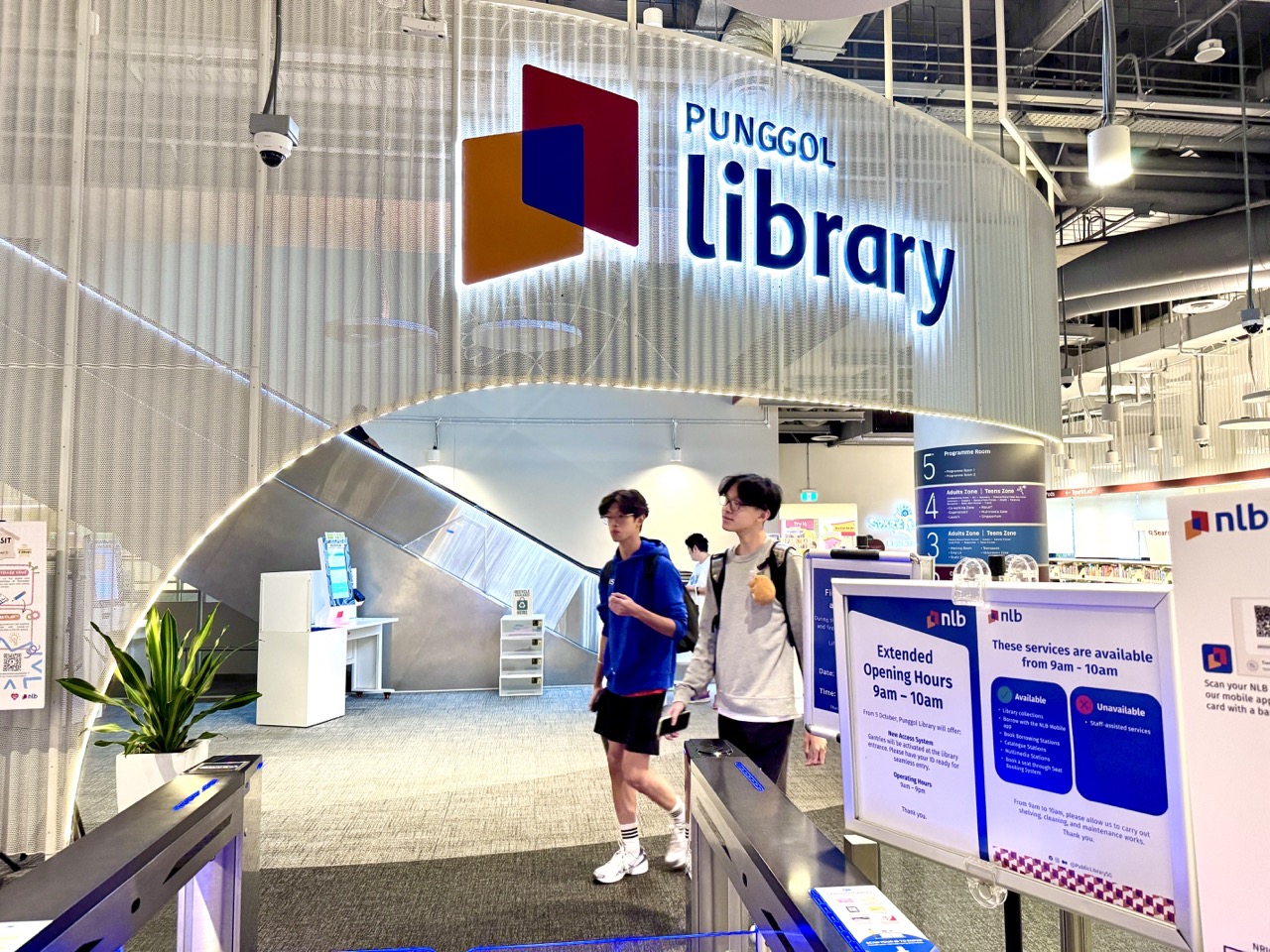
Punggol Regional Library at One Punggol is operated by the National Library Board and provides a public collection that families can explore. MOE’s MTL SOAR announcement specifically mentions collaborating with NLB on curated reading lists, so the connection between school reading and public-library discovery is relevant. However, a school-issued reading passport and an NLB borrowing account are not the same administrative system. Books and records should be managed under the correct institution’s rules.
A family can look for suitable Chinese, Malay or Tamil books at a public library, subject to actual collection availability and current borrowing conditions. A title in a suggested list does not guarantee it is present on a particular shelf. Parents can use the official NLB catalogue or ask library staff for help rather than assume a website’s old photograph represents today’s stock. A child can learn to make a purposeful request and treat shared books responsibly.
A practical reading decision or example
Public-library events may also encourage reading and cultural interest. But a one-off workshop is not automatically part of the school’s MTL SOAR requirements. Families should check age eligibility, registration, language and available places before promising attendance. A child who prefers independent browsing can still benefit without enrolling in a formal programme every weekend.
Reading across several languages can be enriching, but should remain manageable for the child. A parent may encourage the pupil to choose an accessible Mother Tongue story and a separate English book for pleasure. The two experiences need not produce identical vocabulary journals or compete for time. What matters is that the learner understands why they are reading and can talk about something meaningful afterward.
An assumption to avoid and a changed case
Privacy remains important in library activities. A child can share the title of an enjoyable book without publishing the names, photographs or borrowing records of classmates. Families should not use a public platform to compare who borrowed the most books or speculate about another pupil’s reading ability. Access to a library is an opportunity for learning, not a public ranking exercise.
For transfer, imagine the school’s current reader bundle is temporarily unavailable but the family can visit NLB. Can they select a suitable complementary book while checking whether it satisfies a particular school task? The library may support reading, but the teacher decides which assignment it can replace.
9. 2027 language events can inspire reading without becoming a compulsory race
The Committee to Promote Chinese Language Learning has published a 2027 calendar of events, updated 20 October 2026. It lists the National Chinese Reading Competition for Primary and Secondary Schools finals and award ceremony on 17 July 2027, alongside events related to World Book Day and other cultural or language activities. These are confirmed calendar references for a named committee, not evidence that every Punggol primary pupil will automatically participate in the competition.
An official competition may motivate some pupils who enjoy Chinese reading and performance, while others develop through quieter independent routines. Families should check actual eligibility and school selection arrangements before registering or travelling. A competition’s finals date does not tell parents when every school holds preliminaries, nor does it guarantee that a private reader bundle prepares the child for the event. The responsible organiser provides current participation rules.
A practical reading decision or example
Malay and Tamil learning also have their own cultural and literary experiences through schools and relevant organisations. Parents should not infer that a Chinese-language event calendar describes all Mother Tongue programmes. Each language community has distinct materials, traditions and opportunities. Equal respect means taking each programme on its own terms, not forcing identical event schedules onto different languages.
A child may gain joy and confidence from reading a story aloud to a family member, even without any public award. Another may enjoy a reading competition, provided the school programme and preparation are suitable. The family should distinguish an optional performance opportunity from the daily educational aim of reading comprehension and communication. No event guarantees a high PSLE mark or future Higher Mother Tongue placement.
An assumption to avoid and a changed case
Parents can also use the event calendar as a literacy exercise: read an official date, identify what the event actually describes and distinguish planned future activities from past photographs. This helps a student interpret public information while remaining respectful of languages beyond their own. An interesting event should lead to curiosity rather than speculation about admission privileges.
For transfer, give a fictional pupil an invitation to an advanced reading final but no evidence of eligibility. What should the family verify? The actual category, school or organiser selection and current application process, not merely the published date of the award ceremony.
10. A sustainable 2027 reading plan respects language readiness and family time
A good family reading plan can begin with ten to fifteen minutes of age-appropriate engagement on suitable days, adjusted to the child’s interest and actual school expectations. The time is a practical illustration, not an MOE compulsory minimum. A caregiver should ask what the teacher is currently trying to develop: enjoyment, decoding, oral response, comprehension or written expression. Choosing one target keeps the experience purposeful instead of converting reading into a second full examination syllabus.
Families with several children may use shared reading time but different books. A P1 learner might enjoy a picture story, while a P5 student can work with a more complex informational text. Neither child needs to compete on pages or obscure vocabulary. Ask each pupil to explain something suited to their level. Parents can model interest and allow different kinds of response without declaring one child more culturally committed.
A practical reading decision or example
If a pupil struggles persistently to read, speak or write at the expected level, the school can explain suitable language support and, where relevant, formal programmes. A reading passport should not be used as a diagnosis or as proof that additional help is unnecessary. A child who borrows many books may still need decoding instruction, while another who borrows fewer may understand each text deeply. Actual learning evidence matters.
Parents should also protect rest and ordinary play. A child who attends school, CCA and additional lessons may be tired in the evening. Forcing lengthy copying exercises after every short reader can reduce motivation without improving understanding. A small meaningful conversation or shared story can reinforce language while preserving family connection. When formal homework is assigned, follow the school’s actual requirements.
An assumption to avoid and a changed case
Review the plan through one changed question rather than a simple count of completed entries. Can the child explain a new character’s motive, understand a short new passage or use a recently learned word appropriately? That kind of flexible response reveals whether reading is enriching language use. Celebrate genuine growth without promising examination outcomes.
For the final transfer check, imagine the child’s school issues a new 2027 reader list with different books from 2026. Can the family update its plan while preserving the larger goal of meaningful language use? Reading habits should be more durable than any one package or passport format.
Worked family example: reading with a passport rather than chasing stamps
Imagine a fictional Primary 2 child using a school-issued Tamil reader and passport. The pupil reads a short story with a caregiver, identifies what changed between two scenes and gives an age-appropriate oral response. The adult helps explain one unfamiliar expression but does not write the whole passport entry on the pupil’s behalf. The family then checks the school’s actual instructions for how the encounter should be recorded. The exercise promotes genuine comprehension; it makes no claim that every Punggol Primary 2 class uses the same Tamil book.
Four-week age-appropriate MTL reading cycle
Week one: choose a suitable title and ask what the child expects it to be about. Week two: reread a meaningful part and explore one or two useful expressions in context. Week three: let the pupil explain an unfamiliar short passage or character decision without copying a model answer. Week four: review the school’s passport instructions and ask which language skill is developing. Keep the cycle manageable, adapt to the relevant language and do not equate a reading count with guaranteed PSLE success.
Frequently asked questions
What is MTL SOAR?
MOE’s structured Mother Tongue reading initiative, designed to cultivate positive habits through age-appropriate readers, reading passports, school guidance and NLB-curated lists.
When will MTL SOAR reach all primary levels?
MOE announced progressive rollout to all primary levels by 2029; parents should check actual current school implementation.
Does Punggol Green Primary list reading passports?
Yes. Its 2026 P1 and P2 booklists include Chinese, Malay and Tamil supplementary reader and passport materials, with different collections for each language.
Do all three Mother Tongue languages use identical numbers of readers?
No. The school lists language-specific collections and formats. Identical book counts should not be assumed or treated as a measure of quality.
Does a passport stamp prove reading comprehension?
No. A short independent explanation, relevant response or discussion can provide additional evidence of engagement.
Can NLB books complement the school’s readers?
Yes, subject to the pupil’s level, school instructions and public-library borrowing terms. NLB collections and school requirements are separate.
Is SOAR the same as Higher Mother Tongue or MTSP?
No. SOAR encourages reading habits, while HMTL and MTSP are distinct curricular extension or targeted support arrangements.
Does the Chinese Reading Competition apply to every Punggol pupil?
No. The 2027 published calendar lists a national event, but school participation and category eligibility require official verification.
Should parents write all passport responses for a young child?
The family can provide appropriate support, but the learner should be allowed to show genuine understanding within the teacher’s expectations.
Your Next Step
Open your child’s current school Mother Tongue reading guidance and confirm what the teacher expects from the actual reader or passport. Choose one accessible book and have a brief genuine conversation about it. Use Punggol Regional Library or NLB’s recommendations as additional resources when suitable, keeping school and public-library loan rules separate. The aim is a lasting relationship with language, not a competition in the number of titles recorded.
Official sources and related Punggol reading
- MOE 2025 Committee of Supply: MTL SOAR Rollout Through 2029 and NLB Collaboration
- Punggol Green Primary: Mother Tongue Curriculum, Reading and Language Week
- Punggol Green Primary: 2026 P1 Chinese, Malay and Tamil Reader/Passport Bundles
- Punggol Green Primary: 2026 P2 Mother Tongue Reader/Passport Materials
- MOE Primary Mother Tongue Curriculum
- NLB Punggol Regional Library at One Punggol
- Committee to Promote Chinese Language Learning: Published 2027 Events Calendar
- Schools and Education at Punggol | P3–4 HMTL and MTSP
- Schools and Education at Punggol | School Library Lessons
Editorial review: 6 November 2026. The national 2029 rollout target and published 2026 reader bundles are official dated information; 2027 school lists, actual tasks and programme availability may differ. All reading scenarios are fictional, with no promised assessment or admission outcome.


