
Schools and education at Punggol include school library lessons that teach children how to choose books, borrow responsibly, care for shared resources and explain what they read. Punggol Cove Primary School’s Media Resource Library page describes weekly lessons for lower-primary pupils, borrowing opportunities, library etiquette, storytelling and thematic displays. These are meaningful skills beyond simply finishing books: a child learns to match a source to a purpose and respect the next reader. School loan rules are not automatically the same as the National Library Board’s public-library system.
This guide explains how Punggol parents can support library borrowing, appropriate book choice, fiction and nonfiction, Mother Tongue storytelling, responsible returns and short reading conversations at home. It also distinguishes the Punggol Cove programme from Punggol Regional Library at One Punggol. The school-specific information comes from its 2026 public page, while other examples are hypothetical. Borrowing limits, overdue procedures and event schedules should always be checked with the responsible library.
- Punggol Cove Primary’s 2026 Media Resource Library provides weekly lower-primary library lessons.
- Children practise borrowing, etiquette, sharing reading experiences and exploring new topics.
- Thematic displays help pupils discover books without guaranteeing that every source is suitable.
- English and Mother Tongue storytelling sessions are documented for P1–P3.
- Book choice should reflect purpose, interest, level and content.
- School library and NLB public-library cards, periods and rules may differ.
- Borrowed books need accurate due dates, responsible storage and honest reporting of damage.
- Reading awards can motivate but do not measure every aspect of comprehension.
- Punggol Regional Library offers a complementary public collection with separate services.
- Independent target: select a relevant book, explain one idea and return it correctly.
Definition lock: media resource library, borrowing and reading independence
A school Media Resource Library is a managed educational collection supporting pupils’ reading, inquiry and access to information. Borrowing is the temporary use of a shared resource under the lending institution’s specific conditions. Library etiquette is responsible behaviour that respects other readers, staff, materials and spaces. Reading independence is the growing ability to choose a suitable source, engage with its meaning and manage the resource appropriately. These are related but not identical to reading speed or the number of books finished.
A simple school library borrowing checklist
- Identify the correct library and the book’s purpose.
- Read the title, format and an appropriate sample of the contents.
- Check the institution’s actual borrowing and return rules.
- Store the book in a suitable place at home.
- Read or discuss one meaningful part without forced lengthy reports.
- Check the due date and return to the correct institution.
- Tell appropriate staff promptly if a book is lost or damaged.

1. A school library lesson teaches how to find, use and return knowledge
A school library can do more than store books. It offers children opportunities to choose material, recognise the organisation of information, take care of shared resources and learn how to ask for help when a text is difficult. Some pupils enter Primary 1 knowing exactly how to browse a library; others have used mostly books at home or online. School library lessons can make the experience accessible by explaining ordinary routines, selection and etiquette without assuming that everyone already knows them.
Punggol Cove Primary School’s Media Resource Library page, updated in May 2026, describes weekly library lessons for lower-primary pupils. The school says children have regular borrowing opportunities, learn proper library etiquette and share reading experiences with classmates. This is a documented example of a local programme, not proof that every Punggol school has the same weekly timetable or lending rules. Parents should check the actual institution’s current notices.
A practical reading or borrowing choice
A useful first lesson is about purpose rather than the number of books borrowed. Ask the child whether they want to enjoy a story, learn about an animal, explore a language or answer a question. Those goals may lead to different books and different ways of reading. A child should be allowed to make an age-appropriate choice even when the parent would have selected a more difficult-looking title. Independent browsing is one skill the library can help develop.
Etiquette matters because books and space are shared. Keeping materials in suitable condition, using a respectful volume, returning items to the designated place and following staff directions help the next reader. The educational principle is consideration for the community rather than obedience to arbitrary rules. A student can understand that damaging a book affects someone who has not yet borrowed it, making responsibility concrete.
A misconception and a new-context test
An early misunderstanding is treating library time as a contest to find the most pages. A child who selects a short book that they understand and discuss thoughtfully may have learned more than one who grabs a long text and cannot explain it. Different reading experiences have different purposes. School recognition schemes can motivate, but a family should preserve the child’s curiosity and actual engagement rather than reduce reading to counts alone.
For transfer, give the pupil a new purpose such as learning how a safe garden grows, then ask how they would find a suitable book. Can they choose a relevant section, explain why the title matches the question and ask a librarian for help if needed? That shows library independence rather than memorisation of one shelf location.
2. Punggol Cove’s Media Resource Library is a real local model
The Punggol Cove Primary School page describes a Media Resource Library with weekly lower-primary lessons, thematic displays, storytelling in English and Mother Tongue Languages, and special reading activities. Its committee mission emphasises lifelong learning, communication and curiosity through diverse materials. These features show that the school intends the library to support both reading and wider engagement with information. The public page cannot, by itself, describe the experience of every individual pupil or guarantee a particular programme in a later year.
The weekly borrowing opportunity is especially significant for young children learning how to select and manage a book. A pupil can practise finding appropriate material, borrowing according to the school’s rules and returning it responsibly. The school may teach procedures suited to the age level, but the current loan limit, due date and renewal options must be verified locally. Parents should not assume the national public library’s borrowing allowance applies automatically to the school library.
A practical reading or borrowing choice
Punggol Cove’s thematic displays change according to subjects such as animals or plants. A display can make an unfamiliar topic visible and invite questions. Yet a colourful shelf does not guarantee that every book on the theme is accurate, suitable or at the same reading level. Children benefit when adults help them distinguish an attractive cover from the actual information inside, while allowing age-appropriate independent exploration.
The school’s English and Mother Tongue storytelling sessions are described for Primary 1 to 3, with teachers and parent volunteers participating. These experiences can support listening, appreciation of different languages and discussion of stories. They should not be confused with the child being required to perform publicly or assessed on every story heard. A short conversation about one character or idea can be valuable without a formal worksheet.
A misconception and a new-context test
Punggol Cove also describes Star Readers awards and a Media Resource Library Week and Character Day programme that began in 2025. These activities may create enthusiasm, but families should not assume that a termly award is a universal requirement or that a high borrowing count is the only measure of literacy growth. The school page provides a local account; the educational outcome still deserves independent interpretation.
For transfer, compare the school’s Media Resource Library with a public NLB library. Both provide opportunities to read and discover resources, but their lending systems, programmes and access rules can differ. A pupil who checks the rules for the actual institution has learned a transferable information-management skill.
3. Choosing a book means matching purpose, interest and readiness
Children can be overwhelmed by a shelf full of attractive covers. One might select whatever a friend is reading, another the thickest book and a third the title with the brightest illustration. None of those decisions is automatically wrong, but it helps to add a question about reading purpose and capability. A book that supports enjoyment, reading confidence or a current school topic should offer a manageable challenge without requiring the learner to know every word in advance.
Parents can teach a brief book-choice routine. Look at the title and cover, examine the table of contents or a small sample page where appropriate, and ask what kind of reading experience it offers. A book with short sections and labelled diagrams may be useful for learning about a topic, while a narrative with engaging characters may be better suited to leisure reading. The child can explain the reason for the choice rather than rely on an adult’s prestige ranking.
A practical reading or borrowing choice
One common mistake is choosing only material several levels above the child’s current reading ability. Difficult books can be enjoyable when shared with an adult, but persistent independent struggle may reduce comprehension and confidence. A balanced reading diet can include accessible independent books, more demanding shared reading and material connected with specific interests. The actual school teacher can guide choices where a learner needs targeted literacy support.
Genre also matters. Fiction invites engagement with characters, events and imagined worlds; nonfiction can explain real subjects through evidence, diagrams and headings. Children can enjoy both. A pupil interested in birds might borrow an illustrated factual guide and a story featuring a fictional bird. The two books serve different purposes, so the child should not evaluate their truth claims as though they were identical.
A misconception and a new-context test
Social influence can help children discover books, but it should not remove autonomy. A classmate’s recommendation is a useful starting point, not proof that the book suits everyone. Ask the pupil what they liked or found difficult after reading a short section. If the choice does not work out, returning the book appropriately and selecting another can be a responsible decision rather than a failure.
For transfer, present two new books about water: an illustrated factual explanation and an imaginative story set by a river. Ask which would help answer a real science question and which might be enjoyable for a different reason. A good explanation distinguishes purpose without declaring one form of reading superior.
4. Library etiquette can be explained through shared responsibilities
Library rules are easier for young pupils to understand when they are connected to the needs of other readers. Keeping noise appropriate helps someone concentrate; handling books gently preserves them for future borrowers; returning materials correctly helps the next child find them. These are practical expressions of community responsibility, not just instructions to stand still and remain silent. The exact rules should be explained by the school or library staff.
A fictional scenario involves a pupil finding a damaged page in a borrowed book. The responsible action is to tell the relevant library staff or teacher and follow the institution’s procedure, not secretly tape the page or blame the previous borrower. Handling damage honestly protects the shared collection. Parents should not invent a replacement fee or promise there will be no consequences without knowing the school’s policy.
A practical reading or borrowing choice
Another scenario involves a child leaving several books on a shared table while choosing something else. The appropriate action depends on the library’s sorting and reshelving instructions. Some libraries ask readers to leave books on a designated trolley rather than reshelve them incorrectly. Teach children to follow the local signage instead of imposing one universal rule across every institution.
Respect includes other people’s privacy and learning space. A school library may contain children reading, borrowing and using computers. A parent should not photograph identifiable pupils or publish their book choices without appropriate permission. A child’s reading preference can be personal, and a public image is not necessary to prove that the library visit was educational. A brief written reflection can be sufficient.
A misconception and a new-context test
Some pupils benefit from alternative communication methods or more time to choose. A library should be a place where appropriate support can be requested without shame. Children should know how to ask where a section is, how to find a suitable format or whom to tell when a task is unclear. A slower selection process is not evidence that a learner lacks curiosity.
For transfer, imagine a new library whose signs say borrowed books must be returned at a service counter rather than a drop slot. Can the pupil notice that local instructions differ and follow the actual rule? This reflects responsible independence rather than memorisation of one familiar routine.
5. Borrowing and returning are basic information-management skills
Loan procedures introduce children to dates, responsibility and the idea that a resource belongs to a shared system. A borrowed book may need to be returned by a specified date, renewed under certain conditions or treated differently if damaged. The child should read the actual school library information rather than assume the same borrowing limit or overdue policy as the public NLB library. Even when the books look similar, the institutions may use different systems.
A simple private borrowing note can record the book title, institution, due date and where it is kept at home. It need not include the child’s full identity number or personal account details. Parents can help younger learners check the record until the pupil becomes more independent. The goal is gradually developing responsibility, not creating a complicated tracking spreadsheet for two picture books.
A practical reading or borrowing choice
Children may forget a book in a schoolbag or leave it beside a shared household shelf. A designated safe location can reduce loss and accidental damage. Ask where the borrowed item will be stored and when it should be packed for return. A consistent routine is more useful than repeatedly criticising forgetfulness. When a book goes missing, the family can contact the responsible library promptly and follow the actual process.
Overdue rules differ. A school library may have its own procedures for reminders or replacement, and the National Library Board has separate public borrowing conditions. Parents should verify current policies before claiming that a particular fee, suspension or penalty applies. An online article that invents a penalty could cause unnecessary alarm. The correct action is to ask the institution how to resolve the situation.
A misconception and a new-context test
A common mistake is treating a completed loan as the end of the reading activity. The child may borrow a book, leave it unread and return it merely to qualify for another title. A parent can invite a brief conversation about one idea or scene without demanding an essay. That helps connect the borrowing system to actual reading while preserving enjoyment.
For transfer, give a fictional family two books borrowed from different libraries with different due dates. Can the pupil identify which must be returned where, explain why the systems should not be confused and set a suitable reminder? This is useful organisation beyond a reading challenge.
6. Storytelling sessions teach listening and language without turning into tests
Punggol Cove’s library page describes storytelling in English and Mother Tongue Languages for Primary 1 to 3 pupils. Such sessions can help children encounter unfamiliar vocabulary, narrative structures and cultural contexts through listening. The listener may also learn how a speaker uses pacing, expression and questions to make meaning clearer. The benefit is not limited to children who can read every word independently. Listening and reading development interact in different ways.
After hearing a story, a child can be invited to name one character, a meaningful decision or something that changed. A response may be a short sentence or drawing. The adult should not insist on a full retelling of every detail. The aim is to discover what the pupil understood and which question remains interesting. An accurate observation of one event can be more useful than a long summary filled with invented details.
A practical reading or borrowing choice
Mother Tongue storytelling can also support children who have varied levels of language exposure at home. A story may introduce culturally meaningful words or familiar ideas expressed differently. Parents should avoid treating every unfamiliar term as proof that the child needs another tuition class. Ask for a plain-language explanation or enjoy a suitable story together, following the school’s level-appropriate language guidance.
Some stories include imaginative scenes that should not be presented as factual explanations of the world. A child may enjoy a talking animal in fiction while later reading an informational book about the real animal. Adults can help distinguish the purposes. The fictional story is not a failed science report; the nonfiction book should meet different standards of accuracy. Understanding genre builds stronger reading judgment.
A misconception and a new-context test
Children can react differently to public storytelling. Some enjoy asking questions, others prefer to listen quietly, and some need suitable access support. A school programme should be understood in the context of its learners. Families can reinforce participation without shaming a child who did not volunteer to speak. Listener comprehension is not measured solely by how often a hand goes up.
For transfer, choose an unfamiliar story in a language the pupil is learning and ask one genuine question about what a character did. Then read a short nonfiction passage and ask what it explains. Can the child adapt the response to the type of text rather than give the same memorised summary to both?
7. Displays, catalogues and labels can guide independent discovery
Library shelves and thematic displays help readers find subjects that interest them, but the design is also an information system. Children can learn to interpret category signs, understand that fiction and nonfiction are organised for different purposes and ask where a topic might be found. At lower-primary level, this need not begin with technical cataloguing language. The child can first recognise a meaningful shelf label and explain why it fits a reading question.
Consider a pupil who wants to learn about plant roots. A display of stories featuring gardens may contain imaginative material but not the biological explanation needed. The learner can ask for a suitable nonfiction section or seek librarian guidance. The skill is matching a source to a question rather than assuming that every book with a green cover answers a science problem. Selection is an act of reasoning.
A practical reading or borrowing choice
Public libraries may offer catalogue search tools and electronic resources, while an individual school library may use a different catalogue or managed collection. A child who learns how to search one system should recognise the need to read the instructions for another. Do not promise that a school borrowing card works at NLB or that a public-library account grants access to a school-only database. Institutions have different access and privacy conditions.
Colourful displays can also create useful conversation. A theme about festivals might invite pupils to compare how different stories describe celebrations, while a theme about nature might prompt questions about habitats. Adults should encourage curiosity and respectful interpretation without reducing communities to one costume or stereotype. The display is a starting point for inquiry, not a substitute for careful reading.
A misconception and a new-context test
A common error is using the first search result as though it must be reliable. A child can inspect the book’s title, publisher, intended audience and publication date where relevant. For a changing real-world issue, an older title may need comparison with a more recent official source. A librarian or teacher can help the pupil select appropriate material without requiring them to become a professional researcher.
For transfer, give the pupil a new question about Singapore transport and a list of fiction, a dated map book, and a current official transport website. Which source answers which part? The strongest response distinguishes literary enjoyment, historical context and up-to-date operational information.
8. Reading recognition programmes can motivate without making quantity the whole goal
Punggol Cove’s published Media Resource Library page describes Star Readers awards that recognise pupils who borrow or read many books from the school collection. Recognition can help make reading visible and enjoyable, especially when children are excited about sharing titles. Yet a family’s interpretation should remain balanced. A high number of borrowed books does not automatically mean deep comprehension, and a child who reads slowly can still engage meaningfully with an important story.
Parents should not use an award list to compare children publicly or infer that a pupil who did not receive a certificate dislikes reading. Pupils may have different access needs, reading levels, home schedules and interests. The learning target might be independent choice, comprehension, sustained attention or pleasure. Those achievements may not all be represented by the number of loans recorded in a term.
A practical reading or borrowing choice
An enjoyable family discussion can ask which one book the child would recommend and why. The pupil might refer to a character’s decision, a surprising fact or a useful illustration. This develops explanation and communication without imposing an arbitrary volume target. A short book that is understood and reread thoughtfully can remain valuable even when another student finishes several longer texts.
Reading challenges can sometimes encourage choosing very short books simply to increase totals. That is not necessarily dishonest under the scheme’s rules, but it may limit the intended learning if the child loses interest in the content. Parents can support balanced choice by inviting different genres and levels of challenge without converting reading into an endless performance review. Follow any official programme rules while keeping curiosity central.
A misconception and a new-context test
Some pupils may have literacy difficulties and receive additional support. A public award comparison should not become a judgement of their progress. The family can celebrate a new decoding skill or improved understanding alongside classmates’ reading achievements, preserving dignity and motivation. Ask the teacher which reading objective is appropriate for the individual learner.
For transfer, imagine a fictional reader who borrows ten books but cannot recall a main idea and another who borrows three and explains them thoughtfully. What conclusions are justified? A careful answer avoids assuming either count tells the whole story and considers reading quality, purpose and accessibility.
9. The school library and Punggol Regional Library complement rather than replace one another
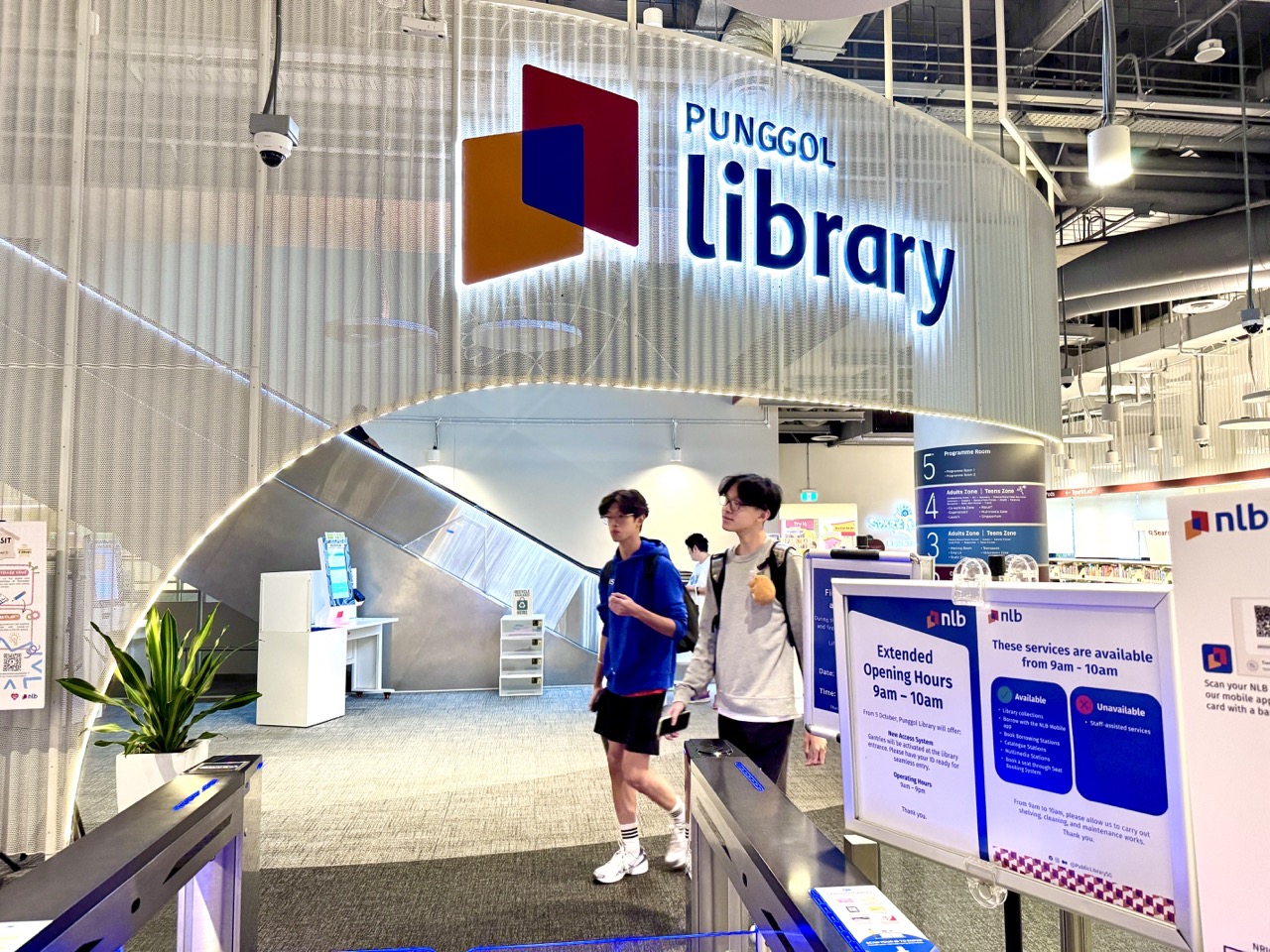
Punggol Regional Library at One Punggol is operated by the National Library Board and offers a wider public-library context for families. A school Media Resource Library serves the school community under its own arrangements, while the public library has separate opening hours, lending policies, event registrations and resources. Both can support curiosity and reading, but one is not an administrative extension of the other. Parents should check the correct institution whenever a loan, activity or account question arises.
A family might use the school library for class-linked reading and borrow additional age-appropriate books from NLB for personal interest. That combination can create a varied reading experience without requiring paid enrichment. Children can learn to compare what they find in each place. A familiar topic may be represented by picture books, reference material and digital resources suited to different audiences.
A practical reading or borrowing choice
Current operational information matters. Public-library hours, programme availability and book stocks can change. The official NLB page is the appropriate reference for visiting or joining an event, not an undated article describing an earlier holiday activity. For a school collection, the school or library staff provide the current borrowing instructions. A parent should not promise that a book listed online is available on a particular shelf without confirmation.
The public library can also be a place to practise responsible use of shared space. Children can ask staff for help, follow suitable noise and device rules, respect other readers’ privacy and return borrowed items appropriately. Those behaviours may resemble school-library etiquette, but the detailed procedures can differ. The learner should know that respectful conduct requires attention to the actual setting.
A misconception and a new-context test
Some families worry that children only benefit when attending a heavily structured workshop. Independent browsing with a clear question, choosing a book and explaining a new idea can also be educational. The family should avoid rushing to several programmes merely because they are advertised. A manageable, enjoyable library habit may support long-term reading better than an overloaded weekend schedule.
For transfer, ask the child to plan a fictional borrowing task involving one school library book and one NLB title. Which institution should be contacted for each issue, which due dates need checking and how can the books be cared for at home? The answer reflects genuine information-management independence.
10. Build a reading-and-return routine that survives a busy school week
A useful library routine should be simple enough for a Primary 1 pupil to participate in and flexible enough to remain useful later. Begin with choosing an appropriate book, identifying where it belongs at home and knowing when it must be returned. The family can invite an enjoyable short conversation about the content without requiring a written book report every time. The aim is to connect access, responsibility and reading.
Set a private reminder based on the actual due date rather than assuming a fixed borrowing period. Parents can help younger pupils pack the book, while older learners may manage the reminder independently. If the child forgets the book, respond by finding out which step failed—recording the date, storing it in one place or checking the schoolbag—rather than simply calling the child careless. A small process change can produce better results than repeated criticism.
A practical reading or borrowing choice
Keep reading interests alive. A pupil may move from picture books to mysteries, informational texts or bilingual stories over time. The family can follow that curiosity while using teacher guidance when specific literacy needs arise. Not every choice should be made to improve an examination score. Pleasure, knowledge, imagination and responsible borrowing are related but distinct reasons to visit the library.
Digital content may form part of reading, but a child should still learn how to judge sources and manage screen use appropriately. The school and NLB may provide different electronic resources or accounts. Parents should respect age requirements, school rules and privacy conditions without sharing logins broadly. A borrowed physical book and an online article may require different skills and different forms of care.
A misconception and a new-context test
One weekly reflection can be brief: ‘Which part did you enjoy or learn from, and what would you like to read next?’ Allow a drawing, a spoken answer or a short sentence. If the child needs additional support with decoding, follow the teacher’s appropriate practice instead of replacing it with a demanding report. The routine should invite participation, not punish slow reading.
For a final transfer task, let the pupil independently select a new book according to a stated purpose, explain why it fits, record the correct lending institution and due date and describe one idea after reading. If they can repeat the method with a different collection, they have gained a library skill that travels beyond the original lesson.
An original worked family scenario: a book from each library
Imagine a fictional Primary 2 pupil selects a short nature book from the school library and a different storybook from Punggol Regional Library. The family records the title, source and actual due date for each in a private list. Over the weekend, the child describes one fact from the nature book and one character’s decision in the story. When the first return date approaches, the pupil packs the correct item for the correct institution. The parent does not assume both use the same lending period or that a school book may be returned to NLB. The learning includes reading, source recognition and responsible follow-through.
Four-week family library-learning cycle
Week one: ask the child to choose a suitable book based on one clear purpose. Week two: read together or independently as appropriate, discussing one main idea or character choice. Week three: try a different genre or language and compare what the two books help the reader understand. Week four: check the actual due dates and have the child explain how to return both items correctly. This optional cycle should remain enjoyable and follow each library’s real policies; a child with targeted reading needs should also follow school support guidance.
Frequently asked questions
Does Punggol Cove Primary offer weekly library lessons?
Its official Media Resource Library page, updated May 2026, states that lower-primary students visit the library weekly to borrow books, practise etiquette and share reading experiences.
Does every Punggol primary school have the same borrowing limit?
No uniform limit should be assumed. Check the actual school library’s current loan period, renewal and return procedures.
Can school library books be returned at NLB?
Do not assume they can. The school library and the National Library Board operate separate collections and processes unless the relevant institution states otherwise.
What is Punggol Cove’s MRL Week and Character Day?
The school describes a programme begun in 2025 to encourage reading and healthy screen-time habits, culminating in a literary character-themed event.
Does a Star Readers award prove a child understands more than other pupils?
No. The published recognition scheme can motivate reading, but loan or reading counts do not measure every aspect of comprehension and growth.
Should a child choose books above their current reading level?
Shared challenging books can be useful, but independent reading should match the learner’s readiness and purpose. Ask the teacher for guidance when targeted literacy support is needed.
What should parents do if a book is damaged or lost?
Contact the responsible school or public library and follow its current procedure rather than inventing a fine or hiding the issue.
How is Punggol Regional Library different from the school library?
NLB operates the regional public library at One Punggol, with its own loans, programmes and access rules; each school library has institution-specific arrangements.
Your Next Step
Ask your child which school library book they would like to read and why. Confirm its loan rules with the school, help find a suitable place to keep it, and invite one short conversation about what the child enjoyed or learned. When visiting Punggol Regional Library, check NLB’s separate current lending and programme information. The goal is growing curiosity and responsibility, not a public competition in book counts.
Official school and NLB references, with related guides
- Punggol Cove Primary School Media Resource Library, updated 11 May 2026
- NLB Punggol Regional Library, One Punggol
- National Library Board official borrowing services and policies
- MOE: MTL SOAR and collaboration with NLB curated reading lists
- MOE Primary Curriculum
- MOE SchoolFinder
- Schools and Education at Punggol | Building a Reading Culture from School Library to Home
- Schools and Education at Punggol | Reading Nonfiction, Text Features and Effective Study Notes
- Schools and Education at Punggol | Learning Support for English, Mathematics and Reading
Editorial reviewed 1 November 2026. Punggol Cove’s programme details are drawn from its published 2026 page. Other reading activities and family cases are illustrative. Borrowing quotas, return dates, programme attendance and library services may change; check current official notices.


