
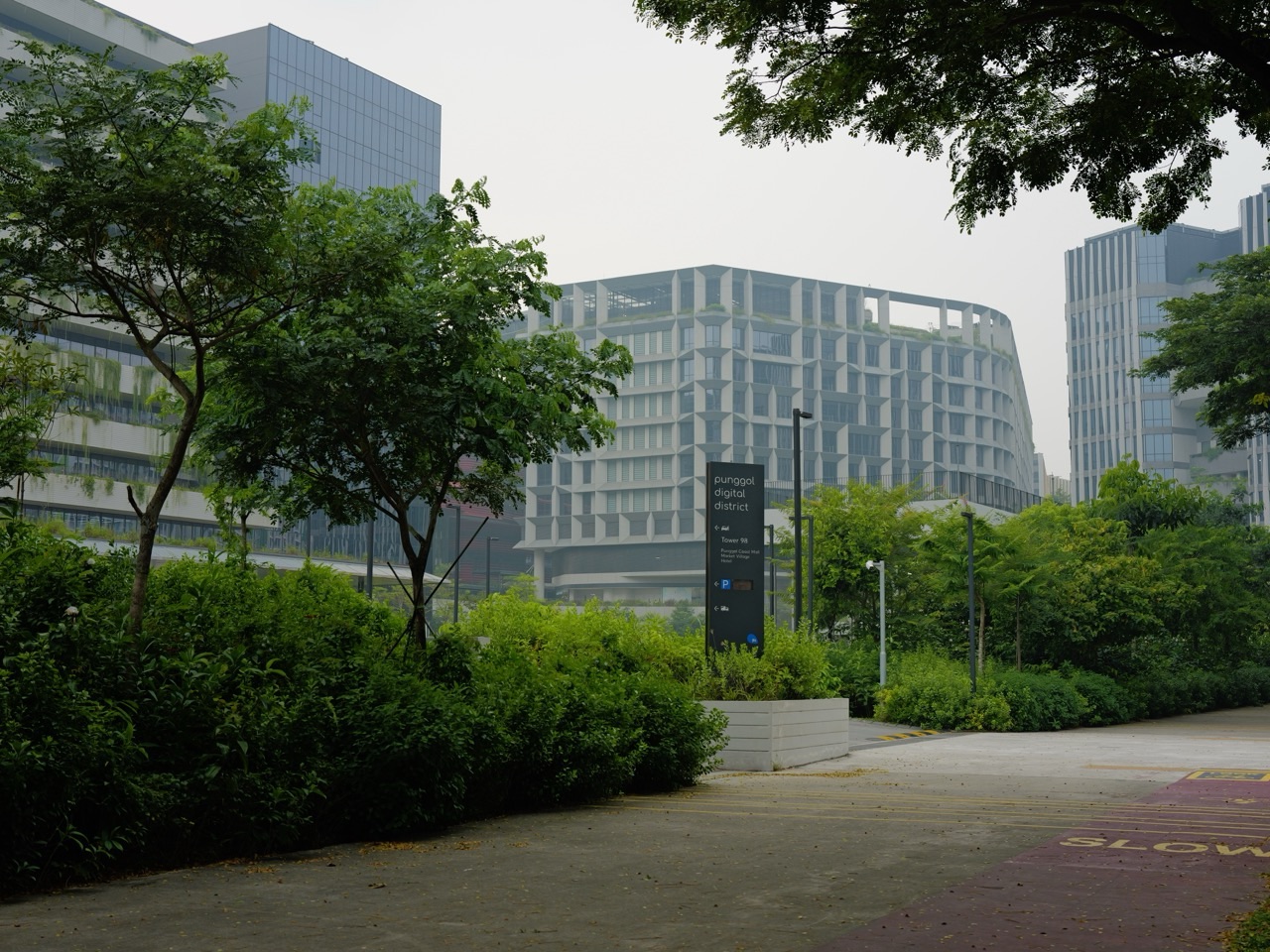
Quick answer — November 2026: Semiconductor cleanroom work protects manufacturing processes from contamination and unstable environmental conditions. Careers can include facilities monitoring, equipment maintenance, contamination investigation and quality documentation. These are Singapore-wide occupational pathways, not confirmed vacancies at Punggol Digital District.
Punggol residents may commute to industrial facilities elsewhere in Singapore. A technology district or a university campus does not establish the presence of a semiconductor fabrication plant in the estate.
For 2027 and 2028, readers should distinguish three different things: a career that exists in Singapore, an employer that actually recruits, and a confirmed job at a particular location. This guide explains skills and plausible developments without inventing headcounts or salaries.
What professionals do
| Role family | Core responsibility |
| Facilities technician | Monitors authorised environmental and utility systems and escalates abnormal readings |
| Contamination control specialist | Investigates particles, handling practices and cleanroom process deviations |
| Equipment maintenance engineer | Plans permitted maintenance, records faults and coordinates recovery |
| Quality engineer | Reviews process evidence, nonconformities and corrective action |
The problems employers need people to solve
Problem 1: Accuracy
Particle contamination can affect a manufacturing process even when an area looks visually clean.
Problem 2: Operational context
Temperature, humidity, air filtration and process discipline must be assessed against the facility’s own specifications.
Problem 3: Human and organisational factors
Workers may need shift coverage, protective clothing and carefully controlled entry procedures.
Problem 4: Documentation and accountability
A failure log should record what happened and when, rather than guessing which component is responsible.
2027–2028 outlook: possible scenarios
| Scenario | What it could mean | What would verify it |
| More digital monitoring | Additional data checks and incident handling | Actual deployed systems and employer job descriptions |
| Stronger quality expectations | More emphasis on reliable processes and traceable records | Published requirements and procurement scopes |
| Cross-disciplinary projects | Coordination across technical and service teams | Verified project announcements and contracts |
| Selective hiring | Existing staff or contractors may perform new work | Confirmed vacancies rather than an assumed district job total |
These scenarios are not predictions of a particular number of jobs. A company may automate routine tasks, outsource support, train existing staff or recruit new specialists. The outcome varies by employer and project.
Worked example: interpreting evidence
In a fictional monitoring exercise, 24 of 1,200 readings exceed a stated training threshold: 2%. After an intervention, 12 of another 1,200 exceed it: 1%. This does not prove contamination risk has halved; instrument calibration, sampling locations and operating conditions might differ.
The important lesson is to keep the numerator, denominator, units and observation period clear. A numerical change does not establish causation, and an apparently favourable percentage can hide an important safety or quality issue.
A practical portfolio project
Create a synthetic cleanroom monitoring table with timestamp, sensor, value, threshold, calibration status and escalation action. Plot exceptions and write a one-page investigation memo. Use no real plant data.
Education and skills
Relevant pathways include mechanical, electrical, mechatronics, chemical and manufacturing engineering, as well as technical diplomas and supervised workplace training.
| Starting point | Preparation |
| Secondary school | English, Mathematics, relevant Science and careful reasoning |
| ITE or polytechnic | Recognised applied programmes and supervised practical experience |
| University | Specialist domain knowledge, research methods and professional standards |
| Mid-career | Compare transferable skills against actual vacancies before paying for retraining |
Professional boundaries
Never enter a restricted cleanroom, change ventilation settings or service hazardous process equipment without authorised training and supervision.
Four-week career exploration
- Week 1: Compare three authentic job advertisements and record actual duties, qualifications, pay structure and reporting location.
- Week 2: Read the relevant official guidance and identify which work requires supervision or registration.
- Week 3: Produce a safe original work sample using public or synthetic information and explain its limitations.
- Week 4: Obtain appropriate feedback, revise the sample and evaluate course costs and employment options.
Frequently asked questions
Are jobs guaranteed in Punggol for 2027? No verified Punggol-specific vacancy count is established here. Confirm openings with employers.
What qualification do I need? Does a cleanroom job require a semiconductor engineering degree? Not every role does; qualifications depend on whether the position is technician, facilities, engineering or quality-focused.
Will AI eliminate this work? Tools may change tasks, but real employment effects depend on deployment, safety, quality and business decisions.
Can working adults transition? Some may, especially through adjacent roles, but should check qualifications, experience requirements and household finances.
Official references and connected reading
- Singapore Economic Development Board: official information
- MyCareersFuture: current job vacancies
- MOM: employment terms
- Punggol Career: retraining costs and risks
The useful career decision
Start with the real work and a genuine employer. Build evidence of skill, understand professional boundaries and treat uncertain 2027–2028 developments as scenarios rather than promises.


