
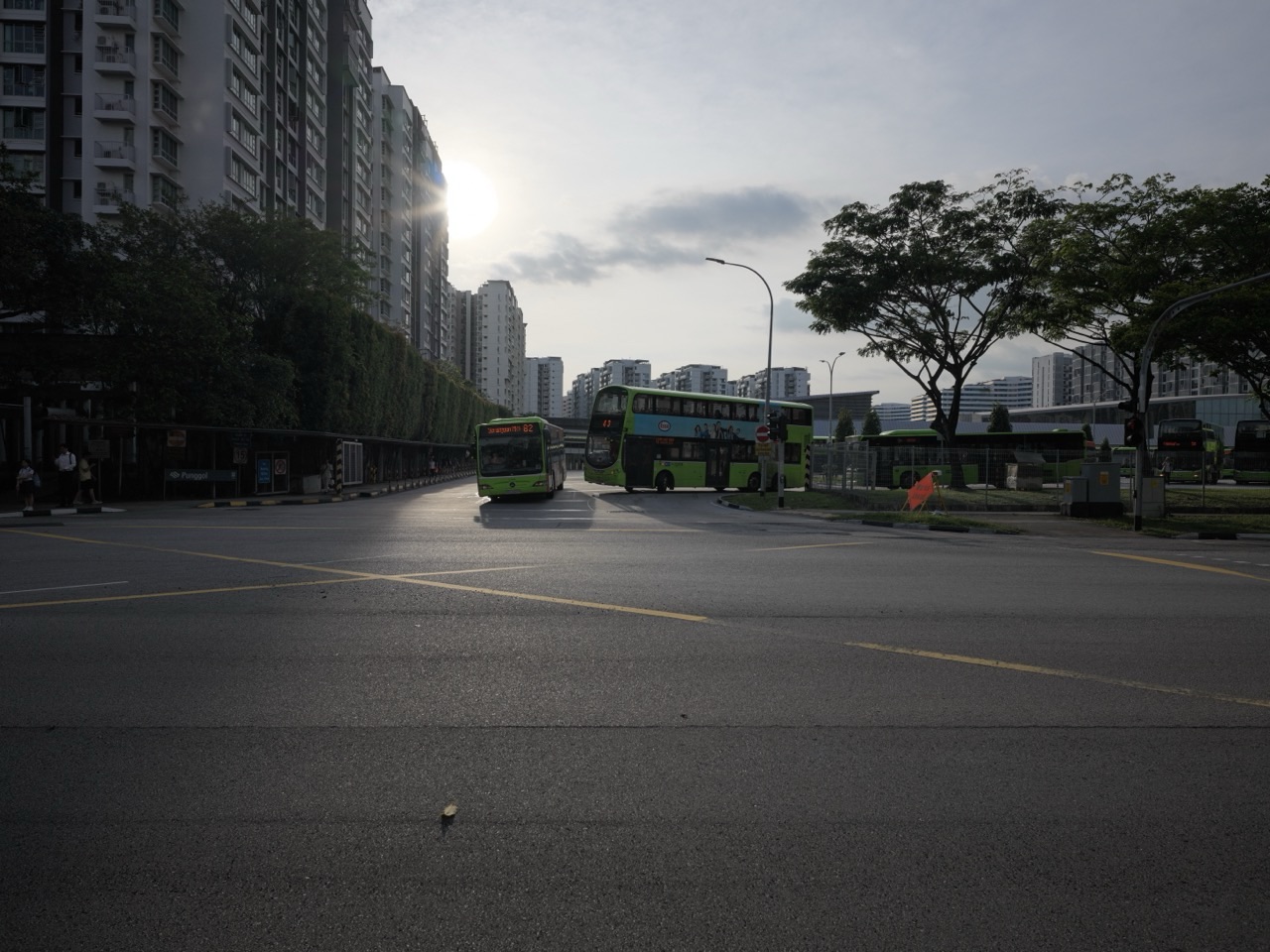
A Punggol public bus stop sign may be missing, faded, covered by a temporary notice or physically damaged. That can make it difficult to identify the five-digit stop code, which services use the location, or which side of the road serves the intended direction. The safe first step is to remain behind the kerb, verify the boarding point with an official bus route finder and report the actual sign problem to the Land Transport Authority (LTA). Do not walk into a bus bay to inspect a loose post or cross the road simply because an approaching bus looks familiar.
LTA’s public transport information distinguishes the bus stop identifier from the bus service number. The stop pole, route information panel and electronic arrival display can have different purposes and different faults. A faded route list does not prove that a service has been cancelled; a blank arrival screen does not prove a pole is defective. This guide explains how to verify the correct location, handle a suspected temporary relocation, report unsafe signage and help children, seniors and visitors travel confidently without relying on guesses.
- Do not enter traffic to read or photograph a damaged roadside sign.
- Find the correct stop using the road, direction, fixed landmark and LTA’s official route finder.
- Distinguish identifiers: a bus route number is not the same as a five-digit stop code.
- Check dated notices before assuming a missing sign means the stop is closed.
- Report the exact defect: faded code, missing panel, wrong route list or dangerously tilted pole.
- Contact LTA for public bus stop infrastructure and use urgent channels for obvious hazards.
- Think about accessibility: physical signage matters to people who cannot rely on smartphones.
- Keep the reference so recurring faults can be reviewed with their history.
1. What the pole tells commuters
The physical bus stop pole identifies the intended public transport boarding point. Some have panels showing a stop number, name and services, while a shelter can display further route information. The key is to understand what you are looking at: a service number identifies the bus, a stop code identifies the particular location, and a building or road name helps describe the surrounding area.
The LTA bus stop design explainer describes how Singapore’s stops developed from simple poles and route boards to more complex waiting facilities. If the route list is faded but the stop code remains legible, that is a different maintenance request from a post that has completely disappeared. Describe the damaged component so the responsible team knows where to look.
2. Why the five-digit code matters
LTA uses five-digit codes to identify public bus stops. A code can be searched in official journey planning services and used to locate a precise stopping point. Two stops facing each other along the same street generally have different codes, even though their names may refer to the same HDB estate or shopping area.
The official LTA bus finder can help confirm a route, stop description and location when the code is unreadable. Check the intended direction and nearby landmarks before selecting a result. A single wrong digit or a stop on the opposite side can give information for a different bus journey.
3. Route numbers and stop numbers are different
A route number such as 3, 34 or 83 refers to a bus service, not a physical stop. A five-digit stop identifier refers to a particular roadside boarding location. A person who confuses the two may try entering a service number into a stop-code search field or assume a printed block number is the correct transit code.
An effective report identifies both when available. For example, explain that the route board for service [number] is unreadable at stop [five-digit code]. If the code itself is absent, use a safe description of the road, direction, junction and building. Do not invent digits just to complete an online form.
4. A missing sign does not cancel the service
A sign can be missing because of damage, scheduled replacement, construction or an administrative update. The physical condition alone does not prove that the service has been withdrawn. A bus could still be operating, or the stop might have been officially shifted. Those possibilities require checking current service information.
The correct first step is to compare with verified LTA or operator notices. Do not use an undated neighbourhood chat screenshot as the sole source. An older photograph can show what used to be printed but cannot establish today’s route or boarding point.
5. Read the side of the road correctly
Two similar bus stops near a crossing often serve opposing directions. The service number may appear on both, making it easy for an unfamiliar traveller to choose incorrectly. That risk is greater when the sign has faded or a temporary board obscures the regular panel.
Check the direction of travel in an official route finder before crossing. Use designated pedestrian crossings and obey signals. A bus seen approaching across the road does not justify running through traffic. Being a few minutes late is safer than taking a dangerous shortcut to an uncertain stop.
6. A bent pole is an immediate physical concern
A stop pole that is visibly leaning, fractured or partly detached may present a risk to people passing beneath it. The edges of a metal sign could also protrude into a walkway, particularly at child height. Such conditions deserve a more urgent infrastructure report than ordinary faded text.
Do not shake a pole to test whether it is loose. Do not pull it upright or walk into the bus bay to photograph the mounting. Stay clear, identify a nearby landmark and contact the responsible operator. Maintenance staff can arrange a proper inspection with suitable safety measures.
7. Unreadable text versus incorrect text
A weathered sign can be impossible to read even when the underlying service information is correct. An incorrect route board is legible but no longer matches the current service. The second claim needs verification from a current official source, not only the observation that one expected bus did not arrive.
State which problem you actually have. ‘The numbers have faded and cannot be read from the waiting area’ describes a visibility fault. ‘The board lists a service that the current LTA service finder does not show at this stop’ describes a possible information mismatch. Both are useful when evidence is accurate.
8. Sometimes a stop has been temporarily moved
Roadworks, construction and other transport changes may require a stop to be relocated temporarily. There may be special notices, barriers and instructions pointing towards a new boarding location. A visitor can mistakenly interpret the absence of an old pole as damage when a planned relocation is in effect.
Look for current, dated official notices. Do not remove a worksite barrier or enter a restricted section to reach the former stop. Where information is confusing, ask LTA or the responsible bus operator for the current stopping point. An unofficial shortcut can expose a pedestrian to vehicles or construction hazards.
9. A shelter and a pole can have different problems
The bus shelter roof, bench, route information board, stop pole and electronic arrival screen are distinct parts of a public waiting facility. One can fail without affecting the others. A blank arrival screen is not proof that the pole’s printed code is wrong; rain from a roof joint does not by itself mean the route board is defective.
This is why reporting one specific symptom matters. For a screen fault, read Punggol bus arrival displays. For water entering the waiting area, read Punggol bus shelter rain leaks. A combined report can mention several faults but should list them separately.
10. Some stops have no shelter at all
Not every authorised boarding place has a roof, seat or electronic information panel. At a basic roadside stop, the pole may be the only clear physical identification. If it is missing, passengers without a smartphone can have difficulty recognising where the bus is intended to call.
Do not assume that any flat piece of kerb is an appropriate substitute for an authorised stop. Use the official bus map, current route instructions or staff advice to locate the correct position. The driver may not be able to stop lawfully or safely at an improvised boarding point.
11. Why fixed landmarks help a report
The street name and nearby building are useful, but Punggol has many repeated design features and similar residential blocks. A technician may have to distinguish several stops on one long road. A five-digit code is ideal, but a well-described road junction, direction, block and shelter position can also narrow the location.
For example, identify the stop travelling towards a named interchange, beside a specific junction or opposite a clearly named building. Do not invent exact distances or a GPS coordinate. If location services are imprecise, explain which side of the street the sign is on.
12. When the pole has a stop code but no service list
A commuter can recognise the physical stop but may not know which buses call there. This is an information-access problem even if the stop remains fully operational. Use current official route information before boarding an unfamiliar service.
Report that the route board is absent or unreadable, not that the bus stop itself has disappeared. Include which part of the sign is intact and any relevant photograph from the pavement. The operator can then assess whether the information panel needs replacing, updating or cleaning.
13. A route board may be awaiting an update
A new service or amended route can create a period during which physical panels and app information do not look identical. Do not immediately accuse the operator of publishing false information. First check the official implementation date and whether a temporary notice explains the change.
If a discrepancy remains after the effective date, report the exact service and panel. A current route finder, dated notice and photograph are more persuasive than a general claim that the sign is outdated. The correct remedy is for the operator to verify the schedule and signage.
14. Does an old bus stop name matter?
Stop descriptions often refer to schools, malls, housing blocks or landmarks. These names may be abbreviated or become less recognisable over time. The name is useful context, but a landmark can change while the code continues to identify the physical stop.
A shortened name is not necessarily a mistake. Check the current bus listing if uncertain. If a displayed name points travellers to a clearly wrong facility or causes repeated confusion, raise that as an information issue with evidence and a precise stop reference.
15. Accessibility for people with low vision
A faded code or poor contrast may inconvenience a frequent commuter only slightly, but create a substantial barrier for someone with reduced vision. Physical route information matters to people who do not use an app, cannot read a small screen or rely on a familiar sign at the same location.
Report the practical effect: the printed number is unreadable at normal viewing distance, the display is hidden by another object or the only route list has been removed. Do not publish personal details about a disabled traveller to prove the problem. The condition of the sign is sufficient evidence for a maintenance request.
16. Accessibility for people using mobility aids
An unstable pole can also narrow a path used by wheelchairs, walkers, pushchairs and people carrying luggage. A sign that hangs low may create a collision hazard. The problem can therefore involve both information and physical access.
Describe the actual obstruction: ‘The lower panel protrudes across the footpath beside the bus waiting area.’ Let LTA assess clearance and installation. Do not move the pole or add an improvised warning barrier that could block another person’s route.
17. A school-going child encounters a faded sign
A child who normally recognises a stop by its bright route numbers may be confused when a sign wears away. Parents can teach the child to know the correct stop code, road, direction and a safe fixed landmark. That is a more reliable plan than remembering only the shelter colour.
If the child cannot identify the boarding point, the safe response is to remain in a permitted waiting area and contact a trusted adult or recognised transport source. Running across to a similar stop without checking direction is not an acceptable solution.
18. An older resident has no mobile data
A senior may rely entirely on printed information. If the panel is damaged, another passenger can help explain the current route using official sources without taking over the resident’s travel card or personal belongings.
When reporting, mention that the information is difficult for a non-digital user to access. Physical signage is part of an inclusive public transport service. A working app does not remove the need for a readable sign at the roadside.
19. A visitor sees an unfamiliar route number
A traveller new to Punggol may see a faded route number and misread it as another service. This can lead to a journey in the wrong direction or a connection missed. A short check through the official LTA bus finder is safer than relying on a hurried guess.
Do not ask a bus driver to stop at an unsafe position because the traveller chose the wrong pole. If the panel is misleading, report the details after locating a proper boarding point. The driver may help explain a route but normally does not maintain infrastructure signage.
20. How construction signs should work for readers
A temporary relocation notice should clearly tell the passenger what changed, which services are affected and where to wait. If a sign is partly hidden or lacks an understandable date, it may no longer help users complete the journey safely.
Describe the uncertainty rather than removing a notice yourself. Worksite boards can be part of an authorised traffic-management arrangement. A proper report asks the operator to clarify or replace the instruction, not to reopen a section of road based on a resident’s preference.
21. Why repeated app checks may not solve it
A person may open several journey-planning apps and still struggle to identify the right stop if they cannot connect the digital map to the physical location. The maps can also use shared upstream information, so matching displays do not always provide independent confirmation.
Use the five-digit code, street, direction and official map as reference points. If the official listing and the sign disagree, tell the operator rather than collecting endless screenshots from unrelated apps. A clear location is the key to resolving the confusion.
22. Do not confuse a private shuttle sign
Some developments operate shuttle services with their own pick-up points. A private shuttle board near a public bus shelter is not necessarily part of LTA’s public-stop signage and may have different operating hours or booking conditions.
Check the service and operator shown on the board. If the damaged sign belongs to a shopping centre, institution or private estate shuttle, contact the relevant premises manager. LTA cannot be assumed to replace every privately installed transport notice.
23. Who receives the report?
For a public bus stop sign, LTA is an appropriate first authority. Its Contact Us page lists public transport and transport infrastructure enquiries. The customer-service number 1800 2255 582 is published for local callers.
If the sign is physically unsafe, describe the urgent hazard when contacting the operator. For a route-operation incident, the bus company may also need information. A damaged bus pole and a bus not stopping are not the same class of problem and may require different follow-up.
24. What an actionable complaint contains
Include the exact road, direction, stop code if known, nearest landmark, date and approximate time. Identify the damaged element: pole, code plate, service list, notice board or shelter nameplate. Describe what is missing, loose, faded or inconsistent.
An overview photograph from the safe pavement can show where the defect is. A close view is useful only if it does not require entering traffic. An operator may ask for more details, but no one should risk injury to provide a perfect image.
25. How to report when the number is missing
A missing stop code creates a reporting paradox: the identifier needed by the form may be the thing that has disappeared. Use the LTA map to seek the correct code. If it still cannot be confirmed, give the exact location in text and say that the stop number is unavailable.
Do not select a neighbouring code just to satisfy a form field. That can route maintenance to the wrong side of the street. Ask the authority for a suitable way to submit a location-based complaint without inventing information.
26. When the panel is detached
A metal or plastic panel hanging from its fixings may fall or cut a passer-by. Keep clear, warn people nearby without stepping into traffic and report immediately through the appropriate safety contact.
Do not tie the sign to the pole with string or tape, and do not use your bicycle as an improvised barricade. An authorised maintenance team can isolate and secure the installation. The priority is to prevent injury and allow a safe repair.
27. A loose pole near a crossing
If the sign tilts near a pedestrian crossing, it may affect visibility and path space. The report should identify the crossing and describe the physical hazard, but not assert that the traffic lights are defective unless an independent problem was observed.
Avoid crossing against the signal to reach a better camera angle. LTA can inspect public road and bus-stop equipment as appropriate. A local sign issue does not justify interfering with an electrical traffic controller or streetlight.
28. A sign partially obscured by an advertisement
A poster or promotional board may hide part of the route information. It can be an operational problem even when the official panel underneath is intact. Do not rip off a poster or start an argument with an advertiser to make the code visible.
Report that the information is obstructed, where it is and how passengers are affected. The correct owner can determine whether removal, relocation or a clearer display is necessary. A photograph can show the obstruction without accusing a particular person.
29. Why the sign should be legible after dusk
A code that looks readable at noon may be hard to recognise after dark. Poor contrast, fading, dirt or nearby glare can reduce legibility. A commuter with an unfamiliar route may need to distinguish a bus service while standing behind the safety line.
A useful report describes the problem at ordinary viewing distance and in the light conditions when it occurred. The authority can assess whether cleaning, better contrast or replacement is needed. Do not add a private lamp or reflective sticker to public signage.
30. How to teach bus-stop map literacy
A family can review the difference between a service number, stop code, road name and destination using an official bus route map at home. Children can practise finding the correct side of the road and explain why neighbouring stops may have similar names but different codes.
This activity supports independence without requiring unsafe road experiments. The student learns that a reliable journey is a chain of decisions: identify the destination, find the authorised stop, wait safely, board the correct service and check the direction.
31. A Punggol morning rush scenario
A parent and child reach a stop whose route board has faded. They remain within the waiting area, use the official stop code to verify the service and plan enough time to board. They then report the faded panel when it is safe to do so.
The example is hypothetical, not a claim about a specific location. The lesson is to separate the immediate travel decision from the later infrastructure report. One does not require sacrificing the other.
32. A rainy-evening scenario
A temporary notice at a bus shelter has become difficult to read during rain, and the usual stop pole is missing. The commuter checks official service information from a safe location rather than stepping into a bus lane. If the shelter has water leaking from its roof as well, that is another distinct problem.
A combined report can describe both the temporary sign and the roof condition. The reader should not assume the rain caused either fault or that all buses are suspended. Accurate observations help different maintenance teams respond.
33. A senior using a wheelchair
An older resident arrives at a stop with a damaged panel and a bent post protruding into the walking route. The main hazard may be the reduced usable width, not the missing service number. A bystander can help the resident avoid the obstruction without taking control of the mobility aid.
Report the access concern and exact stop. A safety-conscious design must work for people with different needs. Do not assume that a wheelchair user can move safely onto the road to pass a fallen sign.
34. Correct route information can change
Routes and stop patterns can change as housing, transport and road networks develop. A bus route shown on a photograph from 2022 may not match a 2026 service. Always check the effective date of current official notices.
The responsibility of physical signage is to reflect the authorised service arrangement. A report about an alleged outdated panel should include the relevant current LTA information, not merely the fact that a traveller remembers a different number from school.
35. What if a bus drives past?
A bus not stopping can be a service-operation issue, a route pattern, a diversion or a vehicle at capacity. It is not proof that a pole is faulty. Record the number, direction, time and actual event before contacting the bus operator.
Do not chase a moving vehicle into the bus bay or wave from outside the designated stopping area. Use a safe waiting position and seek official route clarification when uncertain. A clearly damaged sign can be reported separately.
36. Keeping case numbers together
If the sign remains unreadable after a first report, use the original reference when following up. Include any new facts such as a further damaged panel, a temporary notice or a growing obstruction. Repeated tickets without context can make it harder to connect a problem history.
The operator may decide on cleaning, reprinting, replacement or re-siting after inspection. A resident should not publish an unconfirmed repair date. A factual follow-up helps check that the actual hazard or information gap has been addressed.
37. Why unofficial handwritten fixes can mislead
Writing a route number on a public board may seem helpful but can create a false impression of official information. The route may already have changed, or the handwritten code may refer to the wrong stop. Unauthorised additions can be more confusing than a clearly reported missing panel.
Leave repairs and information updates to the responsible authority. You can help others verbally by referring to verified current listings, but do not alter public infrastructure. Accuracy is particularly important when a child or visitor will rely on the sign.
38. Review what the authority actually resolved
After a report, a sign may be replaced, cleaned or given an updated route panel. A resident can check from a safe place whether the original problem is resolved. An attractive new sign is not enough if the route information still conflicts with the current official listing.
Keep the response factual. If the visible code remains wrong or a panel still poses a hazard, refer to the same report and explain what differs. Do not assume a repair team made a mistake without confirming the current service arrangement.
39. The most common avoidable errors
Do not confuse a bus route number with the five-digit stop code, use the wrong side of a road, rely on an undated notice, stand in traffic to take a photo, or move a construction barrier. These are unsafe shortcuts triggered by an information gap.
Do not make broad claims that all Punggol bus stops are wrong because one sign is weathered. One well-documented location and defect provides more useful evidence than a general accusation. Protecting passengers begins with clear facts and safe behaviour.
How to report in seven steps
- Identify the road and the side or direction of travel.
- Find the five-digit code if possible; otherwise describe the nearby junction and block.
- Determine whether the pole, code plate, route board, temporary notice or electronic screen is affected.
- Note exactly what is missing, broken, obscured or potentially inaccurate.
- Check the current LTA service listing when claiming a route mismatch.
- Take one safe photograph from the pavement, protecting other commuters’ privacy.
- Send the report through LTA’s official contact and save the case number.
Frequently asked questions
Does missing signage mean the bus no longer stops there?
No. Physical signage condition and service operation are different. Check current official LTA route information and any dated relocation notice.
How do I find the stop code if it is unreadable?
Search the road or landmark in LTA’s bus service map, then verify the correct direction. Do not copy an identifier from the opposite side without checking.
Is a route number the same as a bus stop code?
No. A route number identifies the service. A five-digit code identifies the specific physical boarding location.
Who should receive the infrastructure report?
LTA is the appropriate starting point for a public bus-stop pole or information panel. Use its official contact page with the exact stop and observed condition.
Can I board at the kerb when the pole is missing?
Do not assume an unmarked position is an authorised boarding point. Confirm the intended stop and wait safely.
What if I think the bus route list is outdated?
Check the official listing and effective date of any amendment. Report the exact printed service that differs, rather than relying only on memory.
Should I repair a bent pole?
No. Keep clear and report the unstable installation. Unauthorised repair can create injury or misleading signage.
What if the electronic arrival display is blank?
That is a distinct information-system fault. Report the PIDS problem separately from the physical route board or pole.
What if the shelter is leaking too?
Report the roof or water condition as a separate physical problem, including the same stop location. A leak does not establish that the route list is wrong.
What if an old sign has a different stop name?
An abbreviation or historical landmark is not automatically incorrect. Check the official stop code and current description before raising a factual mismatch.
Can I use a private shuttle sign for public bus routes?
Not automatically. Confirm the shuttle operator and service rules. A private sign may have a different management body.
What if a school child cannot identify the stop?
The child should remain in a safe waiting area, use a prearranged family plan and contact a trusted adult or recognised transport source rather than cross traffic on a guess.
What if the pole is blocking the wheelchair route?
Report the physical access hazard urgently with its location. Do not force a mobility user onto the carriageway to pass.
Is a photo always required?
A safe image helps, but never enter a bus bay or climb to obtain one. Use an exact text description when a photograph would be risky.
Can passengers draw their own route numbers on the board?
No. An unauthorised handwritten change may be wrong or become outdated. Give verified information verbally if necessary and let LTA update the public sign.
Official sources and next reading
- LTA — Official Bus Service Finder
- LTA — Bus Stop Shelters and Route Information
- LTA — Public Transport and Infrastructure Contact
- OneService — Municipal Feedback
- eduKate Punggol — Bus Arrival Display Faults
- eduKate Punggol — Leaking Bus Shelters
- eduKate Punggol — Essential Local Guide
Reviewed 6 November 2026. This article is a general public transport information guide and not a live closure notice. Always check the current official route, stop and temporary relocation instructions. No individual Punggol sign has been inspected here.


