
How can you start gardening in Punggol? There are three practical routes. Join a community gardening group through NParks’ Community in Bloom programme, explore the rooftop community garden at One Punggol under the hub’s visitor and activity rules, or apply during a future NParks Allotment Gardening Scheme exercise. NParks included 84 allotment plots at Punggol Waterway Park in its October 2026 ballot, with a tentative licence start in the second quarter of 2027.
As of 6 November 2026, that October ballot has closed. It ran from 20 October to 2 November 2026. NParks says applicants will be notified by end-January 2027 and that another national application exercise is expected in the second quarter of 2027. Do not mistake a gardening plot mentioned in a planning announcement for a plot that can be booked today. You can still begin with suitable containers at home, learn plant care, or enquire about volunteering with a registered Punggol community garden.
- Punggol Waterway Park allotment: 84 plots in the October 2026 exercise; applications closed 2 November, with estimated Q2 2027 start.
- Ballot fee: NParks lists S$65.40 including GST per year, valid for 2026 exercises, for up to three years.
- Size: one raised bed measuring 2.5m by 1m, with soil and a small tool-storage area.
- Allocation: one application per household and a ballot, not a guaranteed purchase or first-come permanent plot.
- One Punggol: People’s Association identifies a rooftop community garden at 1 Punggol Drive; visiting does not create private gardening rights.
- Community in Bloom: NParks’ volunteer gardening network; contact a group to ask about joining or visiting.
- At home: use suitable pots where lawful and safe, without obstructing common corridors or creating falling-object hazards.
- Maintenance: gardeners must manage water, plant health, pests, mosquitoes and the surrounding public space.
- Watch for: 2027 NParks scheme announcements, actual community-garden contact details and permission requirements.
Which gardening route is right for you?
Gardening can look like a simple hobby, but different arrangements give different rights and responsibilities. An allotment gardener holds an individual plot under a time-limited licence. A volunteer in a community garden participates in a group and follows its decisions about planting, access and harvest. A visitor to a rooftop garden enjoys a shared public environment without taking ownership of any plant. A resident growing a chilli plant in a private home is responsible for safe placement and care.
These distinctions prevent many disappointments. Someone who sees green rooftop beds in a photograph may assume that every resident can plant there without permission. Someone who hears about 84 new plots at Punggol Waterway Park may believe applications remain open all year. A family eager to teach children about plants may be better served by a small pot at home while learning the actual rules for group participation.
| Route | What it provides | How to begin |
|---|---|---|
| NParks allotment garden | Individual raised bed for an approved licence period | Enter an open national application exercise and ballot |
| Community in Bloom garden | Shared volunteering, planting, community learning | Locate a group on NParks’ map and enquire |
| One Punggol rooftop garden | Community rooftop greenery and possible activities | Check People’s Association’s current access and programme information |
| Private container gardening | Small plants at home under relevant property rules | Check sunlight, safety, water and suitable location |
The best choice depends on time, experience, space and the relationship you want with other people. A retired resident who enjoys meeting neighbours may prefer a volunteer gardening group. Someone with a demanding work schedule may prefer a small balcony or indoor plant. A child interested in learning how vegetables grow can start with observing a seed, rather than waiting for a plot to become available.
Punggol Waterway Park allotment plots: October 2026 status
NParks’ Allotment Gardening Scheme page, updated 2 November 2026, lists 84 plots at Punggol Waterway Park in the October exercise. The application window was 20 October 2026, 2pm, to 2 November 2026, 11.59pm. At publication on 6 November, NParks explicitly says applications are closed. The tentative licence start date for Punggol is Q2 2027, not November 2026.
For applicants who entered on time, NParks says results will be sent by AXS email by the end of January 2027. It separately says the next application exercise is expected in Q2 2027. These are two different milestones: receiving the outcome of the earlier ballot and a later opportunity to apply. Readers should not interpret ‘next application exercise Q2 2027’ as an assurance that the same Punggol plots will be offered again.
The 2026 advertised rate is S$65.40 including GST per year, for an allotment licence lasting up to three years. This is a particular scheme fee, not the total cost of gardening. Seeds, plants, hand tools, transport, replacement material and the gardener’s time may be additional. Future exercises may have different terms or rates, so the official page should be checked again before applying in 2027.
What does an allotment gardener actually receive?
NParks describes a plot as a raised planting bed 2.5m long and 1m wide, with soil and a mini-storage compartment for tools. The bed is a defined growing space within a publicly accessible garden area, not a fenced private yard. Other park visitors may be nearby, and surrounding pathways must remain unobstructed. The gardener has specific responsibilities under a Temporary Occupation Licence.
Each household may apply for only one plot at any one time. NParks uses a ballot to allocate plots, including different planter heights, rather than allowing applicants to select any bed they like. An application is therefore an expression of interest, not a transaction securing a particular unit. The plan should account for the chance of being unsuccessful.
NParks also says shared water points are available, but electricity is not supplied. Gardener-owned equipment should stay within permitted storage areas. A person hoping to use electrical equipment or create a complicated automated system must not assume it is allowed. The scheme is intended for practical community-scale growing rather than unrestricted installations.
Important rules that people overlook at allotment gardens
NParks limits the standing height of plants and gardening structures to one metre above the top of the planting bed. It advises against thorny, poisonous or otherwise hazardous plants, and prohibits illegal species. The gardener should keep plants from spreading into neighbouring plots or walking paths. This is about public safety and respect for other users, not simply aesthetic control.
Chemical pesticides, herbicides and fungicides are not permitted in the scheme’s allotment plots. NParks explains that these chemicals can affect pollinators, neighbouring gardeners and the public. A beginner should learn suitable non-chemical approaches to plant health, use appropriate organic growing practices when permitted, and ask NParks or experienced gardeners about uncertainty. Not every gardening tip from an overseas video is lawful in a public Singapore garden.
The registered licence holder is responsible for maintaining the plot. NParks does not provide routine garden maintenance when the person is too busy. It may withdraw a licence after persistent failure to maintain standards, and its guidance does not permit assigning the plot’s maintenance responsibility to an entirely different person. If your working life does not allow regular care, volunteering occasionally may be more suitable.
Ballot success does not mean free access to every gardening area
An allotment licence names the approved plot and is governed by its own conditions. A successful applicant should wait for the actual Letter of Offer and payment instructions, then check the commencement date. Do not begin planting in a bed simply because it looks empty. Some areas may not be ready for access, and the new 2027 plots have not necessarily been handed over.
Gardeners should also respect other people’s crops and equipment. A public path around allotment beds is not permission to pick leaves, taste vegetables or borrow tools. Children should be taught to observe without taking plants. A gardener who notices damage or a safety hazard can use NParks’ legitimate reporting route.
For visitors, a good allotment walk is an opportunity to learn about horticulture and shared stewardship. It is not a market where produce can be collected without asking. Keep photography respectful, avoid blocking gardeners who are working and do not publish personal details of plot holders without permission.
Community in Bloom: gardening with neighbours rather than owning a plot
NParks’ Community in Bloom programme supports resident, school, workplace and organisation gardens. Its October 2026 update describes more than 2,000 registered gardening groups nationwide involving over 48,000 enthusiasts. These are national programme figures; they do not mean there are 2,000 gardens in Punggol. The programme encourages practical gardening skills, community relationships and shared care of green spaces.
Community gardens may grow edible plants, ornamental species or habitat-supporting greenery. Not every garden has the same public visiting hours, membership process or produce-sharing policy. NParks advises finding a suitable location on its community-garden map and contacting the group about volunteering or visiting. A resident should not turn up with planting tools and begin using a shared bed without asking.
Some groups operate through a Residents’ Network or Residents’ Committee; others may be supported by schools, organisations or property managers. The group needs an appropriate managing body and landowner approval. The existence of an unused rooftop or vacant patch of land in a Punggol estate is not permission to convert it into a private vegetable patch. Approval and ongoing maintenance arrangements protect residents and shared infrastructure.
How to join a Punggol community garden
Begin by searching NParks’ current Community in Bloom map for nearby gardens. Pick one that is reasonably accessible from home, not just one with beautiful photos. Check whether the gardening group accepts visitors or volunteers and whether particular sessions are scheduled. A regular short commitment close to home may be easier than travelling across Singapore every weekend.
Contact the group using the official or publicly provided channel. Explain your gardening experience honestly, including if you are a beginner. Ask about orientation, tools, responsibilities, access times, safety and whether children can participate. Some groups may have limited membership or a waiting list; that is not a reason to use the garden without permission.
Once involved, listen to experienced gardeners before changing anything. A community bed may follow a shared rotation plan or focus on habitat plants rather than household food production. The goal is to help the common space thrive. Respecting the group can be more satisfying than trying to take control of every planting decision.
What does a volunteer gardener do each week?
Tasks can include watering at appropriate times, removing dead leaves, checking plants for pests, preparing suitable soil, cleaning paths and helping coordinate events. The work depends on the garden’s rules and current plants. A group may have a schedule so that every participant does not need to visit daily. New volunteers should begin with tasks they understand and ask questions when uncertain.
The social side matters. Two neighbours who regularly water plants together may become comfortable exchanging advice about the estate or simply having a pleasant conversation. For an older resident, a gardening session can offer regular connection. For a teenager, it can provide experience with teamwork and patient observation. These are meaningful benefits even when the harvest is small.
Volunteering should not be framed as unlimited free labour. Groups need clear responsibilities, suitable access and safe tasks. A person with physical limitations should be offered an appropriate role or allowed to participate at a comfortable pace. A successful community garden makes room for different skills and capacities.
One Punggol rooftop garden: what visitors should know
The People’s Association’s One Punggol hub information identifies a rooftop community garden alongside community activity spaces and eight barbecue pits. The hub is at 1 Punggol Drive, Singapore 828629, with One Punggol Community Club, Punggol Regional Library and other services. This creates an opportunity for residents to encounter urban greenery within a multi-use public building.
However, the description of a rooftop garden does not confer a private planting bed on every visitor. If you want to join a gardening activity or find out whether volunteers are needed, ask the managing community club about the actual programme. The onePA One Punggol listing gives current contact and visitor information. Different rooftop areas can have separate access rules, booking periods and safety requirements.
A rooftop garden is not a suitable place to move pots around or pick vegetables without permission. It is a shared environment with irrigation, planting plans and maintenance responsibilities. Children can observe plant varieties and learn the idea of community care without treating the garden as a free-to-harvest farm.
Rooftop gardening versus growing in a private flat
Rooftop gardens may provide dedicated planting structures, good sunlight and shared management, but users must follow the property owner’s rules. Home gardening offers more personal control over a few pots, with limits from available light, drainage, window safety and space. A public rooftop is not automatically better than a carefully placed small home planter; the right environment depends on what you want to grow.
In a Punggol HDB flat, choose a place where plants cannot fall, obstruct emergency access or create water damage. Do not install unauthorised fixtures on common property, corridors or external structures. A plant that thrives in a sunny photograph may fail if the actual home faces a different direction. Observe the light and ventilation before buying a large number of pots.
Ask whether the plant will remain indoors, on a suitable private balcony or in a permitted garden bed. Different locations have different maintenance and safety rules. Someone who is unsure about structural loading or permanent installations should consult appropriate property guidance and professionals rather than improvising a heavy soil structure.
Starting an easy container garden in a Punggol HDB flat
A beginner can learn much from one or two suitable pots. Pick a manageable edible herb or ornamental plant suited to the home and source it from a reputable nursery. Start with a suitable container and drainage arrangement. Observe how the plant responds to sun, water and the room’s ventilation before adding more species. This avoids spending money on an elaborate set-up that the household does not yet understand.
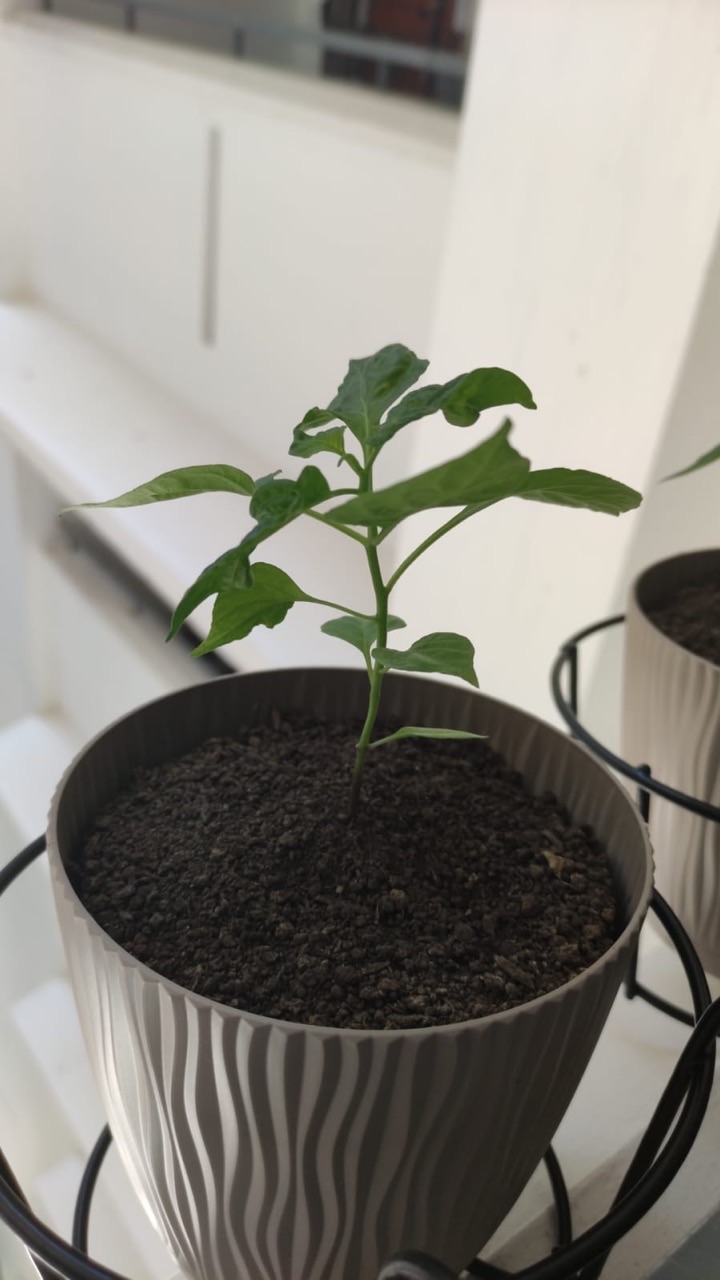
A chilli plant is one possible example when conditions are suitable. It needs appropriate light, water and care, and may not flourish in a dark corner. A family can observe leaves, flowers, fruit development and changes in growth. The educational benefit comes from noticing and recording real changes, not buying expensive equipment or claiming every seed will germinate.
Use clean, suitable growing material and avoid leaving stagnant water in saucers or unused containers. Check for mosquitoes frequently, particularly in outdoor or semi-outdoor locations. Do not water so heavily that runoff damages neighbours’ belongings or creates slippery corridors. Good home gardening should improve the household environment, not impose problems on others.
What to grow first: herbs, leafy plants or flowers?
Choose a plant based on its actual light and care requirements. A small herb may be convenient for cooking, while a flowering plant may teach children about pollination. A leafy vegetable can provide a visible growth cycle, but it still needs suitable nutrients, water and conditions. Avoid promises that every plant will yield a certain amount or pay back the cost of a gardening kit.
For children, select non-toxic plants and keep fertiliser, tools and any pest-control materials safely away from reach. Supervise handling of soil and ensure handwashing afterwards. A child can help with gentle watering and observation while adults remain responsible for safe arrangements and plant health.
Some decorative plants can be irritating or poisonous to people or pets. If the household keeps a cat or dog, research the species’ suitability with a trusted veterinary or horticultural source. A plant being sold in a shop does not mean it is safe for every animal. Keeping plant information accessible helps prevent accidents.
Why gardening in Punggol can teach more than plant names
Gardening provides a way to understand relationships. A plant depends on light, water, air, soil conditions and interactions with organisms. The gardener’s decisions affect those conditions. Children can learn that an outcome often has more than one cause: a yellow leaf might relate to watering, nutrients, light or disease, so the correct response begins with observation rather than guessing.
Adults can use simple questions to deepen understanding: Which part of the pot receives morning sun? How does the soil feel today? Did the plant change after a rainy week? Does a flower attract insects? This is practical scientific thinking rooted in a real place. It does not need to become an examination exercise for children to benefit.
Gardening can also encourage patience. Plant growth is gradual, and some attempts fail. A seed may not germinate, or a leaf may be damaged. The right response is to review conditions and try a safer adjustment, not treat every failure as proof that the gardener lacks ability. That attitude can transfer to other everyday learning.
Water, mosquitoes and Singapore’s climate
Punggol’s warm, humid conditions can support rapid growth for some species but also create pest and disease challenges. Different plants require different watering frequency, and heavy rain can change the moisture of outdoor beds. The best routine is to check the plant and growing medium rather than water automatically on an inflexible schedule.
Stagnant water can encourage mosquito breeding. Empty or manage containers appropriately, keep drains clear and follow NParks and NEA guidance on preventing breeding. An allotment licence holder remains responsible for the plot’s immediate surroundings. A well-intentioned gardener who leaves water trapped in a discarded bucket can create a problem for the whole community.
Water conservation matters too. Use the amount appropriate for the plant, avoid unnecessary runoff and learn whether the chosen garden has approved watering systems. The availability of shared water points does not make wasteful use acceptable. Gardening is most sustainable when it respects local resources and public amenities.
What about chemical fertilisers and pesticides?
NParks’ allotment-garden restrictions explicitly prohibit chemical pesticides, herbicides and fungicides in those plots. A different private or community setting may have its own rules. Do not assume a product permitted at home is permitted in an NParks allotment, and do not apply any unfamiliar substance without understanding its safety and legal status.
Begin with proper plant selection, hygiene and observation. If a plant develops pests, ask the garden’s managing body or an appropriate horticultural professional about suitable approaches. Removing a severely infested plant or adjusting care may be better than spraying chemicals near children, pollinators and neighbouring plots.
Growing edible plants also requires food safety. Wash produce appropriately and be cautious about contaminated soil or unverified chemicals. A homegrown vegetable is not automatically safe simply because it was grown locally. If the environment or treatment history is uncertain, obtain suitable professional guidance.
Rooftop and community-garden neighbour etiquette
Gardeners share pathways, tools, resources and sometimes harvests. Agree on responsibilities and communicate clearly about changes. Do not take produce without permission; a community garden may have an agreed sharing system. Do not remove somebody else’s plant because it appears unhealthy. Ask before altering a bed or watering arrangement.
Keep access routes clear. Plant pots and tools should not create tripping hazards for older residents or people with visual impairments. Children should know which areas are for observation and which require adult permission. A garden that welcomes visitors must still be safe for those who are not gardeners.
If disagreements arise, refer to the group’s agreed rules and managing body rather than escalating an argument in a public neighbourhood chat. The purpose of a community garden is shared care and connection. A clear process for solving small problems preserves the relationship long after a particular crop has been harvested.
Gardening with grandparents, children and teenagers
A multi-generation garden session can be enjoyable when tasks match each person’s ability. A grandparent may prefer a raised bed that reduces bending; a young child may enjoy watering with supervision; a teenager might help document the growth of plants or maintain a simple record of weather. No one needs to perform the same physical task for the experience to count.
Choose a comfortable duration and a route with rest opportunities. Outdoor gardening during hot hours can be tiring, especially for older adults or people with medical limitations. Use shade, drinking water and professional advice where appropriate. A short session that everyone enjoys is more sustainable than forcing a long day of work.
Children can be taught not to touch unknown plants, insects or garden chemicals and to wash their hands after handling soil. Those boundaries help them explore safely. A garden offers educational opportunities, but the adults remain responsible for supervision and the rules of the shared space.
Can Punggol community gardens help local biodiversity?
Some Community in Bloom gardens focus on habitat plants and the support of pollinators rather than edible crops. A garden can provide flowering plants, greenery and places where visitors observe insects and birds. However, a small garden cannot be assumed to solve all ecological issues in the surrounding waterway or estate. The best contribution comes from careful plant choice and sustained appropriate maintenance.
Native and suitable plants may be important in habitat-focused designs, and gardeners should use NParks guidance when planning communal biodiversity projects. Do not release insects, fish or other animals into a public garden or waterway. Introducing unsuitable organisms can cause ecological harm. Responsible stewardship includes understanding what not to add.
A child who notices a bee visiting a flower has an opportunity to ask how plants and pollinators interact. Observation from a respectful distance is enough. Avoid handling wildlife or creating disturbance to obtain a photograph. The relationship between gardening and ecology becomes meaningful when people learn to recognise the lives already present.
How to start a garden in an HDB estate legally
NParks says that a new community garden needs a group of volunteers, support from a managing organisation such as a Residents’ Network or school, and approval from the relevant landowner. The Community in Bloom guidance provides a starting process. Do not begin converting a void deck, public planter, common corridor or rooftop into an unauthorised personal garden.
Start by speaking with interested neighbours and the relevant managing body. Identify a possible location and assess who would maintain it, how water is supplied, whether the ground or roof is suitable, and how people with mobility needs can access the site. A garden that nobody can maintain after the first month is not a successful community project.
Plan for clear ownership of tasks rather than a vague promise that ‘the community’ will water everything. Create a small realistic schedule and agree on tools, hygiene, safety and potential costs. The group can consult NParks’ published guidance before applying for any funding or support. Not every local idea qualifies for every grant, and an application is not an approval.
Four common misunderstandings about Punggol gardening
- “The 84 new Punggol plots are open for booking now.” Incorrect as of 6 November 2026: the October application closed on 2 November.
- “I can pick any empty allotment bed.” Incorrect: plots are assigned under a household ballot and licence.
- “Every rooftop garden is a free personal plot.” Incorrect: public access, volunteering and individual planting rights are separate.
- “Gardening costs only S$65.40.” Incorrect: the published annual licence fee does not include every plant, tool, transport and maintenance expense.
Four-week beginner gardening plan for Punggol residents
Week 1: observe your space and decide the type of garden
Check available light and safe placement at home. If considering community participation, look up NParks’ current map and identify a registered group within reasonable travel distance. Read the allotment rules but do not assume a ballot remains open. Choose one manageable goal rather than buying many plants.
Week 2: begin a small, permitted experiment
Start one suitable plant in a stable container with drainage. Learn when to check moisture and how to avoid stagnant water. If volunteering, attend an approved orientation or arranged garden visit instead. Keep a simple observation record, especially if children are taking part.
Week 3: understand plant health and public-space responsibility
Observe changes in leaves and growth, look for pest problems and adjust care cautiously. Read the scheme’s restrictions on chemicals and plants before making any communal-garden decisions. Check that pots, tools and water do not obstruct neighbours or create hazards.
Week 4: decide on the sustainable long-term route
If the household enjoys gardening and can maintain the routine, consider joining a Community in Bloom group or monitoring NParks’ next ballot exercise. If the time commitment is difficult, keep a modest home plant or visit public gardens for enjoyment. Gardening should make life richer without creating a burden the family cannot carry.
Frequently asked questions about gardening in Punggol
Can I apply for a Punggol Waterway Park allotment plot today?
Not in the October 2026 exercise: NParks says applications closed on 2 November 2026. Watch for future exercises.
How many Punggol Waterway Park plots were offered in October 2026?
NParks listed 84 plots with an estimated licence start in Q2 2027.
When will the October 2026 ballot results be announced?
NParks says applicants will receive results by email from AXS by end-January 2027.
When is the next NParks allotment application exercise?
NParks expects the next exercise in Q2 2027. This does not guarantee that a particular park will have vacancies.
How much does an allotment plot cost?
NParks lists S$65.40 including GST annually for the 2026 exercises, up to three years; future conditions may change.
What size is an allotment planting bed?
NParks specifies a 2.5m by 1m raised planter bed with soil and storage.
Can one family apply for several allotment plots?
No. NParks accepts one application per household under the scheme at a time.
Can I choose which plot I receive?
No. Plot assignment is through ballot, including relevant bed heights.
Does NParks maintain a plot for a busy gardener?
No. The registered holder is responsible for maintenance under the licence.
Can I use chemical pesticides in an allotment plot?
No. NParks prohibits chemical pesticides, herbicides and fungicides in scheme plots.
Is water provided at the plots?
NParks provides shared water points but no electricity.
Can my plants grow as tall as I want?
No. NParks limits standing plant and structure height to one metre above the bed.
Is there a rooftop community garden at One Punggol?
Yes. People’s Association lists one among One Punggol’s community rooftop facilities.
Can any visitor harvest from One Punggol rooftop plants?
No automatic harvesting right follows from visitor access. Ask the managing group and follow its rules.
How do I join a neighbourhood community garden?
Use NParks’ Community in Bloom map to find a registered group and ask about its volunteer opportunities.
Can children join community gardening?
Some groups and programmes may welcome supervised children. Confirm age, safety and programme conditions with the organiser.
Can I grow chillies inside an HDB flat?
Container gardening can be possible where suitable and permitted, but ensure sunlight, safe placement, drainage and compliance with housing rules.
Can I place planting beds in a common corridor?
Do not obstruct or appropriate common property. Follow applicable HDB, Town Council and fire-safety rules.
Is Punggol Waterway Park the same as Punggol Park?
No. Punggol Waterway Park is in Punggol; Punggol Park is in Hougang.
Does a homegrown vegetable always cost less than buying one?
Not necessarily. Plants, materials, water and time all have costs; gardening can be valuable for learning and enjoyment even with a small harvest.
Official sources and further eduKate Punggol reading
- NParks: allotment gardening scheme, 84 Punggol plots and 2026 deadline
- NParks: Community in Bloom gardens and volunteering
- NParks: Grow and Share programme
- People’s Association: One Punggol rooftop facilities
- onePA: One Punggol Community Club contacts
- NParks: Punggol Waterway Park
- eduKate: why One Punggol has rooftop gardens and BBQ pits
- Lifestyle in Punggol: neighbourhoods and daily life
- Lifestyle in Punggol: parks and walking routes
Updated for 6 November 2026. NParks’ October 2026 allotment exercise is closed, and advertised rates apply specifically to 2026 exercises. Garden access, planting rights, future ballots and project dates must be confirmed with the responsible agency or group.


