
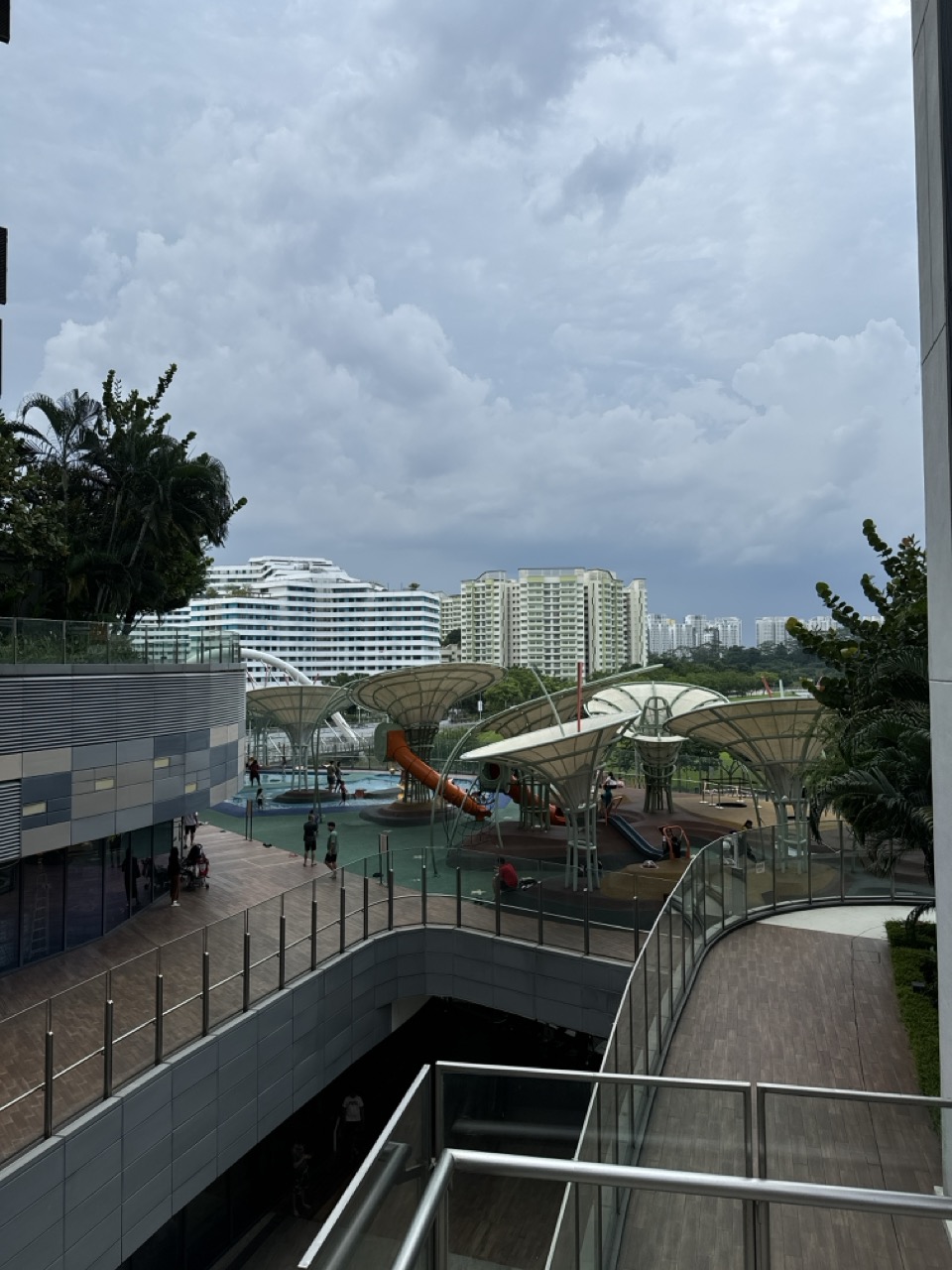
Where are the best playgrounds and water-play places in Punggol? Start with Happy Park at Waterway Point for a rooftop wet-and-dry playground, Punggol Waterway Park for its sand-play area near Carpark B and open walking spaces, or investigate Oasis Terraces for neighbourhood family play areas. Smaller playgrounds among Punggol HDB blocks can be more useful for daily exercise, and the Punggol Sport Centre’s swimming complex is a different supervised aquatic facility. Choose a place by the child’s age, weather, safety and ease of returning home—not only by how exciting the photographs look.
Important distinction: a mall rooftop water-play feature is not the same as a swimming pool, and the man-made Punggol Waterway is not a place for children to swim. Water features may be shut for maintenance, weather or cleaning even when the surrounding mall remains open. Before promising a special outing, check the responsible operator’s current guidance. This guide compares activities, transport, accessibility, costs and safety in simple terms for parents, caregivers and visiting relatives.
- Waterway Point Happy Park: Level 2 rooftop wet-and-dry playground at 83 Punggol Central, beside Punggol MRT.
- Punggol Waterway Park sand play: NParks identifies a kidney-shaped sandpit near Carpark B on Sentul Crescent.
- Oasis Terraces: Block 681 Punggol Drive, with child-friendly public areas and water-play design described by HDB; confirm live operation.
- Neighbourhood playgrounds: play areas below HDB blocks and around precincts, including a documented playground near Block 295 Punggol Central.
- One Punggol: family-friendly public community hub with library and open spaces, but individual activities have rules.
- Swimming lessons: use a proper swimming complex and appropriate instructors; playground splashing does not teach water safety.
- Weather: stop outdoor play during lightning, extreme heat or other unsafe conditions.
- Supervision: adults remain responsible for children in both dry and wet play areas.
- Essentials: water, suitable footwear, a towel or change of clothes, toilet plan and simple return route.
Choose a Punggol play area by age, distance and weather
When parents search for ‘best playground Punggol’, the answer often focuses on photographs and novelty. That can be useful for inspiration, but a successful outing needs more than a spectacular slide. A two-year-old, a seven-year-old and an eleven-year-old may need different challenges, and a grandmother using a walking aid may need seating close to the play space. The most enjoyable location is the one where everyone can participate safely and leave comfortably.
| Destination | Best initial purpose | Plan around |
|---|---|---|
| Waterway Point Happy Park | Wet-and-dry play, with food and shops nearby | Feature operation, age/supervision, change of clothing |
| Punggol Waterway Park sandpit | Sand play and short nature outing | Heat, weather, park location, handwashing |
| Oasis Terraces | Neighbourhood play and family errands | Current equipment status and safe access |
| HDB precinct playground | Short repeatable daily play | Specific block and equipment age range |
| One Punggol | Reading and community activities with family spaces | Rules for individual public areas and programmes |
| ActiveSG Punggol swimming complex | Swimming and appropriate water instruction | Pool hours, admissions, instruction and lifeguard rules |
A parent with only forty minutes before dinner may find the nearest safe neighbourhood playground ideal. Travelling to a famous mall for the same amount of movement might make the day more difficult. On a school-holiday weekend, however, combining Waterway Point with a meal can be a worthwhile special plan. The question should be what the child needs today: vigorous movement, a change of scenery, social play, sensory exploration or a calm place to wind down.
Most play areas are shared. Other children may be younger, smaller or learning new skills. The aim is not to let the fastest child dominate every structure. Adults can encourage turn-taking, allow exploration and intervene when behaviour becomes unsafe. Responsible sharing helps Punggol’s many public spaces remain pleasant for different families.
Happy Park at Waterway Point: wet and dry play in one mall visit
Waterway Point’s official community page calls Happy Park a Level 2 rooftop wet-and-dry playground. It describes jet sprays, water curtains, tunnel slides, a trampoline and other play features. Waterway Point is at 83 Punggol Central, Singapore 828761, beside Punggol MRT/LRT. This combination makes the destination convenient for families who want play, food and a short errand in one place.
The wet-and-dry distinction matters. One child may want to splash; another may prefer climbing or moving through dry structures. There is no reason to force both children into the same activity. Families should check current play restrictions, the recommended age for each element and whether particular features are operating before using them. A playground may have areas requiring different levels of adult supervision.
The general mall hours shown by Waterway Point are 10am–10pm, but that is not a guarantee about the water-play system’s daily operating window. Water features may be disabled because of weather, servicing or an operational issue. Avoid posting a permanent statement that a spray feature always runs at a certain minute. For time-sensitive visits, check with the mall operator.
What to bring to Happy Park
Pack a change of clothes, towel, water and suitable footwear for the child. Wet clothes can make the return trip uncomfortable, especially in air-conditioned areas or on public transport. Decide where the child can change appropriately under the property’s rules. Keep personal belongings in the care of an adult; the playground should not become a place to leave bags unattended.
For children with sensitive skin or specific health needs, ask the relevant professional if unsure about water-play suitability. The area is public and used by many visitors. Practise ordinary hygiene after play, particularly before eating. Do not encourage children to drink from play sprays or put their mouths on shared equipment.
Check where a parent can safely watch without blocking exits or paths. A wet playground is not a replacement for a lifeguarded swimming pool, and the child’s ability to play in shallow spray water does not indicate swimming competence. Keep water safety instruction separate from casual play.
How to plan a short Waterway Point play-and-meal outing
Choose the main activity before the shopping. If the child arrives eager to play, an hour of unrelated shopping can cause fatigue and frustration. It may be easier to inspect the play area, allow a suitable play period, then change and eat. If the equipment is unexpectedly unavailable, the family can still choose a meal or visit an appropriate indoor destination rather than treating the trip as a failure.
Busy play areas may have queues or high energy levels. If the child is overwhelmed, a shorter session is appropriate. A child who needs a quiet recovery after school may enjoy a small snack and a calm browse more than a crowded water-play session. Parents should observe the child rather than following a fixed online itinerary.
Agree on a safe boundary for older children and a plan if someone needs the toilet. Younger children should not be sent across a mall alone merely because the parents can see the other end of the play area. An outing works when caregivers know who is watching each child throughout.
Punggol Waterway Park: real sand play and nature
NParks lists Punggol Waterway Park as a public park along Sentul Crescent, with Nature Cove, Recreation Zone, Heritage Zone and Green Gallery. Its visitor information identifies an accessible park environment and a kidney-shaped sand-play area near Carpark B. The park is listed as open 24 hours, but an individual family outing should be planned around safe daylight, weather and the child’s stamina.
Sand play can be valuable because it gives children opportunities to scoop, build, compare shapes and test what happens when material is moved. The play does not need a formal lesson plan. A child might notice that dry sand falls differently from damp sand or that a small container creates a shape with clear edges. Adults can support curiosity by asking simple questions without requiring correct scientific vocabulary on every occasion.
The sandpit near Carpark B is a particular amenity within a long linear park. Punggol Waterway Park cuts through the town; the general name does not give enough information for a first-time family. Check NParks’ current park map for the chosen section and an appropriate entrance. Families should not assume that the nearest MRT or LRT stop always creates the shortest walk to the sandpit.
Sand-play hygiene and practical preparation
Bring water for drinking, suitable shoes and a way to clean hands before food. Children may enjoy using basic sand tools where permitted, but adults should avoid leaving toys in walking paths. Check the area for visible hazards and do not let children play with sharp or unidentified objects. Public sand areas require common-sense hygiene.
A child who frequently puts sand or small objects into their mouth needs particularly close supervision. If the child has a skin condition or another relevant medical concern, follow professional guidance. Sand play is enjoyable, but an adult should not dismiss a child’s discomfort simply to complete the outing.
Respect the surroundings. Do not dig into protected planting areas, remove vegetation, damage shared facilities or leave rubbish behind. Public amenities are for many families, and a clean space encourages people to return. A short sand session followed by proper cleanup is enough for a successful visit.
Punggol Waterway is not a designated swimming area
The man-made waterway is a landscape and water-management feature, not a children’s paddling pool. Water depth, currents, edges and access conditions cannot be judged safely from an attractive photograph. Do not allow children to enter the waterway, climb over barriers or approach its edge unsupervised. NParks states that fishing is not permitted within Punggol Waterway Park, and general park access does not imply permission for water activities.
A family can still enjoy the waterfront by walking, observing birds, looking at bridges and using appropriate designated park amenities. For a child who wants water play, choose a facility built and maintained for that purpose, such as a currently operating playground water feature, or an appropriate swimming complex with its own admission and supervision conditions.
Understanding this difference is important for visitors who are unfamiliar with the town. A waterfront park and an aquatic facility can be nearby without offering the same safe activities. A responsible guide should describe the actual permitted uses, not convert every scenic stretch of water into an attraction for children to enter.
Oasis Terraces: neighbourhood play rather than a long destination trip
HDB describes Oasis Terraces as its first new-generation neighbourhood centre and highlights child-friendly areas, community plazas and water-play design. The centre is at 681 Punggol Drive near Oasis LRT. It also contains shops and Punggol Polyclinic, making it useful for households already visiting this part of Punggol.
Design information and current operating status are not identical. HDB’s description of original play spaces does not certify that every water feature is running in November 2026. A family planning a specific play visit should check the building’s current conditions and any operator notices. If a feature is closed, a nearby meal, suitable playground or simple stroll may still make the outing worthwhile.
Oasis can suit families who want a short outing near home rather than crossing the estate. A parent might combine a grocery purchase and a brief play stop, subject to safety and availability. A family with an older relative may prefer the neighbourhood centre’s familiar access routes to an unfamiliar destination requiring multiple transfers.
If the visit follows a medical appointment, keep the patient’s comfort and the child’s needs in mind. Someone who is unwell or tired may not want to wait for extended play. A simple homeward trip is often more appropriate than forcing the original plan.
HDB playgrounds in Punggol: the underrated daily choice
Many Punggol residential precincts have playgrounds within or near public housing blocks. These play areas can provide brief, repeatable exercise without admission tickets or a long commute, subject to the posted rules and maintenance status. The advantage is ordinary access: a parent may visit for a short period before dinner, and a child can become familiar with a space over time.
One documented example is the public playground near the Block 295 Punggol Central area, alongside community sport courts. Our Playground 295 family guide describes this setting. Families should check the specific site and actual equipment, because block names and surrounding access paths may be confusing to visitors.
Not every playground is intended for every age. Some structures have larger steps, taller slides or movement challenges that do not suit younger toddlers. Read signs, check equipment condition and choose areas that match a child’s abilities. A parent should not assume an older child is safe merely because the playground is inside an HDB estate.
Small neighbourhood parks can also support important social experiences. Children learn to take turns, negotiate play and recognise when another child needs space. Adults can support these interactions without supervising every word. A familiar public play area becomes more valuable when children know how to use it respectfully.
How much time should a child spend at a playground?
There is no universal ideal session length for every child. Weather, energy, sleep, health and the activity itself matter. A twenty-minute outing may be perfect after preschool; a school-holiday family might choose a longer morning. The objective is enjoyable, age-appropriate movement without overexertion or pressure.
A child who is frustrated, overheated or exhausted may need a break even if the parent had planned a full hour. Do not treat leaving early as a failure. Families can return another day. Repeated pleasant experiences often encourage more independent interest in exercise than one overly demanding session.
Older children may want more challenging games or a court sport. Look for suitable spaces and supervision rather than sending them to equipment designed for toddlers. A public court may have booking or shared-use rules, so check signs before assuming it is always available.
One Punggol: family spaces and reading as a rainy-day alternative
One Punggol is a community hub at 1 Punggol Drive with Punggol Regional Library, a hawker centre, programmes and public areas. It is a useful alternative when an outdoor play plan cannot proceed. A child might enjoy a suitable book, a story-related activity or a calm browse instead of using a wet playground in unsafe weather.
Open public space is not necessarily unrestricted play space. Children should follow posted rules, avoid blocking entrances and respect other visitors. A photograph of children using scooters in a common area does not establish that scooters are allowed at every time or location. Check the building’s actual conditions and programme instructions.
The Regional Library serves children of different ages and has areas intended for reading, learning and exploration. A parent can encourage enjoyment without turning the trip into homework. A child may choose an illustrated book or listen to a story while waiting for rain to stop. This broadens the idea of a successful family outing beyond physical play alone.
What about the Punggol swimming complex?
ActiveSG Punggol Sport Centre at 11 Sentul Crescent includes a multi-pool swimming complex according to SportSG’s official facility materials. It is a swimming venue, not a public spray playground. Pool admission, depth, lessons, supervision and operating hours are separately regulated. The availability of a leisure pool does not mean an unsupervised child can use it safely.
Families teaching water confidence should consider age, swimming ability, a suitable instructor and the child’s comfort. A child who enjoys spray play may still be unfamiliar with being submerged or floating. Learning to swim takes a different sequence of skills and requires appropriate supervision. It should never be rushed because the child has previously played under water jets.
Use the current ActiveSG facility information before travelling. Event promotions, such as a one-day free-entry celebration, should not be treated as normal ongoing prices. A regular family swimming plan should account for current admission, travel, equipment and recovery time.
Water-play safety: what parents should know
Wet surfaces can be slippery. Teach children to move appropriately and avoid pushing, rough games and running through crowded areas when unsafe. Watch for how the child’s footwear performs on wet and dry ground. Follow all posted rules on age limits, equipment and the use of play features.
Keep toddlers within appropriate reach and observation. A very young child can move toward an exit, another group or an unexpected hazard quickly. Adults should agree who is watching each child, particularly when several relatives attend together. The presence of other parents does not mean an unknown adult is supervising your child.
Be attentive to signs of cold, fatigue, distress or discomfort. If the child is upset or overwhelmed, leave the area calmly and change into dry clothes. A playground visit is an activity to enjoy, not a test of endurance. Encourage a child to tell the adult when something hurts or feels unsafe.
Heat, humidity and lightning around Punggol play areas
Outdoor playground structures can become hot in sunlight, and Singapore’s humidity may make strenuous play tiring. Check whether slides, metal surfaces and ground areas are comfortable before use. Offer water and rest in suitable shade. For an infant or an older relative who accompanies the family, the heat may be more difficult than it is for the active child.
During thunderstorms, stop exposed outdoor play. Do not shelter under isolated trees or remain on a rooftop because the child wants one more turn. Indoor alternatives can include the library, an appropriate mall space or simply going home. A short cancelled session is safer than trying to finish play during lightning.
Heavy rain can make travel difficult even when a destination is partially sheltered. A parent pushing a stroller across wet crossings should choose a safe accessible route rather than the shortest-looking path. Check the next bus or train route before leaving if the weather is changing quickly.
Playground accessibility and inclusion
A child who uses a mobility aid or has sensory needs may experience a play space differently. The most useful information is the specific accessible route, surface, restroom and equipment—not a general description that a mall is family friendly. Some play structures are not accessible to every child. Families can select suitable shared activities without requiring everyone to climb the same equipment.
For children with sensory sensitivity, a noisy spray feature or crowded slide can be overwhelming. A quieter neighbourhood playground, sand-play session or library visit may be more comfortable. Let the child’s preferences guide the outing and offer an appropriate break. Inclusion means making room for different ways of enjoying public space.
If an adult accompanying the family uses a wheelchair or walker, check seating, lifts, ramps and an accessible return route. It is difficult for a child to enjoy a playground when a grandparent has to stand uncomfortably far away. The best choice is a place where the family can remain connected without sacrificing anyone’s wellbeing.
Food, snacks and hygiene after playground visits
Playing outdoors can leave children hungry and thirsty. Bring drinking water and a simple snack if appropriate, or choose a nearby reliable meal stop. Food should be handled safely, especially in hot weather. Avoid leaving perishable items in a warm bag for a prolonged period. Wash or clean hands appropriately before eating after sand or water play.
Malls near playgrounds offer convenient food, but families should still consider allergies, dietary restrictions and the true meal cost. A trip can become expensive if adults purchase several impulse snacks because they did not plan a simple meal. A reasonable spending limit helps keep the activity repeatable.
Cleaning up is part of the outing. Put rubbish in appropriate bins, collect toys and leave shared play areas usable for the next family. Children can help with age-appropriate tasks, such as checking that a bucket or bottle has been packed, while adults remain responsible for the final safety check.
Play-based learning: the benefits beyond wearing children out
Playgrounds support many forms of learning. Climbing requires children to judge distance and manage body position. Taking turns introduces timing and social negotiation. Sand play invites experimentation with shape and material. Watching moving water can prompt questions about flow, direction and force. Children may gain these experiences without a worksheet or formal instruction.
Parents can encourage curiosity with simple questions: What changed when you added more sand? Why did the water flow that way? How did you decide when to let another child take a turn? A good conversation starts from what the child noticed, rather than testing them on scientific vocabulary they have not yet learned.
The goal is not to make every minute academically productive. Unstructured and social play have their own value. A child who is allowed to invent a game, manage a small disagreement and discover a new movement is practising important skills. A parent can remain present and supportive without directing every activity.
Three practical playground itineraries in Punggol
Plan A: an easy town-centre outing
Travel to Waterway Point by the appropriate route. Check Happy Park’s operation before the child enters. Enjoy a suitable wet or dry play period, change clothing and have a simple meal. Return before the child becomes exhausted. If water features are unavailable, choose another permitted activity in the mall instead of forcing a disappointing wait.
Plan B: sand and nature at Punggol Waterway Park
Use the official NParks map to locate the sandpit near Carpark B. Bring drinking water, sun protection and basic cleaning supplies. Allow the child to build or explore under appropriate supervision, then take a short park walk if conditions are comfortable. Return by a known route. No family needs to cover the full waterway in one afternoon.
Plan C: the nearby HDB playground
Select a properly maintained playground close to home that suits the child’s age. Visit at a comfortable time, allow a short play period and return for dinner. This plan costs little and can become a regular part of family life. Repeating a safe simple outing can be more valuable than a long trip to a distant attraction every weekend.
Common Punggol playground mistakes
- Treating the waterway itself as a safe place for swimming or paddling.
- Assuming Happy Park’s water features operate during every mall opening hour.
- Promising Oasis Terraces water play based only on old design articles.
- Leaving children unattended because a mall or public park seems familiar.
- Using play equipment outside the posted age or safety recommendations.
- Ignoring hot surfaces, weather alerts and lightning risk.
- Planning a long walk without considering toilets, water and the return journey.
- Confusing Punggol Waterway Park sand play with a conventional water playground.
- Assuming every public community area permits ball games, bicycles or scooters.
- Turning a pleasant outing into an expensive chain of impulse purchases.
Frequently asked questions about Punggol playgrounds
Where is the water playground at Waterway Point?
The official mall identifies Happy Park as a Level 2 rooftop wet-and-dry playground at 83 Punggol Central.
Is Happy Park a swimming pool?
No. It is a playground with wet and dry features; swimming needs proper aquatic facilities and supervision.
What are Waterway Point’s main operating hours?
The mall generally lists 10am–10pm, but water-play equipment may follow different maintenance and operational conditions.
Is Happy Park always open?
Do not assume so. Check the mall operator for current water features and any closures.
Where can children play with sand in Punggol?
NParks lists a sand-play area near Carpark B in Punggol Waterway Park.
Can children swim in Punggol Waterway?
No. Treat the waterway as a scenic public water body, not a designated swimming or paddling area.
Is Punggol Waterway Park open 24 hours?
NParks lists the park as open 24 hours; that does not make every amenity suitable for late-night use.
Does Oasis Terraces have family play areas?
HDB describes child-friendly public spaces and original water-play design. Check the current status of individual play features before visiting.
Where is Oasis Terraces?
Block 681 Punggol Drive near Oasis LRT.
Are there playgrounds among Punggol HDB blocks?
Yes, public precinct play areas exist, including a documented playground around Block 295 Punggol Central. Check the exact site’s equipment and condition.
Are public playgrounds free?
Many public precinct playgrounds and parks can be visited without admission tickets, but individual commercial and booked activities have different rules.
Can grandparents comfortably join?
Choose a location with suitable seating, shade, accessible pathways and a manageable duration for the actual family members.
What should children wear for water play?
Follow the specific operator’s dress and footwear rules, and bring a towel and change of clothes.
Should toddlers play in sand?
Use age-appropriate supervision and hygiene, especially if the child puts objects into their mouth. Follow any relevant professional advice for health concerns.
Where can children learn to swim in Punggol?
ActiveSG Punggol Sport Centre has a swimming complex, subject to current facility rules, admissions and appropriate lessons.
Does water play make a child water-safe?
No. Enjoying water sprays is not the same as swimming competence or water safety education.
What is a good rainy-day substitute?
A suitable library, indoor activity or family meal at One Punggol or a mall, depending on actual opening and entry conditions.
Can children ride scooters in all public community spaces?
No. Follow the particular building, path and active-mobility rules rather than assuming any open space is a scooter track.
How long should playground time be?
Choose a duration that suits age, weather, energy, health and the family’s routine. There is no universal session length.
What if a playground is closed for maintenance?
Respect the closure and choose another suitable activity. Do not enter a restricted area or use damaged equipment.
Official sources and related eduKate Punggol reading
- Waterway Point: Happy Park rooftop wet-and-dry playground
- NParks: Punggol Waterway Park, sand-play area and opening hours
- HDB: Oasis Terraces and neighbourhood play design
- People’s Association: One Punggol public spaces and library
- Punggol Playground 295: family play and community courts
- Lifestyle in Punggol: shopping malls compared
- Lifestyle in Punggol: things to do with children
- Lifestyle in Punggol: swimming pools and other sport facilities
- Lifestyle in Punggol: parks, waterway walks and paths
Play amenities and public-space information checked against NParks, HDB, Waterway Point and PA in November 2026. Play-equipment operation, weather, maintenance, booking and access can change. Supervise children and follow current on-site rules.


