
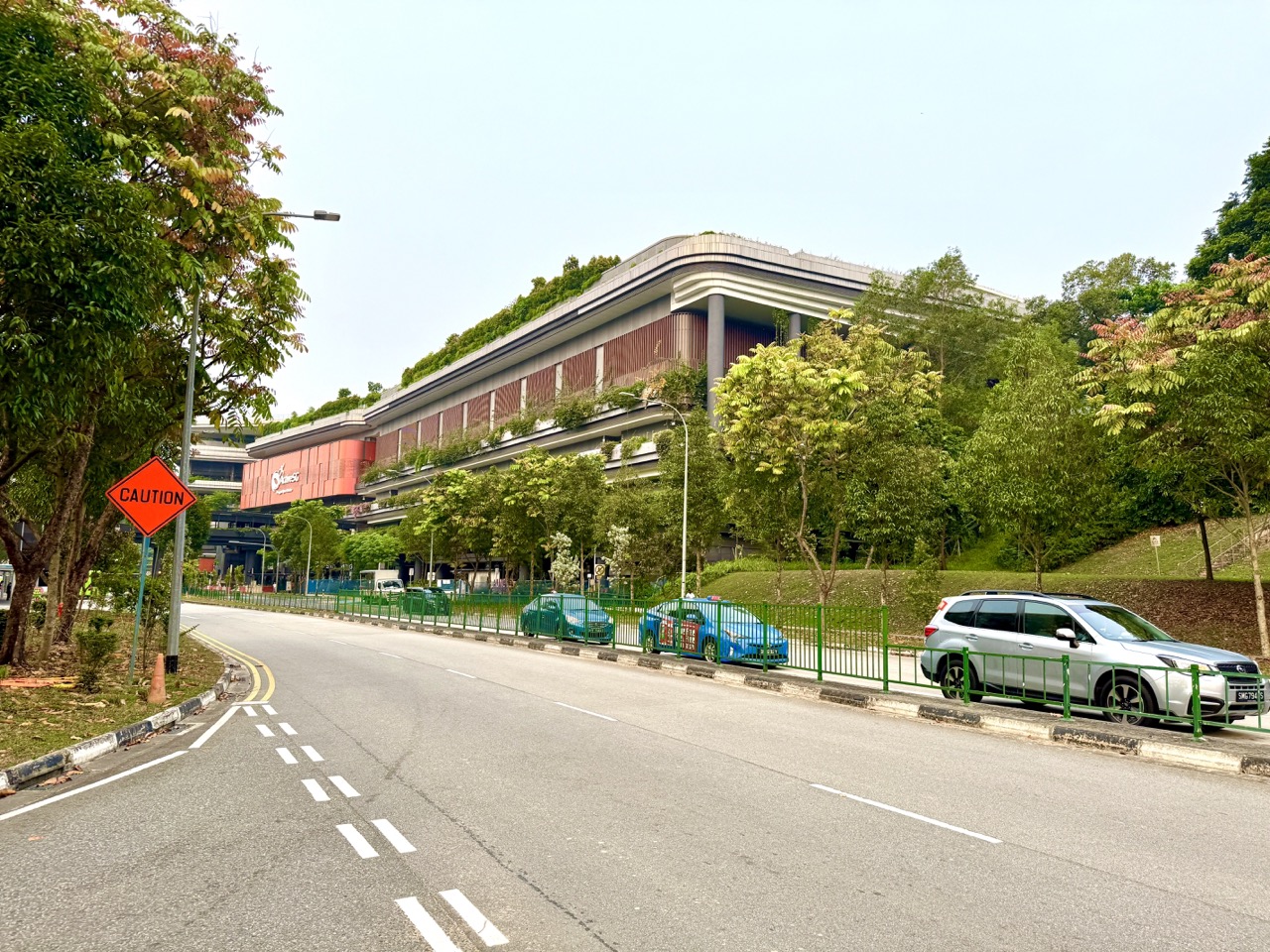
ActiveSG Punggol Sport Centre at 11 Sentul Crescent can help Singapore students learn an important Social Studies question: How can people with different needs share a public place fairly and responsibly? A public sports complex serves families, working adults, seniors, beginners, experienced players and people with different abilities or schedules. It also has limited court-hours, booking rules, safety obligations and different operators for nearby buildings. The Sport Centre began selected public operations on 27 October 2026, with an official opening scheduled for 22 November 2026. A student does not need to enter a booked court or interview strangers to investigate how shared spaces work. Use verified operator notices, maps, sources and clearly labelled fictional scenarios, with current access checked through MyActiveSG+.
Singapore’s Primary Social Studies syllabus aims to develop informed, concerned and participative citizens who examine real issues, consider multiple perspectives and make responsible decisions. The 2024 Lower Secondary G1 Humanities syllabus explicitly discusses common space, multicultural living, identity, harmony and respectful engagement with differences. These frameworks do not teach that every resident must agree or that one facility solves all issues. They ask learners to identify stakeholders, distinguish facts from opinions, investigate how public decisions affect different groups and evaluate responses. This guide uses Punggol as a practical example of citizenship, public institutions and social inquiry, distinct from calculating court scarcity in Economics or translating sports words across languages.
- Place: Punggol Sport Centre, 11 Sentul Crescent; selected operations began 27 October 2026.
- Social Studies question: how should shared facilities serve people with different needs, preferences and responsibilities?
- Core concepts: citizenship, common space, stakeholders, diversity, inclusion, public services, trade-offs and responsible action.
- Different roles: operator, booking holder, parent, child, athlete, staff member, neighbour and non-user may see the facility differently.
- Evidence: official policies, verifiable dates, accurate maps, reliable accounts and respectfully gathered information.
- Public versus private: a public sporting service has goals and obligations that cannot be described solely as a private seller’s profit.
- Decision-making: identify who is affected, compare reasonable options and explain consequences.
- Diversity: shared spaces can create opportunities for interaction without guaranteeing social harmony automatically.
- Civic responsibility: obey booking and safety rules, give useful feedback and protect other users’ rights and dignity.
- Privacy: do not record identifiable strangers, ask children to disclose personal circumstances or conduct unauthorised surveys.
- Learning progression: clear questions, evidence, viewpoints, reasoned conclusions and a four-week inquiry.
Definition lock: Social Studies investigates people and society
Social Studies examines how individuals, communities, institutions and wider social systems interact. It involves historical and geographic knowledge where relevant, but its central purpose includes understanding social issues and making informed responsible judgements. A sports centre is a useful case because people with different circumstances share infrastructure governed by rules. Students can ask why booking conditions exist, how inclusion is supported and what trade-offs arise when space is limited. The lesson is not to memorise that public sport is always good or bad. It is to understand the issue, identify evidence and consider different perspectives without assuming one person’s experience represents everyone.
Why this is different from Punggol History
A History guide asks how waterfront recreation changed across decades, from older coastal businesses to modern development. A Social Studies guide asks how people use, govern and share public facilities today. History can supply background, but the main question here concerns social relationships and public decisions. A student may compare different users’ needs without claiming the old shoreline directly caused every modern rule. Distinguishing disciplines helps learners avoid producing a timeline when the task asks for perspectives, or an opinion essay when the task asks for historical evidence. Good Social Studies often brings several kinds of knowledge together while keeping the inquiry question clear.
Why this is different from Economics
Economics can examine scarce court-hours, demand, prices and allocation incentives. Social Studies asks a broader set of questions about inclusion, responsibility, different needs, institutions and community outcomes. A peak-hour court may be expensive or hard to obtain, but a student should consider who is affected, what rules are public, and what alternative arrangements may be relevant. Price is one part of the issue, not the entire social judgement. A mathematical model of optimal allocation does not tell us how a beginner feels, whether a step-free route is usable or whether a parent understands the booking policy. Multiple perspectives need to be evaluated responsibly.

What makes a space public?
A public sports facility is made available to members of the public under defined operator conditions. Public does not mean that every area is free, always open or available without reservation. A court booking, gym admission or programme registration can carry different terms. Students should distinguish public access as a general policy aim from unrestricted use by any individual at any moment. This is a useful citizenship lesson because sharing requires rules. A person’s freedom to enjoy a booking exists alongside another person’s entitlement to their confirmed slot and staff responsibilities for safety. Common spaces work through both opportunities and boundaries.
The operator’s role is different from the visitor’s
Sport Singapore and ActiveSG manage facilities and programmes within Singapore’s public sports system, while visitors choose eligible activities and follow current conditions. The operator must address service operations, maintenance, rules and safety responsibilities through authorised processes. Visitors do not gain authority to alter rules because they disagree with one booking result. A Social Studies learner can consider which decisions belong to which institution. The operator may publish an opening schedule, the booking system may record a purchase, and a family may decide whether to attend. Understanding these roles prevents confusion about who is responsible for each decision.
Public service is not the same as private profit
A private retailer and a public sports operator may both collect payments, communicate prices and manage customer needs. But public sport also involves policy objectives such as access, participation and appropriate infrastructure. A student should not assume that a court fee equals the cost of delivering the service or proves the operator aims to maximise profit. SportSG’s Sports Facilities Master Plan explains broader public sport ambitions. The appropriate Social Studies question is how institutional goals and constraints affect society, not merely whether a seller could charge more. Fair evaluation requires understanding what the institution is supposed to achieve.
Common space is more than a room
A common space is somewhere people from different backgrounds can encounter one another and potentially share experiences. In Punggol, this may include parks, libraries, community buildings, pathways and suitable sports facilities. Their proximity does not make them one institution. One Punggol, SAFRA Punggol and ActiveSG Sport Centre have different purposes and conditions. A child should learn to name the right place when describing an experience. Physical proximity can create opportunities for interaction, but a busy building does not automatically produce friendship or harmony. The behaviour of users, accessibility and social arrangements matter too.
MOE’s emphasis on common space
The 2024 Lower Secondary G1 Humanities syllabus explicitly identifies common space as relevant to building harmony in a multicultural society. It encourages students to understand shared experiences and appreciate differences while making sense of the social environment. A sports setting can serve as an accessible example of the concept. However, it is not a claim that all cultural groups participate equally in every sport or that there are no disagreements in public spaces. A student should ask what common space makes possible and what conditions help different people feel welcome. That is more thoughtful than declaring that a shared court automatically solves social tensions.
Diversity includes more than language
A group may differ in age, household responsibilities, disability, experience, income, work schedule, cultural background or sporting interests. These differences can affect how people use public amenities. A learner should not reduce diversity to hearing several languages or seeing different clothing. Some relevant needs are not visible. An evening court slot may suit one working adult and be impractical for another. A child may need supervision while an experienced adult may prefer independent exercise. The purpose of Social Studies is to consider what these differences mean for shared arrangements without creating stereotypes or demanding private information from people.
Never infer identity from appearance
A student’s observation of a crowd cannot reliably establish each person’s nationality, first language, health, income or reason for visiting. Asking strangers intrusive questions is not necessary for an introductory inquiry. Use public sources and clearly fictional personas when examining different needs. For example, a character described as a shift worker can have an irregular schedule because the scenario states it, not because the student guessed from clothing. This distinction is part of responsible evidence use. A Social Studies project becomes more credible when claims about people are supported rather than inferred from stereotypes.
Shared experiences may build connections
People who play together may learn to communicate, take turns and recognise other perspectives. A cooperative sports activity can create opportunities for interaction beyond a person’s usual social circle. But outcomes vary. A poorly managed competitive game could also create exclusion or conflict. The learner should examine the conditions, not assume a guaranteed result. Who is invited? Are the rules clear? Do people have suitable access? Are differences handled respectfully? A common space is an opportunity; whether it contributes to belonging depends in part on how people use and manage it.
Inclusion is not simply an open invitation
A poster stating “everyone welcome” may sound encouraging but does not establish that every person can access the activity, understand the instructions or use the equipment safely. Inclusion requires attention to practical barriers and appropriate arrangements. Some participants may need accessible routes or different communication methods; others may be unable to attend a particular time. A student should avoid promising facilities or adaptations that have not been verified. Instead, ask which information the operator provides and what questions remain. Meaningful inclusion involves listening, evidence and suitable action rather than an attractive slogan detached from conditions.
Accessibility must be checked, not guessed
A modern-looking building may contain lifts and accessible design features, but a photograph cannot establish that a particular route is step-free or operating today. A visitor with mobility requirements needs reliable current information. In a fictional Social Studies scenario, a family asks the responsible venue contact which entrance serves their intended activity and whether an alternative is available. The learning issue is the connection between public provision and the practical ability to participate. Do not assume every person with the same disability has identical needs. Ask the individual and use authorised information rather than making guesses.
Time is a barrier too
A parent who works overnight may be unable to use a popular evening slot; a student with CCA commitments may have a limited window; a senior may prefer daytime activity. None of those choices automatically identifies a more deserving person. A public operator faces demand across many schedules. Students can discuss how different time arrangements affect access, without inventing a policy solution guaranteed to satisfy everybody. The key is recognising that barriers are not exclusively physical or financial. A service may be close to home yet difficult to use because of timing, caregiving or eligibility constraints.
Cost can affect participation
Court fees, transport, equipment and programme charges may matter differently to different households. A student should not assume every resident can afford every recreational choice or that all facilities are permanently free. Real rates and subsidies need verification. A Social Studies inquiry can explore how pricing, concessions and public investment relate to access, while keeping calculations and the detailed theory of demand to Economics. The question here is how social circumstances affect the opportunity to participate. Avoid asking classmates to disclose family income for a casual assignment. Hypothetical profiles can illustrate the issue without compromising privacy.
Scarcity creates competing needs
A court-hour can normally be used by a defined set of people at a defined time, so demand may exceed available inventory. This can create tension among users seeking the same peak slot. Social Studies asks how competing needs and rules are understood, while recognising that there may be no arrangement satisfying every preference completely. Students should explain what the booking system actually says before judging a hypothetical outcome. An unsuccessful ballot is not proof of corruption, and a successful booking does not mean the holder may disregard the rules. Scarcity creates a need for clear conditions and responsible conduct.
Rules support shared use
Rules can establish booking periods, authorised activities, footwear requirements, conduct expectations and safety responses. A person may disagree with a particular policy, but should still distinguish personal preference from current obligation. Students can read ActiveSG’s published regulations and consider why shared facilities need predictable standards. A rule’s existence does not establish that it is perfectly understood or experienced equally by everyone; those are topics for inquiry. The first responsibility, however, is accurately identifying the current rule before discussing improvements.
A booking holder has responsibilities
Someone with a confirmed court reservation is entitled to the specified use under the applicable conditions, but not to monopolise other spaces, overstay the slot or sell access improperly. The individual must respect other users and staff. A Social Studies learner can examine how rights and responsibilities operate together. The holder’s valid booking matters, as does the next group’s scheduled access. A fair resolution of a dispute should rely on authenticated records and proper operator procedures rather than whichever participant speaks loudest. Citizenship includes respecting legitimate rules even when immediate personal preferences differ.
Public staff have responsibilities too
Staff may need to explain directions, manage safe use, identify maintenance problems and implement operator rules. Users can reasonably expect respectful and accurate communication within the staff member’s role. But an employee may not have authority to change a ballot result, refund policy or facility closure instantly. Students should distinguish the person handling an enquiry from the institution responsible for the policy. Harassment or threats toward staff are inappropriate responses to disappointment. A constructive issue report includes relevant facts and uses the proper channel. Social responsibility works in both directions.
A court dispute needs verification
Imagine two fictional families each believe they booked the same badminton slot. They may feel frustrated, but the correct response is to verify the authenticated venue, date, court and purchase state with the operator. A screenshot may be outdated or show a different product. The situation is not resolved by declaring one family more deserving based on appearance or language. Students can role-play a respectful request for help without creating a real dispute. This illustrates how public institutions, records and due process support shared access. A Social Studies answer should separate the emotional experience from the evidence needed to resolve the claim.
A maintenance closure changes priorities
A closed court may disappoint visitors, but a genuine safety hazard must be addressed before a game continues. The operator and users have different roles in responding. A person should not enter a restricted area or demand unsafe access solely because the slot was booked. The applicable booking and refund procedures need to be checked. Students can discuss why safety sometimes outweighs a short-term preference and what communication would help affected people. Do not invent compensation rights or assert a particular fault occurred at Punggol. The educational case can remain fictional while examining realistic competing concerns.
Sport and social cohesion
Sport can create shared experiences across social groups, a possibility reflected in SportSG’s SportCares work and broader participation aims. But the mere presence of a sports hall does not prove that community relationships have improved by a measurable amount. A Social Studies student should ask what evidence would support that outcome: participation, accessibility, programme design or appropriately gathered experience data. Without that evidence, the responsible statement is about potential and purpose, not guaranteed impact. This helps distinguish public objectives from evaluated results and avoids turning a complex social issue into promotional language.
Coexistence does not require identical interests
Two neighbours may enjoy different sports, speak different languages and disagree about peak-hour preferences while still sharing space respectfully. Harmony need not mean everyone thinks alike. It can involve predictable rules, willingness to listen and the ability to handle differences without humiliation. The G1 Humanities syllabus explicitly discusses respecting diversity and shared common space. A student can examine whether respectful disagreement is possible without assuming conflict is always harmful. The focus is how people negotiate legitimate differences and maintain relationships, not requiring uniform preferences or declaring one sport culturally superior.
Fairness is not always identical treatment
A rule that treats everybody identically may be simple to administer, but people can encounter different barriers. Accessibility support or age-specific programmes may be designed for particular needs. Students should distinguish equal dignity, equal formal rules and equitable practical participation. These are related but not identical concepts. Do not imply that any specific concession exists at Punggol unless the official operator confirms it. Use fictional examples to explore why a child, older adult and experienced player might need different information or arrangements. A nuanced Social Studies answer considers both consistency and legitimate differences.
Perspectives should be stated accurately
A parent may value supervision, a shift worker may value scheduling flexibility, and a regular racket player may value predictable court allocation. Those are plausible hypothetical perspectives, not evidence that every member of those groups thinks the same way. When writing a Social Studies comparison, label the personas as fictional or cite genuine sourced views. Ask what each person prioritises and why. A perspective should not be caricatured into a selfish demand. Fair analysis describes relevant reasons before evaluating trade-offs. This helps students reason about shared problems without turning other people into stereotypes.
Claims need different types of evidence
An opening date can be supported by an official notice. A personal experience requires an appropriate genuine account. A claim about resident satisfaction would need a defensible survey or other evidence. A claim that the centre has a pool does not establish the pool’s current admission status. Students should match source type to question rather than collect any five links on the general topic. This is central to inquiry-based Social Studies. An apparently official source may be reliable about policy but unable to tell us how every visitor feels. A balanced explanation identifies both the strength and limits of the evidence.
A source’s purpose matters
SportSG’s event announcement communicates planned opening activities. It is well placed to establish what the operator has scheduled. A news report might describe observations from a particular date. A social-media post may reflect one user’s experience or contain an outdated image. Students should ask who produced each source, when, and for what audience. An official promotional announcement is not a complete evaluation of social outcomes, and a complaint post may not establish a universal problem. Understanding purpose does not mean dismissing either source automatically. It means judging each claim within its appropriate scope.
The first question in an inquiry should be manageable
“Is Punggol’s society fair?” is far too broad for a school project. A narrower question is “What information would help first-time visitors use the new Sport Centre responsibly?” or “How might different schedules affect a fictional family group’s ability to participate?” Such questions can be explored through public information and clearly stated assumptions. The inquiry should be possible without contacting strangers, collecting medical information or entering restricted areas. A well-defined question supports focused evidence gathering and an answer whose limitations can be explained. Ambitious language is not a substitute for a manageable research design.
Stakeholder mapping reveals different roles
List the people and organisations relevant to a fictional issue: operator, booking holder, next group, parent, child, staff and possibly residents nearby. Then identify what each needs to know or may be affected by. Do not assume every stakeholder has authority over the same decision. The operator controls facility rules, while a parent may decide whether a particular activity suits their child. A simple table can make those distinctions visible. This is different from ranking whose opinion counts most. Stakeholder mapping helps the student understand the structure of the issue before proposing a response.
A fictional group with conflicting time needs
Imagine six friends seeking one regular badminton session. Two work shifts, two have childcare commitments and two prefer evenings. No single time suits everyone. A student can identify competing needs and propose a fair communication method, such as agreeing on available dates or rotating opportunities over time, subject to real booking rules. The inquiry should not invent live court availability or imply that every preference can be accommodated. The important learning is that public and group decisions involve constraints. Listening and transparent procedures can improve a situation even when no perfect solution exists.
A fictional parent with a first-time child
A parent wants to introduce a young beginner to sport but is unsure which spaces admit children and whether coaching is approved. The parent has a legitimate need for clear age, supervision and programme information. A confident claim from another visitor is not necessarily reliable. The family should check the current operator listing and the provider’s actual status. Students can discuss how information barriers affect participation and what a good public-service explanation would include. Do not invent a programme or suggest entering the adult gym despite published age restrictions. The case illustrates responsibilities and accurate information rather than a claim about an actual family.
A fictional older visitor seeking an accessible route
An older visitor wants a step-free approach to a suitable activity. The student should not assume that the person’s age proves they need a wheelchair or that a photograph shows a working lift. Instead, identify what route information would be necessary and how to obtain it from the appropriate authority. Different needs can coexist without stereotyping people. An accurate inquiry distinguishes a user’s question from a claim that the facility is currently inaccessible. The educational aim is understanding how practical information, infrastructure and respectful communication influence whether common spaces can be shared meaningfully.
A fictional coach whose claims need checking
An independent instructor advertises a lesson at the new complex. A parent should verify the provider, qualifications, programme and permission to use the venue, especially when children are involved. A photo outside the building does not establish official employment. Students can analyse how institutional authority and individual claims differ. This is not permission to accuse a real provider without evidence. The Social Studies issue concerns public trust and responsibility: what information should a family seek before committing, and which organisation has authority to confirm it? A careful response respects privacy and uses legitimate official channels.
How public feedback can work
A resident may have a legitimate suggestion about signage or a concern about maintenance. An appropriate feedback message describes the location, date, observed condition and practical impact without personal attacks or unsupported claims. The operator can then evaluate it through authorised procedures. Students can draft a fictional example at home, learning to propose an improvement rather than merely complain. Feedback does not guarantee that the preferred solution will be adopted; other users and constraints may matter. Responsible participation includes being clear, fair and open to explanations while still raising genuine issues through the correct process.
An actionable complaint is different from a rumour
A statement such as “Court doors were locked at the booked time and staff were informed” is more precise than “This entire centre never works.” A serious allegation should be supported by verified evidence and appropriate context. Students should not record strangers or provoke a conflict to make a complaint seem stronger. A useful inquiry examines what would need to be known before judging the response. The difference between a factual incident report and a generalised rumour matters for fairness to users and staff. It also supports trust in public information.
Why civic participation needs accurate facts
People may want to recommend changes to community facilities, but inaccurate opening dates or invented user numbers can weaken a proposal. A responsible student first checks the operator’s published information and the relevant scope of the issue. A suggestion might ask for clearer explanations of phased openings rather than declare that a pool has permanently closed when the status is unverified. Accurate facts make dialogue more constructive. Social Studies develops civic participation alongside critical judgement, not simply the willingness to express an opinion. The quality of participation depends on how claims are established and communicated.
No-one needs to reveal private details for a class project
A school inquiry can use hypothetical personas, published policy documents and non-identifying observations instead of asking classmates to disclose household income, immigration status, disability or personal bookings. Such information may be sensitive or irrelevant. If a formal school project involves surveys or interviews, teacher supervision, consent and appropriate privacy safeguards are necessary. Students should avoid photographing identifiable children inside sports facilities without authorisation. A project that respects privacy can still learn about different viewpoints through credible public evidence and carefully constructed fictional cases. Ethical inquiry is part of responsible citizenship.

Public safety can override convenience
A person may prefer immediate access, but unsafe equipment or severe weather can require restrictions. A Social Studies student should consider why rules exist even when they inconvenience someone who has travelled far. The operator’s responsibilities, the user’s expectations and any applicable remedies must be distinguished. Do not invent an entitlement to ignore a closure or continue play. A fair discussion can acknowledge disappointment while prioritising safety. Understanding legitimate constraints is not the same as claiming every management decision is beyond question. The proper route for clarification or feedback should remain available.
Shared paths are also common spaces
The routes near Sam Kee and Punggol Waterway serve pedestrians, cyclists, families and people with mobility aids. A group cannot assume that a path becomes a private court or photo studio because it is outside the building. Students can discuss how different movements require consideration for others. A person carrying sport equipment should not block a ramp or create a projectile hazard. The broader principle is that common space involves multiple legitimate users and a duty to avoid preventable interference. An appropriate recreational activity depends on where it takes place, not just whether the participants enjoy it.
Public space includes those not participating in sport
A nearby resident may value quieter routes, a library visit or safe walking conditions without wanting to play badminton. Social Studies should not treat non-athletes as irrelevant to the public environment. A sports development may create opportunities and also affect surrounding movement, traffic or demand on shared spaces. The particular impacts need evidence rather than assumption. Students can consider how planners and operators balance interests without declaring that every non-user opposes sport or that every athlete ignores neighbours. Recognising the legitimate interests of people outside the activity is part of understanding community life.
Social cohesion is not measured by one photograph
A photo of people from different backgrounds enjoying a public event may illustrate participation, but cannot prove that prejudice has disappeared or social harmony has permanently improved. The picture shows one scene at one time. A stronger evaluation would need appropriately designed evidence and a clear definition of the outcome. Students should learn to distinguish a programme’s intended social benefit from demonstrated impact. This avoids both cynical dismissal and unqualified celebration. A meaningful Social Studies conclusion might state that shared sport can offer opportunities for interaction, while the quality and wider effects require further evidence.
A policy aim is different from an evaluated result
SportSG’s published public sport goals may include broad participation and access. A policy aim explains what an institution seeks to achieve. Whether a specific development meets those aims requires evidence about implementation and outcomes. A student cannot declare Punggol either a complete success or failure simply from an announcement of a large facility. The careful inquiry asks what the objectives were, what has been completed, who can use the services and what remains unverified. This is an essential social research distinction. Intentions and effects are connected but not identical.
Avoid false choices about public priorities
An argument might claim a community must choose either sports centres or libraries, as though no other arrangements exist. Public planning often involves multiple needs, budgets, timeframes and constraints. A student should check whether the proposed either-or choice is genuine or artificially narrow. One Punggol and the nearby Sport Centre serve different functions and can both be studied as parts of the community environment. Understanding trade-offs does not require denying every potential combination. A good Social Studies response considers plausible alternatives, evidence and consequences rather than repeating a slogan that presents only two extreme options.
Social responsibility includes online behaviour
Disagreements about venues may move into group chats and social media. Sharing an unverified accusation, exposing a booking QR code or identifying a child can cause harm even when the sender is frustrated. A responsible participant checks facts, protects privacy and uses proper feedback channels. If a claim concerns a serious incident, qualified and official reporting processes may be appropriate. Students should not be taught that every problem must become a public video. Citizenship extends to digital spaces, where information can be repeated beyond the original audience. Careful online communication supports trust in community life.
How to compare perspectives fairly
A useful paragraph might begin with a shift worker’s need for flexible hours, then explain the parent’s interest in weekend activities and the operator’s responsibility to manage finite slots. Each perspective is described through reasonable goals rather than insults. The student can then compare what information or trade-offs would matter in evaluating possible arrangements. A balanced response does not need to declare all proposed solutions equally good. It needs to consider relevant evidence and explain why the chosen conclusion follows. Respectful multi-perspective reasoning is a core part of MOE’s inquiry-based Social Studies approach.
A structured Social Studies inquiry
Start with a focused question about a shared facility. Identify stakeholders and the type of evidence each claim requires. Collect suitable public operator sources and any approved non-personal observations. Check source date and scope. Consider more than one plausible viewpoint. Then write a conclusion that answers the question, explains the main reasons and identifies remaining uncertainty. A pupil should not begin by deciding the verdict and collecting only favourable comments. Inquiry is valuable because it can change the learner’s first impression in light of evidence. That is a strength, not a failure of confidence.
A Primary 3–4 activity
Younger Primary learners can study a fictional common-space scenario: two groups want to play in the same small area, while another person needs to pass safely. Ask what each person wants and what rules or communication might help. Use picture cards or a simple drawing rather than a debate about complicated policy. The pupil can identify a responsible action such as waiting for a turn or moving equipment out of the path. The lesson is awareness of others and shared responsibilities. It should not require children to confront real users or arbitrate actual bookings.
A Primary 5–6 activity
An older Primary pupil can examine how a public sports space serves different people. Give three clearly fictional personas and an official source about the facility’s use conditions. Ask what each persona needs to know and whether the source answers the question. The pupil can write a paragraph comparing the concerns and propose one practical improvement in communication. The task supports source evaluation, reflective thought and concern for community as described in MOE Social Studies. Avoid asking children to rank classmates by economic background or disability. The comparison should be based on stated scenarios rather than private personal data.
A Lower Secondary G1 activity
The 2024 Lower Secondary G1 Humanities syllabus discusses multicultural identity, shared space and harmony. A student can apply those concepts to a fictional community sport group whose participants have different language preferences and schedules. They identify possible obstacles and discuss which agreed communication practices might help. The student should also consider whether a shared activity necessarily creates closer relationships, and what evidence would be needed to assess it. This shows a nuanced understanding of common space. It should remain a supplementary application and not be presented as an official examination prompt or replacement for the school’s taught content.
A G2 or G3 extension
Older students can examine wider issues of governance, access and competing needs using multiple sourced perspectives and relevant official syllabuses. They might compare a public operator’s policy statement with a documented user experience, asking what each can establish. A reasoned answer distinguishes factual access conditions from value judgements about what would be fair. The student should avoid claiming the class has surveyed Punggol residents if it has not. A sophisticated response identifies uncertainty and recognises that a proposal may benefit one group while creating costs for another. Such analysis develops civic and critical reasoning rather than partisan advocacy.
A fictional Punggol weekend scenario
Three families plan to meet for sport, but one has a confirmed badminton court, one wants to swim and one intends only to walk beside the Waterway. The families initially say they are meeting at “Punggol” without naming separate facilities. The organiser clarifies the exact locations and verifies what is actually operating. The Social Studies question is how shared plans depend on accurate information and respect for different preferences. The scenario also illustrates that joining an outing does not require everybody to perform the same sport. Do not claim the described bookings or swimming admissions are real; they are fictional teaching elements.
A fictional accessibility scenario
An individual wants a suitable route into the Sport Centre and asks whether a particular entrance is step-free. Another group member suggests simply taking the stairs, assuming that is practical for everyone. The team recognises the assumption and checks the official route information instead. The inquiry asks why equal invitations can fail to produce equal opportunities without suitable access information. The scenario does not assert that Punggol lacks an accessible entrance. It teaches how to separate a person’s practical need from a claim about facility conditions, and why responsible communication requires accurate sources and respect.
A fictional late-court scenario
A group continues playing beyond its booked time because the match is close. The next group arrives and asks to use the space. One player argues that finishing the match is more important than the booking timetable. Students can examine the competing interests and the purpose of predictable slots. A reasonable response respects the authorised end time and avoids confrontation, while the group may arrange another legitimate session later. The Social Studies lesson concerns shared rules and consequences, not the correct technique for winning the match. One group’s enjoyment does not automatically override another user’s confirmed entitlement.
A fictional feedback proposal
A student notices that some fictional visitors misunderstand the difference between a soft launch and full access. They propose a simple dated information sheet listing confirmed operating categories and a link to current MyActiveSG+ listings. They identify the intended audience, evidence and limitations. The proposal is not an actual SportSG-endorsed notice and should not be attached to public walls without permission. The student can evaluate the draft with a willing family member. This demonstrates concerned and responsible participation through a modest feasible action, instead of claiming that one student project must solve every service problem.
A four-week Social Studies learning plan
Week one: identify common space, public service and the different roles in one hypothetical Punggol issue. Week two: read official venue rules and distinguish factual claims, intentions and opinions. Week three: compare three fictional stakeholder perspectives, noting different needs and possible trade-offs. Week four: produce a short evidence-based explanation and one realistic responsible action, such as a dated family information guide. No booking, filming or stranger survey is required. The desired outcome is a learner who can reason from appropriate evidence and respect legitimate differences, not a predetermined verdict about the entire development.
Common Social Studies mistakes
Do not call public access unrestricted access. Do not assume every group wants the same sport or time. Do not treat an operator’s announcement as proof of permanent outcomes. Do not equate one personal experience with every resident’s perspective. Do not infer identity or needs from appearance. Do not demand private data for a school assignment. Do not assume everyone agreeing is the only form of harmony. Do not confuse prices with the whole issue of social fairness. Good inquiry considers institutions, people, evidence, perspectives and responsible action in a coherent way.
Frequently asked questions
Why study a sports centre in Social Studies? It offers a familiar example of shared spaces, public services, differing needs, rules and responsible citizenship.
Is a public sports centre free for every person at all times? No. Actual admission, eligibility and booking conditions vary by product and schedule.
Does sharing a space automatically create social cohesion? No. It can offer opportunities for interaction, but outcomes depend on circumstances and require evidence.
What is a stakeholder? A person or group affected by, interested in or responsible for aspects of an issue or decision.
Are identical rules always enough for inclusion? Not necessarily. Practical barriers and individual circumstances may also matter.
Can a student evaluate access without interviewing strangers? Yes. Use official sources, hypothetical personas and authorised school methods.
Does an operator’s aim prove its target was achieved? No. Intended outcomes and measured effects are different claims.
Should children handle real booking disputes? No. Those issues belong to authorised users and venue staff through proper procedures.
What is a responsible civic response to a problem? State accurate facts, respect others and use appropriate feedback or support channels.
Does this replace the MOE Social Studies syllabus? No. It is supplementary contextual inquiry that should match the child’s actual learning level.
Official sources and your next step
Read the MOE Primary Social Studies syllabus and the Lower Secondary G1 Humanities syllabus for citizenship, perspective-taking, common space and inquiry. SportSG’s Sports Facilities Master Plan, SportCares and ActiveSG rules explain official objectives and operating conditions. The Punggol official opening notice provides the scheduled event information; real bookability belongs to MyActiveSG+. Companion Punggol guides address Economics of scarcity and multilingual communication.
Your next step: choose one public-sport question, identify three different stakeholders, find an official source and explain one reasonable trade-off. State clearly which conclusion the evidence supports and which part remains uncertain.
Editorial note: Independent Social Studies guide prepared 6 November 2026. Fictional personas and scenarios are educational illustrations, not actual complaints, demographic surveys or promises about Punggol facilities.


