
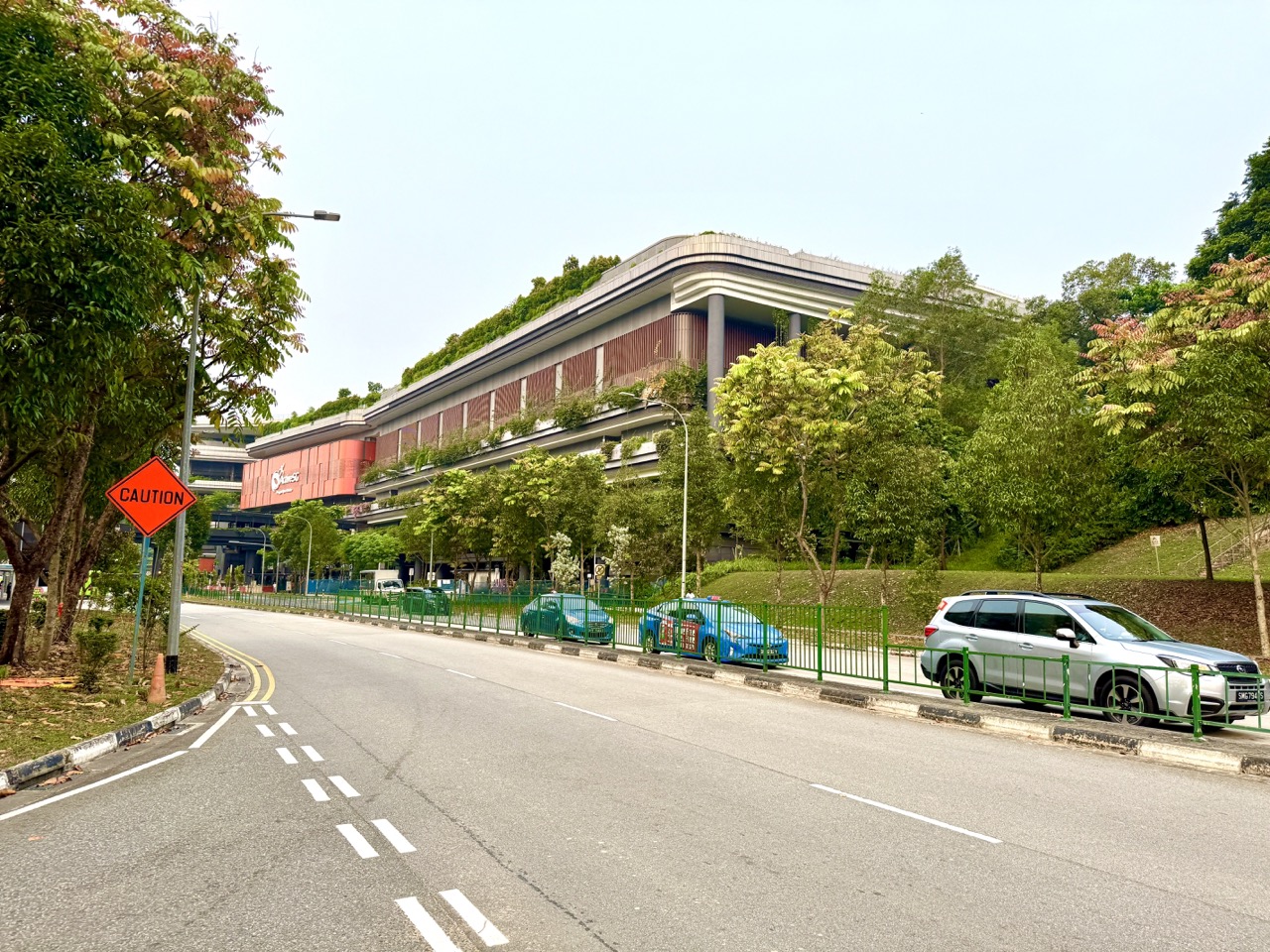
A badminton court at ActiveSG Punggol Sport Centre, 11 Sentul Crescent, is an excellent everyday example of an economic problem: there are only so many bookable court-hours, while more people may want the same evening or weekend slot. The centre entered a soft launch on 27 October 2026, with selected sports courts and the gym reported in operation and a formal opening announced for 22 November. Sport Singapore publishes different standard peak and non-peak badminton rates, and MyActiveSG+ uses a ballot for certain peak-hour courts rather than allowing everybody to buy the same scarce period. This guide teaches scarcity, opportunity cost, demand, allocation, incentives and fair access using a real public sports setting, without claiming that a particular Punggol slot is currently available.
The official ActiveSG individual rates list a Singapore citizen/PR badminton court at S$3.50 per hour off-peak and S$7.40 per hour at peak, while standard rates for other eligible categories differ. ActiveSG’s booking timetable says peak ballots open fourteen days ahead and non-peak or remaining unassigned slots become available twelve days ahead. The economic question is not “Why doesn’t the operator simply sell unlimited courts?” Physical space and time cannot be multiplied by wishful thinking. It is how limited capacity can be allocated while balancing affordability, utilisation, equity and sustainable operations. The examples below distinguish published rates from hypothetical calculations, and operator facts from economic interpretations.
- Place: Punggol Sport Centre, 11 Sentul Crescent, near Sam Kee LRT and the Waterway.
- Definition lock: scarcity means wants exceed available resources at a particular time or under particular conditions.
- Real public prices: published citizen/PR badminton reference fees S$3.50 off-peak and S$7.40 peak per court-hour; verify eligibility and current checkout.
- Time allocation: peak ballot from fourteen days ahead; instant non-peak and unassigned slots from twelve days ahead.
- Key concepts: opportunity cost, supply, demand, incentives, capacity, rationing, equity, public expenditure and externalities.
- Important distinction: a fee is not proof of the full construction or operating cost of a sports facility.
- Careful examples: divide fees per actual user and compare a real family budget with other practical choices.
- Fairness: do not speculate on exact ballot probabilities or treat resale of public slots as permissible.
- Sources: Sport Singapore’s Sports Facilities Master Plan and current ActiveSG rates and terms.
- This article: accessible explanations, worked scenarios, student questions, ethical constraints and a four-week Economics inquiry.
Definition lock: what scarcity means at a court
Scarcity means a resource is limited relative to the uses people want to make of it. A court-hour is a combination of physical space and time. If one badminton court is available between 7pm and 8pm on Friday, only the permitted users can occupy it then. Ten groups wanting that exact court-hour cannot each receive the same exclusive booking.
Scarcity does not mean nobody can ever play badminton. Other hours, venues and sports may be available. It means the desired resource under the specified conditions is limited. The more precisely we define the time, place and sport, the easier it is to understand the allocation challenge.
This is why economic analysis needs exact labels. “Badminton is scarce” is too general; “Saturday evening court-hours at one popular centre are limited” describes a real capacity issue much more usefully.

The physical resource is not unlimited
A sports centre contains equipment, playing surfaces and circulation areas. Each facility has a finite operating schedule and must also allow for maintenance, safety and legitimate programming. Even when demand is strong, a court cannot be sold to several independent groups for exclusive use at the same time.
A hypothetical badminton hall with four courts operating for a ten-hour period has at most forty individual court-hours before allowing for any closure or operational restriction. That is 4 × 10 = 40, not a factual claim about Punggol’s actual current booking inventory. A learner should label the scenario as hypothetical rather than infer the development’s exact number of active courts.
Adding capacity may be possible through investment, but building takes land, money, time and planning. Capacity is therefore a decision constrained by other competing uses of resources.
Demand is about willingness and ability, not just enthusiasm
A person may say they want to play every evening but cannot attend because of work, transport or family duties. Another person may be willing to pay the fee and have time for a daytime session. Economists distinguish desire from demand under the relevant price and conditions.
When a Punggol weekend slot is popular, demand may exceed the number of courts made available. That does not automatically tell us how many people are willing to book on Wednesday afternoon. The price, timing, transport and group coordination change the practical choice.
A learner could survey hypothetical households rather than collect strangers’ private financial information. Ask which of several clearly labelled time options they would choose at stated fees. The pattern demonstrates how circumstances affect demand without pretending a tiny survey represents the entire estate.
Why peak and non-peak prices are different
Sport Singapore publishes separate rates for peak and non-peak sport-facility use. For citizen/PR badminton, the listed reference prices are S$3.50 and S$7.40 per court-hour. The label peak refers to the operator’s defined times, not merely a visitor’s impression that the hall feels busy.
The published definition treats Mondays to Fridays from 6pm to 10pm as peak, and weekends or public holidays within the stated operating period as peak. This corresponds broadly to times when many students and working adults may be free. But it would be inaccurate to claim the operator has published a complete economic calculation explaining every price difference.
From an economic perspective, different rates can affect choices and distribute demand across time. That is an interpretation, not a promise that an off-peak court will always have vacancies.
A simple price comparison
Imagine a family with four players who are eligible for the published citizen/PR badminton rate. At S$3.50 off-peak, the court component divided equally is S$0.875 per person. In ordinary budgeting that could be described as approximately S$0.88, with any actual collection rounded sensibly. At S$7.40 peak, each person’s court component is exactly S$1.85.
The difference in the entire court-hour price is S$7.40 − S$3.50 = S$3.90. This comparison leaves out racquets, shuttlecocks, travel and other expenses. It also assumes four participants and a genuine available slot.
Economics becomes more useful when assumptions are visible. A lower court price does not automatically make a weekday afternoon better value for a parent who must miss work to attend.
Opportunity cost: the choice you give up
Opportunity cost is the value of the next-best alternative forgone when choosing an option. A family attending a one-hour game gives up other possible uses of that time, such as homework, rest, work or a different leisure activity. The court fee is a direct financial cost; opportunity cost includes what the family sacrifices by choosing this time.
Suppose one adult would need to leave paid work early for an off-peak court, while an evening peak slot fits naturally after work. The cheaper nominal fee might not represent the lower overall cost. The family should consider the actual alternative forgone, not just the price tag.
An Economics learner should not invent a dollar value for another person’s time without evidence. State the trade-off qualitatively unless the relevant financial information is explicitly supplied for a hypothetical calculation.
The difference between sunk cost and future decisions
A sunk cost is an expense already incurred that cannot be recovered through the current choice. If a court is paid for and a participant becomes ill, the family’s emotional temptation may be to attend anyway because “we already paid.” But the fee’s existence does not prove that playing while unwell is safe or worthwhile.
The rational next decision considers present conditions, the available alternatives and the operator’s refund rules. If there is a genuine facility closure, an official refund process may apply under the current terms. Voluntary non-attendance is treated differently, and the organiser should check the real booking record.
This concept helps students see why people sometimes make bad choices to justify earlier spending. The most important decision is what to do safely now.
Why the peak-hour ballot exists
ActiveSG’s published rules use a ballot system for peak-hour court slots, with applications opening fourteen days ahead. The operator says successful ballots are randomly assigned, giving applicants an opportunity to book a popular period. This is a mechanism for allocating limited reservations, not an assurance that every applicant will receive a court.
A ballot has its own transaction sequence. Entering is not the same as winning, and winning may require payment by a stated deadline. If ten eligible groups request the same slot, the system cannot give that single exclusive court-hour to all ten.
Students should not claim a specific probability of success without knowing the valid applications, allocation rules and available inventory. The principle is fair allocation under stated procedures, not a promise of equal outcomes.
Instant booking is a different allocation method
For non-peak and unassigned peak slots, ActiveSG generally releases bookings twelve days ahead on a first-come basis. That is a different rule from a ballot. Both are methods of distributing limited capacity, but they create different planning incentives.
A first-come system may reward users who can check the portal as soon as the release opens. A ballot may reduce the advantage of clicking a button at the exact first second for a particular peak period, subject to the actual system rules. Each method has strengths, limits and practical implications.
Economics does not require pretending one method is perfect. A good student asks what problem the mechanism is meant to solve, what behaviour it encourages and how fairness should be evaluated.
A hypothetical ballot probability example
Imagine a simplified fictional lottery in which exactly five identical requests compete for one available court, each with equal chance. The probability that one named applicant wins is 1/5 = 20%. This calculation is mathematically correct only because the example states an equal-likelihood assumption.
Do not copy the 20% figure into a real article about Punggol bookings. Real allocation may involve varying numbers of valid applicants, multiple courts, account restrictions and operator-specific processes. Without accurate data, the actual success probability is unknown.
The educational value is learning to identify assumptions. When a claim about probability appears precise, ask whether the evidence supports it or whether it comes from an imagined illustration.
Quotas are another way to manage limited access
SportSG’s individual facility rates page publishes booking quotas: for badminton and many other court sports, two slots per day per user; for selected soccer or futsal products, different monthly quotas apply. A limit can prevent one account from acquiring unlimited reservations, though its complete impact depends on enforcement and user behaviour.
A quota is not proof that every person receives equal playing time across Singapore. Some residents may lack free time, transport or eligible accounts. It is simply one rule that can influence how a limited resource is distributed.
Students can compare quotas with prices and ballots as three different allocation tools. Each addresses a different dimension of the same underlying scarcity problem.
Why resale restrictions matter economically
SportSG prohibits onselling, subletting and assigning public facility reservations, with additional restrictions on advertising related to onselling. If a popular court were treated as freely tradable by third parties, some intermediaries might seek to capture the value of scarcity without intending to play.
The published policy discourages such behaviour and supports direct access through official channels. This is important because the facility is part of public sports provision rather than an unrestricted secondary-ticket market.
Students should not assume the existence of a resale advertisement proves a crime, or that all legal personal cost sharing is identical to prohibited onselling. Read the terms carefully. The economic point is that transaction rules affect incentives and who can gain access.
Is an ActiveSG court a public good?
In Economics, a pure public good is generally defined as non-excludable and non-rivalrous. A booked court does not neatly meet those characteristics. People can be excluded through booking and access conditions, and one group’s exclusive use prevents another group from occupying the same court-hour.
Publicly operated facilities may provide broad social benefits and supported access, but that does not make their court-hours pure public goods in the technical economic sense. They are better analysed as managed, capacity-limited services with potential community benefits.
This distinction is useful for older students. “Paid for by the public sector” and “pure public good” are not interchangeable definitions. A concept is valuable only when applied accurately.
Why the government might support sports facilities
Sport Singapore’s Sports Facilities Master Plan aims to improve access to quality, affordable sports facilities and wider participation. It reflects a public policy choice to provide a network of sports spaces rather than depend entirely on private operators.

Possible public benefits include opportunities for physical activity, community interaction and accessible recreation. However, an individual article should not assign a precise value to those benefits or claim a measured reduction in healthcare costs without credible supporting analysis. Intention and outcome are separate.
Economics asks how public resources should be allocated among competing needs such as transport, housing, education and recreation. A sports centre is a real example of that wider budget discussion.
Subsidy is not the same as a cheap-looking price
A price below a private gym or court fee may look affordable, but that comparison alone does not tell us the facility’s full operating cost or the exact subsidy per visit. Calculating a subsidy requires information about costs, funding and revenues that a visitor cannot infer from the admission fee.
SportSG clearly states a policy aim of affordable public sports infrastructure. That is a valid starting fact. A student should not write “every badminton hour is subsidised by exactly S$20” unless official data actually establishes the amount.
The careful explanation is that public provision and concessionary pricing can support accessibility, while the underlying fiscal costs and precise distributional effects need further evidence.
Who faces different prices or concessions?
ActiveSG publishes citizen/PR and standard facility rates, as well as selected senior family concession rules. Different categories can create different effective prices depending on eligibility, time and facility type. A student should use the current official page rather than assume all residents always pay the same.
It would also be simplistic to infer a person’s income or need from citizenship, age or membership status. Eligibility categories do not map perfectly onto personal financial circumstances. Public policy may balance several goals simultaneously.
A thoughtful Economics answer asks whom a concession is designed to serve, whether the rules are understandable and what other barriers to participation remain.
How a gym pass creates another decision
An ActiveSG gym can offer per-entry admission and passes for eligible users. A person who attends frequently may benefit from a suitable pass, while someone visiting occasionally may spend less on single entries. The correct comparison depends on live prices, validity, restrictions and actual attendance.
For a hypothetical example, assume a S$30 monthly pass and S$2.50 eligible per-entry fee. The break-even number is 30 ÷ 2.50 = 12 visits if the products are otherwise comparable and no other restrictions affect use. At fewer than twelve visits, individual entry has the lower cash outlay under those simplified assumptions.
This is a model, not a recommendation that everyone should attend twelve times monthly or a guarantee of any specific account product. Real wellbeing and recovery matter more than maximising use of a subscription.
Fixed costs and variable costs in sports provision
A sports complex requires investment in buildings, equipment and infrastructure. Some costs do not change directly with one additional visitor in a particular hour, while other expenses such as consumables or usage-related services may vary. Economists distinguish fixed and variable costs to understand production decisions.
But categorisation depends on the time horizon. A building may be fixed in the short run while capacity investment becomes possible over years. Staff, maintenance, utilities and lifecycle replacement have their own patterns. An outside observer cannot reconstruct the operator’s actual finances from one visitor fee.
Use hypothetical examples to learn the concept, keeping them separate from verified SportSG expenditure. A useful explanation is one whose assumptions the student can state.
Capacity utilisation is not always about filling every slot
A facility might appear more efficient if every court-hour were occupied. Yet maintenance, safety closures, planned programmes and appropriate operating buffers can be necessary. Maximum apparent utilisation is not automatically maximum public benefit.
A family may prefer quiet off-peak access, a school programme may need a structured block, or a court may be temporarily unavailable for maintenance. The operator must balance different purposes rather than continuously sell every physical minute regardless of condition.
Economic analysis should acknowledge quality, fairness and risk alongside quantity. A full booking calendar is only one indicator and not a complete performance measure.
Congestion creates costs beyond money
When too many people approach a facility at once, users may experience queues, crowded walkways, noise or longer equipment waiting times. These are forms of congestion costs. They can affect other users even when a person has paid the correct fee.
A crowded gym does not automatically mean the operator is mismanaging the facility. Demand fluctuates and access rules may involve safety thresholds. Visitors can also reduce friction by following equipment-sharing rules, arriving with correct information and respecting other bookings.
An Economics learner might ask how time-of-day pricing and crowd information influence choices, without claiming to know the actual size of the crowd unless measured through reliable records.
Transport is a complementary cost
The court fee is only one input into the full cost of a sporting outing. Transport, equipment, childcare and the opportunity cost of time may change a household’s decision. A Punggol resident living near Sam Kee may find the journey easier than someone travelling from another town.
If a family pays S$7.40 for a peak court but spends S$18 on a hypothetical round-trip taxi, the transport charge is larger than the court charge. This is clearly a constructed numerical example, not an actual fare quotation. It shows why focusing on the court price alone can misrepresent affordability.
Economics encourages comparing the complete relevant decision. Sometimes a closer free-to-play permitted space is the more sensible option.
Positive externalities: a cautious explanation
An externality occurs when an activity has effects on others not fully captured in the private transaction. A person taking part in appropriate recreation may contribute to social interaction or other community benefits. A group using public facilities responsibly can help build neighbourhood connections.
However, a single badminton match does not prove a measurable population-level health improvement. To quantify an externality, researchers need appropriate data and a sound method. Good Economics separates a possible mechanism from a verified result.
For students, the question is whether benefits or costs reach beyond the immediate buyer and seller. Then ask what evidence would be needed to estimate them.
Negative externalities and everyday courtesy
Recreation can also create inconveniences for others if participants block shared paths, leave rubbish, play loudly in unsuitable areas or use equipment carelessly. These effects may fall on neighbouring residents or other users rather than only on the people playing.
Venue rules, proper rubbish disposal and respect for pedestrian or cycling space can reduce those harms. This does not mean every noise or busy period is an economic failure. It means actions can create costs that the individual user does not directly pay.
A student should describe the mechanism without exaggerating its size. A complaint about one blocked doorway is not proof that an entire regional sports project has harmed the estate.
Why quotas and prices do not solve everything
Even with peak pricing, ballot rules and account quotas, some people will struggle to attend due to work, caregiving, disability access, travel or language barriers. Allocation systems operate within the wider realities of people’s lives.
A fair policy question therefore has several dimensions: is the booking process understandable, does it discourage hoarding, are facilities geographically distributed, and do users with different circumstances have usable opportunities? These questions need more than one published fee table to answer fully.
Economics improves when it recognises multiple objectives instead of treating the lowest possible price as the only success criterion.
How to interpret a government policy announcement
When MCCY or SportSG announces a plan for more sports courts, it often describes a future supply response to growing demand. That can be used as evidence of policy intention. It does not automatically mean the new courts exist today or that waiting time has fallen by a precise amount.
SportSG’s 2026 Committee of Supply material discusses planned additions to multi-purpose court capacity, including different future facilities. A student should note dates and whether a project is planned, under construction or operational.
This distinction is a basic economic research skill. Forecast supply is not current supply, and a target is not a measured outcome.
First case study: the working parent
A parent can play only after 7pm. The off-peak S$3.50 badminton fee looks attractive, but its hours overlap with work. The parent considers an evening peak booking at S$7.40. The financial difference is S$3.90 per court-hour under the published reference rates, but the real trade-off also includes schedule, family time and the likelihood of attendance.
It would be incorrect to demand that the parent choose the cheaper slot if they cannot physically attend. The household should select a legitimate available session or choose another permitted activity.
This case demonstrates that a lower price does not always make a product feasible, and the opportunity cost of time can matter greatly.
Second case study: four friends and a popular weekend
Four friends want Saturday evening badminton at the new Punggol hall. They enter the legitimate peak ballot. If unsuccessful, they do not have a confirmed court and should not buy a screenshot from a reseller. They can check the official remaining-slot release or agree on another date.
Economically, their desired time is scarce, and allocation rules constrain how they obtain it. The group can also weigh other options, such as table tennis or a permitted free-to-play area, but those are different products with different equipment needs.
The lesson is that a constraint changes the feasible choice set. It does not justify ignoring the public booking system.
Third case study: a family considering a monthly pass
A family member visits the gym only four times during a busy month. Under a hypothetical S$2.50 entry fee, four visits cost S$10. A hypothetical S$30 monthly pass would cost more, even though it offers greater potential usage.
If the person expects to attend frequently in another month, the comparison may change. Yet they must consider actual sleep, work and recovery rather than forcing extra workouts just to make the pass “pay for itself.”
This is an example of decision-making under uncertainty. A flexible product can be economically rational for someone whose attendance varies.
Fourth case study: a teenage Economics discussion
A Secondary student asks why Punggol has a new sports centre while some residents still cannot obtain a weekend court. The parent explains that new investment increases capacity, but scarce popular hours can remain limited. Demand may also increase when a convenient new venue opens.
The student distinguishes the long-run decision to build infrastructure from the short-run decision to allocate existing slots. They identify price, ballot and quota as policy instruments and ask how each affects different users.
This is a stronger explanation than saying “There are not enough courts because the government did nothing.” The real question is about capacity, demand, costs and allocation across time and locations.
What an ethical student survey could ask
A small class survey could ask fictional or voluntarily participating adults which of three clearly described court times they would prefer, and whether a booking ballot or first-come release feels clearer to them. Do not ask children to collect strangers’ income, identification numbers or account screenshots at the sports centre.
Explain the sampling limitations. Ten friends from one class do not represent all Punggol residents. A hypothetical survey can still teach how stated preferences differ by schedule if it is clearly labelled.
The learning objective is to interpret data honestly, not to manufacture a dramatic claim about the whole population’s willingness to pay.
A four-week Economics learning sequence
Week one: identify scarcity in a precise court-hour example. Week two: compare official peak and off-peak prices and calculate clearly labelled hypothetical cost-sharing. Week three: study ballot and instant-booking rules and explain how they allocate scarce capacity. Week four: write a balanced evaluation of public sports access, including costs, convenience, fairness and the limits of available evidence.
No live court purchase is required to complete the school-style exercise. The student can work with published policy and fictional scenarios at home. Actual booking information should be viewed only through legitimate accounts.
The sequence develops explanation, comparison and evaluation rather than encouraging children to compete for scarce public facilities as an experiment.
Common mistakes in Economics answers
The first mistake is describing public sports courts as unlimited pure public goods. The second is treating a published fee as the complete cost of building or maintaining the facility. The third is inventing a ballot success probability. The fourth is comparing prices without accounting for time and eligibility. The fifth is claiming all planned facilities are already open.
Correct these by stating definitions and assumptions. Identify the actual source, date and scope of each numerical figure. Use the word *may* when describing a plausible effect that has not been empirically established.
An honest, limited answer is stronger than a precise-looking explanation built from invented data.
Frequently asked questions
Why can’t everybody book the same Saturday evening court? Court-hours are finite. One exclusive playing space cannot be assigned to several unrelated groups simultaneously.
What is the published citizen/PR badminton peak fee? SportSG lists S$7.40 per court-hour, subject to current booking terms and eligibility.
What is the off-peak reference fee? S$3.50 per court-hour for the same published citizen/PR badminton category.
Does a lower fee prove the government pays a fixed subsidy per session? No. A fee does not disclose the complete cost or exact amount of public financial support.
Is a booked court a pure public good? Not in the technical economic sense. Access can be restricted and simultaneous exclusive use is rivalrous.
Why use a ballot? It is an operator-defined mechanism for allocating scarce peak-hour opportunities; success is not guaranteed.
Does entering a ballot guarantee a court? No. A completed and paid eligible reservation is distinct from an application.
Can somebody resell a booking because demand is high? ActiveSG prohibits onselling, subletting and assigning public facility slots.
Does a monthly gym pass always save money? No. It depends on the actual number of eligible visits, live prices and product conditions.
Can students calculate real ballot winning probabilities? Not responsibly without the relevant valid applicant counts and allocation information.
Official sources and your next step
Use SportSG’s Individual Rates & Quotas, the published booking timetable, the no-onselling policy and the Sports Facilities Master Plan. The MCCY overview explains national, regional, town and neighbourhood sports provision. Use MyActiveSG+ for live products and checkout. For distinct practical subjects, read the Punggol family sports budget and court booking troubleshooting.
Your next step: choose one real published rate and create one labelled hypothetical family decision. Identify scarcity, calculate the direct cost, explain the opportunity cost and evaluate how the ballot or pricing rule changes the available options. Economics is useful when it makes decisions clearer, not when it pretends every number has a simple answer.
Editorial note: Independent educational guide prepared 1 November 2026. Hypothetical models are marked as such; listed fees are dated official reference rates, not guaranteed live Punggol vacancies or prices.


