
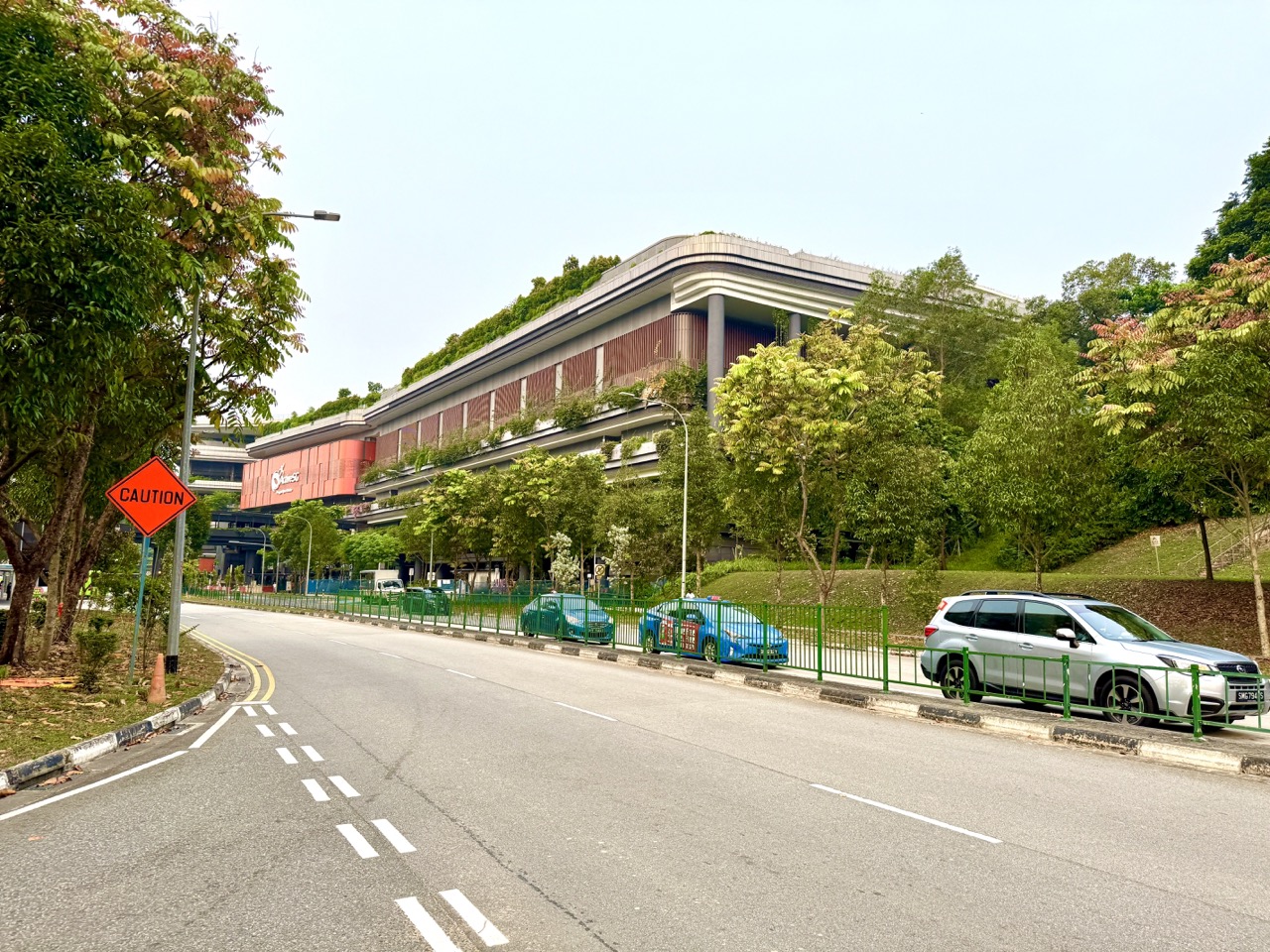
ActiveSG Punggol Sport Centre at 11 Sentul Crescent gives families a useful reason to understand physical literacy: the movement competence, knowledge, confidence and motivation that support enjoyable participation in suitable physical activity. A child does not need to win badminton or master a professional technique before learning to move. Walking, balancing, changing direction, throwing, catching and striking in safe settings develop foundations that can transfer across activities. The Sport Centre began selected public operations on 27 October 2026, ahead of its scheduled formal opening on 22 November 2026. Families can explore movement at home without a paid court booking; current facility access remains subject to MyActiveSG+ and its rules.
Singapore’s 2024 Physical Education syllabus divides fundamental motor skills into locomotor, non-locomotor and manipulative categories and explains the movement concepts of body awareness, space awareness, effort and relationships. Sport Singapore’s My 1st Coach guidance encourages positive early play and parental support, not instant high-performance demands. These principles suggest beginning with safe, manageable experiences, adjusting tasks to the learner and keeping enjoyment central. This independent guide translates the framework into family-friendly examples without claiming that home games replace qualified PE teachers, SportSG programmes, physiotherapy or formal coaching.
- Where: Punggol Sport Centre, 11 Sentul Crescent, near Sam Kee LRT; selected operations began 27 October 2026.
- Locomotor movement: walking, running, hopping, skipping, sliding and jumping when suitable.
- Non-locomotor movement: bending, twisting, turning, stretching and balancing without travelling.
- Manipulative movement: rolling, catching, throwing, bouncing, dribbling and striking suitable objects.
- Four movement concepts: body, space, effort and relationships.
- First principle: adapt the task to the child, not demand the same difficulty from every person.
- Useful outcome: a learner can attempt a movement safely, explain it and try a relevant variation.
- Play rather than pressure: cooperative tasks are as legitimate as simple competitions.
- Safety: no hazardous home drills, no games across pedestrian paths and no unauthorised use of booked courts.
- Age limits: children under twelve are not admitted to ActiveSG gyms under published rules.
- Next steps: four weeks of noticing, exploring, adapting and reflecting.
Definition lock: physical literacy is not athletic talent
Physical literacy describes capacities and dispositions that help a person engage meaningfully with movement. It is broader than sprint speed, match results or a sporting reputation. A child may learn to move confidently in a cooperative game long before joining a formal team. Another may enjoy movement through dancing or walking without wanting competitive sport. A useful lesson identifies what the person can do and what makes the next task manageable. It does not assign a permanent label such as unathletic after a failed catch. Skill and confidence can develop over time and depend on experience, environment and appropriate instruction.
Why the sport centre is a context, not a school laboratory
The new Punggol building contains multiple sports facilities with different operational conditions. Seeing badminton courts or a gym does not create permission to enter every space or run private drills. A sports booking gives its holder defined use subject to rules, not control over surrounding pathways and equipment. A family can study movement skills using harmless home play, diagrams and teacher-approved tasks. That is often more suitable than organising a demonstration in a crowded hall. If the child needs specialised assessment or coaching, seek an appropriate professional rather than inventing a physical test to justify an article.
MOE’s skill categories have a purpose
The Physical Education syllabus categorises fundamental motor skills because teachers need to develop a broad foundation and connect movements with contexts. Locomotor skills carry the body through space. Non-locomotor skills involve controlling movement largely in place. Manipulative skills involve objects. These categories overlap during actual sport: a badminton player moves, balances and strikes. The framework helps reveal which component may need attention before the whole action can improve. It is not a checklist that every child must complete on the same day. Instruction needs age-appropriate choices and gradual progression across different activities.

Locomotor movement carries the body
Walking, running, jumping, skipping, hopping, sliding and galloping are locomotor movements in the MOE framework. Their difficulty depends on speed, distance, obstacles, surface and individual readiness. A safe home activity may involve walking between two clear markers and stopping under control. The adult can then ask how direction or pace changed. Avoid encouraging rapid movement in small rooms or near sharp furniture. A child who manages a comfortable walk is practising a meaningful skill. The next variation should suit the person rather than be chosen for how impressive the result looks on video.
Non-locomotor control is equally important
Bending, twisting, turning, stretching and balancing illustrate non-locomotor skills. They can help a learner understand body position and prepare for movement. A child may practise a comfortable standing turn in a clear area without balancing on an elevated platform. The adult can ask what parts of the body moved and what helped them remain steady. Extreme flexibility, breath-holding or risky balance challenges are unnecessary. If a person experiences pain, dizziness or another concerning symptom, stop and obtain appropriate help. A physical literacy lesson should be about control and understanding, not pushing through discomfort.
Manipulative skills connect people with equipment
Throwing, catching, rolling, bouncing, kicking, dribbling and striking are manipulative skills in the syllabus. They rely on perceiving an object’s movement and adjusting the body appropriately. Object size, weight, texture and speed affect difficulty. A beginner may find a large soft object more manageable than a small fast one; another person may need a different adaptation. Choose safe age-appropriate materials and prevent impacts near people or fragile objects. The objective is learning control, not measuring who can throw hardest. Practice should connect the object with a clear task rather than become an uncontrolled competition.
Body awareness asks what is moving
Body awareness concerns the person’s body parts, positions and actions. A child learning a gentle catch may notice where their hands are and how their weight shifts. The adult can ask what the learner felt or saw instead of delivering a flood of technical instructions. A useful cue should be clear, appropriate and manageable. Do not assume a particular posture is medically correct for every child. Movement differences may reflect individual capacity and require tailored professional guidance. The purpose of a family lesson is to develop understanding and confidence, not diagnose a biomechanical condition.
Space awareness asks where movement happens
Space awareness includes direction, pathways, level and distance from other people or objects. In doubles badminton, partners need to avoid collisions while moving into appropriate positions. In a beginner home task, two family members can practise moving along separate safe imaginary routes without racing. Ask who would have to yield if the paths crossed. This develops spatial judgement alongside movement. It also links learning with consideration for others. A learner who understands how not to obstruct a shared path is practising a valuable movement concept even without holding a racket or scoring a point.
Effort describes movement qualities
Effort concerns how a movement is carried out, including qualities such as speed, force and flow. A child may roll a soft object gently, then adjust the action to travel a slightly longer safe distance. The important question is whether the person can vary effort intentionally. It is not necessary to increase speed or force to the maximum. Some learners benefit from slower predictable movement that allows more control. A good activity gives them a meaningful choice. The same underlying skill can appear quite different when the circumstances call for gentle coordination rather than powerful performance.
Relationships connect the mover and others
Relationships describe how a person moves relative to partners, opponents, equipment or other features of the environment. A cooperative exchange asks the learner to respond to what another person actually does. The activity can also involve choosing a safe distance or waiting for a turn. Children should learn that another person’s preferences and physical ability matter. A parent might adjust their throw so the receiver can succeed, then ask what change made the exchange comfortable. This is part of physical learning, not merely etiquette. Movement competence is often exercised with people rather than in isolation.
One game can combine three categories
Imagine a child stepping sideways, briefly balancing and catching a gentle toss. The step is locomotor; balance reflects non-locomotor control; catching is manipulative. In real movement the categories work together. An adult can identify a component that creates difficulty and practise it separately before returning to the whole task. If the catch fails because the object travels too quickly, slowing the object might help more than asking the child to move faster. A useful lesson diagnoses the missing foundation, changes one demand and checks whether the learner understands what improved.
Teach the first missing principle
A beginner struggling with a badminton return may not yet understand where the shuttle will travel, how to hold the racket or how to stop under control. It is premature to teach advanced tactics when an earlier prerequisite remains uncertain. Start with object recognition, a manageable position or suitable gentle contact, then combine actions gradually. This first-principles approach avoids overwhelming the learner. It also protects enjoyment. The child does not need to reproduce a polished professional stroke before they can participate meaningfully. A qualified coach can provide sport-specific progression when the activity becomes technically demanding.
The My 1st Coach philosophy
SportSG’s My 1st Coach programme emphasises parents and guardians as early positive influences in sport. It highlights fundamentals, understanding, nurturing and adaptable play. These principles do not make every parent a professional coach. They encourage adults to create welcoming, age-appropriate opportunities, notice the child’s experience and avoid making each attempt a judgement of talent. A simple game that is safe and enjoyable may be a better beginning than an exhausting repetitive drill. The family should treat the programme as educational guidance, not a guarantee that every task will work equally well for all children.
Early success should be meaningful
A child might achieve a controlled first catch, recognise a direction cue or complete a cooperative exchange with a sibling. Those are legitimate successes when they match the learning aim. The target should be difficult enough to offer learning but manageable enough to avoid repeated unproductive failure. If it is too hard, reduce distance, speed or complexity. If it becomes easy, add a modest variation. Do not use public rankings or compare children whose experiences differ. Success is a stepping stone toward a broader capacity to participate, not evidence that the child will become an elite athlete.
Repetition can include variation
Practising one identical action may build familiarity, but children also need opportunities to adapt. A ball can be sent from a slightly different safe direction or toward another appropriate target. The variation should preserve the underlying skill while asking the learner to respond to new information. Too much unpredictability at once can make the task confusing. A parent can begin with a consistent pattern and gradually change one feature. This helps movement transfer between situations. The goal is versatile competence rather than perfect performance in one memorised drill under one fixed condition.
Readiness differs between learners
Two children of the same age may have different movement experiences, interests and capacities. A task that is suitable for one may be frustrating or unsafe for another. Age helps inform supervision but cannot replace individual judgement. Offer choices and watch whether the learner understands the task and feels comfortable. Do not demand an identical number of repetitions from everyone. Where medical or developmental needs are relevant, qualified guidance may be appropriate. A respectful environment lets a learner progress at a suitable pace while still finding meaningful opportunities to participate with peers.
A larger soft object can change difficulty
The equipment used in a learning activity influences what the child must control. Some beginners may track a larger slow-moving soft object more easily than a small fast ball. Another might prefer a different texture or size. The adult can adapt while considering allergies, choking risks and room safety. Avoid hard projectiles indoors or equipment that could strike a face. The purpose is not to purchase a branded training product. A simple safe household object may be enough when suitable. Equipment is chosen to support the movement concept, not to demonstrate that a family has spent money.
Choosing a safe space comes first
Before beginning any activity, check available floor space, stable surfaces, nearby people and obstacles. A corridor used by neighbours or a park connector used by cyclists should not become a private throwing lane. If the setting is unsuitable, choose a drawing or desk-based lesson instead. Safety does not make the learning less genuine. Children can explain why a particular activity should not be performed in a certain place. This demonstrates spatial awareness and responsible decision-making. The best movement task is one appropriate to both the learner and the environment.
Weather affects whether to participate
Singapore’s rain, heat, humidity, lightning and haze can change what is appropriate outdoors. Families should respect official advisories and operator closures instead of continuing for the sake of completing a planned exercise. A brief indoor low-risk alternative may be more suitable. The child can still learn by explaining why the plan changed. Physical literacy includes the capacity to choose activities and respond to conditions. It is not a mandate to exercise outdoors regardless of risk. A sustainable routine allows flexibility and places safety ahead of perfect attendance.
A warm-up should prepare, not punish
An appropriate warm-up eases participants into activity and helps them understand the task ahead. It should be suited to age, health and the intended sport. A parent may begin with comfortable walking and gentle familiar movements, without copying a professional athlete’s demanding routine. Avoid forcing intense repetitions as a condition of joining a casual family game. If pain, unusual dizziness or other concerns arise, stop and seek appropriate support. There is no single universally safe warm-up sequence for every body. The purpose is readiness, not proving that a learner can endure difficult preparation.
Cooperative play has a valid place
A game can be organised around keeping an object moving together rather than beating an opponent. Two players may work toward a comfortable number of gentle exchanges and then change one feature of the task. Such activity can support timing, attention and social coordination. It may be useful for a child who is not yet ready for competitive scoring. Do not require competition to make learning count. Cooperative participation can provide meaningful feedback and a sense of belonging. The learning aim should be clear so that the activity does not become merely a score contest under a different name.
Competition should be age-appropriate
Some children enjoy scoring and winning, while others prefer exploration. A competition can be suitable when participants understand the rules, consent to the format and can remain safe. The adult should consider whether the skill differences make the result predictable and discouraging. Offer alternatives such as cooperative rallies or mixed-ability tasks when appropriate. Losing one game is not proof that a child lacks potential. Winning does not establish broad movement competence. The objective is a positive relation to activity across time, not simply collecting favourable results during a single family outing.
Feedback should identify a controllable action
Saying “You are terrible at catching” labels the child rather than helping. A more useful comment is “You watched the ball and prepared your hands that time.” Specific feedback identifies something that can be repeated or adjusted. Keep it proportionate; too many corrections at once may confuse the learner. Ask whether the child wants another attempt or a break. Praise should be credible, not an exaggerated prediction of future championships. A respectful feedback environment encourages experimenting with movement without fear that every miss will become a public judgement of character.
A parent’s example matters
Adults can model patience, fair turns, safety checks and willingness to try a suitable unfamiliar activity. A child may notice how a parent responds to a missed shot or a cancelled plan. The model is not only technical. It communicates whether movement is enjoyable, whether others are treated respectfully and whether rest is allowed. SportSG’s My 1st Coach material recognises this early influence. But parents should not substitute their personal experience for qualified advice in specialised situations. A constructive family role is to enable opportunity and confidence rather than take ownership of the child’s performance identity.
The child who does not like badminton
A pupil may not enjoy racket games yet love dance, walking, cycling or another appropriate activity. That preference does not make the pupil physically illiterate. MOE’s Physical Education framework covers varied contexts, including athletics, dance, games, gymnastics and swimming under suitable school arrangements. Families should avoid making one sport the universal measure of ability. Ask what kinds of movement the child finds satisfying and which skills may support participation there. Offering a range of experiences helps preserve choice. A broad foundation matters because people’s interests and capacities can change throughout life.
The child who wants to join a team
A beginner may ask to participate with older or more experienced friends. Adults should consider age, supervision, readiness, consent and real venue rules. A manageable introduction may include observing, learning the playing area, practising a simple skill and understanding turn-taking. The child should not be forced into a fast competitive game to prove courage. If a formal programme is involved, verify the provider and coach through legitimate channels. Meaningful inclusion is not merely inviting someone into an environment where they cannot participate safely. It is creating an appropriate route into the shared activity.
Adaptation supports equitable participation
Participants may need different object sizes, distances, pace, instructions or positions. Equal respect does not always mean identical tasks. One person may roll an object from a seated position while another makes a gentle standing return. If the goal is shared coordination, both may participate meaningfully. The adaptations must be safe and appropriate to the individual and setting. Do not claim that a particular Punggol programme provides adaptive equipment without verified operator information. A family can learn the principle through carefully chosen fictional scenarios as well as suitable actual play.
Avoid assuming disability from appearance
A visitor’s mobility device, body shape or movement pattern does not tell a stranger everything about their goals or abilities. Do not demand explanations of a person’s medical condition as part of a casual group activity. Ask relevant practical questions if participation arrangements need to be made, and respect the person’s answer. An inclusive approach addresses barriers rather than guessing diagnoses. A student can learn that access, equipment and communication matter alongside technique. This helps develop physical literacy as a socially meaningful capacity, not simply a private measure of speed or strength.
Sensory preferences can affect participation
A noisy crowded hall may be enjoyable for one child and overwhelming for another. Some people prefer predictable instructions, a quieter activity or the chance to observe before joining. These preferences can be accommodated where feasible without claiming every environment has a specialised sensory-friendly service. Parents can choose a suitable family setting, keep directions simple and let the child stop when needed. The educational task remains learning movement, but the method respects how the person experiences the situation. A skill does not become more valuable because it was learnt amid unnecessary distress.
Movement competence changes across life
A person may be comfortable with one activity when young and choose a different kind of recreation later. Interests, responsibilities and physical capacities change. MOE’s broader framework recognises the value of versatile competencies that support participation throughout life. A family should avoid treating early sport selection as a permanent identity. Walking, dancing, balance work and suitable social games can all have value at different stages. This does not mean an older adult should copy a child’s exercises or vice versa. Appropriate participation depends on individual health, goals, environment and qualified guidance where needed.
Age does not determine every goal
Children, working adults and seniors may choose different activity formats, but age alone does not define what a person enjoys or can do. Some older adults have extensive sporting experience, while some children are complete beginners. A supportive group asks about experience, comfort and relevant needs rather than assuming. When an exercise has medical or safety implications, general age-based online advice is insufficient. A physical literacy perspective respects varied pathways and seeks meaningful participation. It does not rank people against one universal ideal of the fastest, strongest or most competitive person.
Movement skill is not a medical diagnosis
A child who drops a ball or finds balancing difficult may simply be encountering an unfamiliar task. Such observations alone cannot diagnose a developmental, neurological or other medical condition. Equally, a child who appears capable during one game does not prove they have no health concerns. Family activities should remain educational and enjoyable rather than covert clinical assessments. If persistent issues concern parents or teachers, seek suitable qualified evaluation. The correct boundary protects children from unnecessary labels and helps families access appropriate support when it is genuinely needed.
Rest is a legitimate skill decision
A learner who recognises fatigue and requests a break may be making a sensible choice. Physical literacy involves informed participation, not constant motion. The appropriate amount of activity varies with age, health and task. Do not portray rest as weakness or force a child through pain to satisfy a planned routine. A family can explain why a comfortable pause may be needed and then decide whether to resume when appropriate. This supports long-term enjoyment. A child should not learn that sports participation requires ignoring bodily warning signs merely to avoid disappointing an adult.

Avoid sports participation as punishment
Telling a child to run laps because they made an academic mistake or ate a particular food can create unhelpful associations between movement and shame. Sports and physical activities can be opportunities for enjoyment, skill and community. They should not be turned automatically into moral consequences. A child may already feel uncertain about performance. Offering enjoyable age-appropriate options helps preserve motivation and dignity. Parents should separate discipline from skill learning and avoid body-shaming language. The goal is a person who can choose and enjoy movement throughout life, not someone who fears being forced to exercise.
Enjoyment is part of a sustainable routine
A young learner may be more willing to return to an activity they understood and enjoyed than one that caused repeated embarrassment. Enjoyment does not require every attempt to be easy. Meaningful challenge can be satisfying when the person feels supported and can see progress. Parents can ask what part of the game was interesting and what should change next time. This provides practical information for choosing a suitable activity. A routine that respects enjoyment, health and other commitments may be more sustainable than an aggressive plan that looks impressive but is abandoned quickly.
School PE and family play have different responsibilities
School Physical Education is a structured programme delivered by trained educators using MOE’s curriculum. A family activity inspired by the same concepts can reinforce movement understanding but does not replace the full school experience. School PE covers several learning areas including physical activity, outdoor education and physical health and safety. A one-hour badminton session addresses only a portion of that wider scope. Parents should use the framework as background rather than claim that their private game meets all syllabus outcomes. Qualified teachers remain important for appropriate progression, assessment and school safety.
The Punggol gym age rule still applies
ActiveSG’s published gym rules prohibit entry by children under twelve. A parent should not take a younger child into the adult gym to conduct a physical literacy lesson, even if the child is enthusiastic. Suitable alternatives may exist elsewhere, but their current access conditions must be confirmed. Using a teaching framework does not create a venue-rule exception. The child can learn movement categories through home play, school PE or legitimate age-appropriate programmes. Good participation includes understanding which environments are appropriate and following the operating conditions that protect users.
Safe Sport is not a slogan
Sports participation should take place in an environment where safeguarding, respect and appropriate supervision matter. Threatening coaching, harassment and unsafe demands are not methods for teaching resilience. Safe Sport Singapore provides information about safeguarding in sport. If a child raises a serious concern, listen, prioritise safety and use appropriate reporting or professional routes. Do not tell the child that physical literacy requires enduring mistreatment. The environment influences whether people feel able to participate, and protecting people is part of making sport accessible and meaningful.
A simple fictional rolling game
Two siblings agree to roll a suitable soft object toward one another across a clear flat home floor. First they try a predictable straight path. Then they move the receiving target slightly to one side. The adult asks how the direction and strength changed. The activity combines object control, space awareness and relationships. There is no scoring and no public pathway is blocked. If either participant feels uncomfortable, the task changes or stops. The example demonstrates how a simple action can contain several movement concepts without special facilities or an elaborate sport programme.
A simple fictional catching progression
A child wants to catch a small ball but finds it difficult. A parent begins with a larger slow-moving soft object at a comfortable distance, then adjusts one feature when the child is ready. The learner is asked what they noticed about the object’s path. The adult celebrates appropriate preparation rather than counting only failures. They do not throw hard objects near faces or rush to high-speed challenges. This example is not a guaranteed coaching technique for every child; it illustrates task adaptation and progression. Qualified guidance may be appropriate where particular developmental or medical needs exist.
A gentle striking introduction
A fictional beginner looks at a badminton racket and learns which parts are held and which are used for contact. Before using real equipment, the adult checks space, supervision and appropriateness. The child may begin with a safe stationary or gently presented target under suitable guidance. They are not required to make a powerful overhead stroke immediately. The adult explains the playing area and respect for others. This progression connects object control with safety and confidence, while recognising that specialist racket technique belongs to appropriate instruction.
A balance-and-direction activity
In a clear safe home area, a learner walks comfortably toward a marker, stops and turns to another direction. The adult asks what changed about the body’s position and pathway. A younger learner may work with one direction at a time. A person with balance concerns may need a different activity or qualified support. No raised beam, slippery surface or public traffic is involved. The exercise illustrates the difference between movement through space and controlling the body during a turn. It is a low-risk learning idea, not a clinical balance assessment.
A cooperative family game with different roles
A grandparent, parent and child want to participate together. They agree on a gentle activity in which one person sends an appropriate soft object, another receives it and a third helps track turns. Roles can change according to comfort and individual ability. The group does not insist that every participant perform the same demanding movement. This shows how relationships and adaptations can support inclusion without making the activity meaningless. Actual health limitations require appropriate advice; the example does not prescribe rehabilitation or senior exercise intensity. The success is shared understanding and suitable participation.
How to notice progress without public rankings
A parent can record one private practical observation: the child understood a direction cue, tried a slower catch or chose an appropriate rest. The note may help plan the next activity. There is no need to film strangers or keep a public leaderboard of children’s coordination. One successful attempt does not prove permanent mastery and one missed catch does not erase progress. Ask whether the learner can use the skill in a slightly different suitable situation. The purpose of observation is to choose a helpful next step, not produce a psychological or medical profile.
What progress might look like after four sessions
After several suitable sessions, a learner may feel more comfortable with a familiar object, use clearer movement language and choose when to pause. The actual outcome will vary and may not be linear. Do not promise that all children will improve a fixed percentage or acquire a new sport in four weeks. The better question is which foundations are becoming clearer and what interests the child. A child who chooses a different activity may still be progressing in physical literacy by learning how to participate meaningfully and make informed movement choices.
A four-week family learning route
Week one: observe and name locomotor, non-locomotor and manipulative movements through safe examples. Week two: choose one manageable activity involving body and space awareness. Week three: add a small appropriate variation and a cooperative relationship. Week four: discuss which activity felt meaningful, what improved and what needs further support. The routine can use home play, drawings or legitimate recreational settings. It is not a prescribed medical or athletic training programme. The aim is repeatable understanding and positive participation rather than an impressive transformation video.
Common mistakes to avoid
Physical literacy is not the same as being the fastest pupil. Locomotor, non-locomotor and manipulative skills overlap but are not identical. Easier equipment can be a legitimate adaptation rather than unfairness. One bad attempt does not diagnose a child. Competition is optional for many learning goals. More effort is not always better. Public courts are not free private laboratories, and SportSG age restrictions remain in force. A parent can be an encouraging first influence without becoming a certified coach. The strongest family lesson is specific, safe and appropriate to the participant.
Frequently asked questions
What is physical literacy? A broad concept connecting movement competence with confidence, knowledge and motivation to participate appropriately in physical activity.
What are the three motor-skill categories? Locomotor, non-locomotor and manipulative skills, as identified in MOE’s Physical Education framework.
Is physical literacy only for competitive athletes? No. It supports recreational and lifelong participation across many forms of movement.
Can children learn basic concepts without a gym membership? Yes. School PE and safe age-appropriate family play can provide meaningful experiences.
Should every child use the same ball or distance? Not necessarily. Suitable adaptation may help different learners participate.
What if a child cannot catch a fast shuttlecock? Return to a manageable object-control task rather than treating one difficulty as a fixed personal limitation.
Does learning from SportSG’s parent guide make a parent a professional coach? No. It supports positive early involvement but does not replace qualified instruction.
Can a child under twelve enter the ActiveSG gym for this lesson? Published ActiveSG rules restrict entry by children under twelve.
Must children compete to develop movement skills? No. Cooperative and exploratory activities can support relevant skill foundations.
Does this programme guarantee elite sport performance? No. It is an educational guide to participation and development, not a talent prediction.
Official sources and your next step
Read MOE’s 2024 Physical Education syllabus, SportSG’s My 1st Coach programme, the SportSG Parents Handbook and Safe Sport Singapore. The official Punggol opening notice confirms the scheduled November event; MyActiveSG+ remains the live access source. Read more about coach selection and safety and choosing a beginner racket sport.
Your next step: choose one movement your child finds enjoyable, one small suitable variation and one way to make it safe. Ask how the experience felt and what the learner would like to try next, rather than demanding a perfect score.
Editorial note: Independent physical literacy guide prepared 6 November 2026. These are illustrative educational activities, not official ActiveSG classes, medical advice or replacements for formal school PE.


