
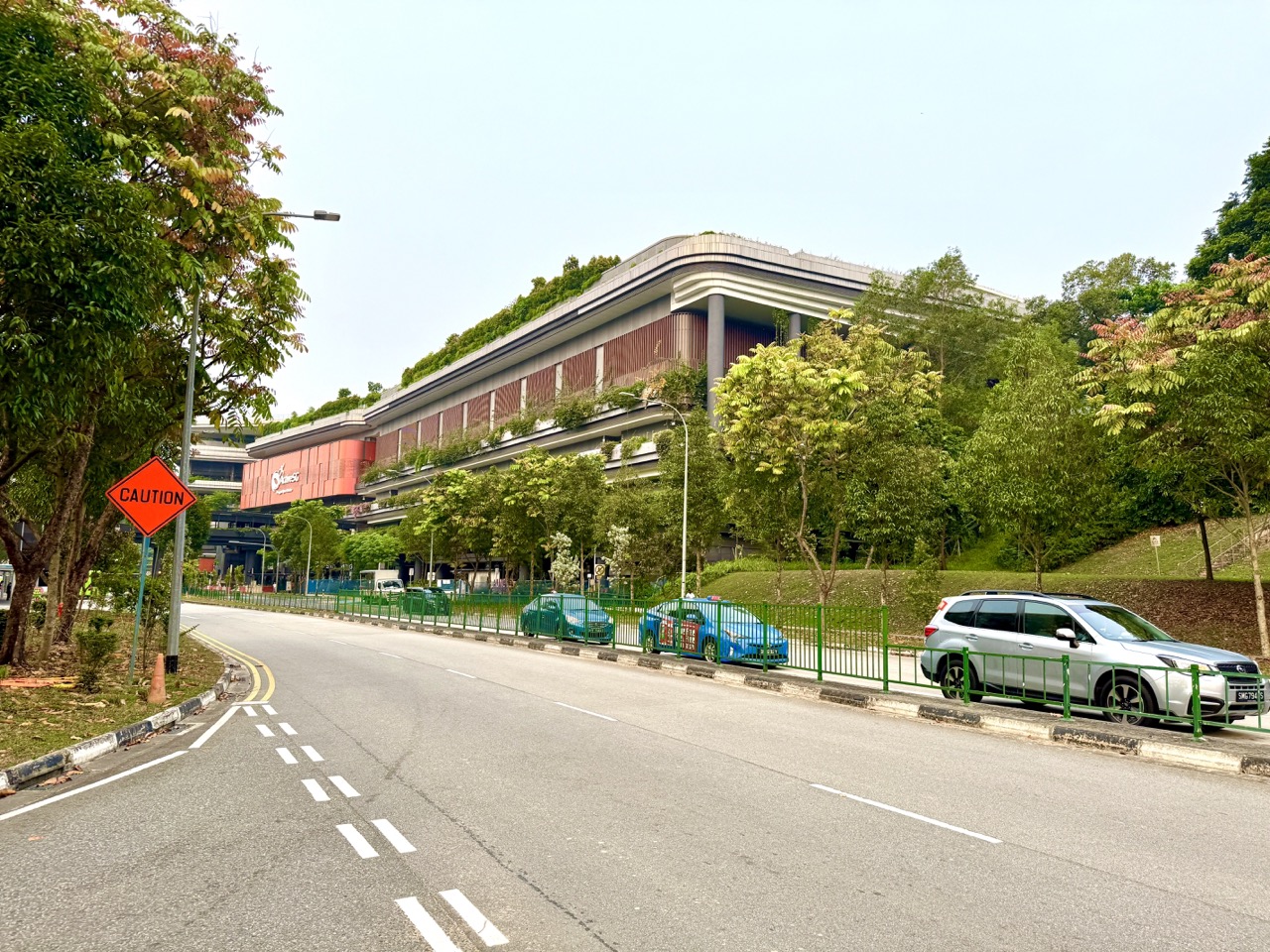
ActiveSG Punggol Sport Centre at 11 Sentul Crescent makes ergonomics easier to understand: the study of how tools, tasks and environments can better fit the people using them. A badminton racket that feels comfortable to one person may feel awkward to another because of differences in hand size, grip thickness, weight distribution, technique and intended activity. The same idea applies to a sports bag carried to the hall, shoes chosen for movement and the height of a classroom practice table. The centre began selected public operations on 27 October 2026, with formal opening scheduled for 22 November 2026. You do not need to test equipment in an occupied court to explore these concepts. Use safe family-owned objects, manufacturer guidance and qualified advice where required. Bookable access remains at MyActiveSG+.
Singapore’s Workplace Safety and Health Council identifies forceful exertion, repetitive movement, awkward posture, static position and load handling among ergonomics risk factors in workplace settings. The US NIOSH guide to non-powered hand tools explains why tool choice should suit the user and reduce unnecessary force and awkward positioning. SportSG’s badminton racket guide separately discusses racket mass, balance, string tension and grip size. The practical lesson is to compare person, task, equipment, environment and exposure rather than proclaim one “ergonomic” product perfect for everyone. These are general principles and selection questions, not medical diagnosis, individually prescribed rehabilitation, sport technique certification or an ergonomic inspection of the new Punggol building.
- Place: ActiveSG Punggol Sport Centre, 11 Sentul Crescent; no public-equipment fitting service is promised here.
- Ergonomics definition: adapt tools and tasks to human capabilities and limitations, with relevant safety and usability evidence.
- The five questions: who uses it, what action they perform, what tool is used, where it happens and for how long.
- Racket factors: total weight, balance point, handle size, grip material and appropriate string tension.
- Hand factors: hand size, grip force, reach and individual preference; no universal perfect handle diameter.
- Exposure factors: repetition, duration, force, awkward posture, recovery opportunity and equipment condition.
- Shoes and bags: intended movement, fit and load distribution matter; a familiar brand is not an injury-prevention guarantee.
- Human differences: bodies, abilities, experience and access needs vary; don’t fit a child to an adult-sized product by pressure.
- Safety boundary: pain or other concerning symptoms deserve appropriate qualified attention, not a do-it-yourself clinical diagnosis.
- Method: use paper comparisons, gentle handling of safe equipment and consultation with appropriate coaches or specialists.
- This guide: first principles, original comparison cases, limits of evidence, common mistakes and a four-week learning sequence.
Definition lock: ergonomics studies fit between person and task
Ergonomics examines how products, work and environments interact with human capabilities and limitations. A task may demand a grip, reach or repeated action that feels different to two people. The ergonomics question is not simply “Is this racket expensive?” It is whether its design and use fit the intended person and context. A comfortable handle can support usability, but comfort alone does not prove safety or sporting effectiveness. The study considers physical, cognitive and organisational factors, although this article focuses mainly on physical equipment interaction. The goal is informed fitting and task design, not declaring one ideal posture that everyone must copy.
Why this differs from sport-equipment shopping
A shopping guide may recommend specific products based on price and features. Ergonomics examines the general relationship between person, tool and task before a purchase. A racket labelled light may still have a balance distribution or handle that feels unsuitable. A stylish shoe may not fit the particular foot or movement. A student can learn these questions without buying any merchandise. This article intentionally avoids promoting a specific brand or model. The objective is to understand what a fit assessment would consider and what evidence is missing, not to guarantee that one product prevents injuries or provides better match results.
Why this differs from Design and Technology
Design and Technology may ask students to invent and prototype a useful object. Ergonomics concentrates on the human constraints and interaction that inform whether a design is suitable. A student drawing a new racket handle might use ergonomics to ask about hand dimensions and grip comfort, while the wider design project also considers material, manufacture and cost. The disciplines overlap but have distinct questions. This guide does not instruct children to modify real safety-critical equipment or produce untested sporting prototypes for public use. A paper concept can illustrate a design trade-off without being represented as approved for a high-speed game.

The person matters before the specification sheet
A product specification gives useful technical information, but it cannot describe every user’s hand, experience, strength or preference. Two adults may handle a racket differently despite using the same manufacturer size category. A child may need suitable age-specific equipment rather than a modified adult tool. Ask whose needs are being considered before deciding which feature matters. A good comparison does not assume an expert player’s choice automatically suits a beginner. It also avoids making a diagnosis based on someone’s age or appearance. The individual and intended task supply essential context that cannot be reduced to one number.
Task matters: serving and carrying are different
The ergonomic demands of swinging a racket differ from carrying the racket in a bag to the venue. One task involves rapid controlled upper-limb movement; the other may involve sustained load and walking. A single product might work well in one task and be inconvenient in another. Students can list the actions involved before discussing a proposed improvement. This is why a general claim that gear is comfortable without identifying the task is incomplete. For public sport, the actual activity should be permitted and appropriate. The lesson can be taught using ordinary family-owned items without recording other users or exerting maximum effort.
Environment can change the experience
A handle held in a dry calm room may feel different during humid activity. Footwear that suits one surface may not suit a particular indoor court. Temperature, lighting, floor conditions and available space can affect practical use, while facility rules determine what equipment is permitted. Do not infer that Punggol’s specific surfaces have an unverified grip coefficient or hazard merely from a photograph. The student should identify environmental factors and ask how suitable evidence would be collected. A product’s general ergonomic design does not remove the need to follow venue instructions or choose a safe location for the intended activity.
Exposure includes duration as well as force
A movement that is manageable once may become tiring when repeated many times without suitable variation or recovery. The WSH Council identifies repetition, force and awkward positions as relevant workplace risk factors. That does not translate into one universal sport repetition threshold for every person. A child should learn the concept through a fictional timeline showing how task duration changes total exposure. They should not perform repeated maximal swings until fatigue simply to prove the idea. The correct educational outcome is understanding why workload and time interact, not prescribing an exact number of safe repetitions for an individual.
A hand tool and a racket share design questions
NIOSH’s hand-tool guide discusses handle size, force and how tools fit users. A sport racket is not the same as a workplace screwdriver, but both require a hand to hold and control an object. The transferable principle is that handle characteristics and human anatomy influence interaction. Do not copy an industrial screwdriver’s recommended diameter into a badminton racket as though the tasks were identical. Contact pattern, movement and purpose differ. Students should compare what is similar and what must be tested separately. Analogy helps generate questions, not universal numerical prescriptions.
Hand size is one relevant variable
People have different hand lengths, palm widths and grip preferences. These differences can influence how a handle feels and which finger positions are practical. The right response is to offer suitable options and consider the task, not assume all adults of one gender or children of one age have identical hands. A student can draw three imaginary hand outlines of different sizes and compare them with a paper handle circle. This is a conceptual exercise, not a personalised fit certification. If an actual product is being selected, appropriate manufacturer and knowledgeable retailer guidance can help.
Handle circumference and diameter are different
A cylindrical handle’s diameter is the distance across the circle, while its circumference is the length around it. For an ideal circle, circumference equals π times diameter. A student who reads a 10cm circumference should not call that a 10cm diameter. Real racket grips may not be perfect circles and may have layered materials. A paper model can teach the geometric relationship without measuring a real player’s hand or making a product recommendation. Accurate quantities help the discussion because “large grip” can refer to several physical dimensions and practical experiences.
A thicker grip can change the task
An overgrip increases the effective size of a racket handle and can change surface feel. SportSG and sports-retailer guides describe how players may prefer different sizes and textures. However, thicker does not universally mean safer or more powerful. A very large handle may require an awkward grip for one person, while a very small handle may feel difficult to control for another. Students should avoid a one-size-fits-all conclusion. The useful question is how the change affects an appropriately supervised user’s comfortable control of a specific task, with product instructions and relevant expertise considered.
Grip material affects comfort and maintenance
Towel and synthetic grips may differ in texture, moisture behaviour, maintenance needs and subjective feel. SportSG’s badminton guidance describes these categories and notes that care requirements can differ. A grip that absorbs moisture is not automatically the best in every context, and a slippery or deteriorated grip may create practical concerns. A student can compare clean material samples visually or through manufacturer descriptions without making high-speed swings. Do not introduce harsh cleaning chemicals or assume a worn grip can repair a damaged frame. Ergonomics and maintenance interact, but they address different questions.
Racket weight should match user and task
SportSG’s published badminton guide describes mass categories such as 3U and 4U and emphasises considering experience and player preference. The lower U numbers generally indicate heavier racket categories in that scheme. Yet mass alone does not establish how easily a person controls a racket. Distribution, technique, grip and intended movement matter. A child should not be told to choose the lightest possible product at any cost, and an adult should not assume a heavier item always produces superior shots. Use the operator’s guide as background and try suitable equipment safely with appropriate assistance before making a practical choice.
A stated U category is not a medical recommendation
A weight label such as 3U or 4U describes a product category, not an assessment of a person’s musculoskeletal health. SportSG’s guide gives examples of player preferences, but these are not guarantees that a particular category prevents shoulder pain or is appropriate for every beginner. A student should distinguish a specification from a clinical claim. If an individual has persistent pain or relevant limitations, qualified advice may be necessary. The right educational lesson is matching evidence to the claim. Numbers can help compare products while leaving personal medical decisions outside the scope of a blog.
Balance point influences handling
Two rackets of similar total weight can feel different when mass is distributed differently. A head-heavy design concentrates relatively more mass toward the racket head, while head-light and even-balance options offer other characteristics. SportSG discusses these distinctions as part of selection. In mechanical terms, balance affects how a tool responds to movement and rotation, but a simple label does not determine every user’s performance. A safe paper lever diagram can illustrate mass distribution without swinging real equipment near others. The ergonomics question is whether the distribution suits the person’s task and capability, not which marketing category sounds most powerful.
Rotational inertia is part of the explanation
Rotational inertia reflects how an object’s mass is distributed relative to its axis of rotation. Two objects with similar total mass can require different effort to change angular motion. A student can compare a hypothetical rod with mass concentrated near its end and another with mass closer to the hand, using a diagram rather than high-speed testing. This helps explain why total racket weight and balance point are separate factors. Real racket motion involves grip, technique and several joints, so the simple physics model cannot prescribe an optimal choice. The principle gives a meaningful first question for equipment design and selection.
Force and leverage affect handling
A longer lever arm can influence the torque required to control an object, depending on how forces act. A student may connect this to racket movement, but should not treat the entire arm and racket as a rigid simple lever with one fixed pivot in real sport. Human joints, muscle coordination and timing make the motion complex. A paper diagram can identify force direction, distance from a pivot and resulting rotational tendency. No person needs to strain a wrist by holding heavy objects at arm’s length. Ergonomics uses physical principles while acknowledging human movement is more complex than a single school formula.
String tension introduces additional trade-offs
Racket string tension changes the mechanical behaviour of the string bed and may influence feel, control and performance under a given technique. SportSG discusses suitable starting ranges in its general badminton guidance, but the exact choice depends on the racket’s allowed specifications and player needs. A student should not increase tension beyond manufacturer limits or attempt home stringing without proper expertise. A visually tight string bed does not prove the racket is safe for a particular person. The right educational conclusion is that equipment characteristics interact, and changes should be evaluated appropriately rather than assumed to improve everything.
Footwear must fit the intended movement
Badminton and related racket games involve stops, starts and directional changes. SportSG recommends functionally appropriate badminton footwear, including traction and cushioning, rather than choosing shoes for appearance alone. But a shoe’s suitability also depends on fit, size, foot shape, court conditions and individual needs. No one pair guarantees that an ankle injury cannot occur. A parent can help a child understand why a comfortable walking shoe may not be identical to a suitable indoor court shoe. For actual purchase or clinical concerns, seek appropriate knowledgeable assistance. A paper comparison of intended actions is a useful learning exercise.
Shoe fit is not just numerical size
A numerical size may not capture differences in width, toe space, heel fit or the way a shoe behaves when the person moves. Students should not assume that an adult and child with the same nominal shoe length need identical footwear. A proper selection considers fit, comfort and the task, with professional guidance if relevant. Do not ask children to run or jump until pain appears as a test of suitability. The purpose is understanding why users need options and why equipment should be chosen deliberately. A size label is useful information, but it is not the whole interface between foot and product.
Sole condition matters over time
A shoe that fitted comfortably when purchased may later have worn cushioning or traction. Material aging, use and storage conditions can change the product. A family should follow manufacturer guidance and replace unsuitable or unsafe gear when appropriate rather than keep using it solely to avoid waste. A student can inspect a fictional diagram showing tread wear and explain why product life is not unlimited. Do not perform slippery-floor demonstrations or attempt to measure actual Punggol surface friction through unauthorised tests. Ergonomic fit and maintenance interact over time, so the decision should consider current condition rather than only the original specification.
A sports bag is a load-handling task
Carrying a bag involves load, strap design, distribution, duration and individual capability. A heavy poorly balanced bag can be inconvenient, but this article cannot prescribe a safe weight limit for every child or adult. The WSH Council’s workplace guidance highlights load handling and awkward posture as risk factors in its own occupational context. The transferable principle is to examine necessity, load distribution and appropriate carrying methods. Students can draw a bag with its contents and ask which items are essential rather than deliberately carry excessive weight to test endurance. Responsible design begins by reducing unnecessary demands.
Strap design affects contact and pressure
A narrow strap can concentrate contact force over a smaller area than a suitably wider strap under some conditions, influencing pressure on the shoulder. But comfort also depends on material, shape, weight, clothing and body geometry. A student can use the simple relation pressure equals force divided by area in a hypothetical calculation, while noting that real contact pressure is not perfectly uniform. Do not claim one strap width medically prevents injury. An appropriate product should be selected based on the user and intended use. The physics is a tool for asking questions, not a universal endorsement of a particular bag.
Worked example: pressure in a simple model
Suppose a fictional load exerts a force of 20 newtons uniformly over a contact area of 0.002 square metres. The simplified average pressure is 20 ÷ 0.002 = 10,000 pascals. If the same force were spread uniformly over twice the area, the average model pressure would be halved. These are invented numbers and an idealised assumption; real straps and skin do not experience perfectly uniform pressure. Students should check units and explain what the equation predicts under the stated conditions. The calculation does not prescribe a backpack size or certify safe carrying for any individual.
Pressure is not the only source of discomfort
A wider strap may change average contact pressure but still be unsuitable if the bag is unstable, the material irritates skin or the person must maintain an awkward position. This illustrates why ergonomics considers more than one variable. A student should resist concluding that doubling strap width always solves every carrying problem. A useful analysis asks how the person moves, how long the load is carried and whether unnecessary items can be removed. A material change may solve one issue and create another. Product fitting requires evaluating the whole user experience within its specific task and environment.
Repetition changes physical exposure
Repeated gripping and movement can contribute to cumulative physical demand, especially when combined with high force or awkward posture. NIOSH and Singapore’s WSH Council discuss these combinations in occupational settings. The evidence supports considering repetition as a risk factor, not issuing a universal number of safe badminton strokes for every player. Students can use a fictional schedule to compare continuous repeated work with sessions that allow suitable variation and recovery. No person needs to perform hundreds of swings for the experiment. The broader lesson is that duration and frequency interact with the physical characteristics of the task.
Static postures are another concern
Holding one position for an extended period can create a different demand from moving dynamically. The WSH Council notes prolonged static posture in its guidance for workplace musculoskeletal risk. In a sporting context, waiting, leaning over equipment or carrying a bag may involve static positions. A student can learn the concept through a drawing, without prescribing a clinical correction or holding a painful pose. The person’s comfort, capability and task requirements matter. General advice to vary appropriate movement can be useful, but persistent discomfort calls for appropriate professional assessment rather than diagnosis from a generic web article.
Awkward posture is relative to the task
The phrase awkward posture should not be used to insult a person’s natural movement or body shape. Ergonomically, the concern relates to positions that create demanding joint or muscle loading in particular tasks, especially when combined with force and repetition. A learner can compare a hypothetical tool held close to the body with one that requires sustained uncomfortable reaching. The purpose is identifying avoidable task demands, not declaring that everyone should move with one identical ideal posture. Real sporting techniques may legitimately include positions that look unusual to a beginner and need qualified instruction for safe execution.
Reach matters during equipment setup

A person using a table for sorting sports gear may need to reach repeatedly across it. If frequently used items are placed awkwardly far away, the task may require more reaching and bending than necessary. This is a familiar ergonomic principle from workstation design. The student can redesign a fictional home tabletop layout to bring relevant objects within comfortable reach, without buying new furniture. No work area should block entrances or create trip hazards. The idea transfers beyond sport into school and home organisation. Reach is a function of the person, task and layout, not a fixed universal distance.
Anthropometry helps describe variation
Anthropometry concerns measurements of human body dimensions and related physical characteristics relevant to design. Products intended for many users should account for a range of sizes and abilities, rather than assume everyone matches one average body. But collected measurements can be personal information and should be handled appropriately. A school exercise can use invented hand-size categories or anonymous published data rather than measure classmates without need or consent. The educational point is that design for a population must consider variation, adjustability and appropriate margins. One average size cannot represent every individual use case.
Designing for the average can exclude many
Suppose a fictional handle is designed solely around one average hand dimension. People with smaller or larger hands may find it less suitable, even though the chosen average was calculated correctly. A more thoughtful design may provide different sizes or adjustability, depending on function and safety. The student should explain why the average is not the same as the range of user needs. This is a general human-factors principle, not proof that any particular Punggol sport product is incorrectly designed. The aim is helping learners consider the distribution of users rather than designing for one imaginary universal person.
Adjustability can support inclusion
An adjustable work surface or product component can sometimes help users with different sizes and tasks, but the mechanism must remain stable and appropriate. The WSH Council and HSE discuss adjustability in work ergonomics because fixed layouts may not fit everyone. In sport, an adjustable accessory or choice among suitable sizes may provide flexibility. A student can draw two possible handle variants and explain the potential benefit. Do not modify safety-critical sporting equipment or gym machines without manufacturer and operator approval. A design feature should be judged by how it works for intended users, not merely because it has a movable part.
Strength and comfort are not the same metric
A person may be physically strong yet find one particular handle uncomfortable. Another may perform a light task with good control but have limited tolerance for repetitive loading. A single strength score cannot determine the ideal equipment. Ergonomics asks about the interaction between required force, hand position, time and user characteristics. Students should not compare classmates’ grip strength or label those with smaller hands as inferior. A suitable task can be adapted rather than forcing everyone to use the same product. The educational objective is a match between capability and demand, not ranking human value.
A fatigue report deserves attention
An individual may report discomfort or fatigue while using equipment. That observation is useful, but it does not identify the medical cause by itself. The person may need rest, a change in task, qualified coaching advice or healthcare evaluation depending on the circumstances. A school activity should not ask children to continue until pain appears to generate data. The NIOSH and WSH resources identify factors worth examining, not specific diagnoses for a particular badminton player. Students should learn to respond seriously to feedback without immediately announcing a condition such as carpal tunnel syndrome or tendonitis based on one informal observation.
The right way to discuss discomfort
A helpful question is “Which action feels uncomfortable, and under what conditions?” rather than “Why are you holding it wrong?” The former focuses on task and context. Do not demand public disclosure of medical conditions or pressure people to demonstrate pain. The next step depends on severity and persistence; appropriate professional advice may be needed. An educator can modify a learning task to keep it manageable without claiming therapeutic expertise. Ergonomic thinking encourages attention to the user’s experience while keeping the boundaries of education, coaching and healthcare distinct.
Equipment maintenance can affect ergonomics
A worn grip, damaged strap or unstable fastening may change how a product must be held or carried. The user may compensate by gripping harder or adopting an awkward movement. But a repair should be performed only when suitable and safe, following manufacturer guidance. Do not assume that wrapping an extra layer around any damaged frame restores its structural strength. A student can compare a fictional well-maintained and worn item and identify possible usability differences. This is separate from lifecycle and recycling decisions. The immediate question is whether the item remains appropriate for its task.
The same product can feel different over time
Fatigue, growth, changes in technique or equipment wear can alter how a person experiences a familiar product. A child may outgrow a racket or shoes, while an adult’s activity needs may change. An earlier comfortable fit does not guarantee permanent suitability. Students should understand that fitting is a process of checking use over time, not a one-time certification. Do not instruct a family to change equipment repeatedly without reason; avoid unnecessary spending. The useful habit is reviewing fit when the task or user changes and asking for appropriate qualified help when the situation requires it.
Function matters more than branding
A highly promoted racket or bag may contain impressive terminology but remain unsuitable for an individual. A simpler item may serve the intended task better if it fits, is well maintained and meets relevant safety requirements. Students should compare meaningful features rather than status. SportSG’s general badminton guidance discusses weight, balance, string tension and grip size instead of recommending a single universal best model. The same approach applies to ergonomic design. The product name is not a measurement of comfort, and a high price cannot guarantee freedom from pain or superior technique.
No universally ideal grip exists
A grip appropriate for a beginner’s hand and technique may not suit an experienced player’s preferences or another person’s abilities. Retailer guides acknowledge differences in grip thickness, material and style, while SportSG offers general factors for selection. A student should not publish one exact circumference as the ideal for every resident. The relevant question is how the equipment fits its user and task. Any personal selection should involve safe handling and appropriate advice, especially for children or people with existing problems. The article’s numerical examples teach relationships, not medical or professional fitting prescriptions.
An original case: small hand and large handle
A fictional learner tries to hold an imaginary racket with a thick handle and finds the fingers do not settle comfortably. The educational response is not to demand stronger squeezing. The family considers whether a suitable smaller grip or age-appropriate racket might be better, using knowledgeable advice before any purchase. A paper drawing can show the conceptual difference without involving an actual person’s hand measurements. The scenario illustrates matching equipment to an individual rather than forcing the person to adapt indefinitely. It is not a diagnosis of weakness or a promise that one product size prevents injury.
An original case: same mass, different balance
Two fictional rackets have the same total mass but different mass distribution, making their rotational behaviour different under the simplified model. A student draws the centre of mass closer to the handle on one and nearer the head on the other. They explain why a total gram figure alone may not describe handling. There is no need to swing real rackets at speed to demonstrate the effect. The outcome is a physical explanation of balance and rotational inertia. The classroom model does not determine which racket will suit a named player or produce a higher match score.
An original case: worn sports shoes
A child owns a pair of shoes that fit but have worn soles and questionable traction. The responsible adult considers current condition, intended surface and manufacturer or qualified advice rather than assuming a familiar size makes them safe forever. They do not attempt a sliding test on a public badminton court. The student records the decision factors in a fictional checklist: fit, sole condition, intended activity and applicable venue requirements. This shows that ergonomics is about use over time, not only original marketing specifications. Replacing unsafe equipment may be appropriate even when a circular-economy lesson encourages reducing unnecessary waste.
An original case: carrying too much
A fictional family packs three rackets, several bottles, shoes and unrelated heavy objects into one bag. The learner asks which items are actually needed and whether splitting or reducing the load would make the journey more suitable. The adult does not ask the child to carry the entire bag until pain appears. A simple load diagram can show how weight and strap contact affect carrying effort. This supports ergonomic reasoning without prescribing a universal safe backpack weight. The task is to identify avoidable load and improve the arrangement, not measure endurance or compare children against one another.
An original case: repetitive school practice
A student rehearses the same easy movement for a long time and begins to feel uncomfortable. The teacher or parent stops the activity and reviews the task rather than treating discomfort as evidence of commitment. They may consider whether force, repetition, awkward position or lack of variety contributed, while leaving medical diagnosis to qualified professionals. The fictional scenario illustrates why exposure matters. It does not establish that the movement caused a specific injury or that a particular recovery period is medically required. A careful educator uses the person’s response to guide appropriate safe next steps.
An original case: inclusive equipment choice
A group wants every participant to use identical equipment because it seems fair. One learner cannot handle the same size comfortably, while another prefers a different permitted option. The organiser considers how suitable alternatives can support meaningful participation without creating unfair or unsafe conditions. The exact requirements depend on the sport and operator rules. A child can discuss whether identical tools produce equal opportunity for everyone. Ergonomic inclusion focuses on the fit between individual capability, task and equipment, rather than assuming one standard physical configuration always meets every person’s needs.
A simple ergonomic observation sheet
Create columns for intended task, user group, equipment feature, possible demand, feedback and unanswered question. The sheet can describe a fictional racket handle or bag. Avoid collecting classmates’ names, health histories or detailed personal measurements without appropriate purpose and permission. A useful entry might say “thick fictional handle; smaller imagined user reports difficulty controlling it; investigate size options.” The observation does not prove injury risk or the best replacement. It turns a vague complaint into a focused design question. Clear documentation is more useful than a colourful rating that has no defined criteria.
How to distinguish a risk factor from a diagnosis
A risk factor is a condition that may contribute to a problem under relevant circumstances. A diagnosis identifies a medical condition through appropriate professional assessment. Forceful grip and repetitive movement may be discussed as ergonomic risk factors, but they do not establish that a person has carpal tunnel syndrome or any other disorder. Students should practise making this distinction in their writing. The WSH Council’s guidance concerns workplace prevention and describes known associations; its examples should not be converted into an individual sports diagnosis. Responsible education encourages appropriate support without overstating its authority.
When to seek qualified help
Persistent or severe pain, numbness, weakness or other concerning symptoms should not be managed through an unverified blog fitting formula. A healthcare professional may be appropriate, while a qualified coach can address sport technique within their competence. Equipment specialists can advise on manufacturer specifications and safe servicing. The correct route depends on the problem. A student should not be asked to diagnose a family member from a photograph of their grip or posture. Recognising the limits of an educational guide is part of ergonomic judgement, especially when the question has moved from product usability to personal health.
Ergonomics is not a guarantee against injury
Good design and appropriate use can help address some physical demands, but no single grip, shoe, strap or technique eliminates every possible injury risk. Actual participation involves skill, activity intensity, surroundings, individual health and unpredictable events. A marketing claim that one product “prevents all wrist injuries” requires extraordinary evidence and should not be repeated casually. A family can value suitable equipment without expecting perfect protection. The practical lesson is to consider multiple risk factors, use products as intended and seek appropriate advice. Evidence-based ergonomics should reduce false certainty rather than sell a universal cure.
Primary school learning with paper models
Young pupils can draw a small and a large hand beside two fictional racket handles, then explain why one option may fit differently. They can also compare a narrow and wide bag strap using a simple pressure diagram. No real physical testing, sharp tools or person measurements are required. The objective is recognising that people and tasks differ. Older Primary students may measure an ordinary family-owned object under supervision and discuss the limitations of their ruler. These activities can reinforce Mathematics and Science while keeping the ergonomics message simple: choose tools appropriate to the user rather than forcing every user into one size.
Secondary learning: combine evidence and trade-offs
Secondary students can develop an ergonomic comparison table of hypothetical racket designs, including weight category, balance, grip dimensions, intended action, user preferences and safety constraints. They may use principles from NIOSH and the WSH Council but should state that occupational studies do not directly certify sport products. An advanced project can consider lever arms, pressure, mass distribution and exposure time without performing dangerous tests. Ask what evidence would be required to recommend a product to a specific individual. The best answer balances technical properties with the real person and task instead of claiming the mathematically lightest design is universally superior.
A four-week ergonomics learning plan
Week one: define user, task, tool, environment and duration for an ordinary sport-related activity. Week two: study hand size, grip dimension, racket mass and balance through drawings or family-owned safe equipment. Week three: compare repetition, force, awkward posture, carrying loads and maintenance, distinguishing general risk factors from medical diagnosis. Week four: write a short fictional equipment-selection guide explaining trade-offs, unknowns and the need for qualified advice where relevant. No public Sport Centre testing or purchases are necessary. A learner succeeds when they can ask better questions and recognise that fit varies rather than confidently prescribe one item for everyone.
Common ergonomics misconceptions
A high price does not prove a racket is suitable. A heavier item is not automatically more powerful for every user. A thicker grip is not universally safer. One U weight label does not identify a person’s ideal product. Comfort and safety are related but not identical. An occupational ergonomics guideline cannot be copied directly into a clinical sports prescription. Repetition and force matter together with context, and an individual’s symptom cannot be diagnosed from one photo. Good ergonomics begins with the person, task and relevant evidence, not with a celebrity’s equipment choice or an impressive marketing claim.
Frequently asked questions
What is ergonomics? The study of fitting tools, tasks and environments to human capabilities and limitations.
Does one racket grip size suit everybody? No. Hand dimensions, task, preference and equipment design vary.
Why does racket balance matter? Mass distribution affects how the racket responds to movement and rotation.

Does a lighter racket guarantee injury prevention? No. Equipment choice involves multiple factors and does not eliminate all risk.
Can a thick overgrip change comfort? Yes, but its suitability depends on the individual, intended use and manufacturer guidance.
Are occupational hand-tool guidelines identical to sport coaching rules? No. They offer general transferable principles, not sport-specific medical certification.
Do worn shoes become safe after cleaning? Not necessarily. Current condition, grip and fit still matter.
Should students test equipment until someone feels pain? No. Avoid harmful experiments and use paper models or appropriate supervised tasks.
Can a blog diagnose a wrist or shoulder condition? No. Persistent or concerning symptoms require appropriate qualified evaluation.
Do we need to visit ActiveSG Punggol to complete the learning plan? No. Safe family-owned objects, credible sources and diagrams are sufficient.
Official sources and next step
Read Singapore WSH Council’s ergonomics risk factors, NIOSH’s guide to choosing non-powered hand tools, and NIOSH’s ergonomic risk-factor overview for the occupational science background. Sport-specific selection principles come from SportSG’s badminton racket guide and its getting-started equipment guide. The Punggol official opening notice and MyActiveSG+ provide venue information. Other eduKate guides examine sports-equipment design, human-centred service design and gear maintenance and reuse.
Your next step: choose one safe family-owned sports item and write down the person, task, equipment features and possible physical demands. Explain what you can observe, what remains uncertain and which question needs qualified guidance.
Editorial note: Independent ergonomics education guide prepared 6 November 2026. It is not a product-fitting certification, professional sport technique lesson, healthcare assessment or inspection of Punggol Sport Centre equipment.


