
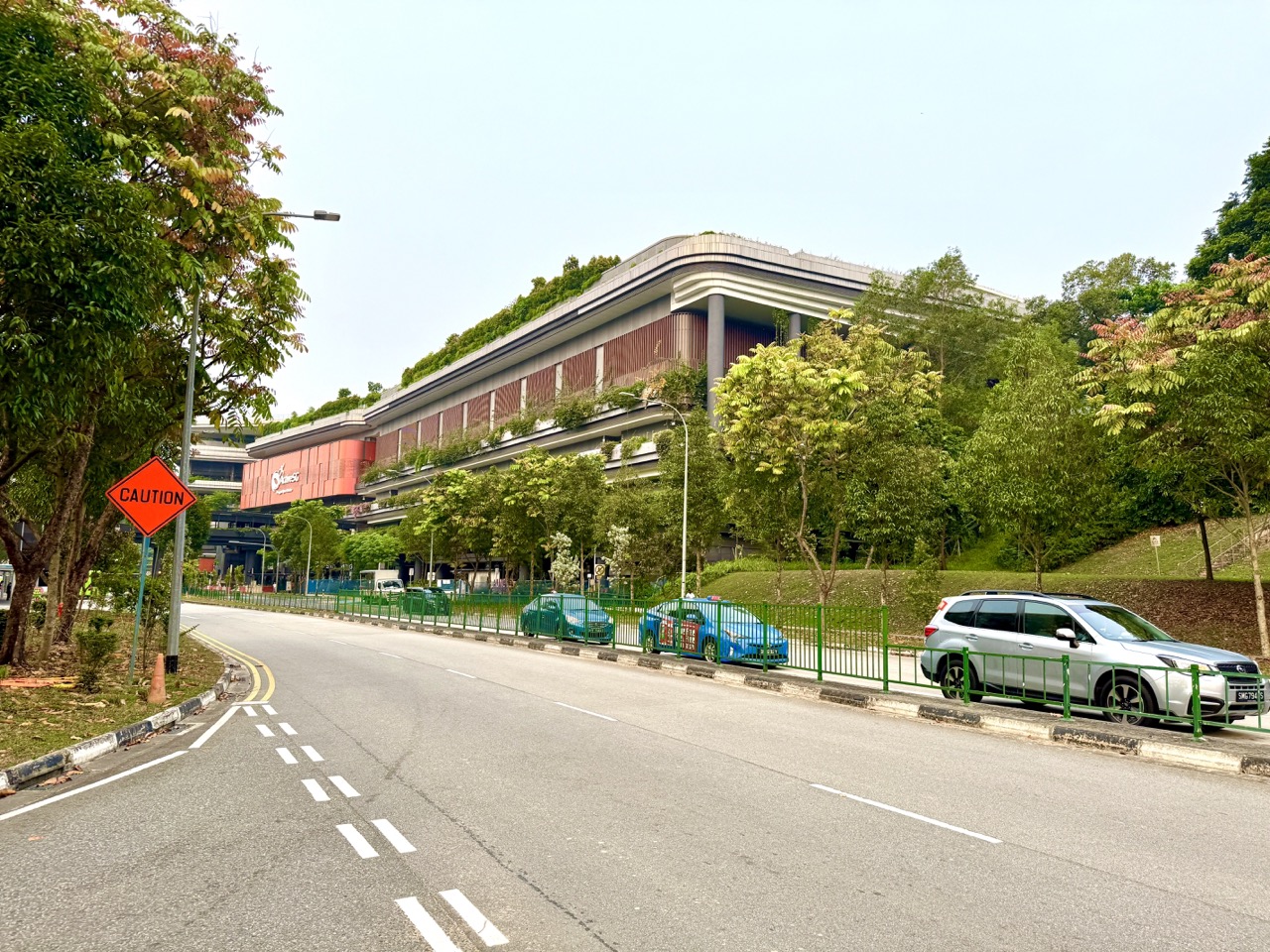
Badminton round-the-head footwork is a skill to practise on a confirmed badminton court at ActiveSG Punggol Sport Hall, Level 3 of Punggol Sport Centre, 11 Sentul Crescent, Singapore 828656. A 30 October 2026 first-hand walkthrough reported thirteen badminton courts in the Indoor Sport Hall. That identifies a suitable facility, not a guaranteed free court. Check MyActiveSG+ for the exact Badminton reservation, allocated court, rate and operator conditions before arranging a partner, and do not use the separate Level 3 Team Sport Hall or sheltered tennis courts as substitutes.
A round-the-head stroke is a forehand overhead taken towards the player’s backhand rear-court side. It can sometimes provide better shot choices than reaching for a difficult backhand overhead, but it requires early shuttle recognition, controlled turning, space to contact, and a safe route back towards base. Badminton Bible describes a split step, a swivel step and, for appropriately skilled players, a scissor-jump movement as parts of the progression. The beginner’s first task is not to leap explosively: it is to read a gentle lift, turn without losing balance and make a legal controlled return. This guide concentrates on that footwork and recovery rather than repeating the separate Punggol overhead-clear, drop-shot or smash-defence articles.
- Venue: Punggol Sport Hall, Level 3, 11 Sentul Crescent, Singapore 828656; thirteen badminton courts reported during October 2026 first look.
- Access: only a genuine eligible badminton reservation or authorised training programme; confirm live availability and fees in MyActiveSG+.
- Meaning: round-the-head is an overhead forehand-style stroke played towards the backhand rear court, not a shot literally struck behind the head.
- Skill sequence: see the lift, take a controlled preparation or split step, turn or swivel safely, arrive in the rear court, strike and recover.
- First practice: shadow turning without a shuttle, then gentle predictable feeds to the backhand rear corner.
- Choices: a suitable forehand clear, drop or attack can be played from the position; selection depends on balance and incoming height.
- Safety: do not sprint backwards blindly, use an untrained maximal scissor jump or strike while falling into an adjacent court.
- Doubles: communicate before the rear player moves across the partner’s path, and adjust coverage after the stroke.
- Progression: separate footwork from contact before combining them and increasing pace.
- Coaching resources: https://www.badmintonbible.com/footwork/rearcourt/round-the-head/intro and https://www.sikana.tv/en/sport/badminton/how-to-hit-a-forehand-round-the-head-shot

Definition lock: round-the-head is an overhead forehand from the backhand side
A badminton round-the-head shot is an overhead forehand-style return made when the shuttle travels towards the backhand rear court. The player turns and reaches the shuttle with the racket arm moving around the head region rather than automatically using a backhand overhead. It is a positional choice: the player still needs to strike legally and direct the shuttle into the opponent’s court.
The name can be misleading if interpreted literally. A beginner should not bend the neck sharply or swing the racket into the back of the head. The useful action brings the body into an appropriate side-on position, giving the arm enough space for a comfortable overhead contact and the feet a planned recovery path.
Why this is not another overhead-clear lesson
A clear sends the shuttle high and deep, while a drop lands shorter and a smash travels downward. Round-the-head describes where and how the player moves to contact a shuttle on the backhand rear side. From that position several legal shot choices may become available. Our earlier Punggol overhead-clear and overhead-drop guides teach the shots themselves.
This guide asks a different question: how can a player reach that rear-court shuttle early enough and return to a useful position afterwards? Understanding the movement makes technical lessons more coherent. The correct shot is difficult when the hitter arrives too late or stands so awkwardly that the racket cannot travel freely.
What the Punggol hall actually offers
TheSmartLocal’s October 30 on-site walkthrough reported thirteen badminton courts in Punggol Sport Centre’s Level 3 Indoor Sport Hall. The sports complex also contains a separate Team Sport Hall and sheltered racket-sport facilities, which have different activities. These physical features help residents locate badminton without implying unlimited casual access.
The sport centre entered a phased soft launch in late October before its announced wider opening in November. Use the current MyActiveSG+ booking inventory for a real badminton slot and keep the confirmation. A visually empty court may be reserved, closed or transitioning to another session. A reliable practice plan begins with permission to use the correct space.
The purpose of moving round the head
When a shuttle is lifted deep towards a player’s backhand corner, a forehand-style overhead may permit a more familiar contact or different attacking options than a rushed backhand. Badminton Bible’s instruction explains advantages in power, vision and recovering forwards when a suitable forehand position can be achieved. Those advantages are conditional, not a promise that every player should always choose the round-the-head path.
If the shuttle is already too far behind or the player would have to move dangerously, a controlled backhand or other legal response may be more sensible. Good badminton decisions consider time, balance and the next shot instead of following a technique label regardless of circumstances.
See the opponent’s lift early
The first movement begins with recognising where the incoming shuttle is travelling. A deep lift to the backhand rear court creates a different footwork demand from a flatter drive or a short net reply. A beginner who notices the depth only when the shuttle is descending may run late and swing from an unstable position.
Ask a partner to deliver gentle predictable high shuttles to one rear target. In the first drill, the learner may simply watch and identify the likely landing zone. That builds observation before speed. Changing the feed suddenly on every repetition makes the basic movement much harder to understand.
The split step is a preparation, not a large jump
Round-the-head footwork instruction commonly begins with a small split step or readiness action around the opponent’s contact. The movement can help the player react towards the correct corner. Its benefit depends on timing and balance, not height. A large jump made too early may actually delay the first rearward step.
Practice a comfortable readiness motion without a shuttle, then move towards a named corner at walking speed. Players with joint or balance concerns may need an adapted version or individual advice. The first goal is finishing ready to move, not demonstrating explosive athleticism.
The swivel step changes body orientation
Badminton Bible emphasises a swivel step that combines turning and moving towards the backhand rear court. This can help the player establish a more side-on forehand overhead posture while covering distance. It differs from repeatedly shuffling backwards while the chest remains facing the net. Appropriate turning reduces some awkward reaching.
A beginner can practise turning a modest amount and moving one or two controlled steps, with no racket swing. The movement should feel stable and should not lead towards another player or the wall. A qualified coach can refine the exact foot sequence for handedness and mobility.
Why blind backpedalling is hazardous
A person looking up at a shuttle while running backwards may fail to see the back line, a stray shuttlecock, a teammate or a court barrier. The resulting stumble can make even a slow overhead return unsafe. Turning and travelling deliberately, with awareness of the playing area, is generally a better teaching progression than desperate backward steps.
Use a short shadow route from an appropriate base position and stop before the boundary. If the player cannot retain balance without a ball, the next drill should not add a fast high feed. Learning where to stop is part of learning the skill.
Getting behind the shuttle matters more than reaching farther
A useful round-the-head overhead generally requires arriving early enough to contact the shuttle at a suitable height and in a comfortable region near the racket shoulder. A player who allows it to travel far behind the head may resort to a painful backward bend or uncontrolled wrist flick. Better footwork can improve contact without a harder swing.
Slow the feeder and reduce travel distance until the learner can arrive in balance. The objective is controlling the relationship between shuttle, body and racket. A shot that works only after a desperate reach is not a dependable beginner technique.
Racket preparation should occur during movement
As the player turns towards the backhand rear court, preparing the racket in a comfortable overhead-ready position can reduce delay after arrival. Sikana’s round-the-head introduction describes preparation, shot and recovery as linked steps. A beginner who leaves the racket down until the shuttle is falling may find that good footwork still leads to late contact.
Rehearse the arm preparation separately, keeping the swing away from nearby people. Then combine it with slow turning. Avoid a huge backswing that might strike a partner. Efficient readiness should make the movement smoother rather than more dramatic.
The non-racket arm may help orientation
Overhead badminton coaching often uses the non-racket arm for balance and to help track the shuttle. During round-the-head movement, the body is turning and may lean sideways, so coordinated arms can help stability. The precise posture varies with player ability and the chosen stroke.
Begin with a gentle shadow movement while checking that shoulders and neck remain comfortable. A qualified coach can make technique-specific adjustments. Do not force an extreme twist simply because a professional athlete can reach farther.
The scissor jump is a later progression
Badminton Bible lists a scissor-jump pattern in the round-the-head footwork progression. Properly taught, it coordinates body rotation, contact and recovery. But it places greater demands on take-off, landing and timing than a simple step-and-hit version. A complete beginner or an injured player does not have to perform it immediately.
Practice the turning route on the floor first. Introduce modest jumping only when suitable and appropriately supervised. A poor landing near a back boundary can create knee or ankle risk. A safe controlled legal return is an excellent first achievement without an airborne movement.
Landing is part of the overhead action
A player who jumps must finish on clear ground in balance and be able to move towards the next likely ball. Landing with twisted feet or into another person’s area can cause injury, even if the shuttle crosses the net successfully. The useful technique includes preparing the landing before take-off.
Keep the practice lane free of spare shuttles and equipment. A coach can adjust speed, jump height and repetitions to the participant. The group should stop if landing control deteriorates rather than demand one more powerful shot.
The rear-court backhand corner needs its own geometry
The backhand rear corner is one of the areas a singles player may need to cover from the central base. Moving there creates a temporary opening elsewhere, particularly towards the opposite front court. A round-the-head player should understand that striking the rear ball is only one part of the rally. Recovery matters because an opponent may immediately reply into the space that was vacated.
Use a simple court diagram and point out the backhand rear corner and central recovery region. Beginners can learn that geometry without hitting a shuttle. This makes later footwork less like random running and more like purposeful movement.
Contact high only when the body is ready
A player who reaches the shuttle at a comfortable overhead height may choose a forehand clear, drop or other legal return. But attempting to strike the highest possible point while falling backwards is not necessarily safe or accurate. Good contact depends on balance and available time, not an arbitrary vertical measurement.
Start with feeds that arrive within comfortable reach. If the shuttle is too far away, allow the attempt to end and reset. Do not make unsafe acrobatics the standard for a successful drill.
A round-the-head clear can restore depth
One option from the round-the-head position is a clear towards the opponent’s rear court. This may create recovery time or move the opponent farther back. The shuttle still needs to land legally with appropriate margin. A hurried clear that falls short may allow an attacking reply.
Begin with a broad deep target and gentle feeds. The overhead-clear article covers detailed flight and stroke mechanics; here the observation is whether the player reaches contact early and recovers afterwards. A controlled moderate clear can be a worthwhile learning result.
A round-the-head drop changes length
From a similar general preparation, a player may choose a drop towards the opponent’s front court instead of a high clear. That can force an opponent to move forwards, but the original hitter must then be prepared for a counter-drop or lift. The decision is tactical and depends on player balance and opponent position.
Practice a gentle clear-or-drop choice only after the rear-court movement is reliable. Avoid attempting advanced deception on the first feed. The priority remains reaching the shuttle safely and leaving the court prepared for the next shot.
A round-the-head smash is not compulsory
A higher overhead contact in a favourable position may offer an attacking smash, but a hard shot is not always useful or safe. A player arriving late at the backhand rear corner may be unable to create a controlled downward trajectory. Forcing power can produce an out ball or a poor landing.
Begin with clears and modest controlled contacts. Qualified coaching can later introduce more aggressive attacks where suitable. No recreational learner needs to prove competence by smashing every high shuttle.
Choosing forehand round the head versus backhand
A round-the-head forehand-style stroke may offer advantages if the player can turn and arrive early. A conventional backhand overhead may be a reasonable choice when the shuttle is already behind the body or the player lacks time to move across. The actual decision depends on the ball, mobility and court position.
Practice recognising two feed situations: one with enough time to turn and another too late for a comfortable round-the-head movement. A good learner knows when to choose a safer legal option rather than chase the technique label at all costs.
A badminton base is a recovery concept
After a rear-court shot, the player generally needs to move towards a useful area from which the next likely return can be covered. That often means recovering forwards from the backhand rear corner rather than remaining at the line to admire the shot. The exact base changes with singles or doubles position and the shot played.
Use a controlled movement from rear corner towards an agreed central ready region after a gentle clear. Do not demand sprinting to a fixed dot regardless of the opponent’s next contact. Good recovery is responsive, not merely completing a memorised route.
Why recovery should begin promptly
The longer a player stands in the rear corner after contact, the less time remains to reach a short reply. An opponent may respond with a net shot, drive or return to the opposite rear side. Beginning recovery in balance gives the player more options. However, moving too early before completing the stroke can also reduce control.
Practice completing a legal return, settling the feet and taking a measured recovery step. Then add a predictable second feed. The point is connecting two actions into one rally, not accelerating blindly.
Recovery after a clear differs from recovery after a drop
A deep clear may push the opponent backwards and create more time, while a short drop can draw them forwards. The original player’s best recovery area may differ accordingly. A round-the-head movement cannot be evaluated solely by how fast the hitter returns to the centre; the next shot must be considered.
Use two announced return options and ask the learner what the opponent is likely to do. Begin with slow controlled feeds. This makes footwork tactical rather than a series of fitness laps.
Singles may require covering the far forecourt
In singles, nobody else covers the opposite half of the court. A player who has travelled to the backhand rear corner may need to respond to a cross-court drop or a straight net reply next. That creates a demanding change of direction. A suitable recovery should account for the player’s previous shot and the actual opponent response.
Do not create a full-court sprint test for a complete beginner. Begin from shorter distances and use predictable second balls. Developing an understanding of available space is the first goal.
Doubles rear-court responsibilities depend on formation
In doubles, a rear player may take round-the-head overheads while a front teammate covers shorter returns. But when the shuttle travels deep into the backhand corner, the pair should communicate to prevent both chasing it. The front player must also avoid entering the rear partner’s overhead swing path.
Start with one designated rear hitter and a front partner who watches and covers an agreed area. Rotate roles later. A safe clear call before contact can be more valuable than an extra step of speed.
Avoid taking over a partner’s racket space
A round-the-head swing can involve the racket moving over and around the player’s shoulder. A teammate who drifts too close may be struck. The risk increases when a player turns while looking up and cannot see who is behind. Clear spacing and early calls are part of proper doubles footwork.
Practise the shadow route with both players, without shuttles. Agree on where the front teammate should stand and when the rear player may travel. A well-organised drill avoids surprise collisions.
The first shadow footwork drill
Begin near an appropriate singles base or agreed doubles position with no shuttle. On the feeder’s verbal cue, take a comfortable readiness action, turn towards the backhand rear corner, travel one or two controlled steps and stop. Rehearse the racket preparation and then recover. No jump is required.
Repeat at walking pace until the participant can maintain balance. If the foot sequence is confusing, simplify it instead of demanding more repetitions at speed. A useful shadow drill teaches a path the player can later reproduce with a ball.
The swivel-only drill
Stand in a clear authorised area and focus only on turning from an ordinary ready position towards the backhand rear side. Practise coordinating foot turn and shoulder orientation without moving a great distance. This isolates the element that makes round-the-head footwork different from simply shuffling backwards.
Ask a partner to observe whether the player stops in balance and can face the intended contact area. If the body twists awkwardly, slow down. A qualified coach can refine mechanics for each player’s handedness.
A two-point rear-court movement drill
Select a comfortable start and one safe backhand-rear target within the booked court. The learner moves towards the rear marker area, prepares a shadow overhead and returns to ready. Use existing court lines for reference rather than placing trip hazards on the floor.
Keep the distance modest at first. The goal is accurate arrival and recovery, not a timed sprint. Players who cannot stop before the back line should begin closer or at lower pace.
The first gentle high feed
A cooperative partner sends a predictable high shuttle towards the learner’s backhand rear region. The learner turns, travels safely and attempts a controlled overhead return when comfortable. Begin without scoring and choose a broad legal target in the opponent’s court. The feeder should not make the shuttle unreachable merely to test reflexes.
After each attempt, ask whether the player arrived early enough and finished balanced. If not, adjust feed depth or speed. A useful drill reveals the movement problem before adding harder ball contact.
A round-the-head clear-and-recover drill
Use a series of gentle high feeds to the same rear-court target. The learner makes an appropriate controlled forehand clear and then moves towards a useful recovery region. Stop after the movement and discuss the route. Only later add a second gentle ball to test whether the player was actually ready.
Do not evaluate the exercise solely by how far the shuttle travelled. A very deep out ball and a stumble are not good results. The aim is legal depth, safe turning and a controlled return towards base.
A clear-or-drop choice drill
After shadow footwork and controlled clear contact become reliable, the feeder supplies a predictable high shuttle. The player announces a clear or drop before contact, then makes the chosen legal return and recovers. This introduces tactical variety while keeping the movement problem manageable.
Do not introduce extreme deception immediately. The target remains broad. A player who can arrive safely and choose between two sensible contacts has developed a useful next stage of skill.
A rear-court shot followed by a front reply
One player sends a high feed towards the backhand rear corner. The learner returns it, recovers and receives a gentle second shuttle towards a comfortable front area. This highlights why the first shot and recovery belong together. The second feed should be announced and slow enough to avoid desperate lunges.
If the learner becomes late to the front ball, reduce distance or allow more recovery time. The objective is connecting movements, not exhausting the person. A clear two-shot sequence can teach more than a chaotic full rally.
A round-the-head response to varied depth
The feeder alternates a comfortable rear-court lift with a slightly deeper one in an announced pattern. The learner reads the flight, decides whether round-the-head preparation remains safe and makes an appropriate controlled return. This teaches that the same corner contains different time and distance problems.
Begin with gentle feeds and do not reward a dangerous reach for a very deep ball. A good decision may be to choose a backhand or allow the practice feed to stop. Sport teaches judgement as well as technique.
The first ten minutes are mostly movement
An introductory ten-minute block can include a warm-up, a few shadow split steps, controlled swivel turns and one simple recovery route. If the learner is comfortable, add a small number of predictable high feeds. This is an illustrative part of a confirmed court booking, not an advertised ActiveSG lesson or guarantee of mastery.
The main useful outcome may be recognising where the backhand rear corner is and how to arrive without blind backpedalling. Speed and power can develop later. A clear movement pattern is already real progress.
Thirty minutes with a partner
A half-hour session can include shadow movement, high-feed contact, an ordinary clear-and-recover drill and one gentle two-shot sequence. Rotate feeder and learner roles so both people practise. Allow pauses to collect shuttles and rest. The exact repetitions should fit ability rather than a universal target.
Choose one observation, such as whether the body turned earlier or whether recovery left the player ready for a front ball. Specific feedback helps improvement more than telling the person simply to move faster.
One hour with four recreational players
With a real authorised court, four friends can alternate feeder, hitter, observer and resting roles. The observer may note timing and safe landing while the feeder provides predictable rear-court shuttles. Later a short doubles sequence can illustrate partner coverage after the round-the-head return. Avoid full-power smashes at a beginner.
Keep the activity within one court and hand over on time. A good learning hour is organised enough for everyone to benefit, not a competition in which the most experienced person sends unreturnable feeds throughout.
Children should learn the turn before the leap
A child may enjoy a forehand round-the-head stroke but lack the strength or coordination for a scissor-jump movement. An authorised youth programme may use smaller distances, a suitable racket and gentle feeds. A parent should not assume ordinary public court hire includes a coach or permission to modify equipment.
Begin with a controlled turn and a reachable shuttle. Praise safe footwork and a clear decision to stop when contact is not possible. A positive first experience makes further learning more likely than comparing the child with a professional athlete.
Teenagers need balance alongside speed
A secondary-school badminton player may be able to run quickly towards the backhand rear corner but still arrive under the shuttle too late or recover poorly. A focused movement drill can help connect earlier observation with a more comfortable overhead position. The technical challenge is timing and controlled direction changes, not merely fitness.
School CCA membership does not grant public court access automatically. Book or organise a legitimate session and fit it around school and recovery needs. A small technical improvement may be more sustainable than repeated maximal jumps after a long day.
Returning adults may prefer a no-jump version
An adult returning to badminton after years away may know what round-the-head means yet have different present-day mobility or shoulder comfort. A grounded turn-and-step pattern can provide a useful skill without repeated airborne scissor movements. Relevant knee, ankle, back or neck conditions may require individual professional guidance.
Age alone does not define readiness. A short comfortable drill can support social participation while allowing gradual progress. A local sports facility is valuable when it encourages repeatable safe movement.
Why footwear and surface condition matter
Round-the-head movement involves turning, rearward travel and stopping, sometimes while looking high above the shoulder. A loose shuttlecock, water spill or worn shoe can cause a fall. Wear footwear accepted by the operator, keep laces secure and inspect the assigned court before practice. Store spare equipment outside movement routes.
If the floor is slippery or damaged, stop and inform staff. An indoor venue still needs normal maintenance. A paid reservation is not permission to continue an unsafe high-movement drill.
Never step into a neighbouring rally
The Indoor Sport Hall contains many badminton courts. A player chasing a deep shuttle can accidentally move beyond the allotted sideline towards another group’s activity. Do not continue into their space; allow the practice ball to end and retrieve it only when safe. The group should use feeds that fit the available court.
Keep waiting players out of the rear movement lane. A correct overhead return is not worth striking a neighbour or damaging barriers. Shared venue courtesy is part of good sport.
Stop for discomfort or unsafe movement
Sharp shoulder, knee, ankle or other joint pain, significant dizziness, faintness, chest discomfort or severe unusual breathlessness call for stopping and appropriate assistance. A general skill guide cannot diagnose a condition or determine whether the person may resume jumping. Repeated unstable landings also signal that the drill is too demanding.
Rest, simplify or choose a different suitable activity rather than forcing a planned quota. A safe controlled return is more useful than an exhausting session that leaves someone unable to practise again.
Filming should not block the rear path
A phone or tripod near the back boundary may become a trip hazard during round-the-head movement. Filming unrelated visitors, particularly children, without suitable consent may also violate privacy and venue rules. An ordinary court booking does not give permission for unrestricted commercial production.
A written note about timing and recovery can be enough. If a qualified coach wants footage, arrange it lawfully and keep equipment well outside the active lane. The learning environment should remain comfortable for all participants.
A four-week rear-court progression
Week one can focus on safe swivel turns and slow travel towards the backhand rear corner. Week two adds gentle predictable shuttle feeds with a controlled overhead clear. Week three introduces recovery and one second ball. Week four offers a simple clear-or-drop choice and modest doubles coverage. This is an illustrative learning pathway, not an official ActiveSG course.
Repeat an easier stage whenever movement loses balance or contact becomes uncertain. Progress may be earlier turning and a better recovery route at the same moderate pace. Jump height is not the only measure, and it may not be a suitable goal for every participant.
Five common round-the-head mistakes
First, recognising the lift late leaves the shuttle behind the body; practise early tracking. Second, blind backpedalling increases fall risk; learn a controlled turn and rearward route. Third, an oversized swing while off balance can make contact unpredictable; simplify the feed. Fourth, forcing a scissor jump before landing is safe can create injury. Fifth, failing to recover after the shot leaves the opposite front court uncovered.
Each problem needs a distinct correction rather than a universal demand to run faster. A helpful partner identifies one observable issue and supplies an achievable next feed. Qualified coaching is useful for complex mechanics, especially airborne footwork.
Frequently asked questions
Where can round-the-head badminton be practised at ActiveSG Punggol? On a confirmed Badminton reservation at Punggol Sport Hall, Level 3, 11 Sentul Crescent. How many courts were reported? Thirteen in the October 2026 first look, with current slot availability determined by MyActiveSG+. What is round-the-head? A forehand overhead played from towards the backhand rear court. Does it mean striking literally behind the head? No.
Is a scissor jump compulsory? No; beginners can start with grounded turning and shadow movements. Can I play a clear or drop from the same position? Yes, depending on the ball and skill. Is round-the-head always better than a backhand? No, timing and safety matter. Does booking include instruction? Not unless an authorised product says so. What if the court is unavailable? Choose another verified booking date.
Sources and your next step
The local court count and facility context are documented in https://www.badmintonbible.com/footwork/rearcourt/round-the-head/intro‘>Badminton Bible’s round-the-head introduction and https://www.sikana.tv/en/sport/badminton/how-to-hit-a-forehand-round-the-head-shot‘>Sikana’s overhead forehand lesson explains preparation, shot and recovery. Formal laws belong to https://activesg.gov.sg/‘>MyActiveSG+.
Your next step is to book a valid Punggol badminton court, practise the turn and rear-court travel without a shuttle, then ask a cooperative partner for gentle lifts into the backhand rear area. Aim for one controlled overhead and a measured recovery. For the separate shot trajectory from that position, see https://edukatepunggol.com/2026/11/01/things-to-do-at-activesg-punggol-badminton-overhead-drop-shot-practice/‘>our overhead-drop guide. Information reflects venue and coaching sources checked on 5 November 2026.


