
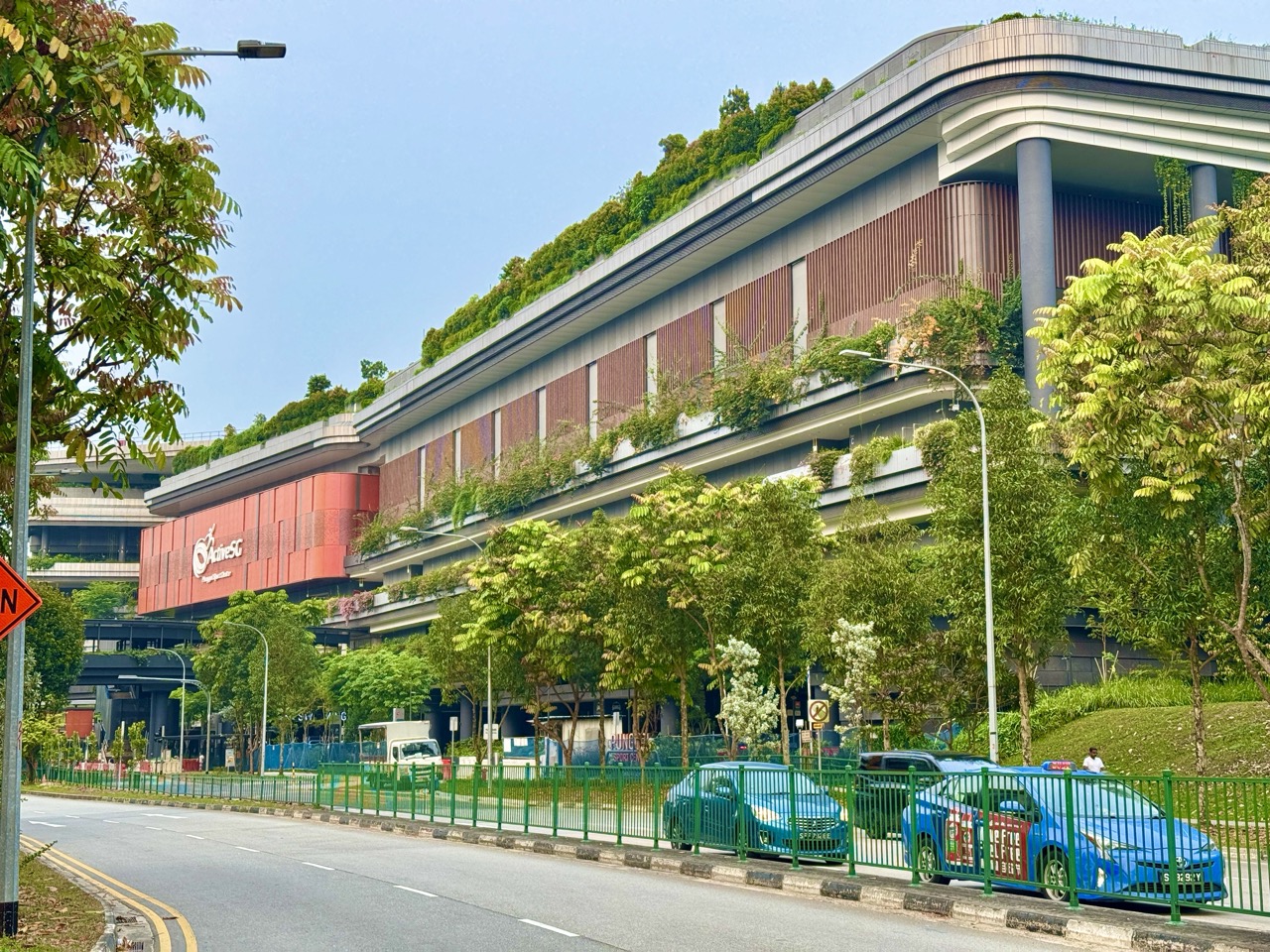
Badminton players can practise a forehand overhead clear and back-court recovery at ActiveSG Punggol Sport Hall, Level 3 of Punggol Sport Centre, 11 Sentul Crescent, Singapore 828656. A first-hand walkthrough dated 30 October 2026 identified thirteen badminton courts in the Indoor Sport Hall and reported bookable courts during the late-October soft launch. Book the correct badminton facility and verify an actual time and price through MyActiveSG+; a visible empty court is not permission to play, and a general sport centre opening announcement does not guarantee any particular booking.
An overhead clear sends the shuttle high and deep into the opponent’s rear court. A defensive clear can buy time to recover after being pushed to the back; an attacking clear follows a faster, flatter path for a different purpose. Beginners often focus only on how hard to hit, but the useful learning sequence starts with reading the incoming shuttle, moving back without losing balance, positioning sideways, making a controlled overhead contact and recovering for the next shot. This guide focuses on that rear-court skill, complementing—not repeating—our separate badminton net-shot and first-match guides.
- Venue: Punggol Sport Hall, Level 3, Punggol Sport Centre, 11 Sentul Crescent, Singapore 828656.
- Reported facilities: thirteen badminton courts identified by the 30 October 2026 on-site walkthrough.
- Reservation: choose a badminton-specific slot on MyActiveSG+ and check current costs, court number and terms.
- Main stroke: forehand overhead clear, aimed high and deep towards the opponent’s back court.
- Key distinction: defensive high clear buys recovery time; a flatter attacking clear has a different tactical purpose.
- Movement: turn, travel to the rear court, prepare overhead contact and move back towards a useful base without rushing blindly.
- Equipment: badminton racquets and shuttles, approved non-marking shoes, water, towel and booking confirmation.
- Learning sequence: shadow footwork, cooperative rear-court rally, then varied feeds and recovery practice.
- Safety: avoid backpedalling blindly, unsafe jump smashes, collisions with partners and loose shuttles on the floor.
- Official guidance: https://www.activesgcircle.gov.sg/learn/badminton/forehand-clear-the-essential-skill-for-badminton-beginners and https://activesg.gov.sg/

Definition lock: a clear is a deep badminton shot
A clear is a badminton shot intended to travel towards the opponent’s back court. A forehand overhead clear is generally played when the shuttle is above or in front of the player’s hitting shoulder in a suitable overhead contact position. A defensive clear follows a high trajectory, creating more travel time. An attacking clear is flatter and faster, seeking different pressure on the opponent. Both are distinct from a smash or an overhead drop that aims nearer the net.
The word clear does not mean the shuttle must always reach the very last line. The useful target is a deep, legal shot appropriate to the rally. A beginner can initially aim for comfortable height and direction rather than perfect length. Learning the difference between shot purpose and raw power is important because a shuttle struck forcefully without balance may still land short or out.
Why the rear court matters to your whole game
A player comfortable only at the net may struggle when an opponent lifts high over their head. The overhead clear helps manage that pressure and can change the opponent’s position. It is often a foundational skill because it creates time for recovery and makes longer rallies possible. The ability to hit deep does not mean every shuttle should be cleared; it gives the player a reliable option when the rally demands it.
The back court also reveals how movement and stroke mechanics depend on each other. A player who arrives too late cannot always take a good overhead position, regardless of arm strength. Rear-court learning should therefore combine footwork, recognition and racquet contact rather than practise only swings while standing in one place.
What was confirmed about Punggol’s badminton hall
The 30 October first-look at ActiveSG Punggol Sport Centre reported an Indoor Sport Hall on Level 3 containing thirteen badminton courts. Contemporary bookings were already available during the October soft launch. The wider development has additional sheltered tennis, pickleball and team-sport spaces, but they are not interchangeable with an indoor badminton booking. This guide is grounded in the dedicated badminton area rather than a neighbouring outdoor neighbourhood court.
Check the live MyActiveSG+ calendar because booking availability and pricing change. The number of courts does not mean your chosen weekday evening will have free space. Some sessions may be restricted for maintenance or organised events. The useful process is to select badminton, confirm the exact Punggol facility and share a real reservation with a practice partner.
Start with the court and the rules
Before swinging overhead, inspect the proper playing area and identify the sidelines, baseline, net and space around the court. The applicable badminton laws specify how the shuttle must land and what counts as a fault. A learner should know the intended deep target and the court boundary relevant to singles or doubles. Do not practise by hitting a shuttle into a neighbouring group simply because you want more distance.
Keep bags off the playing surface and check for loose shuttles. A player moving backwards can easily step on one that has been left behind. The first safety action is making the court predictable before introducing fast overhead movement. Follow all operator signs and any court restrictions rather than relying on an online practice diagram.
Travel to the correct hall
Punggol Sport Centre stands at 11 Sentul Crescent beside SAFRA Punggol, near Sam Kee LRT. From Punggol MRT, use the appropriate LRT service or another current safe route. The final approach can change with operational diversions, so follow site signage instead of assuming an old photograph shows the entrance. Bring the actual court number and booking confirmation.
A player should arrive early enough to change shoes and perform a manageable warm-up. Rushing from public transport into a high overhead stroke is not a sensible first movement. A calm arrival also leaves room to clarify where the next group is waiting and how shuttles should be collected without disrupting adjacent courts.
A defensive clear buys time rather than just distance
A high defensive clear takes longer to travel and can push an opponent away from the net, giving the hitter an opportunity to recover. ActiveSG’s forehand-clear guide identifies this as one of the stroke’s important tactical uses. It can be especially valuable when the player has been pulled out of position and needs time to regain balance. The shot should still be directed inside the proper court.
A clear that floats short may give the opponent an easy attack, while one that sails beyond the baseline is out. The learning objective is therefore depth with control. At first, a beginner may create enough height but insufficient length, or enough length with poor direction. Recognise which component needs attention before changing the whole swing.
The attacking clear is not the same movement goal
An attacking clear follows a faster, flatter trajectory towards the rear court, seeking to make the opponent react quickly. It may look similar to a defensive clear to a casual spectator because both travel deep. But their tactical purposes differ. A fast flat trajectory can create pressure, whereas a high defensive one is often used to recover time and court position.
Beginners should not try to use the flatter clear before they can contact a shuttle safely overhead. The first objective is a controlled high clear. Later, a coach can help adapt the stroke to rally needs. Trying to generate speed without consistent footwork may create inaccurate hits and unnecessary shoulder strain.
Read the shuttle before moving
Badminton shuttles slow quickly, making it difficult to judge where they will fall. A player who reacts only when the shuttle is already overhead may be forced into a hurried backward reach. Watch the opponent’s contact and the initial flight, then move into an appropriate position while maintaining balance. Predicting early is useful, but overcommitting to a false flight path can also create problems.
A gentle feeder can send repeated high shuttles to a known rear-court area. The learner observes the trajectory, moves and stops in a suitable contact position. Begin with predictable feeds before adding variation. The purpose is learning to recognise the flight, not surprising the beginner with impossible retrievals.
Turn rather than backpedal blindly
Beginners often face the net while stepping backwards repeatedly, risking a stumble and a contact made behind the body. Learning to turn sideways and move towards the rear court can create more efficient movement. The exact footwork depends on where the shuttle is travelling and which side is being used. A competent instructor can help teach the appropriate sequence.
Do not sprint backwards without looking or run into a partner. Start with slow shadow movements, stopping in a stable position before returning to base. Practice should make the learner safer as well as quicker. Movement quality matters more than the number of steps or the sound of shoes on the floor.
The first shadow-footwork drill
Without striking a shuttle, begin from a comfortable ready position and rehearse turning and moving towards an agreed rear-court corner. Stop, prepare an imaginary overhead contact and return towards a useful base. Repeat at a manageable pace. Use only the space of a legitimate booked court and keep the drill away from neighbouring players.
Shadow practice removes the difficulty of timing an incoming shuttle, allowing the person to focus on balance and route. It should not become an exhausting series of maximal sprints. Once the movement feels natural, add a predictable feed. This stepwise approach makes progress easier to observe than rushing straight into live rallies.
Balance is more important than reaching far
A player may be tempted to stretch the racquet backwards and hit while falling off balance. That can produce a weak shot and leave little ability to recover. Instead, work on arriving with feet and trunk in a controlled position. Sometimes a player must choose a safer defensive reply when the ideal overhead contact is unavailable. The correct choice depends on the actual shuttle and player’s ability.
Shorten practice distance or slow the feeder’s delivery when the learner cannot control their movement. A successful rear-court lesson is not one that pushes everyone to the deepest possible position. It is one in which the player understands where the shuttle will arrive and has a reasonable action available.
Forehand grip supports the overhead stroke
ActiveSG’s guidance introduces a forehand grip as part of the forehand overhead clear. Beginners sometimes hold the racquet like a frying pan and swing with the face pointing in an unsuitable direction. A more appropriate grip permits controlled racquet alignment and a natural arm motion, but the exact finger placement is best demonstrated through a qualified lesson.
Do not grip so tightly that the hand and shoulder remain rigid throughout the movement. A secure but responsive hold can make timing easier. If contact feels awkward despite a calm feed, revisit the grip before trying to hit harder. Technical improvement often begins with how the racquet is held, not how much strength is used.
Prepare sideways for a forehand overhead
An ordinary forehand overhead clear often involves turning the body sideways with the non-racquet side oriented appropriately and the racquet arm prepared for a controlled swing. ActiveSG’s teaching resource describes this setup before a coordinated contact and follow-through. Beginners should learn a comfortable version rather than forcing an exaggerated professional position.
Do not arch the back or twist a painful shoulder to look more athletic. A smooth, controlled movement suited to the player’s mobility is the goal. Anyone returning after injury should follow individual advice. A qualified coach can observe whether the preparation supports safe contact, something a text article cannot assess.
Make contact at a manageable height
The shuttle should be struck overhead at a position that allows the racquet to travel through the intended stroke without an uncomfortable last-second reach. ActiveSG’s guide places the shuttle around a high forward contact position for the basic clear. The exact angle depends on the player, incoming shuttle and technique, so it should not be treated as a single fixed point for every body.
If a beginner consistently contacts the shuttle behind the head, the problem may begin earlier with footwork or reading the flight. Do not solve it by forcing the shoulder further back. Slow the feed and improve arrival position. When contact is comfortable, controlled depth becomes much easier to develop.
Why a large violent swing is not a shortcut
A forceful swing may produce one long shuttle but often reduces accuracy when timing and position remain unstable. A clear involves coordinated body movement and racquet speed; it is not simply a shoulder-strength test. Beginners benefit from learning a repeatable action that sends the shuttle upward and deep without jerking the arm.
Ask the feeder to watch whether the player remains balanced after the hit. A player who falls sideways with every stroke may need a simpler starting drill. Too much effort can also hide technical differences between good and poor contacts. Controlled practice reveals more useful feedback than hitting every shuttle as hard as possible.
Follow-through should help the player stay balanced
After making a clear, the racquet movement continues naturally according to the technique being used. A controlled follow-through should not create an uncontrolled turn that leaves the person stumbling. The player then needs to prepare for the next shuttle. This connection between stroke and recovery is part of real badminton skill.
Practise making a gentle overhead stroke and regaining a ready position. Do not hold an exaggerated finishing pose for a photograph while the partner prepares the next feed. The rally continues after the clear. A technically useful stroke helps the person remain capable of making another decision.
What a good deep target looks like
For a defensive clear, the aim is generally the opponent’s back-court area, keeping the shuttle in play while creating travel time. Start with a broad legal deep target rather than a tiny corner. As control develops, the learner can try directing shuttles to different portions of the rear court. The correct area depends on singles or doubles boundary lines.
Do not treat every shuttle landing near the middle as a failure. A beginner first needs reliable height, length and legality. Precision into the extreme corners can come later. The ability to keep a rally alive with an effective clear may be more useful during a family match than one spectacular shot followed by multiple errors.
Why the back-court line is not always your only target
Some players become obsessed with hitting every clear exactly onto the far baseline. That narrow target creates a risk of sending many shuttles out. A slightly shorter but comfortably deep legal shot may be more appropriate at the learner’s stage. Tactical decisions depend on the opponent’s position and the type of rally.
Practice with a generous target zone. A partner can report whether the shuttle reaches the back part of the court and whether the hitter has time to recover. The purpose is not merely measuring distance. A useful clear also changes the opponent’s choices and leaves the hitter ready for the next return.
A cooperative high-clear rally
Two players can stand at suitable opposite court positions and attempt gentle overhead clears, with each feeding the other a manageable high shuttle. Begin without scoring. The aim is to produce several legal returns that allow both players to prepare safely. If one player cannot reach the back consistently, reduce the distance or use an easier feed.
Count successful exchanges, not isolated winners. A cooperative drill is valuable precisely because both players help one another learn. Do not send unexpected smashes at a partner who believes they are practising high clears. Clear expectations keep practice safe and make the resulting feedback meaningful.
Rear-court singles drill
ActiveSG’s stroke-practice article describes a rear-court singles exercise in which players use the back halves of the court and attempt high returns. This concentrates attention on clears and recovery while removing some front-court movement. It can be adapted to ability and booking conditions. Do not interpret the modified practice area as an official alternative singles court with permanent markings.
A player can start with slow high feeds and progressively increase movement only when balance remains reliable. If a shuttle drops short, pause and discuss technique rather than turning every feed into a full competitive point. The exercise should teach controlled length and position, not create exhaustion.
Alternate the rear corners gradually
Once a learner can return shuttles from one back-court position, the feeder can vary gently between forehand and backhand rear corners. The correct response may not always be the same forehand overhead, so keep the early drill within manageable positions and obtain instruction for advanced backhand or round-the-head techniques. Avoid making a beginner twist dangerously to force a favourite stroke.
Use the alternating drill to observe footwork and stopping. Did the player turn early? Was the racquet prepared? Could they return to a useful base? A small number of accurate observations teaches more than speeding up the feed every time the learner succeeds once.
Back-court recovery is the hidden half of the clear
A high clear can create recovery time, but the player must use it. Beginners sometimes remain near the back line admiring the shuttle’s flight. If the opponent replies with a drop shot, the hitter may now face a long difficult journey forward. Practise returning towards the relevant base while remaining aware of the opponent’s likely contact.
The exact base position depends on singles or doubles, the player’s previous shot and partner coverage. Avoid treating the geometrical centre as a mandatory destination after every clear. The goal is readiness for the next likely situation. Good recovery is deliberate and flexible rather than mechanical.
Why stopping before the next hit matters
A player who is still running backwards when the shuttle reaches the hitting area may find contact very difficult. A player who rushes forwards immediately after a clear may be off balance if the opponent attacks. Practise a rhythm of moving, stopping or stabilising, striking and recovering. Appropriate footwork depends on timing, not simply how quickly the feet move.
ActiveSG’s footwork teaching stresses balance and the ability to return to base efficiently. Incorporate that principle into the clear drill. A controlled player with fewer wasted steps may retrieve more shuttles than someone sprinting without planning.
Defensive clear versus smash: choose the point’s needs
A smash drives the shuttle downwards aggressively, while a defensive clear sends it high and deep. They can arise from similar overhead preparations but serve different tactical purposes. A player under pressure near the back may benefit more from creating recovery time than from forcing a powerful attack. It is not necessary to smash every shuttle that arrives overhead.
Beginners often enjoy the sound of a smash, yet a useful clear can be the more intelligent choice. Learn to recognise whether balance, contact height and opponent position support an attack. Tactical maturity is knowing when to slow the rally down. A friendly Punggol session can practise both later, but this article concentrates on the clear.
Defensive clear versus drop: different target areas
An overhead drop aims to send the shuttle towards the opponent’s front court, whereas the clear targets depth. The same general rear-court preparation can lead to different shots. This variety can make a player harder to read once they understand both. At the beginner stage, however, trying to deceive the opponent with every stroke can interrupt the learning of a reliable basic clear.
Start by choosing and announcing the intended shot during drills. The feeder should know whether the player is practising a high clear or a short drop. Only later introduce decision-making variation. A skill is easier to improve when its purpose remains clear.
The shuttle’s speed changes quickly
Badminton shuttles experience substantial aerodynamic drag, so they can lose speed much faster than a tennis ball. This affects how early a player must read a high incoming shot and how much the trajectory changes before landing. A high clear is not simply a ball travelling in a straight line at one speed. Understanding this helps beginners recognise why early movement matters.
Do not convert this observation into a precise flight-time calculation without measurements. A practical lesson is to watch the first part of the trajectory, then prepare for the deceleration and descent. Science can clarify the experience without turning every rally into a physics test.
Make the first ten minutes manageable
A short practice can begin with gentle joint-friendly movement, several slow shadow trips to the rear court and predictable cooperative overhead feeds. Finish with a few controlled clears rather than a maximal sprint test. Ten minutes is only a suggested learning block within a valid booking, not a prescribed workout appropriate to every body.
Observe one issue at a time. If the learner cannot reach the shuttle in balance, focus on footwork instead of hitting harder. If the player reaches it comfortably but sends it too short, a qualified instructor may help examine contact and technique. One useful correction is enough for an opening session.
A thirty-minute clear-and-recovery plan
Begin with a calm warm-up, then spend a block on forehand overhead contact from a predictable position. Add moving towards the rear corner from base, then practise the return towards a balanced ready position. Finish with a few cooperative high-clear rallies. Leave time to collect shuttles and hand the court back before the booking ends.
This structure connects the stroke to the movement needed in a real match. Do not add a complicated smash contest halfway through just because someone becomes excited. The session works best when all participants agree on a specific learning goal and stay within the court’s safety limits.
An hour with four players
Four friends can alternate feeder, hitter, observer and resting roles, subject to the booking’s capacity conditions. Each receives a manageable short block of rear-court practice before switching. The observer can note whether the hitter arrived in balance and whether the clear travelled deep. Avoid making someone feed nonstop for the entire hour.
After all players practise, the group may play a gentle doubles game to observe whether the clear is useful under ordinary movement. Keep intensity appropriate to the least experienced participant. The aim is inclusive practice, not proving who can hit hardest. The next group must receive the court on time.
Why footwear and a clean floor matter
Moving quickly to the back line requires reliable grip and stopping. Use footwear accepted by ActiveSG and suited to an indoor badminton surface. Loose sandals, worn soles or unsecured shoelaces can make rear-court footwork unsafe. Before the drill, inspect the court for moisture and scattered shuttles. A person stepping on a shuttle while moving backwards may lose balance.
Do not play through a visibly slippery floor just because the hour is prepaid. Stop and inform staff if the surface seems unsafe. The operator has responsibility for the facility, while players must use it sensibly. Proper preparation is part of learning better footwork.
How to handle a shuttle in another court
Badminton halls contain neighbouring matches, and a stray shuttle may cross a court boundary. Do not run through another rally to retrieve it. Pause, communicate politely and recover the shuttle when the other group is not actively playing. Keep practice supplies in a container rather than leaving many on the floor.
Players practising overhead shots should also avoid swinging through the space of someone collecting shuttles. A feeder can wait until the court is clear before restarting. This simple etiquette reduces collisions and helps the hall operate smoothly for all users.
Doubles players need different recovery awareness
In singles, one player generally covers the entire side. In doubles, partners share the court and can use different formations depending on attack or defence. After a clear, the appropriate recovery may involve a side-by-side defensive stance rather than sprinting to the centre alone. The exact choice depends on the opponents’ likely return and the pair’s skills.
Do not turn an overhead-clear lesson into an entire doubles-tactics course. Practise the essential communication: who is taking the deep shuttle, and where will the partner move? A pair that agrees on coverage can avoid both players rushing into the same back corner. Safety and coordination are the prerequisites for tactical speed.
A child may need a different feed and racket
Children learning badminton often find the adult full-court clear demanding. A younger player may need suitable equipment, shorter learning distances and a gentler shuttle feed under appropriate supervision. Do not ask a child to repeatedly force an overhead movement that causes discomfort or frustration. Qualified coaching may help choose a progression that fits the learner.
Praise controlled contact and early movement rather than insisting on baseline-to-baseline distance immediately. The child’s first useful achievement may be reaching a predictable high shuttle in balance. A positive outing matters more than matching an adult’s shot length.
Returning adults should not recreate old smashes
A former school player may remember how to clear deep and jump smash, but current conditioning may have changed. Start with ordinary warm-up and predictable feeds, not maximal overhead effort. People with shoulder, elbow, knee or back problems may need suitable professional guidance. Avoid playing through pain merely to prove the skill remains intact.
A calm first session can reveal whether footwork or contact timing needs more attention. The new Punggol hall makes a convenient return possible, but only if the plan respects current ability. Sustainable participation is worth more than a single spectacular stroke.
Know when to stop the overhead drill
Stop if you develop sharp pain, unusual joint symptoms, significant dizziness, chest discomfort or severe unusual breathlessness. A text-based sports guide cannot diagnose the cause. If fatigue produces repeated stumbling or uncontrolled racquet movement, take a rest or end the session. A player should not keep hitting overhead simply because the feeder has several shuttles remaining.
Some discomfort may indicate technique issues that need assessment by a qualified coach, while other symptoms require healthcare attention. Do not self-diagnose in a crowded hall. The best habit is knowing when the drill is no longer useful or safe and making an appropriate decision.
How indoor lighting affects a high shuttle
A player tracking a high shuttle may briefly look towards overhead lights or a bright ceiling. That can make timing more difficult, depending on the hall and individual vision. Do not assume every court has identical lighting conditions from a photograph. Allow several gentle practice feeds to learn the environment before increasing pace.
If a particular position creates persistent visibility problems or discomfort, pause and ask the operator for guidance. Do not swing blindly because you have lost sight of the shuttle. Accurate contact requires visual tracking as well as technique. This is another reason a calm opening rally is worthwhile.
What to do if your court is unavailable
A full booking calendar does not authorise using another sport’s hall or arriving without a reservation. Check MyActiveSG+ for another suitable badminton time or a separately confirmed venue. If the operator cancels a booking, use the actual cancellation and refund process. Do not invent a guarantee that a different court will be offered.
Off-court shadow movements may be possible in an appropriate lawful space, but avoid swinging racquets through busy corridors or shared paths. If no safe practice area exists, postpone. Good training depends on an environment suitable for the movement. Waiting for the right court is not a failure.
A four-week back-court learning sequence
In week one, practise turning, moving and stabilising for an overhead contact. Week two can focus on consistent high forehand clears from a predictable position. Week three may add rear-corner movement and deliberate recovery. Week four can incorporate clearer decision-making between a defensive clear and another suitable return. This is a flexible recreational framework, not an official ActiveSG class.
Progress at the player’s actual pace. If the shuttle repeatedly lands short, spend more time on contact and timing instead of demanding faster movement. A successful fourth week may simply involve several deep clears in a cooperative rally with better balance afterward. The value is repeatable technique and confidence.
Five common mistakes with different causes
First, moving backwards without turning can reduce balance. Second, reaching too late may force contact behind the head. Third, using only arm force can produce inconsistency. Fourth, aiming directly at the baseline can generate unnecessary out shots. Fifth, staying in the rear court after the clear leaves the player vulnerable to the next reply. Each problem needs a different correction.
Use one simple observation per drill. A partner can report whether the shuttle was contacted in front of the shoulder or whether recovery began after the stroke. Do not shout a long list of instructions while the player is moving. Practice improves through manageable corrections rather than constant criticism.
Frequently asked questions
Where is the ActiveSG Punggol badminton hall? The Indoor Sport Hall is on Level 3 of Punggol Sport Centre, 11 Sentul Crescent. How many courts did the October walkthrough report? Thirteen, with actual booking inventory subject to change. What is an overhead clear? A high or flatter deep shot directed towards the opponent’s rear court. Is a defensive clear the same as a smash? No, the trajectory and tactical purpose differ.
Why should a player recover after a clear? The opponent may return the shuttle to another area, including the front court. Should beginners always jump to hit a clear? No, safe movement and technique come first. What if the shoulder hurts? Stop and seek suitable advice. Can children practise? Yes with appropriate age, equipment, coaching or supervision and venue conditions. How do I book? Through the official badminton listing in MyActiveSG+.
Sources and Your Next Step
The Punggol hall information is described in https://www.activesgcircle.gov.sg/learn/badminton/forehand-clear-the-essential-skill-for-badminton-beginners‘>ActiveSG’s forehand-clear guide explains defensive and attacking clears, and https://www.activesgcircle.gov.sg/learn/badminton/how-to-perfect-your-badminton-strokes‘>ActiveSG’s practice exercises include rear-court rallies. Consult https://activesg.gov.sg/‘>MyActiveSG+ for bookings.
Your next step is to reserve a real badminton court, warm up, practise several slow rear-court shadow movements and then try high cooperative clears with a partner. Focus on reaching a comfortable contact position and recovering, not just sending the shuttle far. For the opposite end of the court, use 赞过:


