
Punggol’s residential blocks, shopping areas, schools and emerging commercial buildings create continuing demand for fire protection systems, maintenance, competent building management and compliant safety work. But installing a fire alarm, servicing portable extinguishers, managing a building’s fire safety programme and independently inspecting completed fire safety works are different professional activities. A firm based in Punggol, Sengkang, Pasir Ris or Seletar planning 2027–2037 must understand which work it can perform, what approval or certification applies and who carries responsibility for the building. Fire protection is a public-safety industry, so a low quotation or an impressive sensor demonstration cannot substitute for competence and lawful technical approvals.
As at 4 November 2026, the Singapore Civil Defence Force administers Fire Code requirements and fire safety processes under the Fire Safety Act. For construction projects requiring a Temporary Fire Permit or Fire Safety Certificate, owners must engage an appropriate SCDF-registered Registered Inspector to inspect the relevant fire safety works. Certain public and industrial buildings must appoint a certified Fire Safety Manager, and SCDF requires continuing professional development for that role; the current three-year CPD cycle is 1 January 2026 through 31 December 2028. SCDF also states that portable extinguishers must be maintained under Singapore Standard SS 578 and serviced by qualified personnel in proper workshops of certified servicing companies. These are real, separate operating obligations—not permission for a general handyman to certify an entire building’s fire systems.
- Industry: Fire-protection engineering, compliant equipment supply, fire alarm and suppression systems, Fire Safety Manager services, documentation and authorised inspection support.
- Regional customers: Building owners and facilities operators around Punggol, shopping and institutional premises, Seletar industrial sites and nearby commercial developments.
- Key authority: Singapore Civil Defence Force, with qualified professional and registered inspector duties under the relevant law.
- Different professional roles: Qualified Person, Registered Inspector, certified Fire Safety Manager, competent equipment service personnel and suitable contractors.
- Operating standards: Relevant Fire Code provisions, prescribed maintenance practices, building-specific inspections and accurate incident procedures.
- Commercial value: Reliability, compliant completion, proper maintenance records, trained staff, honest fault escalation and manageable lifecycle cost.
- Critical distinction: Physical fire protection, general workplace risk consulting and security-guard services are different professional activities.
- 2027–2037: Long-term scenario planning rather than guaranteed project tenders, certification outcomes or zero-fire promises.

Fire protection starts with a building-specific responsibility
A building owner may need fire detection, escape provisions, alarms, firefighting equipment, plans and trained people under the rules applicable to the premises. Different buildings have different uses and technical systems. A small office, a busy shopping complex and a high-rise residential building do not necessarily have identical fire-safety arrangements.
A professional supplier should first identify the customer’s building type and the exact approved work. It may support equipment maintenance, a specific installation or fire safety management, but it should not promise universal compliance for every occupancy. The buyer needs technical evidence and clear accountability. The value of the service lies in protecting occupants and making sure systems remain suitable over time.
Why Punggol provides a relevant commercial setting
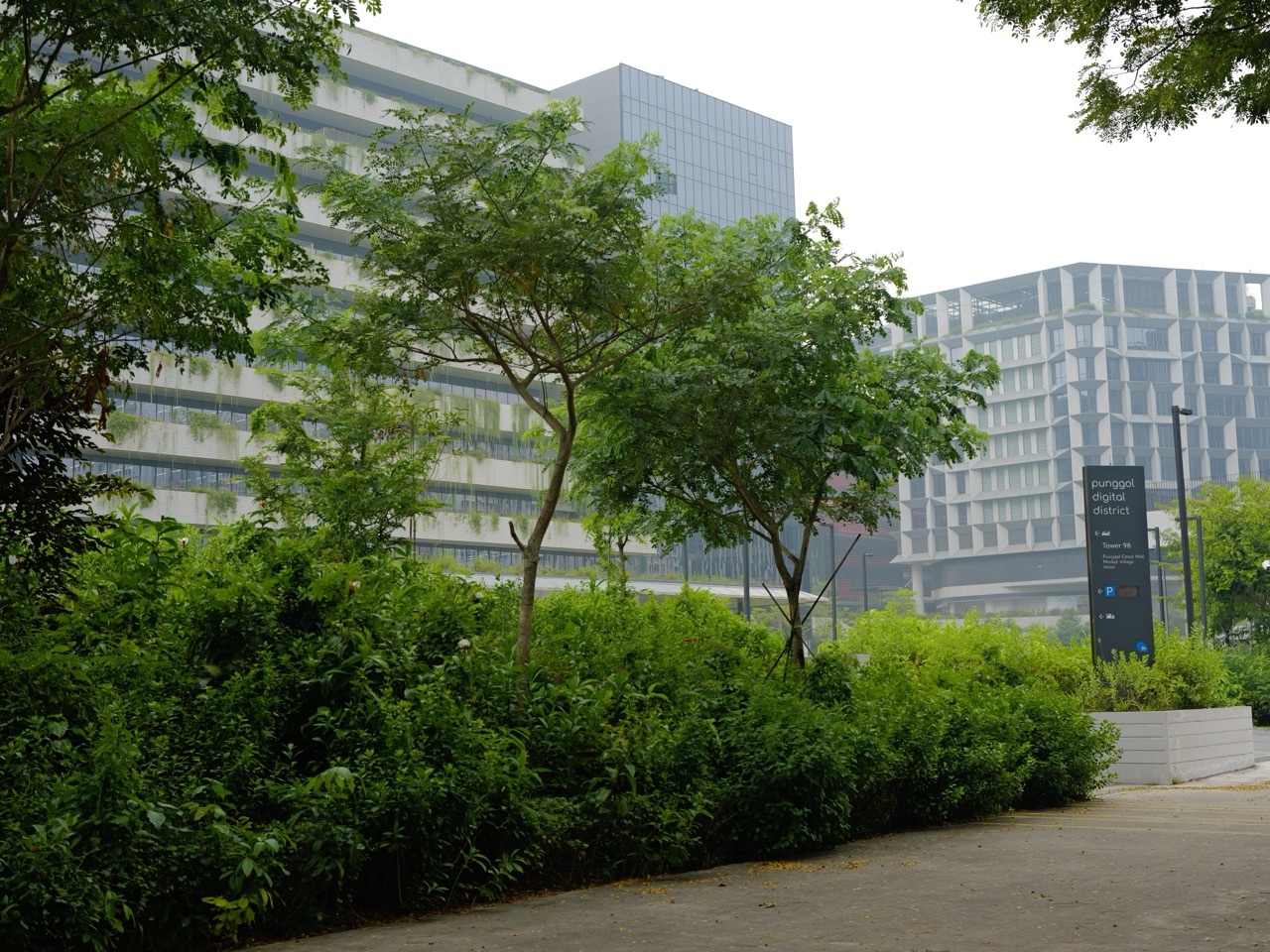
Punggol Digital District includes modern commercial and educational infrastructure, while nearby residential estates and shopping facilities are longstanding assets. Each property may have designated building owners, managing agents and maintenance contracts. A supplier might serve some of these customers legitimately, but its presence in the town does not give it access to electrical rooms, alarm panels or public equipment.
A founder should research actual property-management arrangements and verify tender opportunities before claiming a Punggol project pipeline. Some buildings may appoint national fire protection contractors under existing agreements. A small specialist could provide approved support or serve private clients elsewhere in Singapore. Commercial opportunity depends on competence and contracts, not simply the number of buildings visible from the waterway.
This is not the same as private security services
A guarding company might manage entry points, observe alarms or control visitor access, but its security agency licence does not automatically qualify it to design fire suppression systems or certify building fire safety works. Our Punggol licensed security agencies and access control guide covers those separate operations.
Similarly, our workplace safety, bizSAFE and WSH consulting guide concerns occupational risk assessment and related professional services. Fire protection interfaces with these industries, but it also has its own SCDF rules, design processes and professional roles. A credible business describes the correct scope rather than combine every safety-related service under one unsupported certificate.
What the Singapore Fire Code does
SCDF’s Fire Code sets requirements for fire safety in relevant building development and alteration works. The Code covers topics such as means of escape, fire-resistance, compartmentation, detection and alarms, firefighting equipment and other relevant systems. The applicable requirements depend on the occupancy and circumstances of the building.
A fire protection contractor should not use an outdated generic diagram as the sole basis for design. Qualified Persons and the responsible authorities determine the appropriate approved approach. Where a Code provision changes or the building undergoes alterations, the project may need technical review. A product that meets one technical standard does not automatically satisfy every aspect of a building’s fire protection design.
A Qualified Person has a defined design role
Projects involving regulated fire safety works generally require a Qualified Person with the appropriate professional registration and scope to prepare and submit relevant plans. The QP is not merely someone who understands how an alarm panel operates. Professional design responsibility is distinct from supplying the hardware or performing ordinary servicing.
A startup should establish who is designing the work and who will approve its execution. A competent contractor can provide technical information and implement authorised designs without claiming to be the QP when it is not. Clear roles prevent delays and protect the integrity of the submission. The commercial proposal must identify any professional design or review needed before installation begins.
Registered Inspectors are independent technical specialists
SCDF describes the Registered Inspector, or RI, as a qualified person registered under the Fire Safety Act to inspect fire safety works for compliance. Different categories cover architectural and mechanical-electrical aspects. Projects requiring a Temporary Fire Permit or Fire Safety Certificate need the appropriate inspection certificates from RIs under the relevant arrangements.
An installing contractor cannot simply print an official RI certificate for its own work without the necessary professional status. The owner must engage suitable inspectors, who assess the actual completed works and report relevant non-compliance. A company offering inspection coordination should explain who will perform and sign the inspection. Independence and genuine professional competence are central to the process.
Temporary Fire Permits and Fire Safety Certificates are not identical
SCDF’s application guidance distinguishes a Temporary Fire Permit, or TFP, from a Fire Safety Certificate, or FSC. A TFP may allow certain occupation or use after fire safety works are satisfactorily completed with only minor outstanding issues under defined conditions. An FSC reflects the relevant completed works and applicable approvals. The exact application needs the required documentation and inspections.
A founder should not market a new venue as fully fire-certified merely because construction appears finished. The owner and QP must follow the proper process. A supplier delivering one system should not claim the building has its final FSC without verification. Correct terminology matters when property managers schedule tenants, openings or events.
New installation and ongoing maintenance are separate contracts
A fire alarm supplier might install equipment during building construction. Another firm may later provide maintenance under a multi-year service agreement. The technical responsibilities and profit models differ. Installation can require significant project mobilisation, while maintenance involves repeated visits, response and replacement parts.
The buyer needs to know which contractor is accountable after handover. A poorly defined relationship can leave systems without support when warranties expire. A strong contract identifies accepted works, training, manuals and maintenance duties. A supplier that handles handover well can build trusted long-term relationships, but must not assume it automatically owns every future service contract.
Fire Safety Managers support building operations
SCDF requires specified buildings to appoint a certified Fire Safety Manager, or FSM. The conditions include certain public buildings by height, occupancy or area, relevant industrial buildings and specified other premises. For example, the published criteria include certain public buildings of nine or more storeys, an occupant load of at least 1,000 people, or a floor area of at least 5,000 square metres, subject to exemptions and the precise regulatory wording.
A founder cannot assume every small shop requires a dedicated full-time FSM. Nor should it assume that a building meeting the criteria can operate without the proper appointment. The actual owner and premises classification must be checked. A professionally competent FSM service can help relevant owners meet their duties, but needs genuine registration and practical availability.
FSM professional development continues after certification
SCDF’s current Fire Safety Manager page specifies a continuing professional development cycle from 1 January 2026 to 31 December 2028. A certified FSM generally needs thirty CPD points during the three-year cycle, while a Senior FSM requires forty under the stated rules. These requirements support continuing competence as building technology and regulations evolve.
A business providing FSM services should verify its personnel’s valid status and continuing professional development. A certificate earned long ago is not a reason to stop learning. Staff changes can affect a client’s ability to meet appointment obligations. A responsible service agreement plans backup arrangements and documentation rather than relying entirely on one person whose status may lapse.
A Fire Safety Manager is not the same as a fire engineer
An FSM helps manage the ongoing fire safety programme at premises under the relevant rules. A fire safety engineer or Qualified Person may carry out technical design and professional tasks involving systems and building changes. A Registered Inspector separately examines the completed fire safety works within the applicable professional scope.
These roles can interact but should not be casually exchanged. A property manager asking for a periodic fire drill or compliance programme may need a different service from one seeking major sprinkler redesign. The supplier should ask what outcome is required and engage the correct specialist. An attractive “all-in-one” price can conceal professional gaps if responsibilities are unclear.
Routine fire alarm maintenance has a specific purpose
A fire detection and alarm system must function when needed, without excessive false alarms or unreported faults. Maintenance can include relevant inspections and tests under the applicable standards and manufacturer procedures. Only competent, properly authorised people should perform technical work. Some systems may be integrated with lifts, ventilation or other building functions.
A contractor should not disconnect a troublesome alarm or change a safety interface simply to reduce complaints. The owner needs to understand the fault and obtain a proper solution. A service report should distinguish work completed from unresolved problems. Commercial reliability means maintaining the approved system, not creating a temporary illusion of normal operation.
Portable fire extinguishers require proper servicing
SCDF’s current portable extinguisher guidance refers to Singapore Standard SS 578. Owners or occupants should carry out at least monthly checks for obstruction, condition, readable instructions, approximate fullness and appropriate pressure indication. The servicing, maintenance and disposal of extinguishers can only be conducted by qualified trained personnel in suitable workshops of certified servicing companies.
This creates a distinct supplier niche. A shop might sell compliant extinguishers under appropriate conditions, while a certified service company maintains them. A generic technician should not claim that repainting or replacing a gauge is equivalent to proper servicing. The customer needs verifiable maintenance records and safe equipment appropriate to the premises.
The owner should not confuse visual checks with servicing
A staff member noticing that an extinguisher is unobstructed can provide useful routine information. That visual check is not automatically the same as the technical servicing required under applicable standards. The provider should explain who performs each task and how records are maintained.
A business offering equipment maintenance can support the owner with schedules and documented service. It should never issue a fictional service tag to make an inspection appear complete. A simple reminder system may reduce missed checks, but the physical equipment still needs attention from competent people. The business value comes from real readiness.
Sprinklers, pumps and suppression systems differ
Fire protection can involve sprinklers, hose reels, pumps, special suppression agents and other systems depending on the building’s design. These technologies have different operating mechanisms and technical requirements. A contractor knowledgeable about one type is not automatically qualified to design or maintain every other type.
The buyer should identify the system and the applicable code or maintenance standard. A supplier should work under the approved technical scope and ask appropriate specialists to handle unfamiliar equipment. The commercial danger is assuming that all safety systems are interchangeable because they share the word fire. Precise competence is essential to safe operations.
Fire protection involves building interfaces
A fire alarm may trigger other approved building responses, such as particular ventilation or lift functions under the building’s design. Changing one component can affect the wider system. A supplier should not alter an interface without understanding the professional design and testing requirements. The owner may need the QP and other responsible parties to assess proposed modifications.
Connected buildings can make integration convenient but also complex. The project should define how faults are detected and who responds. A general software developer cannot simply use an accessible interface to control life-safety equipment. Strong integration processes protect occupants and the legitimate operation of the building.
Fire alarm faults can create serious business disruption
Repeated false alarms can interrupt shopping, office work or building operations, but genuine alarms must not be ignored. A contractor needs a process for diagnosing problems without compromising protection. A customer who complains about frequent false alarms may need technical evaluation and appropriate corrective work.
The supplier should distinguish response to a fault from a guarantee that the entire system will never alarm incorrectly. A reliable contract may include escalation and a plan for temporary arrangements under the applicable rules. A building owner should not pressure workers to disable alarms for convenience. Safe continuity matters more than keeping a dashboard green.
Inspection records are valuable only when accurate
Facility teams may manage many fire protection assets across a building. A maintenance system can show locations, scheduled checks, completed work and unresolved defects. A software firm could help organise this information under an authorised agreement. But an automatically filled checklist is not evidence that the equipment was actually inspected.
The report needs to link observations and actions to the right device and time. If a component remains faulty, the system should show that status clearly. Responsible officers need a way to retrieve records during audits or incidents. A trustworthy record system can save management time without replacing qualified technical work.
Fire safety plans should reflect actual premises
A building’s fire safety procedures depend on layout, use, occupants and relevant regulatory requirements. A high-rise commercial building, a warehouse and a small retail unit can have different operating needs. An FSM or appropriate adviser should not paste a generic evacuation plan into every client file.
Procedures should explain who communicates, who helps coordinate required actions and what arrangements apply to persons with accessibility needs. Staff need appropriate training and familiarisation. A professionally written document becomes useful only when the people expected to implement it understand the plan. A business that delivers documents without follow-up may provide little actual safety value.
Training and drills are not the same as official approvals
A contractor may organise a safety awareness session or assist with a building exercise within its competence. This can help staff understand roles, but attendance does not grant an FSC, certify an alarm system or substitute for professional inspection. A training provider must be truthful about what the participants have learned and which credentials, if any, are awarded.
A building owner may commission different providers for design, inspection, FSM services and training. The supplier should help coordinate those roles without claiming authority it does not possess. Clear communication prevents confusion when tenants ask what the building’s certificates mean.
Public events can change fire safety considerations
A venue used for conferences, performances or product demonstrations may temporarily have different crowd or equipment arrangements. The event organiser and venue owner need to follow the relevant rules and permissions. A fire safety supplier may be asked to evaluate specific changes, but the assessment belongs with the appropriate authorised people.
An event contract should not allow exhibitors to block escape routes or modify safety systems for convenience. Temporary structures may require review. Good planning protects both the event and normal building operations. Our Punggol technology conferences and MICE suppliers guide addresses the broader event industry; fire protection is a technical responsibility within that context.
Procurement may involve developer, owner and tenant
During construction, a developer may appoint fire protection contractors under a main contract. After handover, the building owner or managing agent may commission maintenance, while tenants have responsibilities under their occupancy arrangements. A supplier needs to know who has authority to approve work and who will pay for it.
A tenant cannot necessarily instruct a contractor to alter a common building fire alarm network. The vendor should identify the responsible party before touching equipment. A commercial proposal that skips this step may cause disputes or unsafe work. Accurate stakeholder mapping is central to a professional service business.
Fire protection work can require specialist inspections
An installation or alteration may need a suitable Registered Inspector’s assessment before the relevant SCDF approval. The contractor must coordinate access and provide accurate documentation of completed works. A Registered Inspector should maintain professional integrity and report non-compliance appropriately.
A startup offering inspection logistics can help arrange records and appointments, but it should not represent itself as the technical RI unless it has the required registration. The professional boundary is not a sales obstacle to be evaded; it ensures independent scrutiny. Buyers benefit from understanding who designed, installed and inspected the system.
Equipment suppliers must document compatibility
Fire equipment can be safety-critical. A vendor should provide genuine specifications, compatible parts and the appropriate certificates or test evidence. A device that physically fits a panel or pipe is not automatically suitable under the approved design. The manufacturer and responsible professionals may set strict requirements.
A supplier should not buy unverified components simply to undercut a quote. It must know how changes are controlled and whether substitution requires further approval. Quality documentation may seem administratively expensive but can prevent serious problems when a fault occurs. Reliability is an important commercial differentiator.
Software should make unresolved fire risks visible
A facilities software company might offer maintenance schedules, fault registers and authorised reporting. It should use real records and avoid inventing test results. If a system reports a failed detector, the software must not automatically close the issue after a planned technician visit. The completion must be verified under the agreed process.
The vendor should protect building information and user credentials. A fire system’s configuration may be sensitive, and not every app developer should have direct control access. A reporting tool can provide value without connecting to life-safety controls. Keeping this boundary clear protects the supplier and its customers.
Connected systems require cybersecurity without bypassing safety
Modern buildings may use networks for monitoring alarms and equipment. Such connections can be helpful but create additional security and resilience questions. A fault or unauthorised change should not compromise approved life-safety functions. A contractor must coordinate technical changes with responsible professionals and building operators.
A cybersecurity vendor may assess relevant digital risks under its own lawful scope, while an appropriate fire protection firm handles physical systems. Neither should assume it can perform the other’s regulated tasks. A safe project defines responsibility and tests appropriate failure scenarios under authorised procedures.
Maintenance contracts need a defined asset list
A building may have many detectors, extinguishers, pumps and other items. A service company must know which assets are included and where they are located. Without an accurate register, staff may miss equipment or duplicate work. The customer also needs to understand which systems are maintained by another contractor.
A professional contract can include approved asset lists, service intervals, fault response and reporting. Changes should be documented when equipment is installed or removed. A vague “all fire equipment covered” clause may create disputes if the owner and supplier have different understandings. Precise scope supports safe maintenance and fair pricing.
Response time is not the same as safe restoration
A service provider may answer a fault call quickly but need time to diagnose, obtain parts and complete appropriate testing. The customer should understand acknowledgement, technician attendance, diagnosis and return-to-service as different measures. A supplier cannot responsibly guarantee that every complex failure will be solved within one hour.
An honest service-level agreement helps the building plan contingencies. It can state normal hours, emergency support and procedures for equipment that must remain out of service. Safety decisions belong with competent professionals. The lowest possible restoration time should not become an incentive to bypass necessary checks.
Staffing has to reflect real technical needs
A company may employ technicians for routine maintenance, engineers for design and qualified professionals for particular approvals or inspections. These roles require different competencies. A small firm cannot assume one untrained worker can carry out every task. Staff need continuing training as equipment and regulations change.
A business plan should include technical supervision, leave cover and support for difficult faults. Some activities may require specialist subcontractors. A firm that relies entirely on one engineer may struggle when that person is unavailable. Operational resilience is part of the commercial value offered to building owners.
Technician safety matters during maintenance
Fire systems can involve electrical equipment, pressure, access at height and other workplace hazards. Service workers need appropriate precautions and qualified procedures for actual tasks. A company should not encourage technicians to improvise unsafe work to meet a low contract price. The customer may also have site induction or permit-to-work requirements.
A responsible firm plans service windows and communicates with building management. It does not obstruct public access unnecessarily or leave equipment in an unsafe temporary condition. Good work protects both building occupants and staff. A safe operation may take longer than an aggressive sales promise, but it is more sustainable.
A hypothetical fire equipment maintenance model
Imagine a suitably qualified company with a contract portfolio generating S$25,000 monthly. Allocated technician wages and supervision cost S$12,000, equipment and compliant parts S$4,000, transport and customer support S$2,500, and insurance, training and administration S$3,000. That leaves S$3,500 contribution before wider overhead and tax.
These are invented teaching figures, not actual SCDF fees or Punggol maintenance rates. Several unexpected faults or a large parts replacement could change the margin. Contracts should specify whether unusual repairs are included or separately approved. A company should model ordinary and difficult months rather than assume all equipment remains fault-free.
A project installation has different cash flow
Installing a fire protection system during building construction may require equipment purchases and staff long before the final progress payment. Changes to approved designs or construction schedules can create extra work. A contractor should plan working capital and understand contract terms, retention and evidence needed for acceptance.
The business may be technically competent but still fail if it cannot finance the project. A large order is not automatically a healthy order. The founder should calculate cash outflows, supplier credit and possible delays. Quality and finance must be managed together because a cash shortage can disrupt work and affect the customer.
Lifecycle costs matter to building owners
Fire protection assets can remain installed for many years. The initial equipment price may be only a portion of cost, followed by testing, maintenance, replacement parts and upgrades. A lower-cost product with poor support availability may be expensive to maintain. Buyers should compare genuine technical specifications and lifecycle obligations.
A supplier can help owners understand expected support and the risks of obsolescence, but should not sell unnecessary replacements using fear. A technical review may show that maintenance or a limited upgrade is appropriate. Professional judgement creates long-term trust. The best solution is not always the newest catalogue item.
A fictional Punggol extinguisher service provider
A company wants to provide extinguisher maintenance to commercial clients. It confirms the relevant certified servicing workshop requirements and employs trained personnel. It obtains appropriate equipment, procedures and quality controls before advertising servicing. A small retail seller without such competence does not simply issue its own official service tags.
The firm records each item’s identity, condition and work performed. It explains when replacement or further attention is needed. Customers may value convenient collection and return, but must receive genuinely serviced equipment under the applicable standards. Accurate documentation and safe practice are the product.
A fictional commercial fire alarm contractor
A building manager needs changes to an existing alarm system. A qualified provider reviews the proposed work with the owner’s QP and relevant technical parties. The company confirms approved design and integration requirements before touching equipment. It also plans testing, handover and documentation after the work.
If the customer requests a shortcut that conflicts with the approved system, the contractor declines and explains the issue. This may cost the firm one immediate job, but protects occupants and professional reputation. A dependable contractor is not merely a hardware installer; it is a responsible participant in an approved building-safety process.
A fictional Fire Safety Manager consultancy
A company with an appropriately certified FSM offers services to eligible building owners. It determines the actual premises category and agreed role, verifies current CPD status and develops a practical operating plan. The service includes appropriate documentation, drills or reviews within scope. It does not represent routine management work as a substitute for an RI inspection or QP design.
The contract provides clear availability and backup arrangements. The owner understands which duties it retains. A small consultancy can build value through competent ongoing support without claiming to issue every SCDF certificate. Strong professional boundaries help the service remain sustainable.
A fictional fire safety documentation software startup
A Punggol software team creates a maintenance asset register for commercial buildings. It begins with fictional equipment and uses a simple process to track planned inspections, actual completion and unresolved faults. It does not digitally sign for absent technicians or generate a passing result without verification.
A facilities operator may find it easier to retrieve records and coordinate approved contractors. The software vendor protects sensitive site information and allows data export. It supplies a documentation tool, not a statutory fire safety inspection. A narrow product can support the industry without touching critical controls.
The 2027–2029 outlook: capability and professional development
The first part of the decade overlaps SCDF’s 2026–2028 FSM professional development cycle. An entrepreneur should check that its staff and business model meet current technical expectations. A company pursuing installation projects may need qualified design and inspection partners, while a maintenance firm needs the correct procedures and service capacity.
An honest startup can begin with one narrow service that it is competent to deliver. It should not treat a developing commercial district as a guaranteed contract. Build real references, records and customer confidence. The first milestone is correctly completed work, not a large public announcement of an imagined expansion.
The 2030–2033 outlook: improve service continuity
As a company grows, it may maintain more assets or provide monitoring support to additional sites. That creates scheduling, data, spare parts and staffing challenges. The business should keep technical standards current and maintain a reliable escalation process. A new connected system can add value only when it is secure and does not compromise established safety arrangements.
Growth across different building types should be gradual. A small shop and a large industrial facility may have very different requirements. The founder should avoid assuming that one solution or team configuration applies to all. The dates are planning checkpoints, not SCDF forecasts of fire protection spending in Punggol.
The 2034–2037 outlook: equipment and rules will change
By the end of the decade, buildings may use new alarm equipment, energy systems and connected controls. The fire protection industry will need to adapt while preserving suitable professional competence and documentation. Contractors should plan how to support older equipment and manage the transition to newer systems. Customers need accurate records that remain useful when suppliers change.
No one can guarantee that one maintenance technology or business model will be dominant in 2037. The enduring need is safe buildings and dependable accountability. A firm built around honest technical work and clear communication can adapt more readily than one promising effortless compliance.
Fire protection supplier checklist
- Who owns the building and may authorise changes to fire safety systems?
- Is the service QP design, installation, certified extinguisher servicing, FSM management, registered inspection or software support?
- Which SCDF rules and technical standards apply to the premises?
- Are the correct Qualified Persons and Registered Inspectors engaged where necessary?
- Does the building need a certified Fire Safety Manager, and is the appointment current?
- Are FSM continuing professional development requirements being met?
- Have relevant TFP or FSC approvals been obtained where required?
- Can the company prove competence and certification for the equipment it services?
- How are defects, unresolved faults and incidents escalated?
- Does the contract define asset lists, service intervals and actual tests?
- Are emergency response and spare parts realistically priced?
- Are connected systems protected from unauthorised access or changes?
- How are records preserved for the owner and future contractors?
- Can the business withstand delayed projects or unplanned equipment failures?
These questions help founders understand why fire protection is a professional industry with more than one supplier role. The customer needs safe, functioning systems and genuine evidence. A company can be commercially ambitious while respecting the people whose lives depend on those systems.
Frequently Asked Questions
Can a general handyman certify a building’s fire protection system?
No such general authority should be assumed. Fire safety works and statutory inspections may require Qualified Persons, SCDF-registered Registered Inspectors and other competent specialists. The appropriate role depends on the work.
Is a Fire Safety Manager required for every small shop?
No. SCDF specifies premises categories and thresholds, including certain large public and industrial buildings. The owner must check whether the actual premises meets the criteria.
Is a Fire Safety Certificate the same as a Temporary Fire Permit?
No. They are distinct SCDF processes with different conditions. Appropriate RI inspection certificates and other documents are required for projects that need them.
Can anyone service a portable fire extinguisher?
SCDF says servicing, maintenance and disposal should be performed by qualified trained persons in proper workshops of certified servicing companies under the relevant standard. Routine owner visual checks are different.
Does FSM certification remain valid forever without professional development?
No. SCDF has a continuing professional development framework, including thirty points per three-year cycle for certified FSMs under its current guidance, with different conditions for Senior FSMs.
Will fire protection suppliers automatically profit in Punggol through 2037?
No. Contracts, competence, professional requirements, equipment, staffing and competition affect outcomes. The decade is a planning horizon, not guaranteed work.
Your Next Step: choose one fire safety service and confirm who authorises it
Begin with an actual building owner or suitably appointed contractor. Define whether the job involves equipment supply, service, professional design, inspection or ongoing safety management. Verify the current SCDF rules and the required qualifications before quoting. Build a realistic plan for staff, testing, records, fault response and insurance. Do not market an unverified certificate or a monitoring system as universal protection. A valuable Punggol fire safety business grows by fulfilling precise professional responsibilities safely and consistently.
Official sources: SCDF Fire Safety Certificate and Temporary Fire Permit, SCDF Registered Inspector guidance, SCDF Fire Safety Manager requirements and CPD, SCDF portable fire extinguisher guidance, SCDF Fire Code technical standards and SCDF fire safety services information. Recheck current professional and premises-specific requirements before undertaking commercial fire safety work.


