
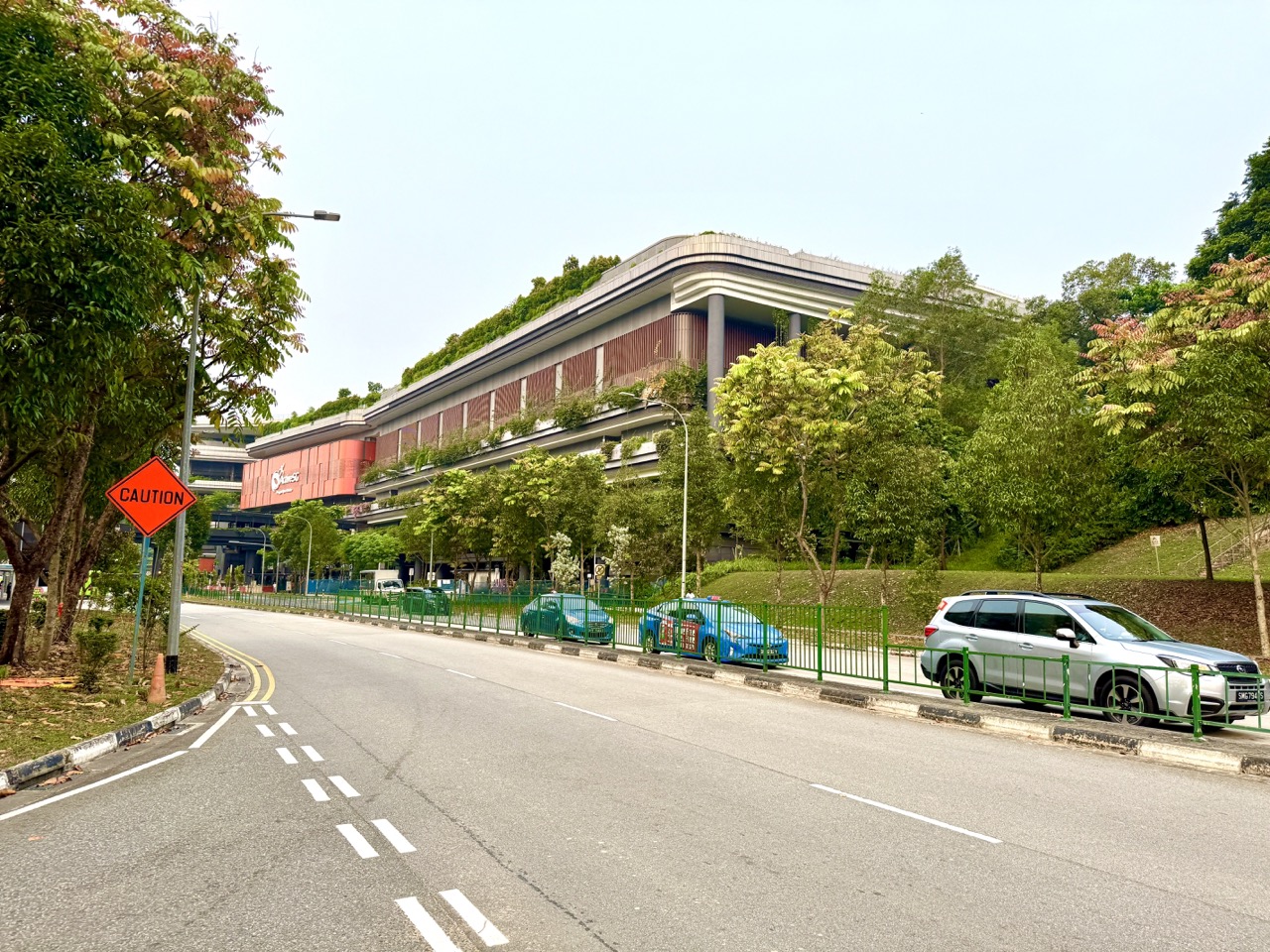
ActiveSG Punggol Sport Centre at 11 Sentul Crescent offers a useful case for learning journalism: a reporter may need to establish when the building opened, which facilities were actually bookable, what the public operator announced, how photographs should be labelled and whether an apparent eyewitness comment is genuine. The centre began selected public operations on 27 October 2026, while Sport Singapore’s official page schedules its formal opening for 22 November 2026. Those are different events. Writing “the entire centre and every pool opened on 27 October” would overstate the available evidence. Parents and students can learn how to report a community story through published primary sources and original writing at home, without entering restricted spaces, filming strangers or claiming to have witnessed an event they did not attend.
Good journalism begins with verification, accurate attribution, honest quotation, context, independence, fairness, harm reduction and transparent correction. Reuters’ published journalistic standards prioritise accuracy over speed, truthful sourcing, non-fabrication and corrections. The Associated Press’s reporting principles likewise distinguish fact-based attribution, original work, verified internet material and ethical handling of quotations and images. The lesson is different from merely deciding whether an online claim is true: the journalist must assemble a coherent and useful report from evidence, explain what is confirmed, make fair efforts to hear relevant viewpoints and take responsibility for the published result. This guide includes original sample leads, a mock editorial workflow, interview planning and specific protections for minors, without inventing quotes or publishing fictional reports as real news.
- Real news anchor: Punggol Sport Centre, 11 Sentul Crescent; selected soft launch began 27 October, with formal event announced for 22 November 2026.
- First news task: define exactly what has happened, what remains planned, and why the reader needs to know.
- Six questions: who, what, when, where, why and how; confirm what can actually be answered.
- Sources: distinguish the official operator notice, dated news coverage, direct observation and second-hand social posts.
- Attribution: identify who supplied information rather than write “sources say” when only one document was used.
- Quotes: do not invent, change, selectively distort or attribute fictional statements to real people.
- Photos: include accurate date and location; distinguish an artist’s impression from a documentary photograph.
- Human subjects: interviews require appropriate consent and safeguarding; do not question children or film venue users without authorisation.
- Corrections: state what was wrong and what has been fixed rather than silently leaving readers misinformed.
- This guide: reporting structure, examples, editorial checklists, source literacy, ethical dilemmas and a four-week journalism project.
Definition lock: journalism is a public account built from evidence
Journalism gathers, checks, explains and communicates information about matters relevant to an audience. It differs from pure opinion, promotional copy and fictional storytelling in how it handles factual claims and sources. An article about a new sports centre should tell readers what actually happened, when, where and under which conditions. It should not use a building photo merely as decoration for unsupported announcements. The journalist is responsible for the whole story, including headline, image and captions, not only its individual sentences. Useful reporting allows the reader to understand what is confirmed and where uncertainty remains.
How this differs from media literacy for readers
Media literacy teaches people how to evaluate information they encounter. Journalism adds the responsibility of producing original reporting that others may rely on. A student might learn to detect an outdated opening poster, but a journalist must decide how to research the dates, identify sources, write an accurate lead and publish a correction if necessary. The distinction matters because a good critic can still be a poor reporter if they invent quotes or hide missing evidence. This guide follows the production workflow: assignment, verification, reporting, writing, editing, publication and accountability. It should not be mistaken for a licence to investigate private sports users without permission.
Why a Punggol opening contains several news stories
The sport centre’s public life did not begin with one all-encompassing event. Construction had an earlier timeline, selected facilities entered a soft launch in October, the complimentary gym promotion had an end date, and a formal opening was announced for November. A journalist could report each of these as a distinct development. Trouble begins when an attractive headline collapses them into one sentence suggesting every facility is already open. Define the actual news event before writing. A reader planning a court booking needs different information from someone studying the project’s history, and the journalist should not make either group infer the practical facts.

The assignment needs one clear question
A reporter should be able to describe the assignment in one sentence: “What selected activities could residents use during the opening phase?” or “What has Sport Singapore announced for the formal opening?” Such a question determines which sources are relevant. An article trying simultaneously to explain every engineering feature, transport route, historical event and sport price may become unfocused. Write the primary news question first, then list supporting questions that matter to readers. News judgement begins with deciding what is timely and consequential, not with collecting the greatest possible number of loosely related search results.
The five Ws and one H
Who, what, when, where, why and how are a traditional framework for organising news information. For a Punggol opening story, who may refer to the operator or users affected; what is the opening or service change; when is the date; where is the exact address; why concerns the stated purpose or relevance; and how describes the access arrangements. Not every source answers all six questions. Do not fill a gap with a guess. A good lead may include only the most critical elements while the following paragraphs establish the rest. The framework helps journalists avoid overlooking an essential fact, not manufacture a complete narrative from limited evidence.
Start with an accurate news lead
An original sample lead could read: “Punggol Sport Centre began selected public sports operations in late October 2026 ahead of a formal opening scheduled for 22 November, with access to individual facilities subject to their current ActiveSG listings.” This is based on dated public information and avoids claiming that every amenity opened simultaneously. A reporter should check the exact source and date before publication. The first sentence answers the most useful reader question, while later paragraphs can explain what was offered and what remains unverified. A lead should communicate verified news, not serve as a suspenseful teaser that withholds the actual development.
A weak lead may sound lively but say little
“Punggol residents are absolutely thrilled by an unbelievable new sporting paradise!” is not an acceptable factual lead without evidence about resident sentiment and the superlative claim. It resembles promotional opinion rather than verified news. A better opening gives the event, timing and scope. Colourful prose can appear in an appropriate feature or review, but should not replace the basic facts. Ask what a reader can actually use from the sentence. Does it identify a venue? Does it establish what happened? If not, revise. Journalism earns attention through relevance and clarity, not only exaggerated adjectives.
The inverted pyramid places critical information first
The inverted-pyramid style starts with the most important verified information, then adds relevant details and background in descending order of immediate importance. A local facility story might lead with the operational change, follow with specific access conditions and later provide planning background. This structure allows a reader to understand the main point quickly. It is not the only valid form of journalism; features and investigations may use different narrative approaches. But for practical opening information, it helps avoid burying the key date under paragraphs of scenery. Parents should be able to find the answer they need without reading every line.
A nut paragraph explains why it matters
In a longer feature, a nut paragraph clarifies the main point and significance of the article after the opening scene. For a Punggol story, it might explain that phased opening means residents must check each sport rather than assuming the completed complex is fully operational. The paragraph connects the news to practical decisions. It should not assert that every family will benefit equally or that the building has already changed population health. Those are broader claims requiring evidence. A useful explanation identifies what the news affects and why the reader should care, while distinguishing observed facts from policy aspirations.
Official announcements are primary sources for announcements
Sport Singapore’s own event listing is a strong source for what the agency has officially announced about the 22 November opening. That does not make it a documentary record of an event that was still in the future on 4 November. Similarly, an ActiveSG booking page is relevant to an individual product’s current access conditions. Journalists should identify the precise claim and choose a source that can establish it. A public agency’s press release may accurately describe its plans while leaving independent questions about outcomes unanswered. An authoritative announcement and evidence that the announced event happened are not interchangeable.
Press releases still require editorial judgement
A press release is written to communicate an organisation’s information and perspective. It may be a useful source for a date, programme or quotation, but an independent journalist should verify and attribute the material, identify relevant context and avoid republishing promotional language as an impartial report. The Associated Press’s standards explicitly distinguish independent reporting from copying a release wholesale. Students can practise rewriting a fictional opening notice into a clear factual summary, keeping the dates and material conditions. The educational objective is understanding the difference between what an organisation wants to say and what readers need independently explained.
Dated news reporting can add context
A dated report from a recognisable newsroom may describe what journalists saw or what the operator told them during the soft launch. It can support background and chronology when its sourcing is clear. But the story’s publication date and the event date should be separately identified. A report written on 29 October about a 27 October event must not be described as an announcement made on 29 October simply because that date appears above the headline. Journalists should read the body and identify the underlying source rather than rely on the search-result snippet alone. Context determines what the source proves.
Copied stories do not create independent confirmation
Three sites repeating the same press release do not necessarily provide three independent observations. A student preparing a school report should trace important claims to their underlying origin. If one newsroom quotes an official statement and another copies the quotation, the underlying evidence may still be one announcement. Independent corroboration means finding genuinely distinct support where appropriate, such as an official record and a reporter’s independently documented visit. Do not inflate the number of sources by counting copies as separate witnesses. The more consequential the claim, the more important it becomes to understand where the information actually originated.
A first-hand account still has limits
A person who visits the Sport Centre may describe what they personally saw and experienced. That can be valuable, but it does not automatically establish conditions in every hall or at every time. Someone seeing the exterior of a swimming pool cannot prove that public swim passes were available. Someone playing a confirmed court slot can describe that session, but not generalise about the permanent availability of all courts. A journalist should ask exactly what the witness observed and when. Direct experience is a strong source for some facts, not a universal authority on every related issue.
Never invent an eyewitness visit
A student writing from official pages at home must not claim “I visited the new hall and watched hundreds of players” unless that actually happened. A descriptive scene can be written as clearly labelled fiction or based on genuine authorised observation, but a news report cannot quietly blend the two. Reuters and AP standards reject fabricated reporting and misleading datelines. Identify the actual reporting method, such as desk research of public sources. An honest sentence beginning “According to Sport Singapore…” is better than a fake eyewitness paragraph intended to sound vivid. The audience deserves to know how the information was obtained.
Facts, analysis and opinion need clear boundaries
A factual report states what can be verified. Analysis may explain the implications and uncertainties of those facts. Opinion argues for a position and should be labelled appropriately. For example, “The official event is scheduled for 22 November” is factual; “phased opening may reduce confusion if clearly communicated” is analysis; “I prefer later evening opening hours” is opinion. A journalist may write different types of material, but should not conceal the distinction. Readers can evaluate an argument more fairly when they know whether a sentence reports an event, interprets evidence or expresses a personal preference.
A quotation must have a real source
Direct quotation marks mean the writer is attributing particular words to a speaker or document. Reuters and AP standards require care not to fabricate or distort quotations. Do not write a fictional teenager saying “This is the best sports centre ever” and present it as an actual interview. If a student wishes to practise quotation style, use a clearly labelled fictional exercise or quote a short accurately transcribed public statement with proper attribution. Readers should be able to identify where the words came from. A quotation adds value only when it is genuine and relevant, not because the article seems more human with dialogue.
Paraphrase is not permission to change meaning
A journalist may summarise what a source said in their own words, but the summary must preserve the substance and context. If an official says selected courts are available, paraphrasing that as “the full centre is operating” would exaggerate the statement. A paraphrase also requires attribution when the information came from another source. Do not hide dependence on a document by removing quotation marks and presenting the idea as original reporting. Teach students to ask whether the paraphrase is accurate, whether an essential qualification was lost and whether the source can be identified. Clear writing should not come at the expense of truth.
Avoid quotation fragments that reverse meaning
A speaker might say, “The new facilities are promising, but public access to some areas remains limited.” Quoting only “The new facilities are promising” may distort the intended message if the limitation is central. Reuters and AP guidance emphasises keeping quotes in context. Students should practise comparing a short excerpt with the complete source and asking whether readers would form a materially different impression. If a quotation cannot be used fairly within the available length, an accurate attributed paraphrase may be better. Selective quotation is a reporting choice with ethical consequences, not merely a writing trick.
Interviews begin with consent and purpose
A genuine interview should have a clear reason. A reporter might seek to understand how a participant plans a family sport outing, but they must explain the context and respect the person’s willingness to participate. An ordinary blogger cannot assume that every visitor entering a publicly funded building agrees to interviews or recording. For children, additional safeguarding and parental or school consent considerations may apply. Family practice can use voluntary adult participants or fictional scripts instead. The purpose of an interview is obtaining relevant information ethically, not pressuring somebody into providing a useful quote for a deadline.
Open questions can reveal more than leading questions
“What was confusing about your first booking?” allows a participant to describe their own experience. “The system was terrible, wasn’t it?” suggests the answer and can distort the interview. Students should prepare questions that invite accurate explanations, then ask appropriate follow-ups. Some narrow factual questions are also necessary, such as confirming a date or exact court name. A good interviewer chooses the method to fit the information sought. They do not assume every response is evidence of a system-wide problem. A person may have misunderstood a booking, and a responsible reporter should check the record before publishing a claim about the operator.
Consent to speak is different from consent to publish
A person may willingly answer a casual question but not expect their full name, image or private family circumstances to appear online. Journalists follow professional ground rules and relevant legal and ethical responsibilities; school interview exercises should use appropriate permissions and teacher guidance. The safe default for family learning is to avoid publishing identifiable personal information. A child should not be asked to disclose health conditions or family finances for a sport article. Even accurate information can cause harm if collected or shared carelessly. Ethical reporting considers necessity, consent and potential consequences throughout the process.
Never make children solve adult reporting disputes
A student might hear adults argue about a court allocation or facility closure. It is not appropriate to assign the child to question the adults, film the confrontation or decide who is telling the truth. The immediate priority is safety and the venue’s official process. For a journalism exercise, use public records and a fictional dispute rather than expose a child to hostile interactions. Reporting skill includes judgement about when not to approach a source. An attractive story does not justify risk, and an independent educational guide should not encourage amateur confrontation in a shared sporting space.
What ‘on the record’ means
Professional journalism distinguishes statements available for attribution from information shared under other ground rules. The Associated Press sets out carefully defined practices around on-record, background and off-record arrangements. These should be negotiated clearly before an interview, not assumed retroactively by a child reporter. An informal school exercise is best conducted openly and with clear consent about whether any words will be quoted. Do not promise anonymity casually if the student’s platform cannot protect it. Complex confidential sourcing belongs to trained journalism practice with appropriate editorial oversight, rather than a quick sports-centre questionnaire.
Anonymous sourcing is not a shortcut
A claim attributed only to “a parent who did not want to be named” may sound compelling, but anonymity can make verification harder. Professional news organisations apply strict conditions to anonymous sourcing because readers need confidence in credibility and context. A student should not invent an anonymous witness or use anonymity to publish a serious allegation without corroboration. For ordinary local education, rely on public official sources or explicitly fictional examples. If a genuine concern requires confidentiality or protection, seek appropriate qualified guidance rather than improvise a school journalism investigation. Accuracy and potential harm must be considered together.
A media release is not evidence of public attendance
An official invitation may say a carnival or try-out event will take place on 22 November. Before that date, it cannot establish how many people attended, what the weather was or which activities were completed. After the event, a journalist would need actual reports, observations or records to describe what happened. This is an important tense lesson. A report that says “the event attracted 10,000 visitors” before the event occurs is fabricated unless it is explicitly discussing a forecast with proper attribution. Future announcements have value as news about plans, but should not be rewritten as past events.
An opening promotion needs its end date
The selected Punggol soft launch included a temporary complimentary gym-entry period that contemporary reporting said ended on 31 October 2026. An article published after that date should not describe it as a current offer. A journalist must carry the relevant time limitation into the headline, body and any social preview. Leaving out the date can mislead a family even when the original promotional fact was true. Time-sensitive service news needs regular verification. When a later 22 November event notice announces free access for that particular day, it is a distinct announced offer, not proof that entry remains free every day between events.
Headlines must not promise more than the article proves

A headline such as “Every Punggol Pool Open Now” would need specific verified evidence for each facility and date. If the body merely says the building’s pools were shown in a video, the headline overstates the story. A responsible title names the actual development: “Punggol Sport Centre plans 22 November formal opening” or “Selected Punggol courts enter soft launch.” The headline is part of the reporting and needs the same accuracy as the paragraphs. Readers who see only the title in a search result deserve a truthful summary rather than a misleading invitation to click.
Sports results require an authoritative record
A reporter covering a genuine competition must verify the participants, score, category and event conditions through reliable results or direct authorised observation. A casual photograph of a scoreboard may show a moment before the final result. A social post celebrating a player may omit the event name or date. Students can practise the reporting structure using invented results clearly labelled fictional, but not publish them as actual Punggol fixtures. A score becomes meaningful when the reporter knows which match it belongs to, whether it is final and who officially recorded it. Precision prevents mistaken victories from becoming local misinformation.
How to write a factual sports result
An original classroom example might read: “In a fictional school doubles final, Team Blue won 21–18 after a close opening game.” That sentence is usable as an exercise because it announces its fictional status. For real reporting, the writer must identify the competition, players, complete relevant score and authoritative source. The coach’s emotional reaction may add context if genuinely obtained and permissioned, but cannot replace verified match facts. A report should lead with the result when that is the most important news and then provide relevant context. The structure can be practised without pretending a fictional match occurred at Punggol.
Never write a composite character into straight news
A writer may want a convenient “typical Punggol parent” who combines several people’s experiences. That may be acceptable in clearly labelled fiction or some forms of illustrative educational writing, but a factual news report must not quietly present a composite as a real interview subject. Reuters and AP standards reject fabrication. Use documented people with appropriate consent, or describe general findings without inventing personal scenes. If no suitable interview is available, the journalist can still write a source-based explanatory article with transparent methodology. An honest report without a personal quote is better than a fabricated human-interest paragraph.
Photographs need exact place and date
An original picture of a neighbourhood badminton court near Punggol Playground 295 is not an image of the ActiveSG indoor Sport Hall. If a publisher uses it as wider Punggol sport context, the caption should say so clearly. Likewise, a photograph of One Punggol community hub should not be presented as the Sport Centre’s main entrance. Exact image attribution protects readers from false associations. A journalistic caption identifies what is visible, where it was photographed, approximately when and any relevant distinction. The picture should support the article, not silently add an unsupported claim.
Artist impressions are not documentary photographs
A computer rendering of a future swimming complex may be useful for explaining planned architecture, but it is not proof that swimmers were admitted at the time the rendering was made. Journalists should label such visuals as artist’s impressions or illustrations. If an image is AI-generated or substantially altered, it should not be passed off as an authentic event photograph. AP and Reuters both emphasise that news images must accurately represent reality. Students can compare a rendering and an original dated exterior image to identify their different purposes, without assuming one is dishonest merely because it is not a photograph.
Photojournalism rules can differ from ordinary art
An artist may change colours or combine imagined scenes to express an idea. Photojournalism has stricter documentary obligations; edits that materially alter what happened can mislead viewers. Ordinary cropping or technical adjustments still require care because they may change context. A news photograph is evidence, not simply a decorative asset. A student should not remove a queue, add a crowd or replace a sky to make an opening event look more exciting. The safer exercise is to use an appropriately captioned original image without substantive manipulation, and explain what it does and does not establish about the story.
Filming inside ActiveSG has its own rules
A desire to make a video report does not automatically confer filming rights. SportSG’s published regulations restrict unauthorised photography and filming within facilities, and child safeguarding must be considered. A reporter should seek appropriate permissions and follow the operator’s conditions. For family journalism education, use public written sources and original non-intrusive exterior images where lawfully taken. No child should be told to film other players, gyms, changing rooms or an argument simply to make the project more authentic. Reporting ethics includes respecting the setting and the people who have come to use it.
Do not expose a booking QR code
A booking screenshot can contain identifying account or transaction details. A journalist investigating a system should not publish such material merely because it appears relevant. Mask or omit private information where lawful and necessary, use authorised verification and explain only the facts needed by readers. Students should never ask someone for their Singpass credentials or bank confirmation to complete a school story. A public-interest question about booking rules can usually be answered from official policy and safely fictional examples. Protecting privacy is part of responsible information handling, not a barrier to learning how digital services work.
Balance is not giving every claim equal credibility
Fairness requires representing relevant perspectives accurately and giving people a reasonable opportunity to respond to significant criticism. It does not mean that an unsupported rumour deserves the same evidentiary weight as a verified operator record. When a source claims a court was cancelled unfairly, the journalist should check the transaction and seek relevant comment through appropriate channels before presenting a serious accusation. A student should not write that every side is equally correct simply to appear balanced. Evidence, context and proportionality matter. Good reporting is open to multiple views without abandoning standards of verification.
A right of reply is relevant to serious criticism
When reporting an allegation that could harm an identifiable person or organisation, professional standards emphasise fair efforts to obtain an appropriate response. This is different from asking a staff member to comment on a harmless family anecdote. A student should not investigate accusations involving safeguarding, employment or misconduct without qualified adult guidance. Those subjects may have legal, privacy and safety implications. For introductory journalism, use public policy explanations or fictional cases instead. The principle is that readers should not receive a one-sided serious allegation presented as settled fact without adequate verification and relevant opportunity for reply.
Attribution should be visible in the prose
“According to Sport Singapore’s official event listing…” tells the reader whose information is being relied upon. “According to a 29 October 2026 news report…” identifies a different source and its date. “According to several credible sources” is misleading if the writer has looked at only one document or copies of it. Attribution can be concise and still useful. A list of links at the bottom does not always show which source supports which claim. Teach learners to connect the important factual sentence to the specific source it derives from, especially when different sources concern different stages of the same project.
How to check proper nouns
Punggol Sport Centre, SAFRA Punggol, One Punggol and Sam Kee LRT are related geographically but not identical institutions. A mistake in the name can send readers to the wrong building or operator. Before publication, check the exact venue title, street address and relevant floor or sport product against current official information. Proper nouns also include names of interviewees, coaches, agencies and competitions, which must be spelled correctly. A newsroom fact-checking routine often catches errors that sound small but have large practical consequences. For local journalism, accuracy with a place name is not a minor cosmetic detail.
Date checking should be a separate edit
During the final read, highlight every date and ask what event it represents. Was 27 October the selected soft launch or the formal opening? Was 31 October the final day of a specific promotion? Is 22 November still scheduled rather than completed on the article’s publication date? This process prevents a common error in rapidly published local news: a future event being written in past tense. A correct calendar date can still be misleading if attached to the wrong noun. A date audit should cover headline, lead, body, photo captions and any embedded promotional graphics.
A reporter should not assume a price from memory
SportSG rates can depend on facility, user eligibility, peak period and the product selected. A journalist must quote the correct dated published category rather than repeat a familiar price for a different sport. If the article’s purpose is opening status and exact current price is not confirmed, direct readers to the official rate table and checkout. The worst approach is inventing a precise fee to make the story appear helpful. Numbers increase a reader’s confidence even when wrong, so they deserve additional scrutiny. Practical news becomes useful when facts are reliable, not merely detailed.
Newsworthiness is not the same as enthusiasm
A new regional sports centre may be newsworthy because it changes available community amenities, has a defined opening milestone and affects residents’ planning. A small equipment colour change may be less important unless it carries a wider safety or service consequence. Journalists decide what matters based on audience relevance, significance, timeliness and credible evidence. The goal is not to praise every new development or cover every rumour that creates attention. A good local reporter helps readers use information, make decisions and understand their neighbourhood. News judgement should be explained rather than hidden behind sensational language.
The difference between news, guide and review
A news report describes a recent verified development. A service guide explains how to perform a task, such as checking a booking. A review gives an identified evaluation based on suitable direct experience and clear limitations. These forms can coexist on a local website but should not be disguised as one another. A review written from an artist’s rendering without visiting should not pretend to be an eyewitness account. A guide may include official booking links without presenting a new event as breaking news. Labeling the content helps readers understand whether they are receiving facts, instructions or personal judgement.
What a useful correction looks like
Suppose an article incorrectly states that the full swimming complex opened on 27 October when only selected facilities had begun operating. A proper correction should explain the error, state the verified revised information and update the article’s misleading headline or caption if necessary. Reuters and AP standards emphasise transparent corrections, not simply deleting a sentence without acknowledging that readers saw it. An organisation may have its own correction policies, but the ethical principle is clear: the public should be able to understand what changed. Treating mistakes responsibly builds more trust than pretending they never happened.
An update is not always a correction
An article published before a formal opening may accurately say the event is scheduled. After the event occurs, new verified information may warrant an update even if the original article was not wrong. A correction, by contrast, addresses an actual error. The two should be labelled appropriately. For example, a forecast visitor count later replaced by an actual confirmed number is an update if the original was clearly a forecast. Calling a factual error a harmless update can hide accountability. A student should learn to maintain a clear record of what was known and when, especially for time-sensitive community information.
Journalism and SEO should not conflict with truth
A searchable title and useful headings can help readers find information, but repeating an inaccurate high-traffic phrase does not make it true. A site should not promise “free gym forever” to attract visits when the relevant promotion has expired. Nor should it bury the answer beneath keyword-heavy introductions. Good digital publishing makes the first paragraphs immediately helpful, then expands with evidence, explanation and practical next steps. The reader’s question should guide the structure. A search engine may change its ranking, but the publisher’s obligation to accuracy and clarity remains. Editorial credibility is a stronger long-term aim than a dramatic misleading snippet.
An internal link should genuinely help
A Punggol opening article can link to a separate transport guide, a court-ballot troubleshooting article or the SportSG official booking service when those answers help the reader. Links should be descriptive and relevant, rather than inserted merely to inflate the number on the page. A reader checking whether a swimming pool is open does not benefit from an unrelated link to a basketball training drill. Journalism should respect the next action the audience needs to take. Good internal linking is part of navigation, not a substitute for delivering the main information in the current article.
Avoid fabricated interviews when a source is unavailable
A student may want a quote from a parent but have no willing interview subject. They must not invent one and present it as reporting. The alternatives are straightforward: write a desk-based source article, use an explicitly fictional classroom exercise or find an appropriate publicly available statement with attribution. A news report can be valuable without a personal quote. Never use a fabricated name, age or school to make the story more emotional. The boundary between imaginative writing and news is essential because readers rely on news to describe actual people and events.
What an original newsroom exercise can use
A teacher can give students three fictional documents: an event invitation, an operator notice and a witness note. All are clearly labelled classroom materials. The learner identifies what each source supports, writes a factual lead and flags any contradiction. This permits realistic practice without real account data or public interviews. The teacher can introduce one error, such as a mismatched opening date, and ask the student to catch it. The assessment concerns verification and clear writing. Students should not publish the fabricated documents as if they were authentic SportSG communications, because that could mislead real visitors.
A first mock Punggol news brief
Original educational news-style brief: “Sport Singapore has scheduled the formal opening of Punggol Sport Centre at 11 Sentul Crescent for 22 November 2026. Selected parts of the complex began operating in late October. Residents intending to use a particular court or other amenity should check the current official ActiveSG listing rather than assume every facility is already open.” This is a source-based sample, not an eyewitness article. It communicates what is known and identifies the relevant reader action. Ask students how each sentence could be checked and what further information would require separate reporting. Do not add an attendance figure or fictitious quotation.
A second mock report about a fictional game
Clearly fictional student exercise: “In a friendly fictional doubles match, Team Green defeated Team Blue after a final rally of six returns. The result was recorded on the classroom’s invented scoreboard.” This sentence is not a report of an actual local competition. Students can use it to practise who, what and how without risking real falsehoods. A more developed article would need a credible actual result, event details and fair context before being published as news. The key lesson is that a plausible-looking paragraph is not enough; journalistic identity comes from truthful reporting of reality.
The interview that should not happen
Imagine a child is visibly distressed after a public sports dispute. A student reporter might believe the emotion makes a compelling story. Yet approaching the child with a camera, asking for identifying details or publishing the moment could cause harm. The better response is not to turn vulnerability into content. Respect privacy, allow appropriate adults or operators to handle the situation, and seek school guidance for any educational discussion. Professional journalism considers public interest, necessity, consent and the impact of publication. Not every observable event belongs in a news story, and a refusal to record can be an ethical editorial decision.
A source log makes reporting traceable
Before writing, a student can create a simple source log with four columns: claim, original source, source date and verification status. “Formal opening scheduled for 22 November” could link to SportSG’s official event page. “Selected soft launch in late October” could link to a dated report and available operator notices. A proposed claim about public pool access should remain unverified until the actual relevant listing supports it. This exercise reduces accidental mixing of facts. It also makes corrections easier because the editor can see which source was intended to support each sentence. No private source records or credentials are needed for the classroom model.
Use direct links rather than vague references

If an article says “according to the authorities,” readers may struggle to locate the underlying information. Name the relevant agency and link to a suitable page where possible. A current booking question should point to the operator, while a historical planning claim may point to a dated parliamentary reply. The source should match the point. A generic homepage is sometimes useful for navigation but not a substitute for citing the exact document that provides the fact. Thoughtful linking helps the reader verify the claim and update their understanding when conditions change.
Avoid copying long passages from another outlet
Journalists should write original descriptions while attributing facts learned from others. Copying an entire news article or lengthy copyrighted passage into an educational blog is not appropriate simply because the information is publicly accessible. Summarise in your own words, quote only short relevant portions when justified and link to the original work. The reporting standard is not merely avoiding plagiarism software; it is honest credit and independent understanding. Students who copy a story without checking it may also reproduce its mistakes. Original explanatory writing helps reveal whether the learner actually understands the source.
Editorial review has more than one pass
A useful editing sequence checks structure first, then factual accuracy, source attribution, language, image captions, privacy and links. The headline should match the lead, and the conclusion should not introduce an unsupported new claim. Read dates and names again separately. A child may be surprised that editing is not only correcting spelling. In journalism, errors in a venue, quote or access condition may matter far more than an awkward adjective. A disciplined final check makes the article clearer and reduces preventable harm. The reviewer should be willing to delay publication if an essential claim cannot be verified.
Publication time changes the truth of some sentences
“The formal opening is scheduled for 22 November 2026” is appropriate on 4 November under the current official announcement. After 22 November, readers will want to know whether the event actually occurred and what services subsequently became available. A static article can become outdated without having been false when written. Date the reporting and review operational claims when updating. Avoid using timeless language for temporary offers, maintenance closures or booking windows. The reader should know whether the page is a historical snapshot or current service advice. Journalism’s commitment to accuracy continues after the first publication.
A respectful correction to a community rumour
A neighbour may forward an image claiming every pool is open. The journalist should verify the specific facility status, identify the original source and explain what the image actually shows. Avoid accusing the neighbour of deliberate deception without evidence. A concise correction might say that the photograph depicts a pool but the official current admission listing is what determines public access. This approach helps the community without turning an ordinary error into a hostile argument. Accuracy and empathy are compatible. A correction can be firm about facts while remaining cautious about another person’s intentions.
What a student can learn from two contrasting leads
Compare “The spectacular new Punggol sports complex changes everything!” with “Selected Punggol Sport Centre facilities entered a soft launch before the scheduled 22 November formal opening.” The second provides a factual event and timeframe; the first relies on an unsupported absolute claim. Ask students which sentence answers a reader’s likely questions and what evidence each would require. Then let them revise a headline or introductory paragraph to improve specificity. This teaches news judgement and source discipline without requiring actual reporting on strangers. The strongest rewrite makes the reader better informed, not simply more excited.
A school journalism club can use clear boundaries
A school club may produce newsletters or student announcements under teacher oversight. Sports events provide topics that are familiar, but student reporters should follow school rules on images, interviews, personal information and publication. Do not assume that attending an event gives unrestricted permission to publish classmates’ faces or private comments. Verify scores with the relevant organisers and attribute genuine statements. A written preview of a future school match has different sourcing from a post-match report. The classroom can teach professional habits on a modest scale without imitating the most intrusive parts of field reporting.
A four-week journalism learning plan
Week one: choose one factual local question and trace claims to original public sources. Week two: build a source log, distinguish event dates from publication dates, and write an accurate news lead. Week three: practise ethical attribution, quotation, caption writing and interview planning with clearly fictional material. Week four: assemble a short source-based report, review its claims and write a model correction for an intentionally planted classroom error. No live sports booking, filming or private interviews are required. The outcome is a learner who can explain how each major sentence was verified and why the public can trust the presentation.
Common journalism mistakes to avoid
Do not confuse the soft launch and formal opening. Do not invent quotes or claim eyewitness attendance from a desk-researched article. Do not describe a neighbourhood badminton court image as the ActiveSG indoor hall. Do not treat copies of one announcement as independent verification. Do not publish actual booking codes or identifiable children without appropriate safeguards. Do not mislead through headlines, selective quotation or cropped context. Do not quietly convert a serious factual error into an unexplained update. Good journalism is careful because its audience may use the information to make real decisions.
Frequently asked questions
Can a student report on Punggol without visiting? Yes, through transparently attributed desk research, while not claiming to be an eyewitness.
Is an official event notice proof that a future event occurred? No. It establishes what has been announced or scheduled at the time.
What is the difference between a lead and a headline? A headline summarises the story for readers; a lead is the opening sentence or paragraph giving key verified news.
May children invent player quotes for a journalism exercise? Only when clearly labelled as fiction, never as genuine reporting about real people.
Can a genuine photograph still be misleading? Yes. A wrong caption, date or location can imply a false claim.
What should a news photo caption include? An accurate subject, relevant location, date and appropriate attribution and context.
Does fair reporting require believing unsupported rumours? No. Different claims should be assessed against credible evidence.
What if an article publishes a factual error? Correct it promptly and transparently, including the headline or caption if necessary.
Can pupils interview strangers at ActiveSG without permission? Do not assume so. Respect venue, consent, privacy and safeguarding requirements.
Does a press release replace independent reporting? No. It can provide useful facts or statements that must still be attributed and evaluated.
Official sources and your next step
Read Reuters’ Standards and Values and the Associated Press’s Telling the Story standards for accuracy, sourcing, quotation, photography and corrections. Sport-specific local facts are provided by the SportSG Punggol official-opening event page, and actual bookability by MyActiveSG+. For related but distinct skills read media literacy for reading claims and public speaking and commentary.
Your next step: choose one verified announcement, write a truthful headline and a two-sentence lead, then list the source supporting each fact. Check the dates and image caption separately. If a fact cannot be verified, say so instead of filling the gap with a guess.
Editorial note: Independent journalism-learning article prepared 4 November 2026. Fictional case studies and sample sports results are labelled as exercises; no original eyewitness reporting, unauthorised interviews or venue filming is claimed.


