
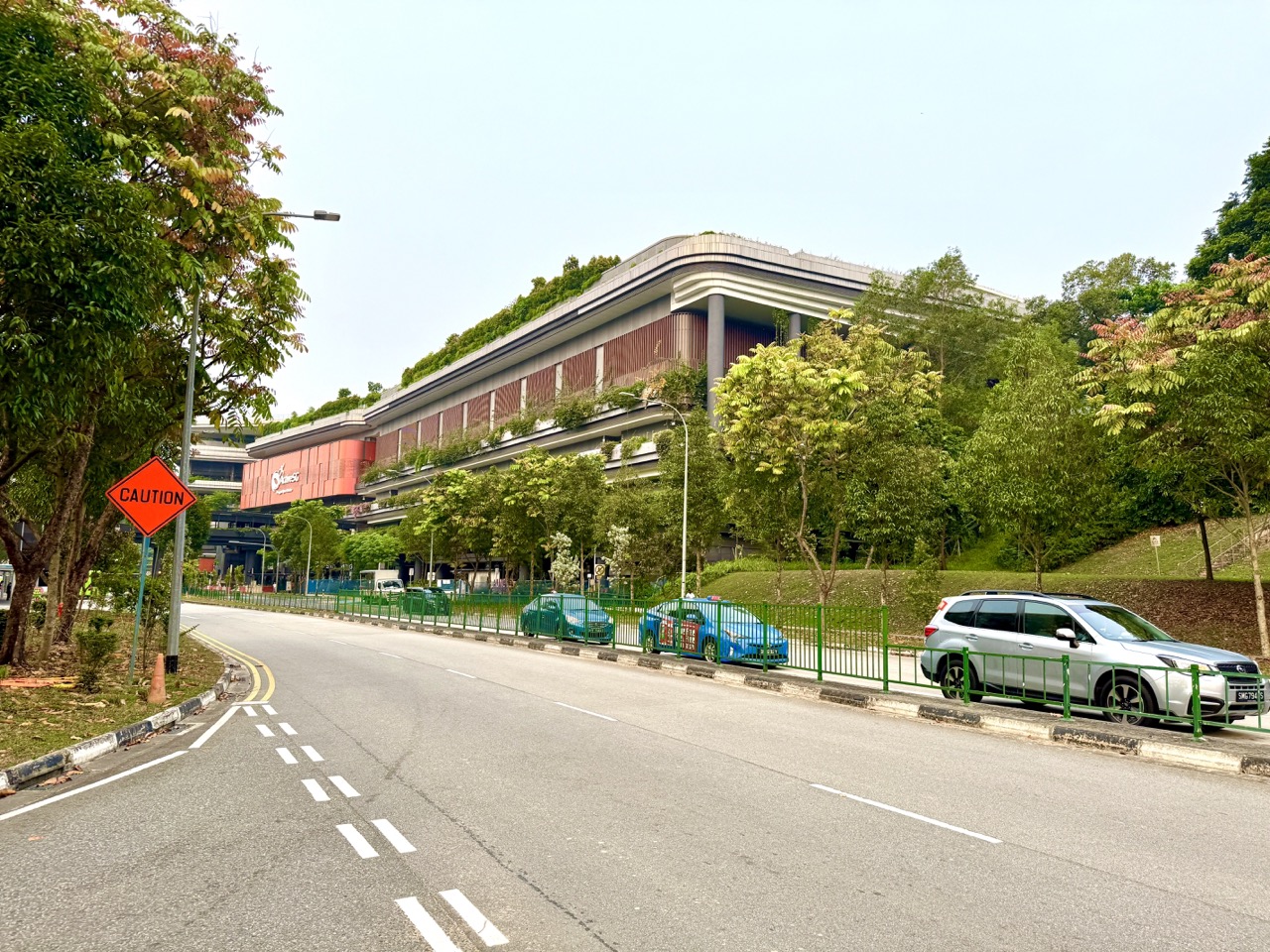
ActiveSG Punggol Sport Centre at 11 Sentul Crescent is a useful real-world case for teaching children how to verify a headline, inspect an image and distinguish a planned facility from one that is actually bookable. The new centre began selected soft-launch operations on 27 October 2026, with a formal opening announced for 22 November 2026. Its gym and some racket-sport spaces were accessible during the initial opening, while swimming, stadium and certain other spaces had separate opening arrangements. A photograph of a striking infinity pool is therefore not proof that a visitor could purchase a swim pass on the day the photo circulated. The practical source for live gym and court access is MyActiveSG+, not an undated social-media caption.
Singapore’s National Library Board teaches the S.U.R.E. framework—Source, Understand, Research, Evaluate—to help students assess information rather than forward it uncritically. Its S.U.R.E. school courseware covers source checking, fact versus opinion, search algorithms and evaluation of digital media. A parent can use a Punggol sports claim as practice: find its origin, identify the precise event, check the publication date against the event date, compare independent credible sources, and ask what the image genuinely depicts. This is media literacy, not merely scam protection. It deals with honest mistakes, promotional exaggeration, AI-generated visuals, ambiguous headlines, misleading statistics and the responsible decision not to share an unverified claim.
- Local anchor: Punggol Sport Centre, 11 Sentul Crescent, near SAFRA Punggol and Sam Kee LRT.
- Verified opening context: selected soft launch from 27 October 2026; formal opening announced for 22 November 2026.
- First distinction: planned, built, photographed, soft-launched, bookable and fully operating do not mean the same thing.
- Four-step method: Source, Understand, Research, Evaluate—NLB’s S.U.R.E. framework.
- Images: check date, location, photographer, whether it is a rendering, and what lies outside the frame.
- AI visuals: a photorealistic picture may be generated or edited; visual plausibility alone is not evidence of a real scene.
- Statistics: identify denominator, sample, time range and source before trusting an apparent trend.
- Promotions: expired free-gym offers should not be described as continuing indefinitely.
- Ethics: do not photograph identifiable facility users without authorisation or circulate children’s images carelessly.
- Learning tasks: analyse sample headlines at home without creating hoaxes or impersonating official agencies.
- This guide: worked fact checks, image interpretation, algorithms, family conversations and a four-week literacy plan.
Definition lock: media literacy is a method of reasoning
Media literacy is the ability to access, understand, critically evaluate and use information and media responsibly. A person may read a factual article yet misunderstand it because the date or scope is ignored. Another may recognise a false claim but still share a striking photograph because it creates a strong emotional reaction. Literacy involves both accuracy and behaviour.
The aim is not to distrust every photograph, journalist or government announcement. It is to know what a given source establishes and what remains uncertain. An official venue listing may be authoritative about a facility’s present booking status, while a dated report may be useful for describing what happened during the soft launch.
Good information users ask specific questions, seek suitable evidence and avoid drawing a conclusion larger than the evidence supports. This approach helps people make decisions without becoming cynical or gullible.
Why the October 2026 opening makes an excellent case study
Punggol residents saw reports about a large new sports centre with a spectacular infinity pool, an extensive gym and multiple courts. The building’s appearance made it easy to imagine that everything was already accessible. But a complex can open in phases, and promotional images may depict spaces that are completed physically but still awaiting public activation.

The actual reporting distinguished a soft launch beginning 27 October, a limited free-gym period ending 31 October and a formal opening announced for 22 November. That is a timeline with separate milestones. The mistake would be reducing it to one unqualified word: “open.”
This case shows why headlines and photographs need context. A story can be accurate about the building while a reader’s inference about a specific pool booking is incorrect.
Start with the original source, not the forwarded copy
A family WhatsApp message might say, “Punggol Sports Centre now open! Free everything!” The person forwarding it may not be the author or source. Ask where the statement first appeared. Is it from Sport Singapore, a dated news report, an advertisement, a neighbour’s personal experience or an anonymous screenshot?
The source determines what kind of claim the message can support. A personal photograph can establish that someone was present at a location, assuming the caption is accurate. It may not establish the official conditions for every amenity. A current authenticated booking listing is more relevant to actual sport access.
NLB’s S.U.R.E. method begins with Source for this reason. Trace a statement back before discussing how many people have shared it.
Understand the exact claim being made
Before researching, write the claim in a form that could be checked. “The centre is amazing” is opinion. “The gym offered complimentary admission through 31 October 2026” is a dated factual statement. “The infinity pool accepts public bookings on 1 November” is another specific claim requiring an operating record.
Vague headlines often join these statements together. “Swimming complex revealed” may mean the public saw photographs or a video, not that every pool has opened to swimmers. The word revealed is not the same as bookable.
Teach students to separate the nouns, verbs and dates. If the claim is unclear, do not silently choose the strongest interpretation. Accurate understanding comes before checking facts.
Research beyond the first attractive page
NLB’s framework encourages checking other credible sources. For a Punggol opening question, compare an actual SportSG facility listing, the MyActiveSG+ booking service and a dated report with identifiable publisher and author. If they describe different stages, note the distinctions instead of immediately deciding one must be false.
Do not count three websites copying the same press release as three independent confirmations of every statement. Look for different underlying evidence. A photograph, an operator notice and a journalist’s dated observation provide different forms of support.
The purpose of research is to resolve the particular question. Endless browsing without a defined question can produce more information but less understanding.
Evaluate before forwarding
Even when an item has some true information, ask whether sharing it in the current form could mislead someone. A message saying “free gym entry” may have been accurate during 27–31 October but no longer be appropriate to forward as a current offer on 1 November.
Consider the audience. A parent planning a weekend swim may spend travel time and money based on a misleading caption. An overconfident post can create avoidable disappointment even when no one intended to deceive.
Evaluation includes the writer’s responsibility to add dates, limitations and the correct next step. A useful correction is specific: “That free-entry promotion ended 31 October; check today’s official pass conditions.”
The difference between an event date and publication date
A news report may be published on 30 October and describe an opening that began on 27 October. These are two different dates. A future-looking announcement published on 29 October may say that a formal opening is scheduled for 22 November. A reader who sees only the latest date in the article can confuse when the information was published with when the event happened.
Students can create two columns: publication date and event date. Fill them separately for each official or news source. Then add a third column for the event’s status: happened, ongoing, announced or uncertain.
This simple table is especially useful for sports facilities, concerts, road changes and school announcements. Date literacy protects against accidental misinformation.
Soft launch and formal opening are not synonyms
A soft launch allows selected services to begin operating or being tested before a broader formal opening. A formal opening may be associated with an announced official milestone, but the presence of a ceremony does not automatically determine the exact access status of every internal facility.
In Punggol’s case, contemporary coverage described the gym and selected racket spaces being available before the announced 22 November formal opening, while other facilities remained subject to separate schedules. A statement can be accurate if it names the service.
A media-literate writer therefore avoids both extremes: claiming the centre was completely closed or that every facility was already open. Precision is more valuable than a short dramatic headline.
Artist impressions are not live photographs
An artist’s impression is a visual representation of a planned design. It may include people, lighting, landscaping or facilities arranged to illustrate a future concept. A photograph captures a particular visible scene at a moment in time. Both can be useful, but they answer different questions.
If an image shows the infinity pool with swimmers, look for labels such as “artist’s impression,” “rendering” or “illustration.” The image cannot independently prove that public swimmers were admitted on the date of publication. Even a genuine recent photograph of water does not establish the pool’s booking status.
Students should learn to read captions and original context, not merely judge whether the image looks realistic.
A genuine photo can still be misleading
An authentic photograph may have been taken years earlier, cropped to remove context or captioned with the wrong location. An image does not become fake simply because it is used misleadingly. The photograph itself may be genuine while the claim attached to it is false.
Suppose someone posts an old badminton court photograph with the caption “New Punggol Sport Hall opened today.” The image might depict a real court elsewhere in Punggol, not the newly bookable hall. Verify the specific facility rather than accepting the sport name as proof of place.
This distinction matters for local publishing. Original photographs need accurate dates, locations and descriptions of what they actually show.
The photograph’s frame has limits
A building photo can show a façade, but not the status of a court on another floor. A picture of a crowd cannot tell us every attendee’s reason for visiting. A photograph of a seemingly empty path does not prove it stays empty during school dismissal.
Ask students what lies outside the frame and what additional evidence would be needed for a broader statement. This encourages careful interpretation without requiring advanced software or an expensive camera.
A useful caption describes the visible subject and date and avoids claims about invisible systems or other people’s private lives.
Image provenance versus image plausibility
Provenance means information about an image’s origin and history: who made it, when, where and how it was used. Plausibility means whether it looks believable. These are not interchangeable.
A photorealistic picture of a rooftop pool might have been generated by AI. A low-quality old photo might be a genuine archive image. Judging only by visual polish will lead to mistakes. Ask for the original publication, source caption and relevant corroboration.
Students should not assume every suspicious image can be reliably diagnosed by counting fingers, inspecting shadows or using a single automated detector. Those clues can be misleading. Source-based verification is more robust.
AI-generated sports images require careful labels
Generative AI can create realistic-looking stadiums, swimming pools, crowds and players. A generated scene is not evidence that an event took place or that a new facility looks exactly as shown. A user may generate a harmless illustration for an article, but the accompanying label should make its illustrative nature clear.
For actual public information, prefer authentic dated exterior photographs, official operator materials and current records. If a sports photo is edited to add objects or people, the alteration may affect what the reader believes.
A media-literate person asks whether an image is being used as art, planning illustration or purported documentary evidence. Misleading presentation is the problem, not the mere existence of image-generation technology.
Why AI detectors cannot settle every question

Automated tools that claim to identify AI-generated images can make mistakes. Real photos may be heavily compressed, edited or captured under unusual lighting; generated pictures can contain plausible details. An algorithm’s confidence score is not independent proof of provenance.
If a sports image’s authenticity matters, investigate the original publisher, earlier appearances, dates and corroborating records. Sometimes the answer must remain uncertain. Students should be comfortable saying they cannot verify an image from the information available.
Critical thinking is not a contest to sound certain. It is the discipline of matching conclusions to evidence.
Reverse image search is a clue, not a verdict
An image search can sometimes reveal that a picture appeared earlier with a different caption. That may expose a reused image or older event. But the absence of a matching result does not prove an image is original or authentic. Some genuine photographs were never indexed; some modified images evade easy matching.
Teach children to treat search results as leads. Compare the actual earlier context, location and date. Do not download or publicly repost identifiable photos of strangers just to demonstrate the process.
A careful student explains what the search found and what it failed to establish. That is stronger than declaring the image verified after a single click.
A video clip can be genuine and out of context
A short video of the Punggol pools may truthfully show that they exist and were presented to the public. It does not by itself prove normal swimming admission. A clip may also omit an accompanying explanation about the facility’s activation stage.
Watch or read the full original context when available. Identify who posted it and what was actually said. Avoid treating a clipped sentence as the speaker’s complete position.
The same principle applies to sporting highlights, coach interviews and school announcements. Editing changes the information a viewer receives even when the individual frames are authentic.
Headline wording can overstate the evidence
“Pool unveiled” and “pool open for bookings” are different claims. “Government plans a sports programme” and “programme starts tomorrow” are different. A headline may be designed to attract attention while the article body gives more qualifications.
Students should read the key paragraphs and cited links before sharing a headline. Ask whether the headline’s verbs and timing match the body. If the body says “expected” or “subject to confirmation,” a caption should not turn that into “guaranteed.”
This is a useful writing skill too. An accurate title attracts the right reader instead of promising an event that may not exist.
Separate fact, opinion and inference
“The centre is at 11 Sentul Crescent” is a checkable fact. “It has the best views in Singapore” is an opinion. “Its location could make recreation more convenient for nearby residents” is a reasoned inference that still depends on actual travel and access.
These types of statements can coexist in an article, but they should not be presented as equally verified. Ask students to label each example and explain the evidence required. A person may enjoy the views without having measured every other sports facility.
The ability to identify a claim type helps children read advertisements, reviews and public policy stories with greater precision.
A rating is not a scientific sample
An online review score may be based on a self-selected set of visitors, not a random sample of all residents or users. People with unusually positive or negative experiences may be more motivated to comment. The number of reviews, date range and platform also affect interpretation.
Do not turn three enthusiastic posts from opening week into a claim that 100% of Punggol residents approve of the centre. Likewise, one critical account does not prove a universal problem.
A media-literate response states whose opinions were captured and recognises who may not have responded. This makes statistics more meaningful without dismissing genuine experiences.
Percentages need a denominator
A claim that “80% prefer pickleball” is impossible to evaluate without knowing 80% of what. Ten friends? Respondents to an online poll? All valid ActiveSG accounts? Was the question voluntary and how were choices defined?
A percentage can be arithmetically correct and still misleading when the denominator or sample is hidden. Students should ask who was counted, how many, over what period and with what method.
The purpose is not to reject every number. It is to understand the conditions under which a numerical claim can support a conclusion.
An opening-week crowd is not a permanent forecast
A new sports facility can attract curiosity during its first days. A picture of a crowded lobby at a particular hour does not establish that the centre will always be busy. A quiet gym image from a weekday morning does not guarantee an empty treadmill at 7pm.
A more credible assessment of crowding would require observations at defined times and suitable data collected consistently. Official live crowd indicators may help planning but do not guarantee equipment availability when a visitor arrives.
The media-literacy lesson is the distinction between an observation at one point and a broad prediction.
Why a claim about a coach needs verification
A social-media coach may describe themselves as “official,” “certified” or “based at ActiveSG Punggol.” Each phrase needs a precise meaning. They may be an independent provider, a properly approved instructor or someone whose venue claims cannot be confirmed.
Check the actual organisation, credentials, programme listing and permission to teach commercially within the facility. Do not assume that a photo in front of the new building proves employment or authorisation.
This overlaps with consumer safety but the media-literacy skill is distinct: identifying what an image or phrase supports and what additional evidence the reader needs.
Fraudulent claims are only one part of misinformation
A scam may intentionally deceive someone for money or account access. But misinformation can also result from honest mistakes, outdated promotional materials or careless re-sharing. A neighbour who posts last week’s free gym offer without its expiry date may be mistaken rather than fraudulent.
Correct the information without making unsupported accusations. A useful response shares the current official source and the specific difference. Avoid shaming the person publicly when the facts can be clarified respectfully.
The objective is to improve the community’s information quality, not turn every error into a conflict.
Time pressure is a reason to verify
An unsolicited message may claim, “The last court slot disappears in five minutes,” or “Your sports credits will be cancelled unless you log in here.” Some legitimate systems do have deadlines, but the message’s urgency does not prove it came from the operator.
Open the known official service independently. Do not reveal OTPs, bank passwords or Singpass credentials to a stranger. ScamShield’s official resources provide routes for checking suspicious contacts and reporting suspected scams.
Media literacy includes noticing when a message attempts to replace verification with emotion. The safest response is often to stop and check.
How recommendation algorithms affect what children see
A social-media feed may show many videos about one sport because the viewer previously watched or engaged with similar content. The apparent popularity of the sport in the feed is not a reliable population survey. NLB’s advanced S.U.R.E. courseware explicitly includes learning about search algorithms and algorithmic bias.
A child might conclude that everyone in Punggol now plays pickleball after seeing several recommended clips. Ask whether the recommendation system is showing a balanced sample or choosing content likely to hold attention.
This helps explain why personal feeds and wider community reality can differ. Seeing the same claim repeatedly is not independent confirmation.
Sponsored content versus an independent review
A creator may receive payment, free products or other benefits connected to a recommendation. Such relationships can affect the context in which a sports product or class is promoted. A viewer should look for relevant disclosures and distinguish advertising claims from independently verified facts.
A sponsored post can contain accurate information, and an unpaid review can contain mistakes. The label alone does not settle truth. Evaluate the evidence, specific claims and source.
For children, the key question is who benefits if they believe the message and purchase or enrol in the offered service.

How to correct a mistaken post responsibly
Suppose a parent shared “Free Punggol gym access all November” based on a message that omitted the 31 October end date. A useful correction identifies the earlier claim, gives the accurate dated information and links to current operator guidance. It does not quietly remove the mistake while allowing neighbours to continue planning from the original assumption.
A respectful correction may say the old promotion was temporary and that present rates must be checked. Avoid adding fresh unverified claims to make the correction sound more dramatic.
Accuracy improves when people can update a belief without being humiliated for having previously misunderstood a message.
Privacy is part of information responsibility
A school or family may want to photograph a sporting event, but the ActiveSG facility regulations prohibit unauthorised photography and filming within its facilities. Children may not wish to appear online, and a public booking does not grant blanket broadcasting permission.
Use permitted original exterior images, anonymous diagrams or written descriptions when those adequately communicate the information. Do not publish booking QR codes, identity documents or other users’ private details while claiming to investigate a story.
Media literacy is not merely about identifying fake information. It includes how evidence is collected and shared ethically.
Case study: a picture of the infinity pool
A fictional parent sees a beautiful photograph of Punggol’s infinity pool and immediately books a family trip for the following morning. The image may be genuine, but it does not establish that swimming is open. A media-literate approach starts with the current official swimming-complex status and available pass product.
If no public admission is listed, the family should not infer that an unrelated sports-hall booking gives pool access. The photograph still has value as a dated view of the facility, but its relevance to a swimming plan is limited.
The case illustrates a general rule: visual existence is not the same as operational availability.
Case study: the expired free-gym banner
An online poster states that the Punggol gym has complimentary entry from 27 to 31 October 2026. On 1 November a user forwards it with the caption “Gym free today.” The source banner may have been accurate; the new caption makes a current claim inconsistent with the dated period.
The child checking the message identifies the dates and corrects the caption using current operator information. They do not accuse the original poster of creating fake news. The error was in removing the temporal context.
This exercise shows how a small change in wording can transform old accurate information into a misleading current announcement.
Case study: a photograph from another Punggol court
A blogger uses a genuine October 2026 photograph of a neighbourhood badminton court near a playground to illustrate an article about the new Sport Hall, without explaining the difference. Readers may assume the picture shows the actual bookable indoor courts. The photograph itself is not fabricated, but its placement could mislead.
A responsible caption identifies the neighbourhood court and states it is not the Sport Centre’s interior. The article can still use the image as wider local context.
The case teaches that an authentic photo can be poorly matched to the claim it accompanies.
Case study: a dramatic AI-generated stadium scene
A fictional social post shows thousands of spectators at the new Punggol stadium and claims a major international final already took place there. Before sharing, the student checks the original source, dates, event organiser and actual venue operating status. A striking image alone proves none of those event facts.
If the picture is labelled as generated concept art, it can remain useful as illustration but not as documentary evidence. If its origin cannot be verified, the correct result is uncertainty rather than an invented confident diagnosis.
This exercise develops source checking without teaching children to manufacture or circulate believable hoaxes.
Case study: a suspicious coach promotion
An account advertises “official Punggol elite coaching” with a Sport Centre photograph and a payment request. The child learns to separate the verifiable building from the unverified claim of official affiliation. A parent checks the current operator programmes, coach credentials and commercial-use permissions independently.
A photograph in front of the building is not proof of employment or course authorisation. If a private course is genuine, it should be represented as such with clear provider details.
This case combines media evaluation with safe consumer decision-making, but its focus remains the evidence supporting the words and images.
The four-week S.U.R.E. home learning plan
In week one, learn to identify an original source and compare its date with the event date. In week two, distinguish facts, opinions and inferences in short local headlines. In week three, assess photographs, renderings and fictional AI scenes, clearly identifying what each can establish. In week four, practise researching one claim through appropriate sources and drafting a respectful correction with a link.
No participant needs to enter a sport hall, collect images of strangers or intentionally spread a false post. The family can create fictional sample headlines on paper and label them as exercises.
The aim is a repeatable thinking method that transfers to school notices, health claims, advertisements and wider online information.
Common media-literacy mistakes
Do not assume every new-looking photograph is current. Do not treat a rendering as proof of public access. Do not use a missing image-search result as authentication. Do not believe a statistic without its denominator or sample. Do not count repeated copies of one claim as independent evidence. Do not label every mistaken neighbour a criminal.
The opposite mistake is also possible: assuming all information is fake and refusing to trust even reliable operator records. Critical evaluation uses evidence proportionately. Skepticism is useful when directed at a clear question; endless distrust does not help people make informed choices.
A good media-literate student can explain what is known, how it was verified and what remains uncertain.
Frequently asked questions
Did Punggol Sport Centre open in October 2026? It entered a selected soft launch from 27 October; a formal opening was announced for 22 November.
Does a pool photograph prove public swimming admission? No. Check the actual facility status and pass availability.
What does S.U.R.E. mean? Source, Understand, Research and Evaluate, the National Library Board’s information-literacy framework.
Can a genuine photo still mislead? Yes. It may be old, wrongly captioned, cropped or used to imply facts it does not establish.
Does an AI detector prove a picture is fake? No single detector or visual clue should be treated as definitive proof.
Is a social-media feed a fair survey of Punggol sports preferences? No. Recommendations and self-selection can distort what appears common.
Should I forward an offer before checking its expiry? No. Confirm the date and official terms first.
Does a photo of a coach outside the building prove affiliation? No. Verify the programme and claimed credentials independently.
Can students film strangers inside ActiveSG for fact checking? Do not assume filming is authorised. Follow venue rules, consent and privacy requirements.
What if a claim cannot be verified? State the uncertainty and avoid forwarding it as fact.
Official sources and your next step
Use the NLB S.U.R.E. school courseware and gov.sg misinformation guide to practise Source, Understand, Research and Evaluate. For current venue access check MyActiveSG+. The dated 29 October 2026 soft-launch report provides an example of a news source with a clear publication date; its reporting should still be interpreted in context. For adjacent concerns, read photography and privacy rules and sports-booking scam warnings.
Your Next Step: find one sports-related headline or image, identify its origin and date, state exactly what it claims, and compare the claim with an appropriate independent source. Then write one sentence about what the evidence does not establish. That is a more useful media-literacy habit than immediately clicking Share.
Editorial note: Prepared 1 November 2026. Fictional examples are explicitly presented as scenarios, not alleged real incidents. Facility operating conditions and digital platform rules can change.


