
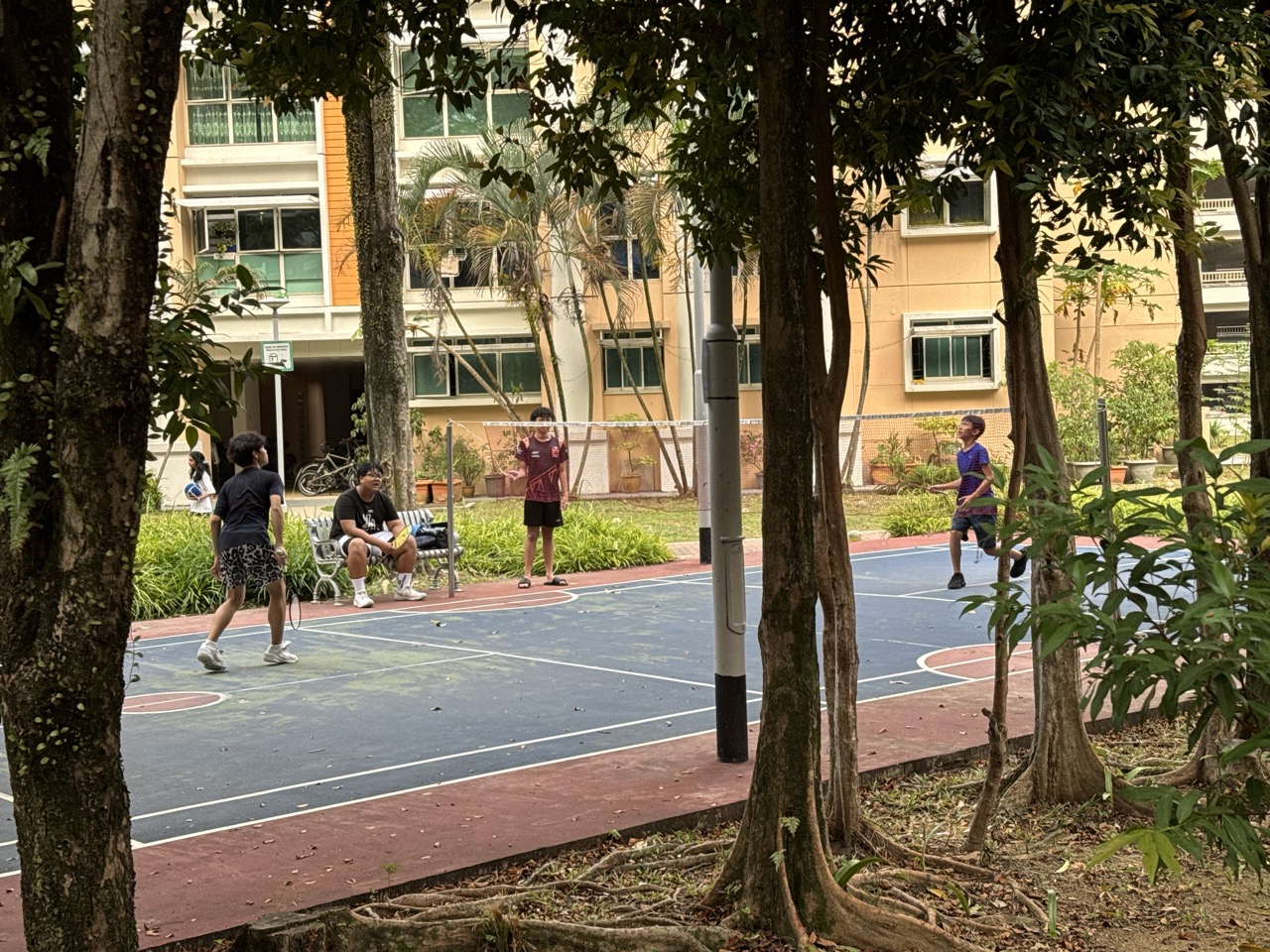
ActiveSG Punggol National School Games 2027/2028: the NSG is Singapore’s major inter-school sporting competition, organised through schools and sports councils rather than the MyActiveSG+ public booking platform. Punggol Secondary’s official sports directory lists basketball, football, netball, shooting, table tennis, and boys’ and girls’ volleyball. Its table tennis page features real B and C Division NSG matches, but no future roster or fixture should be assumed.
SportSG’s Youth in Sport NSG 2026 page documents the national event, while Punggol Secondary’s sports directory confirms actual local school activities. Punggol Sport Centre at 11 Sentul Crescent opened selected facilities in October 2026, but its existence does not make it the automatic host of every NSG match. Parents should check the child’s teacher-in-charge for real competition instructions.
- Programme: annual school-organised National School Games
- Punggol Secondary sports: basketball, football, netball, shooting, table tennis and volleyball
- Divisions: verify the relevant current school sport competition category
- Entry: school selection and official team registration, not private court hire
- Fixtures: obtain the actual event, opponent, venue and reporting time from school
- Parents: support transport, safety, fair play and appropriate photography
- Different from: ActiveSG Cup and Pesta Sukan
- 2027–2028: recheck each sport’s official competition calendar and selected school squad
The goal is a good school-sport experience that develops appropriate skills, resilience and teamwork alongside learning. A safe, encouraging family role is more useful than guessing future tournament outcomes.

Definition lock: NSG is the school competition system
The National School Games, or NSG, is Singapore’s organised inter-school competition system. It is not the same as renting an ordinary ActiveSG public court, registering for the ActiveSG Cup or participating in Pesta Sukan.
SportSG’s Youth in Sport page highlights the NSG 2026 edition as a major annual opportunity for school sports teams. Participation is handled through schools and appropriate sports council arrangements.
A Punggol family should contact the child’s teacher-in-charge about actual selection, registration and the confirmed fixture before making travel plans.
Punggol Secondary has named sporting CCAs
Punggol Secondary’s official 2026 Sports directory lists basketball, football, netball, shooting, table tennis, and volleyball for both boys and girls. These are real school offerings with sport-specific coaching and competition pathways.
Having a CCA listed does not mean every student automatically joins a competition squad or receives a guaranteed match in 2027. Selection and participation follow the school’s actual arrangements.
Use the current school website and teacher’s notices for genuine programme and fixture information, not a broad estate-level guess.
Table tennis has official B and C Division examples
The school’s table-tennis page includes photographs described as B Division boys’ doubles and C Division boys’ singles at NSG events. This is a documented local example of legitimate inter-school participation.
The page emphasises resilience, perseverance and sportsmanship alongside technique. A historic match photograph cannot establish who will represent the school in a future season.
Families should use past achievements as context while respecting the school’s actual current team selection.
Punggol Sport Centre is not the NSG registration desk
Punggol Sport Centre at 11 Sentul Crescent began phased public operations on 27 October 2026. Its gym and selected public courts use SportSG’s ordinary admission and booking framework.
A school competition may use a public sports centre under authorised arrangements, but the building’s opening does not automatically assign an NSG fixture there. The tournament organiser controls the real venue.
Do not treat a personal badminton reservation as school team entry or a spectator credential.
Sports council and school roles are different
MOE and the Singapore schools sports councils oversee NSG competition arrangements, while teachers and coaches manage pupils’ school-based preparations. A parent supports a child but does not unilaterally register an inter-school team.
The actual competition may require specific eligibility, approved entries and a registered team list. These conditions cannot be bypassed through a private gym membership.
Ask the authorised school representative which documents or actions are needed for the student.
The official NSG portal has sport-specific information
Singapore maintains nsg.moe.edu.sg for National School Games information and appropriate competition administration. Public results and specific sport fixtures may also be communicated through organisers or schools.
A screenshot from an older match is not a current reporting instruction. Opponents, venues and timings can change as the competition progresses.
Keep one authoritative communication route through the teacher-in-charge and use current sport-specific sources where available.
B and C Divisions are distinct
Secondary sport commonly uses B and C Division competition categories with different eligibility arrangements and seasons. A younger student should not automatically be placed in an older category because they play strongly.
Sports may have specific age, registration or exception provisions, so a general article cannot determine every student’s eligibility. The actual organiser’s current rules are decisive.
Ask the school to confirm the division well before the competition begins.
Primary school sport has its own regulations
Primary School Games use corresponding primary school sports council structures and age-appropriate competition formats. They should not be treated as identical to the secondary B and C Division competitions.
Younger pupils often need more support with transport, supervision and understanding the event. A school may also approach competition in a developmental way rather than only reward rankings.
Use the child’s actual school notices and appropriate primary-sport rules for current arrangements.
A CCA is bigger than the competition roster
Many pupils can enjoy a sport through school CCA training while only a subset is selected for a particular inter-school match. This does not remove the value of the wider learning experience.
A pupil can develop confidence, teamwork and technical skills without appearing in a final. The school may have different pathways for beginners and competitive players.
Parents should encourage genuine participation without making match selection the only sign of success.
Punggol Secondary basketball’s local purpose
The official school description highlights resilience and sport engagement through basketball training, competition and learning journeys. Players may work on dribbling, passing, defence and decision-making under school guidance.
A child who plays casual basketball after school is not automatically on the national competition roster. Technical instruction and team eligibility are distinct from recreational access.
Follow the actual coach and school processes before buying special competition equipment or arranging spectator travel.
Punggol Secondary football participation
The school describes its football team as developing skilled and well-rounded players through structured practice and competitive experiences. These can complement students’ wider education.
Weekend football at a free school field is a separate recreational activity, even if the student plays for a Punggol school. A public field booking does not replace team training.
Families can support punctuality, rest and appropriate practice while respecting official team arrangements.
Netball competition requires correct rules
Punggol Secondary lists netball as a sporting CCA. Organised netball follows position and movement rules that differ from basketball despite both involving a ball and court.
A pupil should understand the actual team role, game rules and coach instructions before competing. Unofficial social netball may be enjoyable but is not the same as an NSG fixture.
Ask the school which competition and venue apply, instead of assuming every netball event is at the new sports centre.
Shooting uses specialist safety procedures
Shooting is also named in the school’s Sports directory. It has its own controlled equipment, training environment and official competition rules requiring suitable qualified oversight.
A parent should not infer that a public sports hall or a casual home setup is an approved NSG shooting venue. Appropriate permissions and supervision are essential.
Use the school’s real guidance and recognised sporting authority for equipment and safety details.
Separate boys’ and girls’ volleyball programmes
Punggol Secondary’s 2026 site lists boys’ and girls’ volleyball CCAs separately. They may have differing rosters, coaches, schedules or competition arrangements under the school.
A general poster about volleyball should not be treated as evidence that both teams compete in the same hall on the same day.
Confirm the actual fixture and relevant school squad before planning attendance.
School venue and opponent can change
National School Games matches may take place at host schools or other suitable sports facilities. A team representing Punggol may travel elsewhere in Singapore rather than play locally.
Venue changes and revised fixtures can affect transport, meals and collection. A forwarded old screenshot is particularly risky when parents take leave to watch a match.
Rely on the updated school or organiser notice for the exact address and reporting time.
The student’s reporting time differs from match time
A competition might require warm-up, team meetings, registration and equipment checks well before play begins. The public fixture may not show every instruction intended for athletes.
Parents can help children prepare clothing, necessary equipment and transport according to the coach’s actual schedule. Rushing can add stress and reduce enjoyment.
Ask for the correct student reporting and collection arrangement rather than arrive at the public match start time by assumption.
Equipment should fit the actual sport
Footwear, rackets, jerseys, protective items and other kit requirements vary by competition. A child may not need every expensive product marketed to school athletes.
School staff and qualified coaches should explain what is genuinely required, which items are provided and what should be purchased privately.
Wait for specific instructions before buying professional gear or entering restricted areas with unsuitable equipment.
School exams still matter
Students may need to balance homework, weighted assessments and NSG training. Sport can support resilience and teamwork when scheduling is realistic, but a competition is not a universal exemption from academic responsibilities.
A pupil with multiple commitments might benefit from advance planning with parents and teachers. Different schools can manage this balance in different ways.
Do not create unnecessary pressure to train through illness or neglect required study.
Parent conduct influences the sporting experience
An NSG match is a learning experience for students, not merely entertainment for adult spectators. Parents can cheer constructively, respect referees and refrain from personal criticism of children.
Disagreements about scores or decisions should follow appropriate competition channels rather than insults from the stands. A student should not need to defend an official after a loss.
Model sportsmanship and treat the opposition’s pupils with the same respect as one’s own.
Injuries require appropriate care
Student-athletes may be keen to continue playing despite discomfort. A responsible school competition should prioritise safety and follow relevant first aid and healthcare advice for significant symptoms.
A public article cannot diagnose whether an injured student can safely return to competition. Coaches and parents should follow actual professional guidance.
The child’s wellbeing matters more than finishing one match or protecting a team ranking.
Public spectator access must be checked
A fixture at a school hall may have controlled entrances, seating limits or other access procedures. A parent should not assume every competition site welcomes unlimited relatives or young siblings.
For people using mobility aids or needing additional support, the exact accessible route and spectator arrangement can be important.
Contact the school or event organiser about current venue conditions before travelling.
Photography follows school and event rules
SportSG’s Youth in Sport programme includes NSG galleries and encourages appropriate memory sharing. This does not create unlimited permission to film unrelated children or enter changing rooms.
School or venue photography notices and safeguarding policies can govern what is recorded. Avoid captions that identify participants incorrectly or disclose personal information.
Use appropriate permission and share images respectfully when documenting a genuine match.
A past result is not a future ranking
Historic NSG photographs and scores may show achievement, but teams change as pupils graduate and new students enter. A strong result from one year does not guarantee the next cohort’s performance.
A future article should date every result rather than present a past winner as the 2028 favourite without evidence.
Celebrate genuine achievements while keeping current predictions uncertain.
NSG and ActiveSG Cup are separate routes
ActiveSG Cup uses national youth competition registration and age-band categories under SportSG, while NSG requires formal school representation through school sport arrangements.
In 2026, the ActiveSG Cup basketball programme names Punggol Sport Centre as a venue. That does not make the same fixtures NSG school matches.
Check the event’s actual organiser and rules before registering or telling a parent which team is eligible.
NSG and Pesta Sukan are also distinct
Pesta Sukan is a wider national multi-sport competition under GetActive! Singapore, with individual or community-team categories. School sports councils organise NSG separately.
A pupil may enjoy both kinds of sport, but admission, fixtures, age criteria and team composition are different.
Read the correct competition page rather than apply a community championship rule to a school match.
The new Punggol hall may host other events
The regional centre’s team sports hall can host properly authorised competitions, but not every sporting event announced in Singapore is allocated to it.
Parents might see a basketball tournament taking place and assume it is their child’s NSG fixture. Several organisers can use the same type of venue.
Follow the named event and match notice, not the appearance of players in school jerseys.
Students can learn through participation without medals
School sport gives pupils opportunities to practise commitment, listening, cooperation and fair competition. These experiences can matter even when a team does not reach the final.
Parents can ask what the student enjoyed or learned instead of demanding a trophy. Improving a skill or supporting teammates may be meaningful.
A healthy school sporting culture values the wider education experience alongside results.
2027 fixtures must be current
A future year’s competition calendar may change sports, divisions, venues or match dates. A 2026 gallery is not a 2027 roster or schedule.
Families should collect current information from the school and authorised NSG source as the season approaches.
Never promise a specific final at Punggol Sport Centre without an official confirmed fixture.
2028 pupils may move age divisions
A student in a younger division today may become eligible for another category later, depending on actual age rules and school circumstances. Team selection also changes as cohorts move on.
A Punggol parent should recheck eligibility and training demands rather than expect a child’s prior season arrangements to transfer automatically.
The enduring principle is to support safe, meaningful competition with real school supervision and accurate fixtures.
The competition is part of wider education
School sport is not simply a competition for the most talented athlete. Training can develop habits, cooperation and the ability to respond constructively to challenge as part of the wider education experience.
A child who contributes in practice without appearing in every match still belongs to the school sport community, subject to genuine CCA arrangements.
Parents can recognise effort and enjoyment without demanding that every sporting experience leads to selection or a medal.
The season can involve multiple venues
School teams may travel to different sport centres or school sites during one season. A venue used for an early round is not automatically the venue for a semi-final or final.
A parent can check each actual fixture and keep one current travel plan, rather than rely on the location of the previous match.
This is particularly relevant when younger students depend on coordinated school or parent transport.
The competition result may be updated later
Match results can be recorded, checked and published through organiser systems after the game. A spectator’s instant message may contain errors or incomplete information.
Use current official results before writing a public summary and avoid making unsupported allegations about officiating.
The child’s sporting experience should not be reduced to an unverified score circulating in a chat group.
Understand the role of the teacher-in-charge
A CCA teacher helps coordinate school training, student welfare and competition communication, while a technical coach may lead sport-specific instruction.
Parents should direct questions to the appropriate person rather than require a referee to handle transport or an ActiveSG receptionist to confirm the student roster.
Clear roles prevent confusion and help the school maintain consistent supervision.
Support staff and volunteers may be involved
Organised competitions may rely on marshals, scorekeepers, officials and appropriate medical support. Their actual tasks and permitted access are defined by the organiser.
A parent willing to help does not automatically gain a role on the court or authority to change a sporting result.
Respect official assignments and apply through genuine channels where volunteering opportunities exist.
A student’s privacy deserves respect
School competition records can include names, school affiliations and photographs. Organisers and parents should follow applicable privacy and media policies when sharing them.
Children may have reasons not to appear in public social posts, and private family or medical information is not relevant to a game recap.
Use approved photographs and factual descriptions instead of exposing another pupil’s personal circumstances.
Coaches should create a respectful learning climate
Students need feedback that explains technical improvements without humiliation. A good competition team can be demanding while still treating mistakes as part of learning.
Bullying, harassment and inappropriate communication are not justified by a school tournament’s importance. Parents should know the school channel for raising a concern.
Respectful coaching contributes to both sporting development and trust within the school community.
The competition should remain age appropriate
Different year groups have different learning needs and physical readiness. The competition’s technical rules may specify categories, substitutions and other conditions to keep participation appropriate.
A younger student should not be forced into an unsuitable activity merely because they are enthusiastic or a family hopes for a medal.
Follow qualified school and organiser advice regarding the correct competition and safe participation.
Safe transport includes the return journey
A match may end after the normal school day, and the final destination can be different from the school campus. Parents should know whether pupils return with teachers or are collected directly.
If a family needs a particular accessible route, that should be discussed ahead of time. Last-minute assumptions can leave students waiting at an unfamiliar venue.
Use the actual school-approved handover arrangement rather than improvise during the match.
Some fixtures can change because of weather
Outdoor football, athletics and other events may be affected by thunderstorms, haze or venue conditions. Organisers can alter schedules when safety requires it.
Parents should follow the school’s latest notice and avoid pressuring officials to continue when conditions are unsuitable.
A booked ride or a parent’s work schedule does not override participant safety.
An athlete may not need additional paid tuition
School CCA coaching can provide legitimate learning opportunities, while private sports instruction is a separate optional service with its own cost and venue permission.
A parent may consider outside coaching when appropriate but should not assume it guarantees school-team selection or a future national sporting career.
Ask about the child’s genuine goals and school requirements before paying for extra training.
A family can watch without managing the team
Some parents are keen to give tactical advice from the stands, but the school coach is responsible for team instruction during official competition.
Encouragement is helpful; contradictory shouting can distract students and create conflict with officials.
Allow children to experience sporting responsibility and reflect afterward in a calm, supportive conversation.
Sport results are not admissions guarantees
A strong NSG achievement may be meaningful to the student, but it does not automatically determine future school admissions or university scholarship awards.
Selection programmes and admissions policies have their own actual eligibility and assessment rules. Families should distinguish sporting recognition from guaranteed educational benefits.
Let young athletes pursue excellence without promising outcomes unsupported by the responsible institutions.
Punggol Secondary’s table tennis history is specific
The school published photographs described as B Division boys’ doubles and C Division boys’ singles. These support a factual description of its involvement with NSG table tennis.
They do not establish that the 2027 or 2028 squad will contain the same players or that the fixtures will recur at the same venue.
Use the official school page for history and current teacher notices for the next season.
A wider Punggol directory needs school-specific evidence
Other schools in Punggol may have their own sporting CCAs, but their offerings should not be inferred from Punggol Secondary’s list. Names and year groups can differ considerably.
A local guide can help parents discover possible interests while encouraging verification of the chosen school’s actual programmes.
Do not publish invented teams merely to make a town guide look comprehensive.
A division can change as a student grows
Students move through school levels and may change their competition eligibility across seasons. Previous selection does not automatically establish next-year entry.
The coach and school should clarify any current age or registration issues well before team submission.
Plan around actual eligibility rather than a general assumption about Secondary 1 or Secondary 4.
Spectators should respect restricted areas
An event venue may reserve warm-up, medical or competition areas for accredited participants and staff. A parent wanting a photograph should not cross those boundaries without permission.
Other pupils may also need quiet preparation and personal space before competing.
Use actual spectator entrances and seating, treating officials and students with courtesy.
A good post-match conversation is balanced
A child may feel proud, disappointed or exhausted after competing. Parents can listen and ask what the student learned rather than immediately analyse every error.
The next training decision should be made with coaches and the pupil’s own wishes, not driven by public commentary about a score.
Sport can remain enjoyable even when results are disappointing.
Parents should keep equipment and documents organised
The child may need a school consent form, competition attire or particular gear. Losing a required item at the venue can create avoidable stress.
A short checklist from the teacher is more useful than a generic packing list that assumes every sport needs the same materials.
Follow the school’s actual instructions and keep sensitive records secure.
A new sports centre need not host every school event
Punggol’s regional sports building may host some appropriate organised competitions, but schools and the NSG organiser can choose other sites based on sport, equipment and scheduling.
The fact that an ActiveSG Cup event used the Punggol team hall does not imply National School Games will use it too.
Check the precise event name and venue rather than guess based on which building is newest.
2027 family checklist
For a 2027 NSG match, confirm the student’s eligibility, real school team, sport-specific event, reporting time, venue, transport and any necessary consent or safety directions.
Keep the teacher’s updates accessible and avoid relying on last year’s schedule.
The priority is a safe and rewarding student experience supported by accurate information.
2028 family checklist
In 2028, the student may be older, playing in another division or attending a different school. School-team conditions, venues and sport regulations may also have changed.
Review the actual current school and competition sources before making commitments. A historical website photograph cannot guarantee selection or a match location.
A supportive family approach remains useful regardless of the competition year.

Frequently asked questions
Is NSG run by the ActiveSG public booking platform?
No. It is an official school sport competition with school-managed eligibility and organiser fixtures.
Which sports does Punggol Secondary list?
Basketball, football, netball, shooting, table tennis and boys’ and girls’ volleyball, according to its 2026 directory.
Can parents independently register a school team?
School staff and the authorised competition administration manage team entries. Parents should follow teacher instructions.
Are all NSG matches at Punggol Sport Centre?
No such venue guarantee follows from the centre’s opening. The actual sport organiser may use other schools or sports facilities.
What are B and C Divisions?
They are secondary-school sport competition categories subject to current eligibility and sport-specific regulations.
Can families watch?
Spectator access depends on the actual host venue and competition conditions. Confirm with the school before travelling.
Is NSG the same as ActiveSG Cup or Pesta Sukan?
No. These are separate competitions with different organisers, age categories and registration routes.
Where should a parent verify 2028 details?
The child’s school teacher-in-charge, current NSG competition notices and appropriate sport-specific official pages.
Official NSG and Punggol school references
- SportSG: Youth in Sport and National School Games 2026 history
- MOE National School Games official portal for competition information
- Punggol Secondary: current sports CCA directory
- Punggol Secondary table tennis NSG B and C Division photographs
- SportSG ActiveSG Cup: separate public youth competition
- SportSG Pesta Sukan: different national competition route
- SportSG Sports Education Programme, different from NSG matches
- eduKatePunggol: teenage sport and school CCA preparation
- eduKatePunggol: spectator and event venue planning
Your next step
Ask the student’s school teacher-in-charge about the actual competition, division, team status, reporting time and confirmed venue. Plan suitable transport and respectful spectator support around the official notice rather than a historic NSG photo.
Editorial review: 2 November 2026. Punggol Secondary’s 2026 CCA directory and SportSG’s NSG 2026 programme are verified. No 2027/2028 fixture, player selection, NSG result or Punggol Sport Centre match allocation is presented as confirmed.


