
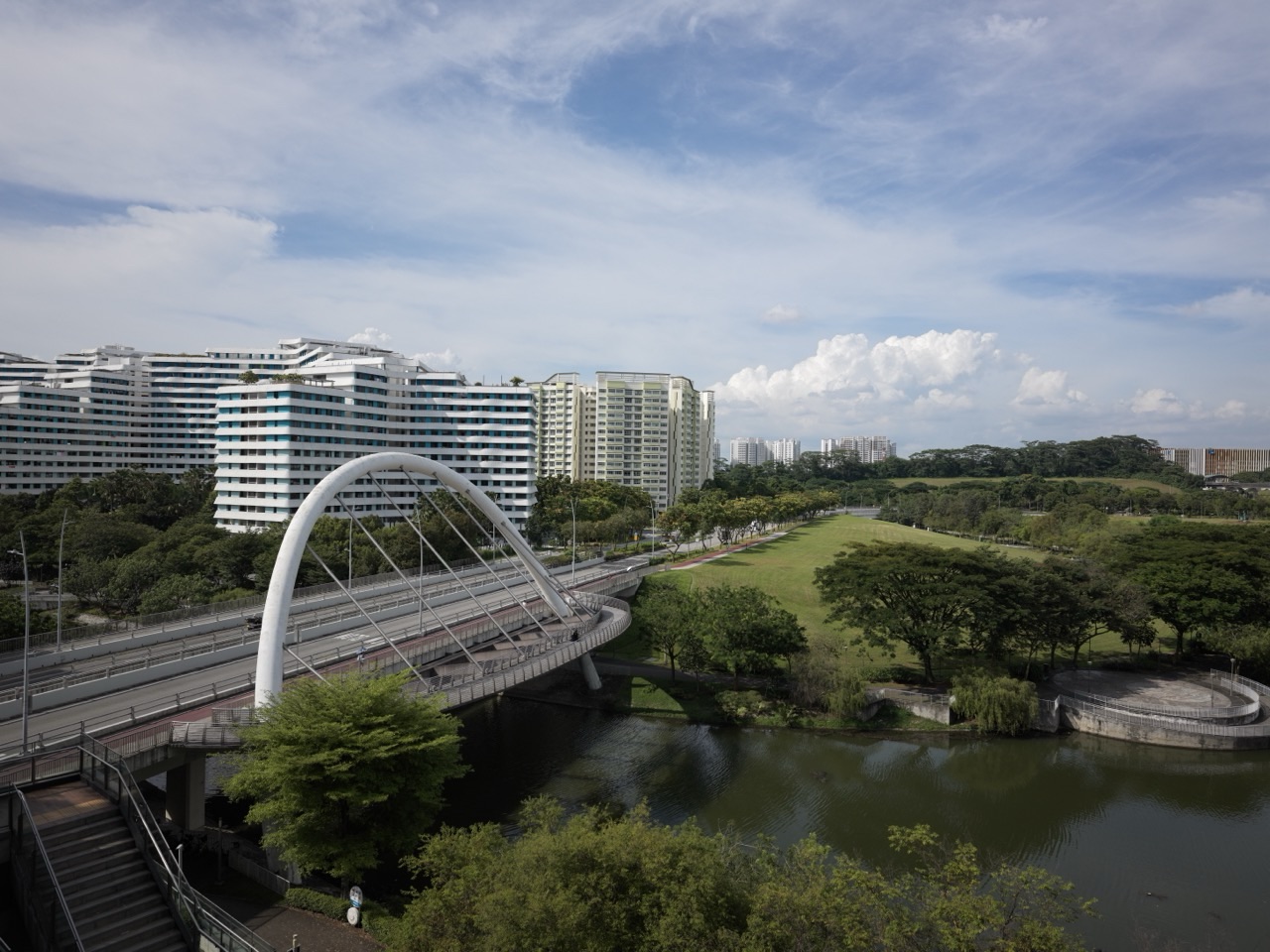
Why would Punggol place a polyclinic inside a neighbourhood shopping centre rather than build the clinic on a separate isolated site? The answer is visible at Oasis Terraces, 681 Punggol Drive, where HDB integrated Punggol Polyclinic, retail, food outlets, childcare and community spaces into a New Generation Neighbourhood Centre. The design makes everyday healthcare part of the town’s ordinary activity network instead of an entirely separate destination.
HDB identifies Oasis Terraces as Singapore’s first New Generation Neighbourhood Centre, officially opened in 2019, and the first neighbourhood centre with an integrated polyclinic and childcare centre. SingHealth Polyclinics lists SHP-Punggol at Oasis Terraces #02-01. HDB’s planning account says the tenant mix and community features were shaped by residents’ feedback, while the design allowed different parts of the centre to operate independently. This combination explains why the project is a useful case study in accessible community infrastructure rather than simply a shopping mall with an unusual tenant.
- Place: Oasis Terraces, 681 Punggol Drive, near Oasis LRT on the East Loop.
- What is unusual: HDB combined a polyclinic, childcare, retail, dining, communal spaces and landscaped terraces in a New Generation Neighbourhood Centre.
- Opened: the new-generation centre was officially opened in February 2019; individual facilities had their own readiness schedules.
- Why: residents need health services and ordinary errands close to homes, connected by practical pedestrian and public-transport routes.
- Important distinction: the polyclinic and commercial shops have different operators, appointments, rules and opening hours.
- For families: confirm a clinical appointment and the correct entrance before travelling; a mall visit does not reserve medical care.
- Main sources: HDB’s neighbourhood-centre guidance and SingHealth Polyclinics’ current Punggol location page.
Why ordinary errands and healthcare can belong near one another
A household may need groceries, a meal and a medical appointment within the same week. When those activities are scattered across different destinations, each journey adds time and coordination.
A neighbourhood centre with an integrated polyclinic can place some of those needs within one broader pedestrian network. A person can reach a legitimate healthcare service near shops and amenities, rather than travelling to a remote single-purpose campus.
This is a planning argument about accessibility, not an assumption that shopping is a substitute for medical care. The hospital, clinic, supermarket and food outlet still perform fundamentally different services. Their proximity may reduce travel effort without combining their professional responsibilities.
Why Oasis Terraces was different from an ordinary shopping centre
HDB defines Neighbourhood Centres as essential parts of public housing towns, bringing food, shopping, healthcare and everyday amenities near homes. The New Generation Neighbourhood Centre model added stronger consideration for community spaces, resident feedback and the mix of activities.
HDB calls Oasis Terraces its first example of that newer generation. It includes social and communal functions instead of only a row of tenants selling goods.
A shopping mall can also be valuable, but it is not identical to a deliberately planned HDB community destination. The architectural and tenancy decisions respond to different sets of everyday needs.
Why the opening year matters
Oasis Terraces was officially opened in February 2019, at a time when Punggol’s waterfront housing and neighbourhood populations were growing.
The opening gives the project a specific historical place in the town’s development. It should not be confused with the later openings of One Punggol, Northshore Plaza or Punggol Coast’s integrated transport hub.
A family reading older descriptions may find shops or tenants that have changed. The enduring planning fact is the co-location of public and commercial functions, not the precise list of businesses operating on one day in 2019.
Why the polyclinic is a different kind of tenant
A polyclinic delivers healthcare services under clinical governance, professional requirements and patient-registration processes. Its purpose differs from a shop selling groceries or household goods.
SingHealth Polyclinics identifies Punggol Polyclinic at Oasis Terraces #02-01 and provides current information about appointments, registration and access. Patients should use that official service information for practical decisions.
The polyclinic’s inclusion does not mean all mall staff can access patient records or that a retail receipt acts as a medical appointment. The organisations remain separate even where the building makes their locations easier to reach.
Why a clinic visit is more than entering the correct building
Someone attending a medical appointment needs to know the appropriate time, registration process, clinic department and any instructions for their visit.
A lift or escalator can bring them to the correct floor, but it cannot perform registration or determine clinical eligibility. SingHealth describes an on-site process involving a self-service kiosk and counter registration where relevant.
This is an example of a service journey layered inside a physical journey. Arriving at Oasis Terraces is one step; accessing the actual healthcare service follows its own rules.
Why one development can have separate operating hours
A supermarket might open early or close late, while the polyclinic runs on its own published schedule. Childcare and community programmes can operate at other times.
A historical planning study described Oasis Terraces as being designed with two wings able to operate independently, allowing the clinic to begin operations before the rest of the centre was fully complete.
This is an important architectural detail. Shared location does not require a universal opening clock. Different services can be co-located while retaining separate entrances, hours and operational responsibilities.
Why independent wings can be useful
Imagine one part of a mixed-use centre ready for patients while another section still requires fit-out and tenant preparation. If the entire building depends on the last retail unit before anything can open, an important service may be delayed unnecessarily.
Providing appropriate independent operating arrangements can allow different functions to start when they are ready, subject to safety and access requirements. That is the principle described in the Oasis Terraces planning history.
The design does not mean visitors can enter any closed area. The separation is a managed feature that helps services operate appropriately, not a relaxation of public-access restrictions.
Why young families were part of the original planning
Punggol’s earlier rapid growth included many young families. HDB’s accounts of Oasis Terraces refer to selecting services with those family needs in mind, including childcare, food options and healthcare.
An area with many young children may benefit from conveniently located childcare and family-supporting retail, but such planning does not guarantee that a particular provider has a vacancy or that every family prefers the same services.
The useful distinction is between designing the range of amenities for a likely community profile and guaranteeing the circumstances of every individual household. Both should be treated honestly.
Why residents’ feedback can influence a tenant mix
HDB’s account of the centre says residents wanted features such as late-night shopping, family-friendly dining and suitable community facilities. Those preferences influenced the eventual design and tenancy approach.
This is more informative than assuming developers chose the entire layout only because it looked visually impressive. Community needs can influence which services make a neighbourhood centre useful.
Consultation does not guarantee that every desired business is financially viable or will remain permanently. It provides useful input to a planning process that also considers cost, operating feasibility and other needs.
Why a supermarket alone would not perform every function
A supermarket addresses many everyday purchasing needs. It cannot provide clinical assessment, childcare programmes or dedicated community spaces merely by being placed in a large building.
Similarly, a clinic might improve healthcare access without offering the ordinary dining and shopping options a household needs during the week.
Oasis Terraces’ value lies in deliberately bringing together several complementary activities. This is not a claim that bigger centres are automatically better; the actual arrangement must be useful to the neighbourhood.
Why HDB resumed developing new-generation centres
NUS Cities’ research on HDB retail describes the challenge of supplying neighbourhood shopping options early enough in developing towns. Private developers may be reluctant to build before a sufficient resident market exists.
HDB’s 2015 announcement to build more neighbourhood centres reflected a policy response to that timing problem. Oasis Terraces became one of the clearest Punggol examples.
The lesson is that essential services and commercial viability do not always arrive on the same schedule. Public planning can influence the timing and mix so earlier residents are not forced to wait indefinitely for ordinary needs.
Why a growing town’s first residents face special problems
The earliest residents in a new precinct may have completed homes while some surrounding shops, transport links and public services are still developing.
That gap can create repeated long trips for food, healthcare or childcare. Planning neighbourhood centres ahead of full residential maturity seeks to reduce the gap between receiving keys and having a functioning neighbourhood.
But the outcome remains phased. HDB can plan and construct a centre, while individual operators still need staff, licences, equipment and appropriate commercial arrangements.
Why an LRT station improves the centre’s access
HDB describes Oasis Terraces as near Oasis LRT and connected by sheltered access. The location creates options for residents who do not live within a short walk of the centre.
A parent may use the East Loop to reach services. Another resident may walk from nearby homes or arrive by bus. The best choice depends on origin, mobility, weather and the actual appointment.
A station near a centre does not make every part of the trip effortless. The person still needs the correct exit, crossing and entrance. Accessibility is a door-to-door relationship, not just a station icon on a map.
Why the Waterway matters to the centre
Oasis Terraces sits beside the Punggol Waterway environment. HDB’s design integrates landscaped terraces and access towards the waterfront.
The waterway makes the centre more than a sealed retail block surrounded only by vehicle lanes. People can encounter greenery and views as part of a visit, although comfort and weather conditions vary.
A water view is not a clinical service or a guarantee of wellbeing. Its contribution is to the surrounding public-space experience. The clinic, shops and landscape each provide different value.
Why cascading gardens were a meaningful choice
The landscaped terraces create green areas across different levels of the building. This shapes how visitors experience the centre and helps connect the development visually with Punggol’s wider waterfront identity.
Vegetation can provide shade and local environmental benefits under suitable conditions. But a green terrace still needs maintenance, drainage, accessible routes and restrictions that protect visitors and plants.
A photograph of an attractive garden does not prove every terrace is open at all times or that every route is step-free. The useful design idea is to make greenery part of the shared building experience, without overlooking its operational needs.
Why a community plaza is different from a shop
A shop provides products or services under a commercial arrangement. A community plaza can host suitable gatherings or everyday informal use without requiring that every visitor make a purchase.
HDB’s description identifies sheltered communal areas intended to enliven the centre with events and social activities.
The distinction matters because a building can be a neighbourhood meeting place as well as a retail destination. But a public-facing plaza still has booking, safety and operating rules; it is not a venue that anyone may reserve for private use without permission.
Why the tenant mix must balance different users
Families may want everyday groceries and affordable meals. Students may seek a place to meet after lessons. Older residents may need convenient access to health services. Visitors may be arriving for appointments rather than leisure.
A neighbourhood centre must serve these legitimate uses without assuming they all have identical preferences or schedules. HDB’s curation of the tenant mix was part of that balancing effort.
A particular store can close or be replaced over time. What remains useful for planning is the principle of maintaining an appropriate collection of services rather than depending on one famous tenant for the centre’s identity.
Why a polyclinic does not replace a hospital
A polyclinic and hospital serve different roles in the health system, including different levels of care and specialist services.
Punggol Polyclinic provides primary-care services within its published scope, while residents may need other providers for specialised or emergency care. A local article should not give a universal medical referral instruction without considering the actual health need.
For a practical visit, use SingHealth Polyclinics’ current information and the relevant clinical guidance. The co-location of the clinic within a mall does not change which service is medically appropriate.
Why shopping and healthcare need different privacy rules
A clinic handles sensitive patient information and medical consultations. Retail businesses may handle purchases, loyalty records and customer transactions. Those functions require separate safeguards.
Two organisations sharing a building do not thereby gain permission to exchange all information about visitors. The accessibility of the physical location should not be confused with unrestricted data access.
This gives students a broader lesson about integrated public services: spatial integration and data integration are different decisions. Good design can make services easier to reach while protecting their separate responsibilities.
Why a children’s play area can coexist with clinic services
Families visiting the centre may use a playground or suitable community area during another part of their day. The activities can complement a busy neighbourhood environment.
But a person attending a clinical appointment should not assume that play areas replace supervision or appropriate care for a child. Each feature operates under its own safety and use conditions.
The goal is convenience and choice. A centre with several kinds of spaces can serve more users when the routes and behavioural expectations are clear.
Why a nearby childcare centre is not a guaranteed place
HDB’s history records childcare as an integrated component of Oasis Terraces. That is an infrastructure fact about the site’s design.
A parent seeking care must still check the current operator, programme, age eligibility, fees, licensing and vacancies. The presence of a child-care sign in a building does not guarantee immediate admission.
The existing Punggol preschool planning article explains why these services are planned with housing. This article focuses on why healthcare, childcare and retail were co-located in the same neighbourhood centre.
Why combining facilities does not merge their budgets
The businesses, polyclinic and other services may be operated under different financial and administrative arrangements. Co-location can share some public infrastructure but does not make their charges identical.
A clinic fee is not determined by a supermarket’s promotional price, and a retail payment does not count as a medical bill. Families should use the actual provider’s published rules for each transaction.
This distinction matters whenever people hear the word integrated. It can describe a shared physical destination without promising a unified provider, combined account or one set of fees.
Why a covered walkway can make a real difference
Singapore’s rain and sun can make even short walks uncomfortable, particularly for caregivers with young children or people with mobility needs.
HDB’s Oasis Terraces material identifies sheltered pedestrian connections near the LRT and surrounding neighbourhood routes. Those can make a daily visit more practical than an exposed alternative.
But a sheltered section does not guarantee the entire journey is protected during severe weather. Families should still assess the actual route and follow relevant alerts. The practical value is reduced exposure along part of the trip, not immunity from Singapore’s weather.
Why independently opening the clinic was useful
The planning-history account describes two separately operable wings and explains that the polyclinic could begin service before the rest of the neighbourhood centre was fully completed.
That reveals an important design choice: some services are especially time-sensitive for residents and may not need to wait for every commercial tenant to finish fitting out a shop.
The architectural response was not to remove the retail component. It was to separate operations enough for appropriate phased service readiness. A good mixed-use design can handle different completion schedules without abandoning integration.
Why some shops may close while the centre remains useful
Businesses can change according to commercial conditions, consumer preferences and the landlord’s tenancy processes. A named store that was there at the 2019 opening may no longer exist.
The centre’s long-term planning role should therefore not be judged only by a historical tenant list. The provision of suitable spaces and a mix of essential and discretionary services is the more durable concept.
When publishing a local guide, state the date of any exact tenant or opening-hour claim. If no current directory has been checked, avoid pretending an old list is a live shopping guide.
Why Punggol Polyclinic’s location must be stated precisely
SingHealth Polyclinics lists the address as 681 Punggol Drive, Oasis Terraces, #02-01, Singapore 820681.
This is valuable for navigation, but an address alone does not book an appointment or tell a person which registration process applies. The provider’s official website is the authoritative source for operating and appointment information.
A clear article should include the location and a direct official link while avoiding invented waiting times, clinical advice or promises that a named service is available on the desired day.
Why a community building needs ongoing maintenance
A mixed-use centre contains lifts, escalators, lighting, cooling, landscaped areas, drains and various tenant spaces. These need regular maintenance and clear responsibilities.
The operators of retail units, public facilities and the property may have different maintenance and service arrangements. A broken lift and a postponed clinic appointment require different kinds of response.
A successful centre is therefore more than one completed construction project. It is an ongoing system in which different parts must remain safe and usable.
Why a beautiful public space still needs clear rules
Landscaped terraces and community plazas can feel welcoming, but public access and permitted activities may be governed by notices, booking terms or safety requirements.
A visitor should not assume that every garden surface is suitable for picnicking or that a corridor may be blocked for a private celebration. The needs of other users, including patients, must be considered.
Shared environments work when the design and human behaviour support one another. Rules are not simply obstacles to enjoyment; they can preserve fair access to a place used for many purposes.
Why the centre matters to residents without cars
A person who can reach healthcare and everyday necessities by walking, LRT or bus may be less dependent on an individual car journey for those tasks.
That can support convenience for people who do not drive or cannot drive, though the actual route, cost and access still matter.
The centre’s proximity to public transport and housing is therefore part of its public value. Its function cannot be fully explained by counting parking lots or shops. The relevant question is whether the services are reachable from the neighbourhoods they are intended to serve.
Why One Punggol is a different model
One Punggol brings together a library, hawker centre and various community services in a town hub. Oasis Terraces combines HDB neighbourhood retail and communal space with a polyclinic and other facilities.
The two have different primary mixes and locations even though both demonstrate co-location of services. A reader should not confuse the healthcare functions of Oasis Terraces with the library functions of One Punggol.
The existing Why Punggol | One Punggol Puts Different Services Under One Roof explains that town-hub model. The present article examines why a neighbourhood centre integrated healthcare and shopping.
Why the bigger malls are not automatically substitutes
A larger mall may offer a greater range of shopping or entertainment, but a family needing an ordinary clinic visit and groceries may prefer a more local mixed-use centre.
These destinations are complements rather than necessarily direct competitors. Their usefulness depends on where a resident lives and what the trip is for.
The earlier neighbourhood-centre article explains why smaller centres still have a role. Oasis Terraces provides a specific example of a more unusual decision: putting primary healthcare inside one.
Why a trip cannot be planned with a single opening hour
Suppose a family wants to visit the polyclinic and collect groceries afterward. The clinic may require an appointment and has its own registration hours. The supermarket follows its own business schedule.
Checking only the mall’s listed hours cannot establish that the clinic will be accepting registration. Likewise, a confirmed clinical appointment does not guarantee that a particular shop is open.
A good multi-purpose trip plan starts with the most time-sensitive service, then checks whether other errands can conveniently fit around it.
A worked example: two trips become one
Imagine a fictional resident who previously travelled fifteen minutes to a clinic and made a separate twelve-minute shopping trip later in the week. A suitable co-located development could reduce the need for some separate travel, depending on route and schedule.
But the arithmetic alone cannot prove every person’s journey becomes shorter. An appointment could require a particular time, or the needed shop might not operate there.
The lesson is to compare the actual set of household tasks and travel legs rather than assume a new building automatically saves a fixed number of minutes for everyone.
A worked example: the clinic opens before the retail wing
A developer finishes the medical wing while some commercial spaces still need fit-out. If the building is designed for appropriate separate operation, the clinic may begin providing authorised services before every shop is ready.
This fictional scenario mirrors the historical planning logic described for Oasis Terraces. It shows why designing circulation and operations separately can produce an earlier public-service benefit.
The exercise does not give permission to bypass construction barriers or assume all services can open without their own approvals. The independence has to be engineered and authorised.
A worked example: a caregiver with a stroller
A parent has a child in a stroller and must reach an appointment, then a supermarket. A reasonable route comparison includes step-free access, lifts, crossings and the actual clinic floor.
The shortest line on a map may be less suitable if it contains an inaccessible transition. The person should check the whole route and current facilities.
This illustrates why a neighbourhood centre designed around families needs more than merely naming childcare as a tenant. Practical access is part of the service.
A worked example: choosing between two healthcare destinations
A resident hears that Oasis Terraces includes a polyclinic and assumes it must handle every medical situation. The family instead identifies the actual health need and checks the appropriate provider or urgent-service guidance.
The existence of a local primary-care facility is valuable, but not a substitute for emergency services or specialised care when those are needed.
The lesson is that co-location makes access easier; it does not change the professional scope of the service.
A Mathematics exercise on accessibility
Draw three fictional household locations with walking times of six, twelve and twenty minutes to a neighbourhood centre. Ask students to compare the repeated effort of weekly journeys.
Then add a bus or LRT connection for one household. The traveller must account for walking, waiting and transfer time rather than assume the new line saves exactly the distance shown on the map.
These are invented values for teaching, not published Oasis Terraces journey times. The aim is to understand why location matters in public-service planning.
A Geography exercise on a community catchment
Draw a centre with nearby homes, transport stops, a waterway, a clinic and shops. Ask which facilities are likely to attract local users and which could serve people coming from farther away.
Introduce a barrier such as a major road. Ask how a safe crossing or sheltered walkway changes practical access. The activity illustrates the difference between straight-line distance and a complete route.
This is a simplified model of the planning logic, not an official map of clinic demand or actual residents’ travel behaviour.
Teaching Guide: why put a polyclinic inside a neighbourhood centre?
Learning goal: explain why co-location can reduce some travel difficulties while different services maintain separate operations.
Activity one: list the needs of a fictional family: healthcare appointment, groceries, childcare and a short rest. Activity two: place the four destinations on separate sites and draw the journeys required.
Activity three: put appropriate services into one mixed-use centre. Compare the routes and identify which tasks still require appointments or booking. Activity four: add the clinic’s independent wing and ask why some operations might begin before all commercial tenants are ready.
Activity five: introduce a wheelchair user and caregiver with a stroller. Ask what access features matter besides the distance shown on a map. Activity six: distinguish the clinic’s records, fees and rules from those of a commercial shop.
Activity seven: evaluate a claim that every Oasis Terraces shop and service follows identical opening hours. Explain why a shared address does not prove identical operations. Transfer test: compare the design with a library or school co-located with shops while respecting the distinct service requirements.
Frequently asked questions
Where is Oasis Terraces? At 681 Punggol Drive, near Oasis LRT and Punggol Waterway.
Why was it called a New Generation Neighbourhood Centre? HDB used a newer design and tenant-mix model including community and family-oriented facilities alongside shopping.
When was Oasis Terraces officially opened? In February 2019, according to HDB and contemporary reporting.
Is Punggol Polyclinic located there? Yes. SingHealth Polyclinics lists it at Oasis Terraces #02-01.
Does the clinic share operating hours with all shops? No. Different services have their own operating arrangements.
Why include childcare? Families in the growing town need childcare as well as food, retail and health services, subject to actual provider eligibility and vacancy.
Are the gardens and community plaza just decoration? No. HDB designed communal areas that support suitable everyday interaction and activities.
Does the clinic replace hospital care? No. The type of care required depends on the health concern and the relevant service scope.
Can I turn up at any time for an appointment? Check SingHealth Polyclinics’ current booking and registration information.
Is Oasis Terraces the same as One Punggol? No. They are separate developments with different mixes of services.
Your next step
If you are a Punggol resident planning a clinic visit, begin with SingHealth Polyclinics’ official Punggol page for the correct location, registration and appointment information. If the purpose is an ordinary shopping or community visit, check the relevant present-day tenant or programme directly.
For the history and design rationale, read HDB’s Neighbourhood Centres guide and the NUS Cities account of evolving HDB retail. Both explain how community needs and the timing of services influenced the newer model.
The one idea to remember is that Oasis Terraces connects services without making them identical. A polyclinic, shops, childcare and public spaces share a convenient neighbourhood location while keeping the rules and responsibilities needed for each to function safely and appropriately.


