
A Punggol student who entered secondary school through Posting Group 2 (PG2) may be able to seek direct admission to Year 1 of a polytechnic diploma after the Singapore-Cambridge Secondary Education Certificate (SEC), if the student’s actual subject levels and grades meet the course requirements. From the 2028 intake, MOE’s announced ELR2B2 formula allows one G2 subject to occupy a specified Best-subject slot, while the other four required subjects remain at G3. The announced ordinary net aggregate eligibility threshold changes from 26 to 22 points to account for the mapped Best-subject result. PG2 is not a separate polytechnic admission route or an automatic disqualification.
The crucial distinction is between being eligible for consideration and actually receiving a diploma place. Direct Year 1 admission requires the correct English, two relevant subjects and two Best subjects, with category-specific rules and additional minimum grades for the selected diploma. A pupil who has only one G3 subject cannot rely on a strong G2 result to satisfy the whole formula. A pupil with four suitable G3 subjects and one G2 Best subject may have a new possibility from 2028, but the school record, calculation and course choice must be checked using current official guidance. Historical 2026 JAE cut-off ranges are reference material, not guaranteed 2028 PSE results.
- PG2: A Secondary 1 admission group; subsequent individual G2/G3 subject records govern progression.
- Direct Year 1: Entry to the diploma itself without first completing the one-year Polytechnic Foundation Programme.
- From 2028: One permitted G2 result may count as the final Best-subject component of ELR2B2.
- Other components: English Language and two Relevant subjects at G3, plus another Best subject at G3, under the published revised structure.
- ELR2B2: English Language + two course-relevant subjects + two other best eligible subjects.
- G3-to-G2 mapping: If both Best subjects are at G3, the weaker graded Best subject is mapped to the G2 scale for the relevant calculation.
- Aggregate threshold: The published general net cut-off is 22 points from 2028, with any course-specific exceptions or rules checked separately.
- Additional requirements: A diploma may require specific subject grades, aptitude assessments, interviews or suitability conditions.
- Admissions from 2028: A new Post-Secondary Admissions Exercise (PSE) replaces the older mainstream JAE framework for eligible SEC graduates.
- Next step: Check MOE CourseFinder, identify the diploma’s aggregate category and confirm that the actual SEC subjects qualify.
Definition lock: the diploma route is not decided by the child’s PSLE Posting Group
Posting Group 2 helps determine Secondary 1 school admission and the indicative start of a child’s curriculum under Full Subject-Based Banding. It does not act as a lifelong academic classification. The student may later take particular subjects at G3 when eligible and appropriate, and the final SEC certificate will list the levels and grades actually examined. Polytechnic admission uses those real qualifications under the rules applicable to the course and year.
This is why a parent should neither promise direct diploma admission nor rule it out solely from PG2. The correct question is whether the student has the necessary G3 English, Relevant and other subject components, together with an eligible G2 or G3 Best component. Subject availability, school progression criteria and academic readiness determine which portfolio the pupil can develop.
Direct polytechnic Year 1 is also different from PFP. A PFP applicant enters a one-year foundation programme before diploma Year 1 under separate conditions. A direct diploma applicant seeks admission straight into Year 1 using ELR2B2 and the diploma’s own minimum entry requirements. The same teenager may be able to consider more than one route, but they are not the same calculation.
This article owns direct diploma admission in the Punggol PG2 series. The PFP page handles its raw ELMAB3 and cluster requirements; the SEC page explains general grade mapping; and the ITE page examines applied Higher Nitec training. Families should read the page relevant to their actual question.
Why the 2028 change creates an additional option
Before the announced reform, the ordinary direct polytechnic diploma entry calculation required five subjects at G3, equivalent in broad standard to the earlier O-Level structure. MOE’s 2024 announcement changed one component from the 2028 intake: the final Best-subject slot can be satisfied using a G2 subject, while four components remain at G3. The change recognises individual subject strengths without abandoning the academic foundations required by diploma courses.
The shift may be meaningful for a pupil who has demonstrated readiness for four G3 subjects but finds another subject more suitable at G2. Previously, the five-G3 requirement could prevent the pupil from using that combination for direct Year 1 entry. Under the new structure, there may be a valid aggregate if every other condition is met.
The reform is not a universal relaxation of all subject-level standards. G3 English, two relevant G3 subjects and one other G3 Best subject remain part of the published structure. A student cannot assemble five G2 results and claim that one of them is permitted simply because the rule mentions G2. The distinction should be explained early enough for parents to make informed upper-secondary subject decisions.
The current course-specific requirements still matter. A pupil may meet the general net threshold while falling short in a compulsory subject needed for the selected diploma.

Read the ELR2B2 acronym carefully
ELR2B2 stands for English Language, two Relevant subjects and two Best other subjects. The Relevant subjects depend on the course category, and the two Best slots have eligibility constraints. It is a structured aggregate, not the sum of any five attractive results on the certificate. Parents should not treat a high grade in a subject as countable without checking which role it may play.
Singapore Polytechnic’s official admission guidance explains that ELR2B2 courses are grouped into categories A, B, C and D for purposes of deciding relevant subjects. An arts or media-oriented diploma may have different eligible subject combinations from an engineering or applied-science programme. A student’s actual subjects can therefore yield different eligible aggregates for different diplomas.
The first useful action is to name a course. “Polytechnic” is not one course with a universal list of relevant subjects. Write down the diploma and the aggregate category, then check the permitted R1 and R2 groups under current official rules. Only then select the Best subjects according to the correct process.
A pupil should learn to explain which subjects fill the five slots. If the child cannot, the resulting total may be a number without admissions meaning.
The four G3 components: don’t overlook the foundation
Under the revised 2028 direct-entry structure, the four components that remain at G3 are English Language, two Relevant subjects and one Best subject. The final Best subject can be at G2 or G3, with the specified mapping. That is the broad structure described in MOE’s 2024 infographic and associated announcement. The precise course category, subject grade minimums and any qualifications exceptions must still be verified.
This means a pupil who is very strong in G2 Mathematics but has no sufficient set of G3 subjects cannot simply use Mathematics to bypass the other requirements. Conversely, a PG2 pupil who has a valid mixture of G3 subjects and one suitable G2 Best may have a real option. The difference is important because Full SBB permits individual levels rather than a single whole-student stream.
Parents should discuss subject level with the school’s teachers rather than demand a particular combination for appearance. A pupil who cannot genuinely cope with the G3 curriculum may struggle even if a school upgrade were somehow available. Readiness involves sustained understanding, not merely an isolated high mark.
The ultimate aim is a young person who can learn successfully in the diploma, not merely satisfy a numerical formula on application day.
The mapped Best-subject component changes the score’s interpretation
The announced general net aggregate threshold changes from 26 to 22 from 2028 partly because the final Best-subject component is expressed on the G2 scale. Under SEAB’s mapping, G3 A1 through B3 map to G2 grade 1, B4 through C6 to grade 2, D7 to grade 3, E8 to grade 4, and grade 9 to grade 5. If both Best subjects are at G3, the one with the weaker grade is mapped under the published rule.
This is not permission to map the entire ELR2B2 into G2 grades. The other four G3 components remain graded and used under their appropriate requirements. Families should not apply one blanket conversion to every subject because it makes the total look better. Grade mapping has a narrowly defined administrative purpose.
Consider a fictional G3 Best-subject result of C5 that must be mapped as the final Best component. Its G2-equivalent value is grade 2. The actual certificate still reports G3 C5. If the pupil instead has an eligible G2 subject graded 2 in that position, the G2 grade is used as specified. The two cases may produce the same component value for the aggregate while representing different original examination levels.
Use the official portal to determine which subject is actually selected and mapped for an application. A manually worked example should never be passed off as the binding admissions result.
A worked illustration of a potential ELR2B2 calculation
Imagine a fictional pupil with G3 English B3 (three points), two accepted relevant G3 subjects graded A2 (two points) and B4 (four points), a further eligible G3 Best subject graded C5 (five points), and an eligible G2 Best subject graded 2. If each subject is allowed for its proposed slot, the illustrative aggregate is 3 + 2 + 4 + 5 + 2 = 16 before any permitted bonus. That lies below the announced general net threshold of 22.
The example is deliberately not attached to a named diploma. The category rules may prevent some choices of relevant subjects. A particular diploma might require stronger Mathematics or Science results than the fictional pupil has. Demand and places may also lead to a more competitive actual admissions result. Therefore, the calculation is only a demonstration of the structure.
For contrast, a pupil with four suitable G3 subjects and one G2 grade 5 might have a worse aggregate, while still meeting the overall general threshold in some combinations. But if the diploma’s compulsory Mathematics requirement is missing, the aggregate does not cure it.
A sound family worksheet has columns for actual level, actual grade, eligible component, mapped value where required, aggregate, course-specific minima and source year. The columns prevent category mistakes.
Course categories A, B, C and D
Polytechnic diploma courses can use different ELR2B2 relevant-subject categories. Singapore Polytechnic’s official aggregate guide lists examples of subjects in each category and the two groups from which the Relevant components are selected. The categories help ensure applicants have preparation suited to the programme. A media or business-related option may draw on a different mix from a Science or engineering course.
A student who hopes to study a specific diploma should first locate its category in current CourseFinder or the institution’s admissions page. Next, identify a qualifying subject in the first relevant group and another from the second group according to the rules. An appealing grade in a different subject cannot simply be relabelled relevant.
Because course offerings can change, parents should not reproduce the entire 2026 category table as a guaranteed 2028 catalogue. The principles remain useful, but every real application needs current subject lists and codes. If an option is not clear, seek official advising rather than making assumptions.
Category requirements can influence upper-secondary subject choice. A Punggol PG2 pupil may benefit from discussing a few plausible diploma areas before finalising the school combination, without being forced to pick one career too early.
Engineering and technology diplomas: actual prerequisites matter
A teenager may be interested in electrical engineering, computing, robotics or building systems after participating in a school Applied Learning Programme. That interest is valuable, but each diploma teaches a particular body of knowledge. The family should inspect which Mathematics, Science or technical subjects are required, as well as the actual grade minima.
Singapore Polytechnic’s 2026 course pages illustrate how an engineering diploma can specify English Language, Mathematics and a qualifying technical or Science subject. Those are historical examples of course-level requirements, not proof that all 2028 diplomas have identical conditions. The applicant must check the latest programme page.
A child who loves making objects but has weak algebra should not be discouraged from exploring technology. The next step may be focused mathematical learning. But the family should also be realistic about the demands of a formal diploma. Practical work often relies on precise calculation, safe procedures and written reports.
Parents should ask what the diploma graduate is trained to do and what modules the student would study, not merely whether the course title sounds futuristic.
Applied Science diplomas: strong explanation matters as much as recall
Applied Science programmes may include laboratory procedures, measurement, data interpretation and scientific reporting. A student who enjoyed lower-secondary Science demonstrations should investigate the difference between observing an experiment and conducting careful, documented work. Formal preparation can involve Chemistry, Biology, Physics or related areas depending on the diploma.
A family should examine the eligible relevant subjects for the named course. A result that qualifies for an arts category may not fill the correct slot in an applied-science calculation. Course-specific minimum grades also matter even when the overall ELR2B2 score is low.
A practical exercise is to ask the teenager to explain a Science investigation using its variables, observations, assumptions and conclusion. Can the pupil tell what the evidence supports and what it does not prove? This develops habits useful in later technical study. It also reveals whether the interest is deep enough to sustain demanding work.
Do not assume that “applied” means easier or that the student can avoid mathematics and writing entirely. The curriculum asks learners to use those skills purposefully.
Media, design and business diplomas: choosing a course for real work
Some pupils are drawn to film, communication, design, business or hospitality-related diplomas. These programmes can be demanding in ways that do not always resemble traditional secondary examination subjects. They may require visual analysis, written communication, project management, creative iteration, data interpretation or industry-related assignments. The exact combination differs by diploma.
An aspiring designer may enjoy drawing but need to develop a rigorous process for testing whether a solution meets a user’s needs. A media learner may enjoy making videos but must learn research, editing, technical production and deadlines. A business student may enjoy presenting but also need numerical literacy and careful documentation.
The relevant-subject category and minimum grades should be checked first. Do not assume a strong Art or English result counts in every aggregate component for every media-related programme. Polytechnic admissions documents specify the accepted subjects.
The family should also examine possible portfolio or aptitude-based entry routes, subject to their own rules. Genuine student work can convey interests, but it does not override a missing formal prerequisite.
The importance of English and Mathematics in diploma success
English and Mathematics appear in many course admission conditions because they support later study and applied problem-solving. Technical reading, workplace communication and data interpretation are not optional decorations. A student who learns to explain reasoning clearly in secondary school will be better prepared for assignments and collaboration.
A PG2 pupil preparing for G3 English should focus on inference, evidence, structure and accurate expression. For Mathematics, the pupil should understand algebra, measurement, graphs and logical steps, not merely memorise formulas. An advanced course can expose weak foundations rapidly, even when the student entered with a competitive aggregate.
A teenager who needs extra support should receive teaching matched to the actual gap. A child who knows the mathematical method but misreads questions requires a different intervention from one who does not understand the underlying relationship. Small-group tutorials can help when the tutor diagnoses these differences, but no class can guarantee an admissions outcome.
Strong foundations are more reliable than a strategy built on squeezing a favourable number from the aggregate calculator.
The difference between eligibility and competitiveness
A net ELR2B2 score within the announced general threshold makes an applicant potentially eligible for consideration, subject to course minima. It does not mean every diploma must offer the pupil a place. Admission is competitive and limited by actual course vacancies. Some popular options may have previous entry ranges far more selective than the general threshold.
Historical net aggregate ranges show the scores among applicants admitted in a completed exercise. They are not predetermined future cut-off points. A 2026 O-Level JAE range should not be described as the fixed 2028 SEC PSE requirement, particularly after the aggregate structure changes. The published year must remain visible alongside any number.
A family should build a shortlist with genuine preferences and a realistic understanding of past demand, while accepting that future allocation cannot be predicted exactly. Choosing only the most competitive courses may create avoidable risk. Choosing an unwanted course merely because its history looks accessible may produce a poor education fit.
The right list reflects both the pupil’s interests and formal opportunities. No search-engine article can see or guarantee future vacancies.
How the new PSE affects polytechnic applications
MOE announced the Post-Secondary Admissions Exercise from 2028 to bring mainstream post-results applications to JC, MI, polytechnics and ITE into a coordinated framework after SEC results are released in January. The existing Poly Early Admissions Exercise will continue as a separate aptitude-based avenue under current rules. Families need to distinguish an early conditional offer from the post-results application process.
The announced PSE tie-breaker sequence is citizenship, choice order, gross aggregate score and computerised balloting when applicants have the same net aggregate. This is not a reason to assume preference order overrides scores, course minima or capacity. Applicants must still meet the applicable rules and compete for places.
A 2026 JAE guide can help a parent recognise how a course code and entry range are presented, but the 2028 applicant should use the correct PSE instructions. Dates, choice limits and acceptance steps may change. Never publish a universal 2028 deadline based on a previous cohort’s calendar.
Keep the application confirmation and read the offer conditions carefully. An admissions result is not a casual reservation that can be changed without following formal procedures.
Poly EAE: aptitude evidence is not a substitute for honest work
Polytechnic Early Admissions Exercise considers relevant aptitude and interest under its eligibility framework, and MOE says it continues alongside PSE. A pupil who has completed genuine projects, sustained a CCA interest or contributed to a meaningful initiative may have evidence worth sharing, provided the receiving institution’s rules allow it. A beautifully formatted portfolio alone is not proof of capability.
For an engineering-related application, the pupil might describe a prototype, the problem it addressed and the test results. A design applicant could explain iterations and user feedback. A media learner might show a work sample with a clear statement of individual contribution. The quality of reflection can matter more than the number of images.
Conditional offers must be read carefully. A student may still need to meet academic and course-specific conditions when final results arrive. Parents should avoid presenting an early success as a guaranteed diploma irrespective of the SEC outcome. Admissions conditions belong to the institution.
The best portfolio is grounded in authentic learning. A teenager should be able to explain the work without an adult or generative AI speaking on the pupil’s behalf.
PFP versus direct diploma: choose the route, not the label
PFP is a one-year foundation route with its own eligibility and cluster-based allocation system. Direct diploma Year 1 uses ELR2B2 and course-specific requirements. The same child may qualify for neither, one or potentially both depending on the actual SEC portfolio. These routes should be compared honestly by academic fit, subject preparation and the child’s interests.
A pupil with mostly G2 subjects might meet the PFP ELMAB3 requirements while lacking the four G3 components for direct Year 1. Another with suitable four G3 components and an eligible G2 Best subject may be able to consider direct Year 1 from 2028. The distinction arises from formal curriculum and admissions rules, not social value.
The foundation year may appeal to a teenager who needs more structured preparation for diploma study. Direct entry may suit one already ready for the programme’s demands. Neither route should be chosen solely because a parent believes it sounds faster or more prestigious. Inspect actual modules and progression conditions.
If a student is uncertain, seek ECG advice rather than forcing an early decision based on incomplete information.
ITE Higher Nitec versus direct diploma: real alternatives
ITE Higher Nitec offers industry-oriented training with progression opportunities subject to performance and programme rules. A learner who enjoys applied work may find an ITE course a meaningful choice, while another may be eligible for direct diploma entry. Both can develop skill and lead to later study, but their structures, qualifications and timelines differ.
A family should avoid treating ITE as a last-minute fallback without reading any course information. It is better to understand a few realistic programmes before the SEC result arrives. If a chosen polytechnic diploma is not available, there may be related ITE pathways worth considering, but admission and later progression require separate checks.
Work backwards from an interest: what kinds of tasks does the student want to learn, what qualification is required and what routes are recognised? This is more informative than asking which institution is highest on an imagined ladder.
No route guarantees a later university place, job or specific salary. Education expands possibilities through real achievements and further applications.
Punggol schools and the long-term subject decision
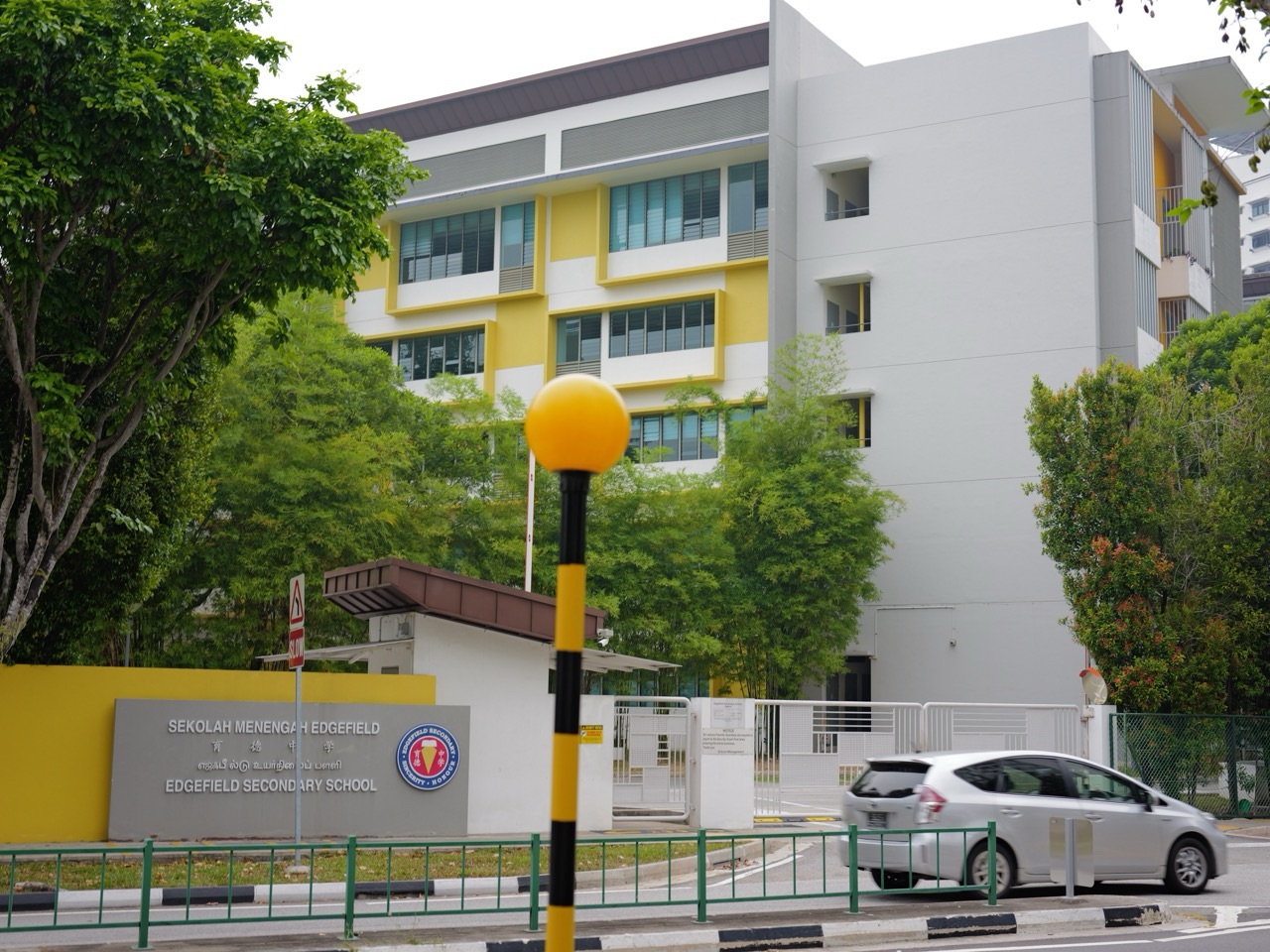
Edgefield Secondary, Greendale Secondary, Punggol Secondary and Yusof Ishak Secondary have their own timetables, programmes and upper-secondary subject offerings. A pupil’s ability to develop a direct diploma-eligible portfolio depends partly on which G3 subjects the school can offer and whether the student meets its readiness and progression criteria.
A family should therefore investigate appropriate subject options during Secondary 2, not wait until the final SEC application period. Ask which upper-secondary combinations are genuinely available, what the student has demonstrated and how a potential diploma’s relevant subjects relate to the school offer. This is a conversation about learning, not an administrative demand for promotion.
The school’s ALP and LLP can help the child explore interests, but participating in a robotics or sustainability project does not automatically create a formal G3 Science or Computing qualification. Projects are valuable; examinable subjects have separate requirements.
Keep a record of the student’s actual strengths and learning needs, and revisit career interests as the teenager develops. A well-informed plan retains flexibility without pretending every option is guaranteed.
The hidden problem of overloading the student’s week
A parent who wants direct diploma eligibility may pressure a PG2 pupil to take every available demanding subject, attend multiple tuition lessons and build an impressive portfolio. The result can be exhaustion rather than improved learning. A subject at G3 requires sustained readiness and appropriate challenge; formal eligibility is not a reward for maximum hours of activity.
Review the student’s ordinary week. Include school, travel, CCA, meals, sleep and independent homework. Is there time to consolidate algebra, read widely and understand feedback? A teenager who is chronically tired may struggle with basic reasoning despite excellent intentions.
If the child needs help, diagnose it precisely. A repeated misunderstanding of functions, a weak reading inference or poor Science explanation warrants targeted teaching. An indiscriminate pile of past papers may create the appearance of effort without addressing the difficulty.
Progress should be judged by whether the pupil can solve changed problems independently, not whether the study calendar looks impressive.
How to research a diploma course properly
Begin with MOE CourseFinder and the polytechnic’s official programme page. Record the diploma title, current course code, relevant aggregate category, minimum subject grades, key modules and typical learning tasks. Then examine whether the child would enjoy the work. A well-written description should reveal more than promotional language about career prospects.
Choose two or three programmes for genuine comparison. Ask what the student would be required to create, calculate, investigate or explain each week. What is different about the modules? Are there practical sessions, substantial projects or health-related suitability conditions? How long is the commute from Punggol? These questions turn an abstract aspiration into a realistic choice.
Check for dated information. An official page may list a 2026 JAE net range, while a school-leaver guidance page discusses 2028 changes. Those are not contradictory if labelled correctly; they refer to different application years and calculation frameworks. Never copy the old range without its year.
If important requirements remain unclear, contact the institution or the student’s ECG adviser. Guessing is unnecessary when a formal question can be asked.
Three hypothetical PG2 applicant profiles
Four G3 results and one G2 Best. A fictional pupil develops G3 English, Mathematics, Science and a relevant Humanities subject, while retaining an additional eligible Best subject at G2. The family may investigate the 2028 direct diploma framework because the published structure permits one G2 Best. Whether the particular diploma’s two Relevant categories are satisfied still needs checking.
Strong G2 performance but too few G3 components. A second pupil has excellent G2 grades but only two G3 subjects. The child cannot assume the revised direct diploma formula is satisfied, because four components remain at G3. The family can investigate PFP and other relevant pathways under their own rules while continuing appropriate academic preparation.
A low aggregate with a missing prerequisite. A third student has an attractive illustrative ELR2B2 total but did not offer the specific Mathematics or Science subject required by a chosen course. The numerical score does not create eligibility. The family should explore related eligible diplomas or another pathway instead of treating the institution as obligated to waive the published requirement.
These are fictional examples. They illustrate the importance of full subject records, not any live admissions outcome.
Common direct-polytechnic misunderstandings
One myth is that all PG2 pupils can count five G2 results for direct Year 1 entry after 2028. They cannot under the announced general structure: four relevant components remain at G3. Another is that having a net aggregate under 22 guarantees a place. Individual course requirements, ranking and vacancies still matter.
A third is that the weaker of two G3 Best subjects should be copied as its original G3 numerical value when the current formula requires mapping. The correct approved mapping must be used. A fourth is that the same two Relevant subjects qualify for every diploma. ELR2B2 categories differ according to course type.
A fifth is that a 2026 net cut-off range predicts exactly what will happen in 2028. The formula changes, applicant preferences change and vacancies are not predetermined. A sixth is that tuition or an impressive portfolio can bypass formal prerequisites. Neither can create a qualification the student has not earned.
An honest family guide teaches the correct conditions before it offers encouragement.
Frequently asked questions
Does entering through PG2 block direct polytechnic admission?
No. Actual SEC subject levels, grades and the applicable course-specific admissions rules determine eligibility.
What is the major 2028 G2 change?
One eligible G2 subject can be counted as the final Best component in ELR2B2. The other four required components remain at G3.
Does a pupil with five G2 grades qualify for direct Year 1?
Not under the announced general ELR2B2 structure, which retains four G3 components. Explore other routes if appropriate.
What is the announced general 2028 net threshold?
Twenty-two points, subject to the current course and framework rules, including any specific exceptions.
Why did the net threshold change from 26 to 22?
MOE adjusted the aggregate because one Best-subject component is expressed on the G2 scale.
What if both Best subjects are at G3?
Under the announced approach, the weaker graded Best subject is mapped to the G2 scale for that component.
Can any subject be used as a Relevant subject?
No. Relevant subject groups vary by ELR2B2 course category. Check the current official list for the named diploma.
Does a net score of 20 guarantee a place when the threshold is 22?
No. Meeting a general threshold is not a guarantee of course allocation or satisfaction of all minimum entry requirements.
Does a PFP applicant use the same aggregate?
No. PFP uses its own G2-based ELMAB3 criteria and foundation-year structure. Direct Year 1 uses ELR2B2 and the diploma’s requirements.
Is Polytechnic EAE ending when PSE begins?
MOE says Poly-EAE will continue. Its aptitude-based and conditional-offer rules need separate checking.
Can a student change diplomas at will after enrolment?
Do not assume so. Transfers depend on institutional policies, academic fit and vacancies. Research before accepting.
Where do families verify the actual requirements?
Use MOE CourseFinder, the institution’s current diploma page and the applicable 2028-or-later PSE instructions.
Your Next Step
Identify two or three genuine diploma interests and read their current entry requirements. Confirm which of the student’s SEC subjects could fill the four required G3 slots and the final eligible Best slot. Use only the official mapping when necessary, check the course-specific minimum grades and discuss readiness with the school. A good pathway decision should combine legitimate eligibility with work the teenager will want to learn.
This article is the direct polytechnic Year 1 owner in the Punggol PG2 series. It complements but does not duplicate the PFP cluster guide, the Higher Nitec route guide and the JC/MI L1R4 guide. Each page answers a distinct admissions decision while recognising that the learner is more than a Posting Group.
Official sources and further Punggol reading
- MOE: 2024 announcement of revised polytechnic Year 1 admissions from 2028
- MOE: New 2028 Post-Secondary Admissions Exercise
- MOE: Direct diploma route under PSE
- MOE CourseFinder
- SEAB: SEC and mapped grades
- Singapore Polytechnic: ELR2B2 category and aggregate guide
- eduKatePunggol: PG2 to PFP from 2028
- eduKatePunggol: PG2 SEC grade mapping


