
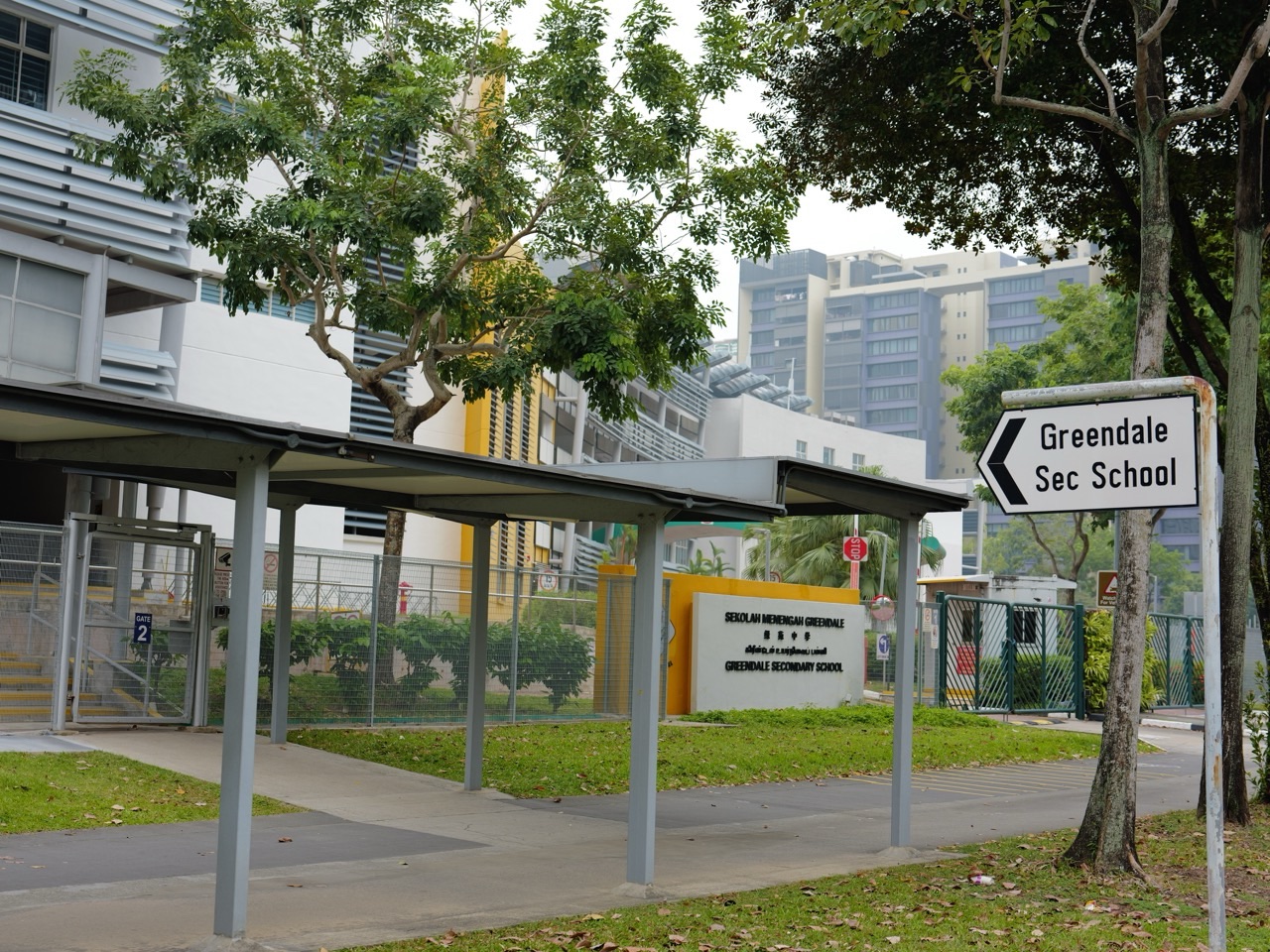
A Punggol student entering secondary school through Posting Group 2 (PG2) faces the same basic questions about school expenses as other students in the school’s mainstream programme: fees, uniforms, textbooks, meals, public transport, learning devices and activities. PG2 is a Secondary 1 admission category under Full Subject-Based Banding, not a separate fee category. For Singapore Citizen pupils in eligible government or government-aided schools, the Ministry of Education Financial Assistance Scheme (MOE FAS) can help families meet necessary schooling costs. The published scheme effective January 2026 uses a gross monthly household income limit of $4,000 or a per-capita income limit of $1,000; families planning for 2027 should verify whether these amounts remain current when they apply.
Under that published 2026 framework, qualifying secondary pupils receive full subsidies for school and standard miscellaneous fees, free textbooks and school attire, subsidies for ten school meals a week, and a public transport subsidy of $21 a month up to $252 annually. Additional help for a personal learning device or home broadband may follow separate school, Edusave or IMDA arrangements. Parents at Edgefield, Greendale, Punggol Secondary or Yusof Ishak Secondary should contact their child’s actual school rather than assume one generic budget or automatically purchase equipment from a retailer.
- What PG2 means: Posting Group 2 affects Secondary 1 admission, not the FAS household means test.
- Published income test from January 2026: Gross household income of $4,000 or less monthly, or per-capita income of $1,000 or less.
- Who qualifies under MOE FAS: Eligible Singapore Citizen full-time students in government or government-aided schools, subject to the official conditions.
- Secondary school fee help: Full school and standard miscellaneous fee subsidy under the 2026 scheme.
- Meals and transport: Subsidies covering ten school meals per week and public transport assistance of $21 monthly, capped at $252 for the year under that framework.
- Books and clothes: Textbooks and prescribed school attire are covered for approved families within the programme rules.
- Devices: Check the school’s PDLP guidance, Edusave eligibility, device funding and any extra support before buying.
- Other needs: Ask about school-based financial assistance even if the household falls outside the published MOE FAS limit.
- Application: Apply through the official process or school, retain the outcome, and check renewal conditions for each school year.
- Important caution: The 2026 benefit table is a dated source, not a guaranteed 2027 award or a substitute for the school’s assessment.
Definition lock: PG2 is not an income category
Posting Group 2 is used for Secondary 1 entry in Singapore’s Full Subject-Based Banding framework. It indicates the general starting subject demand and helps determine a pupil’s school-posting eligibility. G2, by contrast, is a level of an individual subject. Neither term describes whether a household needs financial assistance. A student taking G3 Science and G2 English may need FAS, just as a pupil taking a different subject combination may need it. The two systems measure completely different things.
That distinction prevents a painful misunderstanding. A family may hesitate to ask for help because the child earned a relatively strong PSLE result, or assume that a particular Posting Group automatically brings financial support. The school assesses assistance according to the applicable criteria. Families should never present a PSLE score as a proxy for household income or treat financial pressure as evidence of academic weakness. A school can support both learning and basic participation without confusing the decisions.
The practical question is whether the family can meet ordinary school expenses while maintaining a healthy home routine. The objective of FAS is to make essential attendance, meals, learning materials and travel more affordable. That is different from paying for every optional enrichment programme, private tuition purchase or personal preference.
A well-designed parent guide should show the official eligibility test, the expected benefits, the limits of each benefit, how to apply and what to ask the school. This article does that without inventing the next cohort’s prices or treating one published 2026 chart as a permanent 2027 promise.
Build a real secondary-school budget, not an imagined one
A budget should begin with the actual school your child will attend. The required attire, textbook list, optional materials, device arrangements and CCA requirements may differ. Some expenses occur once at the start of the year; others recur weekly. Mixing them creates a misleading picture. A family may think school is expensive because a December uniform purchase arrives alongside a January device instalment, even when ongoing costs are more modest.
Write four categories: mandatory charges, daily participation, learning equipment and optional activities. Mandatory charges include fees actually billed by the school and required supplies. Daily participation includes transport and meals. Learning equipment may include a personal learning device if prescribed, data access and maintenance arrangements. Optional activities include elective purchases, extra tuition and non-essential enrichment that the child may or may not need.
Ask the school which items are included in an approved subsidy. A heading such as “free school attire” should be read with the official benefit details rather than expanded to unlimited replacements or every optional branded item. Similarly, help with textbooks should be understood from the applicable book-list and assistance process. A family ought to know what it must purchase independently before committing.

The most accurate budget records dates and sources. “School says buy by 20 December” is a different claim from “someone in a parent group remembers buying it last year.” Where a cost remains unknown, mark it for checking instead of assigning a plausible but unverified number.
How the MOE FAS household income test works
The Ministry of Education’s published January 2026 criteria use two alternative thresholds: monthly gross household income of at most $4,000, or monthly per-capita income of at most $1,000. The word or matters. The family does not have to meet both limits to satisfy that part of the scheme. The relevant number still needs to be calculated under MOE’s definitions of eligible household members and income, and other eligibility rules must also be satisfied.
Per-capita income is computed by dividing applicable gross household income by the eligible number of household members. For illustration only, a household with $4,800 in qualifying monthly gross income and five eligible members has a per-capita figure of $960. That example exceeds the $4,000 total-income threshold but falls within the published $1,000 PCI threshold. The numerical result illustrates the logic; it does not prove the family meets every application condition.
The official application instructions specify how household members, income over the relevant period and some additional administrative income are treated. A family should avoid removing an income source simply because it is irregular or assuming that every person who visits the flat counts as a household member. Use the definitions in the actual form and provide accurate information.
If the scheme changes for the 2027 intake, the application must follow the new published criteria. Keep the year beside each quoted limit. This is especially important when an older PDF circulates in a school WhatsApp group after the policy has changed.
Who can apply and who needs a different form of help?
MOE FAS is intended for eligible Singapore Citizen pupils enrolled full time in government and government-aided schools. A pupil’s PG2 status does not override citizenship or school-type conditions. Families in other school categories should check the applicable scheme, including the Independent School Bursary or school-specific support where relevant. Do not treat the FAS page as a universal tuition discount offered to every student in Singapore.
For a parent in Punggol, the simplest first step is to contact the assigned school’s general office or official financial-assistance contact. Ask for the current application route and the documents needed for the household’s circumstances. Families with children in different government or government-aided schools may, under the published guidance, submit a single FAS application through one of those schools, subject to the official process. The receiving school informs the applicant of the outcome.
A household whose income has recently changed should not guess how MOE will assess it. The application instructions describe a period of income assessment and how unemployed or no-pay-leave circumstances are handled. The correct approach is to disclose the relevant facts and seek clarification, not to assume the most favourable number will be used.
Likewise, households slightly above the means-test limit may still have substantial needs. MOE’s guidance indicates that schools can assess additional school-based support case by case. Asking a question does not guarantee approval, but silently giving up can prevent a family from learning about legitimate options.
Fees: what “full subsidy” does and does not mean
The published 2026 MOE FAS table provides a full subsidy of school and standard miscellaneous fees for eligible secondary pupils. This is important because recurring charges can be difficult for families managing several children. It is not correct, however, to translate “full subsidy” into a promise that every conceivable payment requested during four years of schooling will be free.
Some activities involve optional choices or items outside standard fee categories. Others may have separate assistance mechanisms. A parent should read the school invoice and the FAS award notice together to understand what has been covered, what remains payable and whether additional help is available. If a charge seems inconsistent with the award, ask the school before assuming either a mistake or a hidden obligation.
The child’s personal learning needs may generate extra discretionary expenditure. A family might consider tuition, a premium workbook or an overseas learning opportunity. These should be evaluated separately rather than described as mandatory school charges. Some optional opportunities may be valuable, but the family’s financial capacity and the student’s interests must remain part of the decision.
A budget grounded in official fees is more useful than a social-media claim that “every parent spends thousands.” It makes assistance visible and prevents families from confusing marketed extras with school essentials.
Textbooks: collect the right materials before buying duplicates
Textbook lists can change by academic year, subject level and school. A PG2 student may be offered some subjects at G3, which means a generic G2 shopping list may be wrong. Before buying, read the child’s actual subject-level offer and the school-issued book list. Ask whether approved FAS textbooks are provided through a collection system, a vendor or another arrangement.
If the family already has a second-hand book, check whether it is the right edition and syllabus. An outdated edition may omit content or exercises, while a duplicate purchase wastes money. Second-hand materials can be appropriate when allowed, but should not be used to circumvent a requirement for consumable workbooks or an online access component.
An approved FAS award should be translated into practical collection instructions. Does the child need a coupon, proof of award or an appointment? Where will the books be collected? Who should be contacted if one prescribed item is missing? These operational details matter more than a generic claim that “free books” are part of the scheme.
Encourage the teenager to label and care for textbooks without making the materials a source of shame. The books are tools for learning. Families receiving assistance should be able to participate in school ordinarily, without being treated as less committed or less capable.
Uniforms, PE attire and the January purchase rush
Uniform purchases often become stressful because families are handling school reporting instructions, transport, shoes, stationery and perhaps a new device at the same time. Check the school’s current uniform and PE-attire requirements first. Then ask how attire under FAS is issued. The published scheme includes school attire, but the practical quantities and distribution method follow the applicable instructions.
Do not buy every available accessory before school starts. A student may need only the prescribed items immediately, and there may be school-specific guidance on optional clothing. Distinguish what must be worn daily from what is used for PE, CCA or a special activity. If a student is growing quickly, sensible sizing and replacement planning may save future cost.
Families sometimes encounter conflicting advice from older siblings or friends because schools change vendors, designs or reporting arrangements. Treat the current school’s instructions as authoritative. A local photograph showing a uniform from an earlier year is useful for recognising the campus but is not evidence that the garment or purchasing process is unchanged.
If uniform costs remain difficult after the formal benefit, speak with the school. Additional assistance may be available based on circumstances, though it should never be assumed or described as automatic. A child should arrive at school prepared and included, not worrying that an unresolved purchase defines their standing among classmates.
Meal support: what ten school meals a week really means
The 2026 MOE FAS secondary-level benefit provides meal subsidies covering ten meals per school week. The phrase does not mean unlimited spending at the canteen or reimbursement for every restaurant purchase. The school will explain the practical disbursement or use mechanism and any relevant conditions. Parents should ask how a pupil accesses the benefit and whether the student needs to take any action.
Meals matter educationally because hungry pupils may struggle to concentrate or participate in afternoon activities. A school day with CCA can be long, and a student who regularly skips meals may become tired or irritable. The aim is to make a normal school routine feasible. Families need not treat the subsidy as a luxury or apologise for using a benefit intended for eligible students.
Talk to the child about choosing food and timing meals sensibly. If a CCA ends late, discuss whether the student can eat at an appropriate time and how the evening meal fits the home routine. If the pupil has dietary restrictions or a medical need, raise that through the appropriate school channels rather than assuming every food outlet offers the required option.
For financial planning, remember that the published application instructions do not promise retrospective reimbursement for meals incurred before assistance becomes effective. Apply promptly and verify the award’s start month to avoid an unpleasant surprise.
Transport: why the Punggol journey must be costed
Punggol’s secondary schools sit in different parts of the estate. A student near one LRT station may have a very different route from a classmate on another side of the town. Map-based distance is not the same as the actual bus, LRT or walking journey. A realistic budget should reflect the child’s daily route, frequency of travel and what happens after CCA rather than a parent’s occasional car trip.
The published 2026 FAS benefit includes a public transport subsidy of $21 per month, up to $252 annually, subject to the effective month and applicable conditions. It is not a promise that all journeys will cost exactly that amount or be fully covered. If the child travels less or more, the family’s actual spending may differ. Check student travel concessions through the appropriate transport authority rather than assuming an adult fare model.
Practise the route before term begins. Where does the child board, alight and transfer? What if an LRT service is delayed? Is there a safe backup in heavy rain? Transport independence has an educational benefit as well as a cost: it reduces uncertainty and helps the student start lessons with more attention available.
A family should not treat a more distant school as automatically better merely because it has a reputation. Travel uses time and money every day. When choosing activities, account for the late return trip and the effect on homework, rest and family life.
Personal learning devices: ask before paying
Secondary schools may require or facilitate the use of personal learning devices through the Personalised Digital Learning Programme. The approved device model, purchase instructions and payment arrangements depend on the current school programme. A parent should not buy a particular laptop simply because a website lists it as a “best device for PG2”. The pupil’s subject group is not a retail specification.
MOE’s Edusave arrangements can allow eligible Singapore Citizen students to use Edusave funds for approved personal learning device purchases, and schools provide information about applicable subsidies or support. That does not mean every family receives an unrestricted cash payment or may buy any consumer device. The approved purchase, account balance and school rules matter.
If the family’s problem is insufficient home broadband or shared access to a computer, ask about the relevant support separately. The MOE FAS factsheet points to IMDA’s DigitalAccess@Home for subsidised broadband and/or a laptop or tablet for eligible low-income households. Criteria and availability must be checked directly with IMDA; participation in FAS alone should not be presented as automatic approval.
Consider the ongoing needs of the device: safe storage, charging, connectivity, repairs and learning-platform access. Ask whom to contact if a school-issued or approved device fails during an assessment or HBL day. A workable support plan is more valuable than purchasing an expensive device that cannot access the school’s required platform.
Edusave is not the same as FAS
Edusave and MOE FAS are different mechanisms. Edusave provides education-related funds for eligible Singapore Citizen pupils, with permitted uses that can include approved school programmes and personal learning devices. FAS is a means-tested assistance scheme for essential schooling expenses. A family may encounter both, but should not treat them as interchangeable bank accounts.
This matters when a parent reads a letter requesting consent to use Edusave for an approved activity. The deduction is not necessarily a new school fee, and it is not automatically an FAS payment. Ask how the charge is funded, whether consent is required and what happens if the balance is insufficient. School offices can explain options in the specific case.
An annual Edusave contribution figure found online may be historical or subject to update. The relevant figure for a pupil is the current account information and the programme’s eligible uses. Avoid building a 2027 budget from an undated screenshot or a figure copied from an older cohort.
Financial literacy begins with precise labels. A child who knows that a subsidy, an account deduction and a parent-paid expense are different things learns to ask more sensible questions about money. Parents can include the pupil in an age-appropriate discussion without burdening them with adult anxieties.
Applying early and checking the effective month
The timing of an FAS application can affect when support begins. The published application form explains that an approved application, processed before the end of a month, ordinarily places the child on FAS from the following month, subject to its terms. It also explains the absence of retrospective subsidy for specified earlier expenditure. This is a reason to apply promptly, not a reason to claim that every application will be approved immediately.
Find the official form or application route from MOE or the school. Complete household details accurately and include any required evidence. Keep a record of the submission and any request for additional information. If a field is unclear, ask rather than supplying a guessed income. A truthful application protects the family from later problems.
When approval arrives, read the effective date and the named benefits. Ask whether any items require collection or separate school arrangements. If the family expects a public transport subsidy but has not understood how it is implemented, clarify before the term starts. If an application is unsuccessful, request information about other school-based assistance that might be appropriate.
The published instructions also indicate fresh applications for each school year. Families planning several years of secondary education should put an annual review reminder in their home calendar, rather than assuming the previous award continues forever. Always check the latest requirements when that time arrives.
What if a parent loses work during the school year?
Financial circumstances can change quickly. A caregiver may lose a job, become ill, experience reduced working hours or face unexpected expenses. None of these events is caused by the child’s Posting Group. The family should contact the school promptly and explain that the household’s financial position has changed. Officials can advise on how the current income assessment and supporting documents apply.
Do not wait for an end-of-year report card to ask for support. Meals, transport and school materials are everyday needs. If the household cannot afford them, early communication may help identify appropriate assistance or temporary arrangements. A school may have case-by-case support mechanisms beyond the main published scheme, but the exact outcome must not be presumed.
A parent should also be careful about income calculations. The official FAS form describes how recent or twelve-month average income may be considered, including periods of unemployment or no-pay leave. The family should neither conceal income nor decide eligibility from one payslip without reading the instructions.
Protect the child’s privacy and dignity. Explain what they need to know about practical arrangements, but do not make the teenager responsible for resolving adult finances. A student can help by caring for materials and planning transport without carrying the emotional burden of an employment crisis.
How to ask the school’s office for financial help
Prepare a short, factual enquiry. Identify the child’s year and the assigned school, ask for the current FAS application process, and explain whether the main difficulty concerns fees, books, uniform, meals, transport or devices. Avoid sending private income documents through informal messaging channels. Use the method the school authorises for such information.
A sample question might be: “Our child is entering Secondary 1. Could you confirm the current MOE FAS process and whether separate assistance is available for the prescribed learning device?” This gives the administrator a clear purpose. If the household’s circumstances are unusual, ask whom to speak to privately about documentation and eligibility.
When a staff member provides a website or form, check the domain and whether it is current. Scammers can imitate government or school messages. Parents should not provide Singpass credentials or banking passwords to anyone claiming to process an education benefit. Use established school or government access channels and raise suspicious messages with the appropriate authority.
The goal is an accurate route to support. A good enquiry respects confidentiality, allows the office to apply official criteria and gives the family a list of next actions. It does not require an elaborate explanation of the child’s academic strengths or future ambitions.
What an honest sample annual budget can show
Consider a hypothetical household budgeting for a Secondary 1 student at a Punggol school. Instead of assigning unverified 2027 prices, the parent creates a table with actual quoted costs for school charges, prescribed books, uniform, meals, travel and device arrangements. A second column records confirmed assistance and when it begins. A third shows the remaining household amount. A fourth records which figures still need confirmation.
The method reveals where uncertainty matters. A school might provide textbooks after FAS approval, but a parent might otherwise have purchased the entire list early. A device may have an approved funding route, yet the parent might be about to buy an incompatible model. The main benefit of the budget is therefore not the sum alone. It is the prevention of unnecessary expenditure.
Suppose the family’s actual daily food spending is higher than the approved subsidy covers. The difference should be budgeted rather than hidden by saying “meals are free”. Similarly, a transport subsidy does not mean every additional journey after an optional activity costs nothing. Accuracy helps families make sustainable commitments.
Include a small contingency where possible for replacement supplies, travel disruptions and ordinary school-life changes. If that is not affordable, ask the school what support may exist. The objective is a realistic and humane plan, not a perfect spreadsheet that makes financial strain invisible.
Three Punggol household examples
Example one: a five-person household above the gross threshold. A fictional family reports qualifying monthly income of $4,800 and five eligible household members. The illustrative PCI is $960. Under the published January 2026 income threshold, the per-capita criterion could be met even though the gross-income criterion is not. Actual eligibility also depends on citizenship, enrolment, income definitions and application assessment. The family should submit truthful information rather than assume automatic rejection.
Example two: a parent about to buy a laptop. A pupil has entered via PG2 and a parent sees a device advertisement. The family first checks the assigned school’s PDLP instructions, supported model, approved vendor, Edusave treatment and additional assistance. That avoids purchasing a device that may not meet the school’s requirements. The student’s G2 or G3 subjects do not determine the brand of computer.
Example three: unexpected loss of income. A caregiver loses work several months after the child begins school. The parent contacts the school, explains the changed situation and asks which FAS or school-based support options can be assessed. The child continues focusing on lessons while adults handle the application. The family does not assume that the prior term’s financial position permanently excludes future help.
These cases are hypothetical and do not disclose real Punggol households. They demonstrate decisions that can be checked against official rules.
Financial help and the wider meaning of learning opportunity
A child who can travel to school reliably, eat during a long day and use required learning materials has better conditions for participation. Financial assistance should be understood in this practical way. It is not an award for a particular PSLE score or a judgement about parental effort. It addresses barriers that can interfere with education.
There can also be barriers that money alone does not solve. A student may need a structured homework routine, better reading support or clarification about a subject level. Parents should separate those concerns from the financial application. The school may assist with learning and wellbeing through different staff or programmes. Good communication allows each problem to reach the appropriate person.
Private tuition should not be presented as a mandatory expense for every PG2 pupil. A learner who is progressing well with school teaching and independent work may need no extra lessons. A student with a persistent misconception may benefit from targeted tutoring, but the family should assess affordability and educational value honestly rather than responding to fear-based advertising.
An effective education system makes room for students of differing strengths and household circumstances. The aim is not that every child follows an identical expenditure plan, but that financial barriers do not unnecessarily determine whether a child can participate meaningfully in school.
Frequently asked questions about PG2 school costs
Is PG2 a special school fee band?
No. PG2 is a posting group for entry, while school costs and assistance follow the school’s actual charges and the applicable government criteria. G2 and G3 subject levels should not be interpreted as separate tuition-fee prices.
What are the published MOE FAS income limits?
The January 2026 published thresholds are gross monthly household income of at most $4,000 or per-capita monthly income of at most $1,000. Confirm the latest rules before applying for a later school year.
Must we meet both the gross and per-capita limits?
No. The published eligibility test uses “or”. A household can satisfy either income criterion, subject to the other official conditions and correct income calculation.
Are textbooks and uniforms covered?
Under the published MOE FAS secondary benefit, eligible pupils receive free textbooks and school attire. Follow the school’s instructions about prescribed items and collection; do not assume an unlimited clothing allowance.
Does the transport subsidy cover the entire commute?
Not necessarily. The published 2026 benefit is $21 per month for public transport, capped at $252 annually, subject to conditions and effective month. Compare it with actual travel expenditure.
Does MOE FAS pay for every meal?
The published secondary benefit covers subsidies for ten school meals per week. The school can explain how they are used. It is not an unlimited cash allowance for all food purchases.
Do FAS pupils get any laptop they want?
No. Learning-device funding, Edusave use, approved models and additional support follow specific programmes. Check the assigned school’s instructions and any current IMDA eligibility.
Can a non-Singapore Citizen pupil apply under the same MOE FAS?
The published scheme is for eligible Singapore Citizen pupils in the specified school types. Other families should ask the school which support mechanisms or criteria may apply to them.
Can families above the threshold still ask for help?
Yes. Schools may assess additional school-based financial assistance case by case. Asking does not guarantee approval, but it is a legitimate next step when ordinary expenses are difficult.
Is approval backdated to the start of the year?
Do not assume so. The published application conditions state that certain benefits take effect according to the approval timing and do not reimburse earlier expenditure. Verify the award letter and its effective month.
Do families have to apply again the next year?
The published application instructions call for fresh applications for each school year. Confirm the latest process when renewal approaches.
What if there are several children at different MOE schools?
The published guidance allows one application through any of the government or government-aided schools in qualifying circumstances. Follow the official form and ask the schools to confirm the correct process.
Your next step: a private, practical checklist
Before paying for the new school year, gather the assigned school’s current required-item list and the latest MOE FAS guidance. Calculate income using official definitions, ask about school-based support, note the correct application route and confirm any device or transport arrangements. Build a realistic budget with source dates instead of numbers copied from an older intake.
This article explains the financial side of entering secondary school through PG2. For the admission decision, use the separate PG2 school-choice guide; for actual learning levels, use the PG2 G2/G3 article. Each page serves a different family decision, so the reader does not have to wade through repeated admissions explanations to find practical help.


