
For a Punggol student entering Secondary 1 through Posting Group 1 (PG1), an Applied Learning Programme (ALP) and a Learning for Life Programme (LLP) can provide meaningful learning beyond the usual academic lesson. An ALP connects classroom knowledge with practical problems, creativity and real-world applications. An LLP develops character, values, leadership or personal growth through authentic experiences. They are not alternative admission groups, and a pupil studying Mathematics or English at G1 does not automatically lose access to the school’s ordinary student-development programmes. Participation in selective extensions, competitions or specialist components still depends on the individual school’s arrangements.
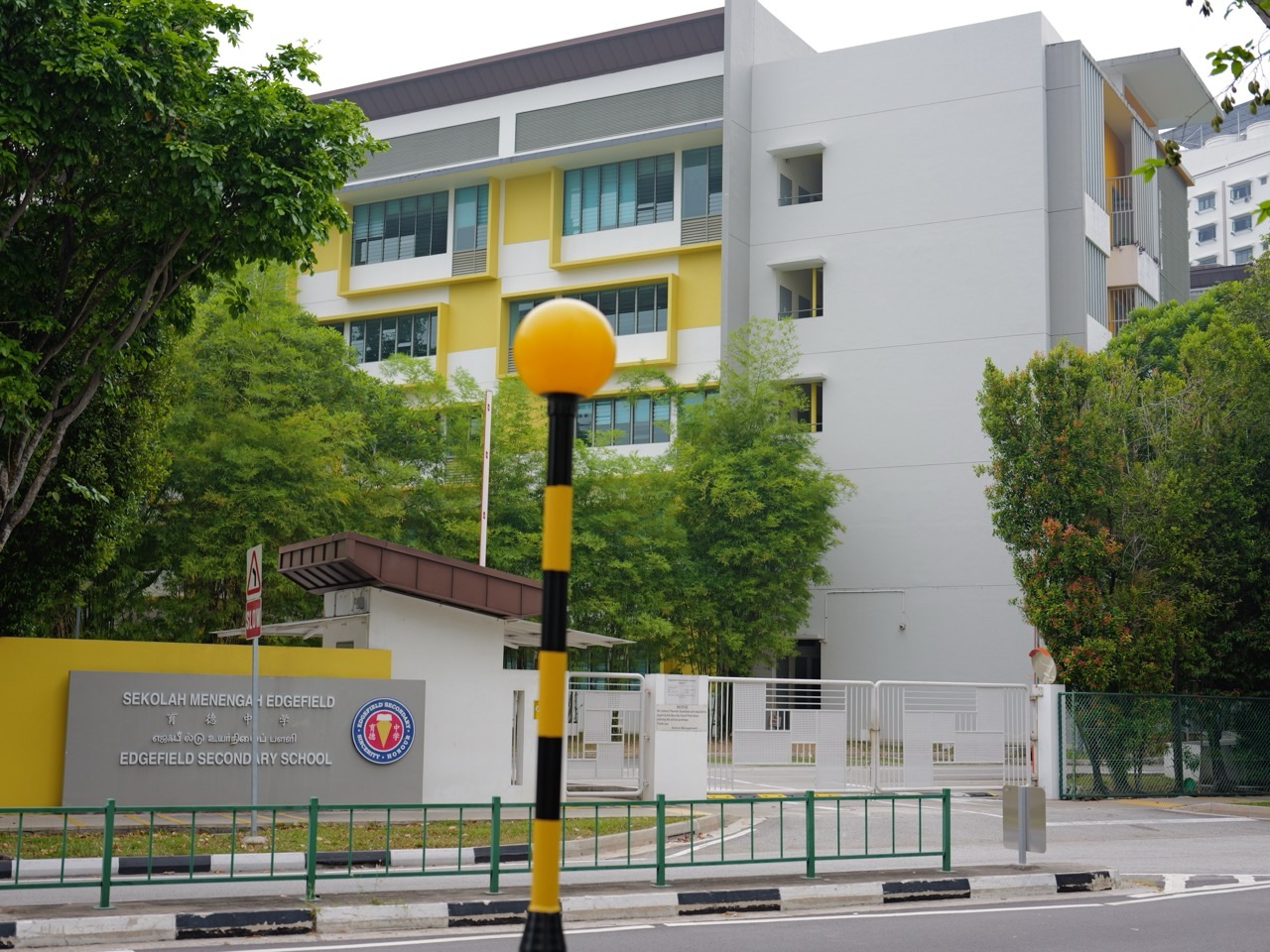
Punggol’s four established mainstream secondary schools currently describe distinct programme emphases. Edgefield highlights entrepreneurial problem-solving through Growing the Edgefield Mindset (G.E.M.) and character development through sport anchored on Taekwondo. Greendale focuses its ALP on design, technology and engineering and its LLP on outdoor adventure education. Punggol Secondary has described environmental sustainability and community leadership, while Yusof Ishak Secondary highlights sustainability-related STEM through S4TEM@YI and leadership through YI LEAD+. For the 2027 intake, parents should check each school’s latest site and MOE SchoolFinder before assuming any particular module, timetable or admission eligibility. This guide is about what a PG1 pupil can learn from those opportunities, not about ranking schools by programme names.
- PG1 refers to Secondary 1 admission; it does not decide a pupil’s worth or automatically exclude them from school programmes.
- ALP = Applied Learning Programme, connecting learning with authentic problems and applications.
- LLP = Learning for Life Programme, strengthening character, values and wider personal development.
- Edgefield: G.E.M. entrepreneurship and Taekwondo-anchored character development.
- Greendale: design, coding and engineering alongside outdoor adventure learning.
- Punggol Secondary: environmental sustainability and community/youth leadership.
- Yusof Ishak: S4TEM@YI sustainable smart-city STEM and YI LEAD+ leadership.
- Read school notices to distinguish shared curriculum experiences from selective enrichment or competitions.
- ALP participation does not equal a DSA offer, a G2 subject transfer or automatic LEAPS 2.0 bonus points.
- Use programme fit alongside actual PG1 eligibility, daily travel, student support and CCA interests.
School programmes checked against official information available 1 November 2026. School participation, resources and PG1 admissions vary by cohort and must be confirmed directly.

Contents: What PG1 Families Should Know About ALP and LLP
- 1. Definition Lock: ALP, LLP, PG1 and G1
- 2. What Makes Applied Learning Different From Extra Homework?
- 3. How LLP Adds Something Different
- 4. The Four Punggol Schools Are Not Interchangeable
- 5. Edgefield’s Growing the Edgefield Mindset (G.E.M.)
- 6. Edgefield’s Taekwondo-Anchored Learning for Life
- 7. Greendale’s Design, Technology and Engineering ALP
- 8. Greendale’s Outdoor Adventure LLP
- 9. Punggol Secondary’s Environmental Sustainability Direction
- 10. Punggol Secondary’s Community and Youth Leadership
- 11. Yusof Ishak’s S4TEM@YI Programme
- 12. Yusof Ishak’s YI LEAD+
- 13. Compare Programme Learning Goals, Not Just Names
- 14. What All Students Receive Versus Selective Opportunities
- 15. ALP Is Not the Same as a DSA-Sec Offer
- 16. LLP Is Not an Automatic LEAPS 2.0 Bonus
- 17. How ALP Can Support G1 English Skills
- 18. How ALP Can Support G1 Mathematics
- 19. How ALP Can Support Science and Inquiry
- 20. Practical Work Still Requires Safety
- 21. How to Ask Useful Questions at an Open House
- 22. The Punggol Commute Still Matters
- 23. A Fictional PG1 Student Finds a Strength in Design
- 24. A Second Case: Community Service Changes a Student’s Perspective
- 25. A School Programme Should Not Become a Brand Ranking
- 26. What Parents Can Do After a Programme Activity
Definition Lock: ALP, LLP, PG1 and G1
ALP is an educational programme using real-world contexts to strengthen competencies. LLP provides structured opportunities to develop character and wider life skills. PG1 is an admissions Posting Group, while G1 is a subject level under Full Subject-Based Banding. A pupil can be admitted through PG1 and participate in school experiences built around the ALP or LLP without being assessed in those programmes as a substitute for English or Mathematics examinations. These categories should stay distinct.
Parents sometimes hear “applied” and assume it describes a less demanding academic route. That is a misunderstanding. Practical activities may require careful reading, mathematics, scientific reasoning and collaboration. They can be highly challenging in a different way from a written examination. The correct questions concern what pupils do, how they are supported, and which opportunities are shared or selected, rather than whether an ALP is “for PG1 only”.
What Makes Applied Learning Different From Extra Homework?
A useful applied-learning task begins with a situation that does not arrive as a pre-solved textbook exercise. Pupils may identify an environmental problem, ask questions of users, design a prototype, test a solution or communicate findings. They must connect ideas across subjects and revise their approach when evidence contradicts their first attempt. That experience can make abstract academic concepts more understandable by giving them a purpose.
A PG1 pupil who struggles with long written answers may demonstrate strong observation or practical reasoning during a project. Teachers can use such moments to support the language and numerical skills needed to explain the result. Parents should ask the child what decision they made, why it worked or failed and what they would change. This reveals genuine learning better than asking only whether the project won an award.
How LLP Adds Something Different
A Learning for Life Programme puts character, social responsibility, resilience and other personal capabilities into experiences where choices have consequences. A student may work with a team, carry out a community task, learn safe outdoor judgment or take responsibility for a shared event. The value lies not just in participating but also in reflecting on how the experience changes behaviour. Schools implement these programmes according to their distinctive design.
For Punggol parents, a useful test is whether a child can give a concrete example of growth. Did they listen when another teammate disagreed? Did they return to a task after failure? Did they contribute respectfully to someone outside their own class? These are signs that an LLP experience is being transferred into life. They matter regardless of the pupil’s G level in Mathematics or Mother Tongue.
The Four Punggol Schools Are Not Interchangeable
Edgefield, Greendale, Punggol Secondary and Yusof Ishak Secondary are separate schools with different educational identities. They are all reasonable local starting points when exploring what Secondary 1 life can offer, but a name on this page is not evidence of an available PG1 vacancy or a guarantee of a particular module. Official school publications describe their aims while actual activities may be revised from year to year.
Before making any school choice, verify the school’s current PG1 admission information and the actual programme details. A parent may prefer environmental education, while the child is attracted to engineering or entrepreneurship. Both views deserve discussion. Programme fit belongs alongside teaching support, CCA availability, school culture and journey time. A vivid programme description should never replace the actual admissions eligibility notice.
Edgefield’s Growing the Edgefield Mindset (G.E.M.)
Edgefield Secondary School describes its ALP as Growing the Edgefield Mindset, or G.E.M. Its official 2026 publication emphasises inventive thinking, problem definition, communication and collaboration, along with entrepreneurship and intrapreneurship. Student activities can involve real challenges, ideas for solutions and opportunities to put those solutions into action. The school’s broader Future Ready Programme gives such learning practical contexts beyond standard worksheets.
A PG1 student could gain value from learning to recognise a customer’s need, estimate costs, explain a design or respond to feedback during a team project. None of these tasks requires pretending the child already knows how to run a company. Parents can encourage honest reflection: which part of the solution was yours, what did the team discover, and what was difficult to explain? The school’s current module list remains the authoritative description for the actual cohort.
Edgefield’s Taekwondo-Anchored Learning for Life
Edgefield’s official LLP information describes character education through sport, anchored on Taekwondo. Its aim includes respect, resilience and excellence through sports-related learning experiences. The school describes lower-secondary Taekwondo experiences as a way to teach routines, etiquette and the values associated with the programme. This is distinct from claiming that every pupil must join a competitive Taekwondo CCA.
A family can ask how the school organises ordinary student participation, safety and progressive learning, especially if the child has no previous martial arts experience. A pupil may learn respect through listening, persistence through practising a movement, and self-control through following safety instructions. These are valuable outcomes independently of competitive grades or belts. As always, the school’s current 2027 arrangements determine what exactly is scheduled.
Greendale’s Design, Technology and Engineering ALP
Greendale Secondary School’s official ALP page describes an emphasis on design, technology and engineering. The programme encourages pupils to design, code and build, using design thinking and technologies such as microcontrollers to tackle practical challenges. These experiences can connect a student’s curiosity about devices with classroom habits of observation, problem-solving, measuring and explaining. A pupil need not already be a programmer to be curious about how a system works.
Parents can ask the child to describe the problem before describing the technology. What was the design supposed to do? How was it tested? What did the team learn from an unexpected failure? Such questions highlight reasoning rather than gadget ownership. PG1 students still need strong foundations in the subject-level Mathematics and English they offer, but an engineering project can provide a motivating context for using those skills accurately.
Greendale’s Outdoor Adventure LLP
Greendale identifies outdoor adventure education as its Learning for Life Programme. Its 2026 school open-house description connects this experience with confidence, resilience and the capacity to work in groups. Outdoor learning can involve navigating unfamiliar conditions, making safe decisions and supporting teammates. These competencies are useful beyond a campsite, even for a pupil who does not consider themselves especially athletic.
A family should ask what the student actually does, which safety arrangements apply and how the school supports beginners. Not every adventure-related activity is a competition or an unsupervised expedition. Students should learn to recognise risk and ask for help, not to take reckless challenges to impress peers. For a PG1 pupil, these experiences can be opportunities to develop dependable habits and relationships with classmates from different academic backgrounds.

Punggol Secondary’s Environmental Sustainability Direction
Punggol Secondary School has described an Applied Learning Programme focused on environmental sustainability, connecting science with responsible use of resources and the natural world. Published school examples have included waste management and clean energy at lower-secondary levels, with opportunities to consider how environmental decisions affect the community. Parents should check the current school’s programme pages to verify whether any particular activity remains in the 2027 timetable.
A practical sustainability task can reveal many skills. Pupils might identify how waste is generated, interpret data, compare possible changes and communicate a feasible recommendation. The learning need not depend on advanced laboratory equipment. A teenager who can make observations carefully and explain the reasoning behind a proposal is practising valuable science and communication. The aim should be responsible thinking rather than collecting photographs of a token recycling activity.
Punggol Secondary’s Community and Youth Leadership
The school has also described a Learning for Life Programme in community and youth leadership. Its materials connect participation with caring for the environment, community partnerships, service and student voice. These experiences can help pupils understand that leadership is a practical responsibility rather than only a badge worn by a prefect. The exact activities and progression can change with the school’s current planning.
Parents can encourage the pupil to focus on a genuine contribution. Did a group activity help someone? Was the plan informed by the people it was intended to serve? Could the student identify what might be improved next time? A PG1 pupil who is quiet in academic lessons can still make a meaningful difference through reliable teamwork. Such development matters even if the student never receives a formal leadership appointment.

Yusof Ishak’s S4TEM@YI Programme
Yusof Ishak Secondary School describes its ALP as S4TEM@YI, connecting STEM learning with sustainable smart-city challenges. Official examples include urban farming, coding, aeronautics and learning with people from relevant fields. The emphasis is not on treating every child as a future engineer from the first day of Secondary 1. It is on exposing students to the ways scientific and technological thinking can address societal needs.
A Punggol family living near the wider digital-district environment may find these themes especially relatable. Ask how an imagined smart system would work and who would benefit from it. Then return to the pupil’s actual lesson: measuring accurately, interpreting evidence, using safe digital tools and communicating with a team. A programme can spark interest in a field without guaranteeing admission to a university or employment with any nearby organisation.
Yusof Ishak’s YI LEAD+
Yusof Ishak Secondary’s LLP is presented as YI LEAD+, focused on nurturing honourable leaders with a global outlook and a desire to contribute positively. The school describes leadership development through opportunities for reflection, training, peer support and engagement with the wider community. This is a framework for student growth, not a promise that every pupil will hold a formal office.
Leadership can begin with small choices: listening to a new classmate, explaining a group task clearly, accepting responsibility after an error and considering the needs of others. Parents should encourage these behaviours instead of demanding a title at the start of Secondary 1. The student can develop initiative while continuing to strengthen subjects they find difficult. Academic level and personal character are related through learning habits, not identical by definition.

Compare Programme Learning Goals, Not Just Names
A family may compare a coding programme with an entrepreneurship programme and ask which one is better. That question has no universal answer because the goals differ. Design and technology may cultivate systematic prototyping; entrepreneurship may emphasise opportunity recognition; outdoor adventure may develop judgment under changing conditions; community leadership may sharpen service and communication. Each can be educationally worthwhile.
A useful comparison starts with the child. Which activities have they enjoyed consistently? What kind of challenge motivates them? Do they prefer solving a technical problem, collaborating with people, performing or investigating nature? The family should also examine what the school teaches explicitly and what access students actually have. A prestigious-sounding title is weak evidence of fit if the child does not understand or enjoy the underlying work.
What All Students Receive Versus Selective Opportunities
School programmes may include experiences delivered during ordinary curriculum hours as well as extensions, competitions, leadership opportunities or specialised projects offered to selected students. It is incorrect to assume that every pupil is automatically entitled to every named extension, just as it is incorrect to assume a PG1 entrant is excluded from every meaningful programme. Specific eligibility, safety, timetables and resourcing determine access to each component.
Ask the school to distinguish the baseline experience from optional or selected pathways. Which modules are part of the Secondary 1 timetable? Which require application? Are competitions open to beginners, or do pupils need particular preparation? The clearer the answer, the easier it is for parents to plan. Avoid promising the child a position on a robotics team or a major performance simply because the school website mentions it.
ALP Is Not the Same as a DSA-Sec Offer
An ALP is part of a school’s educational programme, while DSA-Sec is an admission process with its own talent domains and eligibility rules. A school may have an exciting ALP without using that precise topic as a DSA admission route. Even where there is a related talent area, participation in a public showcase or interest in the programme does not establish an offer.
Parents must not advise a PG1 pupil that selecting an ALP-oriented school automatically waives the PSLE requirements. Use MOE’s current DSA documentation for admissions and the school’s programme description for ordinary learning. Keeping the distinction clear protects families from paying for speculative portfolio services or assuming an educational activity is an admission guarantee.
LLP Is Not an Automatic LEAPS 2.0 Bonus
LEAPS 2.0 recognises specified aspects of participation, achievement, leadership and service under MOE’s criteria. An LLP can support development relevant to those domains, but its existence does not mean a pupil automatically receives every type of attainment or future post-secondary bonus point. Schools record qualifying participation through their own processes within the official framework.
Encourage the child to participate authentically and keep appropriate records when the school requests them. The value of leadership, collaboration or community contribution begins before a formal score is calculated. A pupil starting Secondary 1 in 2027 should also recheck the post-secondary admissions framework in their actual graduation year. An old graphic about point deductions is not a permanent promise.
How ALP Can Support G1 English Skills
A project often requires reading a brief, asking questions, explaining an idea and writing a short reflection. These are all communication tasks, even if the project is mainly technical or environmental. A student working at G1 English may be able to describe a design verbally but struggle to organise that description in writing. A good learning connection makes the language demand clear and manageable.
At home, ask the student to describe the project’s purpose in three sentences: what problem did we notice, what did we try, and what did the evidence show? Avoid writing the answer for them. Use the teacher’s subject-level expectations to improve the explanation gradually. Applied activity becomes more valuable when the pupil can communicate what they actually learned.
How ALP Can Support G1 Mathematics
Practical tasks can involve measurement, estimation, scale, budgets, data or logical sequences. A student may be more motivated to check a ratio when it relates to a model the team is building. But real-world context alone does not guarantee mathematical understanding. The teacher still needs to explain the required operation and provide suitable practice at the pupil’s actual G level.
A parent can ask the child to estimate before calculating and check whether the answer makes sense. If a group compared costs, which quantities did it measure? If a device moved a certain distance, how was the measurement taken? These conversations connect mathematical reasoning to a task without pushing the student into an unsuitable advanced syllabus. Accurate fundamentals support applied learning more reliably than impressive technical vocabulary.
How ALP Can Support Science and Inquiry
Environmental sustainability, engineering and smart-city activities can all require observations and evidence. Pupils should learn to distinguish what they measured from what they guessed, compare possible explanations and recognise limitations. A fictional classroom project about conserving water might ask students to record usage, test an idea and explain whether the proposed solution would work in another setting.
Parents need not purchase specialist laboratory equipment to extend this learning. Ask what evidence the class gathered and whether the conclusion follows from it. When something is uncertain, say so. This habit of responsible inquiry supports Science lessons and everyday decision-making. It also prevents the family from treating every technical demonstration as proof that a student already understands the underlying concept.
Practical Work Still Requires Safety
Workshop tools, digital devices and outdoor activities have safety rules, supervision needs and appropriate age-related limits. A programme website may show an exciting drone, climbing activity or prototype, but that image does not authorise a child to reproduce it unsupervised at home. Families should follow the actual school activity requirements and guidance.
A student can develop sound judgment by asking what the hazard is, who is responsible for supervision and which procedure makes the activity safer. This is especially valuable in an LLP emphasising resilience: safe challenge is not the same as needless risk. Where the pupil has access, mobility or other needs, discuss suitable arrangements with the school before the activity rather than making assumptions about the child’s capabilities.
How to Ask Useful Questions at an Open House
Ask a teacher to describe what a Secondary 1 pupil actually does in the ALP and LLP. A good answer includes a task, the skills being developed, the assessment or reflection process and how students are supported. Ask which parts involve the full cohort and which are selective. Where the school offers an official open house, let the child try to speak with a student guide.
Parents can also ask what happens if a pupil is shy, has no previous coding experience or finds written explanation challenging. The purpose is not to demand a special guarantee but to understand the teaching. A school that communicates its learning process clearly helps families assess fit better than one evaluated only through a single photo of a winning competition team.
The Punggol Commute Still Matters
A student may love a school programme yet face a difficult morning or late-afternoon journey. Compare transport realistically, including walking distances, MRT or LRT transfers and any occasional programme activity outside school. The school where the child feels motivated and supported remains important, but the journey must be sustainable.
A family should test the real route instead of relying on straight-line distance. Consider meals and the student’s ability to travel independently after school activities. A programme that sounds appealing does not automatically justify any commute. The right balance varies by household and should be chosen with the child, not determined by online rankings.
A Fictional PG1 Student Finds a Strength in Design
Imagine a student who entered through PG1 and initially feels hesitant about Mathematics. During a school design challenge, the pupil notices that a prototype fails because two measurements were inconsistent. The team returns to the drawing, checks the dimensions and produces a better version. The teacher uses the incident to reinforce accurate measurement and clear explanation.
This invented scenario is not attributed to any Punggol school. It demonstrates how a practical activity can reveal curiosity and a genuine learning need at the same time. The student is not automatically promoted to a higher G level, but they now understand why precision matters. The parent can celebrate the reasoning and encourage practice of the underlying Mathematics without making the whole event a competition about academic status.
A Second Case: Community Service Changes a Student’s Perspective
Consider a fictional pupil who helps a group plan a school-approved community activity. At first they focus on finishing the task quickly. After listening to people affected by the problem, they revise the plan to make it more useful. The pupil learns that leadership involves listening and making responsible decisions, not simply giving instructions.
The lesson could arise in a range of LLP settings and does not imply a guaranteed leadership award. Parents might ask what the group changed and why. That conversation allows the child to articulate empathy, evidence and reflection. Such growth is meaningful even when it does not appear as a grade in the next English or Science assessment.
A School Programme Should Not Become a Brand Ranking
Families sometimes compare schools by assuming the one with the most dramatic technology demonstration or the longest list of partnerships must be superior. Programmes are tools for developing learners, not advertisements that establish an objective league table. A pupil may thrive in a quieter programme with clear teaching and opportunities to contribute, while another benefits from a more technical environment.
Use actual eligibility, teaching support, student experience, travel and the child’s interests as the decision criteria. Historical school admission cut-offs are not guarantees for the next cohort. If a programme description changes in 2027, update the comparison rather than defending an old ranking. Choosing well means making a reliable decision for this particular child, not finding a universal winner.
What Parents Can Do After a Programme Activity
After a school project, ask the child to explain what they attempted, which evidence mattered and what they would do differently. Allow them to describe an imperfect outcome without rushing to supply the correct answer. Learning through failure is useful only when the pupil understands what changed and receives a chance to apply that insight.
A short reflection can connect ALP and LLP work with academic subjects, friendships and personal responsibility. It also helps adults recognise growth that may not appear immediately on a report card. Keep the conversation natural; do not turn every school experience into an elaborate portfolio exercise. Genuine curiosity and honest reflection are the most durable outcomes of practical learning.
Frequently Asked Questions
Does PG1 mean a pupil cannot join ALP or LLP?
No. PG1 is an admission group; ordinary student-development programmes and selective activities follow the actual school’s arrangements.
What does ALP stand for?
Applied Learning Programme, connecting classroom learning with authentic applications and problems.
What does LLP stand for?
Learning for Life Programme, developing character, values and personal skills through school experiences.
Is Edgefield’s ALP about entrepreneurship?
Its current official programme is G.E.M., emphasising entrepreneurship, creative problem-solving and future-ready thinking.
What does Greendale emphasise?
Its ALP highlights design, coding and engineering; its LLP emphasises outdoor adventure education.
What does Punggol Secondary describe?
Published school material describes environmental sustainability and community/youth leadership, subject to current school updates.
What is S4TEM@YI?
Yusof Ishak Secondary’s ALP connects STEM with sustainable smart-city challenges.
Do ALP projects automatically produce academic grade promotions?
No. Subject-level changes under Full SBB follow separate academic criteria and school guidance.
Are all enrichment competitions open to every student?
Not necessarily. Distinguish ordinary school-wide activities from selective programmes.
Does an ALP count as a DSA offer?
No. DSA-Sec is a separate admission route with its own published talent criteria and eligibility.
Will LLP automatically add LEAPS 2.0 points?
No. Formal recognition requires qualifying participation and attainment under the relevant rules.
Should a PG1 pupil already know how to code for Greendale’s ALP?
Do not assume that. Ask the school what beginner teaching and activity requirements apply to its current cohort.
Can programmes change after 2026?
Yes. Verify each school’s 2027 information, modules and participation criteria directly.
How should parents compare two programmes?
Ask which tasks their child would undertake and whether the learning, support and timetable genuinely fit the child’s interests.
Official Programme Sources and Further Reading
- MOE SchoolFinder
- Edgefield — Applied Learning Programme
- Edgefield — Learning for Life Programme listing
- Greendale — Design, Technology and Engineering ALP
- Greendale — 2026 programmes and open house
- Punggol Secondary School — official programmes
- Yusof Ishak — S4TEM@YI ALP
- Yusof Ishak — YI LEAD+ LLP
- eduKatePunggol — PG1 School Options
Your next step: Read each eligible school’s current programme description with the child. Ask what ordinary Secondary 1 pupils actually experience, what is selective, and which learning opportunities the student would enjoy enough to engage with regularly.


